The Ultimate Low Sugar Vanilla Cake With Maple Syrup
Low Sugar Low Sugar Vanilla Cake With Maple Syrup Recipe
Indulge in a guilt-free treat with this tender, moist vanilla cake sweetened entirely with pure maple syrup. It offers a sophisticated flavor profile with hints of caramel and vanilla bean, perfect for birthdays or a cozy afternoon tea without the sugar crash.
20 minutes
30 minutes
50 minutes
12 servings
Dessert
Baking
American
Low Sugar
Finding a dessert that satisfies the sweet tooth without overloading on refined sugars can be a daunting task for many home bakers. Often, low-sugar alternatives result in dry, dense, or flavorless cakes that leave you craving the real thing. However, this Low Sugar Vanilla Cake with Maple Syrup is a complete game-changer in the world of healthier baking. By harnessing the natural, complex sweetness of pure maple syrup, we eliminate the need for white granulated sugar entirely, resulting in a cake that is not only better for you but also arguably more delicious. The maple syrup imparts a subtle, golden caramel undertone that pairs exquisitely with the aromatic warmth of vanilla extract, creating a depth of flavor that plain sugar simply cannot achieve. This cake boasts a crumb that is incredibly tender and moist, thanks to the hygroscopic nature of the syrup which retains moisture far better than dry sweeteners. It is the perfect canvas for a variety of toppings, from a simple dollop of whipped cream to fresh berries or a light cream cheese frosting. Whether you are managing your sugar intake for health reasons or simply prefer desserts that aren’t cloyingly sweet, this recipe strikes the perfect balance. It is sophisticated enough for a dinner party yet simple enough for a weekend baking project. Prepare to fill your kitchen with the intoxicating aroma of warm maple and vanilla, and get ready to enjoy a slice of cake that feels indulgent but is wholesome at heart.
History & Origins
The concept of cake has evolved significantly over centuries, transforming from ancient, bread-like modifications to the light, fluffy confections we recognize today. The word ‘cake’ itself is of Viking origin, from the Old Norse word ‘kaka’. Historically, early cakes were essentially sweetened breads, often enriched with honey, nuts, and dried fruits, as refined sugar was a rare and expensive luxury reserved for the elite. It wasn’t until the 19th century, with the industrial revolution and the invention of chemical leavening agents like baking powder and baking soda, that cakes began to take on their modern, aerated texture. Simultaneously, the sugar trade exploded, making white sugar accessible to the masses and solidifying its place as the standard sweetener in Western baking. However, in North America, Indigenous peoples had long been harvesting sap from maple trees, boiling it down to create syrup and sugar. This ‘liquid gold’ was a staple sweetener long before cane sugar arrived. In recent decades, as health consciousness has risen and the detrimental effects of excessive refined sugar consumption have become widely documented, there has been a culinary renaissance in revisiting these ancient, natural sweeteners. This recipe represents a modern return to those roots, blending the classic technique of the Victorian sponge with the traditional North American flavor of maple syrup. It honors the history of baking by prioritizing flavor complexity and natural ingredients over the convenience of highly processed white sugar, bridging the gap between historical necessity and modern health-conscious dietary trends.
Why This Recipe Works
Baking with liquid sweeteners like maple syrup instead of granulated sugar requires a careful balancing act of chemistry and physics, and this recipe has been meticulously tested to ensure success. In traditional creaming methods, sugar crystals cut into butter to create air pockets, which assist in leavening. Since maple syrup is a liquid, we rely on a specific ratio of baking powder and baking soda to provide that lift. The acidity inherent in maple syrup reacts beautifully with the leavening agents, creating a vigorous rise and a light, airy crumb that rivals any sugar-laden counterpart. Furthermore, maple syrup is hygroscopic, meaning it attracts and holds water molecules. This property ensures that the cake stays moist for days, avoiding the common pitfall of dryness found in many ‘healthy’ cakes. We also adjust the other liquids in the recipe, slightly reducing the milk content to accommodate the volume of the syrup, ensuring the batter maintains the correct viscosity. The use of room-temperature ingredients is crucial here, allowing the maple syrup to emulsify seamlessly with the fats (butter and eggs), preventing a greasy or heavy texture. The result is a cake that is structurally sound, incredibly tender, and deeply flavorful.
Why You’ll Love This Recipe
- ✓Contains zero refined white sugar
- ✓Sweetened naturally with pure maple syrup
- ✓Incredibly moist and tender crumb
- ✓Subtle caramel and vanilla flavor notes
- ✓Perfect for low-sugar diets
- ✓Stays fresh longer than traditional cakes
Equipment You’ll Need
- ✓9-inch round cake pan
- ✓Large mixing bowl
- ✓Medium mixing bowl
- ✓Electric hand mixer or stand mixer
- ✓Whisk
- ✓Rubber spatula
- ✓Measuring cups and spoons
- ✓Wire cooling rack
- ✓Parchment paper
Ingredients
- ✓2 cups All-purpose flour (or cake flour for extra lightness)
- ✓2 tsp Baking powder
- ✓1/2 tsp Baking soda
- ✓1/2 tsp Salt
- ✓1/2 cup Unsalted butter, softened to room temperature
- ✓3/4 cup Pure maple syrup (Grade A or B)
- ✓2 large Eggs, room temperature
- ✓2 tsp Pure vanilla extract
- ✓1/2 cup Whole milk, room temperature
- ✓1/4 cup Greek yogurt or sour cream (for added moisture)
Instructions
- Preheat your oven to 350°F (175°C). Grease a 9-inch round cake pan with butter or cooking spray and line the bottom with parchment paper to ensure easy release.
- In a medium bowl, whisk together the flour, baking powder, baking soda, and salt until well combined. Set this dry mixture aside.
- In a large mixing bowl or the bowl of a stand mixer, beat the softened butter on medium speed until creamy and smooth, about 1-2 minutes.
- Slowly pour in the maple syrup while continuing to beat the butter. Mix on medium-high speed for about 3 minutes. Note that the mixture may look slightly curdled or separated; this is normal when mixing liquid sweetener with fat.
- Add the eggs one at a time, beating well after each addition. Scrape down the sides of the bowl with a spatula to ensure everything is incorporated.
- Stir in the vanilla extract and the Greek yogurt (or sour cream) until combined.
- Reduce the mixer speed to low. Add the flour mixture in three parts, alternating with the milk in two parts, starting and ending with the flour. (Flour, Milk, Flour, Milk, Flour). Mix just until the flour is incorporated. Do not overmix, or the cake will be tough.
- Pour the batter into the prepared cake pan and smooth the top with a spatula. Tap the pan gently on the counter to release any large air bubbles.
- Bake in the preheated oven for 28-32 minutes, or until a toothpick inserted into the center comes out clean or with just a few moist crumbs attached.
- Remove from the oven and let the cake cool in the pan for 10 minutes. Then, carefully run a knife around the edges and invert it onto a wire rack to cool completely before slicing or frosting.
Expert Cooking Tips
- ✓Ensure all ingredients, especially eggs, milk, and butter, are at room temperature to create a smooth emulsion.
- ✓Use real, pure maple syrup, not pancake syrup which is corn syrup based.
- ✓Do not overmix the batter once the flour is added; stop as soon as streaks of flour disappear.
- ✓Weigh your flour using a kitchen scale for the most accurate results; too much flour creates a dry cake.
- ✓If the top browns too quickly before the center is cooked, tent loosely with aluminum foil.
Substitutions and Variations
This recipe is quite versatile regarding substitutions, though changing ingredients may alter the texture slightly. For a gluten-free version, substitute the all-purpose flour with a high-quality 1:1 gluten-free baking flour blend that contains xanthan gum. If you are dairy-free, you can replace the butter with a vegan butter stick or solidified coconut oil, and use almond milk or oat milk instead of whole milk. The Greek yogurt can be swapped for a dairy-free yogurt alternative or simply omitted, though you may need to add an extra tablespoon of milk. While maple syrup is the star here, you could technically use honey or agave nectar, but be aware that honey will brown faster and has a stronger, distinct flavor that will change the profile from vanilla-maple to honey-vanilla. For a lower fat option, you can replace half the butter with unsweetened applesauce, but the cake will be denser.
Common Mistakes to Avoid
The most common mistake with this cake is using cold ingredients. Cold butter will not mix properly with the maple syrup, leading to a lumpy batter and uneven baking. Another frequent error is confusing ‘pancake syrup’ with pure maple syrup; the former is high-fructose corn syrup and lacks the necessary acidity and flavor depth. Overmixing the batter is a classic baking error that develops too much gluten, resulting in a rubbery, tough texture rather than a tender crumb. Finally, opening the oven door too early can cause the cake to collapse in the center, as the structure hasn’t set enough to hold the air bubbles.
Serving Suggestions
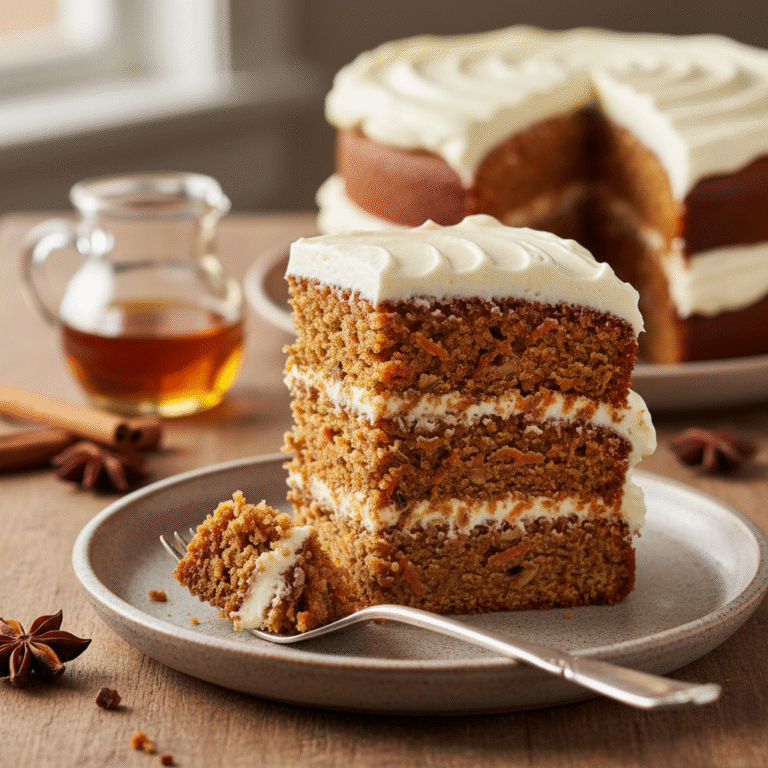
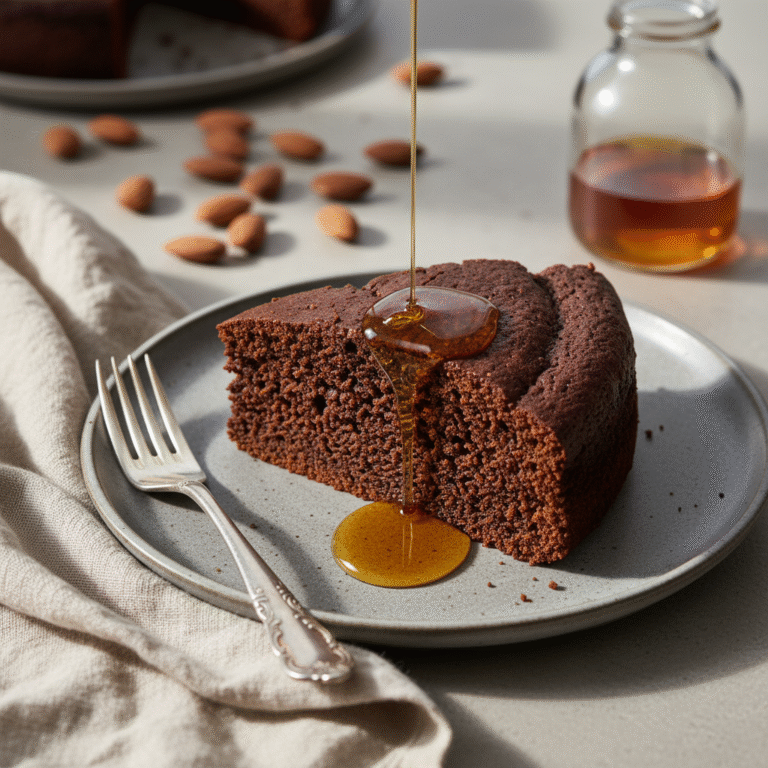
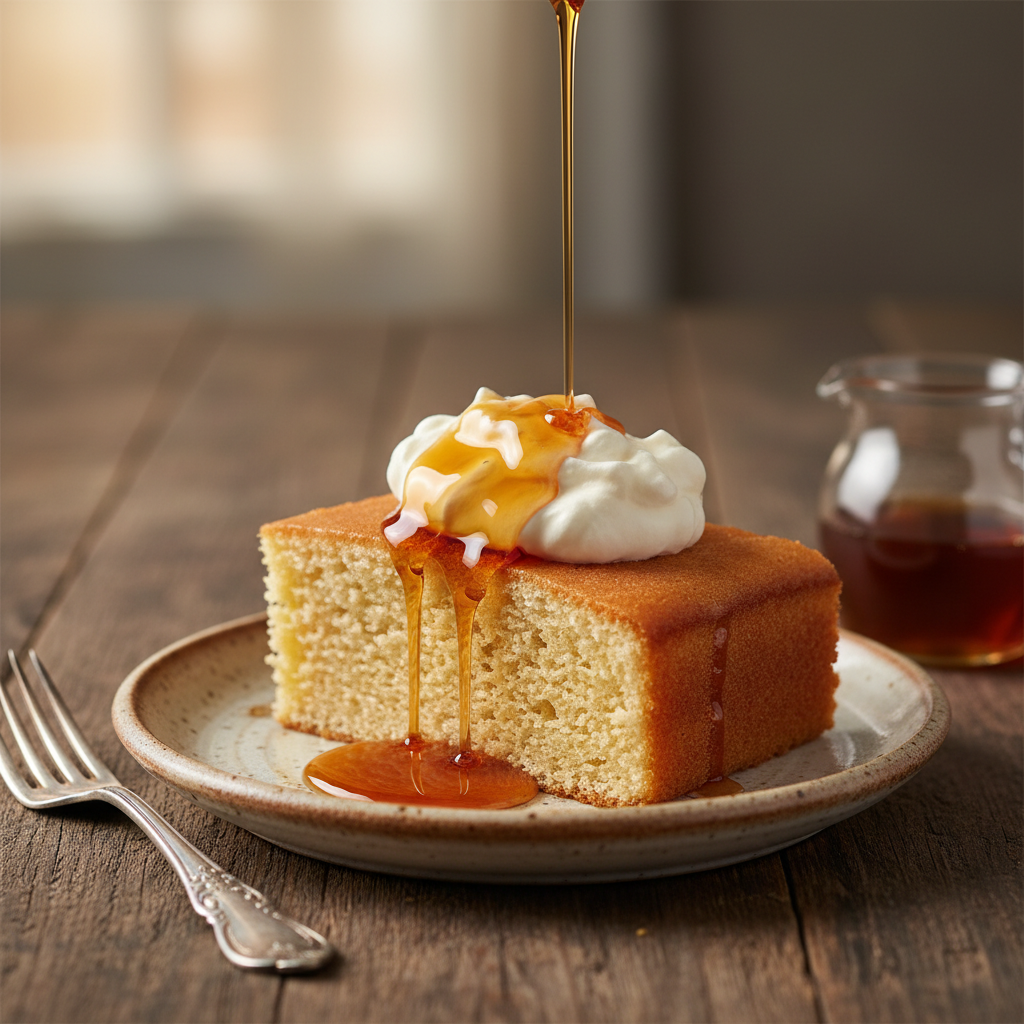
This cake is beautiful in its simplicity and is best served with toppings that complement rather than overpower the delicate maple flavor. A dollop of lightly sweetened whipped cream (sweetened with a dash of maple syrup, of course) and a handful of fresh berries like raspberries or strawberries make for an elegant presentation. For a warmer, cozier vibe, serve a slice slightly warmed with a drizzle of extra maple syrup and a sprinkle of cinnamon or toasted pecans. It also pairs wonderfully with a cup of black coffee or Earl Grey tea, which cuts through the richness of the cake.
Storage and Reheating Tips
Because of the moisture content from the maple syrup, this cake stores very well. It can be kept at room temperature in an airtight container for up to 3 days. If you live in a very humid climate, it is safer to store it in the refrigerator for up to 5 days; just be sure to let it come to room temperature before serving to restore the soft texture. For long-term storage, wrap individual slices tightly in plastic wrap and then aluminum foil, and freeze for up to 3 months. Thaw frozen slices in the refrigerator overnight or microwave gently for 15-20 seconds.
Nutrition Facts (Estimated)
| Serving Size | 1 slice |
| Calories | 210 |
| Fat | 10g |
| Saturated Fat | 6g |
| Unsaturated Fat | 3g |
| Trans Fat | 0g |
| Cholesterol | 45mg |
| Sodium | 180mg |
| Carbohydrates | 26g |
| Fiber | 1g |
| Sugar | 12g |
| Protein | 4g |
Frequently Asked Questions
Can I use honey instead of maple syrup?
Yes, you can use honey in a 1:1 ratio, but keep in mind that honey is sweeter and browns faster than maple syrup. You may need to reduce the oven temperature by 25°F and check the cake earlier.
Why did my cake sink in the middle?
Sinking usually happens if the oven door was opened too early, if the leavening agents were expired, or if the batter was overmixed, incorporating too much air that the structure couldn’t support.
Is this cake suitable for diabetics?
While this cake uses natural maple syrup instead of refined sugar, maple syrup still affects blood sugar levels. It is ‘lower sugar’ compared to standard cakes but should still be consumed in moderation according to individual dietary needs.
Can I bake this as cupcakes?
Absolutely! This batter works great for cupcakes. Line a muffin tin with liners and bake for 18-22 minutes at the same temperature.
What frosting goes best with this?
A maple cream cheese frosting or a stabilized whipped cream frosting are the best pairings. Avoid overly sweet American buttercream, as it might mask the subtle maple notes.
Can I use whole wheat flour?
You can substitute up to 50% of the all-purpose flour with white whole wheat flour. Using 100% whole wheat flour will result in a much denser and nuttier tasting cake.
My batter looks curdled, is it ruined?
No, it is not ruined! This is very common when mixing liquid sweeteners with fat. Once you add the flour, the batter will come together and become smooth.
Do I need Grade A or Grade B maple syrup?
Grade B (often now classified as Grade A: Dark Color, Robust Taste) is preferred for baking because it has a stronger maple flavor that stands up better to the heat, but any pure maple syrup will work.
Conclusion
Embracing a low-sugar lifestyle doesn’t mean you have to say goodbye to the joys of baking or the comfort of a slice of vanilla cake. This Low Sugar Vanilla Cake with Maple Syrup proves that natural ingredients can produce results that are just as decadent, if not more so, than their refined counterparts. The warmth of the maple, the tenderness of the crumb, and the ease of preparation make this recipe a keeper for anyone looking to bake better. Whether for a special occasion or a simple weekday treat, this cake offers a wholesome way to celebrate life’s sweet moments. Give it a try, and you might just find yourself permanently swapping the sugar bowl for a jug of pure maple syrup.