Moist & Fudgy Low Sugar Chocolate Cake with Honey
Low Sugar Low Sugar Chocolate Cake With Honey Recipe
Indulge in a guilt-free dessert with this incredibly moist Low Sugar Chocolate Cake sweetened entirely with natural honey. This recipe delivers a rich, deep cocoa flavor and a tender crumb without the need for refined sugars, making it the perfect treat for health-conscious chocolate lovers.
20 minutes
35 minutes
55 minutes
12 servings
Dessert
Baking
American
Vegetarian
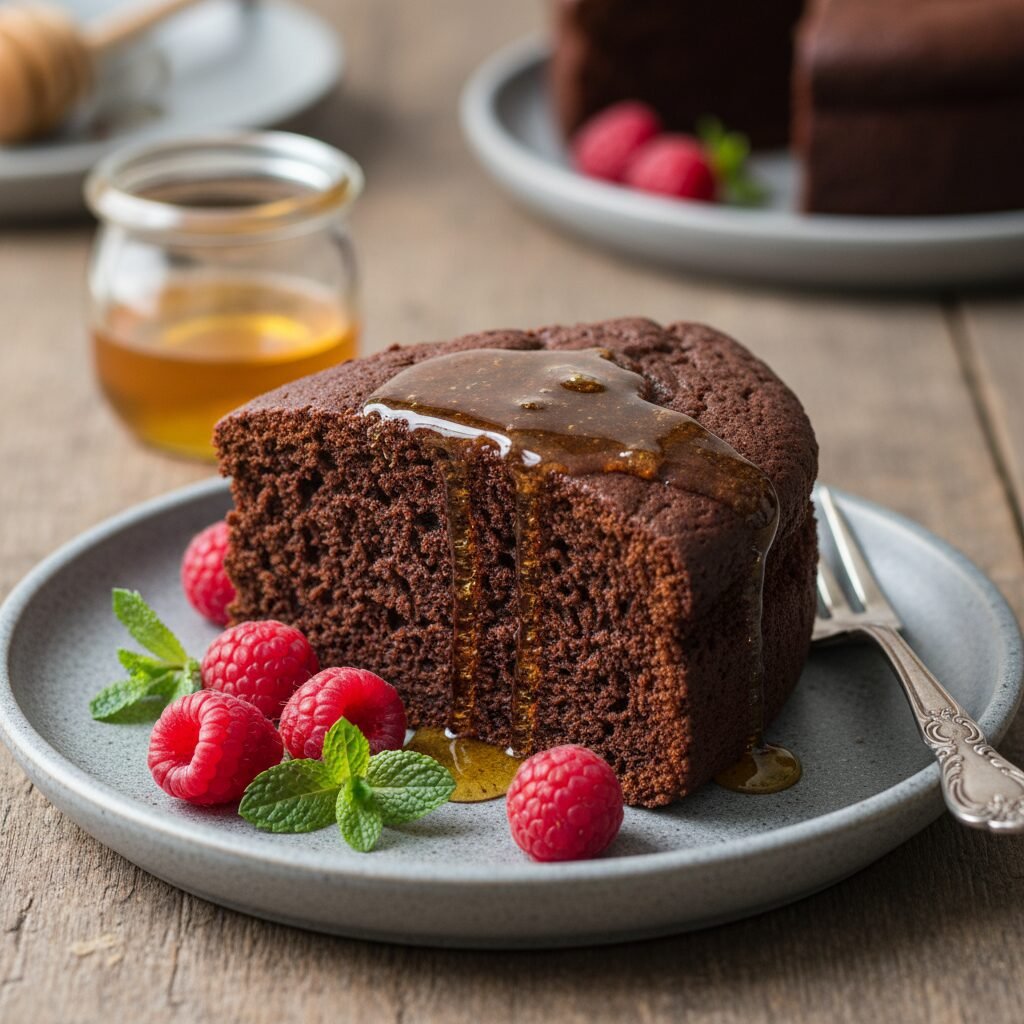
There is something undeniably comforting about a slice of rich chocolate cake. It is the quintessential dessert for celebrations, bad days, and everything in between. However, for many of us trying to reduce our intake of refined sugars, navigating the world of baked goods can be a challenge. Often, ‘healthier’ cakes result in dry, flavorless disappointments that leave you craving the real thing. That is where this Low Sugar Chocolate Cake with Honey changes the game entirely. By swapping out processed white sugar for nature’s golden sweetener, we not only reduce the glycemic load but also introduce a level of moisture and flavor complexity that refined sugar simply cannot compete with. Honey brings a subtle floral earthiness that pairs magnificently with the bitterness of dark cocoa, creating a flavor profile that is sophisticated and deeply satisfying. This cake is not just a ‘good alternative’; it stands on its own as a superior dessert. The texture is the real star here—fudgy, dense, and incredibly soft, thanks to the unique chemical properties of honey. Whether you are baking for a diabetic-friendly diet, looking to cut down on processed ingredients, or simply have a surplus of honey in your pantry, this recipe is your new go-to. It proves that you do not need to sacrifice decadence for health. Imagine a fork sliding effortlessly through a dark, velvety crumb, picking up a hint of vanilla and the robust aroma of chocolate, all without the cloying sweetness of traditional frosting. This is the chocolate cake you can feel good about eating, and it is bound to become a staple in your recipe repertoire.
History & Origins
The history of chocolate cake is a journey that mirrors our relationship with sugar and technology. While chocolate itself has been consumed for millennia, primarily as a bitter drink by the Mayans and Aztecs, the concept of a chocolate cake is relatively modern. It wasn’t until 1764, when Dr. James Baker discovered how to make chocolate by grinding cocoa beans between massive circular millstones, that chocolate became more accessible. However, early ‘chocolate cakes’ were actually yellow cakes with chocolate frosting. It was not until the late 19th and early 20th centuries, with the improvement of cocoa powder extraction, that the batter itself became chocolatey, leading to the creation of the famous Devil’s Food Cake. Parallel to this is the history of sweeteners. For thousands of years, before the industrialization of sugar cane processing, honey was the primary sweetener for much of the world. Ancient Egyptians, Greeks, and Romans used honey in their breads and cakes, valuing it not just for taste but for its preservative qualities. In the mid-20th century, the explosion of cheap refined sugar pushed honey to the sidelines of commercial baking. However, the 21st century has seen a massive cultural shift. As health organizations began to highlight the dangers of excessive refined sugar consumption—linking it to inflammation, diabetes, and heart disease—home bakers began looking backward to move forward. The ‘refined sugar-free’ movement revived the ancient practice of baking with honey and maple syrup. This recipe is a modern culmination of that history, blending the classic 20th-century desire for a rich chocolate crumb with the ancient, health-conscious wisdom of using natural sweeteners.
Why This Recipe Works
Baking with honey instead of sugar is not just a simple swap; it is a science that, when understood, produces superior results. The primary reason this recipe works so well lies in the hygroscopic nature of honey. Hygroscopy is the ability of a substance to attract and hold water molecules from the surrounding environment. Sugar does this to an extent, but honey is significantly more effective. This means that cakes baked with honey stay moist for days longer than their sugar-sweetened counterparts, effectively combating the common issue of dry chocolate cake. Furthermore, honey is acidic (with an average pH of around 3.9). When this acidity interacts with baking soda (a base), it creates a vigorous chemical reaction that produces carbon dioxide bubbles. This reaction provides an excellent lift to the batter, ensuring the cake is fluffy and light despite being moist and dense. We also utilize the ‘blooming’ technique in this recipe, where hot liquid (coffee or water) is added to the cocoa powder. This heat dissolves the cocoa butter and releases flavor compounds that are otherwise locked away, resulting in a more intense chocolate experience. Finally, using oil instead of butter ensures the cake remains soft even when refrigerated, as oil stays liquid at cooler temperatures while butter solidifies.
Why You’ll Love This Recipe
- ✓Sweetened entirely with natural honey—no refined white sugar.
- ✓Incredibly moist texture due to honey’s hygroscopic properties.
- ✓Rich, deep chocolate flavor enhanced by hot coffee.
- ✓Simple one-bowl mixing method means less cleanup.
- ✓Stays fresh and soft for days without drying out.
- ✓A healthier alternative that doesn’t taste like ‘diet’ food.
Equipment You’ll Need
- ✓Large mixing bowl
- ✓Medium mixing bowl
- ✓Whisk
- ✓9-inch round cake pan
- ✓Parchment paper
- ✓Measuring cups and spoons
- ✓Wire cooling rack
- ✓Spatula
Ingredients
- ✓1 and 1/2 cups All-Purpose Flour
- ✓3/4 cup Unsweetened Cocoa Powder (Dutch-processed preferred)
- ✓1 tsp Baking Soda
- ✓1/2 tsp Salt
- ✓3/4 cup Honey (raw or clover)
- ✓3 large Eggs, room temperature
- ✓1/2 cup Vegetable Oil or Melted Coconut Oil
- ✓2 tsp Vanilla Extract
- ✓1/2 cup Greek Yogurt or Sour Cream
- ✓3/4 cup Hot Strong Coffee (or hot water)
Instructions
- Preheat your oven to 350°F (175°C). Grease a 9-inch round cake pan and line the bottom with parchment paper for easy removal.
- In a large bowl, sift together the flour, cocoa powder, baking soda, and salt to ensure there are no lumps.
- In a separate medium bowl, whisk together the honey, eggs, oil, vanilla extract, and Greek yogurt until completely smooth and combined. If your honey is thick, you may warm it slightly to make it mix easier.
- Pour the wet ingredients into the dry ingredients. Gently whisk or fold until just combined. Do not overmix.
- Carefully pour the hot coffee (or hot water) into the batter. Whisk gently until the batter is smooth. The batter will be thin; this is normal.
- Pour the batter into the prepared cake pan.
- Bake for 30-35 minutes, or until a toothpick inserted into the center comes out clean or with just a few moist crumbs attached.
- Remove from the oven and let the cake cool in the pan for 10-15 minutes. Then, run a knife around the edges and invert it onto a wire rack to cool completely before slicing.
Expert Cooking Tips
- ✓Room Temperature Ingredients: Ensure your eggs and yogurt are at room temperature. This helps them emulsify better with the oil and honey, creating a uniform structure.
- ✓Quality Cocoa: Since this is a low-sugar cake, the flavor of the cocoa really shines through. Use a high-quality Dutch-processed cocoa for a smoother, less acidic taste.
- ✓Don’t Overbake: Honey cakes can brown faster than sugar cakes. Keep an eye on it at the 30-minute mark. Overbaking is the enemy of moisture.
- ✓Weigh Your Flour: For the most accurate results, weigh your flour (approx 120g per cup). Scooping directly can pack the flour and dry out the cake.
- ✓The Coffee Trick: Don’t skip the hot coffee! You won’t taste the coffee flavor; it simply enhances the richness of the chocolate.
Substitutions and Variations
This recipe is quite versatile if you need to make adjustments based on dietary needs or pantry staples. For the flour, you can substitute a 1:1 Gluten-Free All-Purpose Baking Flour blend if you are gluten-intolerant; look for a blend that contains xanthan gum for the best structure. If you want a whole grain option, white whole wheat flour works well, though it may result in a slightly denser texture. For the oil, melted coconut oil adds a lovely subtle flavor, but avocado oil or canola oil are perfect neutral options. Olive oil can also be used for a more gourmet, fruity profile that pairs well with chocolate. If you do not have Greek yogurt, sour cream is an excellent 1:1 substitute that provides the same acidity and fat content needed for tenderness. For the liquid, if you are sensitive to caffeine or baking for children, hot water works perfectly fine, or you could use hot decaf coffee. While honey is the star, pure maple syrup can be used in a pinch, though it is slightly thinner, so you might need to add an extra tablespoon of flour.
Common Mistakes to Avoid
The most common mistake when baking with honey is setting the oven temperature too high. Honey caramelizes and burns faster than granulated sugar, so sticking to 350°F (or even 325°F if your oven runs hot) is crucial. Another frequent error is overmixing the batter after adding the flour. Once the wet and dry ingredients meet, gluten begins to form. Excessive mixing will lead to a tough, rubbery cake rather than a tender one. Stop mixing as soon as the white streaks of flour disappear. Additionally, many bakers panic when they see how thin the batter is after adding the hot liquid. Do not add more flour! The thin batter allows the steam to escape slowly and results in that desirable fudgy texture. Lastly, do not try to remove the cake from the pan too early. This cake is very tender when hot and needs that initial 10-15 minutes of cooling in the pan to set its structure, or it may crumble.
Serving Suggestions
This cake is elegant in its simplicity and does not necessarily need a heavy frosting. A light dusting of powdered sugar (or a sugar-free alternative) and a handful of fresh raspberries makes for a stunning presentation. For a more decadent treat, serve a warm slice with a dollop of unsweetened whipped cream or a scoop of vanilla bean ice cream. If you want to keep it refined sugar-free, a ganache made from melted sugar-free dark chocolate and coconut cream makes a luxurious glaze. It pairs beautifully with an espresso after dinner or a cold glass of oat milk in the afternoon.
Storage and Reheating Tips
Because of the honey, this cake has excellent keeping qualities. Store leftovers in an airtight container at room temperature for up to 3 days; the flavor often improves on the second day as the moisture redistributes. For longer storage, keep it in the refrigerator for up to a week. If you want to freeze it, wrap individual slices tightly in plastic wrap and then in aluminum foil. They can be frozen for up to 3 months. To reheat, simply microwave a slice for 15-20 seconds to restore that fresh-from-the-oven warmth and softness.
Nutrition Facts (Estimated)
| Serving Size | 1 slice |
| Calories | 245 |
| Fat | 14g |
| Saturated Fat | 2g |
| Unsaturated Fat | 11g |
| Trans Fat | 0g |
| Cholesterol | 35mg |
| Sodium | 210mg |
| Carbohydrates | 32g |
| Fiber | 3g |
| Sugar | 18g |
| Protein | 5g |
Frequently Asked Questions
Can I use raw honey for this recipe?
Yes, you can use raw honey. However, keep in mind that the beneficial enzymes in raw honey are destroyed at high temperatures, so the health benefits related to raw enzymes will be lost during baking. The flavor and structural benefits remain the same.
Why did my cake sink in the middle?
Sinking usually happens if the oven door was opened too early, causing a sudden temperature drop, or if the cake was underbaked. It can also occur if too much leavening (baking soda) was used. Ensure you measure carefully and resist checking the oven until at least 30 minutes have passed.
Can I make this into cupcakes?
Absolutely! This batter works great for cupcakes. Line a muffin tin with liners and fill them about 2/3 full. Reduce the baking time to 18-22 minutes. Check for doneness with a toothpick.
Is this cake safe for diabetics?
While this cake is free from refined sugar, honey still affects blood sugar levels. It has a slightly lower glycemic index than white sugar and contains trace minerals, but it is still a source of carbohydrates. Diabetics should consume it in moderation and consult their dietary guidelines.
Can I substitute the eggs?
Yes, for a vegan version, you can try using ‘flax eggs’ (1 tbsp ground flaxseed meal + 3 tbsp water per egg). However, since eggs provide structure, the texture might be slightly denser and less fluffy than the original version.
Does the cake taste like honey?
It has a subtle background note of honey, but the dominant flavor is rich chocolate. The honey adds a floral complexity that enhances the chocolate rather than overpowering it.
What kind of cocoa powder is best?
Dutch-processed cocoa powder is recommended because it has been treated to reduce acidity, resulting in a darker color and a smoother, mellower flavor. Natural cocoa powder can be used but may result in a lighter, slightly more acidic cake.
Can I use almond flour instead of all-purpose?
You cannot swap almond flour 1:1 for all-purpose flour in this specific recipe without changing the other ratios, as almond flour has no gluten and absorbs liquid differently. It would require a recipe specifically designed for almond flour to ensure the cake holds together.
Conclusion
Baking a delicious, moist chocolate cake doesn’t require a bag of white sugar. This Low Sugar Chocolate Cake with Honey proves that nature provides us with incredible ingredients that can elevate our desserts in both flavor and nutrition. By understanding the science of honey and cocoa, you can create a treat that feels indulgent yet wholesome. Whether you are sharing it with family, bringing it to a potluck, or enjoying a quiet moment with a cup of coffee, this cake is sure to impress. It represents a balance—a way to enjoy the sweeter things in life while honoring your body’s needs. We hope this recipe brings a little extra joy and a lot of deliciousness to your kitchen. Happy baking!