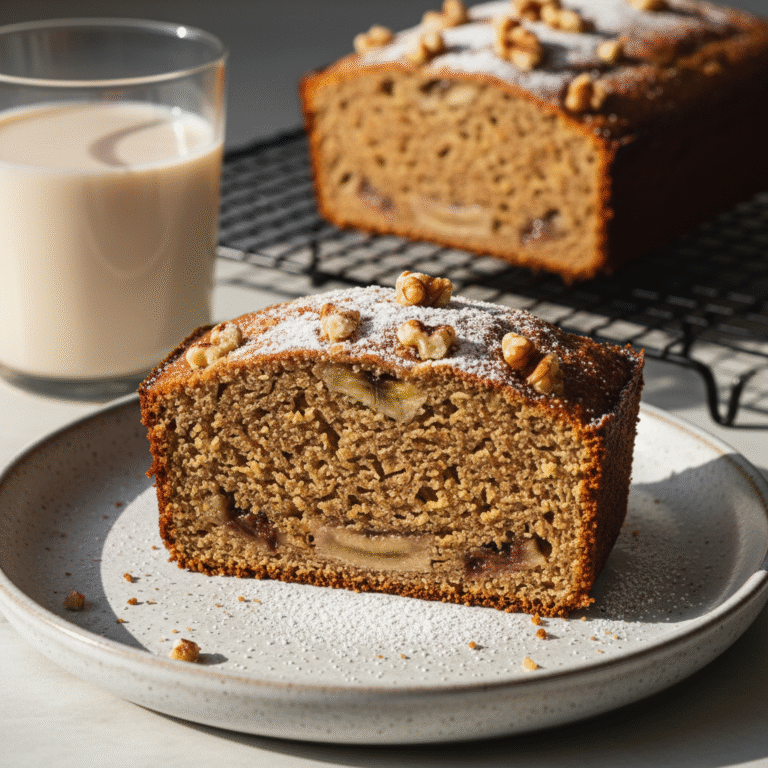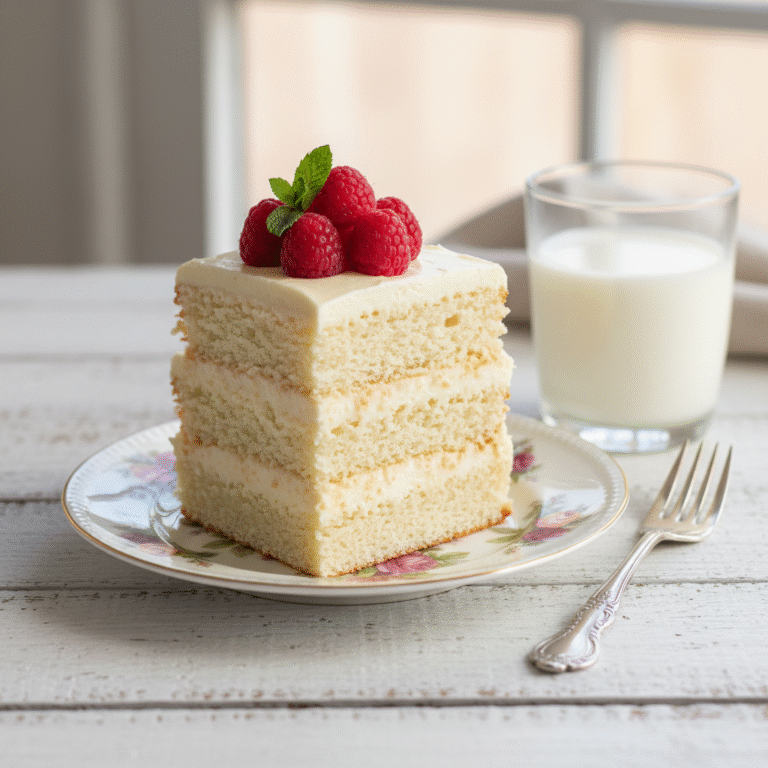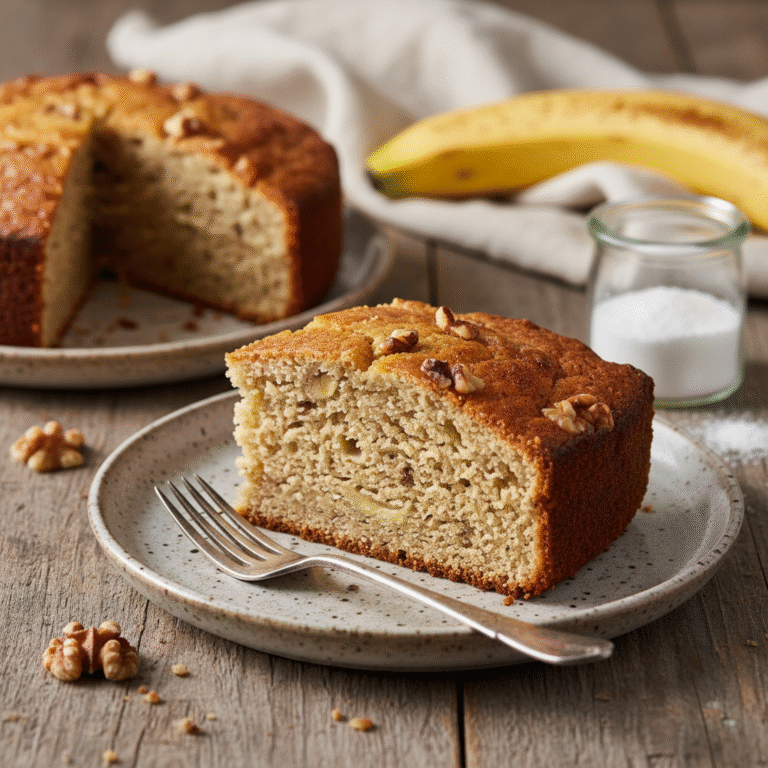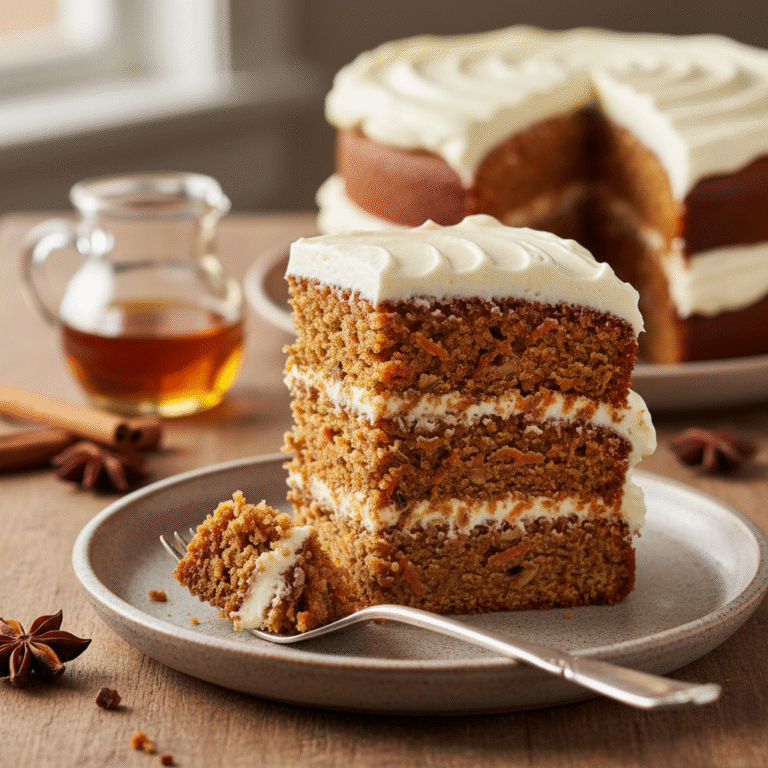
The Ultimate Low Sugar Banana Cake With Honey
Low Sugar Low Sugar Banana Cake With Honey Recipe
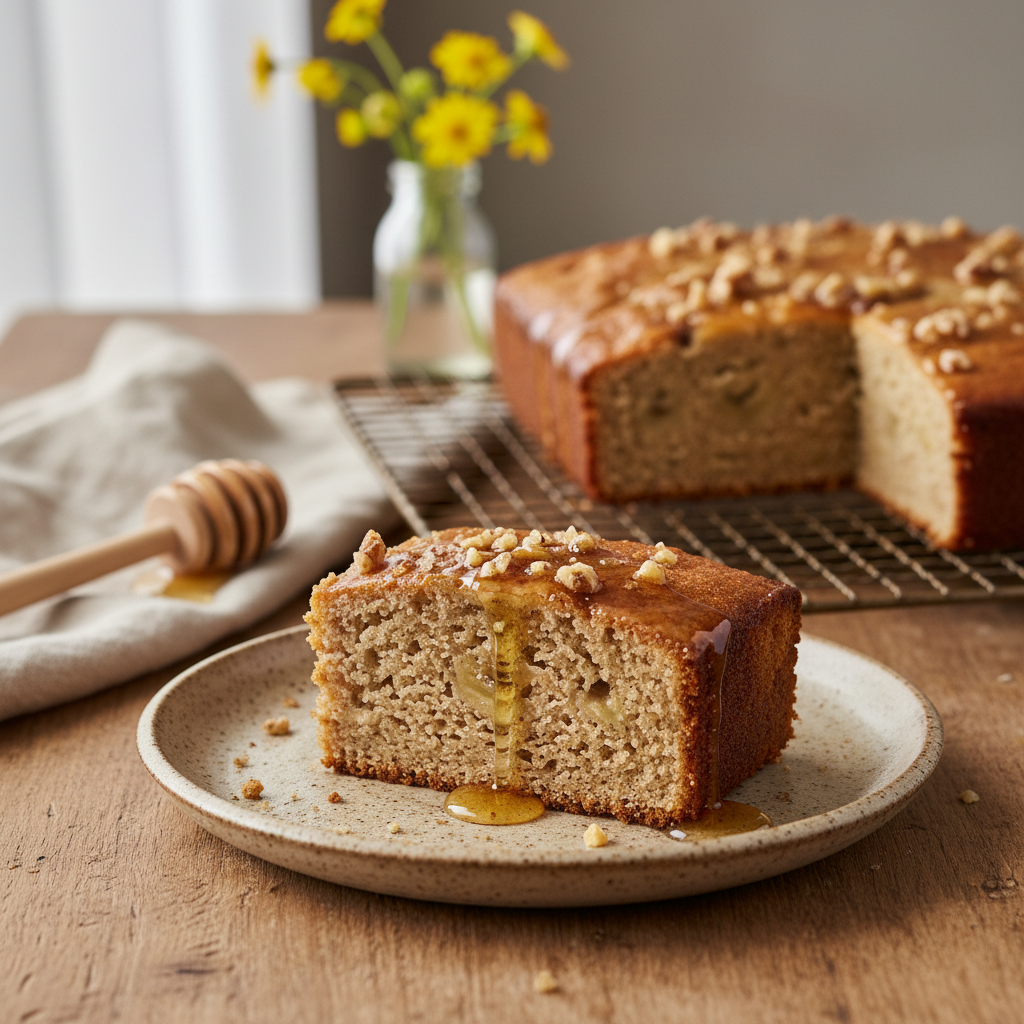
Discover the perfect balance of wholesome sweetness and tender texture with this Low Sugar Banana Cake with Honey. Naturally sweetened and incredibly moist, this recipe ditches refined sugar for a guilt-free indulgence that pairs perfectly with your morning coffee or serves as a healthy after-school snack.
15 minutes
40 minutes
55 minutes
9 servings (1 8×8 inch pan)
Dessert
Baking
American
Vegetarian
There is something undeniably comforting about the aroma of bananas baking in the oven. It evokes memories of cozy weekend mornings and grandma’s kitchen. However, traditional banana cake recipes are often laden with cups of refined white sugar, turning what could be a nutritious treat into a high-glycemic dessert. This Low Sugar Banana Cake with Honey is designed to bridge the gap between health-conscious eating and the desire for a truly decadent baked good. By harnessing the natural fructose found in overripe bananas and the complex, floral sweetness of raw honey, we eliminate the need for processed granulated sugar entirely.
The result is a cake that is not just ‘good for a healthy cake,’ but genuinely delicious in its own right. The crumb is exceptionally tender—almost pudding-like in its moistness—thanks to the unique chemical properties of honey. Unlike sugar, which simply adds sweetness, honey adds depth, a slight earthiness, and a golden hue that makes the cake visually stunning. This recipe is versatile enough to be dressed up with a cream cheese frosting for a celebration or served plain and warm for a rustic breakfast. Whether you are trying to reduce your sugar intake, baking for toddlers, or simply prefer the rich flavor of natural sweeteners, this banana cake is about to become a staple in your recipe rotation. It is a testament to the fact that you do not need to sacrifice flavor to treat your body well.
History & Origins
The history of banana cake and banana bread is inextricably linked to the history of food preservation and the economic hardships of the early 20th century. While bananas were imported to the United States in the late 1800s, they were initially expensive and considered a luxury fruit. However, with the advent of better refrigeration and transport, they became a household staple by the 1920s. The true birth of the banana cake as we know it, however, occurred during the Great Depression. During this era, throwing away food was culturally and economically taboo. Housewives needed a way to use overripe, black bananas that were no longer palatable for fresh eating. Simultaneously, the mass production of chemical leavening agents like baking powder and baking soda made ‘quick breads’ accessible to the average home cook, eliminating the long rise times required by yeast.
The use of honey as a sweetener predates refined sugar by millennia, dating back to ancient Egypt and Greece where it was known as the ‘food of the gods.’ However, in the context of American baking, honey saw a resurgence during World War II due to sugar rationing. Home bakers had to get creative, substituting scarce white sugar with honey, molasses, or maple syrup. This recipe pays homage to that era of ingenuity, returning to a time when sweeteners were used sparingly and chosen for their flavor rather than just their caloric density. Over the decades, banana cake evolved into a sugary confection, often indistinguishable from a standard yellow cake. This version reclaims its roots, focusing on the fruit and the natural nectar as the stars of the show.
Why This Recipe Works
This recipe succeeds where many low-sugar adaptations fail because it understands the science of baking with honey. Honey is hygroscopic, meaning it attracts and retains water. In a cake, this translates to superior moisture retention; a honey-sweetened cake will stay soft for days longer than one made with granulated sugar. Furthermore, honey is acidic. When this acid interacts with the baking soda in the recipe, it creates a robust leavening reaction, producing carbon dioxide bubbles that give the cake a significant lift and a light, airy structure, countering the heaviness of the mashed bananas.
The choice of fat is also crucial. By using oil (or melted butter) rather than creaming solid butter, we coat the flour proteins more effectively, preventing gluten over-development. This ensures the cake remains tender rather than chewy. We also rely heavily on the bananas themselves. By insisting on ‘very ripe’ bananas—those with leopard spots or entirely black skins—we maximize the natural sugar content. As a banana ripens, its starch converts to sugar, providing natural sweetness that allows us to reduce the added sweeteners significantly. The combination of cinnamon and vanilla enhances the perception of sweetness without adding sugar, tricking the palate into perceiving a sweeter treat through aromatic compounds.
Why You’ll Love This Recipe
- ✓Naturally sweetened with honey and ripe bananas
- ✓Zero refined white sugar
- ✓Incredibly moist texture that lasts for days
- ✓Quick one-bowl preparation method
- ✓Kid-friendly and perfect for lunchboxes
- ✓Freezes beautifully for meal prep
Equipment You’ll Need
- ✓8×8 inch square baking pan
- ✓Large mixing bowl
- ✓Medium mixing bowl
- ✓Whisk
- ✓Silicone spatula
- ✓Measuring cups and spoons
- ✓Fork or potato masher
- ✓Wire cooling rack
Ingredients
- ✓3 large ripe bananas (heavily spotted or brown)
- ✓1/3 cup raw honey
- ✓2 large eggs, room temperature
- ✓1/2 cup neutral oil (avocado, vegetable) or melted coconut oil
- ✓1 teaspoon pure vanilla extract
- ✓1 1/2 cups all-purpose flour (or white whole wheat flour)
- ✓1 teaspoon baking soda
- ✓1/2 teaspoon salt
- ✓1 teaspoon ground cinnamon
- ✓1/4 teaspoon ground nutmeg (optional)
- ✓1/2 cup chopped walnuts or pecans (optional)
Instructions
- Preheat your oven to 325°F (165°C). Note that this is slightly lower than the standard 350°F because honey browns faster than sugar. Grease an 8×8 inch baking pan with non-stick spray or line it with parchment paper for easy removal.
- In a large mixing bowl, peel the ripe bananas and mash them thoroughly with a fork or potato masher. You want a mostly smooth consistency with just a few small lumps remaining for texture.
- Add the honey, eggs, oil (or melted butter), and vanilla extract to the mashed bananas. Whisk vigorously until the wet ingredients are completely combined and the mixture is uniform.
- In a separate medium bowl, whisk together the flour, baking soda, salt, cinnamon, and nutmeg. This ensures the leavening agent and spices are evenly distributed throughout the flour.
- Pour the dry ingredients into the wet ingredients. Using a silicone spatula, gently fold the mixture together. Stop mixing as soon as the flour streaks disappear. Do not overmix, or the cake will become dense and rubbery.
- If using nuts or any other mix-ins (like dark chocolate chips), gently fold them in now.
- Pour the batter into the prepared baking pan and smooth the top with your spatula.
- Bake in the center rack of the oven for 35 to 45 minutes. Check for doneness by inserting a toothpick into the center of the cake; it should come out clean or with a few moist crumbs attached, but no raw batter.
- If the top of the cake appears to be browning too quickly before the center is cooked, loosely tent the pan with aluminum foil for the last 10 minutes of baking.
- Remove the cake from the oven and let it cool in the pan for 10 minutes. Then, transfer the cake to a wire rack to cool completely before slicing. Slicing while hot may cause it to crumble.
Expert Cooking Tips
- ✓Use the ripest bananas possible; black skins indicate maximum sweetness and moisture.
- ✓Room temperature eggs incorporate better into the batter, creating a smoother emulsion.
- ✓Measure your flour correctly by spooning it into the cup and leveling it off, rather than scooping directly, to avoid a dry cake.
- ✓Honey creates a darker crust than sugar; don’t mistake a deep golden brown color for being burnt.
- ✓Do not skip the salt; it is essential to balance the sweetness of the honey and bananas.
- ✓Tent with foil if the honey causes the top to brown too fast.
- ✓Let the cake cool completely to allow the structure to set and flavors to meld.
Substitutions and Variations
This recipe is highly adaptable to various dietary needs and pantry staples. For the flour, you can substitute 50% or 100% of the all-purpose flour with white whole wheat flour for added fiber and nuttiness. If you are gluten-free, a high-quality 1:1 gluten-free flour blend works exceptionally well, though the texture may be slightly more crumbly. For the sweetener, maple syrup or agave nectar can be swapped for honey in equal 1:1 ratios, though maple syrup will impart a different flavor profile. In terms of fat, melted unsalted butter provides a richer flavor, while coconut oil adds a tropical hint that pairs lovely with banana; olive oil works too but may lend a savory note. If you need an egg-free version, ‘flax eggs’ (1 tbsp ground flaxseed meal + 3 tbsp water per egg) generally work well in banana-based baked goods due to the binding power of the fruit.
Common Mistakes to Avoid
The most common mistake when baking with honey is baking at too high a temperature. Honey caramelizes and burns much faster than granulated sugar, which is why we bake at 325°F instead of 350°F. Another frequent error is using under-ripe bananas. Yellow or green bananas lack the necessary sugar and moisture, resulting in a bland, dry cake. Overmixing the batter is the enemy of tender cakes; once the wet and dry ingredients meet, mix only until combined to avoid developing tough gluten strands. Finally, checking the cake too early and opening the oven door frequently can cause the center to sink, so try to keep the oven closed until at least the 30-minute mark.
Serving Suggestions
This Low Sugar Banana Cake is delicious on its own, but it shines when paired with complementary toppings. Serve it slightly warm with a pat of grass-fed butter or a drizzle of almond butter for a hearty breakfast. For a dessert presentation, top with a dollop of Greek yogurt sweetened with a drop of maple syrup, or a light dusting of cinnamon. It also pairs beautifully with a hot cup of coffee or chai tea. If you are feeling indulgent, a cream cheese frosting sweetened with honey instead of powdered sugar makes for an incredible birthday cake alternative.
Storage and Reheating Tips
Because of the high moisture content from the honey and bananas, this cake stores best at room temperature for only 2 to 3 days in an airtight container. If you live in a hot or humid climate, it is safer to store it in the refrigerator, where it will last for up to 1 week; just bring it to room temperature or microwave for 15 seconds before eating to soften the crumb. This cake freezes exceptionally well. Wrap individual slices tightly in plastic wrap and then place them in a freezer-safe bag. They can be frozen for up to 3 months. Thaw on the counter for an hour before enjoying.
Nutrition Facts (Estimated)
| Serving Size | 1 slice |
| Calories | 210 |
| Fat | 9g |
| Saturated Fat | 1.5g |
| Unsaturated Fat | 7g |
| Trans Fat | 0g |
| Cholesterol | 35mg |
| Sodium | 180mg |
| Carbohydrates | 30g |
| Fiber | 2g |
| Sugar | 14g |
| Protein | 4g |
Frequently Asked Questions
Can I use frozen bananas?
Yes, absolutely! Thaw the frozen bananas completely before using. They will release a lot of liquid as they thaw; do not discard this liquid, as it contains flavorful sugars and moisture. Include it in the mash.
Is this cake suitable for diabetics?
While this cake contains no refined sugar, it is still relatively high in carbohydrates from the bananas, honey, and flour. It has a lower glycemic index than traditional cake, but diabetics should check the nutrition facts and consult with their doctor.
Why did my cake sink in the middle?
Sinking usually happens if the cake was underbaked or if the oven door was opened too early, causing a temperature drop. It can also happen if there was too much leavening (baking soda).
Can I reduce the honey further?
You can reduce the honey to 1/4 cup if your bananas are extremely ripe, but reducing it too much may affect the moisture and shelf-life of the cake.
Can I bake this as muffins instead?
Yes. Grease a standard muffin tin and bake at 325°F for 18-22 minutes. The yield will be approximately 10-12 muffins.
Why is my cake dark brown?
Honey causes baked goods to brown faster and darker than sugar. This is normal and contributes to a rich flavor. If it’s burning, lower the oven temp and tent with foil.
Can I add chocolate chips?
Certainly. Dark chocolate chips (70% cocoa or higher) are a great addition that keeps the sugar content relatively low while adding richness.
Do I need a mixer for this recipe?
No, one of the best parts of this recipe is that it can be made entirely by hand with a whisk and a fork. A mixer can actually lead to overmixing.
Conclusion
Baking healthier treats shouldn’t mean compromising on the joy of eating. This Low Sugar Banana Cake with Honey proves that nature provides the best ingredients for satisfying our sweet cravings. By swapping refined powders for golden honey and ripe fruit, you create a cake that nourishes the soul without shocking the system. Whether you are a seasoned baker or a novice in the kitchen, this recipe is forgiving, fragrant, and fundamentally delicious. So, the next time you see those bananas turning brown on your counter, don’t throw them away—turn them into something wonderful. Happy baking!