
The Ultimate Fresh Lemon Blueberry Layer Cake with Cream Cheese Frosting
Fresh Lemon Blueberry Layer Cake Recipe
This spectacular Fresh Lemon Blueberry Layer Cake is the epitome of spring baking, featuring tender, moist lemon cake layers studded with juicy, bursting blueberries. Slathered in a tangy, velvety lemon cream cheese frosting, it is the perfect balance of sweet, tart, and incredibly refreshing.
45 minutes
35 minutes
1 hour 20 minutes (plus cooling time)
12-14 servings
Dessert
Baking
American
Vegetarian
There is something undeniably magical about the combination of bright, zesty lemon and sweet, earthy blueberries. It is a flavor pairing that instantly evokes feelings of sunshine, garden parties, and the first warm days of spring. This Fresh Lemon Blueberry Layer Cake is not just a dessert; it is a celebration of texture and flavor. We aren’t talking about a dry sponge with a hint of artificial fruit flavor here. We are talking about a robust, buttery, bakery-style cake that is incredibly moist thanks to the addition of buttermilk and sour cream, yet light enough to leave you wanting a second slice.
The beauty of this recipe lies in its balance. Lemon cakes can sometimes lean too acidic or, conversely, too sugary without enough punch. Here, we use both fresh lemon juice and a generous amount of lemon zest to infuse the batter with natural oils that permeate every crumb. The blueberries—fresh are preferred, though frozen work in a pinch—create pockets of jammy sweetness that break up the richness of the crumb. To top it all off, the lemon cream cheese frosting is a revelation. It is less cloying than a standard buttercream, offering a tangy creaminess that complements the fruit perfectly. Whether you are baking for a birthday, a bridal shower, or simply because you deserve a slice of something heavenly, this cake is guaranteed to be the centerpiece of the table. It is a rustic yet elegant showstopper that looks as beautiful as it tastes, requiring minimal decoration to look professional.
History & Origins
The concept of the layer cake is a distinctly American innovation that gained traction in the mid-19th century. Before this era, cakes were primarily yeast-leavened, resembling sweet breads (like brioche or panettone) or dense fruitcakes. The game-changer was the invention and commercialization of chemical leaveners—baking soda and baking powder—in the 1840s and 1850s. These ingredients allowed home bakers to produce high-rising, light, and fluffy cakes without the arduous task of beating egg whites for hours or waiting for yeast to rise. The ‘layering’ aspect became popular as cast-iron stoves with temperature-controlled ovens became standard in American households, allowing for multiple pans to be baked simultaneously.
Blueberries, indigenous to North America, have been a staple in indigenous diets for centuries, often used in pemmican or puddings. However, their integration into fine baking is a relatively modern luxury, exploding in popularity as cultivation methods improved in the 20th century, making them available beyond just the short wild harvest season. The pairing of lemon and blueberry is a culinary marriage that likely evolved from English tea traditions—where lemon curd and berry jams were staples—adapted by American bakers who had access to the fresh, native berries. By the mid-20th century, lemon-blueberry muffins and coffee cakes were diner staples, paving the way for this flavor profile to graduate to the elegant, frosted layer cake we adore today.
Why This Recipe Works
This recipe succeeds where many fruit-based cakes fail due to a few key scientific principles and structural techniques. First and foremost is the ‘sinkage’ problem. Blueberries are heavy and water-dense; in a thin batter, they will plummet to the bottom of the pan, creating a soggy crust and a fruit-less top. We solve this by tossing the berries in a light coating of flour before folding them in. This creates friction between the berry and the batter, suspending the fruit evenly throughout the cake as it bakes.
Secondly, the texture is optimized through the use of ‘acid-base’ chemistry. We use buttermilk and sour cream, both acidic ingredients, which react with the baking soda. This reaction creates carbon dioxide bubbles, giving the cake a superior lift and a tender, airy crumb. Furthermore, the acidity in the dairy tenderizes the gluten strands in the flour, preventing the cake from becoming tough or rubbery. We also use a combination of butter and oil (or the fat from the sour cream) because butter provides the unbeatable flavor, while liquid fats ensure the cake stays moist for days, even when refrigerated. Finally, we infuse the sugar with lemon zest before creaming it with the butter. By rubbing the zest into the sugar granules, we release the essential lemon oils, ensuring the citrus flavor is deep and aromatic, rather than just a sour aftertaste from juice alone.
Why You’ll Love This Recipe
- ✓Bursting with fresh, juicy blueberries in every bite
- ✓Incredibly moist crumb thanks to buttermilk and sour cream
- ✓Bright, natural citrus flavor using fresh zest and juice
- ✓Tangy, luscious cream cheese frosting that isn’t too sweet
- ✓Beautiful natural presentation perfect for special occasions
- ✓Stays soft and delicious for days in the refrigerator
Equipment You’ll Need
- ✓3 x 8-inch round cake pans
- ✓Stand mixer with paddle attachment or electric hand mixer
- ✓Large mixing bowls
- ✓Rubber spatula
- ✓Whisk
- ✓Citrus zester/microplane
- ✓Parchment paper
- ✓Wire cooling rack
- ✓Offset spatula for frosting
Ingredients
- ✓3 cups (375g) all-purpose flour (spooned and leveled)
- ✓1 tablespoon baking powder
- ✓1/2 teaspoon baking soda
- ✓1/2 teaspoon salt
- ✓1 cup (226g) unsalted butter, softened to room temperature
- ✓1 and 3/4 cups (350g) granulated sugar
- ✓4 large eggs, room temperature
- ✓2 teaspoons pure vanilla extract
- ✓1 cup (240ml) buttermilk, room temperature
- ✓1/2 cup (120g) sour cream, room temperature
- ✓Zest of 3 large lemons (approx. 2-3 tablespoons)
- ✓1/3 cup (80ml) fresh lemon juice
- ✓2 and 1/2 cups (375g) fresh blueberries (washed and dried thoroughly)
- ✓1 tablespoon all-purpose flour (for coating berries)
- ✓FOR THE FROSTING: 16 oz (450g) full-fat cream cheese, softened (block style)
- ✓3/4 cup (170g) unsalted butter, softened
- ✓5-6 cups (600-720g) powdered sugar, sifted
- ✓1 tablespoon fresh lemon juice
- ✓1 teaspoon vanilla extract
- ✓Pinch of salt
Instructions
- 1. PREHEAT & PREP: Preheat your oven to 350°F (175°C). Grease three 8-inch cake pans with butter or non-stick spray. Line the bottoms with parchment paper rounds to guarantee easy removal. Dust the sides with flour and tap out the excess.
- 2. WHISK DRY INGREDIENTS: In a medium bowl, whisk together the 3 cups of flour, baking powder, baking soda, and salt until well combined. Set aside.
- 3. INFUSE SUGAR: In the bowl of a stand mixer, combine the granulated sugar and fresh lemon zest. Rub the zest into the sugar with your fingers until the sugar is moist, yellow, and fragrant. This releases the essential oils.
- 4. CREAM BUTTER & SUGAR: Add the softened butter to the lemon sugar. Beat on medium-high speed for about 3-4 minutes until the mixture is pale, fluffy, and creamy. Scrape down the sides of the bowl and the paddle.
- 5. ADD WET INGREDIENTS: Add the eggs one at a time, beating well after each addition. Mix in the vanilla extract, sour cream, and fresh lemon juice. (Note: The mixture might look slightly curdled due to the acid in the lemon juice; this is normal).
- 6. COMBINE: With the mixer on low speed, add the dry ingredients in three additions, alternating with the buttermilk in two additions, starting and ending with the flour mixture. Mix only until just combined—do not overmix, or the cake will be dense.
- 7. FOLD BERRIES: In a small bowl, toss the fresh blueberries with the 1 tablespoon of flour. Gently fold the coated berries into the batter using a rubber spatula, being careful not to crush them.
- 8. BAKE: Divide the batter evenly among the three prepared cake pans (using a kitchen scale helps ensure even layers). Bake for 30-36 minutes, or until a toothpick inserted into the center comes out clean or with just a few moist crumbs. The tops should be lightly golden.
- 9. COOL: Allow the cakes to cool in the pans for about 15-20 minutes. Then, carefully run a knife around the edges and invert them onto a wire rack to cool completely before frosting.
- 10. MAKE FROSTING: In a large bowl using a handheld or stand mixer fitted with a paddle attachment, beat the cream cheese and butter together on medium-high speed until smooth and creamy. Add the powdered sugar, lemon juice, vanilla, and salt. Beat on low speed for 30 seconds, then switch to high speed and beat for 2 minutes until fluffy. If the frosting is too runny, add more powdered sugar; if too stiff, add a splash of milk.
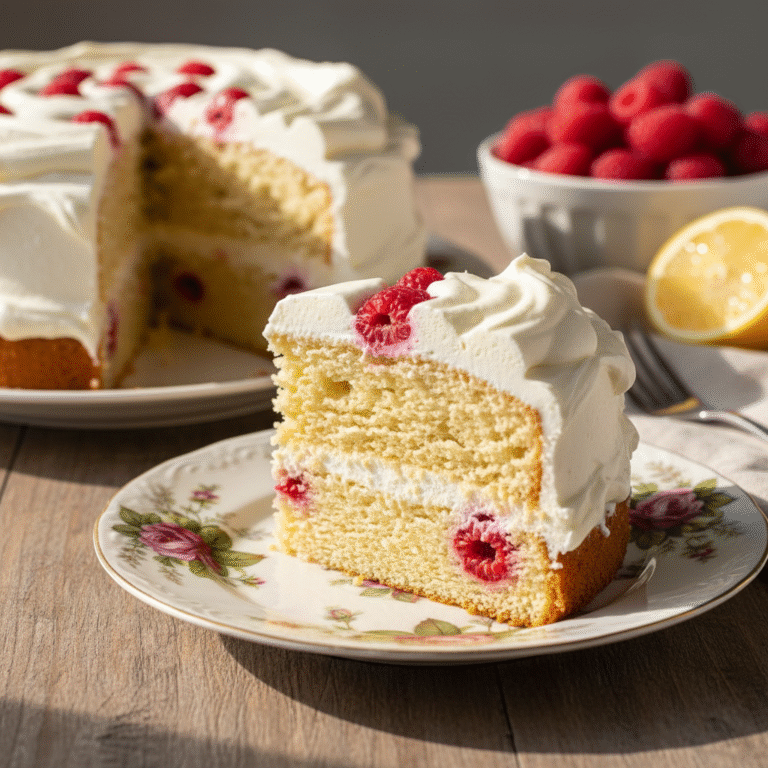
- 11. ASSEMBLE: Place one cake layer on your serving stand. Spread a thick layer of frosting over the top. Repeat with the second layer. Top with the third layer and spread the remaining frosting over the top and sides. Garnish with fresh lemon slices and extra blueberries.
Expert Cooking Tips
- ✓Room Temperature Ingredients are Non-Negotiable: Cold ingredients (eggs, butter, buttermilk) do not emulsify properly, leading to a dense or unevenly baked cake. Set them out 1 hour before baking.
- ✓Don’t Skip the Flour Toss: Coating the blueberries in that tablespoon of flour is the secret weapon to prevent them from sinking to the bottom of your cake pans.
- ✓Measure Flour Correctly: Use a kitchen scale for accuracy. If you don’t have one, fluff your flour with a spoon, sprinkle it into the measuring cup, and level it off with a knife. Never scoop directly from the bag.
- ✓Zest Before Juicing: It is incredibly difficult to zest a lemon after you have squeezed the juice out of it. Always zest first!
- ✓Cool Completely: Do not attempt to frost this cake if the layers are even slightly warm. The cream cheese frosting is heat-sensitive and will slide right off.
- ✓Use Block Cream Cheese: Do not use the spreadable cream cheese in a tub for the frosting; it has too much water content and will result in a soupy mess.
Substitutions and Variations
This recipe is quite versatile if you need to make adjustments. **For the Fruit:** While fresh blueberries are best, you can use frozen blueberries. Do not thaw them before adding to the batter, as this will cause the juice to bleed and turn your cake grey; toss them in flour while frozen and bake immediately (you may need to add 2-3 minutes to the bake time). You can also swap blueberries for raspberries or blackberries. **For the Dairy:** If you don’t have buttermilk, you can make a DIY version by adding 1 tablespoon of lemon juice or vinegar to a cup of whole milk and letting it sit for 10 minutes. Full-fat Greek yogurt can be substituted for the sour cream. **Gluten-Free:** This recipe works reasonably well with a high-quality 1:1 Gluten-Free Baking Flour blend (like King Arthur or Bob’s Red Mill) that contains xanthan gum, though the texture may be slightly more fragile. **Frosting:** If you prefer a more stable frosting for hot weather, swap the cream cheese frosting for a Swiss Meringue Buttercream infused with lemon curd.
Common Mistakes to Avoid
The most common mistake with this cake is **overmixing the batter**. Once the flour is added, you should mix only until the white streaks disappear. Overmixing develops too much gluten, resulting in a tough, bread-like texture rather than a tender crumb. Another frequent error is **using warm butter for the frosting**. If the butter is melted or too soft, the frosting will not hold its shape. It should be cool to the touch but indent easily when pressed. Lastly, **opening the oven door too early** can cause the cakes to collapse in the center. Resist the urge to peek until at least 25 minutes have passed.
Serving Suggestions
This cake is a statement piece on its own, but it shines even brighter with the right presentation. Serve chilled or at room temperature (though the frosting holds up best when slightly cool). It pairs beautifully with a hot cup of Earl Grey tea, which complements the citrus notes, or a glass of cold prosecco for a celebratory brunch. For garnish, fresh lemon slices, edible flowers (like pansies or violets), and sprigs of fresh mint or thyme add a stunning pop of color against the white frosting. If you want to be extra decadent, serve each slice with a dollop of lemon curd on the side.
Storage and Reheating Tips
Because of the cream cheese frosting, this cake should be stored in the refrigerator. It can be left out at cool room temperature for 2-3 hours for serving, but otherwise, keep it chilled. Store it in an airtight cake carrier or cover the cut sections with plastic wrap to prevent drying out. It will stay fresh in the fridge for up to 5 days. **Freezing:** You can freeze the unfrosted cake layers for up to 2 months. Wrap each layer tightly in plastic wrap and then foil. You can also freeze individual slices of the finished cake; place them on a baking sheet to freeze the frosting solid, then wrap tightly in plastic wrap and place in a freezer-safe bag. Thaw in the refrigerator overnight before eating.
Nutrition Facts (Estimated)
| Serving Size | 1 slice |
| Calories | 680 |
| Fat | 34g |
| Saturated Fat | 18g |
| Unsaturated Fat | 14g |
| Trans Fat | 0g |
| Cholesterol | 115mg |
| Sodium | 340mg |
| Carbohydrates | 88g |
| Fiber | 2g |
| Sugar | 52g |
| Protein | 8g |
Frequently Asked Questions
Can I use frozen blueberries instead of fresh?
Yes, you can. However, do not thaw them first. Add them frozen to the batter after tossing in flour. Note that frozen berries are more likely to bleed color into the batter, creating streaks, and you may need to increase the baking time by a few minutes.
Why did my blueberries sink to the bottom?
This usually happens if the batter is too thin or the berries weren’t coated in flour. The flour coating provides friction. Also, ensure you are using a thick batter recipe like this one, rather than a thin sponge mix.
Can I make this cake ahead of time?
Absolutely. You can bake the cake layers a day in advance, wrap them in plastic wrap, and store them at room temperature or in the fridge. The flavor actually develops nicely overnight. Frost the cake the day you plan to serve it.
Why is my frosting runny?
Runny cream cheese frosting usually results from using tub cream cheese (instead of block), using butter that was too warm/melted, or over-beating the mixture after adding the sugar. If it happens, try chilling the frosting for 20 minutes to firm it up.
Can I make this as cupcakes instead?
Yes! This batter makes excellent cupcakes. Line muffin tins with papers and bake at 350°F for approximately 18-22 minutes. This recipe should yield about 24-30 standard cupcakes.
Can I bake this in a 9×13 pan?
Yes, this can be made as a sheet cake. Grease a 9×13 inch pan and bake at 350°F. The baking time will likely increase to 40-50 minutes. Check with a toothpick starting at the 40-minute mark.
How do I get flat cake layers?
To avoid a domed top, you can use ‘cake strips’ (wet fabric strips wrapped around the outside of the pan) which help the cake bake evenly. Alternatively, simply use a serrated knife to trim the domes off the cooled cakes before assembling.
Is the lemon flavor strong?
This cake has a distinct, bright lemon flavor due to the zest and juice, but it is balanced by the sweet cake and berries. It is not as tart as a lemon bar, but definitely citrus-forward.
Conclusion
There are few desserts as cheerful and satisfying as this Fresh Lemon Blueberry Layer Cake. It captures the essence of spring in every bite, combining the zest of citrus with the comfort of a classic homemade cake. Whether you are an experienced baker or trying your hand at a layer cake for the first time, this recipe is designed to guide you to success. The result is a dessert that looks professional, tastes incredible, and brings a little bit of sunshine to your kitchen. So, grab your zester, pick up some fresh berries, and get ready to bake the most delicious cake you’ll have all year. Enjoy!