Ultimate Festive Gingerbread Layer Cake With Cream Cheese Frosting
Festive Gingerbread Layer Cake With Cream Cheese Frosting Recipe
Embrace the magic of the holiday season with this stunning Festive Gingerbread Layer Cake. Featuring three towering layers of moist, spice-infused sponge cake coated in a luscious, tangy cream cheese frosting, this dessert is the quintessential centerpiece for your Christmas table that tastes even better than it looks.
45 minutes
35 minutes
2 hours 30 minutes
12-16 servings
Dessert
Baking
American / European
Vegetarian
There is something undeniably magical about the aroma of gingerbread baking in the oven. It is a scent that instantly transports you to cozy winter evenings, crackling fireplaces, and the anticipation of holiday gatherings. This Festive Gingerbread Layer Cake is not just a dessert; it is a celebration of those nostalgic moments wrapped in a sophisticated, show-stopping package. Unlike the dry, cracker-like gingerbread cookies used to build houses, this cake offers a texture that is incredibly moist, tender, and rich. The crumb is dark and decadent, sweetened with deep molasses and brown sugar, creating a complex flavor profile that is robust without being overpowering. We use a heavy hand with the spices—ginger, cinnamon, cloves, and nutmeg—to ensure that every bite delivers that signature warmth that defines the season. But what truly elevates this cake to masterpiece status is the frosting. The tangy, velvety cream cheese buttercream provides the perfect counterpoint to the spicy, dense cake layers. It cuts through the richness of the molasses, creating a harmonious balance that keeps you coming back for ‘just one more sliver.’ Whether you are an experienced baker looking for a challenge or a novice wanting to impress your family, this recipe is designed to deliver bakery-quality results right in your home kitchen. It is sturdy enough to stack high but soft enough to melt in your mouth. Prepare to make a new holiday tradition that your friends and family will request year after year.
History & Origins
The history of gingerbread is as rich and layered as the cake itself, spanning centuries and crossing continents. The story begins with the ginger root, which was first cultivated in ancient China and later spread to Europe via the Silk Road. In medieval Europe, ginger was a highly enlarged spice, prized not only for its flavor but also for its ability to preserve food and its medicinal properties. Early forms of gingerbread were not cakes at all, but rather dense, honey-sweetened cakes or cookies, often pressed into intricate wooden molds. In the 15th century, gingerbread guilds were established in Germany, and the craft became a protected art form. It is said that Queen Elizabeth I of England was responsible for the concept of the ‘gingerbread man,’ as she would have cookies baked in the likeness of visiting dignitaries. As European settlers moved to the Americas, they brought their cherished recipes with them. However, the availability of ingredients in the New World changed the trajectory of the dessert. Molasses, a byproduct of sugar refining, was abundant and cheaper than honey or refined sugar. This led to the development of softer, darker gingerbread cakes, similar to the ‘pain d’épices’ of France but with a distinct American twist. By the 19th century, soft gingerbread cake became a staple of American cookery, famously associated with George Washington’s mother, Mary Ball Washington, who served a soft gingerbread to the Marquis de Lafayette. Today’s layer cake is a modern evolution of these ancient traditions, combining the historic spice blend with modern leavening and frosting techniques to create a festive luxury.
Why This Recipe Works
This recipe succeeds where many others fail because it meticulously balances moisture, structure, and flavor intensity. Gingerbread cakes can often turn out dry or tough due to the high sugar content and lack of fat, but this recipe utilizes a combination of oil and butter. The butter provides that classic, creamy flavor, while the oil ensures the cake remains moist for days, even when refrigerated. Another critical element is the use of hot water (or hot coffee) in the batter. Adding hot liquid at the end of the mixing process does two things: it blooms the cocoa and spices, intensifying their flavor profile instantly, and it relaxes the gluten in the flour, resulting in a more tender crumb. We also use a significant amount of unsulphured molasses. Molasses is acidic, which reacts vigorously with the baking soda. This reaction creates carbon dioxide bubbles that give the heavy batter its necessary lift, ensuring the cake is fluffy rather than brick-like. Finally, the cream cheese frosting is stabilized with a higher ratio of butter to cream cheese than standard recipes. This allows it to hold up the weight of three cake layers without bulging or sliding, while still maintaining that signature tangy melt-in-the-mouth texture that pairs so perfectly with the spicy sponge.
Why You’ll Love This Recipe
- ✓Incredibly moist crumb that stays fresh for days
- ✓Perfect balance of spicy ginger and sweet molasses
- ✓Stable cream cheese frosting that pipes beautifully
- ✓Ideal make-ahead dessert for busy holidays
- ✓Stunning visual presentation with minimal effort
- ✓Rich history and nostalgic flavor profile
Equipment You’ll Need
- ✓Three 8-inch round cake pans
- ✓Stand mixer or electric hand mixer
- ✓Large mixing bowls
- ✓Whisk
- ✓Rubber spatula
- ✓Wire cooling rack
- ✓Offset spatula
- ✓Parchment paper
- ✓Cake turntable (optional)
Ingredients
- ✓3 cups all-purpose flour
- ✓1 tablespoon ground ginger
- ✓2 teaspoons ground cinnamon
- ✓1 teaspoon ground cloves
- ✓1 teaspoon ground nutmeg
- ✓1 teaspoon baking soda
- ✓1/2 teaspoon baking powder
- ✓3/4 teaspoon salt
- ✓3/4 cup unsalted butter, softened
- ✓1/2 cup vegetable oil
- ✓1 cup granulated sugar
- ✓1/2 cup packed dark brown sugar
- ✓1 cup unsulphured molasses (do not use blackstrap)
- ✓3 large eggs, room temperature
- ✓1 cup buttermilk, room temperature
- ✓1 cup hot water or hot brewed coffee
- ✓16 oz full-fat cream cheese, softened (for frosting)
- ✓1 cup unsalted butter, softened (for frosting)
- ✓5 cups powdered sugar (for frosting)
- ✓2 teaspoons vanilla extract (for frosting)
- ✓Pinch of salt (for frosting)
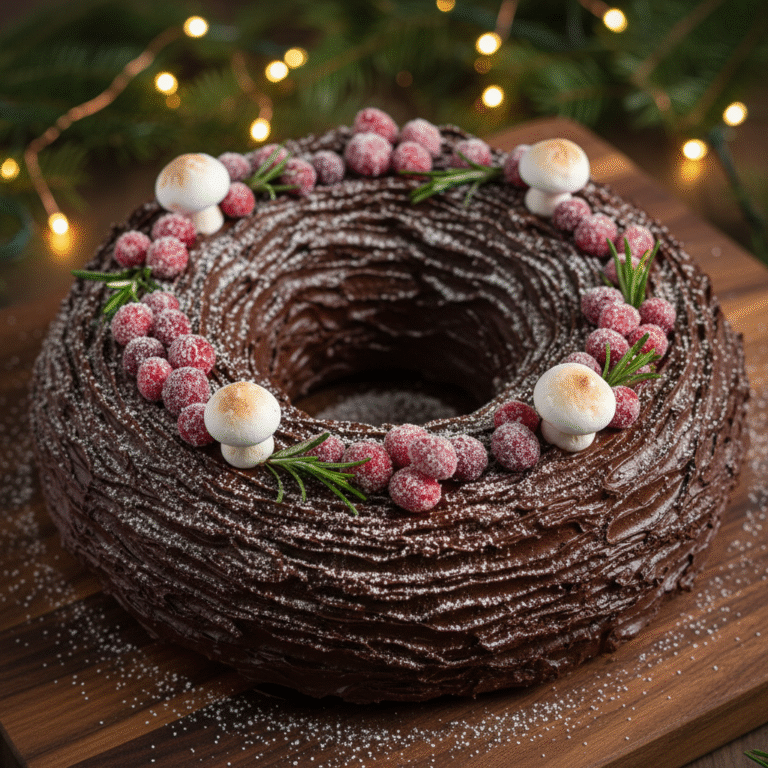
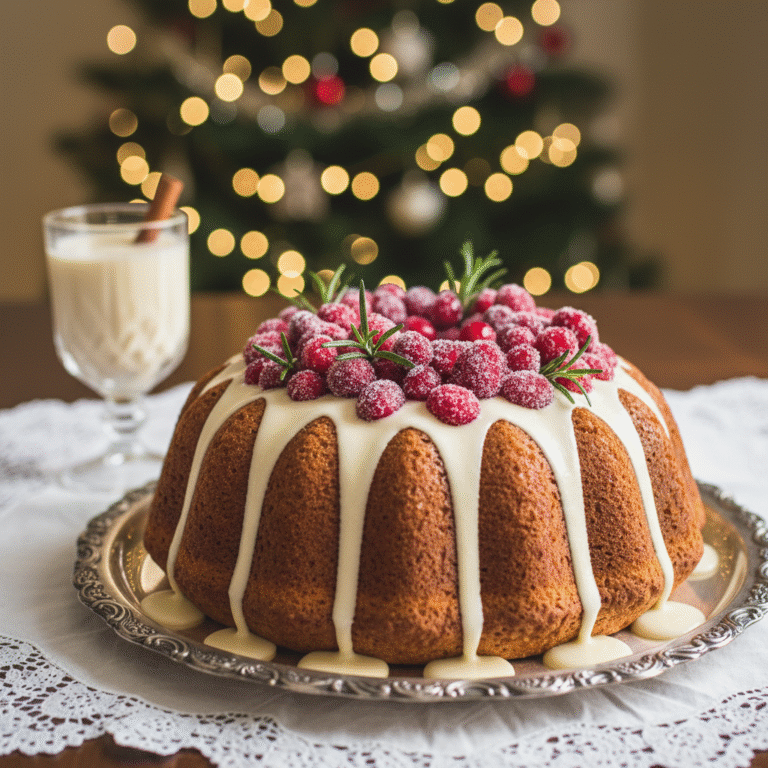
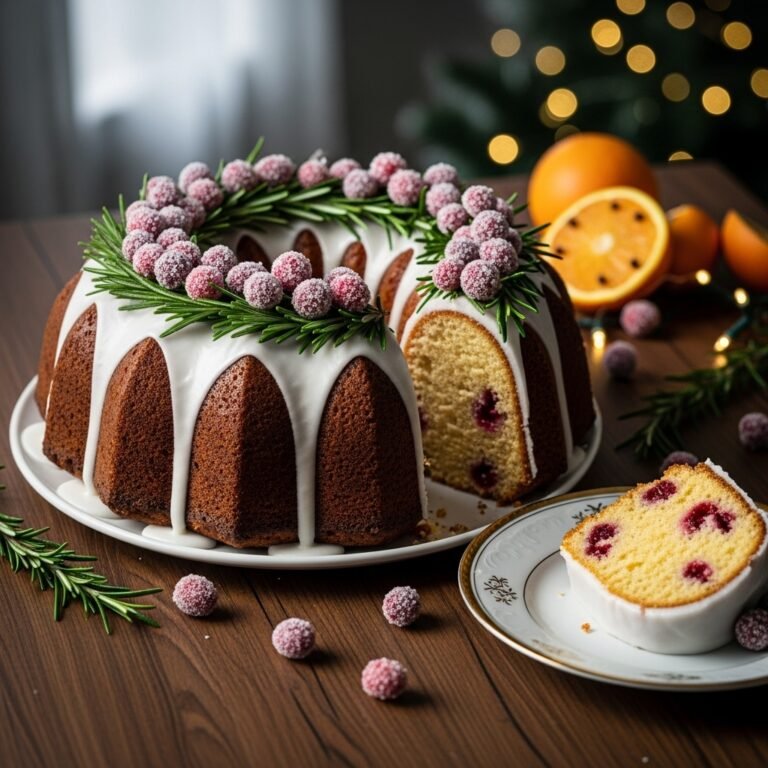
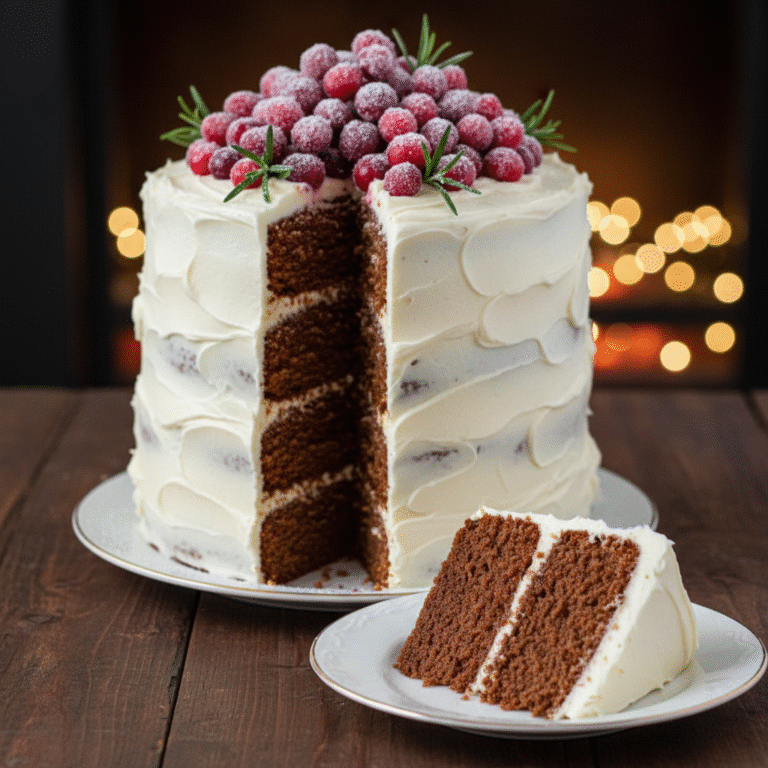
- ✓Sugared cranberries and rosemary for garnish
Instructions
- Preheat your oven to 350°F (175°C). Grease three 8-inch round cake pans with butter or cooking spray, line the bottoms with parchment paper, and grease the parchment. Dust with flour and tap out excess.
- In a medium bowl, whisk together the flour, ginger, cinnamon, cloves, nutmeg, baking soda, baking powder, and salt until well combined. Set aside.
- In the bowl of a stand mixer fitted with the paddle attachment, beat the softened butter, vegetable oil, granulated sugar, and brown sugar on medium-high speed until light and fluffy, about 3-4 minutes.
- Add the molasses and mix until fully incorporated. Scrape down the sides of the bowl.
- Add the eggs one at a time, beating well after each addition. Scrape down the bowl again to ensure the bottom is mixed.
- Reduce the mixer speed to low. Add the flour mixture in three parts, alternating with the buttermilk in two parts, starting and ending with the flour. Mix only until just combined; do not overmix.
- With the mixer on the lowest speed, carefully pour in the hot water (or hot coffee). The batter will be very thin and liquid; this is normal. Mix gently until combined.
- Divide the batter evenly among the three prepared cake pans. Use a kitchen scale for precision if desired.
- Bake for 30-35 minutes, or until a toothpick inserted into the center comes out clean or with a few moist crumbs. Avoid opening the oven door too early to prevent sinking.
- Remove cakes from the oven and let them cool in the pans for 20 minutes. Then, carefully turn them out onto a wire rack to cool completely before frosting.
- To make the frosting: In a clean mixing bowl, beat the softened butter and cream cheese together on medium-high speed until completely smooth and creamy, about 3 minutes.
- Gradually add the powdered sugar, one cup at a time, mixing on low speed until incorporated. Add the vanilla extract and a pinch of salt.
- Increase speed to medium-high and whip the frosting for 2-3 minutes until fluffy and white.
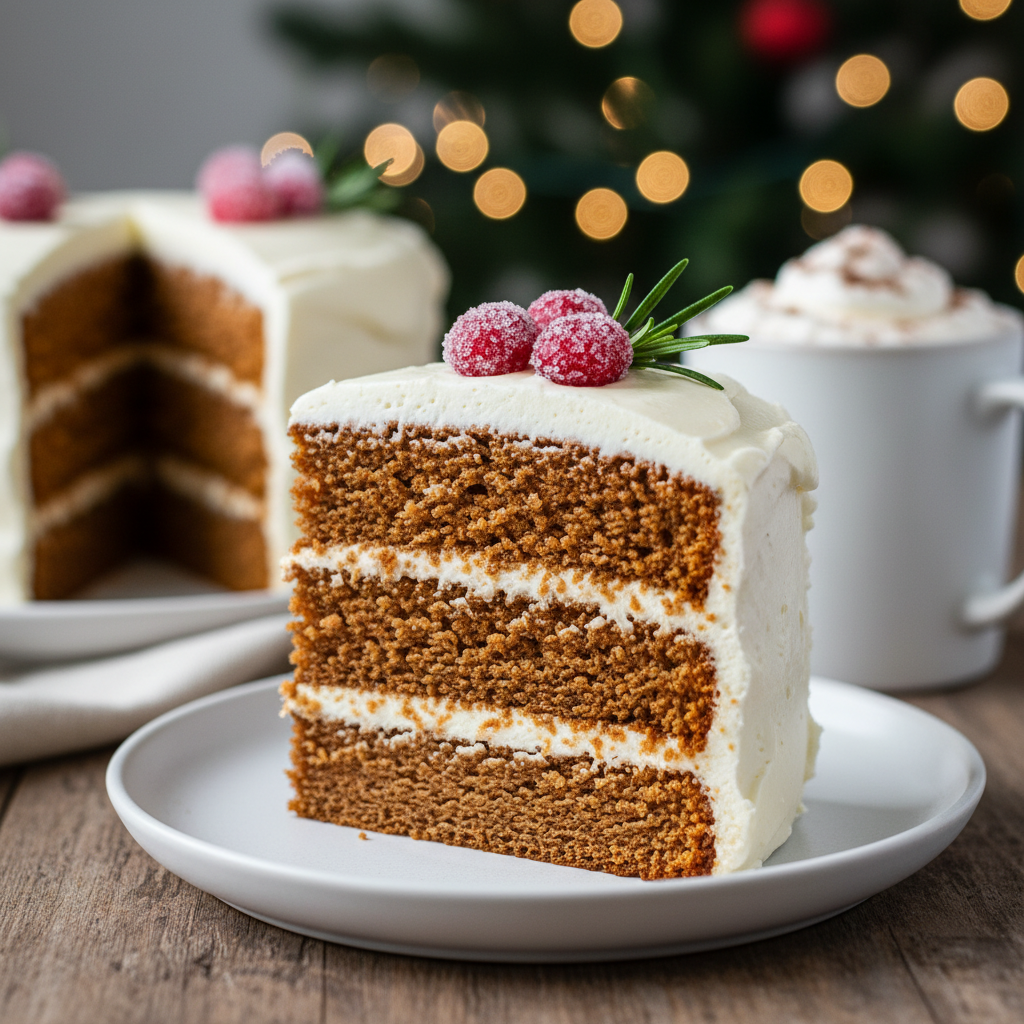
- To assemble: Place one cake layer on a serving plate or cake stand. Spread an even layer of frosting over the top. Repeat with the second and third layers.
- Apply a thin crumb coat of frosting over the entire cake and refrigerate for 20 minutes. Then, apply the remaining frosting generously over the top and sides.
- Garnish with sugared cranberries and fresh rosemary sprigs for a festive look. Serve at room temperature.
Expert Cooking Tips
- ✓Ensure all dairy ingredients (eggs, buttermilk, butter, cream cheese) are at room temperature to prevent the batter from curdling.
- ✓Do not use blackstrap molasses; it is too bitter and will alter the chemical balance of the baking soda.
- ✓Weigh your flour using a kitchen scale (approx. 120g per cup) to avoid a dense, dry cake.
- ✓If you don’t have buttermilk, make a substitute by adding 1 tablespoon of vinegar or lemon juice to 1 cup of milk and letting it sit for 5 minutes.
- ✓Cool the cakes completely before frosting; even a slightly warm cake will melt the cream cheese frosting instantly.
- ✓Use a serrated knife to level the tops of the cakes if they domed significantly during baking.
- ✓For cleaner slices, chill the frosted cake for 30 minutes before cutting and wipe the knife between cuts.
Substitutions and Variations
This recipe is quite adaptable if you have dietary restrictions or missing ingredients. For a Gluten-Free version, substitute the all-purpose flour with a high-quality 1:1 gluten-free baking flour blend that contains xanthan gum; the texture will remain surprisingly similar due to the moisture in the recipe. If you are avoiding dairy, you can use a plant-based butter stick and a dairy-free yogurt or almond milk mixed with vinegar in place of the buttermilk. For the frosting, use high-quality vegan cream cheese and butter alternatives, though you may need to add more powdered sugar for stability. If you do not have molasses, dark corn syrup or maple syrup can be used, but the flavor will lack that signature depth and the color will be much lighter; we highly recommend sticking to molasses for the authentic gingerbread experience. You can also swap the vegetable oil for melted coconut oil or light olive oil, though this may impart a subtle flavor change. Lastly, if you prefer a less sweet frosting, you can swap the cream cheese buttercream for a Swiss Meringue Buttercream infused with cinnamon.
Common Mistakes to Avoid
The most common mistake with gingerbread cake is over-baking. Because the batter is dark, it is hard to tell by color when it is done. Rely strictly on the toothpick test and the spring-back test (lightly press the center; it should spring back). Another frequent error is using cold ingredients. When cold eggs or buttermilk hit creamed butter, the fat solidifies, breaking the emulsion and leading to a greasy or dense cake. Using the wrong type of molasses is also a recipe killer; blackstrap molasses is extremely bitter and has a different acidity level than standard unsulphured molasses, which can result in a flat, metallic-tasting cake. Finally, rushing the cooling process is fatal for layer cakes. If you try to frost a cake that is even slightly warm, the butter in the frosting will separate, and the layers will slide off one another. Patience is a key ingredient here.
Serving Suggestions
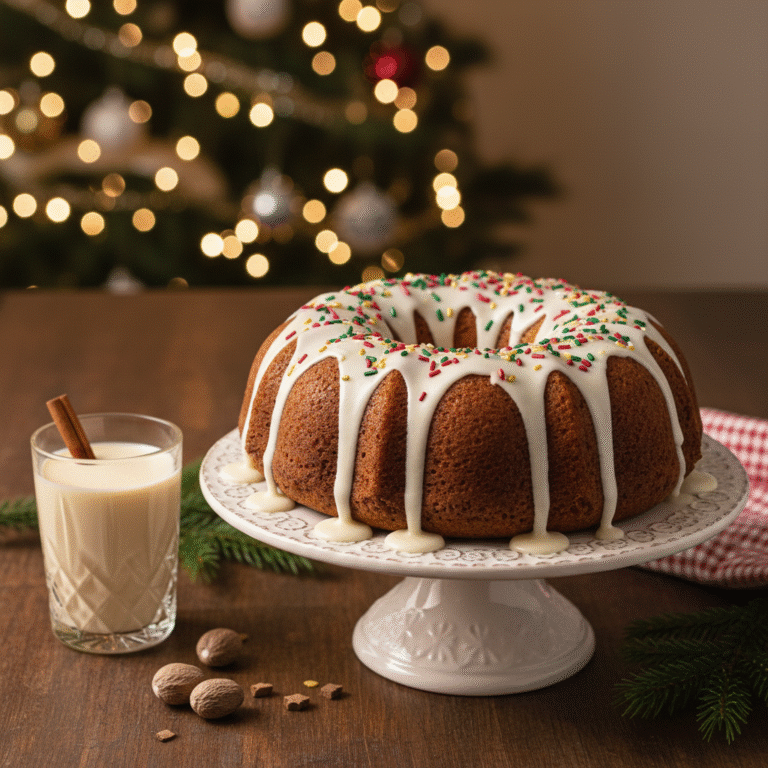
This festive cake is a showstopper on its own, but presentation is everything for the holidays. Serve slices on white ceramic plates to contrast with the dark cake and creamy frosting. It pairs exceptionally well with a hot cup of dark roast coffee, which complements the spices, or a glass of eggnog for the ultimate holiday indulgence. For an elegant touch, garnish the plate with a few extra sugared cranberries or a dusting of cinnamon. If you want to add a textural element, serve it alongside a scoop of vanilla bean ice cream or a dollop of lightly sweetened whipped cream. For an adult twist, a glass of tawny port or a spiced rum cocktail makes for a wonderful companion to the deep molasses flavors.
Storage and Reheating Tips
Because of the cream cheese frosting, this cake must be stored in the refrigerator. However, cold cake can taste dry and the butter hardens, so it is crucial to let the cake (or slices) sit at room temperature for at least 30 to 60 minutes before serving to restore the soft texture. The cake can be stored in an airtight container in the fridge for up to 5 days. If you want to make it ahead, the unfrosted cake layers can be wrapped tightly in plastic wrap and then foil, and frozen for up to 3 months. Thaw the layers in the fridge overnight before frosting. You can also freeze individual slices of the finished cake; just place them on a baking sheet to freeze the frosting solid, then wrap tightly in plastic wrap.
Nutrition Facts (Estimated)
| Serving Size | 1 slice |
| Calories | 680 |
| Fat | 34g |
| Saturated Fat | 18g |
| Unsaturated Fat | 14g |
| Trans Fat | 0g |
| Cholesterol | 95mg |
| Sodium | 340mg |
| Carbohydrates | 88g |
| Fiber | 2g |
| Sugar | 58g |
| Protein | 6g |
Frequently Asked Questions
Can I bake this in a 9×13 pan instead of layers?
Yes, absolutely. Bake in a greased 9×13 inch pan for approximately 40-50 minutes. The baking time will increase because the batter is deeper. Check with a toothpick starting at 40 minutes.
Why did my cake sink in the middle?
Sinking usually happens if the oven door was opened too early, causing a temperature drop before the structure set. It can also be caused by over-mixing the batter or using expired baking soda.
Can I use fresh ginger instead of ground?
You can add 1 tablespoon of freshly grated ginger for an extra kick, but do not omit the ground ginger. Ground ginger has a more concentrated, spicy heat that is essential for the classic gingerbread flavor profile.
Is mild molasses okay to use?
Yes, mild or ‘original’ unsulphured molasses works perfectly. Just avoid ‘blackstrap’ molasses.
The batter seems too runny, did I do something wrong?
Not at all! This batter is intentionally very thin after adding the hot liquid. This ensures a moist cake. Do not add extra flour.
Can I make the frosting less sweet?
Cream cheese frosting relies on powdered sugar for structure. To make it taste less sweet, increase the amount of salt slightly or add a teaspoon of lemon juice to cut through the sugar.
How do I make sugared cranberries for garnish?
Simmer sugar and water to make a syrup, coat fresh cranberries in the syrup, let them dry on a rack for an hour until tacky, then roll them in granulated sugar.
Can I use a different frosting?
Yes, a vanilla bean buttercream, cinnamon buttercream, or even a white chocolate ganache would work well, though cream cheese is the traditional pairing.
Do I have to use coffee?
No, you can use hot water. However, the coffee enhances the depth of the molasses and spices without making the cake taste like coffee.
Conclusion
This Festive Gingerbread Layer Cake with Cream Cheese Frosting is more than just a recipe; it is a heartfelt invitation to slow down and savor the season. The deep, warming spices and the rich, molasses-laden crumb offer a comfort that few other desserts can match. It is the kind of cake that looks impressive on the sideboard but feels like a warm hug when you eat it. Whether you are baking for a crowd or just for your immediate family, the effort you put into this cake will be rewarded with smiles and silence as everyone enjoys their first bite. We hope this recipe becomes a cherished part of your holiday culinary repertoire. Happy baking, and may your holidays be filled with sweetness and spice!