Elegant Vanilla Raspberry Wedding Cake With Fresh Flowers
Elegant Vanilla Raspberry Wedding Cake With Fresh Flowers Recipe
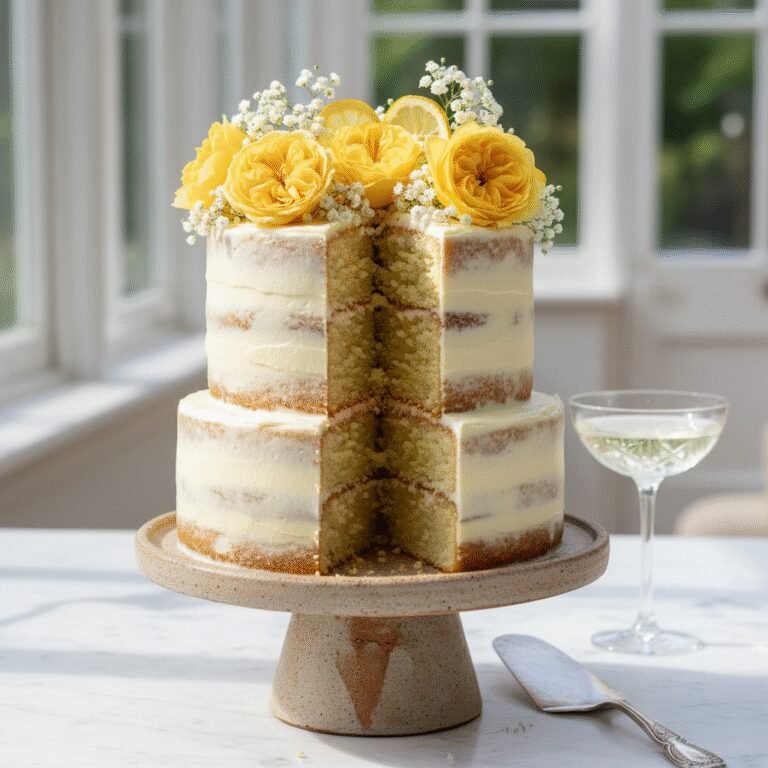
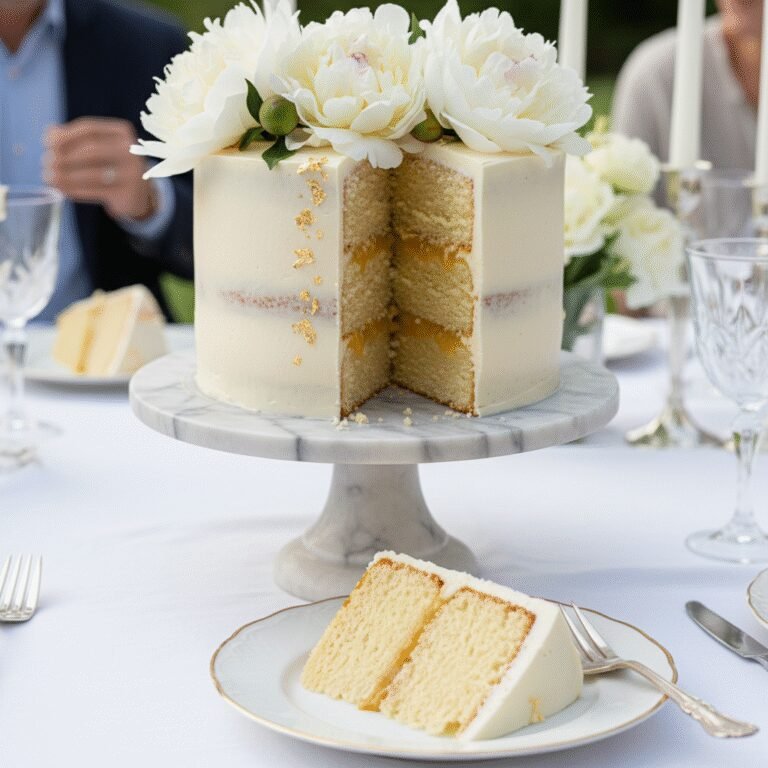
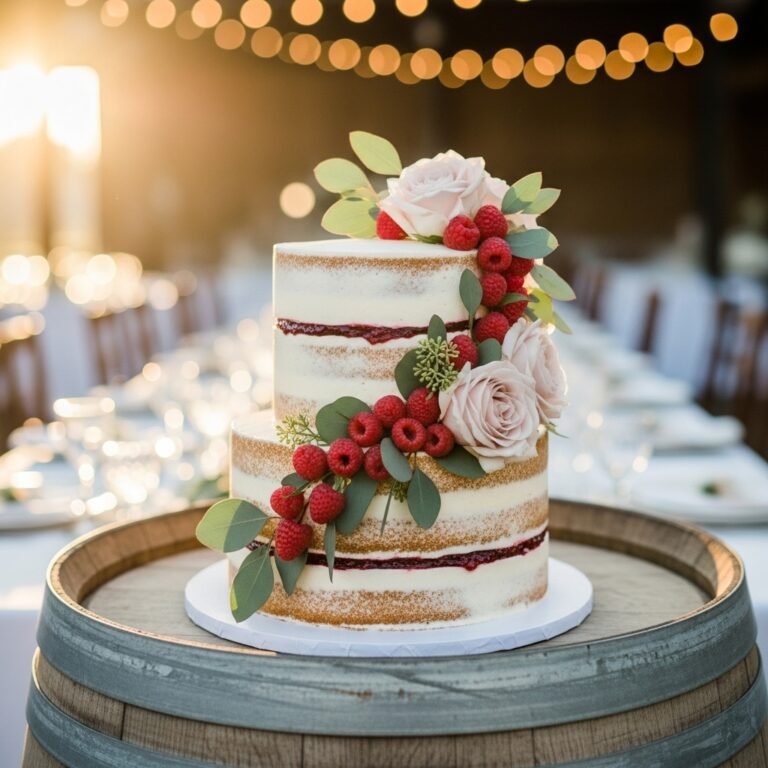
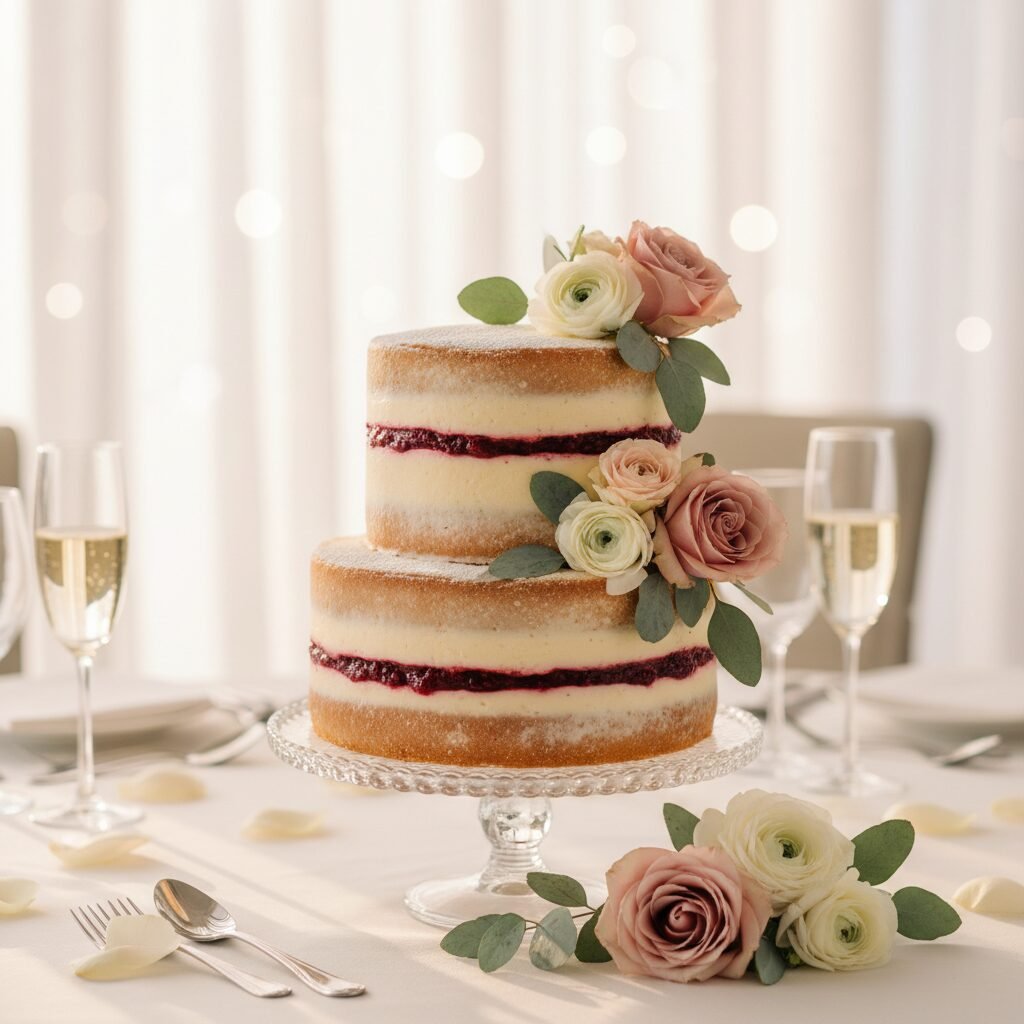
This breathtaking two-tier vanilla bean cake features a tart raspberry coulis filling and silky Swiss meringue buttercream. Adorned with fresh, organic blooms, it is the perfect centerpiece for intimate weddings, bridal showers, or sophisticated celebrations.
2 hours
45 minutes
5 hours
25-30 servings (6-inch and 8-inch tiers)
Dessert
Baking
American / French Inspired
Vegetarian
There is something undeniably magical about a wedding cake. It is not merely a dessert; it is a centerpiece, a tradition, and a symbol of celebration and new beginnings. In the world of bespoke baking, few combinations rival the timeless elegance of vanilla and raspberry. This Elegant Vanilla Raspberry Wedding Cake is designed for the modern baker who craves a professional-grade result right from their home kitchen. Whether you are a dedicated DIY bride, a loving family member baking for a special couple, or simply a connoisseur of fine desserts, this recipe bridges the gap between home baking and patisserie perfection.
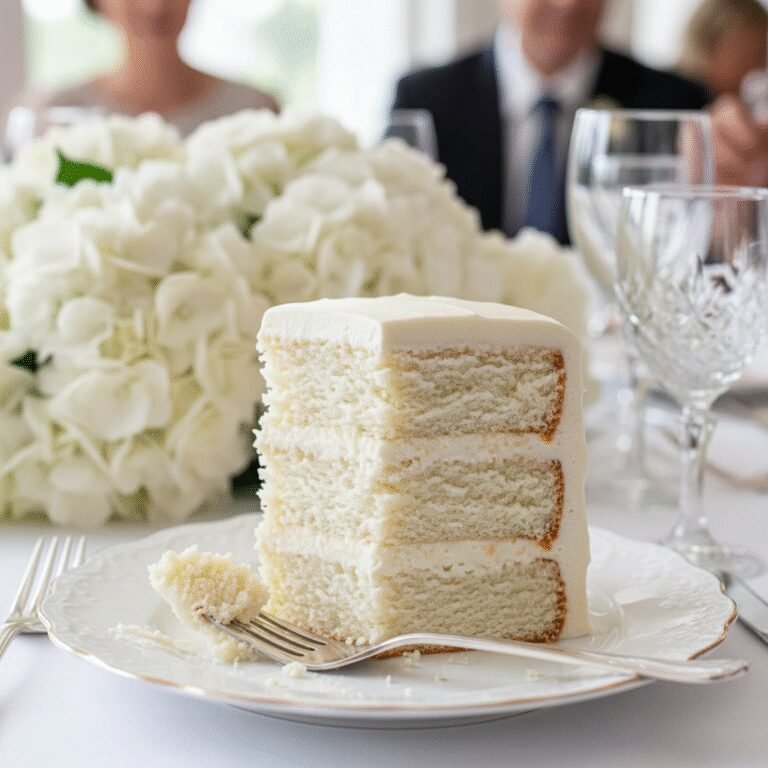
The foundation of this masterpiece is a tender, close-crumbed vanilla bean white cake. Unlike yellow cakes that rely on egg yolks, this white cake uses only egg whites to achieve a pale, pristine interior that looks stunning when sliced. The flavor is pure, aromatic vanilla, amplified by the use of vanilla bean paste which flecks the crumb with tiny black seeds. To cut through the richness of the cake and buttercream, we introduce a vibrant, tart raspberry filling. This isn’t just jam from a jar; it is a homemade reduction of fresh raspberries and lemon juice, thickened just enough to hold its shape between the layers without soaking into the cake too quickly.
Finally, the exterior is coated in a luxurious Swiss Meringue Buttercream. Less sweet and far smoother than its American counterpart, this buttercream provides a stable canvas for the pièce de résistance: fresh flowers. The trend of using fresh florals on cakes brings an organic, romantic aesthetic that sugar flowers simply cannot replicate. This guide will walk you through not just the baking, but the structural assembly and safe floral decoration to ensure your creation is as sturdy as it is beautiful.
History & Origins
The tradition of the wedding cake is steeped in centuries of history, evolving from humble grain ceremonies to the elaborate architectural marvels we see today. The custom dates back to the Roman Empire, where a cake made of wheat or barley was broken over the bride’s head to symbolize good fortune and fertility. The guests would then scramble for the crumbs to share in the luck. By the Medieval period in England, this evolved into a tradition where guests brought small buns or cakes and piled them high; if the bride and groom could kiss over the top of the stack without knocking it over, they were guaranteed a prosperous life together. This practice eventually inspired the French croquembouche.
The modern tiered wedding cake as we know it began to take shape in the 19th century, largely popularized by Queen Victoria’s wedding in 1840. Her cake was covered in a hard, pure white icing—which became known as ‘royal icing’—symbolizing purity and wealth, as refined white sugar was an expensive luxury at the time. It was also during the Victorian era that the language of flowers, or floriography, became fashionable. Specific blooms were chosen for bouquets and decorations to convey hidden messages of love and fidelity.
While heavy fruitcakes were the standard for centuries due to their preservation qualities, the shift toward lighter sponges, like the vanilla cake in this recipe, began in the 20th century as baking technology and ingredient availability improved. The inclusion of fresh fruit fillings, like raspberry, became a way to introduce freshness and seasonality. Today, the ‘naked’ or semi-naked cake trend adorned with fresh flowers is a nod to a more rustic, organic approach to weddings, moving away from stiff fondant and towards natural beauty.
Why This Recipe Works
This recipe succeeds where many others fail because it prioritizes structural integrity without sacrificing texture. Wedding cakes, even small two-tier ones, require a different chemical balance than a standard sheet cake. We utilize the ‘reverse creaming’ method (mixing fat into dry ingredients before adding liquids) for the cake layers. This coats the flour proteins in butter, inhibiting gluten formation. The result is a velvety, plush crumb that is sturdy enough to be stacked but melts in your mouth.
Furthermore, the choice of Swiss Meringue Buttercream (SMBC) is critical. American buttercream, made of butter and powdered sugar, can be gritty and overly sweet, often crusting over in a way that looks less refined. SMBC is an emulsion of egg white meringue and butter. It is stable at room temperature (essential for display), pipes beautifully, and has a silky mouthfeel that feels high-end. Its lower sugar content perfectly balances the sweet cake and the tart raspberry filling.
Regarding the filling, we use a raspberry reduction rather than fresh berries or simple jam. Fresh berries release water that can make the cake soggy and unstable, leading to sliding layers. Jam can be too slippery. By cooking down raspberries with cornstarch and sugar, we create a ‘dam-proof’ filling that packs an intense punch of flavor and stays exactly where you put it. The combination of these technical elements ensures a professional finish.
Why You’ll Love This Recipe
- ✓Uses the reverse creaming method for a tender yet sturdy crumb.
- ✓Swiss Meringue Buttercream offers superior stability and a silky texture.
- ✓Homemade raspberry reduction prevents soggy layers.
- ✓Step-by-step assembly guide ensures a level, straight tiered cake.
- ✓Includes safety tips for decorating with organic fresh flowers.
Equipment You’ll Need
- ✓Stand mixer with paddle and whisk attachments
- ✓Two 8-inch round cake pans
- ✓Two 6-inch round cake pans
- ✓Digital kitchen scale
- ✓Cake turntable
- ✓Offset spatula
- ✓Bench scraper
- ✓Piping bags
- ✓Cardboard cake rounds (6-inch and 8-inch)
- ✓Bubble tea straws or wooden dowels for support
- ✓Floral tape and safety seal/wax for flowers
Ingredients
- ✓3 3/4 cups Cake flour, sifted
- ✓2 cups Granulated sugar
- ✓1 tbsp Baking powder
- ✓1 tsp Salt
- ✓1 cup Unsalted butter, room temperature, cubed
- ✓1 cup Whole milk, room temperature
- ✓1/2 cup Vegetable oil
- ✓1 tbsp Vanilla bean paste
- ✓7 Large egg whites, room temperature
- ✓12 oz Fresh raspberries (for filling)
- ✓1/4 cup Sugar (for filling)
- ✓1 tbsp Cornstarch (mixed with 1 tbsp water)
- ✓1 tsp Lemon juice
- ✓1 1/2 cups Egg whites (approx 10-12 eggs) for buttercream
- ✓3 cups Granulated sugar for buttercream
- ✓3 cups Unsalted butter, cubed, cool room temperature (for buttercream)
- ✓1 tbsp Vanilla extract
- ✓Pinch of salt
- ✓Assorted organic, pesticide-free fresh flowers (Roses, Ranunculus, Eucalyptus)
Instructions
- 1. Prepare the Cake Batter: Preheat oven to 335°F (168°C). Grease and line two 8-inch and two 6-inch cake pans with parchment paper. In the bowl of a stand mixer fitted with the paddle attachment, mix the flour, 2 cups sugar, baking powder, and salt on low speed until combined.
- 2. Reverse Creaming: Add the cubed butter one piece at a time while the mixer is running on low. Continue mixing until the mixture resembles coarse sand and no large chunks of butter remain.
- 3. Add Liquids: In a separate jug, whisk together the milk, oil, vanilla bean paste, and egg whites. With the mixer on low, slowly pour in half of the liquid mixture. Increase speed to medium-high and beat for 2 minutes to build structure. Scrape down the bowl. Add the remaining liquid in two batches, mixing just until combined.
- 4. Bake: Distribute batter between the pans (fill about 2/3 full). Bake for 35-45 minutes, or until a toothpick inserted comes out clean. The 6-inch cakes may bake faster than the 8-inch ones. Cool in pans for 15 minutes, then turn out onto a wire rack to cool completely.
- 5. Make Raspberry Filling: In a saucepan, combine raspberries, 1/4 cup sugar, and lemon juice. Cook over medium heat until berries break down (approx 5-7 mins). Stir in the cornstarch slurry and cook for another 2 minutes until thickened. Strain through a sieve to remove seeds if desired, or leave rustic. Let cool completely.
- 6. Make Swiss Meringue Buttercream: Whisk egg whites and 3 cups sugar in a heatproof bowl over a pot of simmering water (double boiler). Whisk constantly until the mixture reaches 160°F (71°C) and sugar is dissolved. Transfer to stand mixer with whisk attachment. Whip on high speed until stiff peaks form and the bowl feels cool to the touch (approx 10-15 mins).
- 7. Finish Buttercream: Switch to paddle attachment. Add the cool butter cubes one by one, mixing on medium-low. Once all butter is added, increase speed to high and whip until smooth and creamy. Add vanilla and salt. Mix on low for 2 minutes to remove air bubbles.
- 8. Assembly – Dam and Fill: Level the tops of all cakes. Place an 8-inch layer on a cake board. Pipe a ring of buttercream around the edge (the dam). Fill the center with raspberry reduction. Top with the second 8-inch layer. Repeat this process for the 6-inch tier on a separate 6-inch board.
- 9. Crumb Coat: Apply a thin layer of buttercream to the outside of both tiers to trap crumbs. Chill in the fridge for 30 minutes until firm.
- 10. Final Coat: Apply a thick layer of buttercream to both tiers. Smooth with a bench scraper for a sharp finish. Chill again.
- 11. Stacking: Insert 4-5 dowels into the center of the 8-inch tier, cutting them flush with the top of the cake. Carefully place the 6-inch tier (on its board) on top of the dowelled bottom tier.
- 12. Decoration: Prepare flowers by wrapping stems in floral tape or dipping in food-safe wax. Arrange artistically on the cake. Keep cool until serving.
Expert Cooking Tips
- ✓Room Temperature Ingredients: Ensure butter, milk, and egg whites are at room temperature to prevent the batter from curdling.
- ✓Weigh Your Flour: For the most accurate results, use a digital scale. Too much flour leads to a dry cake.
- ✓Cooling the Meringue: Do not add butter to the meringue if it is still warm; the butter will melt and you will get soup. If this happens, chill the bowl for 20 minutes and rewhip.
- ✓Sturdy Dowels: Never stack a cake without dowels. The top tier will crush the bottom tier without support.
- ✓Floral Safety: Only use flowers grown organically without pesticides. Even if you don’t eat them, they touch the food. Wrap stems in floral tape or insert them into bubble tea straws before placing in the cake.
Substitutions and Variations
If you cannot find cake flour, you can make a substitute by removing 2 tablespoons of all-purpose flour from every cup and replacing it with cornstarch, sifting multiple times. For a gluten-free version, use a high-quality 1:1 gluten-free baking flour blend that includes xanthan gum. If you prefer a different fruit profile, strawberries or blackberries work excellently in place of raspberries for the filling; the method remains the same. For the buttercream, if you find Swiss Meringue too technical, you can use an Italian Meringue Buttercream (pouring hot sugar syrup into whites) or a high-quality American Buttercream, though the latter will be much sweeter. If you need a dairy-free cake, substitute the butter with high-fat vegan butter sticks and use almond or oat milk, though the structure may be slightly less robust.
Common Mistakes to Avoid
The most common mistake in cake baking is overmixing the batter after the flour is added. This develops too much gluten and results in a tough, rubbery cake rather than a tender one. Another frequent error is rushing the cooling process. If you try to frost a cake that is even slightly warm, the butter in the frosting will melt, causing the layers to slide and the decoration to fail. Regarding the buttercream, many people panic when the mixture looks curdled halfway through adding the butter. This is a normal part of the emulsion process; just keep whipping, and it will come together. Finally, neglecting to level the cakes leads to a leaning tower; always cut the domes off your cake layers for a flat stacking surface.
Serving Suggestions
Serve this cake at room temperature. While it needs to be stored in the fridge due to the buttercream and filling, it should be taken out at least 2-3 hours before serving. Cold butter cake feels dry and hard, but at room temperature, it is soft and moist. Slice the cake using a sharp chef’s knife dipped in hot water and wiped dry between cuts for clean, professional slices. Pair with a glass of dry champagne or a floral tea like Earl Grey to complement the vanilla and raspberry notes.
Storage and Reheating Tips
Leftover cake can be stored in an airtight container in the refrigerator for up to 4 days. The cut edges should be pressed with a piece of plastic wrap to prevent drying out. For longer storage, you can freeze individual slices wrapped tightly in plastic wrap and then foil for up to 3 months. If you are making the cake ahead of time for an event, the baked, cooled, and undedecorated cake layers can be wrapped in plastic and frozen for up to a month. Thaw them in the fridge overnight before assembling. The buttercream can also be made a week in advance and refrigerated; bring it to room temperature and re-whip before using.
Nutrition Facts (Estimated)
| Serving Size | 1 slice |
| Calories | 480 |
| Fat | 28g |
| Saturated Fat | 17g |
| Unsaturated Fat | 9g |
| Trans Fat | 0.5g |
| Cholesterol | 85mg |
| Sodium | 210mg |
| Carbohydrates | 58g |
| Fiber | 1g |
| Sugar | 35g |
| Protein | 5g |
Frequently Asked Questions
Can I make this cake ahead of time?
Yes. The cake layers can be baked and frozen up to a month in advance. The buttercream can be made a week ahead and refrigerated. Assemble the cake the day before the event.
What flowers are safe to put on a cake?
Safe options include Roses, Pansies, Violets, Hibiscus, Lavender, and Nasturtiums. Avoid toxic flowers like Hydrangeas, Lilies of the Valley, and Foxgloves. Always source from an organic grower.
Why did my buttercream curdle?
This usually happens if the butter was too cold or added too quickly. Keep whipping on high speed; friction usually brings it back. If not, warm the bowl slightly with a hair dryer while mixing.
Do I really need dowels for a two-tier cake?
Absolutely. Even a small 6-inch cake is heavy. Without dowels in the bottom tier to support the weight, the bottom cake will compress and bulge, potentially causing the structure to collapse.
Can I use frozen raspberries for the filling?
Yes, frozen raspberries work perfectly for the reduction since you are cooking them down anyway. You may need to cook it slightly longer to evaporate the extra water content.
How do I get the frosting so smooth?
Use a metal bench scraper and a turntable. Heat the metal scraper under hot water and dry it before the final pass; the heat slightly melts the outer layer of fat for a glass-like finish.
Can I cover this cake in fondant?
Yes, this cake is sturdy enough for fondant. Ensure the cake is chilled firm before applying fondant.
How do I transport a tiered cake?
Transport the cake in a sturdy box on a flat surface (like the trunk or floor of a car), not on a slanted seat. Keep the vehicle cool with air conditioning. For very tall cakes, it is safer to transport tiers separately and stack on site.
Conclusion
Creating your own wedding cake is a labor of love that yields a reward far sweeter than anything you can buy from a store. This Elegant Vanilla Raspberry Wedding Cake is a testament to the beauty of classic flavors and natural aesthetics. By following the reverse creaming method and mastering Swiss Meringue Buttercream, you elevate a simple dessert into a professional-tier showstopper. Whether you adorn it with a cascade of pink roses or a simple wreath of eucalyptus, the result will be a breathtaking centerpiece that tastes as incredible as it looks. We hope this recipe empowers you to bake with confidence and adds a touch of homemade luxury to your special celebration.