Royal Lemon Elderflower Wedding Cake With Naked Frosting
Elegant Lemon Elderflower Wedding Cake With Naked Frosting Style Recipe
Capture the romance of a royal wedding with this breathtaking Lemon Elderflower Cake. Featuring light-as-air lemon sponge layers soaked in floral elderflower syrup and coated in a rustic semi-naked Swiss meringue buttercream, it is the epitome of springtime elegance.
1 hour 30 minutes
45 minutes
3 hours
1 3-layer 8-inch cake (12-16 servings)
Dessert
Baking
British-American Fusion
Vegetarian
There are few desserts that command a room quite like a towering, beautifully decorated layer cake, and this Lemon Elderflower Wedding Cake with Naked Frosting is the absolute crown jewel of springtime baking. Inspired by the floral and citrus notes that took the world by storm during the 2018 Royal Wedding, this recipe balances the zesty brightness of fresh lemons with the intoxicating, musky sweetness of elderflower liqueur. It is a flavor combination that feels both timeless and refreshingly modern, moving away from heavy, rich chocolates or dense fruit cakes into something ethereal and light.
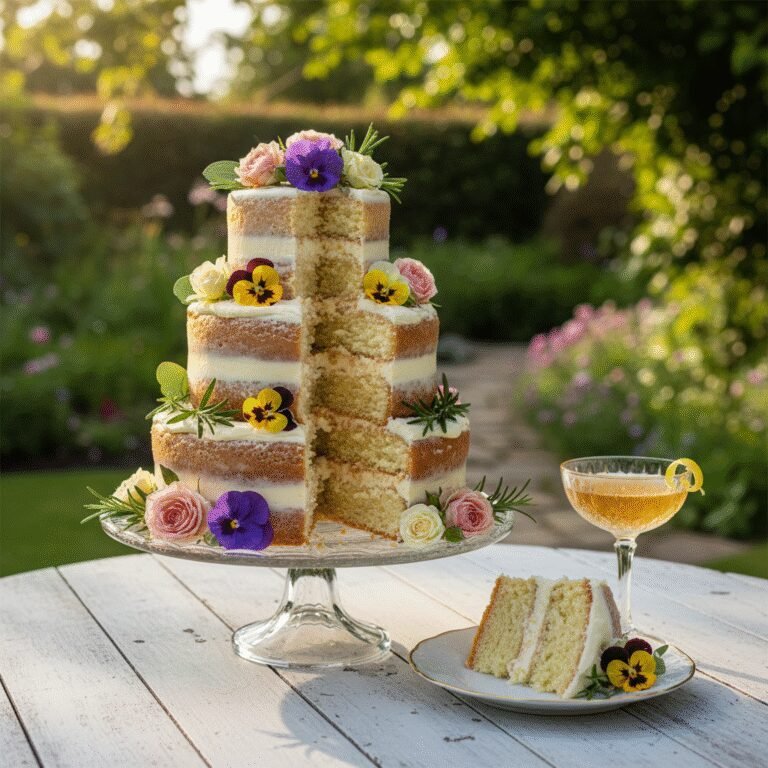
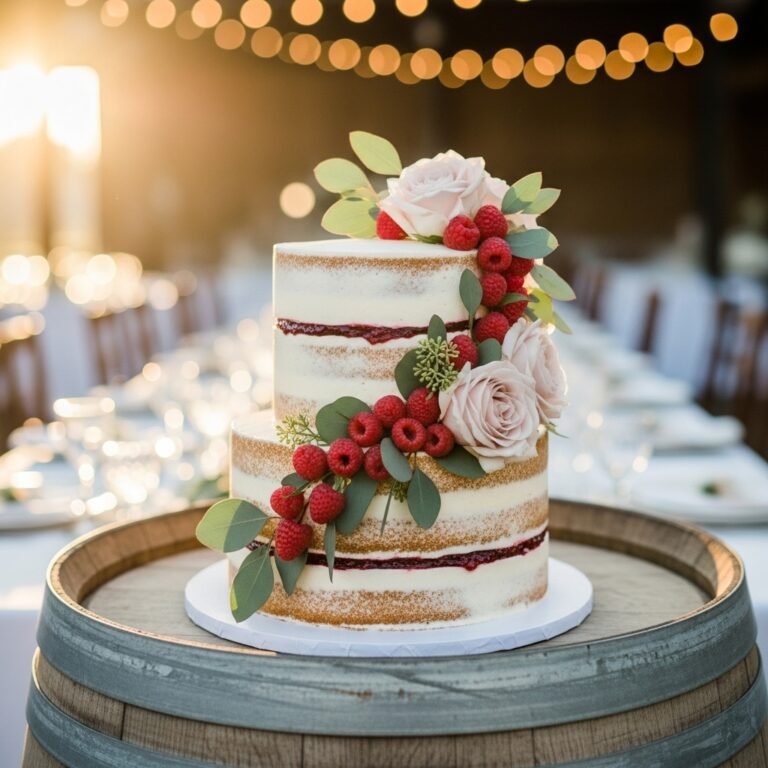
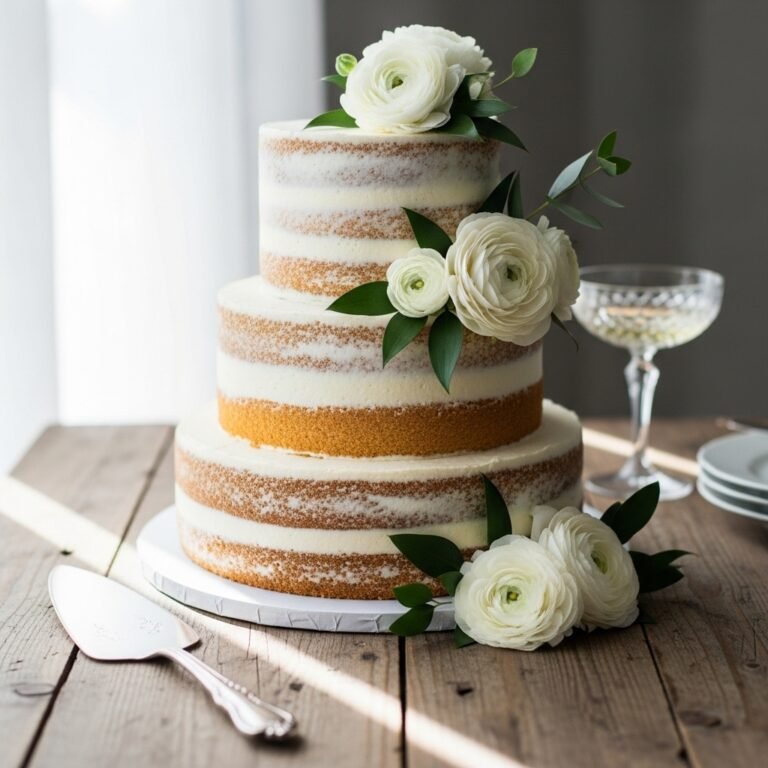
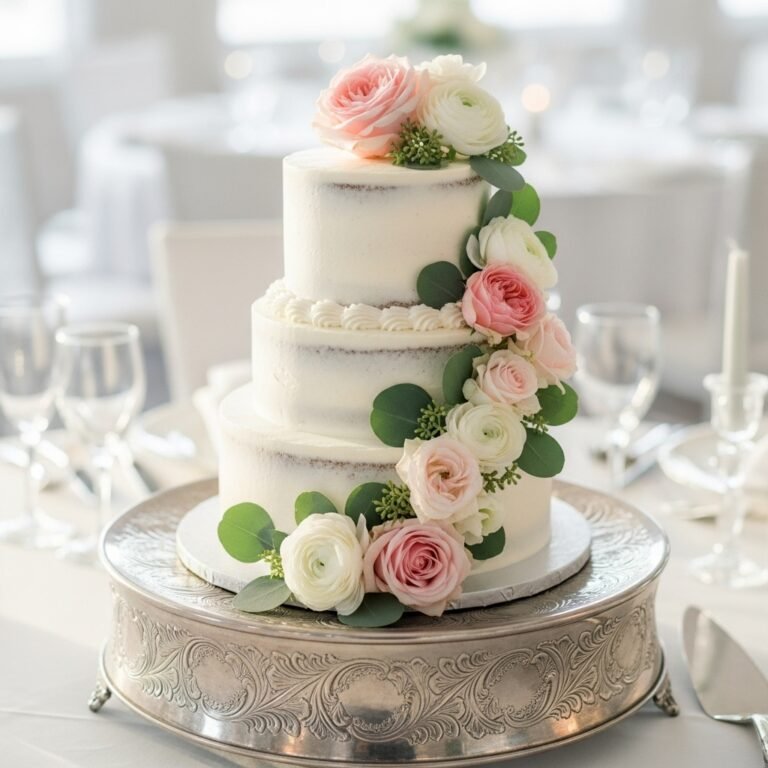
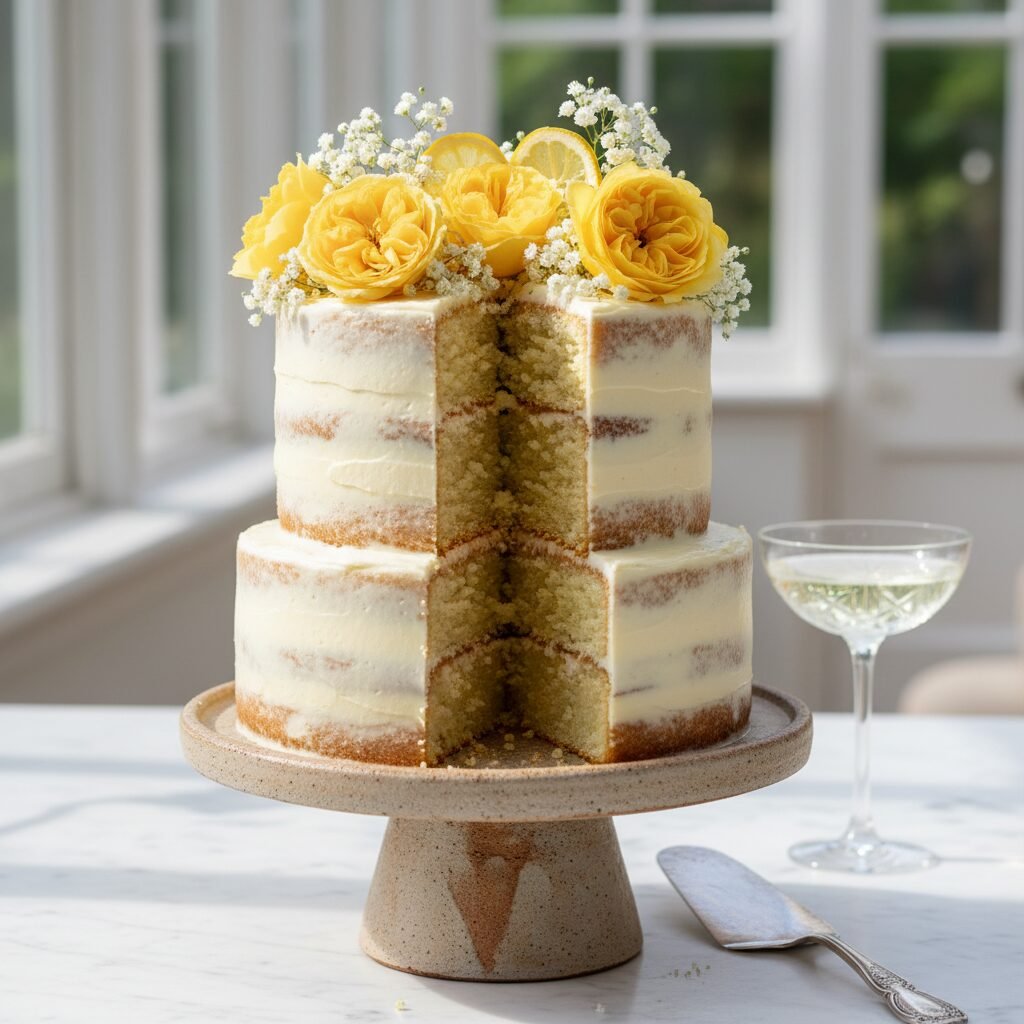
The beauty of this specific recipe lies not just in its flavor, but in its stunning presentation. The ‘naked’ or semi-naked frosting style has become a staple in modern wedding aesthetics for a reason. By thinly scraping the buttercream against the sides of the cake, you allow the golden cake layers to peek through, creating a rustic, organic look that is far more forgiving than smooth fondant yet undeniably chic. This technique highlights the texture of the crumb and invites the eater in, promising a moist and tender bite rather than a mouthful of sugar. Whether you are actually baking for a DIY wedding, hosting an elegant bridal shower, or simply want to challenge your baking skills with a showstopping centerpiece, this cake delivers on every level. The aroma alone—wafting scents of butter, lemon zest, and floral syrup—is enough to transform your kitchen into a patisserie.
History & Origins
The pairing of lemon and elderflower may seem like a contemporary trend, but its roots run deep in European culinary history, particularly within British traditions. Elderflower has long been a quintessential flavor of the English summer, with foragers gathering the white blossoms from hedgerows to create cordials, wines, and jellies for centuries. Lemon, a luxury import in historical Britain, was often paired with these floral notes to cut through the sweetness and add a refreshing zing. However, the combination was catapulted into global stardom in May 2018, when Prince Harry and Meghan Markle chose a lemon elderflower cake for their wedding reception, breaking with the centuries-old tradition of serving heavy, alcohol-soaked fruitcake.
This shift marked a significant moment in the history of wedding cakes, signaling a move towards lighter, seasonal flavors and more natural aesthetics. The choice of a ‘naked’ frosting style further emphasized this departure from rigid formality. Originating in the rustic chic movement of the early 2010s, naked cakes were initially a reaction against the pristine, often inedible layers of fondant that dominated the wedding industry. They represented a return to honest baking, where the ingredients and the cake itself were the stars. Today, this style represents a perfect marriage of rustic charm and elegant sophistication, making it a favorite for bohemians and royals alike.
Why This Recipe Works
This recipe succeeds because it meticulously balances moisture, structure, and flavor intensity—three variables that often fight against each other in layer cakes. First, the sponge uses a ‘reverse creaming’ method or a modified high-ratio method where we ensure the fat coats the flour particles before the liquid is added. This inhibits gluten formation, resulting in a velvety, tender crumb that is sturdy enough to stack but soft enough to melt in your mouth. We also utilize both butter and oil; butter provides the iconic flavor, while a touch of oil ensures the cake stays moist for days, which is crucial for wedding cakes made in advance.
The second secret weapon is the elderflower soak. Generously brushing the warm cake layers with an elderflower and lemon syrup does two things: it infuses the floral flavor deep into the crumb rather than just sitting on top, and it locks in moisture. Finally, the Swiss Meringue Buttercream is the only frosting stable enough for a naked cake that doesn’t crust over unpleasantly like American buttercream. It is silky, less sweet, and holds up beautifully at room temperature, providing a creamy counterpoint to the tart lemon sponge without overpowering the delicate elderflower notes.
Why You’ll Love This Recipe
- ✓Perfect balance of zesty lemon and floral elderflower notes.
- ✓Sturdy yet tender crumb ideal for stacking multiple tiers.
- ✓Swiss Meringue Buttercream offers a silky, non-gritty finish.
- ✓Rustic ‘naked’ style is forgiving for beginner decorators.
- ✓Stays moist for days thanks to the elderflower syrup soak.
- ✓Elegant presentation suitable for weddings and upscale events.
Equipment You’ll Need
- ✓3 x 8-inch round cake pans
- ✓Stand mixer with paddle and whisk attachments
- ✓Kitchen scale
- ✓Cake turntable
- ✓Offset spatula
- ✓Bench scraper
- ✓Pastry brush
- ✓Candy thermometer
- ✓Parchment paper
Ingredients
- ✓3 cups Cake flour, sifted
- ✓2 1/2 cups Granulated sugar, divided
- ✓1 tbsp Baking powder
- ✓1 tsp Salt
- ✓1 cup Unsalted butter, room temperature, cubed
- ✓1/2 cup Vegetable oil
- ✓1 cup Whole milk, room temperature
- ✓1/2 cup Fresh lemon juice
- ✓6 large Eggs, room temperature
- ✓2 tbsp Lemon zest (approx 3 lemons)
- ✓1/2 cup Elderflower cordial or St-Germain liqueur (for syrup)
- ✓1/4 cup Water (for syrup)
- ✓5 large Egg whites (for buttercream)
- ✓1 1/2 cups Granulated sugar (for buttercream)
- ✓2 cups Unsalted butter, softened (for buttercream)
- ✓2 tbsp Elderflower cordial (for buttercream flavor)
- ✓Fresh edible flowers (roses, pansies, or elderflowers) for garnish
Instructions
- Preheat your oven to 350°F (175°C). Grease three 8-inch cake pans with butter, line the bottoms with parchment paper, and flour the sides.
- In the bowl of a stand mixer fitted with the paddle attachment, combine the sifted cake flour, 2 cups of sugar, baking powder, salt, and lemon zest. Mix on low speed for 30 seconds to combine.
- Add the cubed room-temperature butter and vegetable oil to the dry ingredients. Mix on low speed until the mixture resembles coarse sand. This coating of the flour inhibits gluten development.
- In a separate jug, whisk together the milk, lemon juice, and eggs. With the mixer on low, slowly pour in half of the liquid mixture. Increase speed to medium-high and beat for 2 minutes to build structure.
- Reduce speed to low and add the remaining liquid mixture in two batches, scraping down the sides of the bowl as needed. Do not overmix once the final liquid is added.
- Divide the batter evenly among the three prepared pans. Bake for 30-35 minutes, or until a toothpick inserted into the center comes out clean or with a few moist crumbs.
- While the cakes bake, make the syrup. Combine 1/4 cup water and 1/4 cup of the remaining sugar in a small saucepan. Heat until sugar dissolves. Remove from heat and stir in 1/2 cup Elderflower cordial. Set aside.
- Remove cakes from the oven and let them cool in the pans for 10 minutes. Invert them onto a wire rack. While still warm, brush the tops generously with the elderflower syrup.
- For the Swiss Meringue Buttercream: Whisk egg whites and 1 1/2 cups sugar in a heatproof bowl over a pot of simmering water (double boiler). Whisk constantly until the mixture reaches 160°F (71°C) and sugar is completely dissolved.
- Transfer the hot egg white mixture to the stand mixer with the whisk attachment. Whip on high speed until stiff, glossy peaks form and the bowl feels cool to the touch (about 10-15 minutes).
- Switch to the paddle attachment. With the mixer on low, add the softened butter one tablespoon at a time. Once all butter is added, increase speed and whip until smooth and creamy. Add 2 tbsp elderflower cordial and mix until combined.
- To assemble: Place one cake layer on a cake board or turntable. Spread a layer of buttercream on top. Repeat with the second and third layers.
- To create the naked look: Coat the entire outside of the cake with a thin layer of buttercream. Use a bench scraper to smooth the sides, pressing firmly enough to remove excess frosting so the cake layers show through.
- Chill the cake for 20 minutes to set the frosting. Garnish with fresh edible flowers and lemon slices before serving.
Expert Cooking Tips
- ✓Ensure all ingredients, especially butter, eggs, and milk, are at true room temperature to prevent the batter from separating.
- ✓When making the buttercream, if the mixture looks curdled after adding butter, keep whipping! It will come together eventually.
- ✓If the buttercream becomes too runny, chill the bowl for 15 minutes and then whip again.
- ✓Use a kitchen scale to divide the batter evenly between pans for perfectly equal layers.
- ✓Wrap the warm cake layers in plastic wrap and freeze them for an hour before assembling; this makes them easier to handle and frost.
- ✓Rub the lemon zest into the sugar with your fingertips before mixing to release the essential oils for a stronger lemon flavor.
- ✓Wash and dry fresh flowers thoroughly, and wrap the stems in floral tape before inserting them into the cake for food safety.
Substitutions and Variations
If you cannot find cake flour, you can make a substitute by measuring 1 cup of all-purpose flour, removing 2 tablespoons, and replacing them with 2 tablespoons of cornstarch. Sift this mixture at least twice. For the elderflower component, St-Germain liqueur offers a boozy, sophisticated kick, but a high-quality non-alcoholic elderflower cordial (like Belvoir Fruit Farms) works perfectly for a family-friendly version. If you prefer a different citrus profile, oranges or grapefruits can replace the lemons, though the classic tartness of lemon pairs best with elderflower. For the frosting, if Swiss Meringue is too intimidating, an American Buttercream can be used, though it will be sweeter and crust over, making the ‘naked’ scrape slightly more difficult to achieve smoothly. You can also substitute the vegetable oil with melted coconut oil, but ensure the milk and eggs are room temperature so the oil doesn’t solidify in the batter.
Common Mistakes to Avoid
The most common mistake with this cake is overmixing the batter after the liquids are added, which leads to a dense, rubbery texture rather than a tender crumb. Stop mixing as soon as the ingredients are combined. Another frequent issue arises with Swiss Meringue Buttercream: adding the butter while the meringue is still warm. This will melt the butter and result in a soupy mess. Be patient and ensure the meringue bowl is cool to the touch. When assembling the naked cake, many people apply too much pressure with the bench scraper and tear the cake crumb. Apply the frosting generously first, then gently scrape it back to reveal the layers. Finally, do not skip the syrup soak; naked cakes are exposed to air more than fully frosted cakes, so the syrup is essential for keeping the edges moist.
Serving Suggestions
This cake is a centerpiece that deserves a grand presentation. Serve it on a pedestal cake stand to give it height and drama. For a wedding or formal event, accompany each slice with a glass of chilled champagne or an elderflower spritz to echo the flavor profile of the cake. A side of macerated strawberries or raspberries adds a lovely color contrast and a fresh berry tartness that complements the floral notes. If serving at a rustic outdoor gathering, simply garnish the plate with a sprig of fresh mint and a dusting of powdered sugar. For a dessert table, this cake pairs beautifully with lemon macarons and mini fruit tarts.
Storage and Reheating Tips
Because of the Swiss Meringue Buttercream, this cake can sit out at cool room temperature for up to 2 days, which is ideal for event display. However, if the weather is hot, it must be refrigerated. Store the cake in a cake keeper or cover the cut section with plastic wrap to prevent drying out. It will keep in the refrigerator for up to 5 days; just be sure to let it come to room temperature before serving, as the buttercream will be hard when cold. For long-term storage, the baked cake layers (unfrosted) can be wrapped tightly in plastic wrap and foil and frozen for up to 3 months. You can also freeze individual slices of the finished cake in airtight containers for a quick treat later.
Nutrition Facts (Estimated)
| Serving Size | 1 slice |
| Calories | 650 |
| Fat | 35g |
| Saturated Fat | 20g |
| Unsaturated Fat | 12g |
| Trans Fat | 0.5g |
| Cholesterol | 110mg |
| Sodium | 320mg |
| Carbohydrates | 78g |
| Fiber | 1g |
| Sugar | 45g |
| Protein | 6g |
Frequently Asked Questions
Can I make this cake ahead of time for a wedding?
Yes, absolutely. You can bake the layers up to 3 days in advance, wrap them tightly, and store them in the fridge (or freeze for longer). You can also make the buttercream a week ahead and refrigerate it; just let it come to room temperature and rewhip it before using. Assemble the cake the day before the event.
What if I can’t find elderflower cordial?
You can usually find elderflower cordial in the international aisle of well-stocked grocery stores, at IKEA, or online. If you absolutely cannot find it, you can make a simple lemon syrup instead, or use a floral honey syrup as a substitute.
Is the alcohol in the St-Germain cooked off?
If you use St-Germain in the syrup, the alcohol is not cooked off unless you boil the syrup for a significant amount of time. For a kid-friendly or alcohol-free version, use a non-alcoholic elderflower cordial instead of the liqueur.
Why did my buttercream curdle?
This usually happens if the butter was too cold or the meringue was too warm. Keep whipping on high speed! It almost always comes back together after 5-10 minutes of whipping. If it’s soupy, chill it for 15 minutes first.
Can I use store-bought lemon juice?
It is highly recommended to use fresh lemon juice for this recipe. Bottled lemon juice often has preservatives that alter the flavor and lacks the bright, zesty punch that fresh lemons provide.
How do I get the ‘naked’ look without tearing the cake?
The key is to chill your cake layers so they are firm. Apply a thick layer of frosting first, then use a bench scraper held at a 45-degree angle to gently scrape off the excess. Clean the scraper between every pass.
Can I turn this into cupcakes?
Yes, this recipe works well for cupcakes. Reduce the baking time to 18-22 minutes. It should yield approximately 24-30 standard cupcakes.
Do I need to use the syrup?
While the cake is good without it, the syrup is what transforms it from a standard lemon cake to a ‘wedding quality’ cake. It adds moisture and the signature elderflower flavor, so it is highly recommended not to skip it.
Conclusion
Creating this Lemon Elderflower Wedding Cake is a labor of love that rewards you with every bite. It captures the essence of celebration—light, floral, and beautifully imperfect in its naked frosting style. Whether you are channeling your inner royalty or simply want to bring a touch of elegance to your kitchen, this recipe promises a result that is as delicious as it is photogenic. Don’t be intimidated by the steps; take your time, enjoy the process of whipping the meringue, and have fun arranging the fresh flowers. It’s more than just a cake; it’s a memory in the making.