Elegant Champagne Cake With Naked Frosting Style Recipe
Elegant Champagne Cake With Naked Frosting Style Recipe
Celebrate life’s sweetest moments with this sophisticated Pink Champagne Cake. Featuring delicate layers infused with a champagne reduction and finished with a chic, rustic ‘naked’ buttercream, this dessert is the perfect centerpiece for bridal showers, New Year’s Eve, or any elegant gathering.
45 minutes
30 minutes
2 hours 30 minutes (includes cooling)
12-14 servings
Dessert
Baking
American
Vegetarian
There is something undeniably magical about the pop of a cork and the effervescence of champagne. It signals celebration, joy, and a touch of luxury. This Elegant Champagne Cake with Naked Frosting captures that exact spirit in dessert form. Unlike heavy, overly dense confections, this cake boasts a tender, airy crumb that practically melts in your mouth, infused with the subtle, floral notes of reduced sparkling wine. The flavor is distinct yet delicate—a whisper of vanilla, a hint of almond, and the sophisticated tang of your favorite brut or rosé.
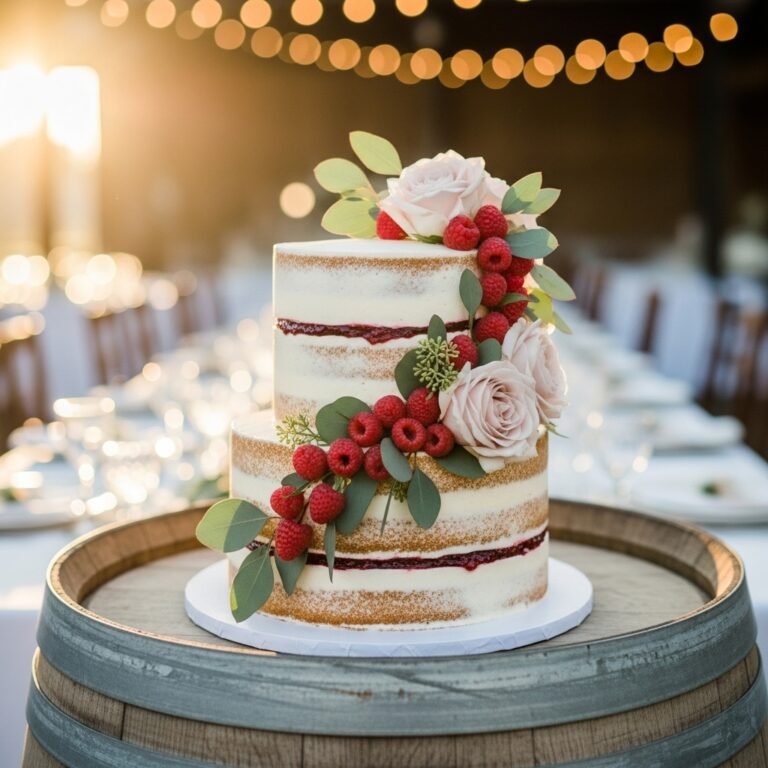
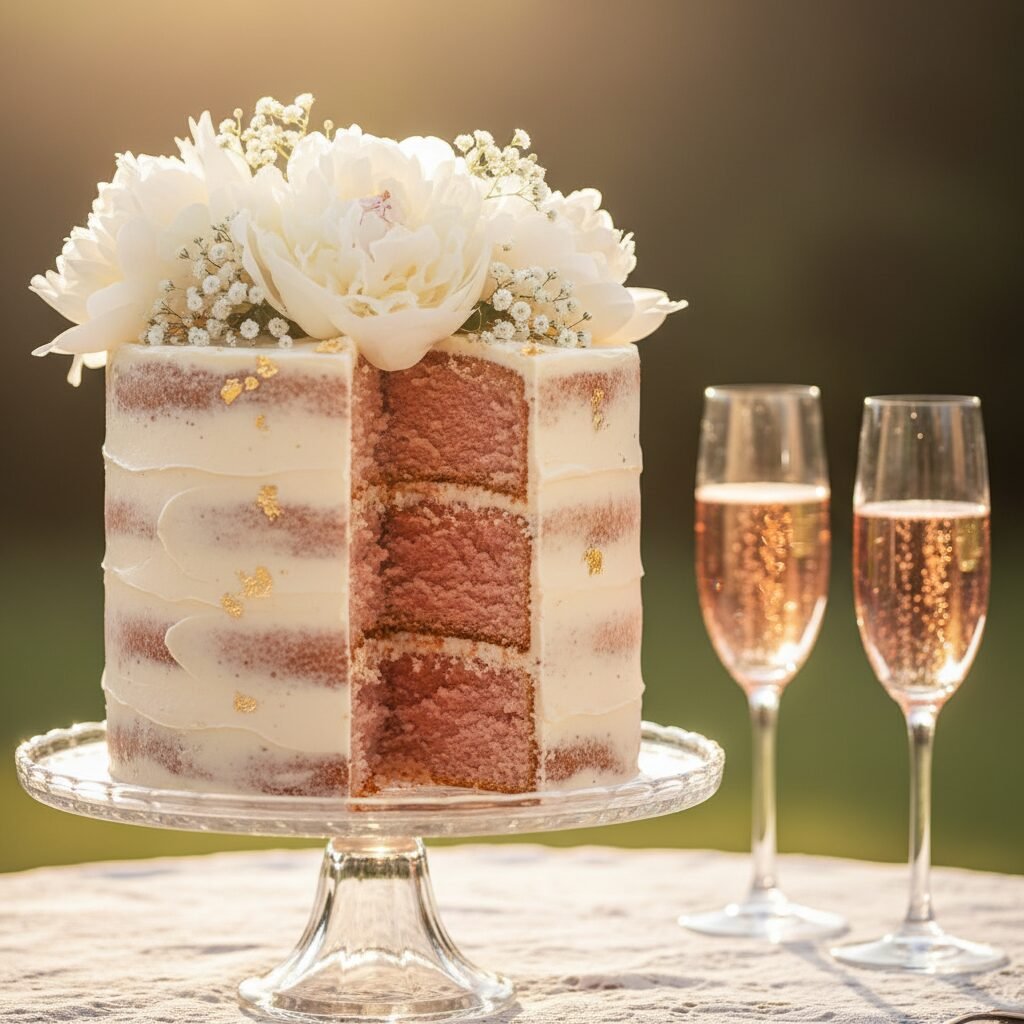
What truly sets this recipe apart is its presentation. We are bypassing the thick, sugary walls of fondant or heavy fondant in favor of the trendy ‘naked cake’ aesthetic. This style, where the layers peek through a thin veil of buttercream, offers a rustic yet incredibly chic look that has taken the baking world by storm. It allows the beautiful, soft pink hue of the cake layers to shine through, creating a visual allure that is both organic and refined. Whether you are hosting a sophisticated bridal shower, ringing in the New Year, or simply elevating a Saturday night dinner party, this cake promises to be the showstopper. It is a dessert that tastes as expensive as it looks, yet with our detailed guide, it is surprisingly achievable in your home kitchen. Prepare to impress your guests with a slice of edible elegance that balances sweetness with the complex profile of fine champagne.
History & Origins
The history of the Champagne Cake is a delightful journey through mid-century American baking nostalgia. While one might assume this recipe originated in the patisseries of France, the ‘Pink Champagne Cake’ is largely considered an American invention, gaining immense popularity in the 1950s and 1960s. It became a staple at weddings, anniversaries, and high-society gatherings, particularly on the West Coast. Legendary establishments like the Madonna Inn in California became famous for their towering, bright pink versions of this confection, cementing its status as a retro icon of celebration. Originally, these cakes were often frosted with copious amounts of whipped cream and shaved white chocolate, tinted a vibrant pink to match the joy of the occasion.
Fast forward to the 21st century, and the cake has undergone a stylistic renaissance. The ‘naked cake’ phenomenon, popularized in the early 2010s by visionary bakers like Christina Tosi of Milk Bar and embraced by the rustic-chic wedding trend, stripped away the excess. This movement was a rebellion against the pristine, often inedible perfection of fondant-covered cakes. By exposing the layers, bakers emphasized the texture and freshness of the cake itself. Combining the retro flavor profile of the mid-century Champagne Cake with the modern, minimalist aesthetic of the naked frosting style creates a beautiful synthesis of old-school glamour and contemporary design. It honors the tradition of celebratory baking while adapting to modern palates that prefer a lighter frosting-to-cake ratio.
Why This Recipe Works
This recipe succeeds where many champagne cakes fail because of one crucial step: the champagne reduction. Simply pouring straight champagne into batter often results in a flavor that disappears during baking, leaving behind only a vague sweetness. By simmering the champagne down to a concentrated syrup before adding it to the batter, we amplify the flavor profile, ensuring the distinct notes of the wine survive the heat of the oven. The acidity in the champagne also acts as a tenderizer, breaking down gluten strands to create a plush, velvety crumb.
Furthermore, we utilize the reverse creaming method (mixing fat into dry ingredients before adding liquids) or a carefully staged creaming process to ensure a flat, even rise—essential for a stackable naked cake. The naked frosting technique is not just stylistic; it is functional. By using a crumb coat as the final coat, we prevent the cake from becoming cloyingly sweet. The ratio of buttercream to sponge is perfectly balanced, allowing the delicate champagne flavor to remain the star of the show rather than being buried under a mountain of sugar. The addition of egg whites rather than whole eggs keeps the cake color light and the texture airy, providing the perfect canvas for a drop of pink coloring if desired.
Why You’ll Love This Recipe
- ✓Uses a champagne reduction for intense, authentic flavor.
- ✓Trendy ‘naked’ frosting style looks professional yet is easier to apply.
- ✓Perfect balance of sweet and tangy notes.
- ✓Ideal for weddings, showers, and New Year’s Eve.
- ✓Light, airy texture that isn’t overly heavy.
Equipment You’ll Need
- ✓3 x 6-inch or 2 x 8-inch round cake pans
- ✓Stand mixer with paddle attachment
- ✓Small saucepan (for reduction)
- ✓Kitchen scale
- ✓Offset spatula
- ✓Cake turntable
- ✓Bench scraper
- ✓Wire cooling racks
- ✓Parchment paper
Ingredients
- ✓1 cup Champagne or sparkling wine (reduced to 1/2 cup)
- ✓3 cups Cake flour, sifted
- ✓1 tbsp Baking powder
- ✓1/2 tsp Salt
- ✓1 cup Unsalted butter, room temperature
- ✓2 cups Granulated sugar
- ✓6 large Egg whites, room temperature
- ✓1 tsp Vanilla extract
- ✓1 drop Pink gel food coloring (optional)
- ✓1/2 cup Whole milk, room temperature
- ✓FOR THE FROSTING:
- ✓1.5 cups Unsalted butter, softened
- ✓4-5 cups Powdered sugar, sifted
- ✓2 tbsp Champagne (unreduced) or heavy cream
- ✓1 tsp Vanilla bean paste
- ✓Pinch of salt
Instructions
- 1. Reduce the Champagne: Pour 1 cup of champagne into a small saucepan over medium heat. Simmer until it has reduced by half (you should have 1/2 cup liquid). Set aside to cool completely to room temperature. This is critical.
- 2. Prep Oven and Pans: Preheat your oven to 350°F (175°C). Grease your cake pans with butter, line the bottoms with parchment paper, and dust the sides with flour, tapping out the excess.
- 3. Mix Dry Ingredients: In a medium bowl, whisk together the sifted cake flour, baking powder, and salt. Set aside.
- 4. Cream Butter and Sugar: In the bowl of a stand mixer fitted with the paddle attachment, beat the room temperature butter and granulated sugar on medium-high speed for about 3-5 minutes until pale, light, and fluffy.
- 5. Add Egg Whites: Reduce speed to medium. Add the egg whites one at a time, mixing well after each addition and scraping down the sides of the bowl as needed. Stir in the vanilla extract and pink food coloring if using.
- 6. Combine Wet and Dry: In a small measuring cup, mix the cooled champagne reduction with the whole milk. With the mixer on low speed, add the flour mixture in three batches, alternating with the champagne/milk mixture, beginning and ending with the flour. Mix only until just combined—do not overmix.
- 7. Bake: Divide the batter evenly between the prepared pans. Bake for 28-32 minutes, or until a toothpick inserted into the center comes out clean or with just a few moist crumbs.
- 8. Cool: Allow cakes to cool in the pans for 10 minutes, then invert onto a wire rack to cool completely before frosting.
- 9. Make the Frosting: Clean the mixer bowl. Beat the softened butter on medium-high speed for 5 minutes until incredibly pale and creamy. Gradually add powdered sugar, one cup at a time, on low speed. Once incorporated, increase speed to high and beat for 2 minutes. Add the splash of champagne (or cream), vanilla bean paste, and salt. Beat for another minute until silky smooth.
- 10. Assemble: Level the tops of the cooled cakes with a serrated knife. Place the first layer on a cake board. Spread a generous layer of buttercream on top. Repeat with remaining layers. Invert the top layer (bottom side up) for a flat top.
- 11. Naked Frosting Technique: Apply a thin layer of buttercream all over the top and sides of the cake to lock in crumbs. Use a bench scraper to scrape away most of the frosting on the sides, revealing the cake layers underneath. Smooth the top with an offset spatula.
- 12. Chill and Serve: Chill the cake for 20 minutes to set the frosting, then garnish with fresh flowers, strawberries, or sprinkles before serving.
Expert Cooking Tips
- ✓Room Temperature is Key: Ensure your butter, eggs, and milk are all at room temperature to prevent the batter from curdling.
- ✓Cool the Reduction: If you add hot champagne syrup to the batter, it will melt the butter and ruin the emulsion. It must be cool.
- ✓Don’t Overmix: Once the flour touches the liquid, gluten begins to form. Mix gently to keep the cake tender.
- ✓Weigh Ingredients: For the most consistent results, weigh your flour and sugar using a kitchen scale.
- ✓Frosting Consistency: If the frosting is too stiff, add a teaspoon more liquid. If too soft, add more sugar or chill it briefly.
Substitutions and Variations
This recipe is versatile if you need to make adjustments. **Champagne:** You can use any sparkling wine, including Prosecco, Cava, or a sparkling Rosé. The flavor profile will shift slightly depending on the dryness of the wine; a Brut is recommended for balance. **Cake Flour:** If you cannot find cake flour, you can make a substitute by measuring 1 cup of all-purpose flour, removing 2 tablespoons, and replacing them with 2 tablespoons of cornstarch. Sift together twice. **Butter:** For a dairy-free version, use high-quality plant-based butter blocks (not tub margarine) for both the cake and frosting, and replace whole milk with almond or oat milk. **Egg Whites:** If you prefer to use whole eggs, use 3 whole large eggs instead of 6 whites, though the cake will have a yellow tint rather than white/pink. **Food Coloring:** Natural alternatives like beet powder or freeze-dried strawberry powder can be used instead of gel coloring.
Common Mistakes to Avoid
The most common mistake is **not reducing the champagne**. Using it straight from the bottle adds too much liquid without enough flavor punch. Another error is **frosting a warm cake**. Even if the cake feels cool to the touch on the outside, the center might still be warm, which will cause your buttercream to slide right off. Ensure the cakes are completely cool, or even chilled, before assembly. **Over-baking** is also a risk; because of the egg whites, this cake can dry out quickly. Start checking a few minutes before the timer goes off. Finally, regarding the **naked look**, a common mistake is leaving too much frosting on the sides. You want to scrape it down until the layers are clearly visible—don’t be afraid to apply pressure with the bench scraper.
Serving Suggestions
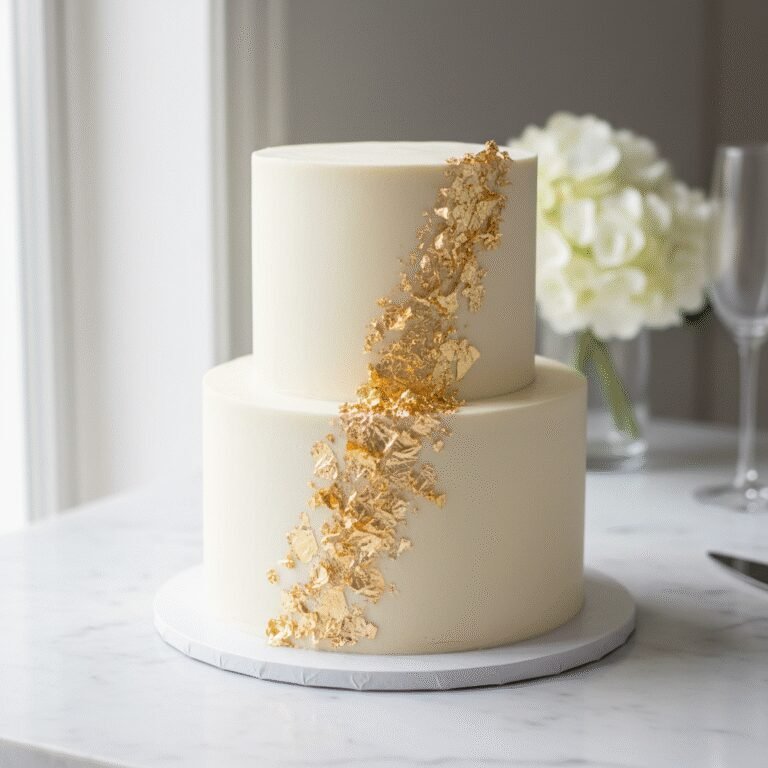
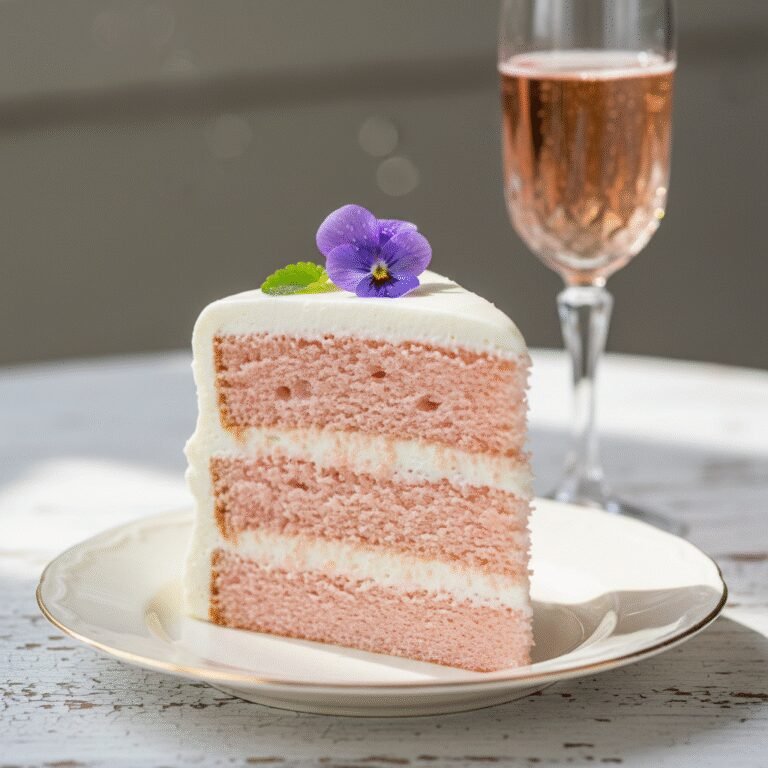
This cake is a stunner on its own, but styling elevates it. Serve slices on delicate white china or vintage glass plates. A garnish of fresh berries—strawberries, raspberries, or red currants—adds a pop of color and tartness that cuts through the sweetness. For a truly elegant touch, top the cake with edible gold leaf or organic edible flowers like roses or pansies. Pair this dessert with a glass of the same champagne used in the batter to bridge the flavor experience. A dollop of unsweetened whipped cream or a side of strawberry coulis also complements the cake beautifully.
Storage and Reheating Tips
Because of the buttercream, this cake is best stored in the refrigerator, especially if your kitchen is warm. However, butter-based cakes taste best at room temperature. Store the cake in an airtight cake keeper or cover the cut sections with plastic wrap to prevent drying. It will keep in the fridge for up to 4 days. **To Serve:** Remove slices from the fridge 30-60 minutes before eating to allow the buttercream to soften and the cake crumb to relax. **Freezing:** The baked, unfrosted cake layers freeze beautifully. Wrap them tightly in plastic wrap, then foil, and freeze for up to 3 months. Thaw in the fridge overnight before frosting.
Nutrition Facts (Estimated)
| Serving Size | 1 slice |
| Calories | 480 |
| Fat | 22g |
| Saturated Fat | 14g |
| Unsaturated Fat | 7g |
| Trans Fat | 0g |
| Cholesterol | 65mg |
| Sodium | 210mg |
| Carbohydrates | 62g |
| Fiber | 1g |
| Sugar | 35g |
| Protein | 5g |
Frequently Asked Questions
Does the alcohol bake out of the cake?
Mostly, yes. The reduction process and the baking time remove the vast majority of the alcohol content, leaving behind the flavor. However, trace amounts may remain, so use discretion for those with strict dietary restrictions.
Can I use flat champagne?
Yes! Since we are boiling it for the reduction, the carbonation is lost anyway. This is a great way to use up leftover champagne from a party.
Why did my cake sink in the middle?
This usually happens if the oven door was opened too early, releasing heat, or if the cake was underbaked. It can also be caused by over-leavening (too much baking powder).
Can I make this cake ahead of time?
Absolutely. You can bake the layers up to 2 days in advance, wrap them tightly, and store them in the fridge. Assemble and frost on the day of serving for the freshest taste.
What if I don’t have a bench scraper for the naked look?
While a bench scraper gives the cleanest finish, you can use a large offset spatula or even the flat edge of a wide knife to scrape the frosting back.
Can I make this as cupcakes?
Yes. This batter yields approximately 24 standard cupcakes. Bake at 350°F for 18-22 minutes.
Is the pink color natural?
The slight pink hue might come from using a dark Rosé, but typically a drop of food coloring is needed for a distinct pink color. You can omit it for a classic ivory champagne cake.
Can I use Swiss Meringue Buttercream instead?
Yes, Swiss Meringue Buttercream pairs wonderfully with this cake and is less sweet than American buttercream, though it requires a bit more effort to make.
Conclusion
This Elegant Champagne Cake with Naked Frosting is more than just a recipe; it is an invitation to celebrate the beautiful moments in life. The process of reducing the champagne, whipping the meringue-based batter, and artfully scraping the frosting to reveal the tender layers is a rewarding culinary experience. The result is a dessert that feels bespoke, sophisticated, and incredibly personal. Whether you are an experienced baker looking for a new favorite or a novice wanting to try your hand at the naked cake trend, this recipe delivers on both flavor and style. So pop a bottle, preheat the oven, and get ready to bake a masterpiece that will have everyone raising a glass in your honor. Cheers to baking!