Elegant Champagne Cake With Fresh Flowers Recipe
Elegant Champagne Cake With Fresh Flowers Recipe
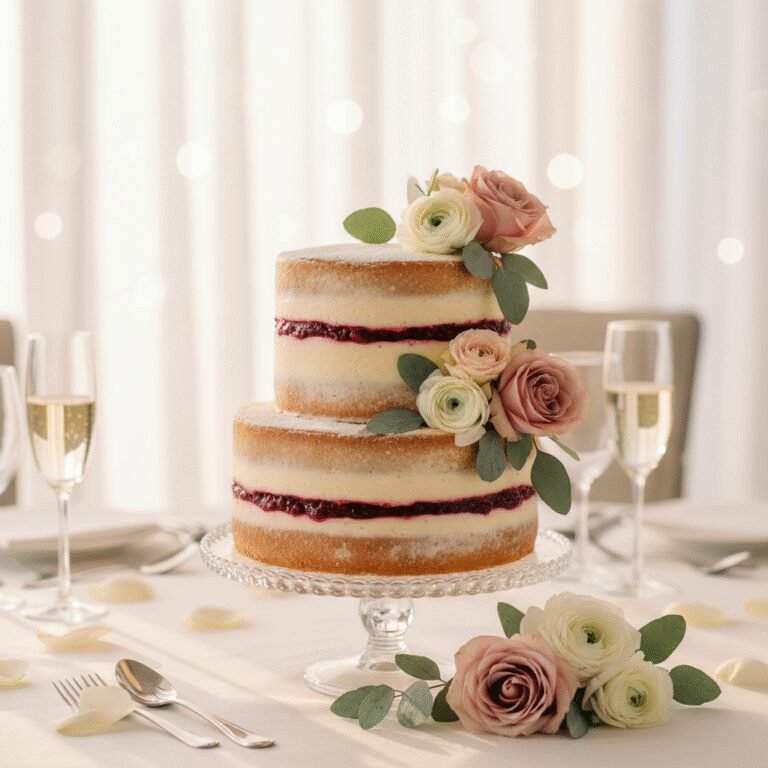
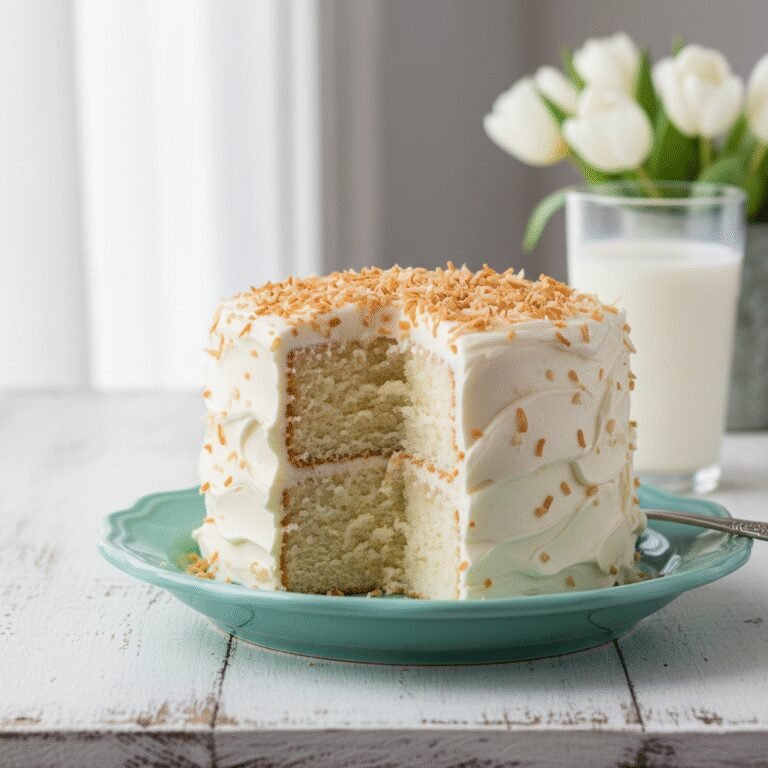
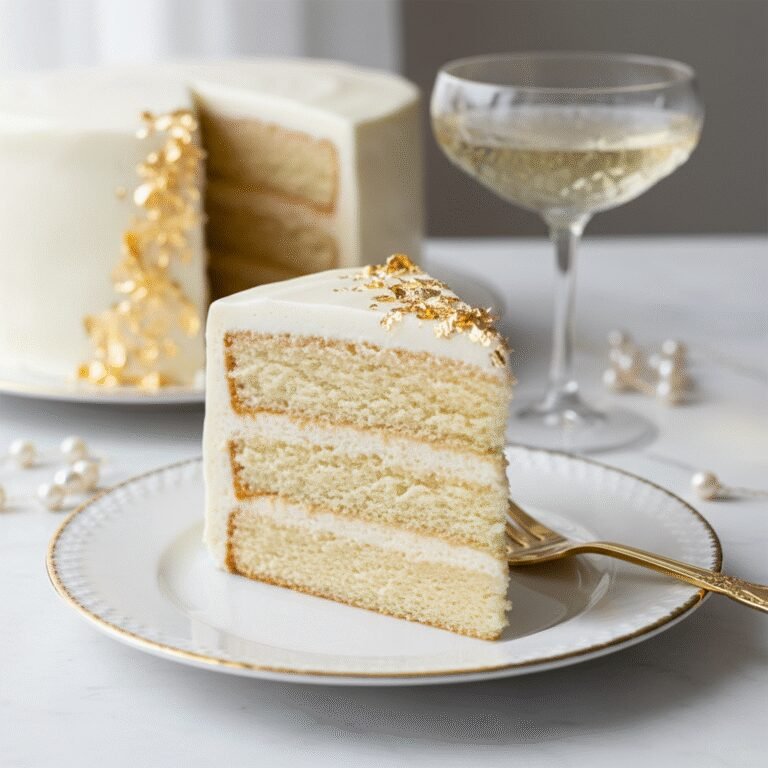
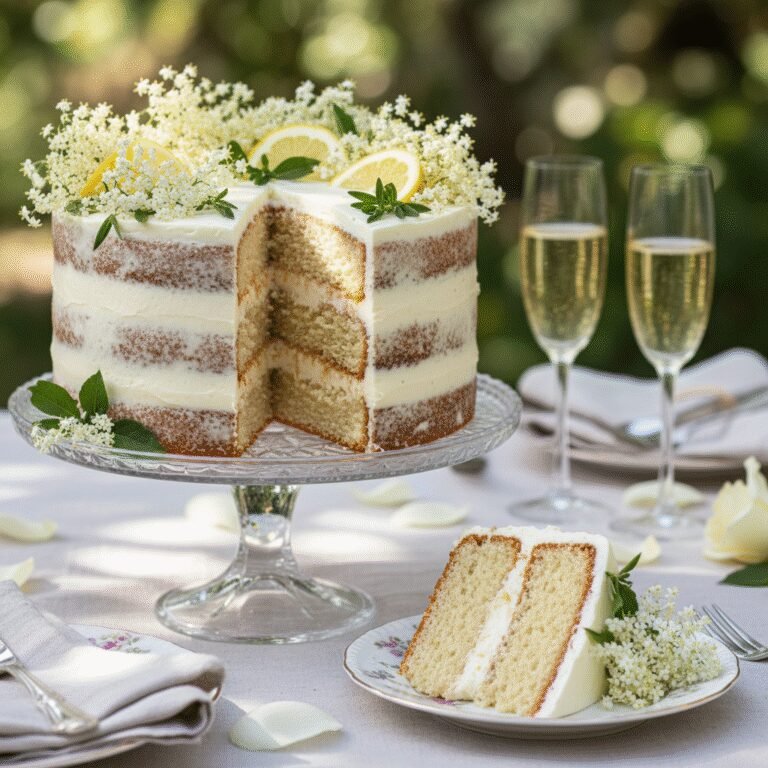
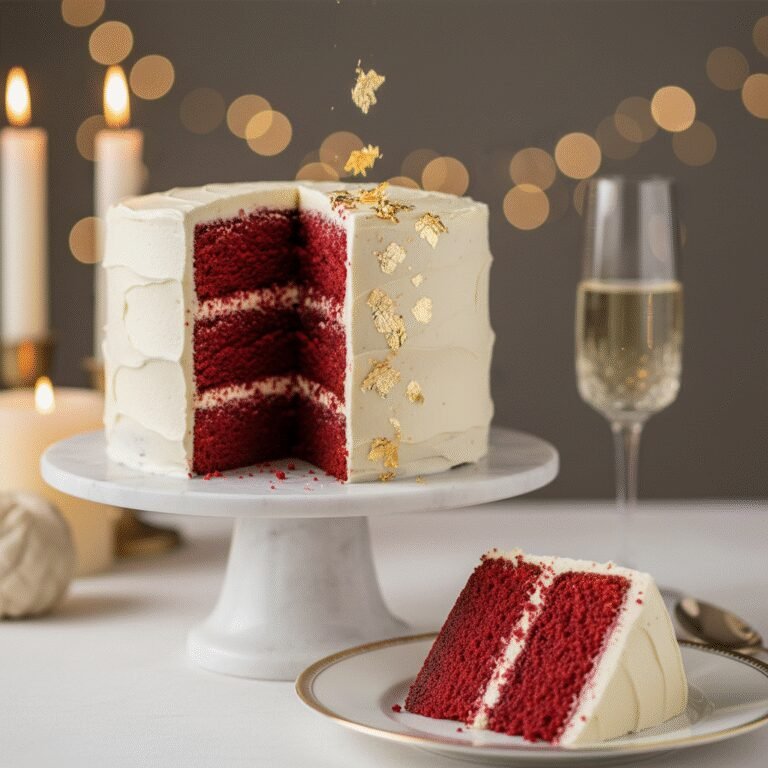
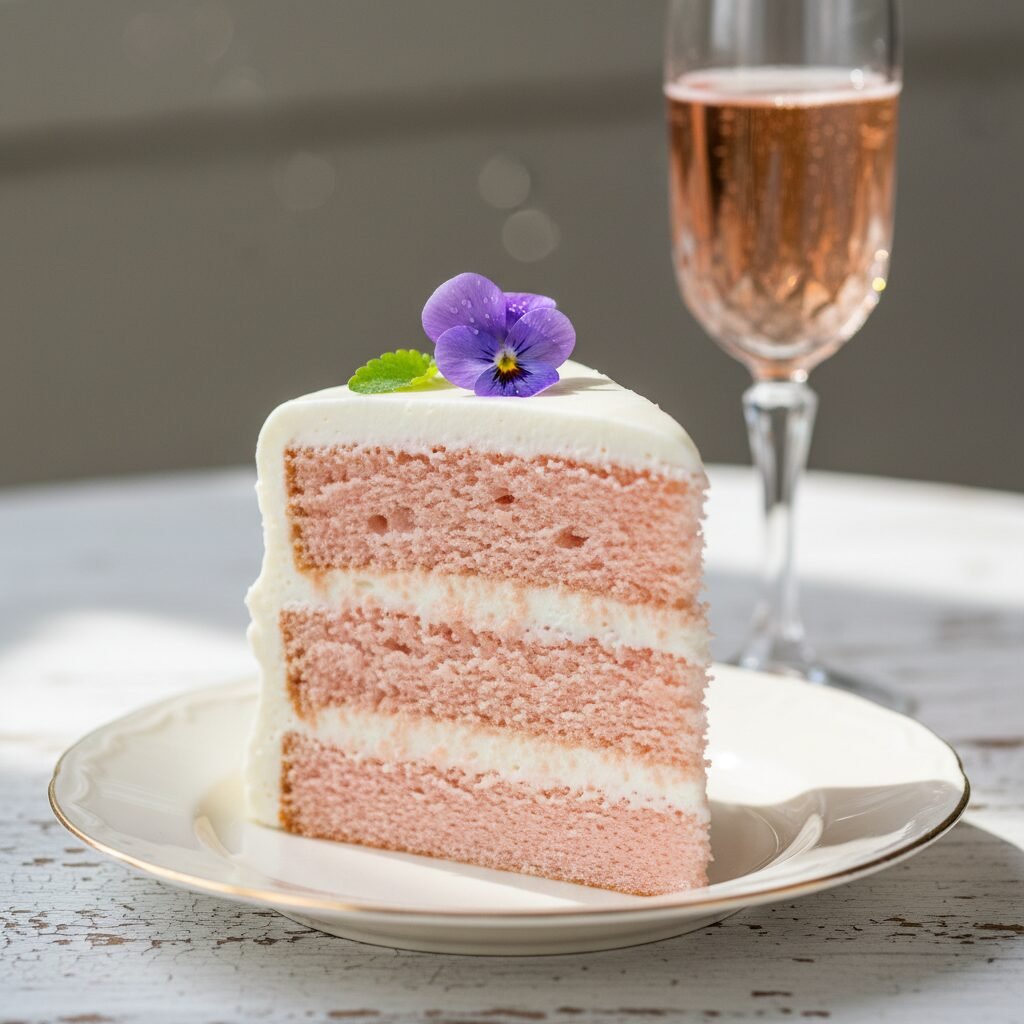
This breathtaking Champagne Cake features tender, fluffy layers infused with a champagne reduction and frosted with a silky champagne buttercream. Adorned with fresh, edible flowers, it is the ultimate centerpiece for weddings, bridal showers, or New Year’s Eve celebrations.
45 minutes
35 minutes
2 hours 30 minutes
12-14 servings
Dessert
Baking
American / French Fusion
Vegetarian
There is something undeniably magical about the popping of a cork, the effervescence of bubbles rising in a flute, and the promise of celebration that comes with a bottle of champagne. Now, imagine capturing that very essence in a dessert. This Elegant Champagne Cake is not just a sweet treat; it is a sophisticated statement piece designed for life’s most memorable moments. Whether you are planning an intimate bridal shower, a milestone birthday, or a romantic Valentine’s Day dinner, this cake brings a level of refinement that standard vanilla cakes simply cannot match. The secret lies in the reduction. By simmering down a good quality sparkling wine, we concentrate its flavor profile—notes of toasted brioche, citrus, and almond—into a potent elixir that infuses both the tender crumb of the cake and the velvety Swiss Meringue Buttercream.
Unlike the bright pink, artificially flavored versions of the past, this modern interpretation focuses on the subtle, aromatic qualities of the wine. The texture is exceptionally light and airy, thanks to the folding of whipped egg whites, yet moist enough to hold up to the rich buttercream. The addition of fresh, edible flowers elevates the presentation from home-baked to professional patisserie standards. It is a dessert that engages all the senses: the visual beauty of the blooms, the scent of vanilla and wine, and the complex, not-too-sweet flavor that dances on the palate. This recipe is a labor of love, but the result is a masterpiece that guests will talk about long after the last crumb is gone.
History & Origins
The concept of the ‘Champagne Cake’—specifically the Pink Champagne Cake—has a distinct and somewhat nostalgic history in the United States, tracing its peak popularity back to the mid-20th century. During the 1950s and 1960s, the post-war era brought about a fascination with convenience foods, new appliances, and a desire for entertaining with a touch of glamour. The Pink Champagne Cake became a staple at West Coast weddings and holiday parties, particularly in California and the Pacific Northwest. Historically, these cakes were often chiffon-style or sponge cakes, dyed a vibrant pink and flavored with a small amount of wine, though often the flavor was masked by the sweetness of the frosting.
Going further back, the use of alcohol in baking has deep roots in European culinary traditions. From British fruitcakes soaked in brandy to Italian tiramisu laced with marsala, bakers have long understood that spirits act as flavor enhancers and preservatives. The use of edible flowers, which this recipe highlights, also sees a resurgence from the Victorian era. In the 19th century, crystallizing flowers like violets and roses was a popular way to decorate elaborate desserts. Today’s version of the Champagne Cake marries these two histories: the mid-century American love for celebratory, alcohol-infused cakes and the timeless, natural elegance of floral garnishes. It represents a shift away from artificiality toward authentic flavors and organic beauty, reclaiming the ‘Champagne Cake’ title as a truly gourmet experience rather than just a novelty.
Why This Recipe Works
This recipe succeeds where many others fail because it addresses the primary challenge of baking with champagne: flavor dilution. Simply pouring champagne into batter often results in a cake that tastes vaguely of yeast or just plain vanilla because the delicate volatile compounds in the wine bake off. To combat this, we utilize a champagne reduction. By simmering two cups of champagne down to a half-cup syrup, we intensify the acidity and the fruit notes, ensuring the flavor survives the heat of the oven.
Furthermore, the structural integrity of the cake is optimized using the reverse creaming method (or a modified high-ratio method) in conjunction with whipped egg whites. The reverse creaming coats the flour proteins in fat before liquid is added, inhibiting gluten formation for a tender melt-in-your-mouth texture. Folding in beaten egg whites at the end provides the necessary lift to counter the density of the reduction syrup. For the frosting, a Swiss Meringue Buttercream is the only logical choice. Unlike American buttercream, which can be gritty and overly sweet, the silky, buttery texture of Swiss meringue carries the champagne reduction beautifully without overpowering it with sugar, creating a perfectly balanced bite.
Why You’ll Love This Recipe
- ✓Uses a champagne reduction for intense, authentic flavor.
- ✓Swiss Meringue Buttercream offers a silky, not-too-sweet finish.
- ✓Moist, tender crumb that stays fresh for days.
- ✓Stunning presentation with fresh edible flowers.
- ✓Perfect for weddings, anniversaries, and New Year’s Eve.
Equipment You’ll Need
- ✓Three 8-inch round cake pans
- ✓Stand mixer with paddle and whisk attachments
- ✓Medium saucepan (for reduction)
- ✓Candy thermometer
- ✓Offset spatula
- ✓Cake turntable
- ✓Parchment paper
- ✓Wire cooling racks
Ingredients
- ✓2 cups Champagne or sparkling wine (for reduction)
- ✓3 cups cake flour, sifted
- ✓1 tbsp baking powder
- ✓1/2 tsp salt
- ✓1 cup unsalted butter, room temperature
- ✓2 cups granulated sugar
- ✓6 large egg whites, room temperature
- ✓1 tsp vanilla bean paste
- ✓1/2 cup whole milk, room temperature
- ✓Red food coloring (optional, for pink tint)
- ✓For the Buttercream: 1 1/2 cups granulated sugar
- ✓6 large egg whites
- ✓2 cups unsalted butter, cubed and cool
- ✓1/4 cup Champagne reduction (reserved from above)
- ✓Assorted edible flowers (pansies, violas, roses) for garnish
Instructions
- 1. Make the Champagne Reduction: Pour 2 cups of champagne into a medium saucepan over medium heat. Simmer until the liquid has reduced to roughly 3/4 cup. This should take about 15-20 minutes. Let it cool completely. You will use 1/2 cup for the batter and reserve 1/4 cup for the frosting.
- 2. Prep the Oven and Pans: Preheat your oven to 350°F (175°C). Grease three 8-inch round cake pans, line the bottoms with parchment paper, and grease the parchment. Dust with flour and tap out excess.
- 3. Mix Dry Ingredients: In a medium bowl, whisk together the sifted cake flour, baking powder, and salt. Set aside.
- 4. Cream Butter and Sugar: In the bowl of a stand mixer fitted with the paddle attachment, beat the butter and sugar on medium-high speed until pale and fluffy, about 4-5 minutes.
- 5. Add Egg Whites: Reduce speed to medium and add the egg whites one at a time, mixing well after each addition. Scrape down the sides of the bowl as needed. Stir in the vanilla bean paste.
- 6. Alternate Wet and Dry: In a small jug, combine the 1/2 cup cooled champagne reduction, the whole milk, and a drop of pink food coloring if desired. With the mixer on low, add one-third of the flour mixture, followed by half of the liquid mixture. Repeat, ending with the flour mixture. Mix just until combined. Do not overmix.
- 7. Bake: Divide the batter evenly among the prepared pans. Bake for 30-35 minutes, or until a toothpick inserted into the center comes out clean. The cakes should be lightly golden.
- 8. Cool: Allow cakes to cool in pans for 10 minutes, then turn out onto wire racks to cool completely before frosting.
- 9. Make the Buttercream: Whisk egg whites and sugar in a heatproof bowl over a pot of simmering water. Whisk constantly until sugar dissolves and mixture reaches 160°F (71°C). Transfer to stand mixer with whisk attachment and beat on high until stiff glossy peaks form and the bowl is cool to the touch (about 10 mins).
- 10. Finish Buttercream: Switch to paddle attachment. Add cubed butter one piece at a time, mixing until silky. Pour in the reserved 1/4 cup champagne reduction and mix until incorporated.
- 11. Assembly: Level the cake layers if domed. Place the first layer on a cake board. Spread a layer of buttercream. Repeat with remaining layers. Frost the outside of the cake with a crumb coat, chill for 20 minutes, then apply the final coat of frosting.
- 12. Decorate: Arrange fresh edible flowers artistically on the top and sides of the cake just before serving.
Expert Cooking Tips
- ✓Do not use expensive vintage champagne; a dry Prosecco or Cava works perfectly for the reduction.
- ✓Ensure all ingredients, especially butter and egg whites, are at room temperature to prevent the batter from curdling.
- ✓Watch the reduction closely near the end so it doesn’t burn or turn into hard candy.
- ✓If the buttercream looks curdled after adding the butter, keep whipping! It will come together.
- ✓Wash and dry edible flowers gently, and ensure they are organic and pesticide-free.
- ✓For flatter cake layers, use cake strips dampened with water around the outside of the pans.
Substitutions and Variations
If you cannot find cake flour, you can make a substitute by removing 2 tablespoons of all-purpose flour from every cup and replacing it with cornstarch; sift firmly to combine. For a non-alcoholic version, you can use a sparkling cider or grape juice, though the flavor profile will be sweeter and less complex; reduce the sugar in the cake slightly to compensate. If you prefer not to use Swiss Meringue Buttercream, a standard American buttercream or a cream cheese frosting can work, though they will be sweeter. You can substitute the champagne reduction in the frosting with a teaspoon of champagne extract if you are short on time, but the real reduction yields a superior flavor.
Common Mistakes to Avoid
The most common mistake is not reducing the champagne enough; if the liquid is too thin, it will water down the batter and break the buttercream. Conversely, reducing it too much creates a sticky taffy that won’t incorporate. Another error is adding the butter to the meringue while the meringue is still warm; this will melt the butter and result in a soupy mess. If this happens, refrigerate the bowl for 15 minutes and whip again. Finally, be very careful with the flowers—never use flowers from a florist unless specified as edible, as they are often treated with non-food-safe chemicals.
Serving Suggestions
Serve this cake at room temperature to ensure the buttercream is soft and the cake is tender. Cold butter cakes can feel dense. Pair it with a glass of the same champagne used in the recipe for a harmonious tasting experience. For a dessert table, accompany it with champagne-infused truffles or macaroons. If slicing for a wedding, use a warm knife (dipped in hot water and wiped dry) to get clean, sharp cuts through the cake layers.
Storage and Reheating Tips
The frosted cake can be stored at room temperature for up to 2 days if the environment is cool. For longer storage, refrigerate for up to 5 days, but allow it to come to room temperature for at least 2 hours before serving. The cake layers can be baked ahead and frozen, wrapped tightly in plastic wrap, for up to 3 months. The buttercream also freezes well; thaw and re-whip before using. Note that fresh flowers will wilt, so remove them before storing leftovers or add them only immediately before the event.
Nutrition Facts (Estimated)
| Serving Size | 1 slice |
| Calories | 580 |
| Fat | 30g |
| Saturated Fat | 18g |
| Unsaturated Fat | 10g |
| Trans Fat | 0g |
| Cholesterol | 95mg |
| Sodium | 320mg |
| Carbohydrates | 68g |
| Fiber | 1g |
| Sugar | 45g |
| Protein | 6g |
Frequently Asked Questions
Can I use rosé champagne for this recipe?
Absolutely! Rosé champagne or sparkling rosé will add a lovely subtle pink hue and a slightly berry-forward flavor profile that complements the vanilla bean paste beautifully.
Does the alcohol bake out of the cake?
Most of the alcohol evaporates during the reduction process and the baking process, leaving behind the flavor. However, trace amounts may remain. The buttercream contains the reduction which is not cooked again, so it retains a tiny amount of alcohol, though generally negligible per slice.
What flowers are safe to eat?
Common edible flowers include pansies, violas, roses, lavender, nasturtiums, and calendula. Always buy from the herb section of a grocery store or a reputable organic source to ensure they are pesticide-free.
Why did my cake sink in the middle?
This usually happens if the oven door was opened too early, causing a temperature drop, or if the batter was overmixed, incorporating too much air that collapsed. Ensure your baking powder is fresh as well.
Can I make cupcakes with this batter?
Yes, this batter works well for cupcakes. Bake them at 350°F for approximately 18-22 minutes. The yield will be around 24 standard cupcakes.
My buttercream is soupy, how do I fix it?
This means your meringue was too warm when you added the butter. Place the bowl in the fridge for 15-20 minutes, then whip it again on high speed. It should come together perfectly.
Can I use sweet champagne?
It is best to use ‘Brut’ or ‘Extra Dry’ champagne. Sweet varieties (Doux or Demi-Sec) may make the cake and frosting cloyingly sweet when combined with the sugar in the recipe.
How far in advance can I decorate with flowers?
Fresh flowers are delicate. It is best to place them on the cake within 2-3 hours of serving. If you need more time, look for crystallized or candied flowers which last much longer.
Conclusion
This Elegant Champagne Cake with Fresh Flowers is more than just a dessert; it is a celebration of flavor, technique, and beauty. While it requires a bit of patience to reduce the champagne and perfect the Swiss meringue, the payoff is an exquisitely light, flavorful, and visually stunning cake that rivals any high-end bakery. It captures the joy of a toast in every bite, making it the perfect ending to a special meal or the centerpiece of a grand party. We hope this recipe inspires you to bring a touch of floral elegance and bubbly sophistication to your next gathering. Cheers to baking beautiful things!