Elegant Pink Champagne Cake With Buttercream Flowers
Elegant Champagne Cake With Buttercream Flowers Recipe
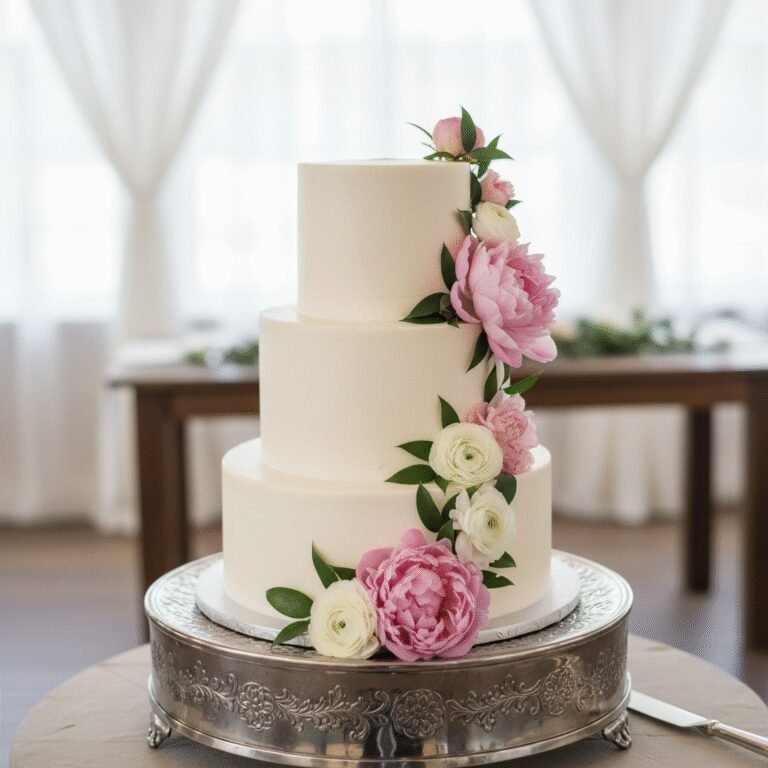
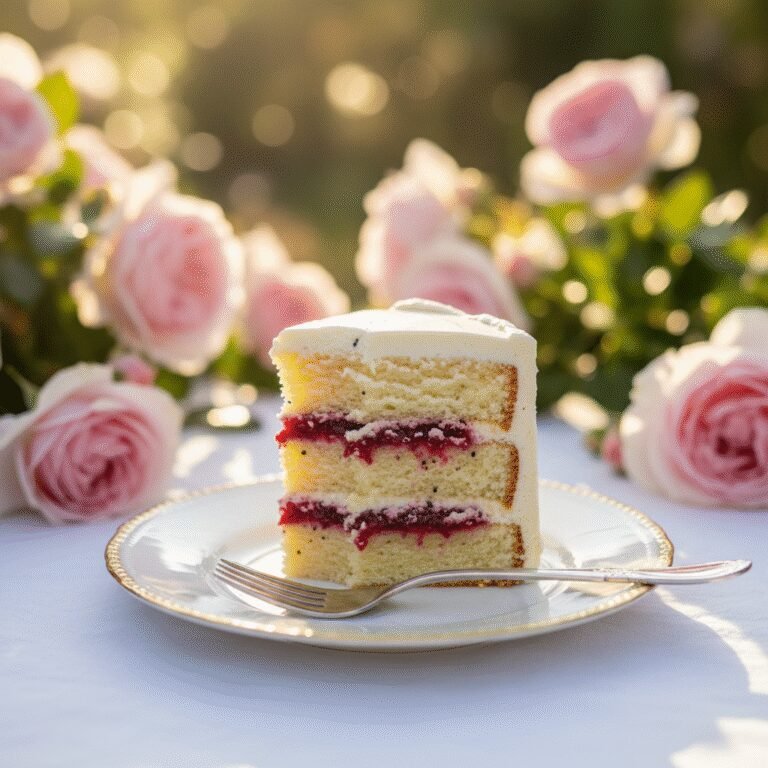
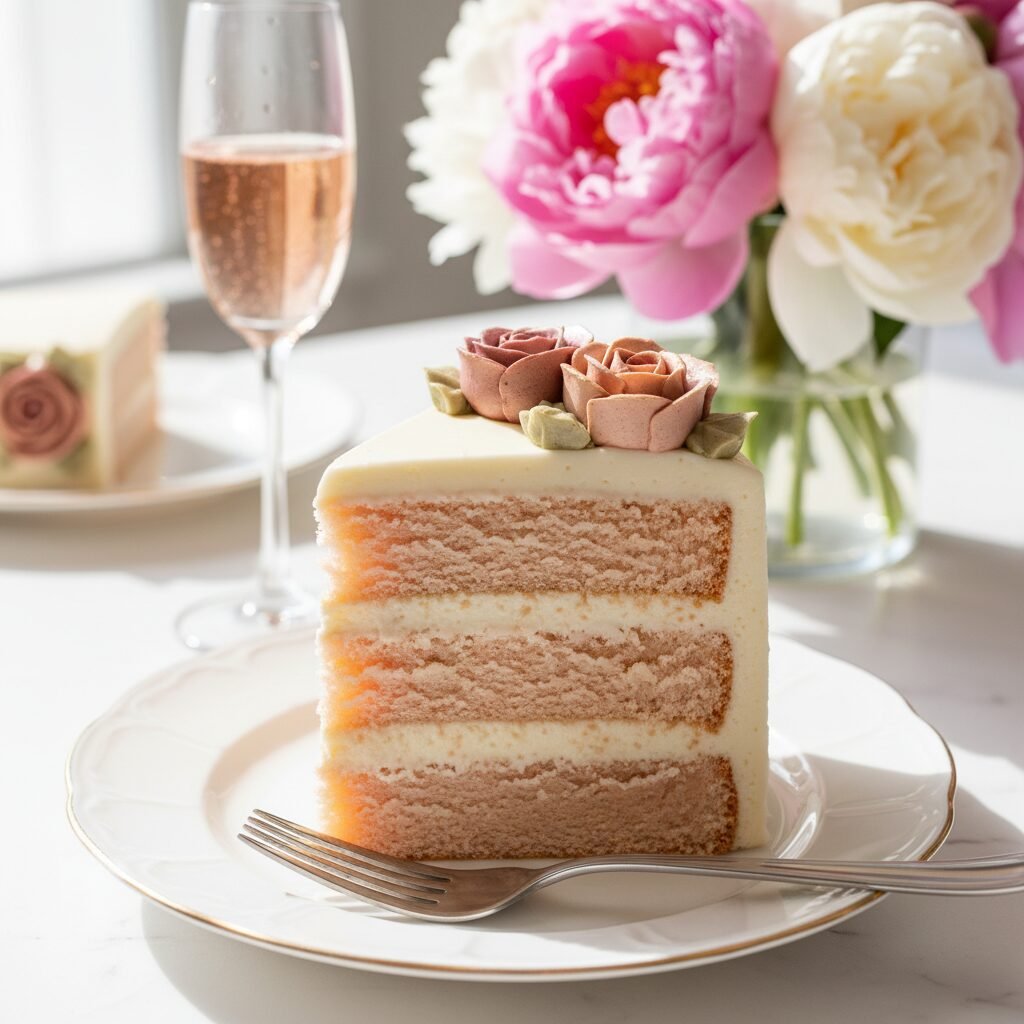
Celebrate life’s most sparkling moments with this stunning Pink Champagne Cake. Featuring tender, rose-hued cake layers infused with a champagne reduction and adorned with intricate buttercream flowers, this dessert is the definition of edible elegance.
1 hour 30 minutes
35 minutes
3 hours (includes cooling)
12-14 Servings
Dessert
Baking
American
Vegetarian
There is something undeniably magical about the sound of a cork popping; it signals celebration, joy, and a touch of luxury. This Elegant Pink Champagne Cake captures that exact effervescent spirit in dessert form. It is not merely a white cake with a splash of wine thrown in; it is a carefully crafted masterpiece where the flavor of sparkling wine is concentrated and celebrated. The cake layers themselves are incredibly tender, boasting a velvety crumb that melts in your mouth, dyed a delicate blush pink to match the romance of the occasion. The flavor is sophisticated—notes of vanilla and almond dance around the distinct, fruity, and slightly tangy profile of the champagne.
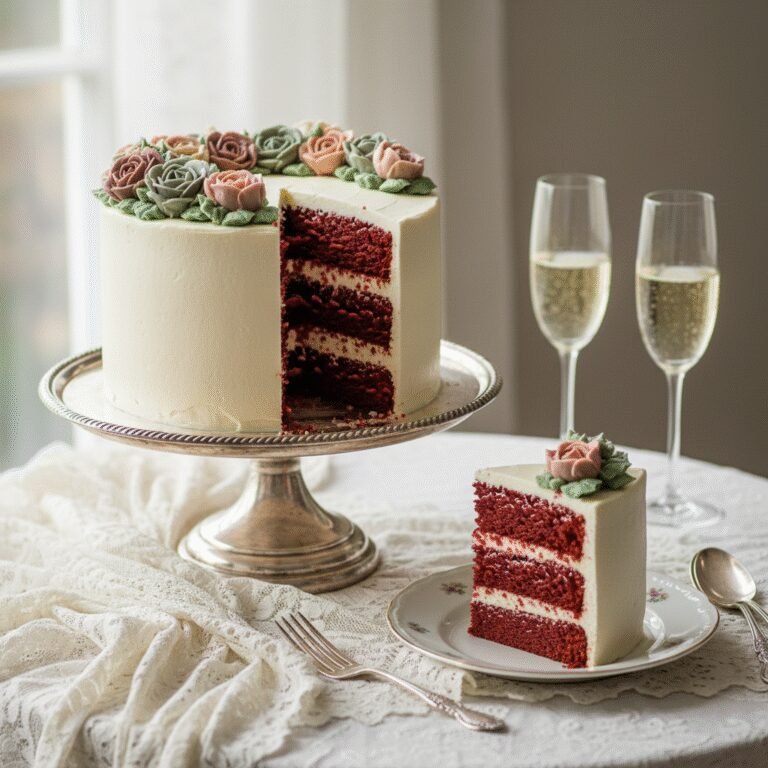
But the true showstopper here is the decoration. Enveloped in a silky, champagne-infused buttercream, the cake serves as a canvas for a garden of hand-piped buttercream flowers. Whether you are planning a bridal shower, a milestone birthday, a Valentine’s Day surprise, or simply want to elevate a Sunday afternoon, this cake demands attention. While it looks like it came straight from a high-end French patisserie, the techniques used are accessible to the home baker. We utilize a champagne reduction to ensure the flavor punches through the sugar and butter, ensuring that ‘champagne’ isn’t just a name, but the primary tasting note. Prepare to impress your guests with a slice of pure, sparkling joy.
History & Origins
The history of the Champagne Cake is steeped in mid-century American nostalgia, tracing its popularity back to the glamorous dinner parties of the 1950s and 1960s. While using wine in baking has European roots dating back centuries (think sherry cakes or fruitcakes soaked in brandy), the specific ‘Pink Champagne Cake’ is often cited as a West Coast phenomenon. Culinary historians frequently point to Los Angeles and the Pacific Northwest as the birthplaces of this trend. Legend has it that the recipe gained cult status at iconic establishments like the Madonna Inn or posh LA department store tearooms, where it was served as a symbol of post-war affluence and modern elegance.
During this era, pink champagne was the height of fashion, representing a playful yet sophisticated departure from traditional heavy desserts. The cake became a staple at weddings and anniversaries, often tinted a bright, artificial pink that defined the technicolor aesthetic of the time. Originally, these cakes were often chiffon or sponge bases, light enough to mimic the bubbles of the drink. Over the decades, the recipe has evolved. Modern interpretations, like this one, often favor a butter cake base for a sturdier structure that can support elaborate decorating while still maintaining a fine, tender crumb. Today, the Champagne Cake remains a retro-chic classic, reinvented for the modern palate with more natural flavors and sophisticated piping techniques, bridging the gap between vintage charm and contemporary pastry art.
Why This Recipe Works
This recipe succeeds where many others fail because it solves the primary problem of baking with alcohol: flavor dilution. If you simply pour straight champagne into a cake batter, the alcohol evaporates during baking, and the delicate flavor notes are lost, leaving you with a cake that tastes vaguely like plain vanilla but with a disrupted liquid ratio. To combat this, we utilize a **champagne reduction**. By simmering the sparkling wine on the stovetop until it reduces to half or even a third of its original volume, we concentrate the sugars and the fruity, yeasty flavor profile of the grapes. This syrup packs a punch that survives the heat of the oven.
Furthermore, the texture of this cake is scientifically balanced. We use a combination of butter and oil; butter provides the classic rich flavor and structure, while a small amount of neutral oil ensures the cake stays moist for days, as oil remains liquid at room temperature. We also use egg whites rather than whole eggs. This serves two purposes: it keeps the batter white (allowing the pink coloring to show through clearly without a yellow tint) and it creates a lighter, more delicate structure that feels ‘fluffy’—reminiscent of the drink itself. Finally, the buttercream is whipped for an extended period to incorporate air, making it silky and smooth, perfect for piping realistic petals that hold their shape without looking stiff or waxy.
Why You’ll Love This Recipe
- ✓Uses a champagne reduction for intense, authentic flavor.
- ✓Texture is perfectly balanced: moist, tender, and fluffy.
- ✓Egg-white base ensures a true pink color without yellow undertones.
- ✓Silky buttercream is stable enough for intricate floral piping.
- ✓Perfect for weddings, Valentine’s Day, and New Year’s Eve.
- ✓Can be made with Rosé or standard Brut champagne.
Equipment You’ll Need
- ✓Three 8-inch round cake pans
- ✓Stand mixer with paddle and whisk attachments
- ✓Small saucepan (for reduction)
- ✓Piping bags
- ✓Piping tips (Wilton 104 for petals, 352 for leaves)
- ✓Flower nail
- ✓Parchment paper squares
- ✓Cake turntable
- ✓Offset spatula
Ingredients
- ✓1 1/2 cups Pink Champagne or Sparkling Rosé (to be reduced)
- ✓3 cups Cake flour, sifted
- ✓1 tbsp Baking powder
- ✓1/2 tsp Salt
- ✓1 cup Unsalted butter, room temperature
- ✓2 cups Granulated sugar
- ✓1/4 cup Vegetable oil
- ✓1 tsp Vanilla extract
- ✓1/2 tsp Almond extract (optional)
- ✓6 Large egg whites, room temperature
- ✓Pink gel food coloring
- ✓FOR THE BUTTERCREAM:
- ✓2 cups Unsalted butter, slightly softened
- ✓7-8 cups Powdered sugar, sifted
- ✓1/4 cup Reduced champagne (reserved from above)
- ✓2-3 tbsp Heavy cream
- ✓Pinch of salt
- ✓Assorted gel food colorings for flowers
Instructions
- 1. Prepare the Champagne Reduction: Pour 1 1/2 cups of champagne into a small saucepan. Simmer over medium heat until it reduces to roughly 3/4 cup. This should take about 15-20 minutes. Set aside to cool completely to room temperature. You will use 1/2 cup for the batter and 1/4 cup for the frosting.
- 2. Prep Oven and Pans: Preheat oven to 350°F (175°C). Grease three 8-inch cake pans, line the bottoms with parchment paper, and grease the paper and sides. Dust with flour and tap out excess.
- 3. Mix Dry Ingredients: In a medium bowl, whisk together the sifted cake flour, baking powder, and salt. Set aside.
- 4. Cream Butter and Sugar: In the bowl of a stand mixer fitted with the paddle attachment, beat the butter on medium-high speed until creamy. Add the sugar and beat for 4-5 minutes until very pale and fluffy. This aeration is crucial.
- 5. Add Oil and Extracts: Lower speed and stream in the vegetable oil, vanilla extract, and almond extract. Beat until combined.
- 6. Incorporate Egg Whites: Add the egg whites two at a time, beating well after each addition and scraping down the sides of the bowl to ensure everything is incorporated.
- 7. Combine Wet and Dry: With the mixer on low speed, add the flour mixture in three parts, alternating with the cooled champagne reduction (1/2 cup), beginning and ending with the flour. Mix just until the flour streaks disappear. Do not overmix.
- 8. Color: Fold in a small drop of pink gel food coloring until you reach your desired shade of blush.
- 9. Bake: Divide the batter evenly among the prepared pans. Bake for 30-35 minutes, or until a toothpick inserted into the center comes out clean or with a few moist crumbs. The edges should slightly pull away from the pan.
- 10. Cool: Let cakes cool in pans for 10 minutes, then invert onto a wire rack to cool completely before frosting.
- 11. Make the Buttercream: Wipe the mixer bowl clean. Beat the butter on medium-high speed for 7 minutes until it is almost white and very creamy. Add powdered sugar one cup at a time on low speed. Once incorporated, increase speed to high and beat for 3 minutes.
- 12. Flavor Frosting: Add the remaining 1/4 cup reduced champagne, heavy cream, and salt. Beat for another 2-3 minutes until the texture is silky. If it’s too soft, add more sugar; too stiff, add more cream.
- 13. Assembly: Place one cake layer on your serving plate or turntable. Spread a layer of buttercream on top. Repeat with the second and third layers. Apply a crumb coat (thin layer of frosting) all over the cake and chill for 20 minutes. Apply the final smooth coat of buttercream.
- 14. Decorate: Divide remaining buttercream into small bowls and tint with colors for your flowers. Using a flower nail and parchment squares, pipe roses using tip 104. Freeze the flowers for 10 minutes to harden, then arrange them on the cake.
Expert Cooking Tips
- ✓Cool the Reduction: Never add hot champagne reduction to the butter/sugar mixture; it will melt the butter and ruin the batter’s emulsion.
- ✓Room Temperature Ingredients: Ensure butter, egg whites, and the reduction are all at room temperature to prevent the batter from curdling.
- ✓Weigh Your Flour: For the most accurate results, weigh your flour (approx. 120g per cup) or use the spoon-and-level method. Scooping directly packs too much flour.
- ✓Gel Colors Only: Use gel food coloring rather than liquid drops. Liquid coloring can alter the consistency of the batter and frosting.
- ✓Stiff Buttercream for Flowers: If piping flowers, you may need to add extra powdered sugar to the piping portion of the frosting to ensure the petals stand up.
- ✓The Freezing Trick: When piping buttercream flowers, pipe them onto small squares of parchment paper on a flower nail, then freeze them for 15 minutes. They become hard and easy to handle, allowing you to place them perfectly on the cake.
Substitutions and Variations
If you cannot find pink champagne, any sparkling wine will work. A dry Brut or Prosecco is excellent for controlling sweetness, while a Spumante will yield a sweeter cake. If you wish to make this alcohol-free, you can use sparkling cider or sparkling grape juice; however, you must still reduce it to concentrate the flavor, and be aware the cake will be sweeter, so you might reduce the granulated sugar in the batter by 1/4 cup. For the flour, if you don’t have cake flour, you can make a substitute by removing 2 tablespoons of all-purpose flour per cup and replacing it with 2 tablespoons of cornstarch, sifting several times. If you prefer a cream cheese frosting, you can swap half the butter in the frosting recipe for full-fat block cream cheese, though this will be softer and harder to pipe into intricate flowers.
Common Mistakes to Avoid
The most common mistake is **overmixing the batter** after adding the flour. Once the wet and dry ingredients touch, gluten begins to form. Overmixing leads to a dense, rubbery cake rather than a tender one. Another frequent error is **skipping the reduction**. Using straight champagne adds too much liquid without enough flavor, resulting in a bland cake that may sink in the middle. Regarding the buttercream, **warm hands** can be a disaster. If your piping bag gets too warm, the flower petals will wilt. If this happens, pop the piping bag in the fridge for 5 minutes before continuing. Finally, do not try to frost the cake before it is **completely cool**. Even a hint of warmth will cause the buttercream to slide right off the layers.
Serving Suggestions
This cake is a centerpiece and deserves to be served with flair. Slice it using a sharp knife dipped in hot water and wiped dry for clean, professional cuts. Serve alongside a glass of the same champagne used in the recipe to bridge the flavor profile. Fresh berries, particularly raspberries or strawberries, make a wonderful accompaniment on the plate, as their tartness cuts through the rich buttercream. For an afternoon tea setting, serve with an Earl Grey or floral white tea. If serving for a summer evening, a scoop of raspberry sorbet on the side creates a refreshing contrast.
Storage and Reheating Tips
Because of the butter content, this cake is best enjoyed at room temperature, but it should be stored in the refrigerator if not eaten within 24 hours. Store the cake in an airtight cake carrier or cover the cut section with plastic wrap to prevent drying out. It will keep in the fridge for up to 5 days. Allow slices to sit at room temperature for 30-60 minutes before eating to let the buttercream soften. You can also freeze the cake layers (unfrosted) for up to 3 months wrapped tightly in plastic wrap. You can even freeze the fully decorated cake; place it in the freezer unwrapped until frozen solid, then wrap tightly in plastic and foil. Thaw in the fridge overnight before serving.
Nutrition Facts (Estimated)
| Serving Size | 1 slice |
| Calories | 650 |
| Fat | 34g |
| Saturated Fat | 21g |
| Unsaturated Fat | 11g |
| Trans Fat | 0.5g |
| Cholesterol | 95mg |
| Sodium | 320mg |
| Carbohydrates | 82g |
| Fiber | 1g |
| Sugar | 48g |
| Protein | 6g |
Frequently Asked Questions
Can I use flat champagne?
Yes! Since we are reducing the champagne on the stove, the carbonation is going to be cooked out anyway. This is a great way to use up leftover champagne from a party.
Does the cake taste like alcohol?
The cake retains the flavor notes of the champagne (fruity, vanilla, yeast) but the alcohol content largely evaporates during the reduction and baking process. It is not ‘boozy’ in the sense of a rum cake.
Why did my cake sink in the middle?
This usually happens if the oven door was opened too early, causing a drop in temperature, or if the batter was over-mixed. It can also happen if there was too much liquid (did you reduce the champagne enough?).
Can I make this into cupcakes?
Absolutely. This recipe will yield approximately 24-28 standard cupcakes. Bake them at 350°F for 18-22 minutes.
My buttercream is too sweet. What can I do?
American buttercream is naturally sweet. To cut the sweetness, add a pinch of salt or a teaspoon of lemon juice. Ensure you used salted butter or added salt as the recipe dictates.
Do I have to use a flower nail?
For realistic roses, a flower nail is highly recommended as it allows you to rotate the flower while piping. However, you can pipe simpler rosettes directly onto the cake using a 1M or 2D tip without a nail.
Can I bake this in two pans instead of three?
Yes, you can use two 8-inch or 9-inch pans. You will need to increase the baking time by 5-10 minutes. Just keep an eye on them and use the toothpick test.
How do I get the white buttercream so white?
Butter has a yellow tint. To get white frosting, beat the butter for a long time (7+ minutes) before adding sugar. You can also add a tiny, tiny speck of violet food coloring to cancel out the yellow tones.
Conclusion
The Elegant Pink Champagne Cake with Buttercream Flowers is more than just a dessert; it is a labor of love that pays dividends in flavor and presentation. While the process involves a few steps—from reducing the champagne to piping the delicate blooms—the result is a bakery-quality confection that you can proudly claim as your own. The interplay of the tender, aromatic sponge with the rich, creamy frosting creates a texture and taste experience that stays with you long after the last crumb is gone. Whether you are an experienced baker looking for your next challenge or a novice wanting to try your hand at something spectacular, this recipe is your ticket to a truly memorable celebration. Pop the cork, preheat the oven, and get ready to bake something beautiful.