Elegant Almond Wedding Cake With Fresh Flowers
Elegant Almond Wedding Cake With Fresh Flowers Recipe
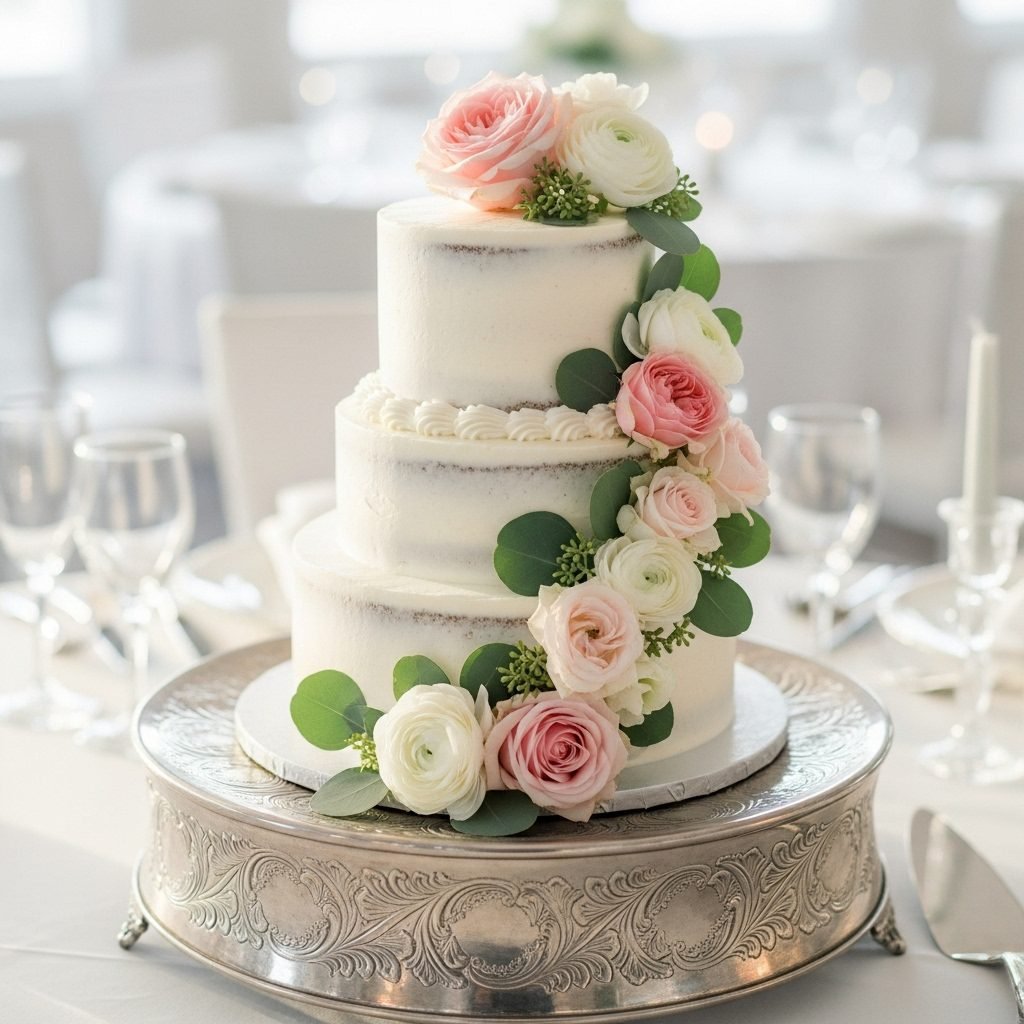
This breathtaking Almond Wedding Cake features layers of velvety, tender white cake infused with sweet almond essence, wrapped in a silky almond Swiss Meringue Buttercream. Adorned with fresh, organic blooms, it is the ultimate centerpiece for weddings, bridal showers, or elegant celebrations.
1 hour
35 minutes
3 hours
30-35 servings (Three 8-inch layers)
Dessert
Baking
American / French Inspired
Vegetarian
There is something undeniably magical about a homemade wedding cake. While the prospect of baking such a significant confection can seem daunting, this Elegant Almond Wedding Cake is designed to be both achievable for the home baker and indistinguishable from a high-end bakery creation. The flavor profile is sophisticated and nostalgic; the sweet, nutty aroma of almond extract permeates every crumb of the moist, dense, yet fluffy sponge. Unlike standard vanilla cakes, the almond addition brings a depth of flavor that pairs exquisitely with the richness of butter and sugar, creating a taste sensation that is luxurious without being overly cloying.
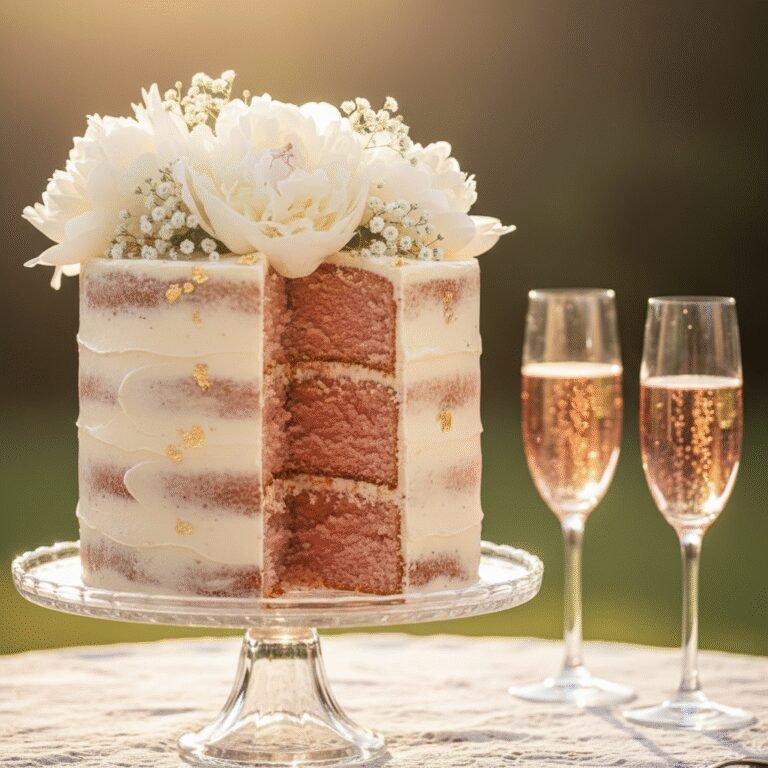
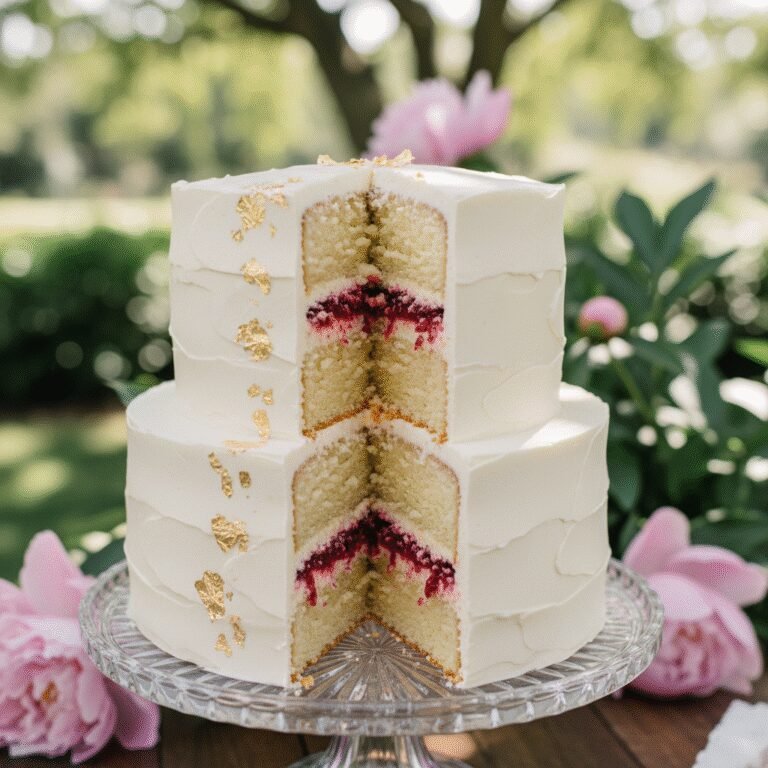
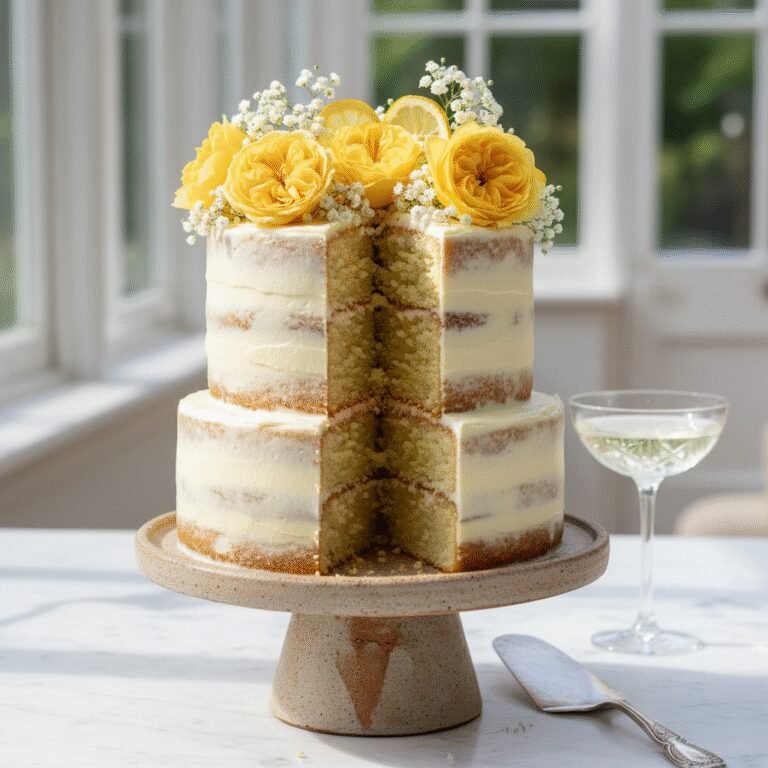
Visually, this cake is a masterpiece of understated elegance. The crumb is starkly white, achieved by using only egg whites and high-quality cake flour, which provides a stunning contrast to the creamy, ivory hue of the Swiss Meringue Buttercream. We forgo the heavy, sugary fondant often found in commercial wedding cakes in favor of a buttercream that is light as air, stable enough to hold up layers, and melts in your mouth. The final touch—fresh, organic flowers—transforms the dessert into a living art piece, allowing you to customize the color palette to match any event theme. Whether you are baking for a small, intimate backyard wedding or a lavish bridal shower, this recipe promises a professional finish that will have guests asking for the name of your baker.
History & Origins
The tradition of the wedding cake is steeped in centuries of history and symbolism, evolving significantly from its humble origins. In Ancient Rome, the ceremony involved breaking a loaf of barley bread over the bride’s head to symbolize fertility and good fortune. By the 17th century in England, this had transformed into the ‘Bride’s Pie,’ a savory dish often containing oysters, pine kernels, and cockscombs. It wasn’t until the 19th century, specifically with the wedding of Queen Victoria in 1840, that the wedding cake as we know it began to take shape. Queen Victoria’s cake was covered in pure white icing—later dubbed ‘royal icing’—which was a status symbol at the time, as refined white sugar was incredibly expensive. The white color symbolized purity and wealth, setting a standard that remains prevalent today.
The inclusion of almonds in wedding confections also has deep cultural roots. In many Mediterranean and European cultures, fresh almonds signify the ‘bitter and sweet’ nature of marriage. The traditional gift of five Jordan almonds (sugar-coated almonds) represents health, wealth, happiness, fertility, and longevity. Incorporating almond flavor directly into the wedding cake is a modern homage to this tradition, embedding these wishes of good fortune into the very celebratory vessel itself. Today, the trend has shifted away from the stiff, fruit-filled cakes of the Victorian era toward lighter, more flavorful sponges like this almond velvet cake, often decorated with fresh flowers to reflect a return to nature and organic beauty in modern nuptials.
Why This Recipe Works
This recipe succeeds where many others fail because it prioritizes both structural integrity and texture—two qualities that are often at odds in tiered cakes. First, we utilize the ‘reverse creaming’ method (also known as the paste method). Instead of creaming butter and sugar first, we beat the butter into the dry ingredients until it resembles sand. This coats the flour proteins in fat, inhibiting gluten formation. The result is an incredibly tender, velvety crumb that stays flat on top, minimizing the need for leveling and reducing waste.
Secondly, the moisture balance is meticulously calculated. We use a combination of sour cream and whole milk. The acidity in the sour cream tenderizes the gluten strands further and adds a subtle tang that cuts through the sweetness, while the fat content ensures the cake remains moist for days—a crucial factor for wedding cakes that are often baked in advance. We also use pure egg whites rather than whole eggs; this maintains the pristine white color of the sponge and provides a lighter, fluffier structure. Finally, the Swiss Meringue Buttercream is the superior choice for frosting. Unlike American buttercream, which can be gritty and overly sweet, SMBC is cooked to dissolve the sugar and then whipped into a stable meringue before adding butter. This creates a frosting that is silky smooth, holds sharp edges perfectly for a professional look, and withstands warmer temperatures better than cream cheese or standard buttercreams.
Why You’ll Love This Recipe
- ✓Velvety, tender crumb using the reverse creaming method
- ✓Stunning pure white color perfect for weddings
- ✓Silky, stable Swiss Meringue Buttercream frosting
- ✓Rich almond flavor that isn’t overpowering
- ✓Structurally sound for stacking tiers
- ✓Customizable decoration with fresh, edible flowers
Equipment You’ll Need
- ✓Three 8-inch round cake pans
- ✓Stand mixer with paddle and whisk attachments
- ✓Kitchen scale
- ✓Parchment paper
- ✓Cake turntable
- ✓Offset spatula
- ✓Bench scraper
- ✓Candy thermometer
- ✓Saucepan
- ✓Flower tape and straws (for fresh flowers)
Ingredients
- ✓3 3/4 cups (450g) Cake flour, sifted
- ✓2 1/2 cups (500g) Granulated sugar
- ✓2 tbsp Baking powder
- ✓1 tsp Salt
- ✓1 1/2 cups (340g) Unsalted butter, room temperature, cut into cubes
- ✓1 cup (240ml) Egg whites (approx. 7-8 large eggs), room temperature
- ✓1/2 cup (120g) Sour cream, room temperature
- ✓1 cup (240ml) Whole milk, room temperature
- ✓1 tbsp Pure almond extract
- ✓1 tsp Vanilla bean paste
- ✓FOR THE BUTTERCREAM:
- ✓8 large Egg whites (240g)
- ✓2 1/2 cups (500g) Granulated sugar
- ✓3 cups (680g) Unsalted butter, room temperature, cubed
- ✓1 tbsp Pure almond extract
- ✓Pinch of salt
- ✓Fresh organic edible flowers (roses, ranunculus, eucalyptus) for garnish
Instructions
- Preheat your oven to 335°F (168°C). Grease three 8-inch round cake pans, line the bottoms with parchment paper, and grease the paper. Dust with flour and tap out the excess.
- In the bowl of a stand mixer fitted with the paddle attachment, combine the sifted cake flour, sugar, baking powder, and salt. Mix on low speed for 30 seconds to combine.
- Add the cubed, room-temperature butter to the dry ingredients. Mix on low speed until the mixture resembles coarse sand and no large chunks of butter remain. This is the reverse creaming method.
- In a separate medium bowl, whisk together the egg whites, room-temperature milk, sour cream, almond extract, and vanilla bean paste until smooth.
- With the mixer on low, slowly pour in about half of the liquid mixture. Increase the speed to medium-high and beat for 2 minutes to build structure. Scrape down the sides and bottom of the bowl.
- Reduce speed to low and add the remaining liquid mixture in two batches, mixing just until combined after each addition. Do not overmix.
- Divide the batter evenly among the three prepared pans (use a kitchen scale for accuracy).
- Bake for 30-35 minutes, or until a toothpick inserted into the center comes out clean or with just a few moist crumbs. The tops should be pale gold.
- Allow the cakes to cool in the pans for 10 minutes, then turn them out onto a wire rack to cool completely before frosting.
- FOR THE BUTTERCREAM: Fill a saucepan with 2 inches of water and bring to a simmer. Place the bowl of your stand mixer over the saucepan (ensure the bottom doesn’t touch the water).
- Add the egg whites and sugar to the bowl. Whisk constantly by hand until the mixture reaches 160°F (71°C) on a candy thermometer and the sugar is completely dissolved (rub a bit between your fingers; it should feel smooth, not gritty).
- Transfer the bowl to the stand mixer fitted with the whisk attachment. Whip on high speed until the meringue is stiff, glossy, and the bowl feels cool to the touch (this takes about 10-15 minutes).
- Switch to the paddle attachment. With the mixer on low speed, add the butter one cube at a time. Wait for each piece to incorporate before adding the next.
- Once all butter is added, add the almond extract and salt. Increase speed to medium-high and whip until the buttercream is smooth, creamy, and silky. If it looks curdled, keep whipping; it will come together.
- ASSEMBLY: Place a dab of buttercream on a cake board. Place the first cake layer down. Spread an even layer of buttercream on top. Repeat with the second and third layers.
- Apply a thin ‘crumb coat’ of frosting all over the cake to trap loose crumbs. Chill in the fridge for 20 minutes.
- Apply the final thick layer of buttercream. Use a bench scraper to smooth the sides for a sharp, elegant finish.
- Prepare your flowers: Wrap the stems of your fresh flowers in floral tape or insert them into bubble tea straws before placing them into the cake to ensure food safety. Arrange artistically in a crescent or cascading pattern.
Expert Cooking Tips
- ✓Ingredients MUST be at room temperature. Cold milk or eggs will cause the batter to curdle and the cake to bake unevenly.
- ✓Weigh your flour. Using a measuring cup often leads to packing the flour, resulting in a dry, dense cake. A scale is your best friend here.
- ✓Do not open the oven door before the 25-minute mark. The rush of cool air can cause the delicate protein structure to collapse, leading to a sunken center.
- ✓If your buttercream looks like cottage cheese (curdled) after adding butter, don’t panic. It’s a temperature issue. Just keep whipping on high speed for 5-10 minutes; it will emulsify.
- ✓If your buttercream is too soupy, the meringue was too warm when you added the butter. Pop the bowl in the fridge for 15 minutes, then whip again.
- ✓Use ‘clear’ vanilla extract if you want the absolute whitest cake possible, though vanilla bean paste adds lovely speckles.
- ✓Wrap the stems of fresh flowers. Never insert raw flower stems directly into the cake; sap can be bitter or toxic. Use floral tape or posy picks.
Substitutions and Variations
If you cannot find cake flour, you can make a substitute by measuring 1 cup of all-purpose flour, removing 2 tablespoons, and replacing them with 2 tablespoons of cornstarch. Sift this mixture twice to aerate it. For a dairy-free version, use a high-quality plant-based butter block (not tub margarine) and unsweetened almond milk, though the texture will be slightly different. The sour cream can be replaced with full-fat plain Greek yogurt in a 1:1 ratio. If you have a nut allergy but want the flavor, use artificial almond extract which is often nut-free (check labels carefully) or swap the almond extract entirely for vanilla, lemon, or coconut extract for a different flavor profile. For the egg whites in the frosting, you can use pasteurized carton egg whites, but fresh eggs usually yield a more stable meringue.
Common Mistakes to Avoid
The most common mistake is rushing the cooling process. If the cakes are even slightly warm when you apply the butter-based frosting, the buttercream will melt and slide off, ruining the structure. Another frequent error is overmixing the batter after adding the liquids. Once the flour is hydrated, excessive mixing develops tough gluten, turning your tender cake into a chewy bread-like texture. Regarding the buttercream, many people give up when it looks curdled. This is a normal stage of the emulsion process—persistence is key; just keep whipping. Finally, failing to level the cakes (cutting off the domed top) results in an unstable tower that leans. Always trim your layers flat before stacking.
Serving Suggestions
Serve this cake at room temperature. Butter-based cakes solidify in the fridge and can taste dry if eaten cold. Allow the cake to sit out for at least 2-3 hours before serving to ensure the buttercream is soft and the crumb is tender. Slice using a sharp chef’s knife dipped in hot water and wiped dry between cuts for clean, professional-looking slices. This almond cake pairs beautifully with a raspberry coulis or fresh berries on the plate to cut the sweetness. For a beverage pairing, a dry Champagne or a floral Earl Grey tea complements the almond notes perfectly.
Storage and Reheating Tips
The frosted cake can be left at cool room temperature (below 72°F) for up to 2 days due to the sugar and fat content acting as preservatives. If making ahead, the baked, un-frosted cake layers can be wrapped tightly in plastic wrap and frozen for up to 1 month. Thaw them in the fridge overnight before assembling. The Swiss Meringue Buttercream can also be made ahead and refrigerated for a week or frozen for 3 months. To reuse, bring it completely to room temperature and re-whip until fluffy. Once the cake is cut, press a piece of plastic wrap directly against the exposed crumb to prevent it from drying out.
Nutrition Facts (Estimated)
| Serving Size | 1 slice |
| Calories | 580 |
| Fat | 32g |
| Saturated Fat | 19g |
| Unsaturated Fat | 11g |
| Trans Fat | 0g |
| Cholesterol | 85mg |
| Sodium | 310mg |
| Carbohydrates | 68g |
| Fiber | 0.5g |
| Sugar | 42g |
| Protein | 5g |
Frequently Asked Questions
Can I make this cake as a naked cake?
Absolutely. For a naked cake look, simply apply a generous crumb coat and scrape it down until the layers of cake peek through. You won’t need the second coat of frosting.
Which flowers are safe to use on a cake?
Stick to edible, pesticide-free flowers. Roses, pansies, violas, chamomile, lavender, and marigolds are popular safe choices. Avoid hydrangeas, lilies, and baby’s breath as they can be toxic.
Can I bake this in different sized pans?
Yes. This batter amount fits two 9-inch pans or four 6-inch pans. Adjust baking time accordingly; 6-inch cakes will bake faster, while 9-inch cakes may take slightly longer.
Why did my cake sink in the middle?
This is usually caused by opening the oven door too early, underbaking (the structure wasn’t set), or using too much baking powder which causes it to rise too fast and then collapse.
How do I get the frosting so white?
Buttercream is naturally yellowish due to the butter. To counteract this, add a tiny, tiny drop of violet food coloring to the finished frosting. The purple neutralizes the yellow, making it appear bright white.
Can I use salted butter?
It is best to use unsalted butter so you can control the sodium level. If you only have salted butter, omit the additional salt listed in the recipe ingredients.
Is this cake sturdy enough for fondant?
Yes, this almond velvet cake is dense enough to support the weight of fondant, and the Swiss Meringue Buttercream works well as a base for fondant application.
How far in advance can I assemble the cake?
You can fully assemble and crumb coat the cake the day before. Apply the final coat and flowers on the day of the event for the freshest appearance.
Conclusion
Creating your own Elegant Almond Wedding Cake is a labor of love that yields spectacular rewards. Beyond the significant cost savings compared to a bakery, there is an immense sense of pride in presenting a dessert that is both visually stunning and incredibly delicious. This recipe bridges the gap between home baking and professional pastry arts, giving you a reliable, sturdy, and flavorful canvas to celebrate love and joy. Whether adorned with a simple spray of eucalyptus or a lavish arrangement of garden roses, this cake is sure to be the sweet highlight of your special day. Happy baking!