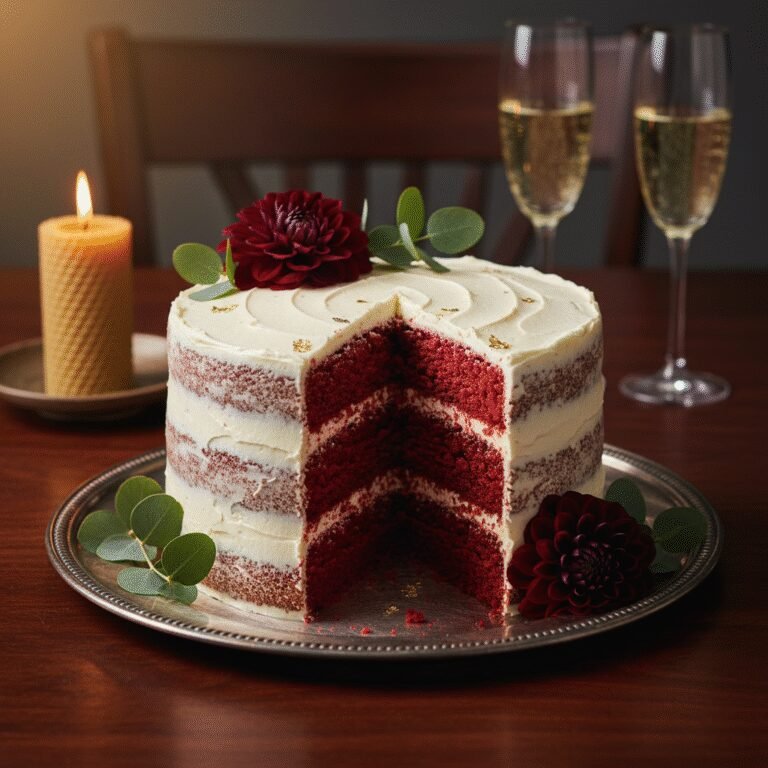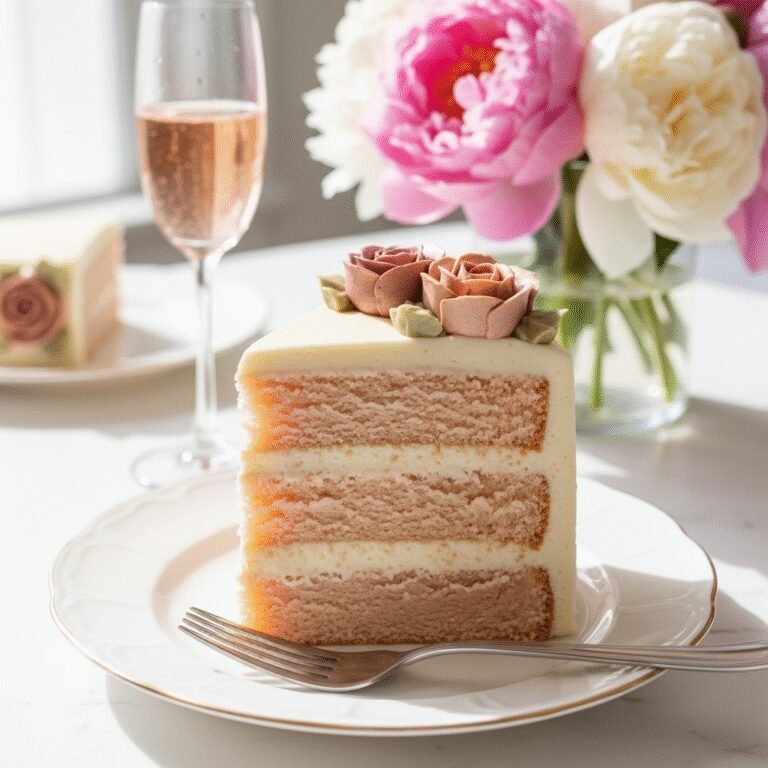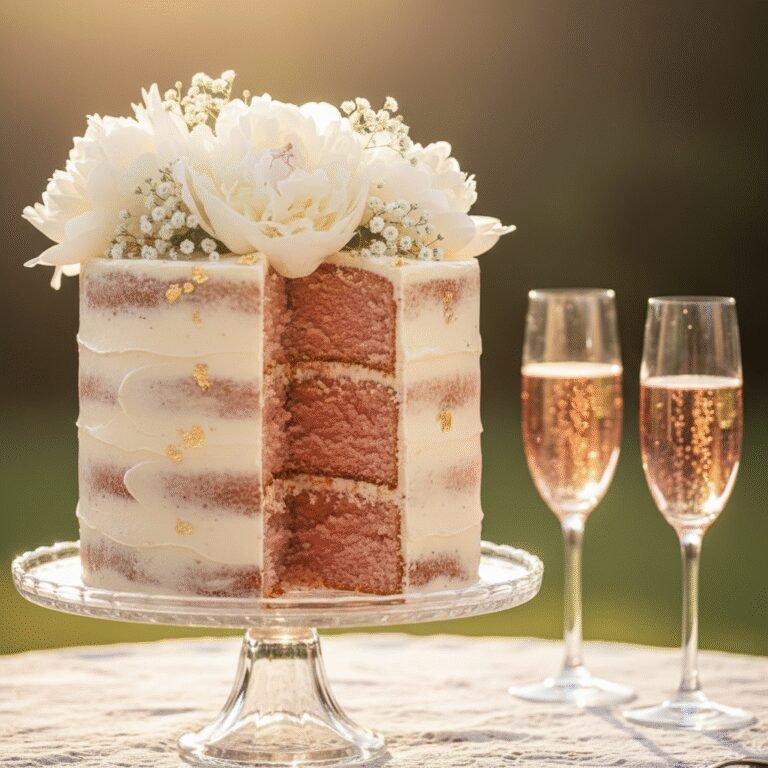
The Ultimate Elegant Almond Wedding Cake with Swiss Meringue Buttercream Flowers
Elegant Almond Wedding Cake With Buttercream Flowers Recipe
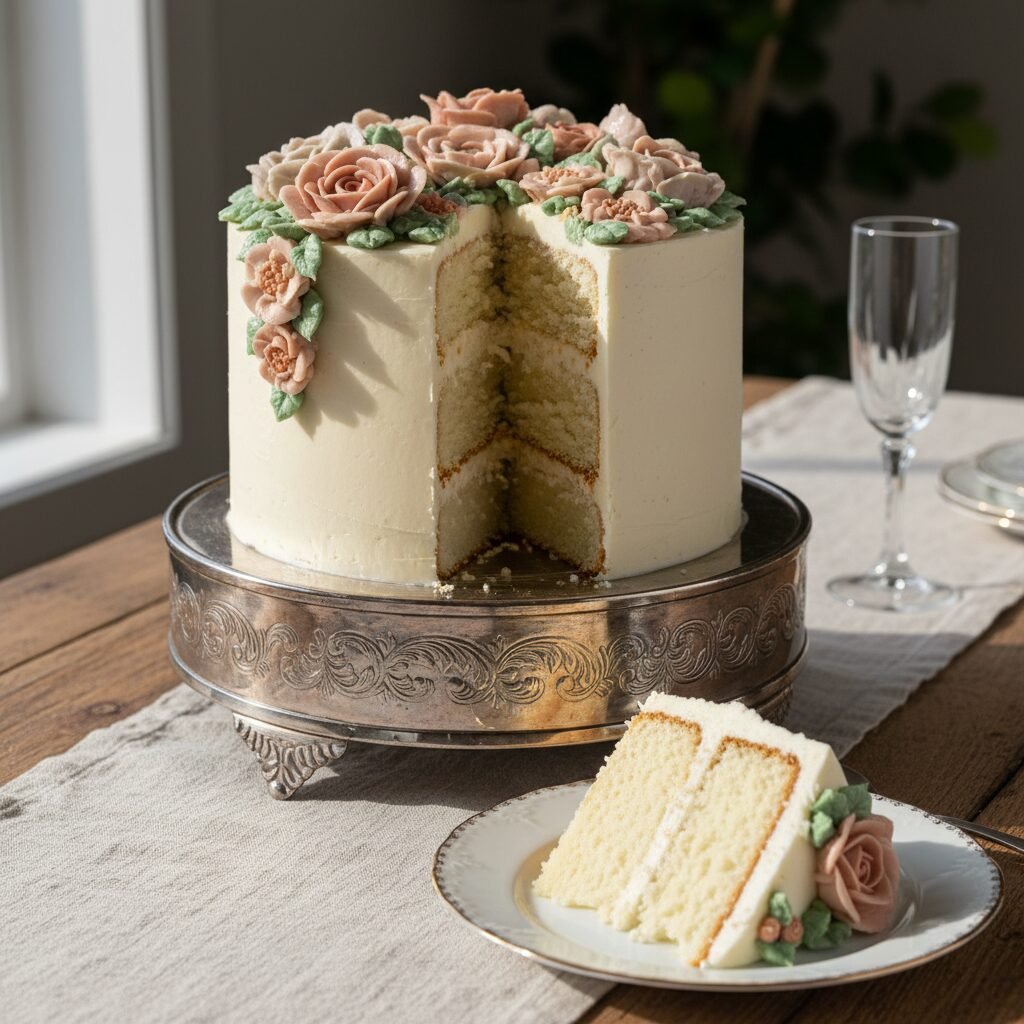
This sophisticated Almond Wedding Cake features tender, velvety white cake layers infused with pure almond extract and paired with silky Swiss Meringue Buttercream. It is the perfect centerpiece for intimate nuptials or bridal showers, offering professional bakery quality and intricate floral piping right from your home kitchen.
1 hour 30 minutes
35 minutes
4 hours (includes cooling and decoration)
12-16 servings (Three 6-inch layers or two 8-inch layers)
Dessert
Baking
American / French Inspired
Vegetarian
There is something profoundly magical about a wedding cake. Beyond the towering tiers and the artistic piping, it represents the first sweet moment shared between a newly married couple. However, you do not need a professional pastry degree or a commercial bakery to create a cake that tastes as ethereal as it looks. This Elegant Almond Wedding Cake is designed to bridge the gap between home baking and professional patisserie. The flavor profile is a timeless classic: the distinct, nutty, and aromatic warmth of almond, balanced by the creamy richness of vanilla. Unlike many wedding cakes that prioritize structural integrity over texture, resulting in dry, dense sponges, this recipe utilizes the reverse creaming method to ensure a crumb that is plush, moist, and incredibly tender.
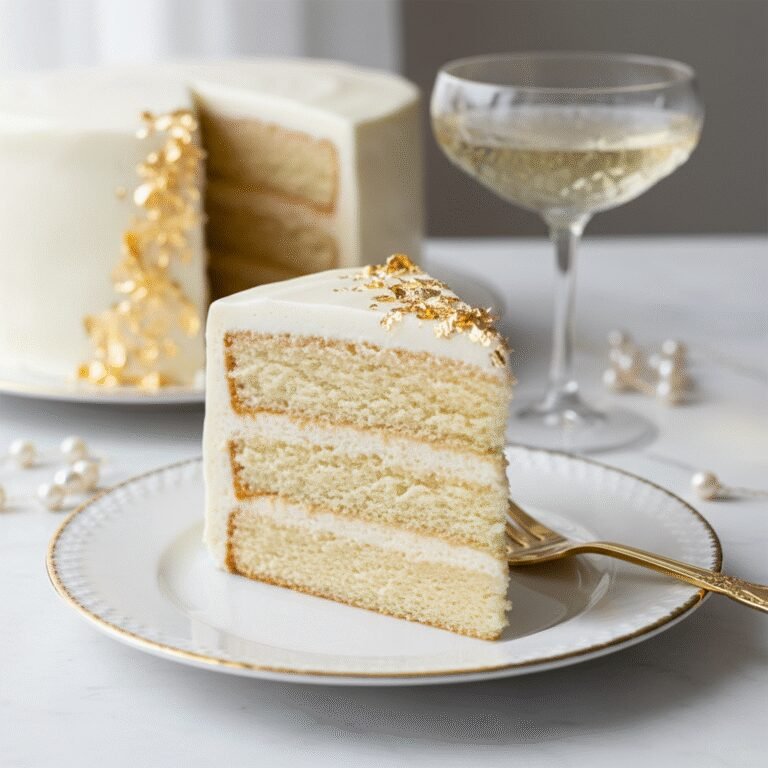
What truly sets this cake apart is the finish. We are skipping the overly sweet, gritty American buttercream in favor of a silky, cloud-like Swiss Meringue Buttercream. This frosting is the medium of choice for cake artists because of its stability and glossy finish, making it perfect for piping the realistic buttercream flowers that adorn the top. Whether you are baking for a micro-wedding, an engagement party, or simply want to tackle a baking project that screams elegance, this almond cake delivers on every front. It is white, bright, and boasts a fine crumb that melts in your mouth, leaving a lingering sweetness that pairs perfectly with a glass of champagne. Let’s dive into the art of creating a showstopper centerpiece that tastes even better than it looks.
History & Origins
The tradition of the wedding cake is steeped in centuries of history, ritual, and symbolism, evolving significantly from its humble origins. In Ancient Rome, the ceremony concluded not with a sweet confection, but by breaking a loaf of barley bread over the bride’s head to symbolize fertility and good fortune. The guests would then scramble to pick up the crumbs for good luck. By the Medieval period in England, this tradition transformed into a stack of spiced buns or cookies; if the bride and groom could kiss over the towering pile without knocking it over, they were promised a lifetime of prosperity.
The modern iteration of the wedding cake, particularly the white almond style, began to take shape in the 19th century. The term ‘royal icing’ was coined after Queen Victoria’s wedding cake in 1840, which was covered in pure white icing. At the time, refined white sugar was extremely expensive, so a pure white cake was a supreme status symbol, indicating that the family had the wealth to afford the finest ingredients. Almonds have long been a staple in European celebratory baking, particularly in France and Italy, where almond paste and marzipan were prized for their ability to keep cakes moist and add a luxurious flavor profile distinct from common vanilla. Over time, the ‘white almond cake’ became the quintessential American wedding flavor—a marriage of the Victorian aesthetic of purity and the continental appreciation for nut-based confectionery. Today, serving a white almond cake is a nod to this rich history, blending the symbolism of purity with a flavor that has stood the test of time.
Why This Recipe Works
This recipe succeeds where many others fail due to the specific scientific application of the ‘reverse creaming’ (or paste) method. In traditional creaming, you beat butter and sugar to create air, then add flour. While this creates lift, it can sometimes lead to large air tunnels and a dryer texture. In this almond cake recipe, we mix the softened butter directly into the dry ingredients (flour and sugar) first. This coats the flour proteins in fat, inhibiting gluten formation. The result is an exceptionally tender, velvety crumb that stays flat on top—perfect for stacking—rather than doming significantly.
Furthermore, we use egg whites exclusively, rather than whole eggs. This serves two purposes: it maintains the pristine white color essential for a ‘wedding’ aesthetic, and it provides a lighter, fluffier structure without the heavy richness of egg yolks. To compensate for the fat lost by removing yolks, we introduce full-fat sour cream. The acidity in the sour cream tenderizes the gluten strands even further and adds a density that keeps the cake moist for days. Finally, the choice of Swiss Meringue Buttercream is crucial. Unlike American buttercream, which is just butter and powdered sugar, Swiss Meringue involves cooking egg whites and sugar before whipping. This creates a stable protein structure that holds sharp edges for piping flowers and isn’t cloyingly sweet, allowing the delicate almond flavor of the sponge to shine through.
Why You’ll Love This Recipe
- ✓Velvety, tender crumb using the reverse creaming method.
- ✓Pristine white color perfect for wedding aesthetics.
- ✓Stable Swiss Meringue Buttercream that pipes realistic flowers.
- ✓Balanced sweetness that isn’t cloying.
- ✓Sturdy enough for stacking tiers but soft enough to melt in your mouth.
- ✓Can be made ahead and frozen without losing quality.
Equipment You’ll Need
- ✓Stand mixer with paddle and whisk attachments
- ✓Three 6-inch round cake pans (or two 8-inch)
- ✓Digital kitchen scale
- ✓Candy thermometer
- ✓Parchment paper
- ✓Piping bags
- ✓Piping tips (Wilton 104, 127, and 352)
- ✓Flower nail
- ✓Offset spatula
- ✓Cake turntable
Ingredients
- ✓375g (3 cups) Cake flour, sifted
- ✓350g (1 3/4 cups) Granulated sugar
- ✓1 tbsp Baking powder
- ✓1 tsp Salt
- ✓170g (3/4 cup) Unsalted butter, room temperature, cut into cubes
- ✓180g (3/4 cup) Egg whites (approx 5-6 large eggs), room temperature
- ✓120g (1/2 cup) Full-fat sour cream, room temperature
- ✓2 tsp Pure Almond extract
- ✓1 tsp Clear Vanilla extract
- ✓240ml (1 cup) Whole milk, room temperature
- ✓FOR THE BUTTERCREAM:
- ✓200g (7 oz) Egg whites
- ✓400g (2 cups) Granulated sugar
- ✓450g (2 cups) Unsalted butter, slightly cool but pliable, cubed
- ✓1 tbsp Vanilla bean paste
- ✓Pinch of salt
- ✓Gel food coloring (Soft Pink, Peach, Sage Green)
Instructions
- Preheat your oven to 335°F (168°C). Grease your cake pans, line the bottoms with parchment paper, and grease the paper. Dust with flour and tap out excess.
- In the bowl of a stand mixer fitted with the paddle attachment, combine the sifted cake flour, sugar, baking powder, and salt. Mix on low speed for 30 seconds to blend.
- Add the cubed, softened butter to the dry ingredients. Mix on low speed until the mixture resembles coarse sand or damp crumbs. This typically takes about 2 minutes. Do not overmix to a paste yet.
- In a separate pouring jug, whisk together the egg whites, sour cream, almond extract, vanilla extract, and milk until fully combined.
- With the mixer on low, slowly pour in half of the liquid mixture. Turn the speed up to medium-high and beat for exactly 2 minutes to build structure.
- Scrape down the sides and bottom of the bowl. Turn the mixer to low and add the remaining liquid in two batches, mixing for 20 seconds after each addition. The batter should be smooth and velvety.
- Divide the batter evenly between the prepared pans (use a scale for accuracy). Bake for 30-35 minutes, or until a toothpick inserted into the center comes out with just a few moist crumbs attached.
- Allow cakes to cool in pans for 10 minutes, then turn out onto a wire rack to cool completely before frosting.
- FOR THE BUTTERCREAM: Fill a saucepan with 2 inches of water and bring to a simmer. Place a heatproof bowl over the pot (don’t let it touch the water). Whisk egg whites and sugar in the bowl.
- Heat the mixture, whisking constantly, until it reaches 160°F (71°C) on a candy thermometer and sugar is completely dissolved (rub a bit between fingers to check for grit).
- Transfer mixture to a stand mixer with the whisk attachment. Whip on high speed until stiff peaks form and the bowl feels cool to the touch (about 10-15 minutes).
- Switch to the paddle attachment. With the mixer on low, add the butter one cube at a time. Once all butter is added, add vanilla and salt. Whip until silky and smooth.
- ASSEMBLY: Level the cake layers if necessary. Place the first layer on a board, top with buttercream, and repeat. Crumb coat the entire cake and chill for 20 minutes. Apply the final coat of frosting and smooth with a bench scraper.
- DECORATION: Tint remaining buttercream. Using a flower nail and petal tips (104/127), pipe roses and ranunculus onto parchment squares. Freeze the flowers for 10 minutes until hard, then transfer them to the cake. Use the leaf tip (352) to fill in gaps with green leaves.
Expert Cooking Tips
- ✓Weigh your ingredients: Using a digital scale is the only way to ensure the ratio of flour to fat is perfect for that tender crumb.
- ✓Room temperature is key: Ensure your butter, milk, sour cream, and eggs are all at room temperature so they emulsify properly without curdling.
- ✓Don’t rush the buttercream: If your meringue is too warm when you add the butter, it will turn into soup. If this happens, put the bowl in the fridge for 15 minutes and whip again.
- ✓Use clear vanilla: To keep the cake layers bright white, use clear vanilla extract instead of brown.
- ✓Freezing layers: For easier stacking and frosting, wrap your baked cake layers in plastic wrap and freeze them for 30 minutes before assembly.
- ✓Almond Emulsion: For a stronger flavor that doesn’t bake out, consider swapping half the almond extract for almond emulsion.
- ✓Piping practice: If you are new to piping flowers, practice on the countertop first. You can scrape the frosting up and reuse it.
Substitutions and Variations
If you cannot find cake flour, you can make a substitute by removing 2 tablespoons of all-purpose flour from every cup and replacing it with cornstarch, sifted together several times; however, true cake flour yields the best results. For a nut-free version, simply omit the almond extract and double the vanilla, or use a clear butter emulsion. If you prefer not to use sour cream, plain full-fat Greek yogurt is an excellent 1:1 substitute that provides similar acidity and moisture. For the buttercream, if you find Swiss Meringue too intimidating, you can use an Italian Meringue Buttercream (which involves pouring hot sugar syrup into whites) or a high-ratio American Buttercream, though the latter will be much sweeter and slightly grittier. If you need a dairy-free cake, use a high-quality plant-based butter block (not tub margarine) and unsweetened soy milk mixed with a teaspoon of vinegar to mimic buttermilk.
Common Mistakes to Avoid
The most common mistake with this cake is over-creaming or over-mixing. Because we use the reverse creaming method, you want to coat the flour with butter, not beat air into butter and sugar. Over-mixing once the liquid is added will develop gluten and result in a tough, bread-like texture. Another frequent issue is the buttercream ‘curdling’ or looking separated. This usually happens if the butter is too cold or the meringue is too warm. Keep whipping! It almost always comes back together. If it stays soupy, chill it; if it looks like cottage cheese, heat the side of the bowl with a hair dryer while whipping. Finally, do not open the oven door during the first 20 minutes of baking, or the delicate structure may collapse.
Serving Suggestions
This cake is rich and flavorful, so it pairs beautifully with beverages that cut through the creaminess. Serve thin slices with a glass of dry Champagne, Prosecco, or a floral Earl Grey tea. For a dessert plating, add a coulis of raspberry or apricot on the plate to provide a tart contrast to the sweet buttercream. Fresh berries—raspberries, blackberries, or strawberries—placed on the side of the cake slice add a burst of freshness and color. If serving at a summer wedding, a side of lemon sorbet is a refreshing accompaniment.
Storage and Reheating Tips
This cake stores exceptionally well due to the sour cream content. The frosted cake can sit at cool room temperature (below 70°F) for up to 2 days. For longer storage, keep it in the refrigerator for up to 5 days, but allow it to come to room temperature for at least 2 hours before serving; cold butter cake feels dense and dry, but it softens perfectly at room temp. You can freeze individual slices wrapped tightly in plastic wrap and foil for up to 3 months. The buttercream flowers can be piped days in advance and stored in an airtight container in the freezer until you are ready to decorate.
Nutrition Facts (Estimated)
| Serving Size | 1 slice (1/14th of cake) |
| Calories | 580 |
| Fat | 32g |
| Saturated Fat | 19g |
| Unsaturated Fat | 11g |
| Trans Fat | 0g |
| Cholesterol | 85mg |
| Sodium | 210mg |
| Carbohydrates | 68g |
| Fiber | 1g |
| Sugar | 42g |
| Protein | 6g |
Frequently Asked Questions
Can I make this cake ahead of time?
Yes! You can bake the cake layers up to 3 weeks in advance. Wrap them tightly in double layers of plastic wrap and freeze. Thaw in the fridge overnight before decorating.
Why did my cake sink in the middle?
This usually happens if the oven door was opened too early, the leavening agents (baking powder) were expired, or the batter was over-mixed, incorporating too much air that collapsed.
Does the almond extract make it taste like marzipan?
It gives it a distinct sweet-nutty flavor similar to marzipan or wedding cake, but because we mix it with vanilla, it is softer and more rounded, not harsh.
My buttercream tastes like butter, what did I do wrong?
Swiss Meringue Buttercream is very buttery by nature. If it tastes like a stick of butter, you likely didn’t add enough vanilla or salt, or you didn’t whip it long enough to aerate it fully.
Can I use liquid food coloring?
It is best to use gel paste coloring. Liquid coloring adds water which can destabilize the meringue buttercream, whereas gel is concentrated and won’t alter the texture.
How do I get the frosting perfectly smooth?
Use a metal bench scraper and a turntable. Run the scraper under hot water and dry it off; the heat will slightly melt the outer layer of butter for a glass-like finish.
Is this cake sturdy enough for fondant?
Yes, the reverse creaming method creates a structure that is sturdy enough to support the weight of fondant, provided you use dowels for support in a tiered cake.
Can I use carton egg whites?
For the cake batter, yes. For the Swiss Meringue Buttercream, it is risky. Carton whites are pasteurized in a way that often prevents them from whipping to stiff peaks. Fresh eggs are best.
Conclusion
Creating an Elegant Almond Wedding Cake at home is a labor of love that yields spectacular rewards. The combination of the plush, aromatic almond sponge with the silky, barely-sweet Swiss Meringue Buttercream creates a dessert experience that is far superior to mass-produced bakery cakes. Whether you are celebrating a marriage, an anniversary, or simply the joy of baking, this recipe offers a slice of luxury. Don’t be intimidated by the steps; take your time, trust the process, and enjoy the artistic freedom of piping your own floral garden. This is a cake that creates memories, one delicious bite at a time.