The Ultimate Classic Mexican Chocoflan (The Impossible Cake)
Classic Mexican Chocoflan Cake Recipe
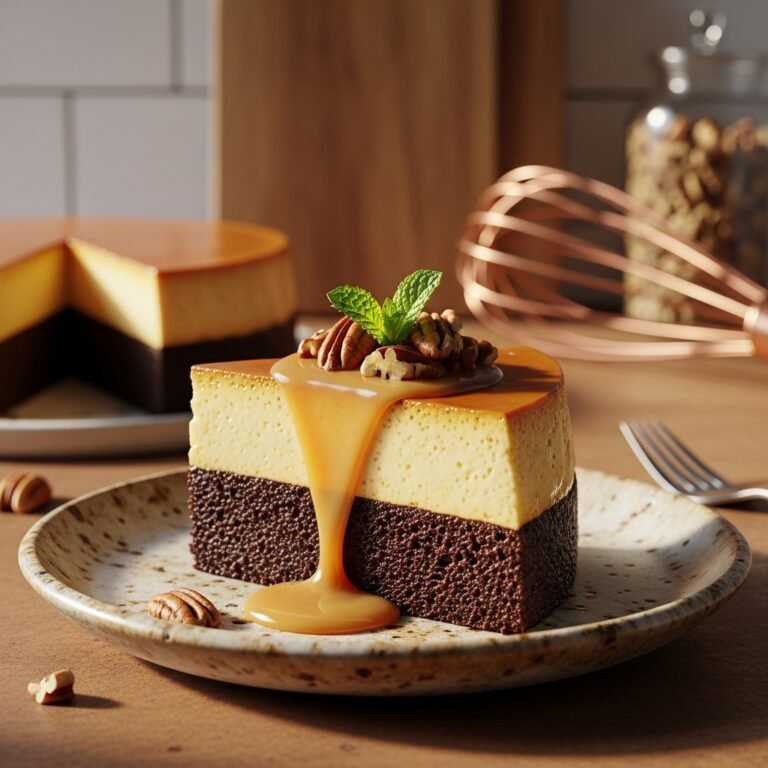
Experience the magic of the ‘Impossible Cake’ where rich chocolate cake and creamy vanilla flan switch places during baking. This show-stopping Mexican Chocoflan features a decadent layer of cajeta caramel, a moist chocolate base, and a silky custard topping that is guaranteed to impress.
30 minutes
1 hour 15 minutes
5 hours (includes cooling time)
12 servings
Dessert
Baking (Water Bath)
Mexican
Vegetarian
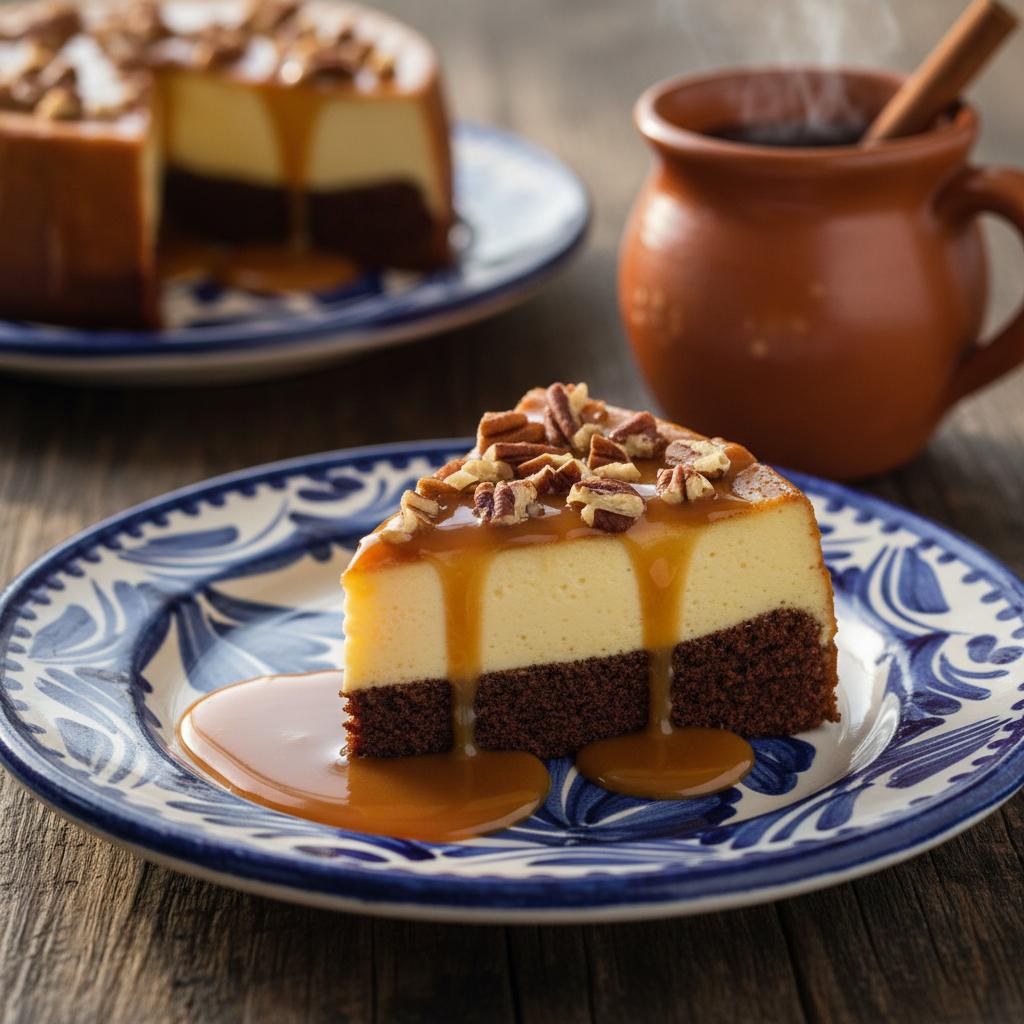
If you have ever found yourself torn between ordering a slice of rich chocolate cake or a smooth, creamy flan for dessert, the Chocoflan is the culinary miracle you have been waiting for. Often referred to as ‘Pastel Imposible’ or the Impossible Cake, this Mexican masterpiece is a feat of baking physics and flavor engineering. At first glance, it looks like a beautiful Bundt cake topped with a layer of custard, but the magic lies in how it is made. You pour the dense chocolate batter into the pan first, followed by the lighter flan mixture, but during the gentle heat of the water bath, the layers invert. The chocolate cake rises to the top (which becomes the bottom when flipped), and the flan sinks to the bottom (becoming the top). The result is a stunning two-toned dessert dripping with caramelized cajeta. The textures are the real star here; the bottom layer offers the deep, bittersweet crumb of a cocoa-rich cake, while the top layer provides a cool, silky, melt-in-your-mouth vanilla custard. It is a dessert of contrasts—dense and light, dark and light, warm spices and cool cream. Perfect for Cinco de Mayo, birthdays, or any dinner party where you want to elicit a gasp from your guests, this recipe has been refined to ensure perfectly distinct layers every single time. Unlike many dry versions, this recipe uses a specific blend of buttermilk and oil to keep the cake moist even after the long baking time required to set the custard. Prepare to fall in love with the ultimate fusion dessert.
History & Origins
The history of Chocoflan is a fascinating journey through time and across continents, representing the ultimate collision of Old World and New World cuisines. To understand Chocoflan, we must first look at its two components. The flan layer traces its roots back to the Roman Empire, where domesticated chickens led to a surplus of eggs. The Romans developed savory and sweet custards, a tradition adopted and refined by the Spanish, who added sweet caramel sauces. When Spanish conquistadors arrived in Mexico in the early 16th century, they brought this love for custard-based desserts with them. On the other side of the equation is chocolate, a distinctly Mesoamerican treasure. The Aztecs and Mayans had been cultivating cacao for centuries, primarily consuming it as a bitter, spiced beverage. The fusion of Spanish dairy and sugar with indigenous Mexican chocolate laid the groundwork for modern Mexican baking. However, the specific invention of the ‘Pastel Imposible’ is a more modern mid-20th-century innovation, likely popularized by the rise of industrialized food products like condensed milk and evaporated milk in Latin America. These canned milks became staples in Mexican households, leading to the widespread popularity of ‘Flan Napolitano.’ Innovative home bakers eventually discovered that by combining a chocolate sponge with this dense flan, the different densities caused the batters to swap places in the oven. Today, Chocoflan is a staple at Mexican bakeries (panaderías) and family gatherings, symbolizing the beautiful, delicious blend of Mexico’s mestizo culinary heritage.
Why This Recipe Works
The success of a Chocoflan recipe hinges entirely on the science of density and the gentle application of heat. Many home bakers struggle with layers that bleed into each other or a cake that dries out before the flan sets. This recipe works because we have meticulously balanced the specific gravity of the two batters. The chocolate cake batter relies on baking soda and buttermilk, which creates gas bubbles (carbon dioxide) upon heating. This aeration makes the cake batter less dense than the fluid, egg-heavy flan mixture. As the cake becomes lighter and airy, it floats up, while the heavier, sugar-dense flan mixture sinks to the bottom of the Bundt pan. Furthermore, this recipe utilizes the ‘Baño de María’ or water bath method. Direct oven heat is too aggressive for the delicate proteins in the eggs and cream cheese; without the water bath, the flan would curdle and become rubbery before the cake is baked. The water regulates the temperature around the pan, ensuring the custard sets into a creamy, porcelain-smooth texture. Finally, we use Cajeta (Mexican goat’s milk caramel) instead of a standard sugar caramel. Cajeta is thicker and has a more complex, nutty flavor profile that bridges the gap between the tangy cream cheese in the flan and the bitterness of the cocoa, preventing the sauce from dissolving entirely into the cake.
Why You’ll Love This Recipe
- ✓Two desserts in one: Rich chocolate cake and creamy vanilla flan.
- ✓The ‘magic’ inversion creates a stunning visual presentation.
- ✓Uses Cajeta for a deeper, more authentic Mexican caramel flavor.
- ✓Can be made a day in advance, making it perfect for hosting.
- ✓The water bath method ensures a silky, non-rubbery custard texture.
- ✓Feeds a crowd with 12 generous servings.
Equipment You’ll Need
- ✓12-cup Bundt pan (non-stick preferred)
- ✓Large roasting pan (for water bath)
- ✓Electric hand mixer or Stand mixer
- ✓Blender
- ✓Rubber spatula
- ✓Large mixing bowls
- ✓Aluminum foil
Ingredients
- ✓1/2 cup Cajeta (Mexican caramel sauce) or Dulce de Leche
- ✓Softened butter (for greasing the pan)
- ✓FOR THE CAKE:
- ✓1 1/2 cups all-purpose flour
- ✓2/3 cup unsweetened cocoa powder
- ✓1 cup granulated sugar
- ✓1 teaspoon baking soda
- ✓1/2 teaspoon baking powder
- ✓1/2 teaspoon salt
- ✓1/2 teaspoon ground cinnamon
- ✓1 cup buttermilk, room temperature
- ✓1/2 cup vegetable oil
- ✓2 large eggs, room temperature
- ✓1 teaspoon vanilla extract
- ✓FOR THE FLAN:
- ✓1 (12 oz) can evaporated milk
- ✓1 (14 oz) can sweetened condensed milk
- ✓4 oz cream cheese, room temperature
- ✓4 large eggs
- ✓1 tablespoon vanilla extract
Instructions
- Preheat your oven to 350°F (175°C). Adjust the oven rack to the middle position.
- Generously grease a 12-cup Bundt pan with softened butter. Be sure to get into every crevice to ensure the flan releases perfectly later. Pour the cajeta into the bottom of the pan and tilt it slightly to coat the bottom evenly.
- Prepare the cake batter: In a large bowl, sift together the flour, cocoa powder, sugar, baking soda, baking powder, salt, and cinnamon. In a separate bowl, whisk the buttermilk, vegetable oil, eggs, and vanilla. Pour the wet ingredients into the dry and mix with an electric mixer on medium speed for 2 minutes until smooth. Pour the cake batter evenly over the cajeta in the Bundt pan. Use a spatula to smooth the top.
- Prepare the flan mixture: In a blender, combine the evaporated milk, condensed milk, cream cheese, eggs, and vanilla. Blend on high for 30-45 seconds until completely smooth.
- Slowly and gently pour the flan mixture over the cake batter. Using a ladle to pour it gently helps prevent the layers from mixing prematurely. Cover the Bundt pan loosely with aluminum foil.
- Set up the water bath: Place the Bundt pan inside a large roasting pan. Place the roasting pan in the oven, then carefully pour boiling water into the roasting pan until it reaches about 2-3 inches up the side of the Bundt pan.
- Bake for 60 to 75 minutes. The cake is done when a toothpick inserted into the cake layer comes out clean (or with just a few moist crumbs). The flan should be set but may still jiggle slightly.
- Remove the Bundt pan from the water bath and transfer it to a wire rack. Remove the foil and let it cool completely at room temperature (about 1-2 hours).
- Once cool, refrigerate the cake in the pan for at least 4 hours, preferably overnight. This chilling step is crucial for the flan to set firmly.
- To serve, run a thin knife around the edges of the pan to loosen. Place a large serving platter upside down over the pan, then quickly flip both over. Gently lift the pan to release the Chocoflan. Garnish with chopped pecans if desired.
Expert Cooking Tips
- ✓Grease the pan thoroughly: Even if you have a non-stick pan, the sugar in the cajeta and flan can stick. Butter works better than cooking spray for this recipe.
- ✓Room temperature ingredients: Ensure your eggs, buttermilk, and cream cheese are at room temperature. This ensures a smooth emulsion and prevents lumps in the flan.
- ✓Do not skip the water bath: This is the secret to a creamy flan. Without it, the direct heat will cause the eggs to scramble and the texture will be grainy.
- ✓Patience is key: Do not try to invert the cake while it is warm. The flan structure is too delicate and will collapse. It must be cold.
- ✓Pour gently: When adding the flan liquid over the cake batter, pour it over the back of a spoon or ladle to distribute the weight and prevent it from ‘drilling’ a hole into the cake batter.
- ✓Check your oven temperature: Use an oven thermometer. If the oven is too hot, the water bath might boil vigorously, which can introduce bubbles into the flan.
Substitutions and Variations
For the caramel layer, if you cannot find Cajeta (goat milk caramel), you can use Dulce de Leche or make a traditional wet caramel by melting 1 cup of sugar until amber. For the cake layer, while this scratch recipe is superior, you can use a high-quality box of Devil’s Food cake mix. Prepare it according to the box instructions but substitute the water with milk or buttermilk for a denser crumb that holds up to the flan. For a dairy-free version, this recipe is challenging, but you can substitute coconut condensed milk and coconut evaporated milk for the flan, and use almond milk for the cake, though the texture will differ significantly. If you don’t have buttermilk, make a ‘sour milk’ by adding 1 tablespoon of lemon juice or vinegar to 1 cup of regular milk and letting it sit for 5 minutes.
Common Mistakes to Avoid
The most common mistake is flipping the cake too early. It is tempting to see the result immediately, but the flan needs the cold of the refrigerator to solidify its structure. Another frequent error is under-greasing the Bundt pan, leading to a tragic presentation where half the flan stays in the pan. Make sure to grease the center tube of the pan well. Additionally, failing to cover the pan with foil during baking can cause the top of the cake (which is actually the bottom) to dry out and form a hard crust before the interior is cooked. Lastly, be careful not to overfill the water bath; you don’t want boiling water splashing into your cake batter.
Serving Suggestions
Serve the Chocoflan chilled. It pairs beautifully with a hot cup of Mexican coffee (Café de Olla) spiced with cinnamon and piloncillo. For garnish, toasted chopped pecans or walnuts add a nice crunch that contrasts with the soft textures of the cake. Fresh berries, such as strawberries or raspberries, add a pop of color and acidity to cut through the richness. A dollop of unsweetened whipped cream can also balance the sweetness of the condensed milk and cajeta.
Storage and Reheating Tips
Because of the dairy and egg content in the flan layer, Chocoflan must be stored in the refrigerator. Cover it tightly with plastic wrap or store it in an airtight cake carrier. It will keep well for up to 4 days. In fact, many find it tastes better on day two as the cajeta seeps further into the cake. Freezing is not recommended for Chocoflan, as the freezing and thawing process tends to weep water from the flan, ruining the smooth texture and making the cake layer soggy.
Nutrition Facts (Estimated)
| Serving Size | 1 slice |
| Calories | 480 |
| Fat | 22g |
| Saturated Fat | 10g |
| Unsaturated Fat | 11g |
| Trans Fat | 0g |
| Cholesterol | 115mg |
| Sodium | 310mg |
| Carbohydrates | 64g |
| Fiber | 2g |
| Sugar | 42g |
| Protein | 9g |
Frequently Asked Questions
Why didn’t my layers switch places?
This usually happens if the batter densities are too similar. Ensure you are using a dense cake batter (like the one provided) and a fluid flan mix. Also, ensure the oven is fully preheated before putting the cake in.
Can I use a regular cake pan instead of a Bundt pan?
A Bundt pan is highly recommended because the center tube helps heat distribute evenly to the center of the dense custard. If you use a solid round pan, the center may remain liquid while the edges overcook.
Why is my flan layer rubbery?
A rubbery texture is a sign of overcooking or baking at too high a temperature. The water bath is essential to moderate the heat. If the water boils violently, the heat is too high.
Can I make this ahead of time?
Yes, absolutely! In fact, it is better made a day ahead. The overnight chilling time allows the flan to set perfectly and the flavors to meld.
How do I know when it is done?
Insert a toothpick or skewer into the cake layer. It should come out clean or with moist crumbs. Do not push it all the way down into the flan layer, as that will always be wet while hot.
What is the difference between Cajeta and Caramel?
Cajeta is made from goat’s milk and sugar, giving it a tangier, nuttier flavor. Traditional caramel is just burnt sugar and water or cream. Cajeta is more traditional for Chocoflan.
Can I use a box cake mix?
Yes, a Devil’s Food cake mix works well. Just be sure to use milk instead of water to ensure the batter is dense enough to support the inversion process.
My cake stuck to the pan, how do I fix it?
If it’s stuck, you can try placing the bottom of the pan in hot water for 30 seconds to loosen the caramel. If it breaks, serve it as ‘Chocoflan trifle’ in cups—it will still taste delicious!
Conclusion
The Classic Mexican Chocoflan is more than just a dessert; it is a conversation starter and a testament to the magic of baking. While the process requires a bit of patience and trust in the ‘impossible’ inversion, the result is a sophisticated, decadent treat that rivals anything you would find in a high-end bakery. The combination of the moist, chocolatey crumb with the smooth, sweet flan and the rich tang of cajeta creates a symphony of textures and flavors that is truly unforgettable. Whether you are celebrating a special occasion or simply want to challenge your baking skills, this recipe promises a reward that is well worth the effort. Don’t forget to share your beautiful creations on Pinterest and tag us!