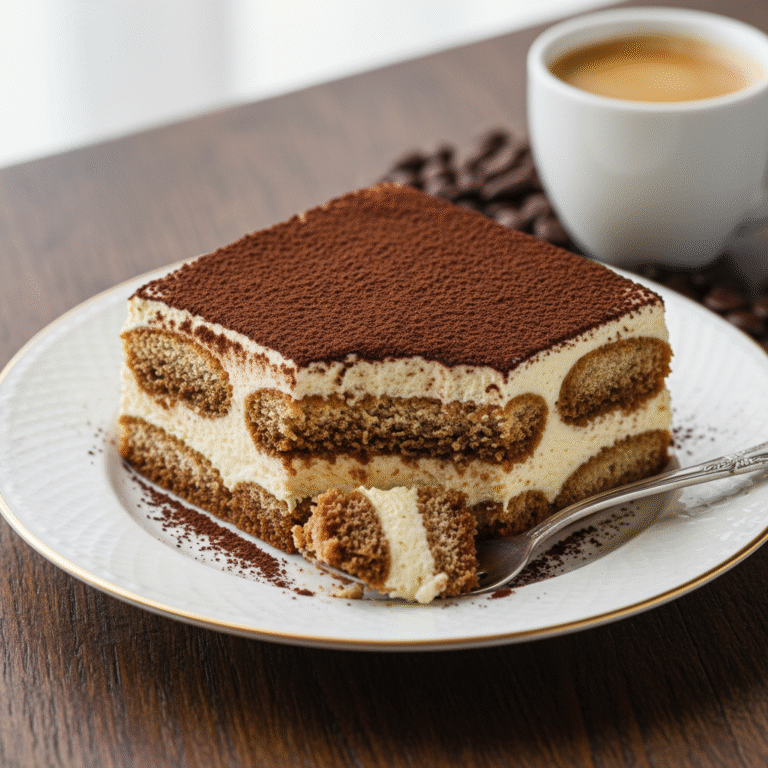

Authentic Classic Italian Tiramisu: The Ultimate No-Bake Dessert Recipe
Classic Italian Tiramisu Cake Recipe
Experience the magic of Italy with this authentic Classic Tiramisu recipe, featuring layers of espresso-soaked ladyfingers and a rich, velvety mascarpone cream. This no-bake masterpiece is the perfect make-ahead dessert for dinner parties, offering a sophisticated balance of bitter coffee and sweet cream that melts in your mouth.
45 minutes
10 minutes
6 hours 55 minutes (includes chilling)
9-12 servings
Dessert
No-Bake / Whisking
Italian
Vegetarian
Tiramisu is arguably the most famous Italian dessert in the world, and for good reason. It is a study in contrasts: the intense bitterness of espresso against the sweet richness of mascarpone; the soft, sponge-like texture of the ladyfingers against the dusting of dry cocoa powder; the boozy warmth of Marsala wine against the chilled cream. In Italian, ‘Tiramisu’ translates literally to ‘pick me up’ or ‘cheer me up,’ a nod to the caffeine kick from the espresso and the sugar rush that inevitably follows. While there are countless variations involving strawberries, lemon, or even pumpkin, nothing beats the classic.
This recipe is not just a quick assembly of ingredients; it is a culinary project that rewards patience and precision. Unlike many modern shortcuts that use heavy cream alone to fluff up the mixture, this traditional approach utilizes a zabaglione—a cooked custard of egg yolks, sugar, and wine—to provide structure and a depth of flavor that simple whipped cream cannot achieve. The result is a dessert that is sturdy enough to slice yet light enough to dissolve on the tongue. Whether you are hosting an elegant dinner party or simply craving a slice of European luxury at home, this Tiramisu will transport you straight to a piazza in Rome. It is rich, decadent, and undeniably romantic, making it the ultimate finale to any meal.
History & Origins
The history of Tiramisu is a subject of heated debate in Italy, with various regions claiming paternity over this beloved dessert. Most food historians agree that Tiramisu as we know it is a relatively modern invention, likely originating in the late 1960s or early 1970s in the Veneto region, specifically in the city of Treviso. The most widely accepted origin story points to the restaurant ‘Le Beccherie,’ where pastry chef Roberto Linguanotto and owner Ada Campeol created the dish. It was said to be inspired by ‘sbatudin,’ a simple rustic mixture of egg yolks and sugar beaten together, often given to children and the elderly as a restorative tonic.
By adding mascarpone cheese to the egg mixture and layering it with coffee-soaked biscuits, they created a dessert that was both familiar and entirely new. The recipe first appeared in print in a 1981 issue of ‘Vin Veneto,’ cementing its status in Italian culinary culture. However, other regions like Friuli-Venezia Giulia also lay claim to early versions of the dessert. Regardless of exactly who whisked the first bowl, Tiramisu quickly conquered the globe in the 1980s, becoming a staple in Italian-American restaurants and a symbol of Italian gastronomy. Its rapid rise to fame speaks to its universal appeal—simple ingredients transformed into something extraordinary through the alchemy of layering and time.
Why This Recipe Works
This recipe stands out because it refuses to compromise on technique. Many quick Tiramisu recipes skip the eggs entirely or use raw eggs, which can be a safety concern for some and often results in a mixture that is too runny or lacks depth. This version employs a traditional ‘zabaglione’ method, where egg yolks and sugar are whisked over a double boiler until they are cooked, thick, and pale. This not only pasteurizes the eggs, making them safe to eat, but also dissolves the sugar completely and emulsifies the fats, creating a stable base that holds up well after slicing.
Furthermore, we use a combination of mascarpone and a small amount of whipped heavy cream. The mascarpone provides the dense, tangy richness essential to Tiramisu, while the folded-in whipped cream lightens the texture just enough to prevent it from being cloying. The ratio of liquid to biscuit is also calculated precisely; we use strong espresso fortified with Marsala wine. The goal is to dip the ladyfingers just long enough to absorb the flavor but not so long that they disintegrate into mush. This balance ensures that every bite has distinct layers and textures, rather than becoming a homogeneous soup.
Why You’ll Love This Recipe
- ✓Authentic Italian flavor profile using Marsala wine and espresso.
- ✓Uses the zabaglione method for safe, cooked eggs and superior texture.
- ✓Perfect make-ahead dessert that tastes better the next day.
- ✓No-bake recipe ideal for warm weather or keeping the oven off.
- ✓Produces clean, beautiful layers that look professional when sliced.
- ✓Balanced sweetness that isn’t overpowering.
Equipment You’ll Need
- ✓Stand mixer or electric hand mixer
- ✓Heat-proof glass bowl (for double boiler)
- ✓Saucepan
- ✓8×8 or 9×9 inch baking dish
- ✓Rubber spatula
- ✓Whisk
- ✓Shallow bowl (for dipping)
- ✓Fine mesh sieve
Ingredients
- ✓6 large egg yolks
- ✓3/4 cup granulated sugar
- ✓2/3 cup Marsala wine (divided use)
- ✓16 oz (450g) Mascarpone cheese, room temperature
- ✓1 cup heavy whipping cream, cold
- ✓1 1/2 cups strong brewed espresso, cooled
- ✓1 teaspoon vanilla extract
- ✓2 packages (about 24-30) Savoiardi (Italian Ladyfingers)
- ✓2-3 tablespoons unsweetened cocoa powder, for dusting
Instructions
- Brew the espresso and pour it into a shallow, wide bowl. Stir in 1/3 cup of the Marsala wine, the vanilla extract, and 1 tablespoon of sugar (optional, depending on coffee bitterness). Set aside to cool completely.
- Set up a double boiler: Fill a medium saucepan with an inch of water and bring to a gentle simmer. Place a heat-proof bowl over the pot (ensure the bottom of the bowl does not touch the water).
- In the heat-proof bowl, whisk together the egg yolks and the remaining sugar. Whisk constantly over the simmering water for about 9-10 minutes. The mixture will pale in color, thicken significantly, and increase in volume. This is your zabaglione. Remove from heat and let it cool slightly.
- While the yolks cool, beat the mascarpone cheese in a large bowl just until smooth. Do not overbeat or it may separate. Gently whisk the remaining 1/3 cup of Marsala wine into the mascarpone.
- Fold the cooled egg yolk mixture into the mascarpone until well combined.
- In a separate cold bowl, whip the heavy cream until stiff peaks form. Gently fold the whipped cream into the mascarpone-egg mixture in two batches. Keep the mixture airy; do not deflate the cream. This is your filling.
- Assemble the cake: Quickly dip each ladyfinger into the cooled espresso mixture. Dip for only about 1-2 seconds per side—do not soak them! Arrange them in a single layer at the bottom of your 8×8 dish. You may need to break some to fit.
- Spread half of the mascarpone filling evenly over the first layer of ladyfingers.
- Repeat with a second layer of dipped ladyfingers, followed by the remaining mascarpone filling. Smooth the top with a spatula.
- Cover the dish with plastic wrap (you can use toothpicks to keep the plastic from touching the cream) and refrigerate for at least 6 hours, preferably overnight. This sets the dessert and melds the flavors.
- Right before serving, remove from the fridge and dust the top generously with cocoa powder using a fine mesh sieve.
Expert Cooking Tips
- ✓Ensure your mascarpone is at room temperature before mixing to avoid lumps, but keep the heavy cream ice cold for better whipping.
- ✓The ‘dip’ is the most critical step. Savoiardi are like sponges; a quick ‘in and out’ is all they need. If you soak them, the cake will collapse and weep liquid.
- ✓Use high-quality espresso. Since coffee is a primary flavor, instant coffee won’t provide the same depth. A Moka pot brew is ideal.
- ✓If you don’t have a double boiler, you can make one using a glass bowl and a pot. Just be careful not to scramble the eggs.
- ✓Chill time is non-negotiable. The structure of the cake depends on the fats solidifying in the fridge.
- ✓Use a high-fat cocoa powder (Dutch-processed) for a darker color and smoother, less acidic flavor on top.
Substitutions and Variations
Tiramisu is adaptable to various dietary needs and pantry limitations, though purists might disagree. If you cannot find Marsala wine, dark rum or brandy make excellent substitutes, offering a similar warmth. For a non-alcoholic version, simply omit the alcohol entirely or add a drop of rum extract to the coffee. If raw eggs are a concern and you don’t want to cook the zabaglione, you can find pasteurized eggs at the store, or use a recipe that relies solely on whipped cream and mascarpone (though it will be less rich).
Savoiardi (crisp ladyfingers) are essential for texture. Avoid the soft, cake-like ladyfingers often found in US grocery bakery sections, as they get soggy instantly. If you absolutely cannot find Savoiardi, you can use stale sponge cake cut into strips and toasted in the oven to dry out. For a caffeine-free version, use decaf espresso or even strong hot chocolate for a kid-friendly twist.
Common Mistakes to Avoid
The most common mistake is over-soaking the ladyfingers. This leads to a watery dessert that falls apart on the plate. Remember, the biscuits will continue to absorb moisture from the cream as they sit in the fridge. Another frequent error is over-whipping the mascarpone. Mascarpone has a high fat content and can turn into butter if beaten too aggressively; mix it only until smooth.
Finally, do not rush the chilling process. Cutting into the Tiramisu too early will result in a sloppy mess. It needs time for the ladyfingers to soften to a cake-like consistency and for the cream to firm up. Also, avoid dusting the cocoa powder until the very last minute; if done too early, the cocoa will absorb moisture from the cream and turn wet and dark.
Serving Suggestions
Tiramisu is a rich dessert, so it is best served in modest squares. Remove the dish from the refrigerator about 15 to 20 minutes before serving to take the chill off, which allows the flavors to bloom. Use a sharp knife dipped in hot water and wiped dry between cuts for clean, professional-looking slices. Serve alongside a shot of espresso or a small glass of dessert wine, such as Vin Santo or the same Marsala used in the recipe. For an elegant touch, garnish the plate with a few chocolate-covered coffee beans or fresh berries like raspberries or strawberries, which provide a tart contrast to the creamy sweetness.
Storage and Reheating Tips
Tiramisu is an excellent keeper and actually tastes better on day two. It can be stored in the refrigerator, tightly covered with plastic wrap, for up to 3-4 days. After that, the ladyfingers may become too mushy. Do not leave it out at room temperature for longer than an hour due to the egg and dairy content.
Freezing is also an option! You can freeze the assembled Tiramisu (without the cocoa dusting) for up to 3 months. Wrap the container in a layer of plastic wrap followed by a layer of aluminum foil to prevent freezer burn. Thaw it in the refrigerator overnight before serving, and add the fresh cocoa dusting just before presenting it to your guests.
Nutrition Facts (Estimated)
| Serving Size | 1 slice |
| Calories | 450 |
| Fat | 32g |
| Saturated Fat | 18g |
| Unsaturated Fat | 12g |
| Trans Fat | 0g |
| Cholesterol | 185mg |
| Sodium | 120mg |
| Carbohydrates | 38g |
| Fiber | 1g |
| Sugar | 28g |
| Protein | 7g |
Frequently Asked Questions
Is it safe to eat the eggs in this recipe?
Yes. In this recipe, we use a ‘zabaglione’ technique where the egg yolks and sugar are cooked over a double boiler. This gently pasteurizes the eggs, reducing the risk of salmonella, making it safer than traditional raw egg recipes.
Can I use cream cheese instead of mascarpone?
Technically yes, but the flavor profile will change significantly. Cream cheese is tangier and saltier. If you must substitute, blend the cream cheese with a little heavy cream and sugar to mimic the milder, milkier taste of mascarpone.
Why is my Tiramisu runny?
A runny Tiramisu usually happens for two reasons: either the ladyfingers were dipped in the coffee for too long, or the mascarpone mixture was over-mixed or didn’t include enough beaten egg/cream structure. Ensure you chill it for the full time.
What is the best alcohol to use?
Sweet Marsala wine is the traditional choice and offers the most authentic flavor. However, dark rum, brandy, cognac, or even a coffee liqueur like Kahlua work very well.
Can I make this ahead of time?
Absolutely. In fact, Tiramisu essentially *requires* being made ahead of time. It needs at least 6 hours to set, but 24 hours is the sweet spot for texture and flavor melding.
Where can I find Savoiardi biscuits?
You can find them in the cookie aisle of most well-stocked supermarkets, often near the Italian foods. They are hard, sugar-crusted biscuits. Avoid the soft sponge-cake variety sold in the bakery section.
Can I make individual servings?
Yes! This recipe works beautifully when layered into individual glass jars, ramekins, or martini glasses. The assembly method is exactly the same, just on a smaller scale.
How do I get clean slices?
Freezing the Tiramisu for about 30-45 minutes before slicing can help firm it up. Also, use a sharp knife, dip it in hot water, and wipe it clean after every single cut.
Conclusion
Classic Italian Tiramisu is more than just a dessert; it is a testament to the beauty of Italian cuisine—simple ingredients, treated with care, resulting in something spectacular. Whether you are a seasoned baker or a novice in the kitchen, this recipe provides a foolproof roadmap to creating a bakery-quality dessert at home. The creamy richness of the mascarpone, the bold kick of the espresso, and the subtle warmth of the wine come together in a harmony that is sure to impress anyone lucky enough to grab a slice. So, brew a strong pot of coffee, gather your ingredients, and prepare to fall in love with this timeless classic all over again. Buon appetito!