The Ultimate Festive Christmas Yule Log Cake (Bûche de Noël)
Festive Christmas Yule Log Cake Recipe
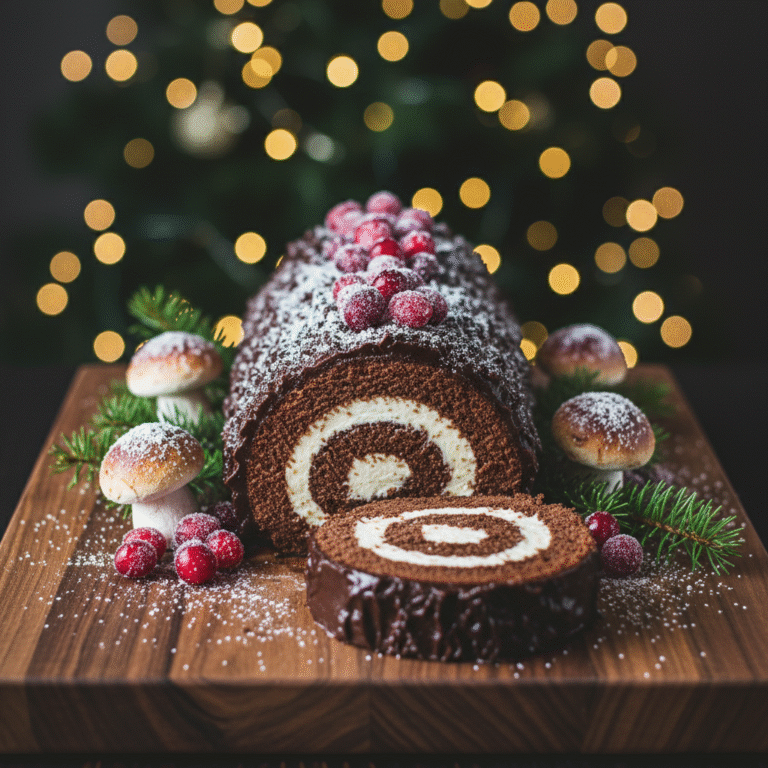
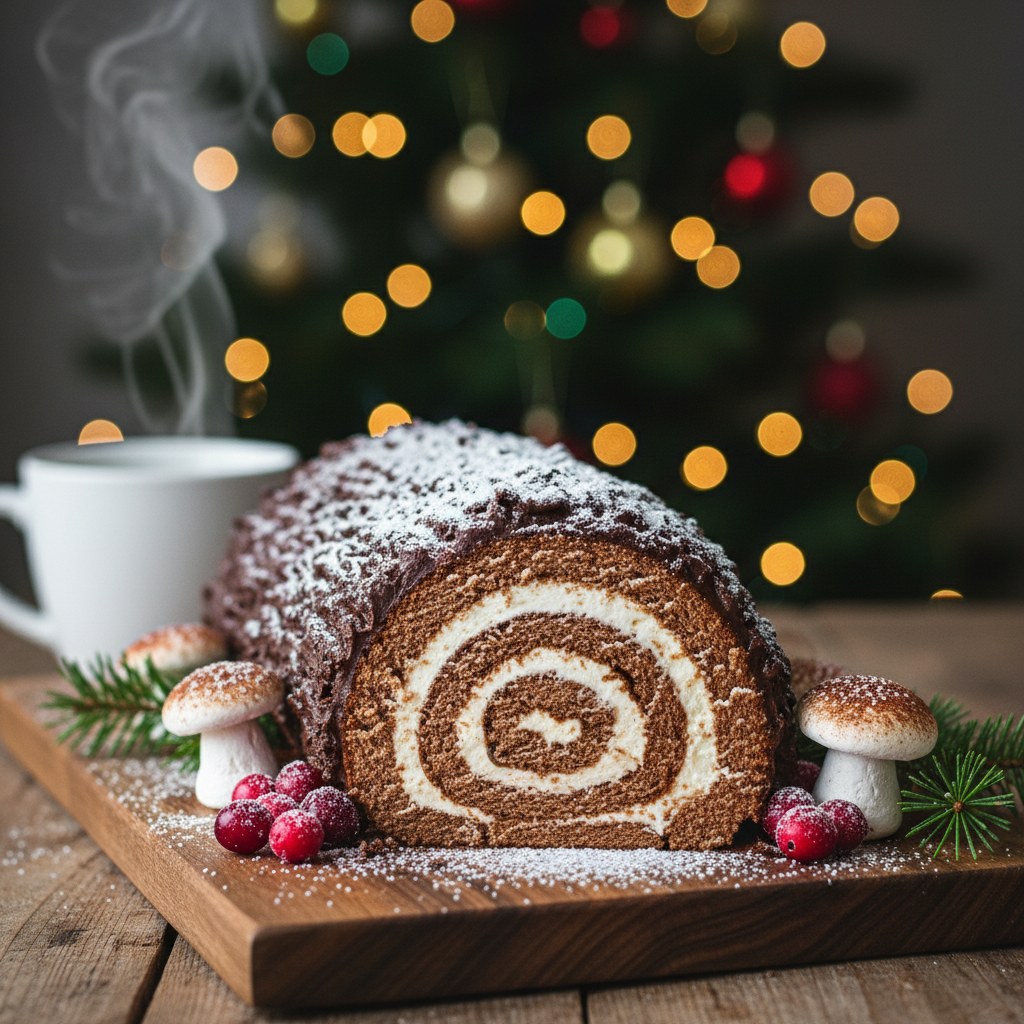
This showstopping Bûche de Noël features a feather-light chocolate sponge cake rolled with a luscious whipped ganache filling and decorated to look like a rustic forest log. It is the quintessential holiday centerpiece that combines French elegance with cozy Christmas nostalgia.
45 minutes
15 minutes
1 hour 30 minutes (plus cooling time)
10-12 servings
Dessert
Baking
French
Vegetarian
There are few desserts that command the holiday table quite like the Bûche de Noël, or Yule Log Cake. It is a masterpiece of confectionery illusion—a dessert that looks for all the world like a rugged piece of firewood brought in from the winter cold, yet tastes like the most delicate, cloud-like chocolate dream imaginable. For many home bakers, the Yule Log is a bucket-list bake, often surrounded by an aura of intimidation due to the infamous ‘roll.’ However, this recipe is designed to dispel those fears and guide you toward a flawless, crack-free spiral of sponge and cream.
The magic begins with the cake itself: a classic flourless or low-flour chocolate sponge that relies on whipped eggs for its airy lift. Unlike dense butter cakes, this sponge is flexible and tender, acting as the perfect canvas for the rich filling. We fill ours with a decadent whipped chocolate ganache or a mascarpone cream, offering a sophisticated balance to the sweetness of the cake. The exterior is slathered in a rich chocolate buttercream, textured with the tines of a fork to mimic rugged tree bark, and dusted with powdered sugar to simulate fresh snowfall.
Beyond its stunning appearance, the flavor profile is deeply comforting. Notes of dark cocoa, perhaps a hint of espresso or hazelnut liqueur, and the creamy richness of the filling create a symphony of textures and tastes. It is a dessert that evokes memories of fireside gatherings and the magic of Christmas Eve. Whether you decorate it with meringue mushrooms, fresh cranberries, or sprigs of rosemary, this cake is more than just food; it is an edible tradition, a labor of love, and the ultimate way to say ‘Merry Christmas’ to your friends and family.
History & Origins
The history of the Yule Log is a fascinating journey from the hearth to the dessert plate, spanning centuries of European tradition. Its origins lie in the ancient Celtic and Gaelic festivals of the Winter Solstice, celebrated long before the medieval era. During these pagan celebrations, families would drag a massive log—often an entire tree trunk—into the home. This ‘Yule log’ was ceremoniously burned to mark the return of the sun, bringing light and warmth into the darkest days of the year. The burning of the log was steeped in superstition; the ashes were often kept to protect the house from lightning and evil spirits in the coming year.
As hearths became smaller with the advent of cast-iron stoves in the 19th century, burning a giant log became impractical for many households. It was in France, the culinary capital of the world, that this tradition underwent a delicious transformation. Innovative Parisian pastry chefs in the late 1800s began creating a symbolic log made of sponge cake and buttercream to replace the wooden one. Known as the ‘Bûche de Noël,’ this edible tribute allowed families to keep the ancient tradition alive in a modern, gastronomic form.
The cake quickly became a staple of French Christmas Eve dinners (Le Réveillon) and spread throughout the Francophone world and beyond. Today, the Bûche de Noël is celebrated globally, with variations ranging from the traditional chocolate and chestnut flavors to modern interpretations featuring exotic fruits and mousses. Yet, the heart of the tradition remains the same: gathering with loved ones to share sweetness and light during the holiday season.
Why This Recipe Works
This recipe succeeds where many others fail because it meticulously addresses the chemistry of the sponge cake and the mechanics of the rolling process. First, the sponge uses a high ratio of eggs to a minimal amount of flour and cocoa powder. This creates a structure that is structurally sound yet incredibly pliable. By whipping the egg whites to stiff peaks and folding them gently, we incorporate air that acts as a leavening agent, resulting in a cake that is light rather than rubbery.
The critical ‘why’ behind the success of this recipe, however, is the pre-roll technique. Rolling the cake while it is still hot from the oven within a tea towel trains the gluten and protein structure to hold a spiral shape without snapping. As the cake cools in this rolled position, it develops a ‘memory’ of the curve. When you unroll it to add the filling, it naturally wants to return to that curled state, drastically reducing the chance of cracking.
Furthermore, the filling and frosting are engineered for stability. The whipped ganache filling is firm enough to hold the spiral shape but soft enough to eat pleasantly. The exterior buttercream is robust, allowing you to texturize it heavily to resemble bark without it sliding off the cake. We also utilize a simple syrup soak, which keeps the sponge moist for days, ensuring that the cake doesn’t dry out even if made in advance.
Why You’ll Love This Recipe
- ✓Foolproof rolling technique prevents cracking
- ✓Rich, deep chocolate flavor without being overly sweet
- ✓Stunning ‘tree bark’ visual effect that impresses guests
- ✓Can be made ahead of time for stress-free hosting
- ✓Includes instructions for adorable meringue mushrooms
- ✓Light, airy texture that serves as a perfect end to a heavy meal
Equipment You’ll Need
- ✓10×15 inch Jelly Roll Pan
- ✓Parchment Paper
- ✓Electric Stand Mixer or Hand Mixer
- ✓Clean Kitchen Towel (smooth texture, not terry cloth)
- ✓Sifter or Fine Mesh Sieve
- ✓Offset Spatula
- ✓Rubber Spatula
- ✓Wire Cooling Rack
Ingredients
- ✓6 large eggs, separated (room temperature)
- ✓3/4 cup granulated sugar, divided
- ✓1/2 cup all-purpose flour
- ✓1/4 cup unsweetened cocoa powder
- ✓1 tsp vanilla extract
- ✓1/4 tsp salt
- ✓1/4 tsp cream of tartar
- ✓2 tbsp melted butter (cooled)
- ✓FOR THE FILLING: 1 cup heavy whipping cream
- ✓FOR THE FILLING: 8 oz semi-sweet chocolate, chopped
- ✓FOR THE BARK FROSTING: 1/2 cup unsalted butter, softened
- ✓FOR THE BARK FROSTING: 1 1/2 cups powdered sugar
- ✓FOR THE BARK FROSTING: 1/3 cup cocoa powder
- ✓FOR THE BARK FROSTING: 1/4 cup heavy cream
- ✓Garnish: Powdered sugar, rosemary sprigs, cranberries, or meringue mushrooms
Instructions
- Preheat your oven to 375°F (190°C). Grease a 10×15 inch jelly roll pan and line it with parchment paper. Grease the parchment paper as well to ensure easy release.
- In a medium bowl, sift together the flour, cocoa powder, and salt. Set aside.
- In a large bowl (or stand mixer), beat the egg yolks and 1/2 cup of the granulated sugar on high speed until the mixture is pale, thick, and ribbons fall from the beaters (about 3-4 minutes). Beat in the vanilla extract and melted butter.
- In a separate clean, dry bowl, beat the egg whites and cream of tartar on medium speed until soft peaks form. Gradually add the remaining 1/4 cup sugar and continue beating until stiff, glossy peaks form.
- Gently fold 1/3 of the egg whites into the yolk mixture to lighten it. Then, carefully fold in the remaining egg whites until just combined, being careful not to deflate the batter.
- Gradually fold in the dry ingredients (flour mixture) in two batches, using a gentle over-under motion.
- Pour the batter into the prepared pan and spread it evenly into the corners with an offset spatula. Bake for 12-15 minutes, or until the cake springs back when lightly touched.
- While the cake bakes, lay a clean kitchen towel on the counter and dust it generously with powdered sugar or cocoa powder.
- When the cake is done, immediately invert it onto the dusted towel. Peel off the parchment paper carefully. Starting at one short end, roll the hot cake up tightly with the towel inside. Let it cool completely in this rolled shape on a wire rack.
- Make the filling: Heat the heavy cream until simmering, then pour over the chopped chocolate. Let sit for 5 minutes, then whisk until smooth. Refrigerate until thickened but spreadable, or whip it for a lighter texture.
- Make the frosting: Beat the softened butter until creamy. Add powdered sugar and cocoa powder alternately with the heavy cream. Beat until fluffy and spreadable.
- Assembly: Gently unroll the cooled cake. Spread the filling evenly over the surface, leaving a small border around the edges. Re-roll the cake without the towel. Place seam-side down on a serving platter.
- Cut a small diagonal slice off one end of the log and attach it to the side of the main log using a bit of frosting to create a ‘branch’ effect.
- Cover the entire cake with the chocolate frosting. Use a fork to drag lines through the frosting to resemble tree bark.
- Dust with powdered sugar to look like snow and garnish with rosemary, cranberries, or meringue mushrooms before serving.
Expert Cooking Tips
- ✓Room temperature eggs whip to a greater volume, which is crucial for this sponge.
- ✓Do not overbake the sponge; a dry cake will crack when rolled.
- ✓The towel must be dusted generously to prevent the cake from sticking.
- ✓Roll the cake immediately after it comes out of the oven; delay causes cracking.
- ✓If the cake cracks slightly, don’t panic—the frosting acts as ‘glue’ and covers imperfections.
- ✓Chill the bowl and beaters before whipping the cream for the filling to get better volume.
- ✓Sifting the cocoa powder is mandatory to avoid bitter lumps in your smooth sponge.
Substitutions and Variations
This recipe is quite adaptable to various dietary needs and pantry staples. For a gluten-free version, substitute the all-purpose flour with a high-quality 1:1 gluten-free baking flour blend; avoid almond flour as it may be too heavy for this specific sponge structure. If you want a dairy-free sponge, simply omit the melted butter or use a neutral oil, though the filling and frosting will need significant adjustment (coconut cream whipped with dark chocolate works well for the filling).
For the filling, while we use a chocolate ganache, you can easily swap this for a vanilla whipped cream (Chantilly cream), a coffee-flavored mascarpone filling, or even a chestnut puree cream for a traditional French touch. If you prefer a lighter frosting, a Swiss Meringue Buttercream flavored with melted chocolate offers a silky, less sweet alternative to the American buttercream listed. You can also use Dutch-processed cocoa for the cake to achieve a darker color and mellower flavor, or natural cocoa for a lighter, reddish-brown hue.
Common Mistakes to Avoid
The most frequent error when making a Yule Log is overbaking the sponge. Because the layer of batter is so thin, a minute or two too long in the oven will dry it out, causing it to snap rather than curl when you try to roll it. Watch it like a hawk starting at the 10-minute mark. Another common mistake is waiting too long to roll the cake. It must be rolled while hot and steamy; the steam keeps it pliable. If you let it cool flat, the proteins set flat, and forcing it to roll later will break it.
Additionally, be careful not to deflate the batter when folding. The air beaten into the eggs is the primary leavener. If you stir aggressively rather than folding gently, you will end up with a dense, rubbery pancake instead of a fluffy sponge. Finally, avoid overfilling the cake. A layer of filling that is too thick will squish out the sides when you re-roll it, creating a messy finish and potentially destabilizing the spiral.
Serving Suggestions
To truly capture the festive spirit, presentation is key. Serve the Yule Log on a long, rectangular platter or a rustic wooden board. Dusting the final product with powdered sugar is non-negotiable as it mimics the snowy forest floor. Arrange fresh rosemary sprigs around the base to resemble pine boughs, and scatter fresh cranberries or pomegranate seeds for a pop of holiday red.
For a professional touch, make meringue mushrooms (baked stiff meringue piped into caps and stems, then assembled with melted chocolate) and place them on and around the log. Serve slices with a dollop of lightly sweetened whipped cream or a side of raspberry coulis to cut through the richness of the chocolate. A hot cup of coffee, espresso, or a glass of tawny port pairs beautifully with the deep cocoa flavors.
Storage and Reheating Tips
The Bûche de Noël actually benefits from resting, making it a great make-ahead dessert. Once assembled and frosted, store it in the refrigerator. The sponge will absorb moisture from the filling and frosting, becoming even more tender. It can be kept in the fridge, loosely covered with plastic wrap or in a cake carrier, for up to 3 days.
If you need to store it longer, the Yule Log freezes surprisingly well. Place the assembled but unfrosted cake (or the frosted cake if you flash freeze it first to set the icing) in the freezer wrapped tightly in plastic wrap and then foil for up to 1 month. Thaw it overnight in the refrigerator before serving. Bring the cake out of the fridge about 20-30 minutes before serving to allow the buttercream and ganache to soften slightly for the best texture and flavor release.
Nutrition Facts (Estimated)
| Serving Size | 1 slice |
| Calories | 420 |
| Fat | 24g |
| Saturated Fat | 14g |
| Unsaturated Fat | 8g |
| Trans Fat | 0g |
| Cholesterol | 125mg |
| Sodium | 110mg |
| Carbohydrates | 48g |
| Fiber | 3g |
| Sugar | 32g |
| Protein | 6g |
Frequently Asked Questions
Why did my cake crack when I rolled it?
Cracking usually happens if the cake was overbaked (too dry) or if it wasn’t rolled immediately while hot. The steam is essential for flexibility. Even if it cracks, simply patch it with frosting—no one will know!
Can I make the sponge cake ahead of time?
Yes, but it’s best to store it rolled up in the towel. You can bake and roll it the day before, let it cool, and leave it wrapped in the towel at room temperature overnight before filling.
What is the best way to separate eggs?
Separate eggs while they are cold from the fridge; the yolks are less likely to break. However, let the whites come to room temperature before whipping for maximum volume.
Can I use store-bought frosting?
You can, but homemade chocolate buttercream or ganache will give you a much better texture for creating the ‘bark’ effect and a superior flavor profile.
How do I get the bark texture?
Apply a thick layer of frosting, then simply drag the tines of a dinner fork through the frosting in slightly wavy lines. Create ‘knots’ in the wood by swirling the fork in a circle.
Is cream of tartar necessary?
Cream of tartar is an acid that stabilizes the egg whites, preventing them from collapsing. If you don’t have it, you can use a few drops of lemon juice or white vinegar.
Can I use a different filling?
Absolutely. While chocolate ganache is traditional, you can use jam, vanilla buttercream, hazelnut spread, or a whipped mascarpone cream filling.
What size pan should I use?
A 10×15 inch jelly roll pan is the standard size. If you use a larger sheet pan, the cake will be too thin and dry; a smaller pan will make it too thick to roll properly.
Conclusion
Creating a Bûche de Noël is a rewarding culinary project that brings the magic of a French pâtisserie right into your home kitchen. While the steps may seem numerous, the process is logical and deeply satisfying. The moment you dust that final coat of ‘snow’ over your chocolate log, you’ll feel a sense of accomplishment that few other desserts can provide. This cake is more than just a sweet treat; it’s a centerpiece that sparks conversation, nostalgia, and joy. So, preheat your oven, whip those egg whites to glossy peaks, and get ready to start a delicious new holiday tradition that your family will look forward to year after year. Happy baking and Merry Christmas!