The Ultimate Low Sugar Chocolate Cake: Rich, Fudgy, and Keto-Friendly
Low Sugar Low Sugar Chocolate Cake Recipe
Indulge in a decadent, guilt-free dessert experience with this incredible Low Sugar Chocolate Cake. Perfectly moist, intensely chocolaty, and surprisingly easy to make, this recipe uses smart low-carb ingredients to deliver a bakery-quality treat that won’t spike your blood sugar.
20 minutes
30 minutes
50 minutes
12 servings
Dessert
Baking
American
Gluten-Free
For many of us, the hardest part of adopting a healthier lifestyle or managing dietary restrictions is the thought of saying goodbye to our favorite indulgences. Chocolate cake, with its rich, comforting crumb and luscious frosting, often tops the list of forbidden foods. But what if I told you that you could enjoy a slice of pure chocolate bliss that is not only low in sugar but also gluten-free and keto-friendly? This Low Sugar Chocolate Cake recipe is the result of extensive testing and tweaking to find the holy grail of healthy baking: a cake that actually tastes like cake, not a compromise. Unlike many low-carb alternatives that can end up dry, dense, or tasting overly ‘eggy,’ this recipe achieves a luxurious, velvety texture that rivals any traditional devil’s food cake. The secret lies in a carefully balanced blend of almond and coconut flours, which provide structure and moisture without the high carbohydrate load of wheat flour. We also utilize high-quality cocoa powder and a hint of hot coffee to bloom the chocolate flavor, creating a depth of richness that masks any cooling effect often associated with sugar-free sweeteners. Whether you are managing diabetes, following a ketogenic diet, or simply trying to cut down on refined sugars, this cake is a game-changer. It is the perfect centerpiece for birthdays, anniversaries, or just a Tuesday night when you need a little chocolate therapy. Prepare to be amazed as you take your first bite—you truly won’t believe it’s low sugar.
History & Origins
The history of chocolate cake is a journey that mirrors the evolution of baking technology and the global availability of ingredients. While chocolate itself has been consumed as a beverage by Mesoamerican civilizations for thousands of years, the concept of a chocolate cake is a relatively modern invention. It wasn’t until 1828, when Conrad Van Houten discovered a way to mechanically extract fat from cacao liquor to produce cocoa powder, that baking with chocolate became accessible and affordable. The first recorded recipes for chocolate cake appeared in the late 19th century, initially as yellow cakes with chocolate frosting or swirled batters. The deep, dark ‘Devil’s Food’ cakes we know and love today gained popularity in the early 20th century in the United States, characterized by their use of baking soda which reacted with the cocoa to create a reddish-black hue and a tender crumb. As the 20th century progressed, the abundance of sugar and refined flour made these cakes a staple of American celebrations. However, the late 20th and early 21st centuries brought a nutritional paradigm shift. With the rise of the Atkins diet in the 90s, followed by the Paleo and Keto movements, home bakers began experimenting with alternative ingredients. Early low-sugar cakes often relied on artificial sweeteners like saccharin or aspartame, which unfortunately degraded under heat and left bitter aftertastes. The real revolution came with the mainstream availability of natural, heat-stable sweeteners like erythritol, stevia, and monk fruit, alongside the popularization of nut flours. This modern Low Sugar Chocolate Cake stands on the shoulders of this culinary evolution, combining the classic desire for indulgence with cutting-edge nutritional science to create a dessert that honors the past while embracing a healthier future.
Why This Recipe Works
This recipe succeeds where many other low-carb or sugar-free baked goods fail because it addresses the three main pillars of baking chemistry: structure, moisture, and flavor balance. First, the combination of blanched almond flour and coconut flour is critical. Almond flour provides healthy fats and a tender crumb, but on its own, it can be too heavy. Coconut flour is highly absorbent and fibrous, mimicking the structure-building properties of gluten when used in the right ratio. This blend creates a cake that holds together beautifully without being dense. Second, moisture is often lost in low-sugar baking because sugar is hygroscopic (it holds water). To combat dryness, this recipe incorporates both melted butter and almond milk, but the real hero is the addition of hot coffee. The hot liquid not only blooms the cocoa powder—releasing its essential oils for a more potent chocolate taste—but also hydrates the absorbent coconut flour instantly, ensuring the batter is smooth and the final cake is moist. Third, the sweetener choice is paramount. We use a granular erythritol or monk fruit blend which measures 1:1 like sugar. These sweeteners provide the necessary bulk and sweetness without caramelizing too quickly or leaving a chemical aftertaste. Finally, the generous amount of Dutch-processed cocoa powder ensures that the chocolate flavor is front and center, completely overpowering any potential ‘diet’ flavor notes.
Why You’ll Love This Recipe
- ✓Keto-friendly and low-carb with only 3g net carbs per slice.
- ✓Completely gluten-free and grain-free, perfect for Celiac diets.
- ✓Uses hot coffee to intensify the rich chocolate flavor.
- ✓Moist, fudgy texture that doesn’t crumble apart.
- ✓Quick and easy one-bowl batter preparation.
- ✓Includes a luscious, sugar-free cream cheese chocolate frosting.
Equipment You’ll Need
- ✓2 8-inch round cake pans
- ✓Large mixing bowl
- ✓Electric hand mixer or stand mixer
- ✓Whisk
- ✓Rubber spatula
- ✓Measuring cups and spoons
- ✓Parchment paper
- ✓Wire cooling rack
Ingredients
- ✓2 cups blanched almond flour (super fine)
- ✓1/3 cup coconut flour
- ✓3/4 cup granulated erythritol or monk fruit sweetener
- ✓3/4 cup unsweetened cocoa powder (Dutch-processed preferred)
- ✓2 tsp baking powder
- ✓1/2 tsp sea salt
- ✓1/2 cup unsalted butter, melted and cooled
- ✓4 large eggs, room temperature
- ✓1/2 cup unsweetened almond milk
- ✓2 tsp vanilla extract
- ✓1/2 cup hot brewed coffee (or hot water)
- ✓Frosting: 8 oz cream cheese, softened
- ✓Frosting: 1/2 cup unsalted butter, softened
- ✓Frosting: 1/2 cup powdered sweetener (erythritol based)
- ✓Frosting: 1/4 cup cocoa powder
- ✓Frosting: 1 tsp vanilla extract
- ✓Frosting: 1-2 tbsp heavy cream (optional, for consistency)
Instructions
- Preheat your oven to 350°F (175°C). Grease two 8-inch round cake pans with butter or coconut oil and line the bottoms with parchment paper for easy removal.
- In a large mixing bowl, whisk together the dry ingredients: almond flour, coconut flour, sweetener, cocoa powder, baking powder, and salt. Ensure there are no lumps, especially in the almond flour.
- Add the melted butter, eggs, almond milk, and vanilla extract to the dry ingredients. Mix with an electric mixer on medium speed until combined and smooth.
- Reduce the mixer speed to low and slowly pour in the hot coffee. Continue to mix until the batter is glossy and uniform. The batter will be slightly thinner than traditional cake batter, which is normal.
- Divide the batter evenly between the two prepared cake pans. Smooth the tops with a spatula.
- Bake for 25-30 minutes, or until a toothpick inserted into the center comes out clean or with just a few moist crumbs. Be careful not to overbake, as almond flour cakes can dry out quickly.
- Remove the cakes from the oven and let them cool in the pans for 15 minutes. Then, carefully invert them onto a wire rack to cool completely before frosting.
- While the cakes cool, prepare the frosting. In a medium bowl, beat the softened cream cheese and butter together until fluffy.
- Add the powdered sweetener, cocoa powder, and vanilla extract. Beat on low speed until incorporated, then increase to high and whip until creamy. Add heavy cream a tablespoon at a time if needed to reach your desired spreadable consistency.
- Once the cakes are completely cool, place one layer on a serving plate. Spread a layer of frosting over the top. Place the second layer on top and frost the top and sides of the entire cake.
- Slice and serve immediately, or refrigerate for 30 minutes to set the frosting.
Expert Cooking Tips
- ✓Ensure all your refrigerated ingredients (eggs, milk, cream cheese) are at room temperature before starting. This prevents the batter from seizing and ensures a smooth emulsion.
- ✓Do not skip the parchment paper lining. Low-carb flours can be stickier than wheat flour, and parchment guarantees your cake layers come out perfect.
- ✓If you are sensitive to caffeine, you can use decaf coffee or hot water. The coffee flavor isn’t distinct in the final cake; it just enhances the chocolate.
- ✓Sift your cocoa powder and coconut flour if they look lumpy. Clumps of dry flour can be unpleasant in the finished cake.
- ✓Let the cake cool completely before frosting. Since the frosting is butter and cream cheese based, it will melt instantly if the cake is even slightly warm.
- ✓Weigh your ingredients if possible. Low-carb baking is precise, and packing almond flour into a cup can lead to a dry cake.
Substitutions and Variations
This recipe is quite versatile, but substitutions should be made with care to preserve the chemistry. For the flour, there is no direct 1:1 substitution for the almond/coconut blend that will yield the exact same texture. However, if you have a nut allergy, you could try using sunflower seed flour in place of almond flour, though it may turn green due to a reaction with baking powder (add a splash of lemon juice to prevent this). For the sweetener, any granular 1:1 sugar substitute works, such as Swerve, Lakanto, or pure Erythritol. If you use pure Stevia or liquid sweeteners, you will need to adjust the dry ingredients significantly, which is not recommended for beginners. Dairy-free? You can substitute the butter with melted coconut oil or a vegan butter stick. For the buttermilk/almond milk, any unsweetened plant-based milk works perfectly. For the frosting, a vegan cream cheese and butter alternative can be used, or you can make a simple ganache using coconut cream and sugar-free chocolate chips.
Common Mistakes to Avoid
The most common mistake with low-sugar baking is overbaking. Almond flour browns faster and dries out quicker than wheat flour. Start checking your cake at the 25-minute mark. Another error is using the wrong type of sweetener; ensure you are using a ‘granular’ version for the cake and a ‘powdered’ version for the frosting to avoid a gritty texture. Many people also forget to bring ingredients to room temperature; cold eggs hitting melted butter will cause the butter to solidify instantly, resulting in a lumpy batter and an uneven bake. Lastly, don’t expect the batter to look exactly like box-mix batter; it will be slightly grainier due to the nut meal, but this smooths out during baking.
Serving Suggestions
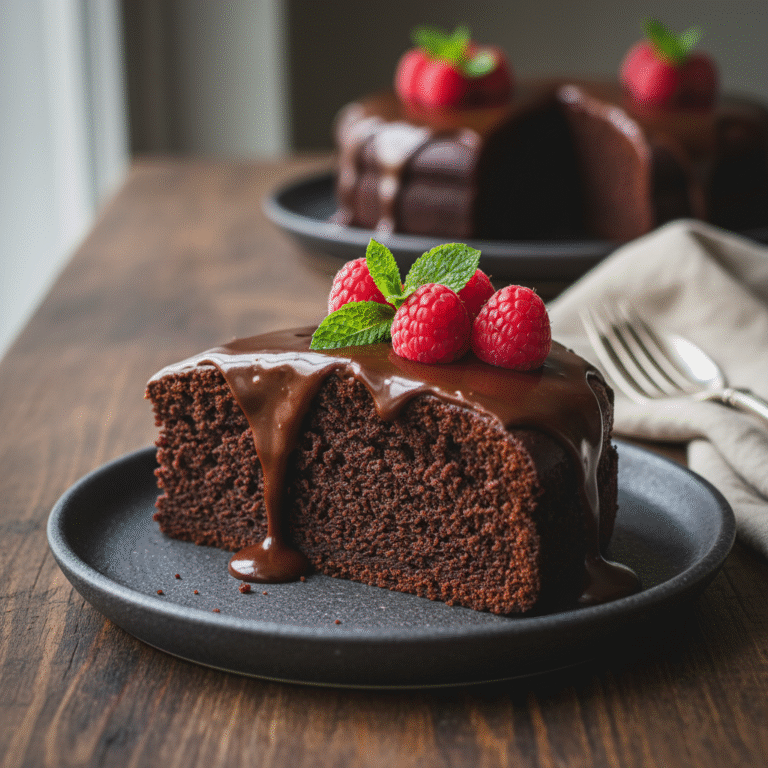
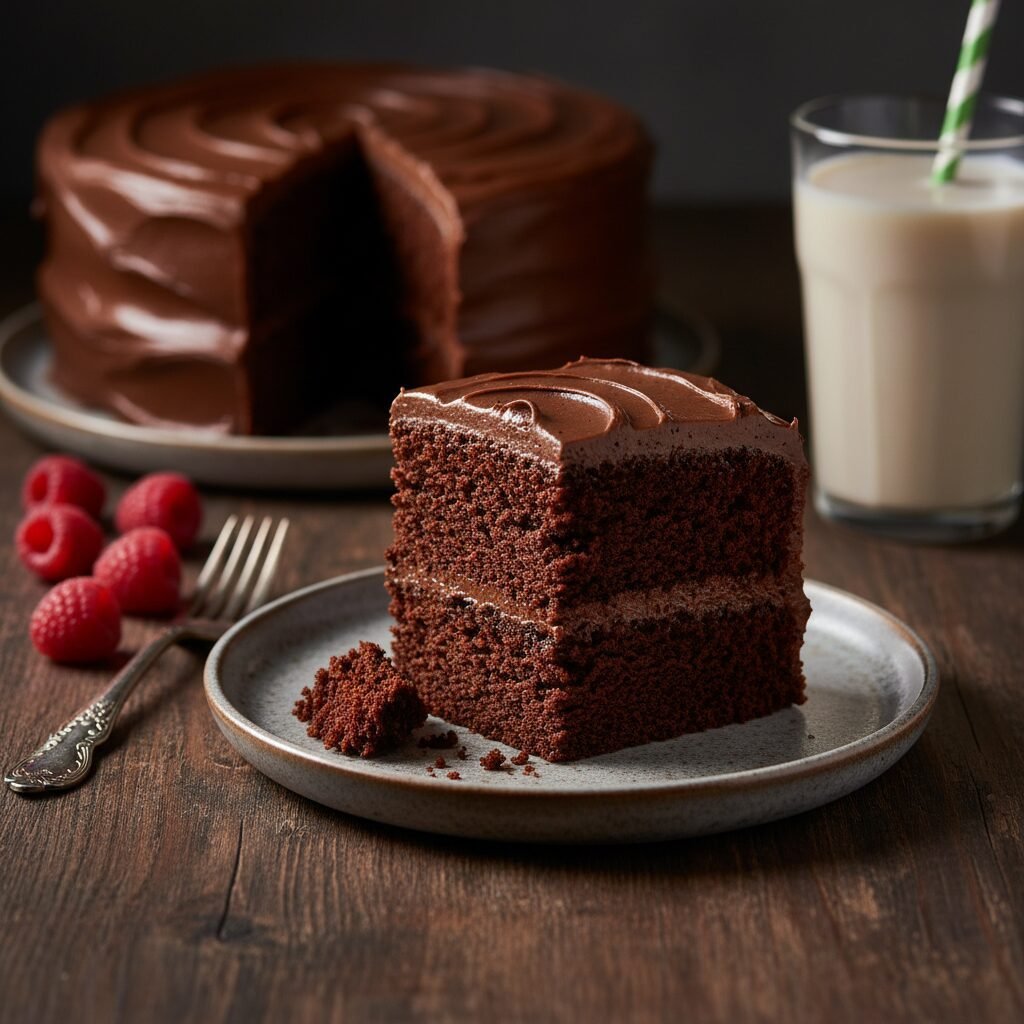
This cake is rich and decadent, so it pairs beautifully with lighter accompaniments. Serve a slice with a dollop of unsweetened whipped cream or coconut cream to cut through the richness. Fresh berries, particularly raspberries or strawberries, add a tart contrast and a pop of color that looks stunning on the dark chocolate frosting. For a warm, cozy treat, serve it alongside a hot cup of black coffee or an almond milk latte. If you are feeling extra fancy, shave some sugar-free dark chocolate curls over the top or dust lightly with extra cocoa powder before serving.
Storage and Reheating Tips
Because this cake contains cream cheese in the frosting and lacks the preservatives of store-bought cakes, it is best stored in the refrigerator. Place the cake in an airtight cake carrier or cover slices individually with plastic wrap. It will stay fresh in the fridge for up to 5 days. For longer storage, this cake freezes exceptionally well. You can freeze the unfrosted layers wrapped tightly in plastic wrap and foil for up to 3 months. Alternatively, freeze individual slices of the frosted cake on a baking sheet until solid, then wrap them tightly and store in a freezer bag. Thaw in the refrigerator overnight or on the counter for 30 minutes before eating.
Nutrition Facts (Estimated)
| Serving Size | 1 slice |
| Calories | 285 |
| Fat | 25 g |
| Saturated Fat | 10 g |
| Unsaturated Fat | 12 g |
| Trans Fat | 0 g |
| Cholesterol | 85 mg |
| Sodium | 210 mg |
| Carbohydrates | 7 g |
| Fiber | 4 g |
| Sugar | 1.5 g |
| Protein | 8 g |
Frequently Asked Questions
Can I use regular all-purpose flour instead of almond flour?
No, this recipe is specifically designed for the absorption rates of almond and coconut flour. Substituting all-purpose flour 1:1 will result in a dry and likely failed cake. Stick to the recipe for best results.
Does this cake taste like coconut?
Not at all. The amount of coconut flour is small and is used primarily for structure and absorption. The rich cocoa powder and coffee completely mask any subtle coconut flavor.
Is this cake suitable for diabetics?
Yes, generally speaking. It uses low-glycemic sweeteners and low-carb flours that minimally impact blood sugar. However, everyone’s body is different, so it’s always best to check with a doctor or monitor your own levels.
Why did my cake sink in the middle?
Sinking usually happens if the oven door was opened too early, causing a temperature drop, or if the cake was underbaked. It can also happen if too much baking powder was used. Ensure your oven temperature is accurate.
Can I make this into cupcakes?
Absolutely! This recipe makes about 12-15 standard cupcakes. Bake them at the same temperature for 18-22 minutes. Watch them closely so they don’t dry out.
What sweetener is best to avoid a cooling effect?
A blend of erythritol and monk fruit is usually best. The monk fruit helps offset the cooling sensation of erythritol. Allulose is another great option that has no cooling effect and caramelizes well.
Can I leave out the coffee?
Yes, you can use hot water instead. However, the coffee really deepens the chocolate flavor without making the cake taste like coffee, so it is highly recommended.
Is the frosting necessary?
The cake is delicious on its own or just dusted with powdered sweetener, but the frosting adds moisture and fat that balances the texture. It is recommended for the full experience.
My batter is very thick, is that wrong?
It shouldn’t be like a dough, but it will be thicker than a watery box mix. If it’s too thick to pour, you may have used too much coconut flour (it’s very absorbent). Add a tablespoon of almond milk at a time to loosen it.
Can I use Dutch-process cocoa?
Yes, Dutch-process cocoa is actually preferred for this recipe as it has a smoother, less acidic flavor and a darker color that makes the cake look and taste richer.
Conclusion
Eating healthy doesn’t mean you have to banish chocolate from your life. This Low Sugar Low Sugar Chocolate Cake proves that with the right ingredients and a little baking know-how, you can have your cake and eat it too. It’s the perfect solution for birthdays, holidays, or just satisfying that midweek chocolate craving without the sugar crash. The moist crumb, the rich ganache-style frosting, and the deep chocolate flavor will fool even the most skeptical eaters. Give this recipe a try, and you might just find it replaces your traditional sugary chocolate cake recipe for good. Don’t forget to pin this recipe to your Keto or Dessert boards on Pinterest so you can easily find it whenever the craving strikes!