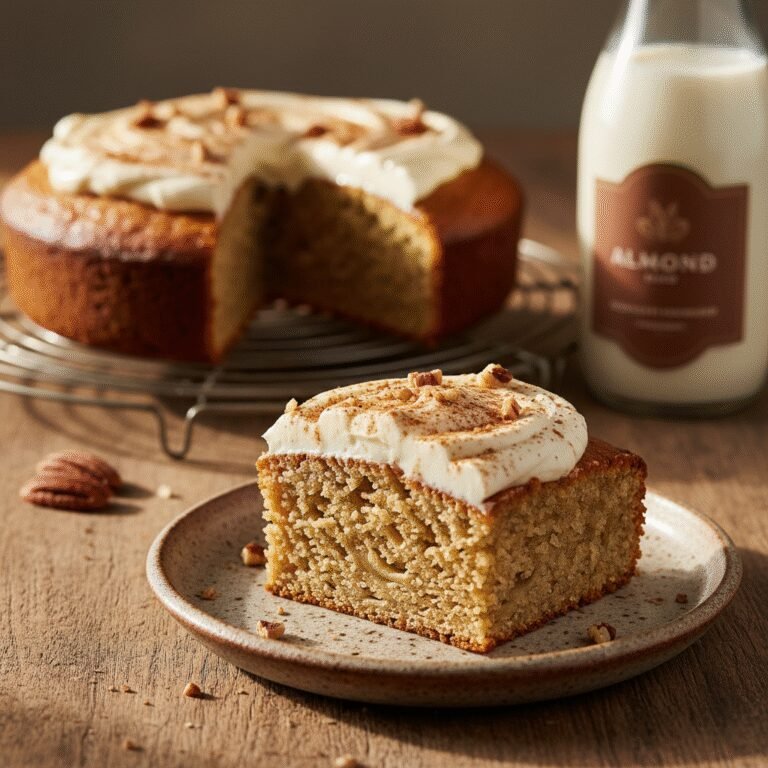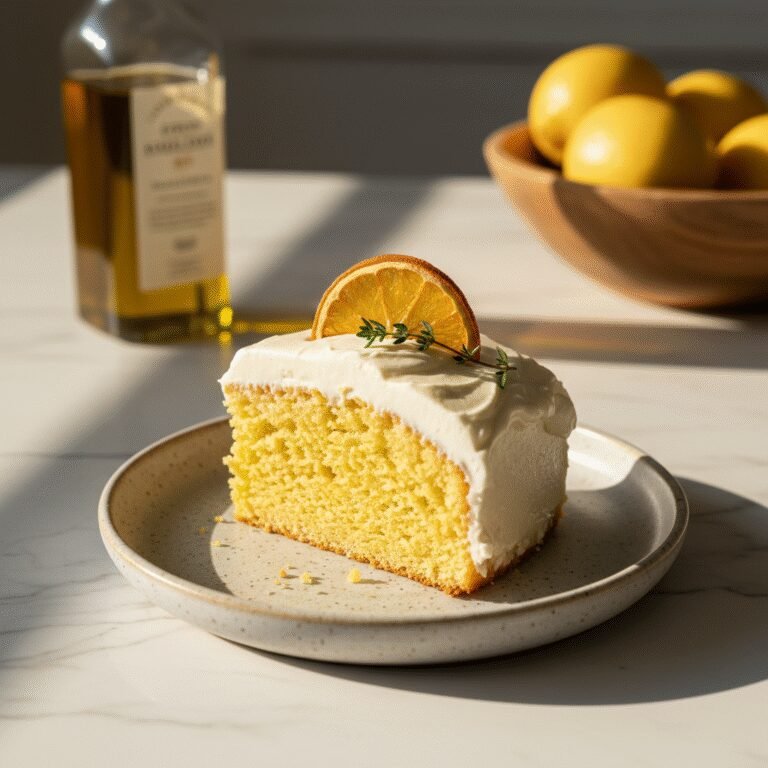
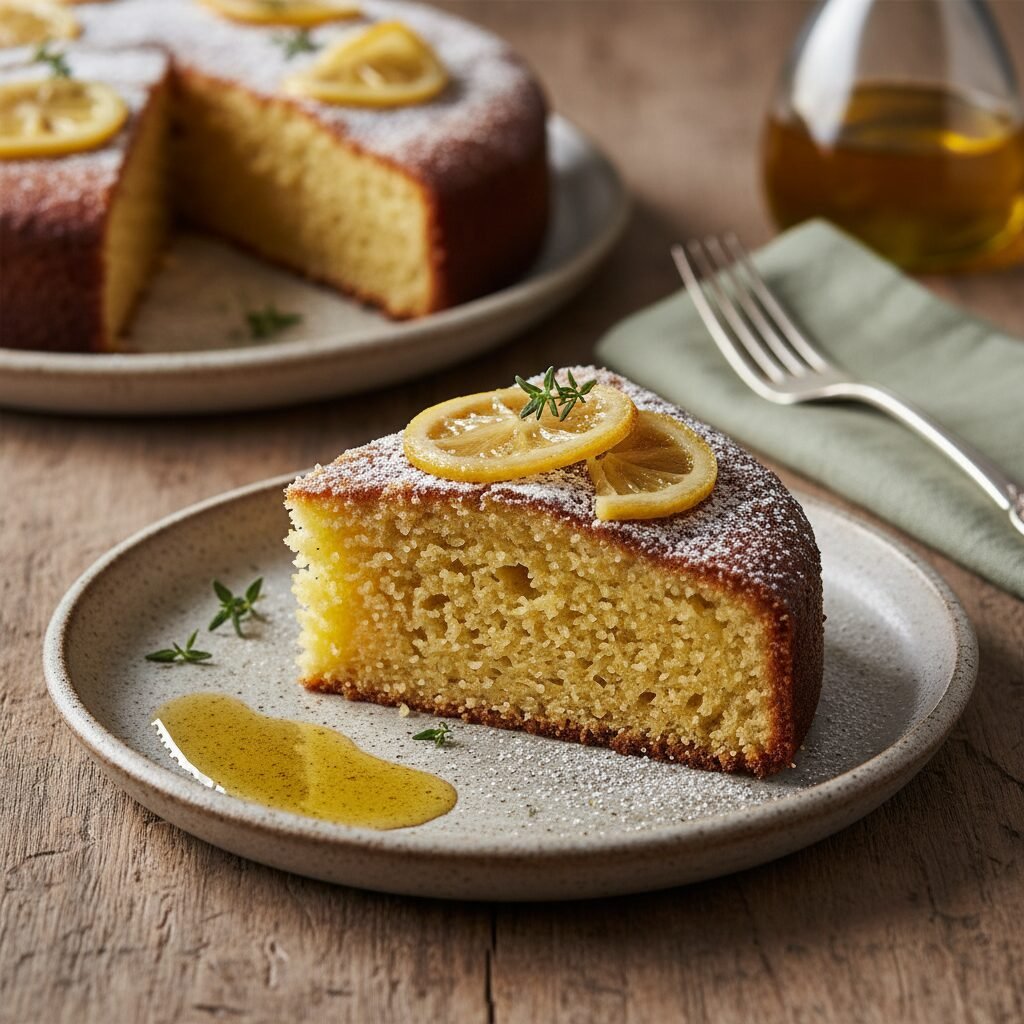
The Ultimate Moist Olive Oil Citrus Cake: A Mediterranean Delight
Moist Olive Oil Citrus Cake Recipe
Experience the perfect balance of fruity richness and bright zest with this incredibly moist Olive Oil Citrus Cake. Unlike butter-based cakes that dry out, this Mediterranean-inspired dessert stays tender for days, making it the ultimate centerpiece for brunch or afternoon tea.
20 minutes
45 minutes
1 hour 5 minutes
10-12 servings
Dessert
Baking
Mediterranean
Vegetarian
There is something undeniably magical about the alchemy of baking with olive oil. While butter has long held the crown in the world of Western pastry for its ability to create fluffy, aerated structures, olive oil brings a completely different, and arguably superior, textural element to the table. This Moist Olive Oil Citrus Cake is a celebration of that texture—a crumb so tender, velvety, and rich that it almost melts on the tongue. It captures the essence of a sunny Mediterranean orchard, bringing warmth and brightness to your kitchen regardless of the season outside.
The beauty of this recipe lies in its simplicity and its sophistication. It does not require heavy machinery or complex creaming methods. Instead, it relies on the emulsification of high-quality extra virgin olive oil with fresh eggs and sugar, enhanced by the aromatic oils of citrus zest. When you rub lemon and orange zest into the sugar before mixing, you release essential oils that perfume the entire batter, ensuring that every bite is infused with a vibrant, zesty punch. The olive oil provides a fruity, grassy undertone that complements the acidity of the citrus perfectly, creating a flavor profile that is complex, not just sweet.
This cake is also a testament to patience and aging. unlike many baked goods that are best eaten immediately out of the oven, an olive oil cake improves with time. As it sits, the moisture redistributes, and the flavors meld together, meaning a slice had the next morning with coffee might be even better than the one you had for dessert. Whether you are a seasoned baker looking for a reliable showstopper or a novice wanting to try something forgiving yet impressive, this citrus olive oil cake is the recipe you have been searching for.
History & Origins
The history of baking with olive oil is as ancient as the cultivation of the olive tree itself, deeply rooted in the culinary traditions of the Mediterranean basin. While the modern concept of ‘cake’—leavened, sweet, and fluffy—is a relatively recent evolution in food history, the combination of grain, sweetener (often honey), and olive oil dates back to antiquity. In ancient Greece and Rome, olive oil was not just a cooking medium but a sacred gift from the gods, used in religious rituals and daily sustenance alike. Early iterations of olive oil cakes were likely denser, unleavened flatbreads sweetened with honey and fruits, served during festivals and celebrations.
As culinary techniques advanced through the Middle Ages and the Renaissance, particularly in Italy, Spain, and Greece, the use of olive oil in sweets persisted, especially in regions where butter was scarce or expensive, or during religious fasting periods where dairy was prohibited. In Italy, ‘Ciambella’ style cakes often utilized olive oil for its availability and keeping qualities. The distinct flavor profile of olive oil cakes became a hallmark of Tuscan and Ligurian desserts.
In contrast to Northern Europe, where dairy farming flourished and butter became the primary fat for baking (leading to the pound cakes and sponges we know today), the South remained loyal to the olive. In recent decades, there has been a global resurgence and appreciation for these rustic cakes. Modern food culture, with its emphasis on heart-healthy fats and complex flavor profiles, has elevated the humble olive oil cake from a grandmother’s kitchen staple to a sophisticated dessert found in high-end bakeries from New York to London. This recipe honors that lineage, bridging the gap between ancient necessity and modern indulgence.
Why This Recipe Works
The science behind why this Moist Olive Oil Citrus Cake works so well lies primarily in the difference between solid fats (butter) and liquid fats (oil). Butter is about 80% fat and 20% water, and it is solid at room temperature. When a butter cake cools, the fat resolidifies, which can lead to a firmer, sometimes dry crumb if not eaten quickly. Olive oil, however, is 100% fat and remains liquid at room temperature. This physical property ensures that the cake remains incredibly soft, moist, and tender long after it has cooled. The oil coats the flour proteins (gluten) more thoroughly than butter, preventing the formation of tough gluten networks, resulting in a plush, melt-in-your-mouth texture.
Furthermore, this recipe utilizes the ‘rubbing in’ method for the citrus zest. Sugar is abrasive; by massaging the zest into the sugar with your fingertips before adding wet ingredients, you physically rupture the oil cells in the fruit skin. This infuses the sugar crystals with intense citrus flavor, ensuring the aroma permeates the entire cake rather than just sitting on the surface. We also incorporate an acidic component—typically Greek yogurt or buttermilk—which reacts with the baking soda (if used) or simply helps to tenderize the gluten further while adding a subtle tang that cuts through the richness of the oil. The result is a cake that is perfectly balanced: rich but not heavy, sweet but not cloying, and structurally sound yet incredibly moist.
Why You’ll Love This Recipe
- ✓Stays moist for 4-5 days without drying out
- ✓No electric mixer required; can be made with just a whisk
- ✓Dairy-free adaptable (using plant-based yogurt)
- ✓Sophisticated flavor profile balancing sweet, tart, and grassy notes
- ✓Beautiful rustic presentation perfect for any occasion
- ✓Improves in flavor the day after baking
Equipment You’ll Need
- ✓9-inch Springform pan or round cake pan
- ✓Large mixing bowl
- ✓Medium mixing bowl
- ✓Whisk
- ✓Microplane or fine grater
- ✓Citrus juicer
- ✓Rubber spatula
- ✓Wire cooling rack
Ingredients
- ✓1 3/4 cups (220g) All-purpose flour
- ✓1 cup (200g) Granulated sugar
- ✓1/2 teaspoon Baking soda
- ✓1/2 teaspoon Baking powder
- ✓1/2 teaspoon Salt
- ✓3 Large eggs, room temperature
- ✓3/4 cup (180ml) Extra virgin olive oil (high quality)
- ✓1/2 cup (120ml) Whole milk or plain Greek yogurt
- ✓2 tablespoons Fresh lemon zest (approx 2 lemons)
- ✓1 tablespoon Fresh orange zest (approx 1 orange)
- ✓1/4 cup (60ml) Freshly squeezed lemon juice
- ✓2 tablespoons Freshly squeezed orange juice
- ✓1 teaspoon Vanilla extract
- ✓Powdered sugar, for dusting (optional)
Instructions
- Preheat your oven to 350°F (175°C). Grease a 9-inch springform pan generously with olive oil and line the bottom with parchment paper.
- In a large mixing bowl, add the granulated sugar, lemon zest, and orange zest. Using your clean fingertips, rub the zest into the sugar for about 1-2 minutes until the mixture looks like wet sand and is incredibly fragrant.
- Crack the eggs into the sugar-zest mixture. Using a whisk, beat vigorously for about 2-3 minutes until the mixture is pale yellow and slightly thickened.
- Slowly stream in the olive oil while whisking constantly to emulsify the mixture. It should look glossy and smooth.
- Whisk in the milk (or yogurt), lemon juice, orange juice, and vanilla extract until fully combined.
- In a separate medium bowl, sift together the flour, baking soda, baking powder, and salt.
- Add the dry ingredients to the wet ingredients in two batches. Gently whisk or fold with a spatula just until the flour streaks disappear. Do not overmix, or the cake will become tough.
- Pour the batter into the prepared pan and smooth the top with a spatula. Tap the pan gently on the counter once to release large air bubbles.
- Bake in the center of the oven for 40-50 minutes. The cake is done when the top is golden brown, springs back to the touch, and a toothpick inserted into the center comes out clean or with just a few moist crumbs.
- Remove from the oven and let the cake cool in the pan for 15 minutes. Run a knife around the edges to loosen, then release the springform ring.
- Transfer the cake to a wire rack to cool completely before slicing. Dust with powdered sugar just before serving.
Expert Cooking Tips
- ✓Use high-quality Extra Virgin Olive Oil. The flavor of the oil shines through, so pick one that tastes good on its own—fruity and mild is usually best for baking.
- ✓Do not skip the zest rubbing step. This releases the essential oils and maximizes citrus flavor.
- ✓Ensure ingredients are at room temperature. Cold eggs or milk can cause the batter to separate or curdle slightly.
- ✓Don’t overmix the batter once the flour is added. Overmixing develops gluten, which leads to a rubbery texture.
- ✓Check the cake at the 40-minute mark. If the top is browning too quickly but the center is still jiggly, tent it loosely with aluminum foil.
- ✓Let it cool completely. Olive oil cakes are fragile when warm; cooling solidifies the structure.
- ✓For a boozy twist, add a tablespoon of Grand Marnier or Limoncello to the batter.
Substitutions and Variations
This recipe is quite versatile. If you need to make it gluten-free, a high-quality 1:1 gluten-free baking flour blend works exceptionally well because the olive oil provides enough moisture to prevent the grittiness often associated with GF baking. For a dairy-free version, swap the whole milk or Greek yogurt for a thick almond milk yogurt, oat milk, or even mild coconut milk; the texture remains largely unchanged. While the recipe calls for a mix of lemon and orange, you can easily use blood oranges, grapefruits, or even limes for a different citrus profile. If you don’t have extra virgin olive oil, you can use a neutral vegetable oil, but you will lose the distinct floral, fruity depth that makes this cake special. For a refined sugar-free option, coconut sugar can be used, though it will darken the color of the cake significantly and add a caramel note.
Common Mistakes to Avoid
The most common mistake with this cake is using old or rancid olive oil. Because the oil is a primary flavor component, if it smells like crayons or tastes bitter, your cake will too. Another pitfall is over-baking. Olive oil cakes are meant to be moist; baking until it is bone-dry will ruin the texture. Pull it when a few moist crumbs still cling to the tester. Additionally, skipping the parchment paper on the bottom of the pan is risky; these cakes can be sticky, and you want to ensure a clean release. Finally, resist the urge to slice it while it’s hot. The crumb structure needs time to set as it cools; cutting it too early can result in a gummy texture.
Serving Suggestions
This cake is elegant enough to be served plain with just a dusting of powdered sugar, making it perfect for a casual breakfast or coffee break. However, to dress it up for a dinner party dessert, serve slices with a dollop of barely sweetened whipped cream or mascarpone cheese. Fresh berries, particularly raspberries or strawberries, macerated in a little sugar and lemon juice, provide a beautiful color contrast and tartness. For a warm, cozy vibe, serve a slice with a drizzle of warm honey and a sprinkle of toasted pistachios or almonds. It pairs exceptionally well with an espresso, a cup of Earl Grey tea, or a glass of dessert wine like Vin Santo.
Storage and Reheating Tips
One of the greatest advantages of olive oil cake is its storage life. It can be stored at room temperature, covered tightly with plastic wrap or in a cake dome, for up to 4 days. In fact, the flavor often improves on the second day. If you live in a very hot or humid climate, you may want to store it in the refrigerator after day 2, but allow it to come back to room temperature before eating for the best texture. For long-term storage, wrap individual slices tightly in plastic wrap, then a layer of foil, and freeze for up to 3 months. Thaw at room temperature for a few hours before serving.
Nutrition Facts (Estimated)
| Serving Size | 1 slice |
| Calories | 340 |
| Fat | 18g |
| Saturated Fat | 3g |
| Unsaturated Fat | 14g |
| Trans Fat | 0g |
| Cholesterol | 45mg |
| Sodium | 180mg |
| Carbohydrates | 40g |
| Fiber | 1g |
| Sugar | 22g |
| Protein | 4g |
Frequently Asked Questions
Can I use ‘light’ olive oil instead of Extra Virgin?
Yes, you can use light olive oil if you prefer a completely neutral flavor. However, Extra Virgin Olive Oil (EVOO) adds a beautiful fruity depth and golden color that characterizes this specific style of cake. If you are worried about the flavor being too strong, choose a ‘mild’ or ‘buttery’ EVOO rather than a ‘peppery’ one.
Why did my cake sink in the middle?
Sinking usually happens if the oven door was opened too early, causing a temperature drop, or if the cake was underbaked. It can also happen if there was too much leavening agent (baking soda/powder). Ensure your oven temperature is accurate using an oven thermometer.
Can I bake this in a Bundt pan?
Absolutely. This batter works very well in a Bundt pan. You may need to adjust the baking time slightly (usually 5-10 minutes longer), and ensure you grease and flour the Bundt pan very thoroughly to prevent sticking.
Is this cake suitable for a dairy-free diet?
The base recipe contains milk or yogurt, but it is very easily adapted. Simply swap the dairy for an unsweetened plant-based milk (like almond or oat) or a dairy-free yogurt. The olive oil ensures it remains rich without butter.
Can I reduce the sugar amount?
Sugar plays a structural role in keeping the cake moist and tender, not just sweet. You can reduce it by about 1/4 cup without disastrous results, but reducing it further may affect the texture and shelf-life of the cake.
My cake tastes bitter. Why?
This is almost certainly due to the olive oil. Some high-polyphenol olive oils are naturally bitter or peppery. When baked, these notes can intensify. Always taste your oil before baking with it. Alternatively, you may have grated the white pith of the citrus along with the zest.
Can I add nuts or fruit to the batter?
Yes! Fold in 1/2 cup of toasted pine nuts, slivered almonds, or chopped pistachios for crunch. You can also fold in blueberries, but toss them in a little flour first to prevent them from sinking to the bottom.
How do I know if my baking powder is still good?
Test it by putting a teaspoon of baking powder into a cup of hot water. If it fizzes and bubbles vigorously immediately, it is active. If it does nothing, you need to buy a fresh tin.
Can I use gluten-free flour?
Yes, a 1:1 all-purpose gluten-free flour blend (that includes xanthan gum) works very well in this recipe. The density of the oil helps mask the sometimes gritty texture of GF flours.
Conclusion
Baking this Moist Olive Oil Citrus Cake is more than just following a recipe; it is an invitation to slow down and enjoy the simple pleasures of high-quality ingredients. The way the kitchen fills with the scent of warm citrus and toasted sugar is a reward in itself. Whether you are serving this at a festive holiday gathering, a summer picnic, or simply treating yourself on a rainy Sunday, this cake delivers comfort and sophistication in equal measure. Don’t forget to snap a photo of your masterpiece and tag us on social media—we love seeing your beautiful creations! Happy baking!