The Ultimate Moist Dairy-Free Carrot Cake with Creamy Vegan Buttercream
Moist Dairy Free Carrot Cake With Dairy Free Buttercream Recipe
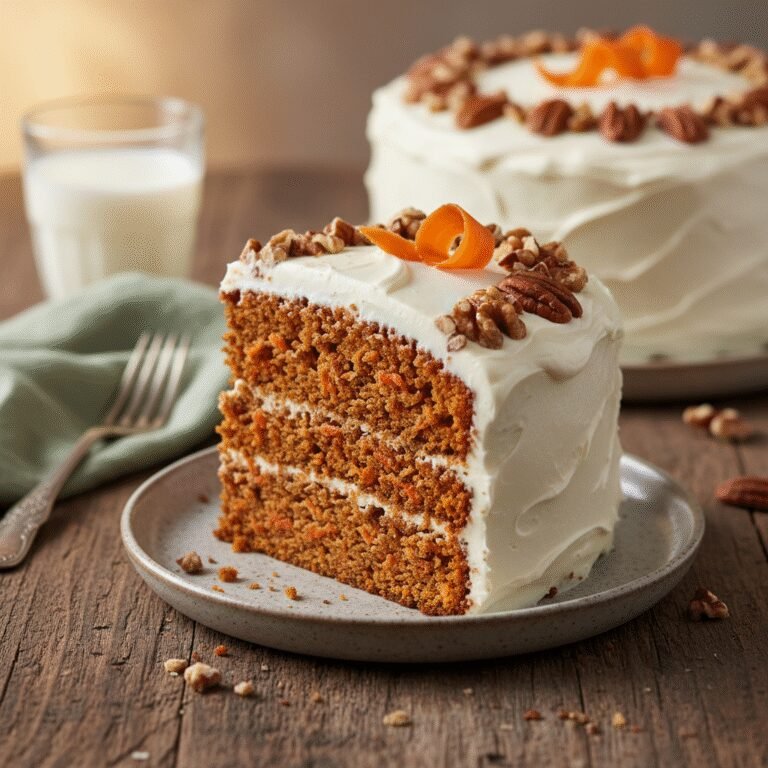
This is the only dairy-free carrot cake recipe you will ever need. It is incredibly moist, perfectly spiced with cinnamon and nutmeg, and topped with a luscious, velvety dairy-free buttercream that rivals any traditional cream cheese frosting. Perfect for birthdays, holidays, or a cozy afternoon treat.
30 minutes
35 minutes
1 hour 5 minutes (plus cooling)
12 servings (2-layer 9-inch cake)
Dessert
Baking
American
Dairy-Free
If there is one dessert that bridges the gap between comfort food and gourmet baking, it is a classic carrot cake. However, for those of us avoiding dairy, finding a recipe that retains that signature moist, dense, and tender crumb without relying on butter or buttermilk can be a challenge. Many dairy-free adaptations end up dry, crumbly, or lacking that rich depth of flavor we crave. That stops today. This Moist Dairy-Free Carrot Cake is a triumph of texture and taste, designed specifically to be indistinguishable from its dairy-filled counterparts.
The secret lies in the balance of premium oil, brown sugar, and freshly grated carrots, which work together to keep the cake soft for days. Unlike butter-based cakes that can firm up when cool, this oil-based batter ensures a plush texture that melts in your mouth. But a carrot cake is only as good as its frosting. We have developed a Dairy-Free Buttercream that mimics the tang and creaminess of traditional cream cheese frosting using high-quality vegan butter alternatives and a touch of lemon acid. Whether you are baking for a lactose-intolerant family member, a vegan friend, or simply want a lighter-feeling dessert, this cake delivers on every level. From the warming aroma of cinnamon and nutmeg filling your kitchen to the satisfying crunch of toasted pecans, this recipe is a celebration of flavor that proves you don’t need dairy to bake the best cake of your life.
History & Origins
The history of carrot cake is a fascinating journey that traces back much further than the retro diners of 1970s America. Its origins are widely believed to lie in medieval Europe, specifically evolving from carrot puddings. During the Middle Ages, sugar was a rare and expensive luxury, imported from distant lands and reserved for the wealthy. Carrots, however, were abundant and naturally sweet—in fact, they contain more sugar than almost any other vegetable besides sugar beets. Enterprising cooks began using carrots to sweeten their desserts, creating dense, steamed puddings that were the precursors to the modern cake.
The transition from pudding to cake likely occurred slowly over centuries, but the recipe saw a significant revival during World War II. With sugar rationing in full effect in the United Kingdom, the government promoted the use of carrots as a sweetener in baking to stretch limited supplies. This ingrained the vegetable into the repertoire of home bakers. However, it wasn’t until the 1960s and 1970s in the United States that carrot cake exploded in popularity. It became a staple of the ‘health food’ craze, though the addition of generous amounts of oil, sugar, and the newly popularized cream cheese frosting (which became the standard pairing during this era) made it a decadent indulgence rather than a health food. Today, it remains a beloved classic, and adapting it to be dairy-free is simply the next step in its centuries-long evolution.
Why This Recipe Works
This recipe succeeds where others fail because it relies on the science of baking with oil versus butter. While butter provides flavor, it is composed of about 80% fat and 20% water. In a cake, that water evaporates, which can sometimes lead to a drier crumb if not careful. Oil, on the other hand, is 100% fat. It coats the flour proteins more thoroughly, inhibiting gluten formation (which makes the cake tough) and remains liquid at room temperature, ensuring the cake stays sensationally moist and tender even after days in the fridge.
Furthermore, we utilize a blend of granulated white sugar and dark brown sugar. The molasses in the brown sugar is hygroscopic, meaning it attracts and holds onto moisture from the air, further preventing the cake from drying out. It also adds a deep, caramel-like undertone that pairs beautifully with the spices. For the frosting, the challenge with dairy-free variations is often stability. By using high-quality vegan butter sticks (not tub margarine which has high water content) and a specific ratio of powdered sugar to fat, we create a structure that holds up between layers. The addition of a teaspoon of apple cider vinegar or lemon juice to the frosting mimics the tangy culture found in real cream cheese, fooling the palate completely.
Why You’ll Love This Recipe
- ✓100% Dairy-Free but tastes indistinguishable from traditional cake.
- ✓Uses oil instead of butter for superior moisture retention.
- ✓Deeply spiced with cinnamon, ginger, and nutmeg.
- ✓Versatile: Can be made with or without nuts and raisins.
- ✓Frosting is stable, pipeable, and perfectly tangy.
- ✓Stays soft and fresh for up to 5 days.
Equipment You’ll Need
- ✓Two 9-inch round cake pans
- ✓Stand mixer or electric hand mixer
- ✓Large mixing bowls
- ✓Box grater or food processor (shredding attachment)
- ✓Wire cooling rack
- ✓Rubber spatula
- ✓Offset spatula for frosting
- ✓Parchment paper
Ingredients
- ✓2 cups all-purpose flour
- ✓2 tsp baking soda
- ✓1 tsp baking powder
- ✓1/2 tsp salt
- ✓2 tsp ground cinnamon
- ✓1/2 tsp ground nutmeg
- ✓1/2 tsp ground ginger
- ✓1 1/4 cups neutral oil (canola, vegetable, or grapeseed)
- ✓1 cup granulated sugar
- ✓1 cup packed dark brown sugar
- ✓1 tsp vanilla extract
- ✓4 large eggs, room temperature
- ✓3 cups grated carrots (approx. 5-6 medium carrots)
- ✓1 cup chopped pecans or walnuts (optional)
- ✓1/2 cup raisins (optional)
- ✓1 cup vegan butter sticks, slightly softened (for frosting)
- ✓1/2 cup vegan cream cheese alternative (optional, for tang)
- ✓4-5 cups powdered sugar, sifted
- ✓1 tsp vanilla extract (for frosting)
- ✓1-2 tbsp unsweetened almond milk (if needed)
- ✓Pinch of salt (for frosting)
Instructions
- Preheat your oven to 350°F (175°C). Grease two 9-inch round cake pans with oil and line the bottoms with parchment paper to ensure easy removal.
- Peel and grate the carrots using the medium holes of a box grater. Do not use pre-packaged shredded carrots as they are too dry and thick. Set aside.
- In a medium bowl, whisk together the flour, baking soda, baking powder, salt, cinnamon, nutmeg, and ginger until well combined.
- In a large bowl or stand mixer fitted with the paddle attachment, beat the oil, granulated sugar, brown sugar, and vanilla extract until smooth and combined.
- Add the eggs one at a time, beating well after each addition. Scrape down the sides of the bowl as needed.
- Gradually add the dry ingredients to the wet ingredients. Mix on low speed until just combined—do not overmix, or the cake will be dense.
- Fold in the grated carrots and chopped nuts/raisins (if using) by hand with a rubber spatula until evenly distributed.
- Divide the batter evenly between the two prepared cake pans. Tap the pans on the counter gently to release any large air bubbles.
- Bake for 30-35 minutes, or until a toothpick inserted into the center comes out clean or with just a few moist crumbs attached.
- Remove from the oven and let the cakes cool in the pans for 10 minutes. Then, turn them out onto a wire rack to cool completely before frosting. They must be cool to the touch.
- To make the frosting: In a stand mixer, beat the vegan butter (and vegan cream cheese if using) on medium-high speed for 5 minutes until pale and fluffy.
- Reduce speed to low and gradually add the powdered sugar, one cup at a time. Add the vanilla and a pinch of salt.
- Increase speed to high and whip for another 3-5 minutes until airy and creamy. If the frosting is too stiff, add almond milk one teaspoon at a time. If too soft, add more powdered sugar.
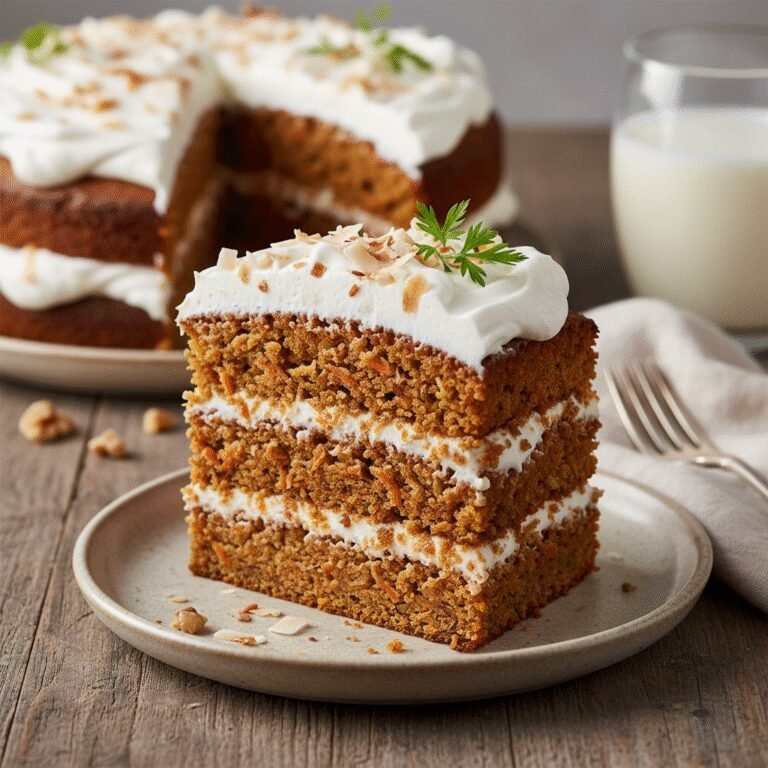
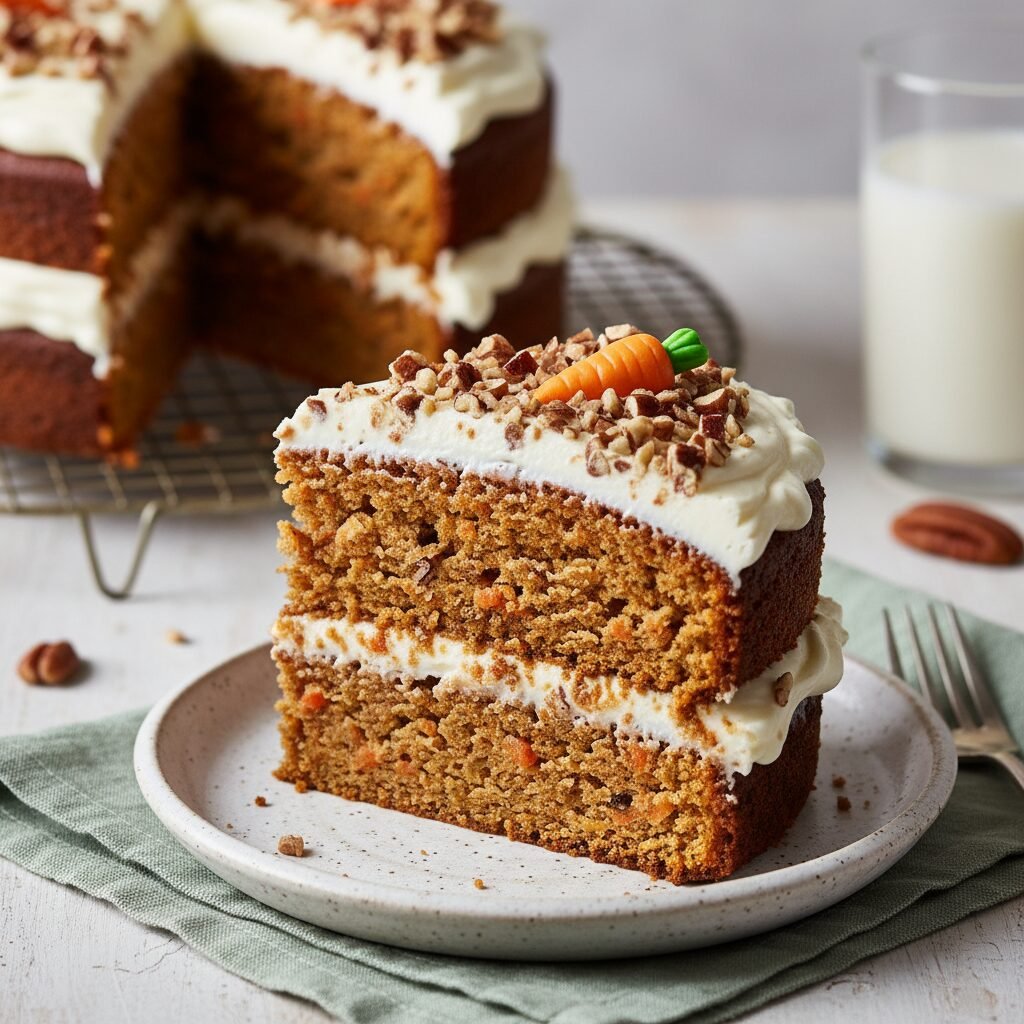
- Assemble the cake: Place one layer on your serving plate. Spread a generous layer of frosting over the top. Place the second layer on top. Frost the top and sides of the cake. Garnish with extra chopped nuts if desired.
Expert Cooking Tips
- ✓Always grate your own carrots. Store-bought shredded carrots are dry and hard; fresh carrots release moisture that is essential for the cake’s texture.
- ✓Room temperature eggs incorporate better into the batter, creating a more uniform emulsion and a fluffier cake.
- ✓Do not overmix the batter once the flour is added. Overmixing develops gluten, which leads to a tough, rubbery cake rather than a tender one.
- ✓Weigh your flour if possible (approx 120g per cup). If using cups, spoon the flour into the cup and level it off; dipping the cup packs the flour and dries out the cake.
- ✓Chill the cake layers for 30 minutes before frosting. This reduces crumbs getting caught in the frosting (crumb coat).
- ✓If your vegan butter is too soft, the frosting will be runny. Ensure it is cool room temperature, not melting.
Substitutions and Variations
This recipe is highly adaptable. If you need to make it **Gluten-Free**, simply swap the all-purpose flour for a high-quality 1:1 Gluten-Free Baking Flour blend (make sure it contains xanthan gum). For an **Egg-Free/Vegan** version, you can use flax eggs (1 tbsp ground flaxseed meal + 3 tbsp water per egg) or a commercial egg replacer, though the cake may be slightly denser. If you are allergic to **nuts**, simply omit the pecans or walnuts; you can replace them with pumpkin seeds for crunch or just leave them out. For the oil, melted coconut oil works well but will impart a slight coconut flavor; stick to canola, vegetable, or avocado oil for a neutral taste. If you cannot find vegan cream cheese for the frosting, simply use all vegan butter and add 1 teaspoon of lemon juice or apple cider vinegar to cut the sweetness and mimic the tang.
Common Mistakes to Avoid
The most common mistake is using pre-shredded ‘matchstick’ carrots from the grocery store. These are treated to stay crisp and won’t soften or release moisture during baking, leading to a dry cake with crunchy vegetable bits. Another error is frosting the cake while it is still warm. Dairy-free butter has a lower melting point than regular butter, so if the cake is even slightly warm, the frosting will slide right off. Finally, avoid opening the oven door frequently to check on the cake; the temperature fluctuation can cause the center to sink.
Serving Suggestions
This cake is rich and substantial, so it pairs beautifully with a hot beverage to cut through the sweetness. Serve a slice with a hot cup of black coffee, an oat milk latte, or a spiced chai tea. It is perfect for Easter brunch, Thanksgiving dessert, or birthday parties. If you want to elevate the presentation, press chopped toasted walnuts into the sides of the cake or top with candied carrot ribbons. For a summer twist, serve with a side of dairy-free vanilla bean ice cream.
Storage and Reheating Tips
Because of the fresh carrots and the nature of the frosting, this cake is best stored in the refrigerator. It will keep in an airtight container or cake dome for up to 5 days. The oil-based sponge ensures it won’t dry out in the cold like butter cakes do. However, for the best flavor and texture, let the slice sit at room temperature for 15-20 minutes before eating to soften the frosting. You can also freeze the cake layers (unfrosted) for up to 3 months wrapped tightly in plastic wrap. Frosted slices can also be frozen; place them on a baking sheet to freeze solid, then wrap individually.
Nutrition Facts (Estimated)
| Serving Size | 1 slice |
| Calories | 580 |
| Fat | 34g |
| Saturated Fat | 6g |
| Unsaturated Fat | 28g |
| Trans Fat | 0g |
| Cholesterol | 45mg |
| Sodium | 320mg |
| Carbohydrates | 68g |
| Fiber | 2g |
| Sugar | 48g |
| Protein | 5g |
Frequently Asked Questions
Can I make this into cupcakes instead of a layer cake?
Yes! This recipe will make approximately 24 standard cupcakes. Bake them at 350°F for 18-22 minutes. Check for doneness with a toothpick.
Why did my cake sink in the middle?
Sinking usually happens if the cake was underbaked (the structure didn’t set), the oven door was opened too early, or there was too much leavening (baking soda/powder). Ensure your oven temperature is accurate using an oven thermometer.
Can I reduce the sugar in this recipe?
You can reduce the sugar by about 1/4 cup without drastically affecting the texture. However, sugar provides moisture and structural stability, so reducing it too much will result in a drier, denser cake.
What is the best vegan butter for frosting?
Look for vegan butter ‘sticks’ rather than tubs. Brands like Miyoko’s, Country Crock Plant Butter, or Earth Balance sticks have a lower water content and hold their shape better for frosting.
Can I use applesauce instead of oil?
You can substitute half of the oil with unsweetened applesauce to reduce fat, but I do not recommend replacing all of it. The oil is crucial for that signature moist carrot cake texture.
How do I grate carrots easily?
A food processor with a shredding attachment is the fastest method. If doing it by hand, use the medium holes of a standard box grater. Watch your fingers!
Does this cake taste like coconut if I use coconut oil?
If you use unrefined (virgin) coconut oil, yes, it will have a coconut flavor. Use refined coconut oil for a neutral taste, or stick to vegetable/canola oil.
Is this recipe vegan?
The batter contains eggs, so it is Dairy-Free but not Vegan. However, you can make it vegan by using flax eggs or a commercial egg replacer as mentioned in the substitutions section.
Conclusion
Creating a dairy-free dessert that feels indulgent and authentic shouldn’t be a struggle. This Moist Dairy-Free Carrot Cake proves that you don’t need butter or cream to achieve bakery-quality results. The combination of the spiced, tender sponge and the sweet, creamy frosting makes for a dessert that everyone at the table will love, regardless of their dietary restrictions. It is a labor of love that rewards you with every bite. We hope this becomes a staple in your recipe box for years to come. Happy baking!