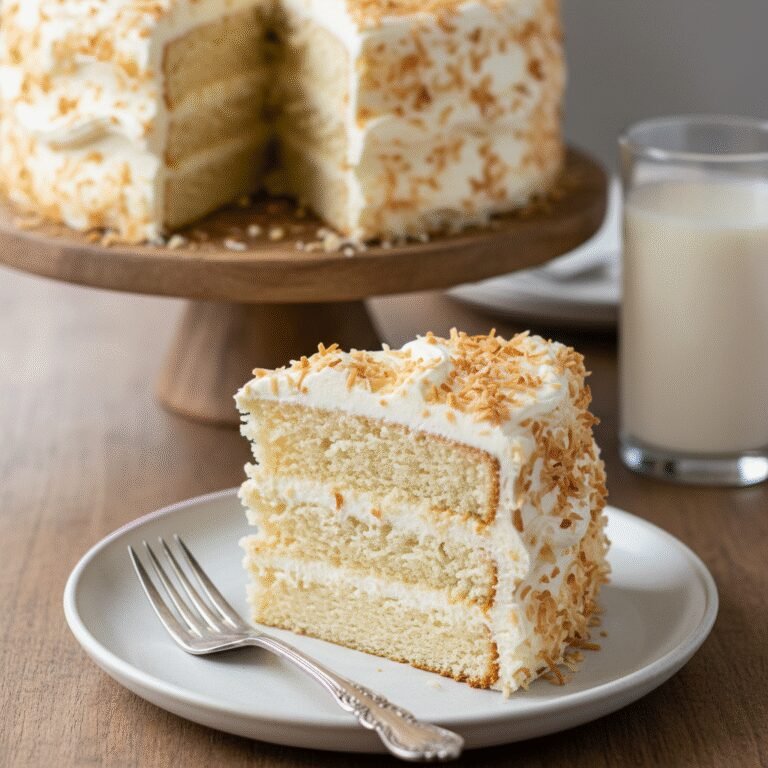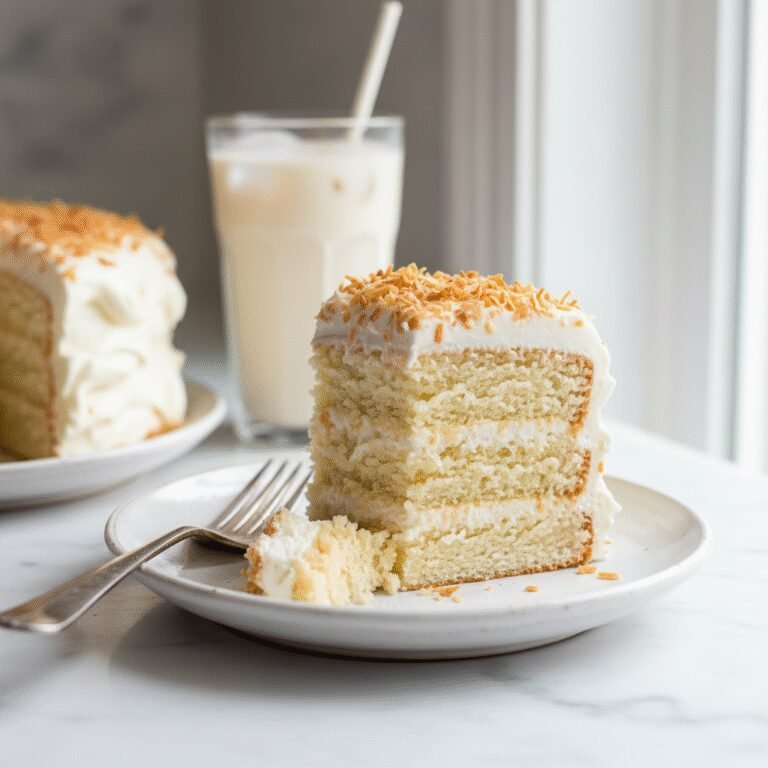
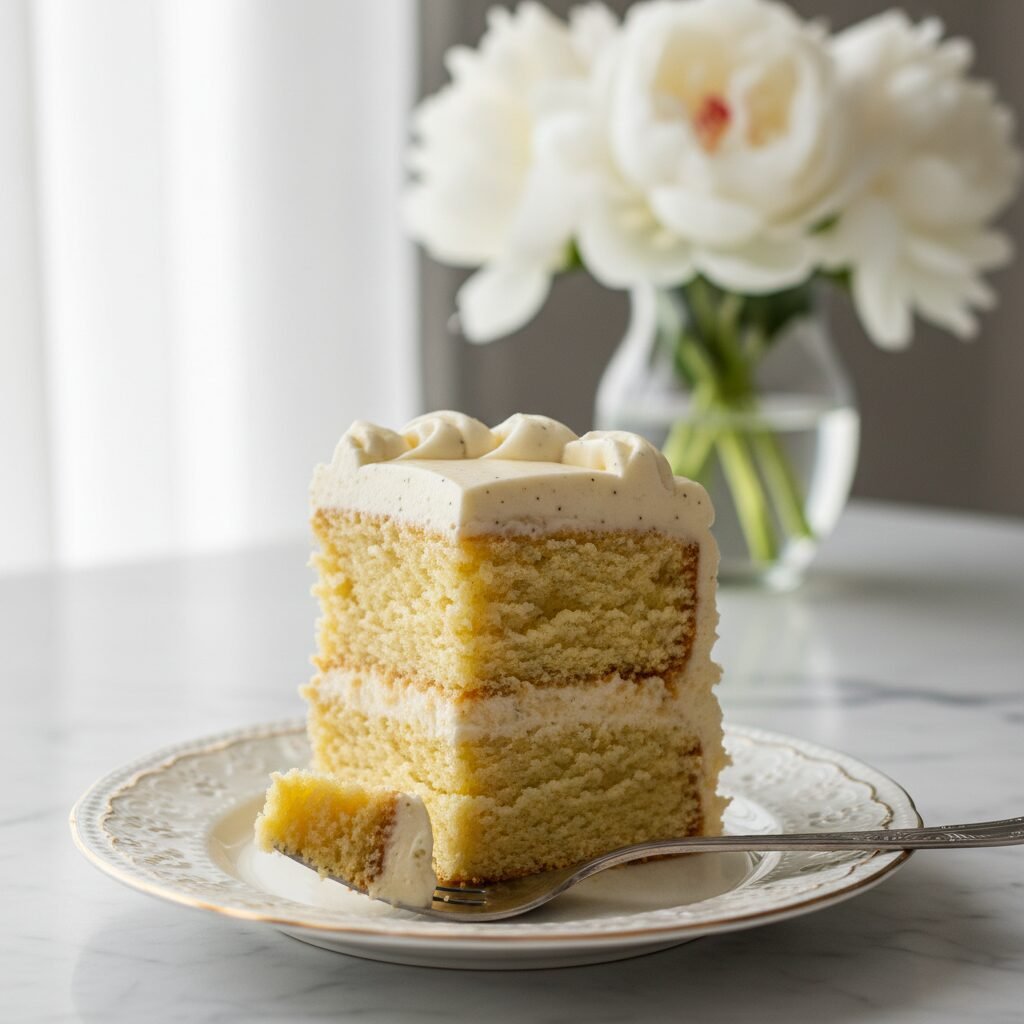
The Ultimate Moist Keto Vanilla Cake Recipe with Buttercream Frosting
Moist Keto Vanilla Cake Recipe
Discover the holy grail of low-carb baking with this incredibly moist Keto Vanilla Cake recipe. Using a perfect blend of almond flour and sour cream, this sugar-free and gluten-free dessert delivers a tender crumb and rich buttery flavor that rivals any traditional bakery cake.
20 minutes
30 minutes
50 minutes
12 slices
Dessert
Baking
American
Gluten-Free
For anyone following a ketogenic lifestyle, the quest for the perfect cake is often fraught with disappointment. We have all been there: excited to try a new low-carb recipe, only to pull a dense, dry, or eggy sponge out of the oven that feels more like an omelet than a dessert. This recipe changes everything. After extensive testing and tweaking, I am thrilled to share what I truly believe is the best Keto Vanilla Cake you will ever bake. This isn’t just ‘good for keto’; it is genuinely delicious, boasting a tender, velvety crumb that holds together perfectly without being gritty.
The secret lies in the precise balance of almond flour for healthy fats and a touch of coconut flour for structure, combined with the magic of sour cream to ensure lasting moisture. Whether you are celebrating a birthday, a wedding, or simply a Tuesday night craving, this cake serves as the perfect blank canvas. It pairs beautifully with a rich sugar-free buttercream, fresh berries, or a lemon glaze. The flavor profile is deeply aromatic with pure vanilla bean notes, masking any cooling sensation often associated with keto sweeteners. Prepare to impress your non-keto friends and family, because they likely won’t even guess this decadent treat is gluten-free and sugar-free.
History & Origins
The concept of cake dates back to ancient times, though early versions were more bread-like and sweetened with honey. The modern ‘cake’ as we know it, with its light and airy texture, only became possible with the invention of chemical leavening agents like baking soda and baking powder in the mid-19th century. Vanilla cake, specifically, became a staple of American households with the widespread availability of pure vanilla extract in the late 1800s.
However, the history of the *keto* cake is a much more recent phenomenon, born out of the low-carb revolutions of the late 20th and early 21st centuries. Initially, during the height of the Atkins diet, low-carb desserts were often experimental and relied heavily on soy flour or vital wheat gluten, resulting in rubbery textures. As the Paleo and Keto movements gained momentum in the 2010s, the culinary world saw a massive shift toward nut flours. Almond flour became the gold standard for gluten-free, low-carb baking due to its neutral flavor and high fat content. The challenge remained in replicating the gluten network’s structure without the carbohydrates. Over the last decade, the introduction of high-quality sweeteners like erythritol, monk fruit, and allulose, combined with binders like xanthan gum, has revolutionized keto baking, allowing us to recreate classic comfort foods that honor the culinary history of the vanilla cake while adhering to modern nutritional science.
Why This Recipe Works
This recipe succeeds where many others fail due to the specific chemistry of the ingredients used. First, we use ‘super-fine’ blanched almond flour rather than almond meal. This is crucial because the finer grind mimics the texture of all-purpose wheat flour, preventing the cake from being gritty or heavy. Secondly, the addition of a small amount of coconut flour is scientifically necessary; coconut flour is highly absorbent and helps dry out the excess moisture from the almond flour just enough to create a sturdy structure that doesn’t crumble when sliced.
The true game-changer, however, is the inclusion of room-temperature sour cream. The acidity in the sour cream reacts with the baking powder to create carbon dioxide bubbles, giving the cake a superior lift and fluffiness. Furthermore, the fat content in the sour cream and butter coats the protein in the almond flour, inhibiting toughness and ensuring a ‘melt-in-your-mouth’ sensation. We also use xanthan gum, a common hydrocolloid in gluten-free baking, which acts as a replacement for gluten strands, providing the elasticity needed to trap air bubbles during baking. Finally, using a blend of allulose and monk fruit sweetener helps avoid the crystallization that can happen with pure erythritol, keeping the cake soft even after it cools.
Why You’ll Love This Recipe
- ✓Incredibly moist and tender crumb
- ✓Only 4g net carbs per slice
- ✓Gluten-free and grain-free
- ✓No strange aftertaste or cooling effect
- ✓Sturdy enough for layer cakes
- ✓Simple one-bowl mixing method
Equipment You’ll Need
- ✓Two 8-inch round cake pans
- ✓Parchment paper
- ✓Electric hand mixer or stand mixer
- ✓Large mixing bowl
- ✓Medium mixing bowl
- ✓Whisk
- ✓Rubber spatula
- ✓Wire cooling rack
Ingredients
- ✓2 1/2 cups Super Fine Blanched Almond Flour
- ✓1/4 cup Coconut Flour
- ✓1 1/2 tbsp Baking Powder
- ✓1/2 tsp Xanthan Gum
- ✓1/2 tsp Salt
- ✓1/2 cup Unsalted Butter, softened
- ✓1/2 cup Granulated Monk Fruit Sweetener (or Allulose blend)
- ✓4 large Eggs, room temperature
- ✓1/2 cup Full-Fat Sour Cream, room temperature
- ✓2 tsp Pure Vanilla Extract
- ✓1/3 cup Unsweetened Almond Milk, room temperature
Instructions
- Preheat your oven to 350°F (175°C). Grease two 8-inch round cake pans generously with butter or coconut oil and line the bottoms with parchment paper rounds to prevent sticking.
- In a medium bowl, whisk together the almond flour, coconut flour, baking powder, xanthan gum, and salt until well combined and free of lumps. Set aside.
- In a large mixing bowl (or the bowl of a stand mixer), cream the softened butter and sweetener together on high speed for about 2-3 minutes until the mixture is pale and fluffy.
- Reduce the mixer speed to medium. Add the eggs one at a time, beating well after each addition. Scrape down the sides of the bowl as needed.
- Mix in the sour cream and vanilla extract until fully incorporated.
- With the mixer on low speed, gradually add the dry ingredient mixture in two batches, alternating with the almond milk. Mix just until the batter is smooth and combined. Do not overmix.
- Divide the batter evenly between the two prepared cake pans. Smooth the tops with a rubber spatula.
- Bake in the center of the preheated oven for 25-30 minutes, or until the tops are golden brown and a toothpick inserted into the center comes out clean or with just a few moist crumbs.
- Remove from the oven and let the cakes cool in the pans for at least 20 minutes. This step is critical as keto cakes are fragile when hot.
- Gently run a knife around the edges to loosen the cakes, then invert them onto a wire rack to cool completely before frosting.
Expert Cooking Tips
- ✓Ensure all dairy and eggs are at room temperature before starting; cold ingredients will curdle the batter.
- ✓Weigh your almond flour if possible (approx. 112g per cup) to avoid a dense cake.
- ✓Do not skip the parchment paper; almond flour cakes adhere to pans more than wheat cakes.
- ✓If the tops are browning too quickly, tent the pans loosely with aluminum foil halfway through baking.
- ✓Let the cake cool completely before frosting, or the butter-based frosting will melt right off.
- ✓Sift the almond flour to ensure there are no lumps for the smoothest texture.
Substitutions and Variations
This recipe is quite flexible but relies on specific ratios. If you cannot use sour cream, full-fat Greek yogurt is an excellent 1:1 substitute that provides similar acidity and moisture. For a dairy-free version, you can substitute the butter with coconut oil (solid state) or a vegan butter stick, and replace the sour cream with a thick coconut cream or dairy-free yogurt. Regarding sweeteners, Allulose is the best option for a soft texture as it doesn’t recrystallize, but an Erythritol/Monk Fruit blend works well too. Do not substitute the almond flour with coconut flour entirely; coconut flour is extremely absorbent and requires a completely different recipe. If you don’t have xanthan gum, you can try using 1 tablespoon of gelatin powder or ground psyllium husk, though the texture may be slightly less sturdy.
Common Mistakes to Avoid
The most common mistake in keto baking is checking the oven too often or opening the door early; this causes the temperature to drop and can make the cake sink in the middle. Another major error is cutting into the cake while it is still warm. Unlike gluten cakes, keto cakes need to cool to set their structure; cutting it hot will result in a crumbly mess. Using ‘almond meal’ (which includes the skins) instead of ‘blanched almond flour’ will result in a gritty, heavy cake that doesn’t rise well. Finally, over-beating the batter after adding the dry ingredients can knock out the air bubbles you worked hard to create, leading to a dense brick.
Serving Suggestions
This cake is best served at room temperature to ensure the frosting is soft and the cake is tender. It pairs perfectly with a Keto Buttercream Frosting made from butter, powdered sweetener, heavy cream, and vanilla. For a lighter option, top with homemade sugar-free whipped cream and fresh strawberries or raspberries. If you are feeling adventurous, slice the cake layers horizontally to create a four-layer torte, filling the layers with sugar-free lemon curd or a chocolate ganache made from sugar-free dark chocolate chips and heavy cream.
Storage and Reheating Tips
Store leftover cake in an airtight container in the refrigerator for up to 5 days. Because this cake contains no preservatives and has a high moisture content from the dairy, it keeps best when chilled. To serve, remove a slice and let it sit on the counter for 15-20 minutes to reach room temperature. For long-term storage, this cake freezes beautifully. Wrap individual unfrosted layers or frosted slices tightly in plastic wrap, then place them in a freezer-safe bag. They can be frozen for up to 3 months. Thaw overnight in the fridge before serving.
Nutrition Facts (Estimated)
| Serving Size | 1 slice |
| Calories | 320 |
| Fat | 28g |
| Saturated Fat | 10g |
| Unsaturated Fat | 16g |
| Trans Fat | 0g |
| Cholesterol | 85mg |
| Sodium | 180mg |
| Carbohydrates | 6g |
| Fiber | 2g |
| Sugar | 1g |
| Protein | 7g |
Frequently Asked Questions
Can I use only coconut flour instead of almond flour?
No, you cannot swap them 1:1. Coconut flour absorbs 4 times as much liquid as almond flour. Substituting it directly will result in a dry, hard puck.
Why did my cake fall in the middle?
This usually happens if the cake was underbaked or if the oven door was opened too early, causing a sudden temperature drop that collapses the air bubbles.
Does this cake taste like almonds?
Not really. The vanilla extract and butter mask the almond flavor significantly, leaving a neutral, sweet, traditional yellow cake flavor.
Can I make this into cupcakes?
Yes! This recipe will make approximately 12-15 cupcakes. Bake them at 350°F for 18-22 minutes.
Is xanthan gum absolutely necessary?
It is highly recommended. Without gluten, xanthan gum acts as the binder. Without it, the cake will be much more crumbly and difficult to handle.
What sweetener is best to avoid the cooling effect?
Allulose is the best sweetener to avoid the ‘cooling’ sensation often associated with erythritol. It also caramelizes like real sugar.
Can I use salted butter?
Yes, you can use salted butter, but you should omit the additional 1/2 tsp of salt listed in the ingredients.
How do I know when it is done?
Insert a toothpick into the center. It should come out clean or with a few moist crumbs, but no wet batter. The top should spring back slightly when pressed.
Conclusion
Baking on a keto diet doesn’t mean you have to sacrifice the joy of a classic vanilla birthday cake. This Moist Keto Vanilla Cake recipe proves that with the right ingredients and technique, you can enjoy a decadent, fluffy, and delicious dessert that aligns with your health goals. Whether you are a seasoned keto veteran or just starting your low-carb journey, this foolproof recipe is sure to become a staple in your kitchen. So preheat that oven, grab your mixer, and get ready to enjoy a slice of guilt-free heaven. Don’t forget to leave a review and let us know how your cake turned out!