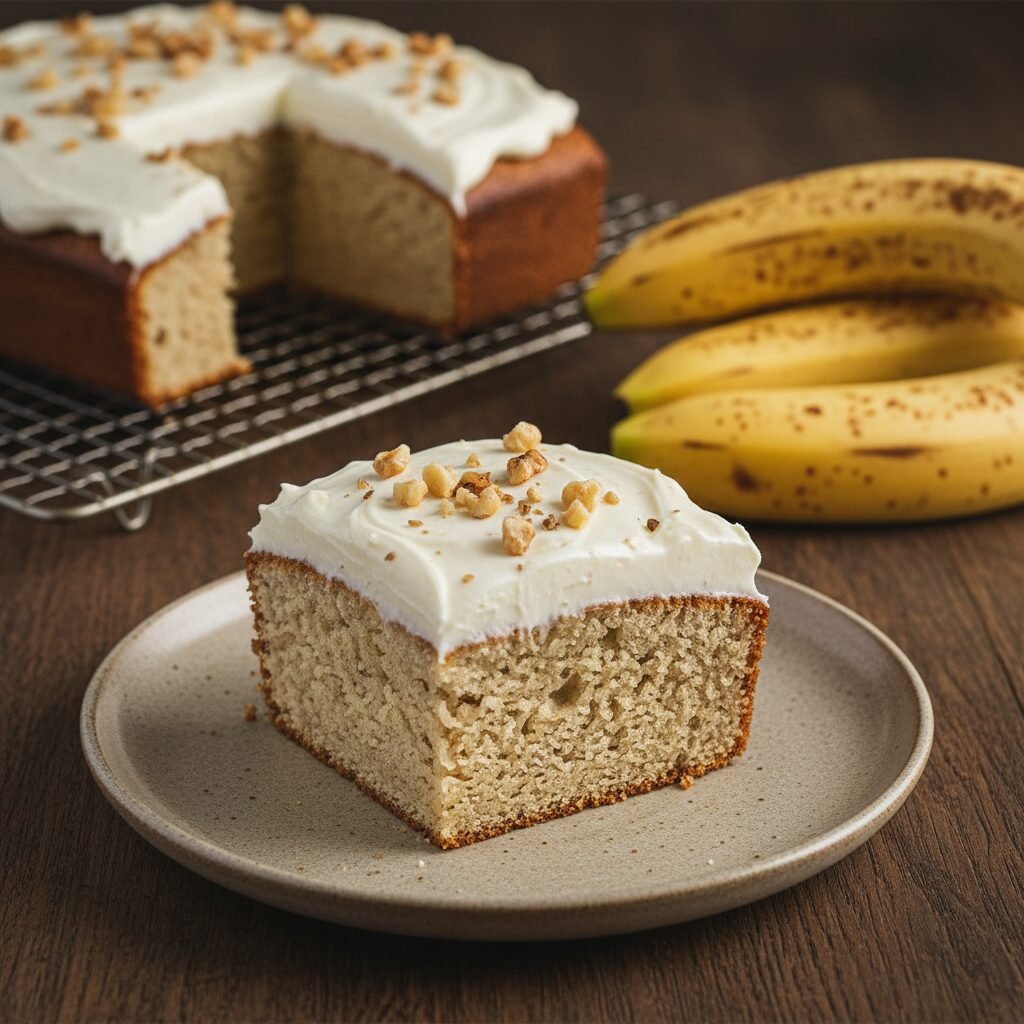
The Ultimate Moist Vegan Banana Cake with Creamy Vanilla Frosting
Moist Vegan Banana Cake Recipe
Discover the secret to the most tender, melt-in-your-mouth vegan banana cake you’ve ever tasted. This foolproof recipe uses pantry staples to create a dessert so rich and fluffy, no one will believe it’s entirely plant-based.
20 minutes
35 minutes
55 minutes
12 servings (one 9×13 inch cake or two 8-inch rounds)
Dessert
Baking
American
Vegan
There is something undeniably comforting about the aroma of baked bananas and cinnamon wafting through a kitchen, evoking memories of cozy afternoons and family gatherings. However, finding a vegan banana cake that rivals the traditional butter-and-egg versions can often be a culinary challenge. Many plant-based attempts end up too dense, gummy, or dry. That ends today. This recipe for Moist Vegan Banana Cake is the culmination of extensive testing to achieve the perfect crumb—light, airy, yet incredibly moist. We’ve stripped away the need for flax eggs or expensive commercial egg replacers, relying instead on the magic of simple chemistry to provide structure and lift.
The flavor profile is a sophisticated balance of sweet, ripe bananas, warm hints of cinnamon and nutmeg, and a rich vanilla undertone. It is sweet without being cloying, allowing the natural fruitiness to shine through. What truly sets this cake apart is its versatility; it serves as a humble snack cake for brunch or can be dressed up with our luxurious vegan cream cheese frosting for a show-stopping birthday dessert. Whether you are a lifelong vegan, managing an egg allergy, or simply out of butter, this recipe promises a result that feels indulgent and satisfying. Get ready to redefine your expectations of vegan baking with a slice of cake that is tender, flavorful, and utterly irresistible.
History & Origins
The history of banana-based baked goods is a fascinating journey through American culinary evolution, deeply rooted in the economic shifts of the 20th century. While bananas were becoming available in the US in the late 1800s thanks to improved refrigeration and transport, they were initially considered a luxury. It wasn’t until the Great Depression in the 1930s that banana bread and cakes became household staples. During this era of scarcity, throwing away food was unthinkable. Resourceful home cooks needed a way to use overripe bananas that were too mushy to eat raw. Coincidentally, this period also saw the mass production and popularization of baking soda and baking powder, chemical leavening agents that made quick breads and cakes easier and faster to rise than yeast-based goods.
As the decades progressed, the banana cake evolved from a dense, bread-like loaf into a lighter, sweeter dessert. The transition to vegan versions mirrors the broader cultural shift toward plant-based eating that began gaining significant momentum in the late 20th and early 21st centuries. Early vegan baking was often stigmatized as flavorless or having poor texture, largely due to a lack of understanding of food chemistry. However, as culinary science advanced, bakers discovered that ingredients like vinegar, applesauce, and oils could replicate the functional properties of eggs and dairy. This specific recipe pays homage to that history, utilizing the Depression-era ‘wacky cake’ technique of using vinegar and baking soda for lift, proving that necessity truly is the mother of invention.
Why This Recipe Works
This recipe succeeds where many others fail because it meticulously balances moisture, fat, and acidity to replicate the structural integrity usually provided by eggs. The key to the incredible moisture in this cake is the use of oil rather than vegan butter in the batter. Oil remains liquid at room temperature, which ensures the cake stays soft and tender for days, whereas butter-based cakes can firm up. We also utilize a ‘vegan buttermilk’ technique by combining plant-based milk with apple cider vinegar. This acidity does two things: it tenderizes the gluten strands in the flour to prevent toughness, and it reacts vigorously with the baking soda. This chemical reaction creates carbon dioxide bubbles, providing the essential lift and fluffiness that eggs would typically offer.
Furthermore, the inclusion of both brown and white sugars plays a critical role. Brown sugar contains molasses, which is hygroscopic—meaning it attracts and holds onto water molecules—ensuring the cake doesn’t dry out in the oven. Finally, the bananas themselves act as a binder. By using bananas that are heavily spotted or even black, we maximize the natural sugar content and breakdown the starches, resulting in a smoother batter and a deeper, more intense banana flavor that permeates every crumb.
Why You’ll Love This Recipe
- ✓Completely egg-free and dairy-free
- ✓Uses simple pantry staples—no weird ingredients
- ✓Stays moist for days thanks to oil-based batter
- ✓Rich, authentic banana flavor without being gummy
- ✓Perfect for birthdays, potlucks, or casual snacking
Equipment You’ll Need
- ✓Large mixing bowl
- ✓Medium mixing bowl
- ✓Whisk
- ✓Rubber spatula
- ✓9×13 inch baking pan or two 8-inch round pans
- ✓Measuring cups and spoons
- ✓Fork or potato masher
- ✓Wire cooling rack
Ingredients
- ✓3 large overripe bananas (approx. 1.5 cups mashed)
- ✓3 cups all-purpose flour
- ✓1 1/2 cups granulated sugar
- ✓1/2 cup light brown sugar, packed
- ✓1 1/2 tsp baking soda
- ✓1/2 tsp salt
- ✓1 tsp ground cinnamon
- ✓1 1/2 cups unsweetened almond milk (or soy milk)
- ✓1 tbsp apple cider vinegar
- ✓2/3 cup neutral oil (canola, vegetable, or melted coconut oil)
- ✓2 tsp pure vanilla extract
- ✓For the Frosting: 1/2 cup vegan butter, softened
- ✓For the Frosting: 3 cups powdered sugar
- ✓For the Frosting: 1-2 tbsp almond milk
- ✓For the Frosting: 1 tsp vanilla extract
Instructions
- Preheat your oven to 350°F (175°C). Grease and flour a 9×13 inch baking pan or line it with parchment paper for easy removal.
- In a small bowl or measuring cup, combine the almond milk and apple cider vinegar. Stir gently and set aside for 5-10 minutes to curdle into vegan buttermilk.
- Peel the ripe bananas and place them in a large mixing bowl. Mash them thoroughly with a fork or potato masher until smooth and liquidy. A few small lumps are okay, but avoid large chunks.
- Add the oil, vanilla extract, and the prepared vegan buttermilk mixture to the mashed bananas. Whisk vigorously until the wet ingredients are fully combined.
- In a separate medium bowl, sift together the flour, granulated sugar, brown sugar, baking soda, salt, and cinnamon. Whisk well to ensure the leavening agents are evenly distributed.
- Slowly pour the dry ingredients into the wet mixture. Using a rubber spatula, gently fold the batter together. Mix only until no streaks of flour remain. Do not overmix, or the cake will become dense.
- Pour the batter into the prepared baking pan. Smooth the top with the spatula to ensure an even layer.
- Bake in the preheated oven for 30-40 minutes. Test for doneness by inserting a toothpick into the center of the cake; it should come out clean or with just a few moist crumbs attached.
- Remove the cake from the oven and place the pan on a wire rack. Let it cool completely in the pan before frosting. This is crucial as warm cake will melt the frosting.
- To make the frosting: In a medium bowl, beat the softened vegan butter until creamy. Gradually add the powdered sugar, one cup at a time, beating well after each addition. Add the vanilla and 1 tablespoon of almond milk. Beat on high for 2-3 minutes until fluffy. Add more milk if needed for spreadability.
- Once the cake is cool, spread the frosting generously over the top. Slice and serve immediately.
Expert Cooking Tips
- ✓Use spotty bananas: The browner the bananas, the sweeter and more moist your cake will be.
- ✓Measure flour correctly: Spoon the flour into the measuring cup and level it off with a knife. Scooping directly packs the flour and leads to a dry cake.
- ✓Don’t overmix: Stop stirring as soon as the flour disappears to keep the crumb tender.
- ✓Room temperature ingredients: While not strictly necessary for this oil-based cake, having milk at room temp helps the emulsion.
- ✓Let it cool: Vegan cakes can be more fragile when hot. Letting it cool completely sets the structure.
- ✓Check your baking soda: Ensure it isn’t expired, as this is the primary lifting agent.
- ✓Vinegar is key: Do not skip the vinegar; it activates the baking soda.
Substitutions and Variations
This recipe is quite forgiving and adaptable to various dietary needs. If you need to make this gluten-free, substitute the all-purpose flour with a high-quality 1:1 Gluten-Free Baking Flour blend that contains xanthan gum. The texture may be slightly denser but still delicious. For the sugar, you can use coconut sugar instead of brown sugar for a more caramel-like flavor, though the color of the cake will be darker. If you are avoiding refined sugars, you can try using maple syrup, but you will need to reduce the liquid (milk) by about 1/4 cup and increase the flour slightly to balance the moisture. Any neutral oil works well here; avocado oil, grapeseed oil, or melted refined coconut oil are excellent choices. If you have a nut allergy, simply use oat milk or soy milk instead of almond milk. For the vinegar, white vinegar or lemon juice can be used as a 1:1 replacement for apple cider vinegar.
Common Mistakes to Avoid
The most common mistake when making vegan banana cake is using under-ripe bananas. Yellow or green bananas lack the sugar content and moisture needed for the correct texture, resulting in a bland, dry cake. Another frequent error is overmixing the batter. Once the wet and dry ingredients meet, gluten begins to develop. Excessive stirring creates tough, rubbery gluten strands instead of a tender crumb. Additionally, opening the oven door too early can cause the cake to sink in the middle. The chemical reaction creating the rise needs heat to set the structure; a sudden draft of cool air can collapse the bubbles before the cake is firm. Lastly, attempting to frost the cake while it is even slightly warm will result in a greasy, melted mess, as vegan butter has a lower melting point than dairy butter.
Serving Suggestions
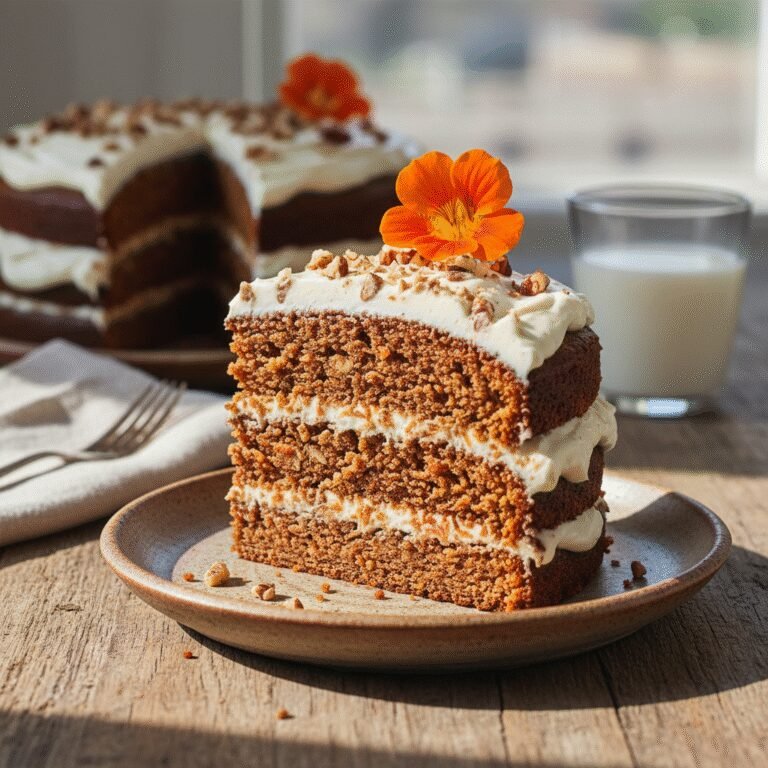
This cake is incredibly versatile in how it can be served. For a classic approach, serve a square chilled or at room temperature with a dusting of cinnamon on top of the frosting. It pairs beautifully with a hot cup of dark roast coffee or an Earl Grey tea, making it an excellent choice for mid-morning brunch or afternoon tea. To elevate it for a dinner party, serve the slice slightly warmed (without frosting) with a scoop of vegan vanilla bean ice cream and a drizzle of salted caramel sauce. Chopped walnuts or pecans sprinkled over the frosting add a delightful crunch that contrasts with the soft cake. Fresh berries, such as strawberries or raspberries, also provide a tart brightness that cuts through the sweetness of the frosting.
Storage and Reheating Tips
To store this cake, cover the pan tightly with plastic wrap or transfer slices to an airtight container. It can be kept at room temperature for up to 3 days, provided your kitchen isn’t too hot, as the frosting may melt. For longer storage, keep it in the refrigerator for up to 1 week; the oil-based batter ensures it won’t dry out even when chilled. If you wish to freeze the cake, it is best done unfrosted. Wrap individual slices or the whole cake tightly in plastic wrap, then in aluminum foil to prevent freezer burn. It can be frozen for up to 3 months. Thaw at room temperature before frosting and serving. If the cake is already frosted, freeze it on a baking sheet until the frosting is hard, then wrap it.
Nutrition Facts (Estimated)
| Serving Size | 1 slice |
| Calories | 340 |
| Fat | 14g |
| Saturated Fat | 2g |
| Unsaturated Fat | 11g |
| Trans Fat | 0g |
| Cholesterol | 0mg |
| Sodium | 210mg |
| Carbohydrates | 52g |
| Fiber | 2g |
| Sugar | 28g |
| Protein | 4g |
Frequently Asked Questions
Can I use whole wheat flour instead of all-purpose?
Yes, you can use white whole wheat flour or a mix of 50% all-purpose and 50% regular whole wheat flour. Using 100% regular whole wheat flour may result in a denser, heavier texture.
Why did my cake sink in the middle?
Sinking is usually caused by underbaking or opening the oven door too early. It can also happen if there was too much leavening (baking soda) or liquid in the batter.
Can I reduce the sugar in this recipe?
You can reduce the sugar by about 1/4 to 1/3 cup without significantly affecting the structure. However, sugar adds moisture as well as sweetness, so reducing it too much may make the cake drier.
Can I make this into cupcakes?
Absolutely! This batter makes wonderful cupcakes. Line a muffin tin with liners and bake for 18-22 minutes at 350°F. Check for doneness with a toothpick.
What if I don’t have apple cider vinegar?
White distilled vinegar or fresh lemon juice work perfectly as substitutes. You need the acid to react with the baking soda.
Is this cake freezer-friendly?
Yes, it freezes very well. Wrap tightly to prevent freezer burn. It’s best to freeze it unfrosted, but frosted cake works too if flash-frozen first.
My bananas aren’t ripe enough. Can I speed up the process?
Yes! Place unpeeled bananas on a baking sheet and bake at 300°F for about 15-20 minutes until the skins turn black and the fruit is soft.
Can I add mix-ins like chocolate chips or nuts?
Definitely. Fold in up to 1 cup of vegan chocolate chips, chopped walnuts, or pecans gently at the very end of the mixing process.
Why is my cake gummy?
Gumminess is often a sign of overmixing the batter or cutting into the cake while it is still hot. Ensure you just mix until combined and let it cool completely.
Conclusion
Baking a vegan cake that satisfies the soul doesn’t have to be complicated or require a chemistry degree. This Moist Vegan Banana Cake proves that with simple ingredients and a little love, you can create a dessert that brings people together. Whether you are baking for a special occasion or just trying to salvage some overripe bananas on a Tuesday night, this recipe is your new go-to. The tender crumb, the rich aroma of cinnamon and banana, and the creamy sweetness of the frosting create a symphony of flavors that everyone will enjoy, regardless of their dietary preferences. Give it a try, and don’t be surprised if it disappears from the kitchen counter faster than you expected!