The Ultimate Moist Vegan Red Velvet Cake with Tangy Cream Cheese Frosting
Moist Vegan Red Velvet Cake Recipe
Discover the secret to the most velvety, tender, and vibrant red velvet cake that happens to be 100% vegan. Topped with a luscious dairy-free cream cheese frosting, this recipe rivals any traditional bakery classic and is perfect for birthdays, holidays, or a decadent weekend treat.
30 minutes
35 minutes
1 hour 5 minutes
12-14 slices (one 3-layer 6-inch cake or 2-layer 8-inch cake)
Dessert
Baking
American
Vegan
If you have ever hesitated to bake a vegan cake for fear of it turning out dry, dense, or lackluster, let this recipe completely change your mind. Red velvet is a classic American dessert known for its distinct flavor profile—a subtle hint of chocolate paired with a buttery vanilla undertone and a slight tang from buttermilk. Recreating this in a plant-based format is not only possible but often results in a superior crumb. By using oil instead of butter and a homemade vegan buttermilk substitute, we achieve a texture that stays moist for days, far longer than many traditional cakes.
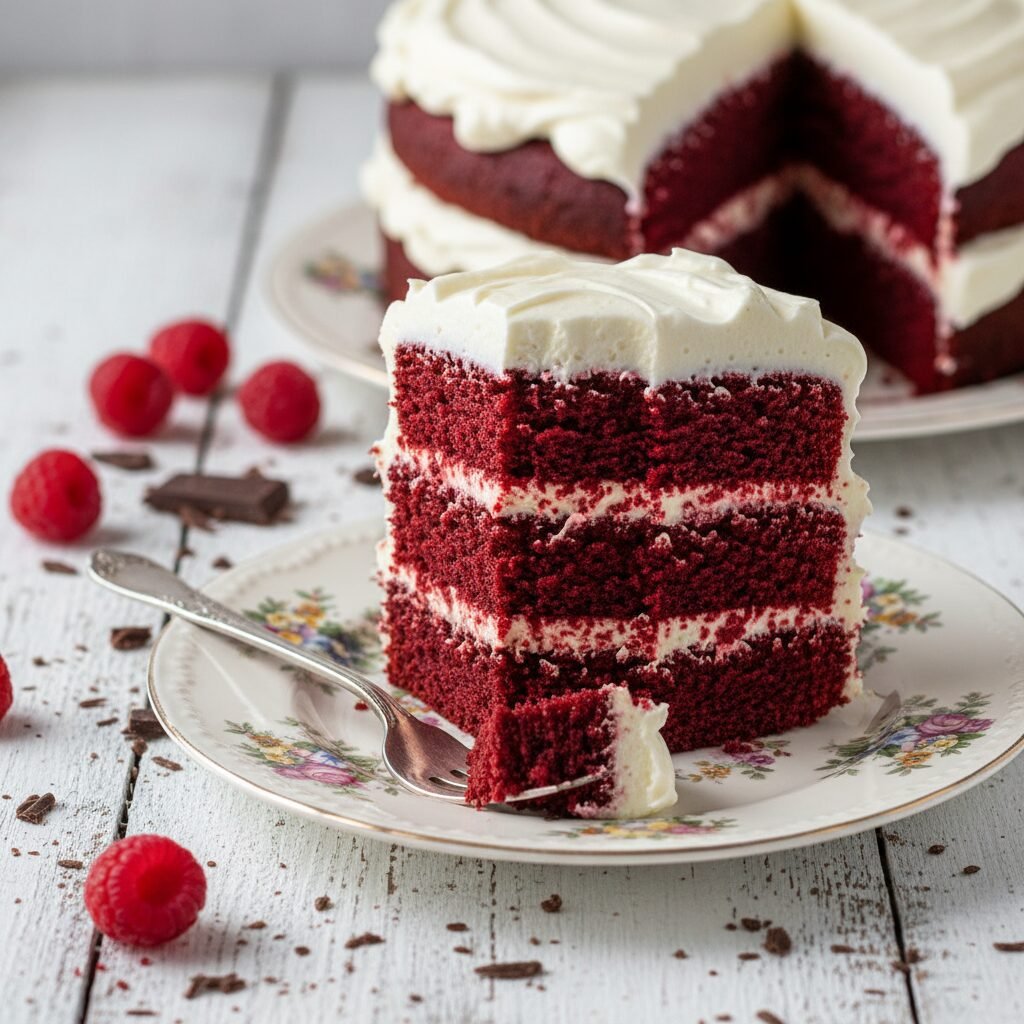
This Moist Vegan Red Velvet Cake is a showstopper. It features three glorious layers of crimson sponge that are soft, fluffy, and melt-in-your-mouth tender. The flavor is complex: not quite chocolate, not quite vanilla, but that signature ‘red velvet’ taste that is impossible to resist. The crowning glory is the frosting. We are using a dairy-free cream cheese buttercream that is whipped to perfection, offering that essential tangy counterpoint to the sweet sponge. Whether you are vegan, dairy-free, or simply an avid baker looking for the next best thing, this cake delivers on all fronts. It is sturdy enough to stack but delicate enough to feel elegant. Get ready to impress your friends and family with a dessert that looks as stunning as it tastes.
History & Origins
The history of Red Velvet Cake is as rich and layered as the cake itself, often debated among food historians. Its origins can be traced back to the Victorian era when ‘velvet’ cakes were a category of their own, distinguished by their soft, velvety crumb which was achieved by using almond flour, cocoa, or cornstarch to break down the protein in flour. The ‘red’ aspect, however, has a few different origin stories.
Originally, the reddish hue was a result of a chemical reaction between raw cocoa powder (which contains anthocyanins) and acidic ingredients like buttermilk and vinegar. This reaction revealed a rusty, mahogany red color in the chocolate. During the Great Depression, when ingredients were scarce, bakers used beet juice to enhance moisture and provide a rich color, a method that is still used in some natural recipes today.
The cake’s modern popularity exploded in the mid-20th century. The Adams Extract company in Texas is often credited with popularizing the bright red version we know today during the 1920s to sell more food coloring and flavor extracts. Additionally, the Waldorf Astoria Hotel in New York City claims the cake as its own signature creation. Regardless of its exact birthplace, Red Velvet became a staple of Southern US cuisine, synonymous with celebrations, Juneteenth, and holiday gatherings. Today, it stands as an iconic American dessert, and converting it to a vegan recipe honors that tradition of innovation and adaptation.
Why This Recipe Works
This recipe succeeds where others fail because it relies on the science of baking to create lift and moisture without eggs or dairy. First, the combination of soy milk and apple cider vinegar creates a vegan ‘buttermilk.’ The acid in the vinegar curdles the soy milk, thickening it and providing the acidity needed to react with the baking soda. This reaction releases carbon dioxide bubbles, giving the cake a tremendous lift and a fluffy, airy structure that mimics the function of eggs.
Secondly, we use a neutral oil (like canola or vegetable oil) instead of vegan butter for the batter. While butter adds flavor, it contains water which can evaporate during baking, sometimes leading to a drier crumb. Oil is 100% fat and remains liquid at room temperature, ensuring the cake stays incredibly moist and tender even after it has cooled. We also incorporate a touch of cornstarch into the dry ingredients, which lowers the protein content of the all-purpose flour, mimicking cake flour for a softer, more ‘velvety’ texture. Finally, the inclusion of hot coffee (optional but recommended) blooms the cocoa powder, intensifying the chocolate notes without making the cake taste like coffee.
Why You’ll Love This Recipe
- ✓100% Vegan and Dairy-Free
- ✓Incredibly moist texture that lasts for days
- ✓Authentic red velvet flavor with a hint of cocoa and tang
- ✓Sturdy crumb perfect for layer cakes
- ✓Rich, tangy dairy-free cream cheese frosting
- ✓No hard-to-find ingredients required
Equipment You’ll Need
- ✓Two 8-inch round cake pans or three 6-inch pans
- ✓Large mixing bowl
- ✓Medium mixing bowl
- ✓Whisk
- ✓Electric hand mixer or stand mixer
- ✓Rubber spatula
- ✓Wire cooling rack
- ✓Measuring cups and spoons
- ✓Parchment paper
- ✓Offset spatula for frosting
Ingredients
- ✓2 1/2 cups All-purpose flour
- ✓1 1/2 cups Granulated sugar
- ✓1 tbsp Cocoa powder (regular, not Dutch-processed)
- ✓1 tsp Baking soda
- ✓1/2 tsp Salt
- ✓1 tbsp Cornstarch
- ✓1 1/2 cups Soy milk (or almond milk)
- ✓1 tbsp Apple cider vinegar
- ✓1/2 cup Neutral oil (canola, vegetable, or melted coconut oil)
- ✓1 tsp Vanilla extract
- ✓1-2 tsp Red gel food coloring (ensure it is vegan)
- ✓1/2 cup Vegan butter, softened (Frosting)
- ✓8 oz Vegan cream cheese, cold (Frosting)
- ✓4 cups Powdered sugar, sifted (Frosting)
- ✓1 tsp Vanilla extract (Frosting)
Instructions
- Preheat your oven to 350°F (175°C). Grease your cake pans with a little oil and line the bottoms with parchment paper rounds to prevent sticking.
- In a glass measuring cup or small bowl, combine the soy milk and apple cider vinegar. Whisk gently and let it sit for 5-10 minutes to curdle into vegan buttermilk.
- In a large mixing bowl, sift together the all-purpose flour, sugar, cocoa powder, baking soda, salt, and cornstarch. Whisk well to ensure the raising agents are evenly distributed.
- To the curdled milk mixture, add the oil, vanilla extract, and red food coloring. Whisk until the color is vibrant and uniform.
- Pour the wet ingredients into the bowl of dry ingredients. Using a whisk or rubber spatula, mix gently until just combined and no large lumps of flour remain. Do not overmix, or the cake will become dense.
- Divide the batter evenly between the prepared cake pans. Tap the pans gently on the counter to release any large air bubbles.
- Bake in the center of the oven for 30-35 minutes, or until a toothpick inserted into the center comes out clean or with just a few moist crumbs.
- Remove the cakes from the oven and let them cool in the pans for 10 minutes. Then, carefully turn them out onto a wire rack to cool completely before frosting.
- Make the frosting: In a large bowl or stand mixer, beat the softened vegan butter until creamy (about 2 minutes). Add the cold vegan cream cheese and beat for another minute until combined. Do not overbeat the cream cheese or it may become runny.
- Gradually add the sifted powdered sugar, one cup at a time, mixing on low speed. Add the vanilla extract.
- Once all sugar is incorporated, whip on medium-high speed for 2-3 minutes until fluffy and creamy. If it’s too soft, refrigerate for 20 minutes.
- Assemble the cake: Place one cake layer on your serving plate. Spread a generous layer of frosting on top. Repeat with the remaining layers. Cover the top and sides with the remaining frosting.
Expert Cooking Tips
- ✓Room Temperature Ingredients: Ensure your vegan butter is softened but your vegan cream cheese is cold. This helps stabilize the frosting.
- ✓Weigh Your Flour: For the most accurate results, weigh your flour (approx 120g per cup) or use the spoon-and-level method to avoid packing it in.
- ✓Don’t Overmix: Once the wet and dry ingredients touch, mix only until combined. Overworking the gluten leads to a tough cake.
- ✓Cool Completely: Never frost a warm cake. The frosting will melt and slide right off.
- ✓Vinegar is Key: Do not skip the apple cider vinegar; it is essential for the chemical reaction with baking soda that makes the cake rise.
- ✓Gel Coloring: Use concentrated gel food coloring rather than liquid drops for a more vibrant red without adding excess liquid.
- ✓Crumb Coat: Apply a thin layer of frosting first and chill the cake for 20 minutes to lock in crumbs before applying the final layer.
Substitutions and Variations
If you cannot use soy milk, almond milk or oat milk work well, though soy milk curdles best for the buttermilk substitute. For a gluten-free version, swap the all-purpose flour for a high-quality 1:1 Gluten-Free Baking Flour blend that contains xanthan gum. If you prefer to avoid food dye, you can use beet powder or concentrated beet juice, though the color will be a more muted, earthy red-brown rather than vibrant crimson. Coconut oil can replace canola oil, but ensure it is melted and cooled; note that it may impart a slight coconut flavor. For the frosting, if you cannot find vegan cream cheese, you can make a standard vegan buttercream using vegetable shortening and vegan butter, adding a teaspoon of lemon juice to mimic the tanginess.
Common Mistakes to Avoid
The most common mistake is overmixing the batter, which results in a rubbery texture. Stop mixing as soon as the flour streaks disappear. Another issue is opening the oven door too early, which can cause the cakes to sink in the middle; wait until at least 25 minutes have passed before checking. Using ‘spreadable’ tub margarine instead of stick vegan butter for the frosting can lead to a soup-like consistency; always use stick butter for structure. Finally, failing to line the pans with parchment paper often results in the cake sticking to the bottom and breaking when you try to flip it out.
Serving Suggestions
This cake is stunning on its own, but you can elevate the presentation by garnishing with cake crumbs (save the trimmings if you level the cakes), fresh raspberries, or shaved dark chocolate. Serve it on a white ceramic stand to let the red color pop. It pairs beautifully with a cold glass of oat milk or a hot cup of coffee to balance the sweetness. For a festive touch during the holidays, garnish with a sprig of fresh mint or sugared cranberries.
Storage and Reheating Tips
Store the frosted cake in the refrigerator, as the cream cheese frosting can soften too much at warm room temperatures. It will keep in an airtight container in the fridge for up to 5 days. Let the slices sit at room temperature for 15-20 minutes before eating for the best texture and flavor. To freeze, wrap individual slices or the whole unfrosted cake layers tightly in plastic wrap and then foil; they can be frozen for up to 3 months. Thaw in the fridge overnight before serving.
Nutrition Facts (Estimated)
| Serving Size | 1 slice |
| Calories | 450 |
| Fat | 22g |
| Saturated Fat | 6g |
| Unsaturated Fat | 14g |
| Trans Fat | 0g |
| Cholesterol | 0mg |
| Sodium | 310mg |
| Carbohydrates | 62g |
| Fiber | 2g |
| Sugar | 38g |
| Protein | 4g |
Frequently Asked Questions
Can I make this cake without food coloring?
Yes, you can leave the food coloring out. The cake will be a light brown color due to the cocoa powder, but the flavor and texture will remain exactly the same.
Why did my vegan cream cheese frosting turn runny?
Vegan cream cheese often has a higher water content than dairy cream cheese. To prevent this, use cold cream cheese, do not overbeat it, and consider adding a little cornstarch or more powdered sugar if it becomes too soft.
Can I make this into cupcakes?
Absolutely! This recipe will make approximately 20-24 standard cupcakes. Bake them at 350°F for 18-22 minutes.
What is the best vegan food coloring brand?
Brands like Americolor and Wilton offer concentrated gels, but check labels to ensure they don’t contain carmine (which is not vegan). Whole Foods and specialty health stores often carry natural vegan dyes derived from vegetables.
Does it taste like coconut if I use coconut oil?
If you use unrefined (virgin) coconut oil, yes, it will have a coconut flavor. To avoid this, use refined coconut oil, which is neutral in flavor, or stick to canola or vegetable oil.
Why do I need vinegar in a cake recipe?
Vinegar is acidic. It reacts with the baking soda to create carbon dioxide gas, which acts as the leavening agent to make the cake rise and become fluffy.
Can I use whole wheat flour?
Whole wheat flour is heavier and will result in a denser, nuttier cake. For the classic tender red velvet texture, all-purpose flour or cake flour is highly recommended.
How do I know when the cake is done?
Insert a toothpick or cake tester into the center. If it comes out clean or with just a few moist crumbs attached, it is done. If it has wet batter, bake for a few more minutes.
Can I prepare the cake layers in advance?
Yes, you can bake the layers 1-2 days in advance. Wrap them tightly in plastic wrap once cooled and store them at room temperature or in the fridge until you are ready to frost.
Conclusion
Mastering a vegan red velvet cake is a milestone for any plant-based baker, and this recipe is designed to be your go-to for years to come. With its vibrant color, tender crumb, and irresistible tangy frosting, it proves that you don’t need dairy or eggs to create a bakery-quality dessert. Whether you are celebrating a special occasion or just craving something sweet, this cake brings joy to the table. Happy baking, and don’t forget to share your beautiful creations with us on social media!