The Best Moist Gluten Free Coconut Cake With Chocolate Frosting
Moist Gluten Free Coconut Cake With Chocolate Frosting Recipe
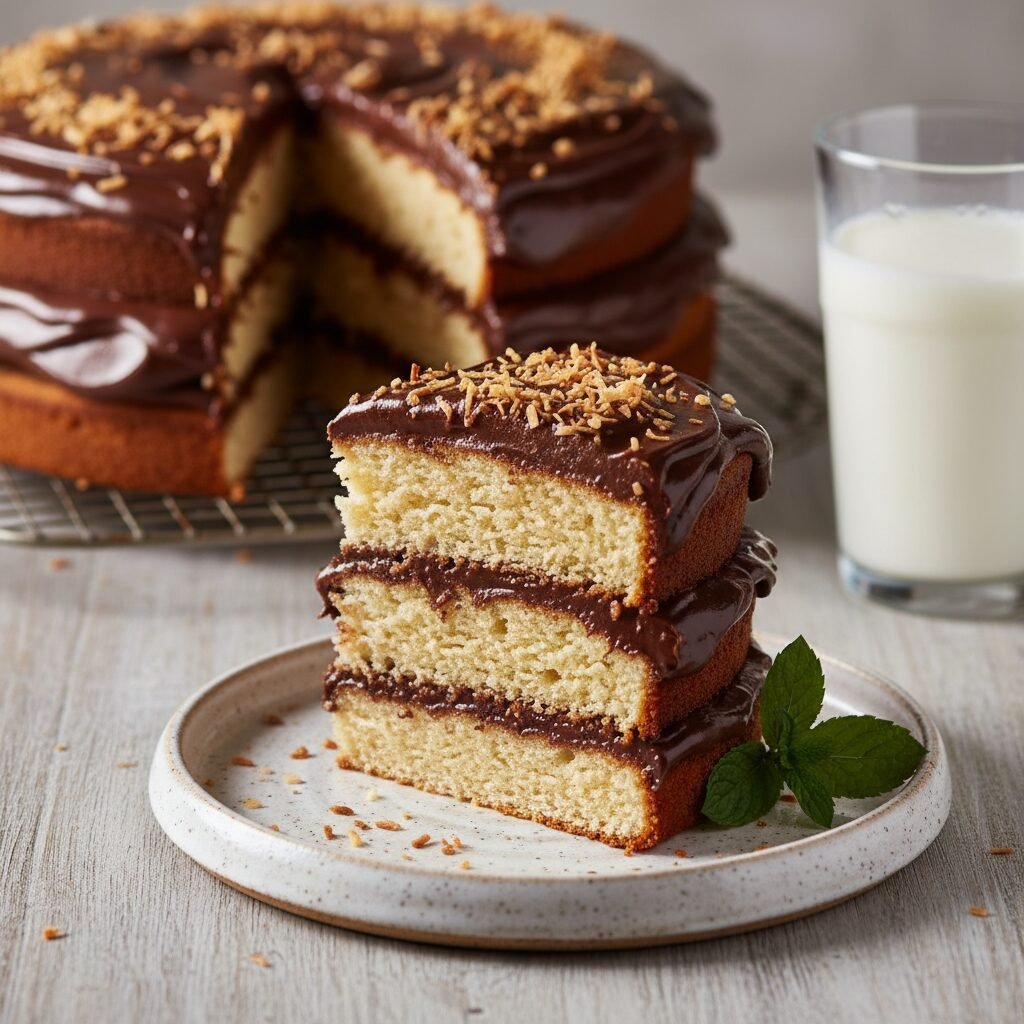
This incredibly moist gluten-free coconut cake defies all expectations with its tender, fluffy crumb and rich tropical flavor. Paired with a luscious, creamy chocolate buttercream frosting, it is the ultimate dessert for celebrations that everyone can enjoy, regardless of dietary restrictions.
30 minutes
35 minutes
1 hour 5 minutes
12 servings
Dessert
Baking
American
Gluten-Free
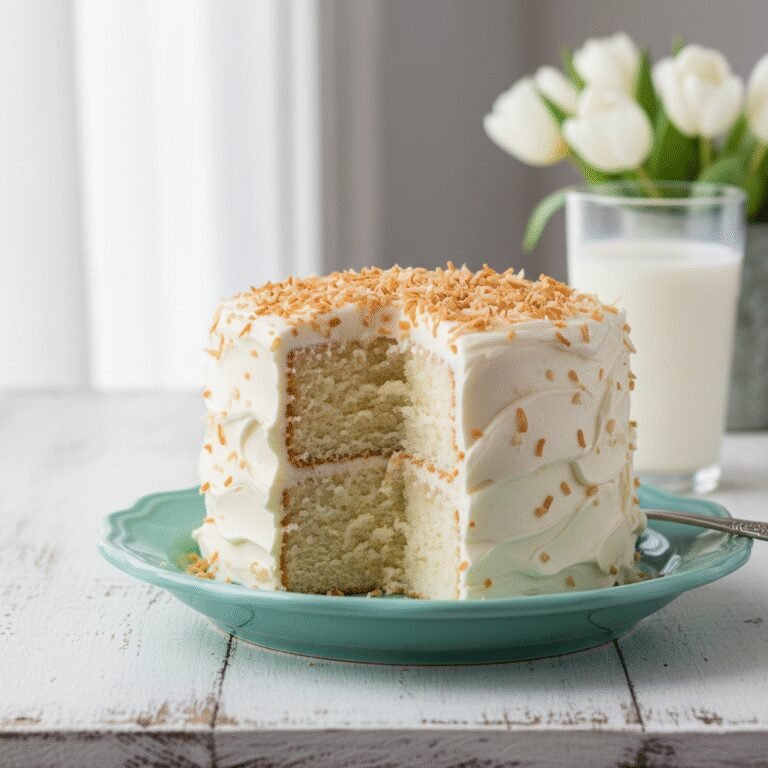
Welcome to what might just become the most requested dessert in your baking repertoire: the Moist Gluten Free Coconut Cake with Chocolate Frosting. If you have been navigating the world of gluten-free baking for any length of time, you know the struggle is real. Finding a cake that isn’t crumbly, dry, or dense like a brick can feel like searching for a unicorn. But let me tell you, the search ends here. This cake is a revelation. It possesses a crumb so tender and moist that even your most skeptical wheat-eating friends will be reaching for a second slice, completely unaware that it lacks gluten.
The magic lies in the marriage of textures and flavors. We are talking about layers of soft, vanilla-infused cake speckled with sweet shredded coconut, providing a subtle chewiness that is utterly addictive. But a coconut cake is only as good as its partner, and in this case, we have skipped the traditional meringue or cream cheese frosting for something bolder: a silky, deep chocolate buttercream. The bitterness of the cocoa perfectly cuts through the sweetness of the coconut, creating a flavor profile reminiscent of a gourmet candy bar. This isn’t just a dietary alternative; it is a standalone masterpiece. Whether you are baking for a birthday, a holiday gathering, or simply a Tuesday night craving, this recipe promises to deliver bakery-quality results right from your home kitchen. So, preheat your ovens and get your mixers ready, because we are about to bake a cake that will change your mind about gluten-free desserts forever.
History & Origins
The history of the coconut cake is deeply rooted in the American South, a region known for its hospitality and decadent desserts. While coconuts are not native to the continental United States, the expansion of the railway system and increased trade with the Caribbean in the late 19th century brought this exotic fruit to Southern kitchens. Initially, fresh coconut was a luxury ingredient, laboriously grated by hand to create the famous ‘seven-minute frosting’ laden cakes that became staples at church picnics and holiday tables. The classic Southern coconut cake is typically a white or yellow cake layered with a meringue-type frosting and heavily dusted with fresh coconut flakes.
The pairing of coconut and chocolate, however, has a different trajectory, often popularized by the confectionery industry in the early 20th century with the advent of candy bars like Mounds and Bounty. This flavor combination eventually migrated from the candy aisle to the bakery case.
The gluten-free evolution of this classic is a much more modern phenomenon. As awareness of Celiac disease and gluten sensitivity grew in the early 21st century, home bakers and food scientists began experimenting with alternative flours. Early attempts were often disappointing—gritty rice flour textures and dry crumbs were common. However, the introduction of sophisticated gluten-free all-purpose blends and the use of almond flour for moisture revolutionized gluten-free baking. This recipe stands on the shoulders of that history, combining the traditional Southern love for coconut cake with modern gluten-free techniques and the timeless appeal of chocolate.
Why This Recipe Works
This recipe succeeds where many gluten-free cakes fail primarily due to the strategic selection of fats and moisture-retaining ingredients. Gluten acts as a binder and structure builder in traditional baking; without it, cakes can fall apart or become dense. To counteract this, we use a high-quality 1:1 gluten-free flour blend that contains xanthan gum, which mimics the elasticity of gluten. However, the real secret weapon here is the combination of full-fat canned coconut milk and sour cream (or a dairy-free yogurt alternative).
Coconut milk is naturally high in fat, which coats the flour particles and prevents the cake from becoming tough, while also infusing the crumb with authentic flavor rather than artificial extracts. The acidity in the sour cream reacts with the baking soda to create a lift, ensuring the cake is fluffy rather than heavy. Furthermore, we incorporate a small amount of almond flour. Almond flour adds a high oil content and a nutty richness that keeps the crumb moist for days, preventing the ‘staling’ effect common in rice-flour-based baked goods. Finally, the chocolate frosting is whipped with a touch of heavy cream or coconut cream, creating an emulsion that is stable enough to pipe but soft enough to melt in your mouth, providing the perfect textural contrast to the shredded coconut in the cake.
Why You’ll Love This Recipe
- ✓100% Gluten-Free and Celiac Safe
- ✓Incredibly moist texture that stays fresh for days
- ✓Rich, decadent chocolate buttercream frosting
- ✓No gritty rice flour texture
- ✓Can be easily adapted to be Dairy-Free
- ✓Perfect balance of sweet coconut and dark cocoa
Equipment You’ll Need
- ✓Two 8-inch or 9-inch round cake pans
- ✓Electric stand mixer or hand mixer
- ✓Large mixing bowls
- ✓Whisk
- ✓Rubber spatula
- ✓Wire cooling rack
- ✓Measuring cups and spoons
- ✓Offset spatula for frosting
Ingredients
- ✓2 1/2 cups Gluten-Free 1:1 Baking Flour (with xanthan gum)
- ✓1/2 cup Superfine Almond Flour
- ✓1 tablespoon Baking Powder
- ✓1/2 teaspoon Baking Soda
- ✓1/2 teaspoon Salt
- ✓1 cup Unsalted Butter, softened (or dairy-free stick butter)
- ✓1 1/2 cups Granulated Sugar
- ✓4 Large Eggs, room temperature
- ✓1 teaspoon Pure Vanilla Extract
- ✓1 teaspoon Coconut Extract (optional)
- ✓1 cup Canned Full-Fat Coconut Milk (shaken well)
- ✓1/2 cup Sour Cream (or dairy-free yogurt)
- ✓1 cup Sweetened Shredded Coconut
- ✓FOR THE FROSTING:
- ✓1 cup Unsalted Butter, softened
- ✓3/4 cup Unsweetened Cocoa Powder
- ✓3 to 4 cups Powdered Sugar
- ✓1 teaspoon Vanilla Extract
- ✓3-4 tablespoons Heavy Cream or Canned Coconut Milk
- ✓Pinch of Salt
- ✓Toasted Coconut flakes for garnish
Instructions
- 1. Preheat your oven to 350°F (175°C). Grease two 8-inch or 9-inch round cake pans generously with butter or cooking spray. Line the bottoms with parchment paper rounds to ensure the cakes release perfectly.
- 2. In a medium bowl, whisk together the gluten-free flour blend, almond flour, baking powder, baking soda, and salt. Ensure there are no lumps of almond flour. Set aside.
- 3. In the bowl of a stand mixer fitted with the paddle attachment (or a large bowl using a hand mixer), beat the softened butter and granulated sugar on medium-high speed for about 3-4 minutes. The mixture should look pale, fluffy, and aerated.
- 4. Add the eggs one at a time, beating well after each addition and scraping down the sides of the bowl as needed. Mix in the vanilla extract and coconut extract if using.
- 5. In a small bowl or measuring cup, whisk together the canned coconut milk and sour cream.
- 6. Reduce the mixer speed to low. Add the dry ingredients in three parts, alternating with the coconut milk mixture in two parts, starting and ending with the dry ingredients. Mix only until just combined—do not overmix.
- 7. Gently fold in the shredded coconut using a rubber spatula.
- 8. Divide the batter evenly between the prepared cake pans. Smooth the tops with a spatula.
- 9. Bake for 30-35 minutes, or until a toothpick inserted into the center comes out clean or with just a few moist crumbs. The tops should be golden brown and spring back lightly when touched.
- 10. Remove from the oven and let the cakes cool in the pans for 10-15 minutes. Then, carefully invert them onto a wire rack to cool completely before frosting.
- 11. MAKE THE FROSTING: While the cakes cool, beat the softened butter in a large bowl until creamy. Add the cocoa powder and beat until well combined.
- 12. Gradually add the powdered sugar, one cup at a time, alternating with a tablespoon of heavy cream (or coconut milk). Beat on high speed for 3-4 minutes until the frosting is light, fluffy, and spreadable. Add the vanilla and a pinch of salt. Adjust consistency with more cream or sugar if needed.
- 13. ASSEMBLY: Place one cake layer on your serving platter. Spread a generous layer of chocolate frosting over the top. Place the second cake layer on top. Frost the top and sides of the entire cake. Garnish with toasted coconut flakes.
Expert Cooking Tips
- ✓Ensure all refrigerated ingredients (eggs, butter, sour cream, coconut milk) are at room temperature before starting. This creates a smoother emulsion and a better rise.
- ✓Weigh your flour if possible. Gluten-free flour is notoriously tricky to measure by volume; 1 cup usually weighs around 140g depending on the brand.
- ✓Do not skip the parchment paper. Gluten-free cakes can be more fragile when warm, and parchment ensures they don’t stick to the bottom.
- ✓Use full-fat canned coconut milk, not the beverage kind found in the dairy aisle. The fat is crucial for moisture.
- ✓Let the cake cool completely. Frosting a warm gluten-free cake will result in a melted mess and potentially a broken cake layer.
- ✓If you want a stronger coconut flavor, toast the shredded coconut before folding it into the batter.
- ✓Sift your cocoa powder and powdered sugar to avoid lumpy frosting.
Substitutions and Variations
This recipe is quite versatile if you need to accommodate other dietary restrictions. **Dairy-Free:** To make this cake dairy-free, swap the butter in the cake and frosting for a high-quality vegan butter stick (not tub margarine). Replace the sour cream with a dairy-free plain yogurt (coconut or almond based work best) and use canned coconut cream instead of heavy cream in the frosting. **Nut-Free:** If you cannot use almond flour, replace the 1/2 cup of almond flour with an additional 1/3 cup of your 1:1 gluten-free flour blend. The texture might be slightly less rich, but it will still be delicious. **Sugar:** You can use coconut sugar instead of granulated sugar for a deeper, caramel-like flavor, though the cake will be darker in color. **Egg-Free:** While I haven’t tested this specific recipe with egg replacers, a commercial gluten-free egg replacer or flax eggs (1 tbsp ground flaxseed meal + 3 tbsp water per egg) usually works reasonably well in dense cakes like this, though the rise may be slightly less.
Common Mistakes to Avoid
The most common mistake with gluten-free baking is **over-measuring the flour**. If you scoop the flour directly with the measuring cup, you pack it down, resulting in a dry, dense cake. Always use the ‘spoon and level’ method or a kitchen scale. Another mistake is **opening the oven door too early**. Gluten-free structures set later than wheat cakes; opening the door causes a temperature drop that can make the center collapse. Wait until at least 30 minutes have passed. **Using the wrong coconut milk** is also a frequent error. You must use the thick, canned coconut milk (often found in the Asian food aisle), not the thin milk in cartons intended for cereal. The fat content in the canned version is non-negotiable for the moisture of this cake. Lastly, **cutting the cake while warm** will cause it to crumble. Gluten-free gums need time to set as they cool.
Serving Suggestions
This cake is rich and decadent, so it pairs beautifully with beverages that can cut through the sweetness. Serve a slice with a hot cup of dark roast coffee or an espresso to balance the sugar. For a cold option, a glass of cold almond milk or an iced latte works wonders. If you want to elevate the plating for a dinner party, serve the slice with a side of tart raspberry coulis or fresh berries (raspberries and strawberries are best) to add a fresh, acidic contrast to the deep chocolate and sweet coconut. A dollop of unsweetened whipped coconut cream on the side is also a lovely touch.
Storage and Reheating Tips
Because this cake contains fresh dairy (sour cream/butter) and coconut milk, it has a decent shelf life but requires care. **Room Temperature:** You can store the frosted cake in an airtight cake carrier at cool room temperature for up to 2 days. **Refrigerator:** For longer storage, keep it in the fridge for up to 5 days. The buttercream will harden in the fridge, so be sure to let the slices sit at room temperature for 30 minutes before eating to restore the soft texture. **Freezing:** This cake freezes beautifully. You can freeze individual slices wrapped tightly in plastic wrap and then foil for up to 2 months. Thaw overnight in the fridge or on the counter for an hour. You can also freeze the unfrosted cake layers if you want to prep ahead.
Nutrition Facts (Estimated)
| Serving Size | 1 slice |
| Calories | 480 |
| Fat | 28g |
| Saturated Fat | 16g |
| Unsaturated Fat | 10g |
| Trans Fat | 0g |
| Cholesterol | 85mg |
| Sodium | 210mg |
| Carbohydrates | 54g |
| Fiber | 3g |
| Sugar | 32g |
| Protein | 5g |
Frequently Asked Questions
Can I make this into cupcakes instead of a layer cake?
Absolutely! This recipe yields about 24 standard cupcakes. Bake them at 350°F for 18-22 minutes. Check for doneness with a toothpick.
Which gluten-free flour blend do you recommend?
I highly recommend King Arthur Measure for Measure or Bob’s Red Mill 1-to-1 Baking Flour. Ensure your blend contains xanthan gum. If it doesn’t, you will need to add 1 teaspoon of xanthan gum to the dry ingredients.
Why did my cake sink in the middle?
Sinking usually happens if the cake was underbaked (the center structure wasn’t set) or if the oven door was opened too early. It can also happen if your baking powder/soda is expired.
Is this cake very sweet?
It is a dessert cake, so it is sweet, but the dark chocolate frosting helps balance the sugar. If you prefer less sweetness, use 85% dark chocolate cocoa powder or reduce the sugar in the cake batter by 1/4 cup.
Can I use fresh coconut instead of dried?
Fresh grated coconut is delicious but contains more moisture. If you use fresh, squeeze out some of the excess liquid before adding it to the batter to prevent the cake from becoming soggy.
Can I make this cake in a 9×13 pan?
Yes, grease a 9×13 inch pan and bake for approximately 35-45 minutes. The baking time will likely be slightly longer than round pans, so keep an eye on it.
My batter looks curdled after adding the eggs. Is it ruined?
Not at all! This often happens if the ingredients were at different temperatures. Once you add the flour, the batter will come back together into a smooth emulsion.
How do I toast the coconut for the garnish?
Spread the shredded coconut on a baking sheet and bake at 325°F for 5-10 minutes, stirring every 2 minutes until golden brown. Watch it closely as it burns quickly!
Conclusion
There is something truly special about a homemade cake that caters to everyone’s needs without sacrificing an ounce of flavor or texture. This Moist Gluten Free Coconut Cake with Chocolate Frosting is more than just a recipe; it’s a ticket to inclusivity at your dining table. The lush, tropical notes of the coconut sponge combined with the sophisticated, velvety chocolate frosting create a harmony that is hard to beat. Whether you are a seasoned gluten-free baker or just starting out, this recipe is designed to give you a win every single time. Don’t forget to snap a picture of your masterpiece and tag us on social media—we love seeing your beautiful creations! Happy baking!