The Ultimate Moist Gluten Free Banana Cake with Cream Cheese Frosting
Moist Gluten Free Banana Cake Recipe
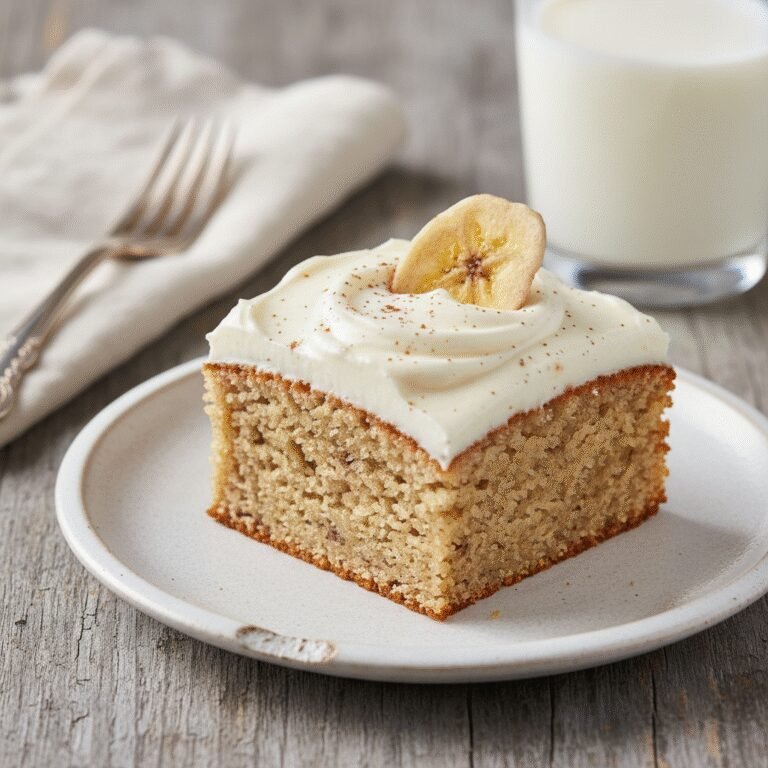
Say goodbye to dry, crumbly gluten-free baking forever. This incredibly moist Gluten Free Banana Cake is tender, fluffy, and topped with a luscious tangy cream cheese frosting that makes it the perfect dessert for any occasion.
20 minutes
35 minutes
55 minutes
12-16 servings
Dessert
Baking
American
Gluten-Free
If you have been on a gluten-free diet for any length of time, you are likely all too familiar with the disappointment of dry, gritty, or dense cakes that crumble the moment you look at them. It is the holy grail of gluten-free baking to find a recipe that not only mimics the texture of traditional wheat-based desserts but actually rivals them. This Moist Gluten Free Banana Cake is exactly that recipe. It is a game-changer in the world of allergen-friendly desserts, boasting a crumb so tender and a flavor so rich that your friends and family won’t believe it is gluten-free.
The secret lies in the careful balance of moisture-rich ingredients and the right blend of gluten-free flours. Unlike banana bread, which is denser and more loaf-like, this is a true cake—light, airy, and delicate. We use overripe bananas not just for their intense, caramelized sweetness, but for their ability to lock in moisture. Paired with a hint of cinnamon and the tang of sour cream, the flavor profile is complex and comforting.
This cake is perfect for birthdays, potlucks, or just a cozy Sunday afternoon baking project. It smells like heaven while it bakes, filling your kitchen with notes of vanilla, caramelized banana, and warm spices. Topped with a thick, swooping layer of homemade cream cheese frosting, it strikes the perfect balance between sweet and tangy. Whether you are a seasoned gluten-free baker or a complete novice, this recipe is designed to be foolproof, delivering bakery-quality results right from your home oven. Get ready to redefine what you think is possible with gluten-free flour.
History & Origins
The history of banana cake is intrinsically linked to the history of banana bread, a beloved American staple that rose to prominence in the 1930s. Before this time, bananas were a somewhat expensive import in the United States, often eaten as a luxury fruit. However, with the advent of refrigeration and better transport logistics, bananas became widely available. During the Great Depression, wasting food was unthinkable. Housewives were constantly looking for ways to use overripe bananas that were past their prime for eating raw but perfect for baking.
The popularization of baking soda and baking powder as chemical leavening agents in the 1930s allowed for the creation of ‘quick breads’—baked goods that didn’t require the long fermentation time of yeast. This converged with the surplus of bananas to create the first iterations of banana bread. Over the decades, as home baking evolved, cooks began experimenting with lighter batters, transitioning from the dense breakfast loaf to a lighter, sweeter dessert cake.
The gluten-free evolution of this dish is a much more modern phenomenon. With the rise of Celiac disease diagnoses and gluten sensitivity awareness in the late 20th and early 21st centuries, the demand for gluten-free versions of classic comfort foods skyrocketed. Early gluten-free baking was often a disaster of rice flour and grit. However, the development of sophisticated flour blends containing xanthan gum, tapioca starch, and potato starch has revolutionized the landscape. Today’s gluten-free banana cake pays homage to the resourceful bakers of the Great Depression while utilizing modern food science to ensure that everyone, regardless of dietary restrictions, can enjoy this timeless treat.
Why This Recipe Works
This recipe succeeds where many other gluten-free cakes fail because it addresses the primary culprit of bad GF baking: lack of structure and moisture retention. Wheat flour contains gluten, a protein that creates a web to trap air and hold moisture. Without it, baked goods often turn out dense or dry. To counteract this, we rely on a ‘high-hydration’ batter. The inclusion of both oil and butter provides a dual benefit: butter offers that classic rich flavor, while oil remains liquid at room temperature, ensuring the cake stays soft for days.
Furthermore, the bananas act as a natural binder and humectant. The starches in the banana absorb water and gelatinize during baking, providing structure that mimics the effect of gluten. We also incorporate sour cream (or Greek yogurt), which introduces acidity. This acidity reacts with the baking soda to create a powerful lift, resulting in a fluffy crumb rather than a dense brick.
Finally, the choice of flour matters. We recommend a high-quality 1-to-1 gluten-free flour blend that already includes xanthan gum. Xanthan gum is a hydrocolloid that acts as the ‘glue’ in the absence of gluten, preventing the cake from crumbling apart. By carefully balancing the ratio of fat, sugar, and liquid to the absorption rate of gluten-free flours, we achieve a texture that is indistinguishable from a traditional cake.
Why You’ll Love This Recipe
- ✓Incredibly moist texture that stays soft for days.
- ✓Rich banana flavor enhanced with a hint of cinnamon.
- ✓Simple, one-bowl mixing method for the batter.
- ✓Tangy cream cheese frosting balances the sweetness.
- ✓Freezes beautifully for make-ahead desserts.
- ✓No gritty aftertaste common in some GF baked goods.
Equipment You’ll Need
- ✓9×13 inch baking pan or two 9-inch round pans
- ✓Large mixing bowl
- ✓Medium mixing bowl
- ✓Electric hand mixer or stand mixer
- ✓Rubber spatula
- ✓Measuring cups and spoons
- ✓Wire cooling rack
- ✓Potato masher or fork (for bananas)
Ingredients
- ✓2 1/2 cups Gluten-Free All-Purpose Flour (with xanthan gum)
- ✓1 1/2 tsp Baking powder
- ✓1 tsp Baking soda
- ✓1/2 tsp Salt
- ✓1 tsp Ground cinnamon
- ✓1/2 cup Unsalted butter, softened
- ✓1/2 cup Vegetable oil (or melted coconut oil)
- ✓1 1/2 cups Granulated sugar
- ✓3 large Eggs, room temperature
- ✓1 1/2 cups Mashed ripe bananas (about 3-4 medium bananas)
- ✓1/2 cup Sour cream or plain Greek yogurt
- ✓1 tsp Pure vanilla extract
- ✓8 oz Cream cheese, softened (for frosting)
- ✓1/2 cup Unsalted butter, softened (for frosting)
- ✓3 cups Powdered sugar (for frosting)
- ✓1 tsp Vanilla extract (for frosting)
- ✓1 tbsp Milk or heavy cream (optional, for frosting consistency)
Instructions
- Preheat your oven to 350°F (175°C). Grease a 9×13 inch baking pan lightly with butter or cooking spray, or line it with parchment paper for easy removal.
- In a medium bowl, whisk together the gluten-free flour, baking powder, baking soda, salt, and cinnamon until well combined. Set aside.
- In a large mixing bowl or the bowl of a stand mixer, beat the softened butter, vegetable oil, and granulated sugar together on medium-high speed for about 3-4 minutes until the mixture is light, fluffy, and pale in color.
- Add the eggs one at a time, beating well after each addition. Scrape down the sides of the bowl with a spatula to ensure everything is incorporated.
- Mix in the mashed bananas, sour cream (or yogurt), and vanilla extract until combined.
- Turn the mixer to low speed. Gradually add the dry ingredients to the wet ingredients in two or three batches. Mix only until the flour streaks disappear. Do not overmix, even with gluten-free flour, as it can affect the rise.
- Pour the batter into the prepared baking pan and smooth the top with a spatula.
- Bake for 30-35 minutes. Test for doneness by inserting a toothpick into the center of the cake; it should come out clean or with just a few moist crumbs attached. If using two 9-inch round pans, check around 25 minutes.
- Remove the cake from the oven and place the pan on a wire rack. Let the cake cool completely in the pan. This is crucial as gluten-free cakes are more fragile when warm.
- While the cake cools, make the frosting. Beat the softened cream cheese and butter together until smooth and creamy.
- Gradually add the powdered sugar, one cup at a time, mixing on low speed until incorporated. Add the vanilla extract and a splash of milk if needed to reach your desired consistency. Whip on high for 1-2 minutes until fluffy.
- Once the cake is fully cool, spread the frosting generously over the top. Slice and serve.
Expert Cooking Tips
- ✓Use a scale to measure your flour if possible; 1 cup of GF flour usually weighs around 140g.
- ✓Ensure your bananas are very ripe—brown spots are good, black is better. This ensures maximum sweetness and moisture.
- ✓Room temperature ingredients (eggs, butter, sour cream) emulsify better, creating a more uniform crumb.
- ✓Do not skip the cooling step; frosting a warm cake will cause the frosting to melt and slide off.
- ✓If your flour blend does not contain xanthan gum, add 1 teaspoon to the dry ingredients.
- ✓Tap the pan on the counter before baking to release any large air bubbles.
Substitutions and Variations
This recipe is quite versatile if you need to accommodate other dietary restrictions or pantry shortages. For a dairy-free version, substitute the butter with a high-quality vegan butter stick (not tub margarine) and use a dairy-free sour cream or coconut yogurt. The cream cheese frosting can also be made with vegan cream cheese and butter alternatives. If you are out of sour cream, full-fat canned coconut milk or plain Greek yogurt works as a 1:1 substitute. For the sugar, you can use brown sugar for half of the granulated sugar if you prefer a deeper molasses flavor, though it will make the cake slightly darker. We do not recommend substituting almond flour or coconut flour directly for the gluten-free all-purpose flour blend, as their absorption rates are drastically different and will result in a failed cake.
Common Mistakes to Avoid
The most common mistake in gluten-free baking is measuring flour incorrectly. If you scoop the flour directly with the measuring cup, you pack it down and can end up with 20-30% more flour than intended, leading to a dry cake. Always use the ‘spoon and level’ method or a kitchen scale. Another mistake is using under-ripe bananas. Green or bright yellow bananas lack the sugar content and moisture needed for this recipe. Using a different size pan without adjusting the baking time can also lead to issues; a glass pan, for example, retains heat longer and may require a slightly lower oven temperature (325°F). Finally, cutting into the cake while it is still warm is a recipe for disaster. Gluten-free structures take longer to set, and cutting too early can cause the cake to crumble or appear gummy.
Serving Suggestions
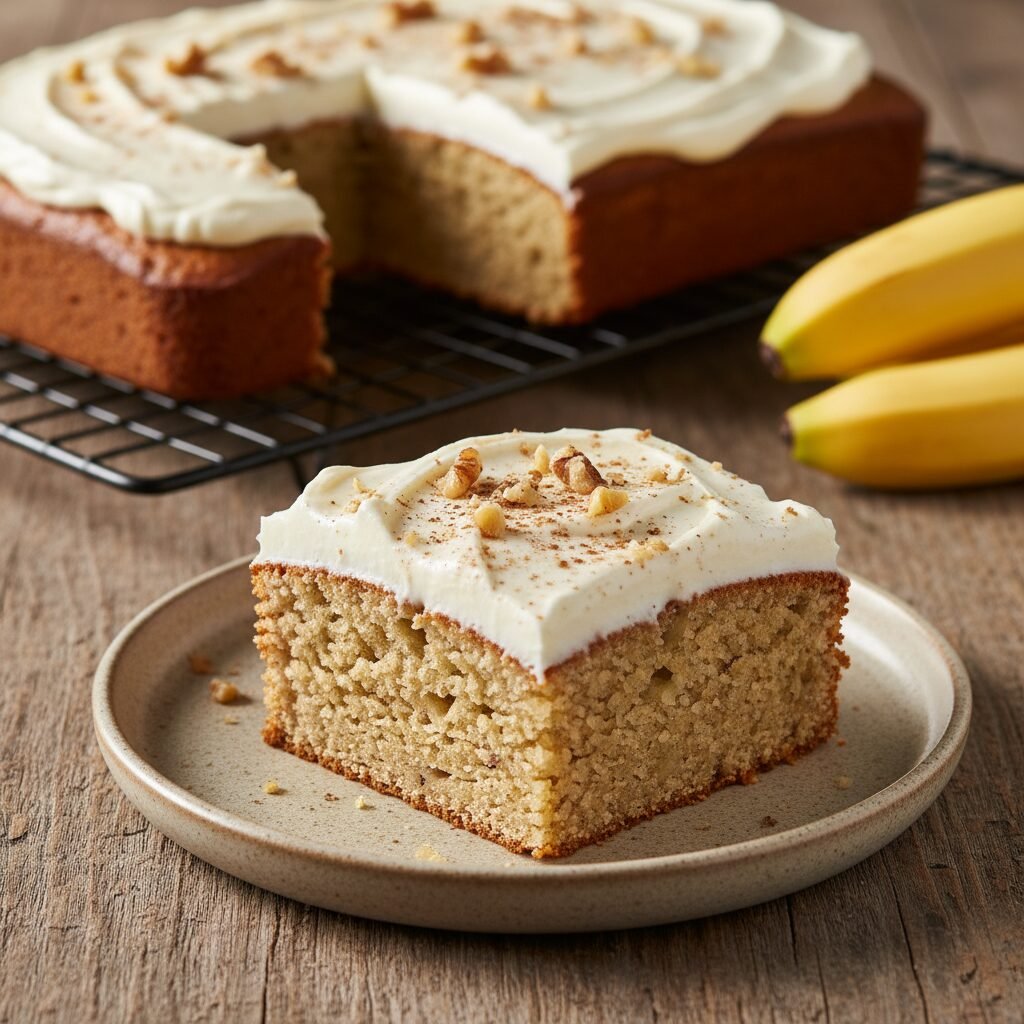
This cake is rich enough to stand on its own, but it can be dressed up for special occasions. Serve a slice with a dusting of cinnamon or chopped walnuts on top of the frosting for added texture. Fresh banana slices or berries make for a beautiful garnish just before serving. For a dessert course, pair it with a hot cup of coffee or a cold glass of almond milk. If you want to skip the frosting for a lighter ‘snack cake’ vibe, simply dust the cooled cake with powdered sugar or serve it warm with a dollop of whipped cream.
Storage and Reheating Tips
Because of the cream cheese frosting, this cake should be stored in the refrigerator. It will keep well in an airtight container for up to 5 days. The cold air can sometimes dry out baked goods, so ensure the container is sealed tight. To serve, let the slice sit at room temperature for 15-20 minutes to take the chill off and soften the frosting. For long-term storage, you can freeze the cake. It is best to freeze the cake unfrosted, wrapped tightly in plastic wrap and then foil, for up to 3 months. If you must freeze it frosted, place slices on a baking sheet to freeze solid first, then wrap them individually.
Nutrition Facts (Estimated)
| Serving Size | 1 slice |
| Calories | 380 |
| Fat | 18g |
| Saturated Fat | 10g |
| Unsaturated Fat | 7g |
| Trans Fat | 0g |
| Cholesterol | 55mg |
| Sodium | 210mg |
| Carbohydrates | 52g |
| Fiber | 2g |
| Sugar | 28g |
| Protein | 4g |
Frequently Asked Questions
Can I make this recipe into cupcakes?
Yes, absolutely! This batter works perfectly for cupcakes. Line a muffin tin with paper liners and fill them about 2/3 full. Bake at 350°F for 18-22 minutes, or until a toothpick comes out clean. This recipe should yield about 24 cupcakes.
Why is my gluten-free cake gummy?
Gumminess usually results from either underbaking or cutting into the cake before it has completely cooled. Gluten-free flours with xanthan gum need time to set structure as they cool. Ensure your toothpick comes out clean and wait for the cake to reach room temperature.
Can I use almond flour instead of a blend?
No, almond flour behaves very differently than a starch-based gluten-free flour blend. It has high fat and no starch structure. If you want to use almond flour, you should look for a recipe specifically designed for it.
Is this cake dairy-free?
As written, it contains butter, sour cream, and cream cheese. However, it is easily adaptable. See the ‘Substitutions’ section for details on using vegan butter and dairy-free yogurt.
My bananas aren’t ripe enough, what can I do?
You can speed up the ripening process by placing unpeeled bananas on a baking sheet in a 300°F oven for 15-20 minutes until the skins turn black and the fruit is soft. Let them cool before peeling and mashing.
Can I reduce the sugar?
Sugar provides moisture as well as sweetness. Reducing it by more than 1/4 cup may affect the texture, making the cake drier and less tender. Proceed with caution.
What brand of gluten-free flour do you recommend?
We recommend blends like King Arthur Measure for Measure or Bob’s Red Mill 1-to-1 Baking Flour. Ensure the blend you choose lists xanthan gum as an ingredient.
Can I add nuts or chocolate chips?
Definitely! You can fold in up to 1 cup of chopped walnuts, pecans, or chocolate chips into the batter just before pouring it into the pan.
Conclusion
We hope this Moist Gluten Free Banana Cake recipe becomes a staple in your kitchen. It proves that dietary restrictions don’t have to mean sacrificing flavor or texture. The combination of sweet bananas, warm spices, and tangy frosting creates a symphony of flavors that is hard to resist. Whether you are baking for a Celiac loved one or just want a delicious use for those brown bananas on the counter, this cake delivers every time. Happy baking, and don’t forget to share your results with us on social media!