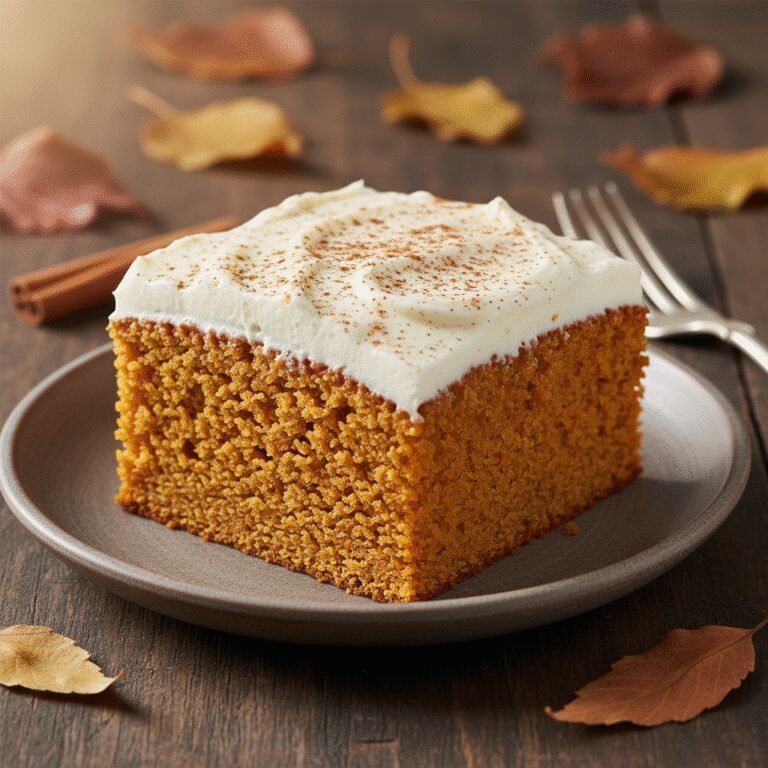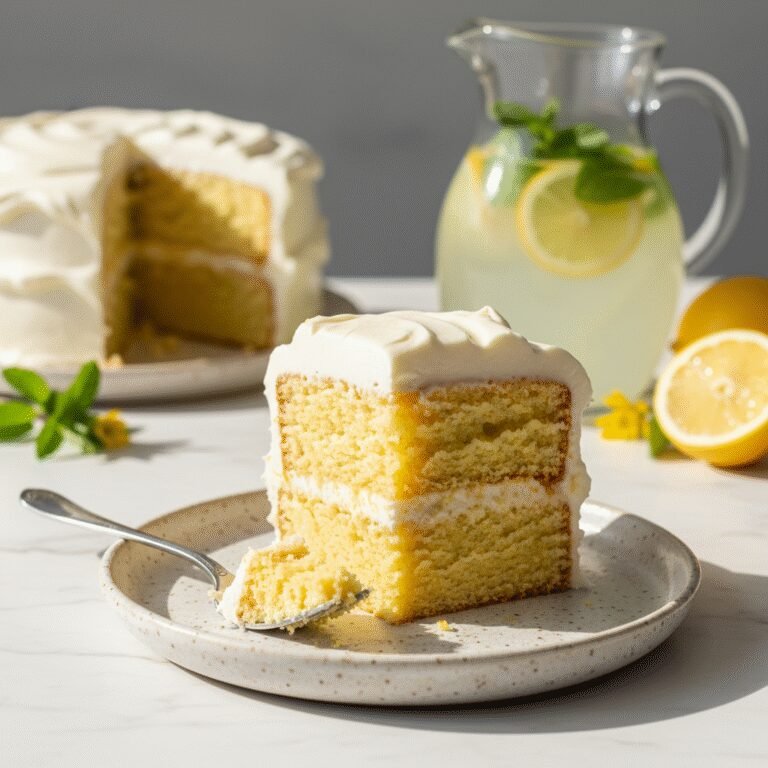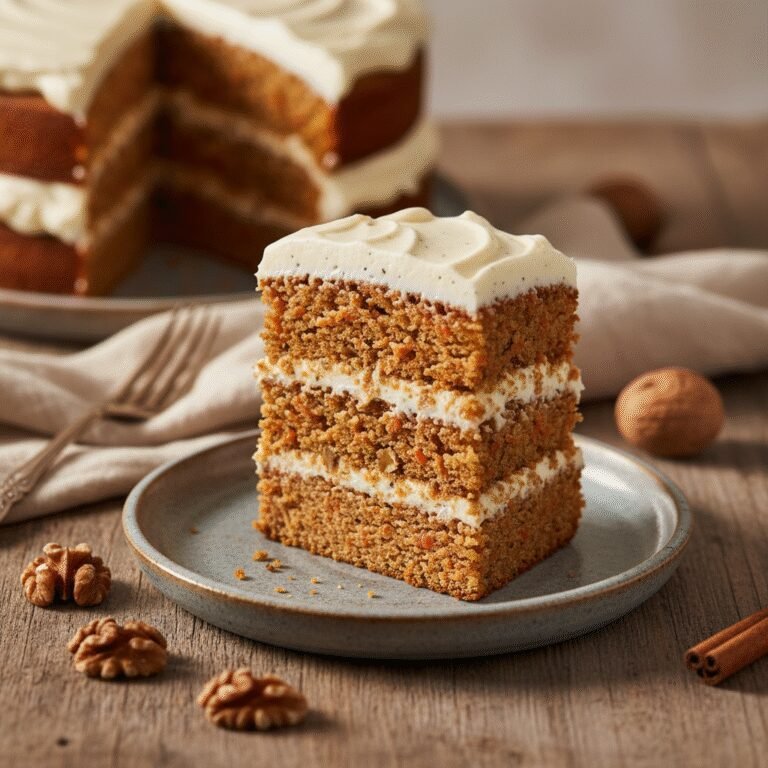
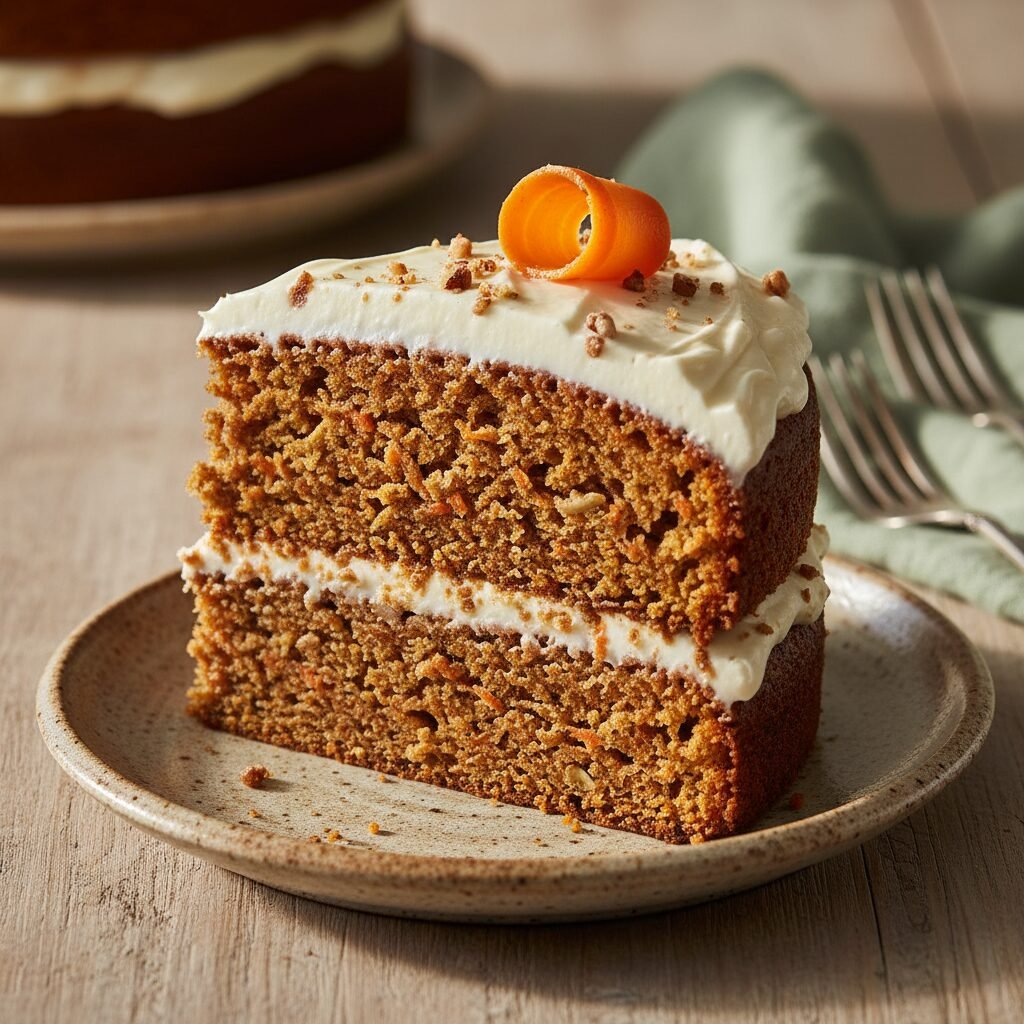
The Ultimate Moist Gluten-Free Carrot Cake with Dairy-Free Cream Cheese Frosting
Moist Gluten Free Carrot Cake Dairy Free Frosting Recipe
Discover the holy grail of gluten-free baking with this incredibly moist carrot cake. Topped with a luscious, tangy dairy-free frosting, this spiced delight is so tender and flavorful that no one will ever guess it is allergy-friendly.
30 minutes
35 minutes
1 hour 30 minutes
12 servings
Dessert
Baking
American
Gluten-Free
If there is one dessert that bridges the gap between cozy comfort food and sophisticated baking, it is the carrot cake. However, for those living a gluten-free and dairy-free lifestyle, finding a version that isn’t dry, crumbly, or lacking in that signature tang has always been a culinary challenge—until now. This recipe represents the culmination of years of testing to replicate the exact texture of a traditional bakery-style carrot cake without the wheat or dairy. We aren’t just talking about a ‘good for gluten-free’ cake; we are talking about a cake that stands tall against any conventional recipe in a blind taste test.
The secret lies in the balance of moisture-retaining ingredients and a robust spice blend. While many gluten-free flours tend to absorb liquid aggressively, leading to a sandy texture, this recipe utilizes the natural humidity of fresh carrots combined with a specific blend of sugars and oil to lock in softness for days. The flavor profile is complex and warming, featuring cinnamon, nutmeg, and a hint of ginger that cuts through the sweetness. But the real showstopper is the dairy-free cream cheese frosting. Often, vegan frostings can be too runny or taste artificial. This version is whipped to stable, pipeable perfection, offering that crucial tangy counterpoint to the sweet, spiced sponge. Whether you are baking for Easter brunch, a birthday celebration, or just a weekend treat, this cake promises to be the centerpiece of your table, proving once and for all that dietary restrictions do not mean restricting flavor or enjoyment.
History & Origins
The lineage of the carrot cake is as rich and textured as the dessert itself, tracing its roots back much further than the 1970s health food craze that popularized it in the United States. Historians generally agree that the concept originated from medieval carrot puddings enjoyed by Europeans. In the Middle Ages, sweeteners like sugar were rare and prohibitively expensive commodities. Carrots, containing more natural sugar than any other vegetable besides the sugar beet, became the logical alternative for sweetening desserts. These early iterations were likely steamed or boiled puddings rather than the baked cakes we know today.
The transition from pudding to cake is thought to have accelerated during World War II in the United Kingdom. With strict rationing on sugar and other luxury goods, the Ministry of Food disseminated recipes that utilized carrots to add sweetness and moisture to baked goods. It was a patriotic duty to use homegrown vegetables to stretch the pantry.
However, the modern American carrot cake—characterized by its layers, spices, and thick cream cheese frosting—really found its footing in the 1960s and 1970s. It was paradoxically marketed as a ‘health food’ due to the presence of a vegetable, despite being laden with oil and sugar. This era cemented the carrot cake as a staple in American baking culture. As dietary needs have evolved in the 21st century, the demand for gluten-free and dairy-free adaptations has soared. Today’s version honors that medieval ingenuity of using carrots for sweetness while utilizing modern food science to bypass gluten and dairy, continuing the evolution of this timeless classic.
Why This Recipe Works
Gluten-free baking is often a battle against dryness and poor structure. Wheat flour provides elasticity (gluten) that holds gas bubbles, creating a light crumb. When you remove gluten, you risk a dense brick or a pile of crumbs. This recipe succeeds because it fundamentally alters the fat and moisture ratios to compensate for the lack of gluten structure. First, we use oil instead of butter for the cake batter. Oil remains liquid at room temperature, which coats the gluten-free flour granules more effectively than butter, preventing the cake from drying out even after days in the fridge.
Secondly, the use of both brown and white sugar is critical. Brown sugar contains molasses, which is hygroscopic—meaning it attracts and holds water. This ensures the cake stays moist. We also rely on a high volume of freshly grated carrots. We do not squeeze the water out of the carrots; that liquid is essential for hydrating the rice flour and starches in the gluten-free blend during the baking process.
For the frosting, the challenge is stability. Dairy-free cream cheese often has a higher water content and lower melting point than traditional cream cheese. To combat this, we use a combination of high-quality vegan butter sticks (not tub margarine) and vegetable shortening if needed for hot climates, along with a touch of lemon juice to mimic the lactic acid tang of real dairy. This creates a frosting that crusts slightly on the outside but remains creamy on the inside, providing the perfect structural integrity to hold up a layer cake.
Why You’ll Love This Recipe
- ✓Incredibly moist crumb that stays soft for 3-4 days.
- ✓Stable, pipeable dairy-free frosting that doesn’t separate.
- ✓Perfectly balanced spice blend of cinnamon, nutmeg, and ginger.
- ✓No grit—uses a specific flour hydration technique.
- ✓Customizable with nuts, raisins, or pineapple.
- ✓Freezer-friendly for make-ahead convenience.
Equipment You’ll Need
- ✓Two 8-inch or 9-inch round cake pans
- ✓Stand mixer or electric hand mixer
- ✓Large mixing bowls
- ✓Box grater or food processor (shredding disk)
- ✓Wire cooling rack
- ✓Rubber spatula
- ✓Offset spatula for frosting
- ✓Parchment paper
Ingredients
- ✓2 1/2 cups Gluten-Free All-Purpose Flour Blend (ensure it contains xanthan gum)
- ✓1 1/2 teaspoons baking powder
- ✓1 teaspoon baking soda
- ✓1/2 teaspoon sea salt
- ✓2 teaspoons ground cinnamon
- ✓1/2 teaspoon ground nutmeg
- ✓1/2 teaspoon ground ginger
- ✓1 cup granulated sugar
- ✓3/4 cup light brown sugar, packed
- ✓1 cup vegetable oil or melted coconut oil
- ✓4 large eggs, room temperature
- ✓2 teaspoons pure vanilla extract
- ✓3 cups finely grated fresh carrots (approx. 5-6 medium carrots)
- ✓1 cup chopped walnuts or pecans (optional)
- ✓1/2 cup raisins (optional)
- ✓FOR THE FROSTING:
- ✓1 cup (2 sticks) vegan butter, slightly softened (stick form, not tub)
- ✓8 oz vegan cream cheese, cold
- ✓4-5 cups powdered sugar, sifted
- ✓1 teaspoon vanilla extract
- ✓1 teaspoon fresh lemon juice (optional, for extra tang)
Instructions
- 1. Preheat your oven to 350°F (175°C). Grease two 8-inch or 9-inch round cake pans and line the bottoms with parchment paper. This step is crucial as gluten-free cakes can be sticky.
- 2. In a medium bowl, whisk together the gluten-free flour, baking powder, baking soda, salt, cinnamon, nutmeg, and ginger. Ensure there are no lumps of baking soda.
- 3. In a large bowl or the bowl of a stand mixer, beat the eggs, granulated sugar, and brown sugar on medium-high speed for about 3-4 minutes until the mixture is pale and slightly frothy.
- 4. With the mixer running on low, slowly drizzle in the oil and add the vanilla extract. Mix until fully combined.
- 5. Gradually add the dry ingredients to the wet ingredients, mixing on low speed just until the flour is incorporated. Do not overbeat, although gluten-free flour is more forgiving than wheat flour.
- 6. Fold in the grated carrots and nuts/raisins (if using) by hand using a rubber spatula. Ensure the carrots are evenly distributed throughout the batter.
- 7. Divide the batter evenly between the prepared cake pans. Smooth the tops with a spatula.
- 8. Bake for 30-38 minutes, or until a toothpick inserted into the center comes out clean or with just a few moist crumbs. Avoid opening the oven door too early to prevent sinking.
- 9. Remove from the oven and let the cakes cool in the pans for 15 minutes. Then, carefully invert them onto a wire rack to cool completely. The cakes must be 100% cool before frosting.
- 10. To make the frosting: In a large bowl, beat the vegan butter until creamy. Add the cold vegan cream cheese and beat for 1-2 minutes until combined. Do not overbeat or it may become runny.
- 11. Gradually add the powdered sugar, one cup at a time, mixing on low. Add vanilla and lemon juice. Increase speed to high and whip for 2 minutes until fluffy.
- 12. Assemble the cake by placing one layer on a serving plate. Spread a thick layer of frosting on top. Place the second layer on top and frost the top and sides. Garnish with chopped nuts if desired.
Expert Cooking Tips
- ✓Use room temperature eggs to ensure the batter emulsifies properly.
- ✓Weigh your flour if possible (approx 140g per cup for GF blends) to avoid a dense cake.
- ✓Grate your own carrots. Pre-shredded store-bought carrots are dry and hard; fresh carrots provide necessary moisture.
- ✓If the frosting feels too soft, refrigerate it for 20 minutes before piping.
- ✓Let the batter sit for 10 minutes before baking; this allows the rice flour to hydrate and reduces grittiness.
- ✓Ensure your baking powder is fresh, as GF flours are heavy and need strong leavening.
- ✓For the whitest frosting, use clear vanilla extract.
Substitutions and Variations
This recipe is highly adaptable to various dietary needs beyond just gluten and dairy-free. If you have a nut allergy, simply omit the walnuts or pecans; you can replace them with pumpkin seeds for crunch or just leave them out entirely. For the flour, use a high-quality 1:1 gluten-free blend like King Arthur Measure for Measure or Bob’s Red Mill 1:1; do not use single-grain flours like plain almond flour or coconut flour as they absorb liquid differently and will ruin the structure. If you are vegan, the eggs can be replaced with ‘flax eggs’ (1 tbsp ground flaxseed meal + 2.5 tbsp water per egg), though the cake will be slightly denser and less fluffy. For a refined sugar-free option, coconut sugar can replace the brown and white sugar 1:1, resulting in a darker, more caramel-flavored cake. For the oil, light olive oil, avocado oil, or melted coconut oil all work beautifully.
Common Mistakes to Avoid
The most common mistake with gluten-free carrot cake is over-measuring the flour. If you scoop the flour directly with the measuring cup, you compress it, adding up to 30% more flour than intended, leading to a dry, hard cake. Always use the ‘spoon and level’ method or a kitchen scale. Another error is using ‘tub’ style vegan butter for the frosting. Tub spreads contain high water content and will cause the frosting to slide off the cake; always use vegan butter sticks. Additionally, do not grate the carrots too coarsely; large chunks of carrot won’t cook down properly, leading to a crunchy texture. Finally, impatience is the enemy of frosting—if the cake is even slightly warm, the dairy-free butter will melt instantly, ruining the aesthetic.
Serving Suggestions
This cake is rich and flavorful, so it pairs beautifully with beverages that can cut through the sweetness. Serve a slice with a hot cup of black coffee, an Earl Grey tea, or a glass of unsweetened almond milk. For a festive presentation, garnish the top of the cake with candied carrot curls, a sprinkle of cinnamon, or chopped toasted pecans. It is the perfect dessert for spring gatherings, Easter brunch, or autumn dinner parties due to its warming spices.
Storage and Reheating Tips
Because of the high moisture content and the cream cheese frosting, this cake must be stored in the refrigerator. It can be left out for 1-2 hours for serving, but should otherwise be kept chilled. Store in an airtight cake carrier or wrapped gently in plastic wrap for up to 5 days. In fact, the flavor often improves on the second day as the spices meld. For freezing, you can freeze the unfrosted layers wrapped tightly in plastic and foil for up to 3 months. You can also freeze individual slices of the frosted cake; place them on a baking sheet to freeze solid, then wrap them individually.
Nutrition Facts (Estimated)
| Serving Size | 1 slice |
| Calories | 480 |
| Fat | 28g |
| Saturated Fat | 6g |
| Unsaturated Fat | 20g |
| Trans Fat | 0g |
| Cholesterol | 35mg |
| Sodium | 310mg |
| Carbohydrates | 58g |
| Fiber | 3g |
| Sugar | 38g |
| Protein | 4g |
Frequently Asked Questions
Can I make this recipe into cupcakes?
Yes! This recipe yields about 20-24 cupcakes. Bake them at 350°F for 18-22 minutes. Check for doneness with a toothpick.
Why did my cake sink in the middle?
Sinking usually happens if the cake was underbaked or if the oven door was opened too early, causing a sudden temperature drop. It can also result from too much leavening agent.
Is this recipe vegan?
As written, it contains eggs. However, you can substitute the eggs with flax eggs or a commercial egg replacer to make it fully vegan. The frosting is already vegan.
Can I use almond flour instead of a GF blend?
No, almond flour behaves very differently from a rice-based GF blend. It lacks the starch necessary for structure here. You would need a recipe specifically designed for almond flour.
Do I need to peel the carrots?
Yes, peeling is recommended. The skin can be bitter and tough, which might affect the texture of the delicate cake crumb.
My frosting is too runny, what do I do?
Add more powdered sugar, 1/4 cup at a time. Also, ensure your vegan butter and cream cheese were not melted, just slightly softened. Refrigerating the frosting for 30 minutes helps stiffen it.
Can I reduce the sugar?
You can reduce the sugar by about 15-20% without ruining the structure, but reducing it too much will affect the moisture level, as sugar holds water in the cake.
What brand of GF flour do you recommend?
King Arthur Measure for Measure or Bob’s Red Mill 1-to-1 Baking Flour are both excellent choices that yield consistent results for this recipe.
Conclusion
There is a profound satisfaction in baking a cake that accommodates dietary restrictions without compromising on the joy of eating. This Moist Gluten-Free Carrot Cake with Dairy-Free Frosting is a testament to that possibility. It is a recipe that invites everyone to the table, regardless of allergies, to share in a slice of spiced, sweet comfort. Whether you are an experienced gluten-free baker or trying it for the first time, this recipe is robust, forgiving, and guaranteed to become a requested favorite in your household. So, grab your grater, preheat that oven, and get ready to enjoy the best carrot cake you have ever tasted—gluten or not.