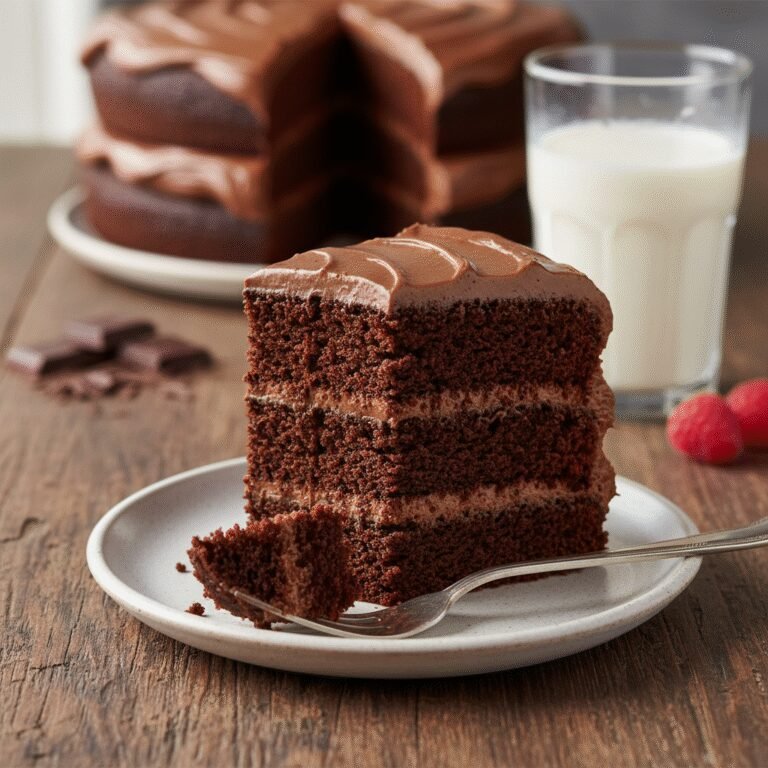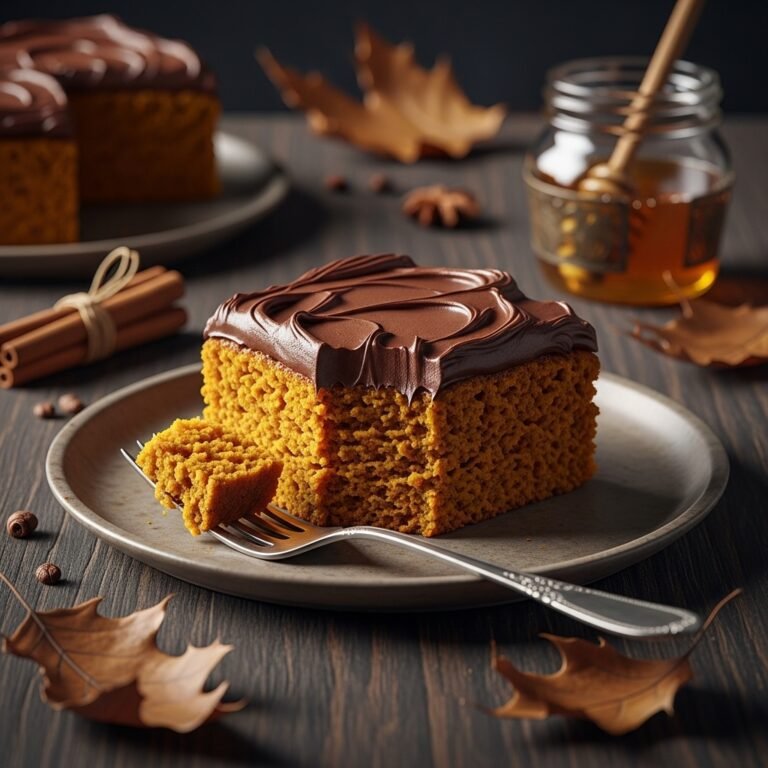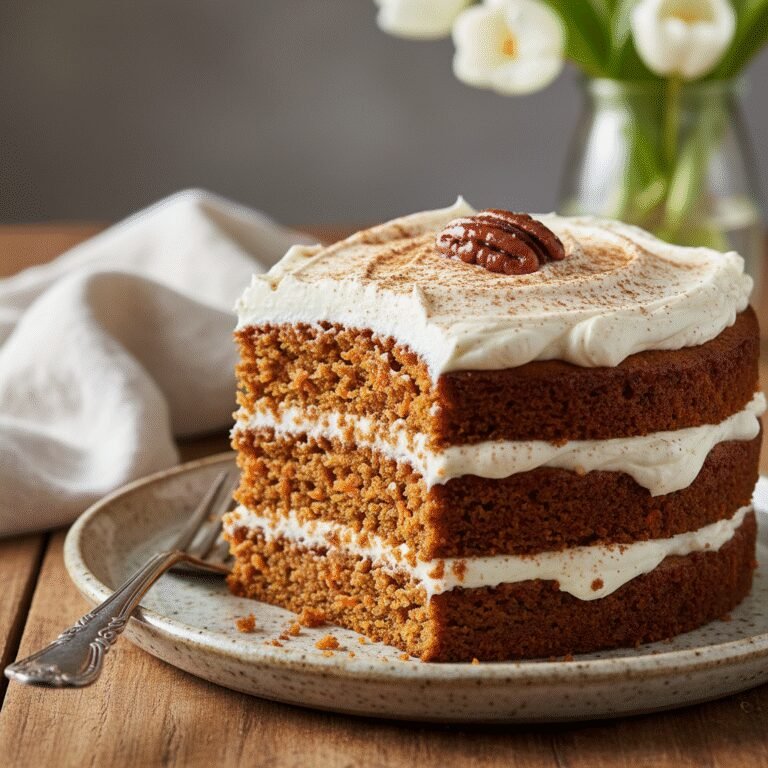
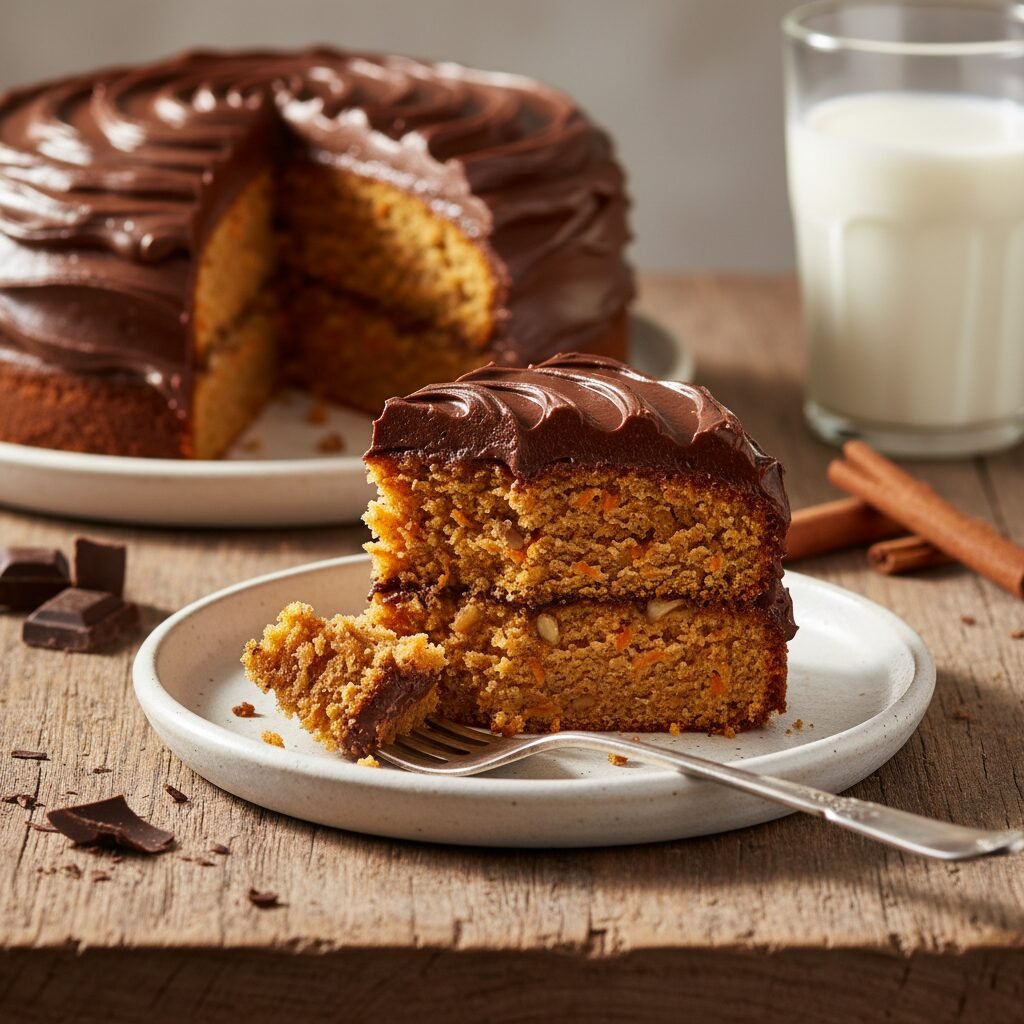
The Best Moist Gluten Free Carrot Cake With Rich Chocolate Cream Cheese Frosting
Moist Gluten Free Carrot Cake With Chocolate Frosting Recipe
Forget everything you know about dry gluten-free baking. This incredibly moist carrot cake combines the classic warmth of cinnamon and nutmeg with a decadent, tangy chocolate cream cheese frosting that creates an unforgettable flavor combination perfect for any celebration.
25 minutes
35 minutes
1 hour 15 minutes
12 servings
Dessert
Baking
American
Gluten-Free
If there is one dessert that bridges the gap between comfort food and gourmet indulgence, it is carrot cake. However, for those living a gluten-free lifestyle, finding a carrot cake that isn’t crumbly, dry, or gritty can feel like searching for a needle in a haystack. This recipe is the result of years of testing to create a sponge so tender and moist that no one will ever guess it is gluten-free. While traditional carrot cake is often paired with vanilla cream cheese frosting, we are elevating the experience with a rich, velvety chocolate cream cheese frosting. The slight bitterness of the cocoa powder cuts through the sweetness of the cake and complements the earthiness of the carrots and walnuts in a way that is truly magical. This cake is robust enough to hold up to stacking but delicate enough to melt in your mouth. The secret lies in the balance of oil, brown sugar, and fresh carrots, which work together to lock in moisture for days. Whether you are baking for a birthday, Easter brunch, or just a Tuesday night craving, this cake promises to deliver a bakery-quality experience right from your home kitchen. It is a celebration of textures—crunchy nuts, soft crumb, and creamy frosting—all harmonizing in a dessert that is destined to become a family heirloom recipe.
History & Origins
The origins of carrot cake are somewhat debated, but food historians generally agree that it traces its lineage back to the carrot puddings eaten by Europeans in the Middle Ages. During this era, sugar was a rare and expensive luxury, so bakers turned to carrots, which contain more natural sugar than almost any other vegetable (second only to sugar beets), to sweeten their desserts. These early iterations were more like steamed puddings than the fluffy cakes we know today. The concept saw a major revival during World War II in Great Britain, where rationing of sugar inspired the government to disseminate recipes for carrot cake to keep morale high and tea times sweet. However, the modern American carrot cake, typically dense with oil and topped with cream cheese frosting, gained massive popularity in the 1960s and 1970s. It was initially perceived as a ‘health food’ due to the inclusion of a vegetable, appearing on the menus of trendy cafes across the United States. The addition of cream cheese frosting became the gold standard shortly after. In recent decades, the rise of celiac disease awareness and gluten sensitivity has pushed bakers to reinvent this classic. Early gluten-free versions were often disappointing, but with the advent of high-quality 1-to-1 gluten-free flour blends and a better understanding of hydrocolloids like xanthan gum, we can now produce a gluten-free carrot cake that honors its medieval roots and mid-century popularity while catering to modern dietary needs.
Why This Recipe Works
This recipe succeeds where many gluten-free cakes fail because it prioritizes moisture retention and structural integrity. Gluten-free flours tend to be more absorbent and can dry out baked goods quickly. To combat this, we use a high ratio of oil instead of butter. Oil remains liquid at room temperature, ensuring the cake stays soft and moist on the counter or in the fridge, whereas butter would solidify and make the crumb feel dense. Furthermore, we utilize a combination of white and brown sugar; the molasses in the brown sugar is hygroscopic, meaning it attracts and holds water, further preventing dryness. The chemical reaction between the baking soda and the acidity in the brown sugar and cream cheese frosting also helps give the cake a necessary lift, counteracting the heaviness of the gluten-free flour blend. We also insist on freshly grated carrots rather than pre-shredded ones. Pre-shredded carrots are dry and coated in cornstarch, whereas freshly grated carrots release their natural water during baking, steaming the cake from the inside out. Finally, the chocolate cream cheese frosting works because the tang of the cream cheese and the depth of the cocoa powder balance the intense sweetness and spice of the cake, creating a complex flavor profile that is far superior to a standard sugar bomb.
Why You’ll Love This Recipe
- ✓Incredibly moist texture that stays fresh for days
- ✓Rich chocolate cream cheese frosting offers a unique twist
- ✓Simple one-bowl mixing method for the cake batter
- ✓No grit or sandiness common in gluten-free baking
- ✓Perfectly spiced with cinnamon, ginger, and nutmeg
- ✓Freezer-friendly for make-ahead convenience
Equipment You’ll Need
- ✓Two 9-inch round cake pans
- ✓Large mixing bowl
- ✓Medium mixing bowl
- ✓Whisk
- ✓Electric hand mixer or stand mixer
- ✓Box grater or food processor
- ✓Rubber spatula
- ✓Wire cooling rack
- ✓Parchment paper
Ingredients
- ✓2 1/2 cups Gluten-Free 1-to-1 Baking Flour (ensure it contains xanthan gum)
- ✓1 1/2 teaspoons baking powder
- ✓1 teaspoon baking soda
- ✓1/2 teaspoon salt
- ✓2 teaspoons ground cinnamon
- ✓1/2 teaspoon ground nutmeg
- ✓1/2 teaspoon ground ginger
- ✓1 cup vegetable oil or melted coconut oil
- ✓1 cup light brown sugar, packed
- ✓3/4 cup granulated white sugar
- ✓4 large eggs, room temperature
- ✓2 teaspoons pure vanilla extract
- ✓3 cups freshly grated carrots (approx. 5-6 medium carrots)
- ✓1 cup chopped walnuts or pecans (optional)
- ✓8 oz full-fat cream cheese, softened (Frosting)
- ✓1/2 cup unsalted butter, softened (Frosting)
- ✓3 cups powdered sugar (Frosting)
- ✓1/2 cup unsweetened cocoa powder (Frosting)
- ✓1 teaspoon vanilla extract (Frosting)
- ✓1-2 tablespoons heavy cream (Frosting)
Instructions
- Preheat your oven to 350°F (175°C). Grease two 9-inch round cake pans and line the bottoms with parchment paper for easy removal.
- In a medium bowl, whisk together the gluten-free flour, baking powder, baking soda, salt, cinnamon, nutmeg, and ginger until well combined and aerated.
- In a large bowl, whisk together the oil, brown sugar, white sugar, eggs, and vanilla extract until the mixture is smooth and slightly thickened.
- Gradually add the dry ingredients to the wet ingredients. Stir with a rubber spatula or wooden spoon just until the flour is moistened. Do not overmix, although gluten-free batter is more forgiving than wheat batter.
- Gently fold in the freshly grated carrots and the chopped nuts (if using) until they are evenly distributed throughout the batter.
- Divide the batter evenly between the two prepared cake pans. Smooth the tops with a spatula.
- Bake for 30-35 minutes, or until a toothpick inserted into the center comes out clean or with just a few moist crumbs attached. Avoid opening the oven door before the 25-minute mark to prevent sinking.
- Remove cakes from the oven and let them cool in the pans for 10 minutes. Then, turn them out onto a wire rack to cool completely before frosting. This is crucial; warm cake will melt the frosting.
- To make the frosting: In a large bowl using a hand mixer or stand mixer, beat the softened cream cheese and butter together until completely smooth and creamy.
- Sift in the cocoa powder and powdered sugar gradually, beating on low speed to incorporate. Add the vanilla extract.
- Increase speed to medium-high and whip for 2-3 minutes. If the frosting is too stiff, add heavy cream one tablespoon at a time until it reaches a spreadable, fluffy consistency.
- Once the cakes are fully cool, place one layer on a serving plate. Spread a generous layer of chocolate frosting over the top. Place the second layer on top and frost the top and sides of the entire cake.
- Garnish with extra chopped nuts or chocolate shavings if desired. Slice and serve.
Expert Cooking Tips
- ✓Always use room temperature eggs and dairy ingredients. This ensures they emulsify properly into the batter and frosting, creating a smoother texture.
- ✓Weigh your flour if possible. A kitchen scale is the most accurate way to bake gluten-free. If using cups, spoon the flour into the cup and level it off; never scoop directly from the bag.
- ✓Grate your own carrots. Do not buy the pre-shredded carrots in a bag; they are too dry and hard. Use the medium holes on a box grater for the best texture.
- ✓Let the batter rest. After mixing, let the batter sit for about 15 minutes before baking. This allows the gluten-free flour to hydrate fully, reducing grittiness.
- ✓Cool completely. Gluten-free baked goods are more fragile when warm. Attempting to move or frost the cake before it is 100% cool will result in it falling apart.
- ✓Check your baking powder. Ensure it is fresh and gluten-free to ensure the cake rises properly.
Substitutions and Variations
This recipe is quite versatile. If you need to be dairy-free, you can use a high-quality plant-based cream cheese and butter alternative for the frosting, and the cake itself is already dairy-free (just ensure you grease the pans with oil or shortening). For the oil, you can substitute melted coconut oil, canola oil, or even light olive oil, though vegetable oil provides the most neutral flavor. If you have a nut allergy, simply omit the walnuts or pecans; you can replace them with raisins or dried cranberries if you enjoy a chewy texture, though the chocolate frosting pairs best with nuts. For the sugar, you can use coconut sugar instead of brown sugar for a lower glycemic index option, but the texture may be slightly less moist. If you cannot find a specific gluten-free flour blend, look for one that lists rice flour, potato starch, and tapioca starch, and remember to add 1 teaspoon of xanthan gum if your blend doesn’t include it.
Common Mistakes to Avoid
The most common mistake is using the wrong flour blend. Not all gluten-free flours are created equal; you must use a ‘measure-for-measure’ or ‘1-to-1’ blend intended for baking. Using straight almond flour or coconut flour will not work and will result in a soup or a brick. Another error is over-baking. Gluten-free cakes do not turn golden brown as easily as wheat cakes, so rely on the toothpick test rather than color. If you bake it until it looks dark brown, it will likely be dry. Also, avoid opening the oven door too early. The structure of gluten-free cakes is delicate while rising; a rush of cold air can cause the center to collapse. Finally, do not skip the cooling step. Frosting a warm cake will cause the butter and cream cheese to separate and slide right off the cake.
Serving Suggestions
This rich cake is best served in thin slices due to its density and the richness of the chocolate frosting. It pairs beautifully with a hot cup of black coffee or an espresso, as the bitterness of the coffee cuts through the sweetness. For a cozy evening treat, serve it with a mug of herbal tea like rooibos or peppermint. If you want to go over the top for a dinner party, serve a slice with a scoop of vanilla bean ice cream or a dollop of unsweetened whipped cream to balance the chocolate. A dusting of extra cocoa powder or some candied orange peel on top makes for an elegant presentation.
Storage and Reheating Tips
Because of the cream cheese frosting and the moist nature of the cake, this dessert should be stored in the refrigerator. Place the cake in an airtight cake carrier or cover it gently with plastic wrap (use toothpicks to keep the wrap from sticking to the frosting). It will keep well in the fridge for up to 5 days. In fact, many find the flavor improves on the second day as the spices meld. To freeze, you can freeze individual slices wrapped tightly in plastic wrap and then foil for up to 3 months. Thaw overnight in the refrigerator or on the counter for an hour before eating. Serve the cake slightly chilled or let it come to room temperature for 20 minutes to soften the frosting.
Nutrition Facts (Estimated)
| Serving Size | 1 slice |
| Calories | 520 |
| Fat | 34g |
| Saturated Fat | 12g |
| Unsaturated Fat | 20g |
| Trans Fat | 0g |
| Cholesterol | 65mg |
| Sodium | 310mg |
| Carbohydrates | 58g |
| Fiber | 3g |
| Sugar | 42g |
| Protein | 6g |
Frequently Asked Questions
Can I make this recipe into cupcakes?
Yes! This recipe makes about 24 standard cupcakes. Bake them at 350°F for 18-22 minutes. Watch them closely so they don’t dry out.
Why did my gluten-free cake sink in the middle?
This usually happens if the cake was underbaked or if the oven door was opened too early. It can also happen if there is too much leavening (baking soda/powder) or too much liquid. Ensure your oven temperature is accurate.
Can I use almond flour instead of a blend?
No, you cannot substitute almond flour 1:1 in this specific recipe. This recipe relies on a blend with starches to mimic the structure of wheat flour. Almond flour requires different ratios of eggs and liquid.
Is the chocolate frosting overwhelming?
Not at all. The frosting uses cream cheese, which adds a tanginess that lightens the chocolate flavor. It tastes like a sophisticated, tangy truffle rather than a heavy fudge frosting.
Can I leave the nuts out?
Absolutely. The nuts add texture but are not required for the chemistry of the cake. You can omit them entirely for a nut-free version.
Do I really need xanthan gum?
Yes. In gluten-free baking, xanthan gum acts as the binder that replaces gluten. Without it, your cake will likely crumble and fall apart. Check your flour blend; if it’s included, you don’t need to add more.
Can I make this cake vegan?
You can try using flax eggs (1 tbsp ground flaxseed + 3 tbsp water per egg) and vegan dairy alternatives, but the texture will be denser and less fluffy than the egg-based version.
How do I know when the cake is done?
Insert a toothpick into the center. It should come out clean or with a few moist crumbs. The cake should also pull away slightly from the sides of the pan.
Conclusion
This Moist Gluten-Free Carrot Cake with Chocolate Frosting is more than just a dietary alternative; it is a standout dessert in its own right. By combining the rustic, spiced comfort of traditional carrot cake with the sophisticated indulgence of chocolate cream cheese frosting, you create a flavor profile that is unexpected and utterly delicious. It completely dispels the myth that gluten-free food has to be dry or tasteless. Whether you are an experienced gluten-free baker or trying it for the first time for a loved one, this recipe is designed to be foolproof and rewarding. We hope this cake becomes a centerpiece at your table and brings joy to everyone who takes a bite. Don’t forget to pin this recipe for later and share your creations with us!