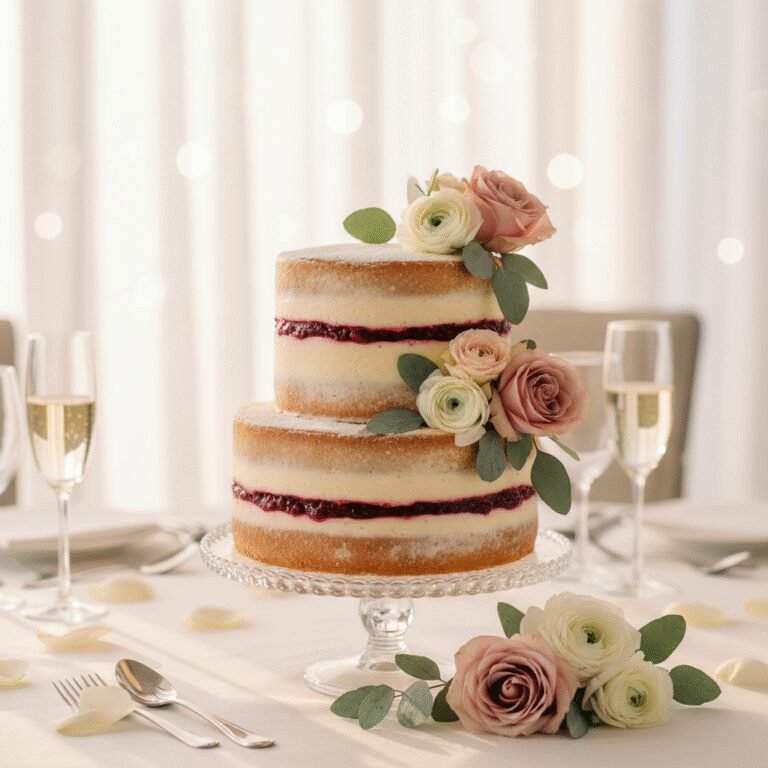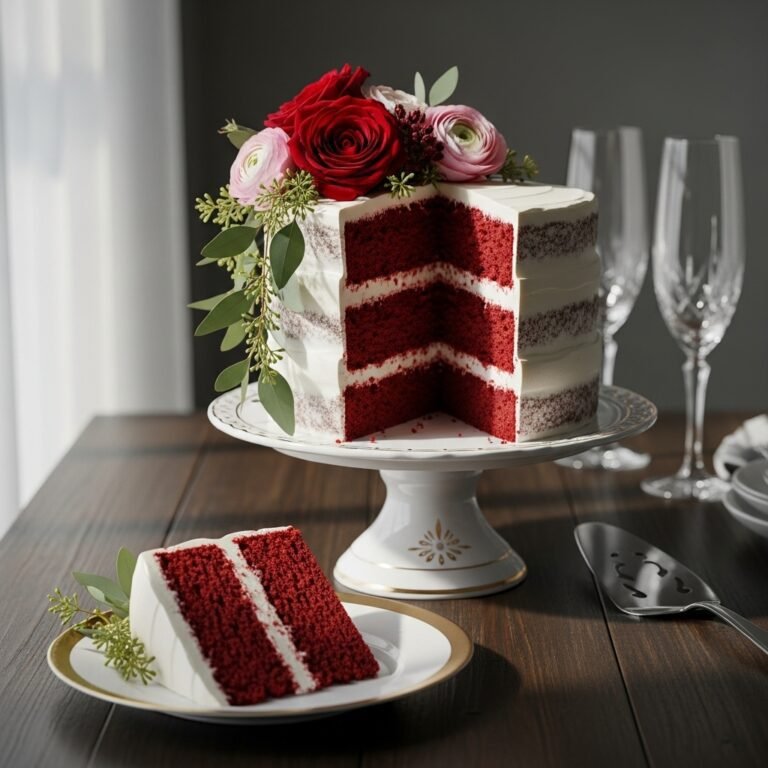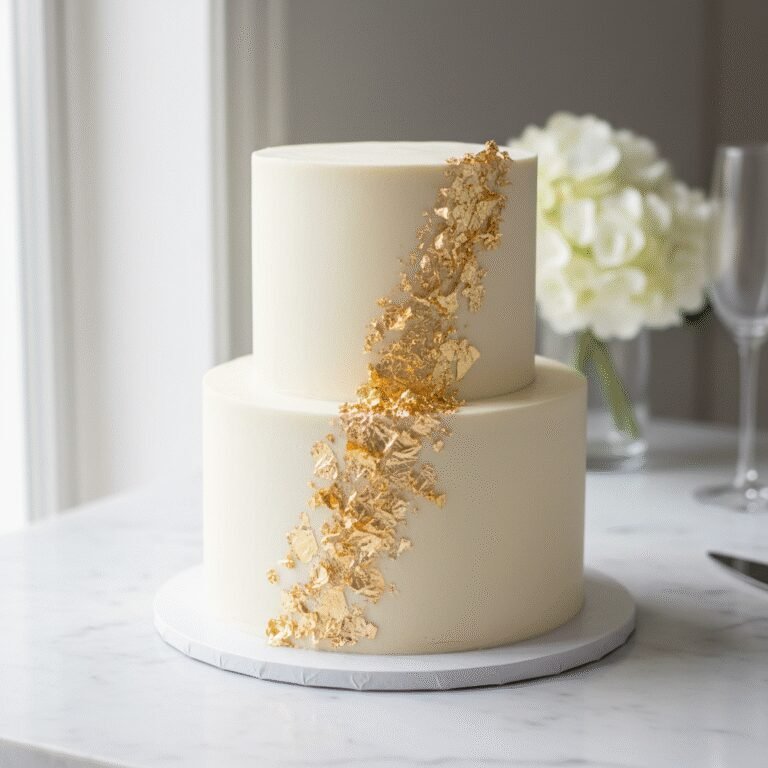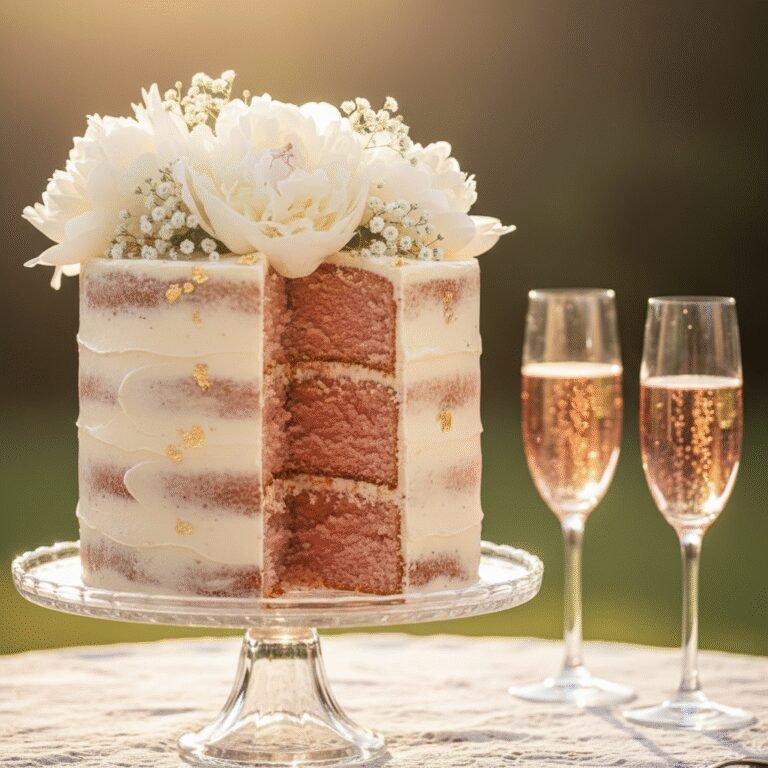
Royal Lemon Elderflower Wedding Cake with Gold Leaf Decoration
Elegant Lemon Elderflower Wedding Cake With Gold Leaf Decoration Recipe
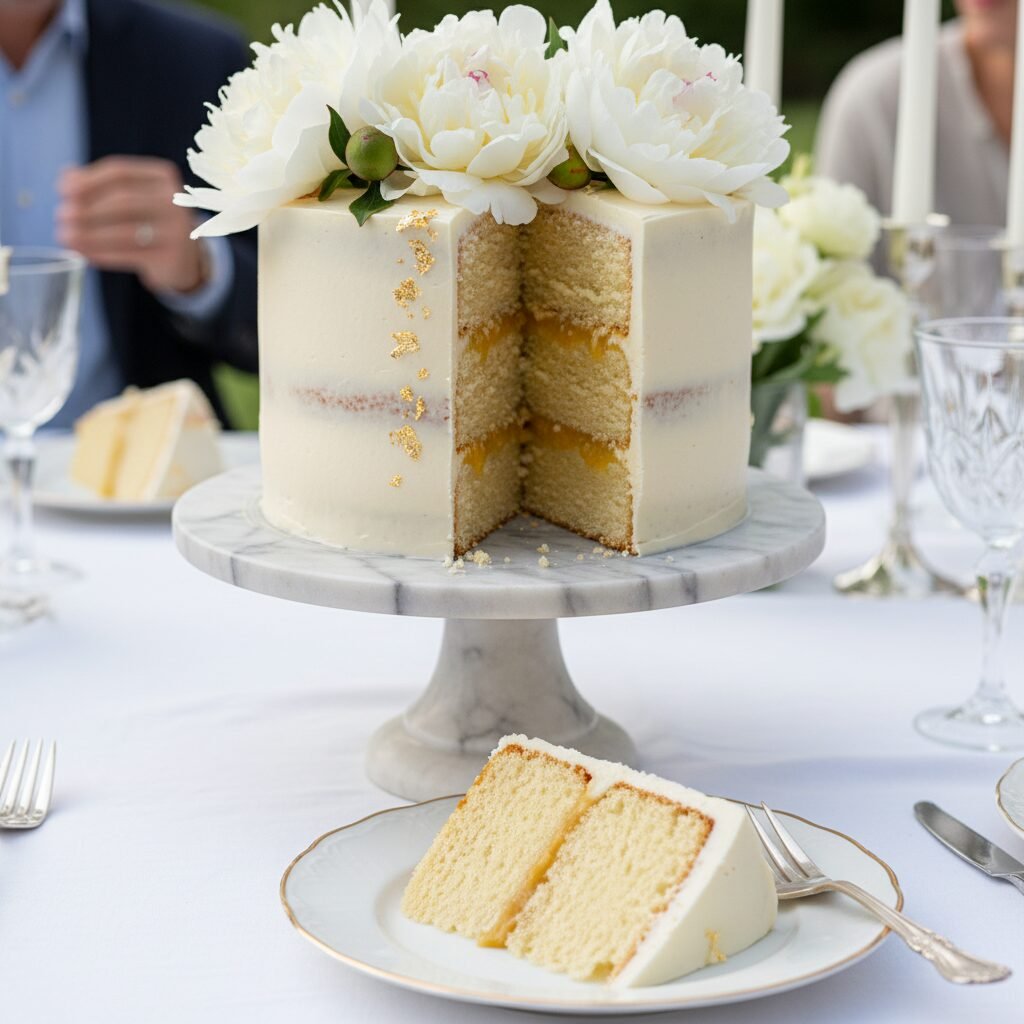
Capture the magic of a royal celebration with this exquisite Lemon Elderflower Wedding Cake. Featuring light, zesty lemon sponges soaked in elderflower syrup, filled with tangy lemon curd, and coated in silky Swiss meringue buttercream, this cake is finished with edible gold leaf for a truly breathtaking centerpiece.
2 hours
45 minutes
4 hours (plus cooling)
One 3-layer 8-inch cake (12-16 servings)
Dessert
Baking
British / American
Vegetarian
There is something undeniably magical about a wedding cake that breaks away from tradition while establishing a new standard of elegance. When Prince Harry and Meghan Markle chose a Lemon Elderflower cake for their nuptials in 2018, they didn’t just pick a flavor; they sparked a global baking revolution. This recipe is my homage to that iconic moment, designed for the home baker who wants to create a show-stopping centerpiece for a wedding, anniversary, or an upscale garden party. Unlike the heavy, dense fruitcakes of the past, this cake is a celebration of spring and summer lightness. It marries the bright, acidic punch of fresh lemon zest with the floral, Muscat-like aroma of elderflower cordial.
The texture is paramount here. We aren’t looking for a dense pound cake, nor a flimsy chiffon that collapses under the weight of buttercream. We are aiming for a ‘velvet’ crumb—sturdy enough to stack but tender enough to melt in your mouth. The secret lies in the soaking syrup. By brushing the warm sponges with a concentrated elderflower and lemon syrup, we lock in moisture and infuse every crumb with floral notes that might otherwise bake out in the oven. Covered in a cloud-like Swiss Meringue Buttercream, which is far less sweet than its American counterpart, the cake allows the delicate flavors to shine without inducing a toothache. Finished with touches of edible gold leaf, this isn’t just dessert; it is edible art that promises to be the most photographed item at your event.
History & Origins
The history of the wedding cake is as rich and layered as the dessert itself. Traditionally, British royal wedding cakes were fruitcakes, prized for their longevity and ability to be preserved for future christenings. The spices and alcohol acted as natural preservatives in an era before refrigeration. However, the culinary landscape has shifted dramatically in the 21st century. The break from tradition seen in the 2018 Royal Wedding signaled a modernizing monarchy, one that embraced seasonality and fresh, organic flavors over rigid customs.
Elderflower itself has a deep-rooted history in British and European folklore. The elder tree was often associated with protection and warding off evil spirits, making it a poetic addition to a union of two people. In Victorian times, the ‘language of flowers’ was a popular way to send coded messages; elderflower represented compassion and zeal. Culinarially, elderflower cordial has been a staple of English summers for centuries, a way to capture the fleeting, two-week blooming window of the elder tree. By pairing this ancient, hedgerow ingredient with the exotic luxury of lemons—historically a status symbol in Northern Europe due to the cost of import—this cake bridges the gap between rustic, countryside charm and aristocratic luxury. The addition of gold leaf traces back to Renaissance feasts where precious metals were used to adorn food to display immense wealth and power. Today, it serves as an accessible touch of glamour, transforming a simple frosted cake into a regal masterpiece.
Why This Recipe Works
This recipe succeeds where many others fail because it meticulously balances structural integrity with moisture and flavor intensity. Many lemon cakes rely solely on extracts, which can taste artificial, or lemon juice in the batter, which can alter the pH and result in a gummy texture. Here, we use a three-pronged approach to flavor. First, we rub fresh lemon zest into the sugar before mixing; the friction releases the essential oils, perfuming the sugar and ensuring the flavor is distributed evenly throughout the crumb. Second, we use a soaking syrup. Alcohol-based extracts often evaporate at high heat, but a post-bake soak ensures the elderflower flavor remains potent and keeps the cake fresh for days—crucial for wedding cakes that are often baked in advance.
Furthermore, the choice of Swiss Meringue Buttercream (SMBC) is scientifically superior for this application. American buttercream is crusting and very sweet, which would overpower the delicate elderflower. SMBC is an emulsion of egg whites, sugar, and butter. It is stable at room temperature (essential for display), takes color beautifully, and has a silky mouthfeel that complements the tender crumb. The inclusion of a homemade lemon curd filling adds a necessary sharp, acidic contrast to the sweet buttercream and floral sponge, creating a complex flavor profile that hits every part of the palate: sweet, sour, floral, and creamy.
Why You’ll Love This Recipe
- ✓Perfect balance of tart lemon and floral elderflower notes.
- ✓Sturdy yet tender crumb ideal for tiered stacking.
- ✓Silky Swiss Meringue Buttercream that isn’t overly sweet.
- ✓Uses a soaking syrup to ensure the cake stays moist for days.
- ✓Elegant gold leaf decoration makes it look professionally made.
- ✓Includes a homemade lemon curd filling for a zesty surprise.
Equipment You’ll Need
- ✓Three 8-inch round cake pans
- ✓Stand mixer with paddle and whisk attachments
- ✓Digital kitchen scale
- ✓Microplane zester
- ✓Candy thermometer
- ✓Offset spatula
- ✓Cake turntable
- ✓Pastry brush
- ✓Piping bags and tips
- ✓Food-safe tweezers (for gold leaf)
Ingredients
- ✓3 cups Cake flour, sifted
- ✓2 1/2 tsp Baking powder
- ✓1/2 tsp Salt
- ✓1 cup Unsalted butter, room temperature
- ✓2 cups Granulated sugar
- ✓2 tbsp Lemon zest (approx. 3 lemons)
- ✓4 Large eggs, room temperature
- ✓1 tsp Vanilla bean paste
- ✓1 cup Whole milk, room temperature
- ✓1/2 cup Elderflower cordial (for syrup)
- ✓2 tbsp Fresh lemon juice (for syrup)
- ✓1 cup Lemon Curd (homemade or high-quality store-bought)
- ✓6 Large egg whites (for buttercream)
- ✓2 cups Granulated sugar (for buttercream)
- ✓3 cups Unsalted butter, cubed and cool (for buttercream)
- ✓1/4 cup Elderflower cordial (for buttercream flavoring)
- ✓Sheets of edible gold leaf (24k)
- ✓Fresh organic edible flowers (optional garnish)
Instructions
- Preheat your oven to 350°F (175°C). Grease three 8-inch cake pans, line the bottoms with parchment paper, and grease the paper. Dust with flour and tap out excess.
- In a medium bowl, whisk together the sifted cake flour, baking powder, and salt. Set aside.
- In the bowl of a stand mixer, combine the 2 cups of sugar and lemon zest. Rub the zest into the sugar with your fingertips until fragrant and moist like wet sand.
- Add the room temperature butter to the sugar mixture. Beat on medium-high speed with the paddle attachment for 5-7 minutes until pale, fluffy, and aerated.
- Reduce speed to medium. Add eggs one at a time, mixing fully after each addition and scraping down the sides of the bowl. Stir in the vanilla bean paste.
- Reduce mixer speed to low. Add the flour mixture in three parts, alternating with the milk in two parts, starting and ending with flour. Mix only until just combined to avoid overworking the gluten.
- Divide the batter evenly among the three prepared pans. Smooth the tops with a spatula.
- Bake for 30-35 minutes, or until a toothpick inserted into the center comes out clean or with a few moist crumbs. Do not overbake.
- While cakes bake, make the syrup: Combine 1/2 cup elderflower cordial and 2 tbsp lemon juice in a small bowl. Set aside.
- Remove cakes from the oven and let cool in pans for 10 minutes. Then, invert onto a wire rack. While still warm, generously brush the tops and sides with the elderflower syrup.
- Make the Buttercream: Whisk egg whites and sugar in a heatproof bowl over a pot of simmering water. Whisk constantly until sugar is dissolved and mixture reaches 160°F (71°C).
- Transfer to stand mixer with whisk attachment. Whip on high speed until stiff, glossy peaks form and the bowl feels cool to the touch (about 10-15 minutes).
- Switch to paddle attachment. Add cubed butter one piece at a time on low speed. Once all butter is added, increase speed to high and whip until smooth and creamy. Add elderflower cordial and whip to combine.
- Assembly: Place one cake layer on a cake board or stand. Pipe a dam of buttercream around the edge. Fill the center with lemon curd. Top with the next layer and repeat. Place the final layer upside down for a flat top.
- Crumb coat the entire cake with a thin layer of buttercream. Chill for 20 minutes.
- Apply the final coat of buttercream, smoothing it with an offset spatula and bench scraper for a clean finish.
- Chill the cake for another 15 minutes to firm up the frosting. Using tweezers, carefully apply edible gold leaf to the sides or edges in an artistic, cascading pattern.
- Garnish with fresh, food-safe flowers if desired. Serve at room temperature.
Expert Cooking Tips
- ✓Room temperature ingredients are non-negotiable. Cold eggs or milk will cause the batter to curdle.
- ✓Rubbing the zest into the sugar releases essential oils, providing a deeper lemon flavor than just mixing it in.
- ✓If your buttercream looks curdled after adding butter, keep whipping! It will come together. If it’s too soupy, chill the bowl for 10 minutes then whip again.
- ✓Brush the syrup on while the cakes are warm; they absorb liquid much better than cold cakes.
- ✓Use a kitchen scale for accuracy, especially with flour, to ensure the cake is light and not dense.
- ✓For flat cake layers, use ‘cake strips’ around your pans or slice off the domes before assembling.
Substitutions and Variations
If you cannot find elderflower cordial, you can substitute it with St-Germain elderflower liqueur for an adult version, though the flavor will be slightly more intense and alcoholic. For a non-floral version, simply use a rich simple syrup infused with lemon peels. If you need to make this gluten-free, swap the cake flour for a high-quality 1:1 gluten-free baking flour blend that contains xanthan gum; the texture will be slightly different but still delicious. For the filling, if you prefer not to use lemon curd, a raspberry preserve makes a wonderful alternative that pairs beautifully with elderflower. If you don’t have cake flour, you can make a substitute by measuring 1 cup of all-purpose flour, removing 2 tablespoons, and replacing them with 2 tablespoons of cornstarch, then sifting well.
Common Mistakes to Avoid
The most common mistake with this recipe is overmixing the batter after adding the flour. Once the flour hits the liquid, gluten development begins. If you mix too vigorously, you will end up with a tough, rubbery cake rather than a tender one. Stop mixing as soon as the white streaks of flour disappear. Another pitfall is rushing the buttercream. If you add the butter to the meringue while it is still warm, the butter will melt, and you will have a soupy mess. Ensure the meringue bowl is completely cool to the touch before adding butter. Lastly, do not skip the crumb coat. This thin layer of frosting traps crumbs so they don’t mar the surface of your final, elegant white cake. Without it, you’ll likely get brown specks in your pristine finish.
Serving Suggestions
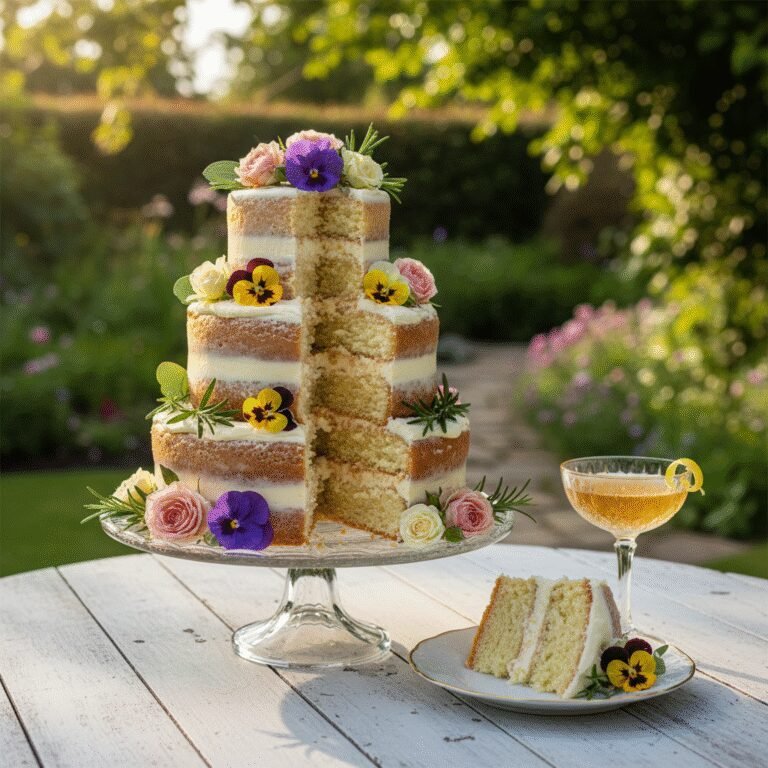
This cake is a showstopper and deserves to be the center of attention. Serve it on a high pedestal cake stand—marble or ceramic works best to highlight the gold leaf. Since it is a tall cake, slice it using a sharp chef’s knife dipped in hot water and wiped dry between cuts for clean, professional layers. Serve with a glass of chilled champagne or a sparkling elderflower pressé to echo the flavors in the sponge. Fresh berries on the side can add a nice pop of color and acidity to cut through the rich buttercream.
Storage and Reheating Tips
Because of the Swiss Meringue Buttercream and curd filling, this cake can stay at cool room temperature for up to 2 days, provided it’s not too hot in your kitchen. For longer storage, keep it in the refrigerator for up to 5 days. However, butter-based cakes harden when cold, so it is imperative to let slices come to room temperature (about 30-60 minutes) before eating to restore the soft texture and creamy frosting. You can freeze individual slices wrapped tightly in plastic wrap and foil for up to 3 months. Thaw in the fridge overnight before serving.
Nutrition Facts (Estimated)
| Serving Size | 1 slice (1/16 of cake) |
| Calories | 650 |
| Fat | 38g |
| Saturated Fat | 22g |
| Unsaturated Fat | 14g |
| Trans Fat | 1g |
| Cholesterol | 140mg |
| Sodium | 320mg |
| Carbohydrates | 72g |
| Fiber | 1g |
| Sugar | 45g |
| Protein | 6g |
Frequently Asked Questions
Can I make the cake layers ahead of time?
Yes, absolutely. You can bake the sponge layers, let them cool completely, wrap them tightly in plastic wrap, and freeze them for up to a month. Thaw them in the fridge before assembling. Actually, handling semi-frozen cakes makes assembling and frosting easier.
Where can I buy elderflower cordial?
Elderflower cordial is widely available in the UK and increasingly common in US supermarkets in the mixer or international aisle. Brands like Belvoir Farm or Monin are excellent. You can also order it online or find it at specialty food stores like Whole Foods or World Market.
Is the gold leaf safe to eat?
Yes, provided you buy ‘edible gold leaf’ specifically labeled for food use. It is biologically inert and passes through the body without being absorbed. Do not use gold leaf from art supply stores, as it may contain copper or other non-edible metals.
Why did my buttercream separate?
Temperature is usually the culprit. If the butter was too cold or the meringue too warm, the emulsion breaks. To fix it, if it’s soupy, chill it for 15 minutes and rewhip. If it looks curdled/chunky, scoop out a small amount, melt it in the microwave, pour it back in, and whip on high.
Can I use fresh flowers on the cake?
Yes, fresh flowers look stunning. However, ensure they are non-toxic and ideally organic (pesticide-free). Wrap the stems in floral tape or insert them into a straw before putting them into the cake to prevent sap from leaching into the sponge.
Do I have to use Swiss Meringue Buttercream?
You don’t have to, but it is highly recommended for the texture and lower sweetness. American buttercream (butter + powdered sugar) is much sweeter and grittier, which might overwhelm the delicate elderflower flavor.
Can I make this as cupcakes?
Yes! This recipe will yield approximately 24-30 standard cupcakes. Bake them for 18-22 minutes at 350°F. You can fill them with lemon curd using a corer or piping tip.
What if I don’t have a stand mixer?
You can use a hand mixer for the cake batter. For the Swiss Meringue Buttercream, a hand mixer is possible but will take significantly longer and requires a lot of arm stamina to whip the meringue to stiff peaks and emulsify the butter.
Is the lemon curd filling necessary?
It is not strictly necessary, but it provides a ‘pop’ of acidity that cuts through the richness of the butter and sugar. Without it, the cake is much milder. If you skip it, simply use buttercream between the layers.
How do I transport this cake?
Transport the cake well-chilled. Cold buttercream is hard and acts like armor. Place the cake box on a flat surface in your car (like the floor of the passenger seat), not on a slanted seat, and keep the AC running.
Conclusion
Creating this Elegant Lemon Elderflower Wedding Cake is a labor of love that yields a reward far greater than the sum of its parts. It is a dessert that tells a story of elegance, seasonality, and celebration. Whether you are baking for a wedding, a milestone birthday, or simply to challenge your culinary skills, this cake promises to impress. The combination of the zesty, moist sponge, the floral whisper of elderflower, and the luxurious finish of gold leaf creates a sensory experience that your guests will talk about long after the last crumb is gone. So, gather your ingredients, trust the process, and prepare to bake a masterpiece.