Royal Lemon Elderflower Wedding Cake with Fresh Florals
Elegant Lemon Elderflower Wedding Cake With Fresh Flowers Recipe
Capture the magic of a royal romance with this exquisite Lemon Elderflower Wedding Cake. Featuring airy lemon sponge layers soaked in elderflower syrup and draped in silky Swiss meringue buttercream, this showstopper is adorned with fresh, organic blooms for a breathtaking presentation.
1 hour 30 minutes
35 minutes
3 hours
12-16 servings
Dessert
Baking
British / American
Vegetarian
There is something undeniably magical about the combination of zesty lemon and floral elderflower. It evokes images of English garden parties, dappled sunlight through ancient oaks, and, of course, the fairytale romance of Prince Harry and Meghan Markle, who famously chose this flavor profile for their 2018 royal wedding. This Elegant Lemon Elderflower Wedding Cake is more than just a dessert; it is a celebration of spring and summer flavors, designed to be as delicious as it is beautiful.
The cake itself is a triumph of texture—a tender, fine-crumbed sponge that avoids the heaviness often associated with traditional wedding cakes. By infusing the batter with fresh lemon zest and soaking the warm layers in a concentrated elderflower cordial syrup, we ensure that every bite is moist and bursting with botanical brightness. The frosting is a classic Swiss Meringue Buttercream, chosen for its silky mouthfeel and stability, which is essential when stacking layers for a special occasion. Unlike American buttercream, which can be overly sweet and gritty, this meringue-based frosting offers a sophisticated, buttery finish that carries the delicate scent of elderflower liqueur perfectly.
Whether you are baking for a micro-wedding, a bridal shower, or simply want to challenge your baking skills with a centerpiece dessert, this recipe guides you through creating a bakery-quality cake at home. We will cover everything from achieving the perfect ‘naked’ icing look to selecting safe, edible flowers for decoration. Prepare to impress your guests with a slice of elegance that tastes like a sunny day in a glass.
History & Origins
The tradition of the wedding cake is steeped in centuries of symbolism and evolving tastes. Historically, wedding cakes in Western culture were actually savory pies or simple breads broken over the bride’s head to symbolize fertility and good fortune. It wasn’t until the 17th century that sugar became more accessible, leading to the creation of icing and the tiered structures we recognize today. For generations, the gold standard for British wedding cakes was the dense, alcohol-soaked fruitcake, prized for its preservation qualities, allowing tiers to be saved for christenings.
However, the culinary landscape has shifted dramatically in the 21st century. Modern couples have begun to favor lighter, fresher flavors that reflect the season of their nuptials rather than the preservation needs of the past. The lemon and elderflower combination taps into a deep-rooted British love affair with elderflower, a hedgerow plant that blooms briefly in early summer. Elderflower cordial has been a staple in British pantries since the Victorian era, valued for its heady, floral aroma that pairs exceptionally well with the sharp acidity of citrus.
When the Duke and Duchess of Sussex commissioned a lemon elderflower cake for their wedding, it solidified a departure from the heavy fruitcakes of royal protocol, signaling a modern, fresh era. This recipe pays homage to that cultural shift, blending the rustic charm of English foraging traditions with the refined techniques of high-end patisserie. It represents a bridge between the old-world love for botanical ingredients and the new-world desire for light, airy textures.
Why This Recipe Works
This recipe succeeds because it meticulously balances the three pillars of a great layer cake: structure, moisture, and flavor intensity. Many lemon cakes suffer from being dry because the acidity can toughen the gluten, or they lack flavor because the citrus cooks out. We solve this by using a ‘reverse creaming’ method or a high-ratio mixing technique where the fat coats the flour particles before the liquid is added. This inhibits gluten formation, resulting in a velvety, tender crumb that is sturdy enough to stack but soft enough to melt in your mouth.
Furthermore, the ‘soak’ is the secret weapon of professional pastry chefs. By brushing the cake layers with an elderflower syrup while they are still warm, the cake absorbs the liquid like a sponge. This not only infuses the flavor deep into the center of the cake—rather than just the edges—but also locks in moisture, allowing the cake to stay fresh for days.
Finally, the choice of Swiss Meringue Buttercream (SMBC) over standard buttercream is crucial for the flavor profile. SMBC is less sweet, which is vital when pairing with a sweet elderflower cordial. The buttery richness cuts through the tartness of the lemon, while the egg whites provide a stable structure that holds up well against fresh flowers and warm reception venues. The result is a harmonious bite where no single element overpowers the other.
Why You’ll Love This Recipe
- ✓Light and airy sponge texture that isn’t dense or heavy.
- ✓Floral and zesty flavor profile perfect for spring and summer events.
- ✓Stable Swiss Meringue Buttercream that pipes beautifully.
- ✓Keeps moist for days due to the elderflower syrup soak.
- ✓Stunning ‘naked cake’ presentation with fresh edible flowers.
Equipment You’ll Need
- ✓Stand mixer with paddle and whisk attachments
- ✓Three 6-inch round cake pans (or two 8-inch pans)
- ✓Digital kitchen scale
- ✓Parchment paper
- ✓Offset spatula
- ✓Cake turntable
- ✓Pastry brush
- ✓Wire cooling rack
Ingredients
- ✓CAKE: 2 1/4 cups Cake flour (sifted)
- ✓CAKE: 1 1/2 cups Granulated sugar
- ✓CAKE: 3 1/2 tsp Baking powder
- ✓CAKE: 1/2 tsp Salt
- ✓CAKE: 1 cup Unsalted butter (room temperature, cubed)
- ✓CAKE: 1 tbsp Lemon zest (freshly grated)
- ✓CAKE: 1 cup Whole milk (room temperature)
- ✓CAKE: 5 Large egg whites (room temperature)
- ✓CAKE: 2 tbsp Elderflower cordial
- ✓SYRUP: 1/2 cup Elderflower cordial
- ✓SYRUP: 2 tbsp Fresh lemon juice
- ✓FROSTING: 5 Large egg whites
- ✓FROSTING: 1 1/2 cups Granulated sugar
- ✓FROSTING: 2 cups Unsalted butter (cool room temperature, cubed)
- ✓FROSTING: 1/4 cup Elderflower liqueur (e.g., St. Germain) or cordial
- ✓GARNISH: Assorted organic edible flowers (pansies, roses, chamomile)
- ✓GARNISH: Fresh lemon slices or zest curls
Instructions
- 1. PREHEAT & PREP: Preheat your oven to 340°F (170°C). Grease three 6-inch cake pans with butter, line the bottoms with parchment paper, and dust the sides with flour. Shake out excess flour.
- 2. MIX DRY INGREDIENTS: In the bowl of a stand mixer fitted with the paddle attachment, combine the sifted cake flour, sugar, baking powder, salt, and lemon zest. Mix on low speed for 30 seconds to distribute the zest and aerate the dry mix.
- 3. REVERSE CREAMING: Add the cubed, room-temperature butter to the dry ingredients. Mix on low speed until the mixture resembles coarse sand or damp breadcrumbs. There should be no large chunks of butter remaining.
- 4. ADD LIQUIDS: In a separate jug, whisk together the milk, egg whites, and 2 tablespoons of elderflower cordial. With the mixer on low, slowly pour in about half of the milk mixture. Increase speed to medium-high and beat for 2 minutes to build structure.
- 5. FINISH BATTER: Scrape down the sides and bottom of the bowl. Reduce speed to low and add the remaining milk mixture in two batches, mixing just until incorporated. Do not overmix.
- 6. BAKE: Divide the batter evenly among the prepared pans (use a scale for accuracy). Bake for 30-35 minutes, or until a toothpick inserted into the center comes out clean or with just a few moist crumbs. The tops should be pale golden.
- 7. MAKE SYRUP: While the cakes bake, whisk together the 1/2 cup elderflower cordial and lemon juice in a small bowl.
- 8. SOAK: Remove cakes from the oven. Let them cool in the pans for 10 minutes. While warm, poke holes in the tops with a skewer and brush generously with the elderflower syrup.
- 9. COOL: Turn the cakes out onto a wire rack to cool completely before frosting.
- 10. MAKE FROSTING: Fill a saucepan with 2 inches of water and bring to a simmer. In the clean bowl of your stand mixer, whisk combined egg whites and sugar. Place the bowl over the simmering water (double boiler method), ensuring the bottom doesn’t touch the water. Whisk constantly until the mixture reaches 160°F (71°C) and sugar is dissolved.
- 11. WHIP MERINGUE: Transfer the bowl to the stand mixer with the whisk attachment. Whip on high speed until stiff peaks form and the bowl feels cool to the touch (about 10-15 minutes).
- 12. ADD BUTTER: Switch to the paddle attachment. With the mixer on low, add the butter one cube at a time, allowing it to incorporate before adding the next. Once all butter is added, increase speed to high and whip until smooth and creamy.
- 13. FLAVOR FROSTING: Add the elderflower liqueur (or cordial) and mix on low until combined. Beat on low speed for 2 minutes to remove air bubbles for a silky finish.
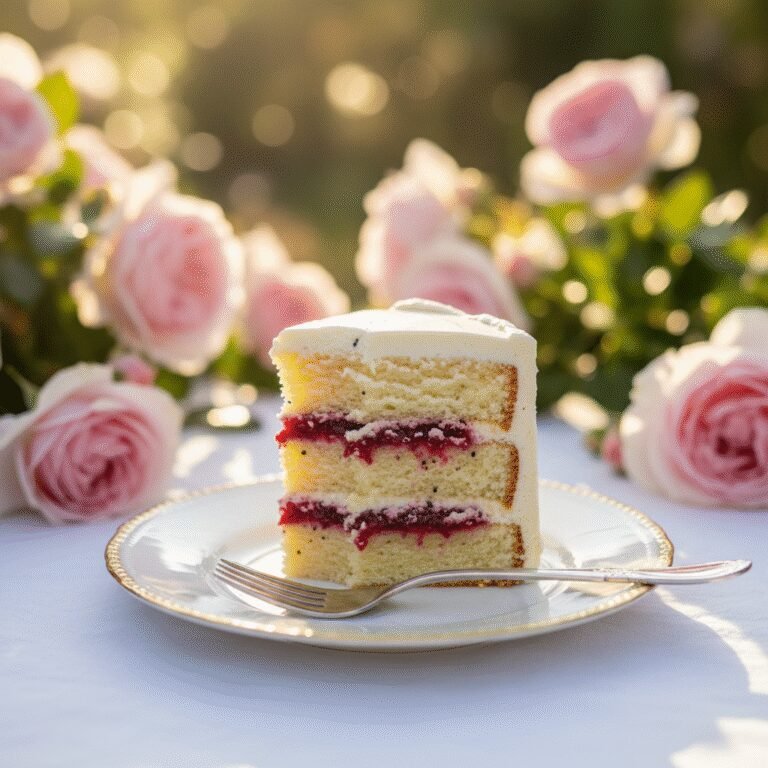
- 14. ASSEMBLE: Place the first cake layer on a board. Top with a layer of frosting. Repeat with remaining layers. Apply a thin layer of frosting all over the cake (crumb coat) and chill for 20 minutes.
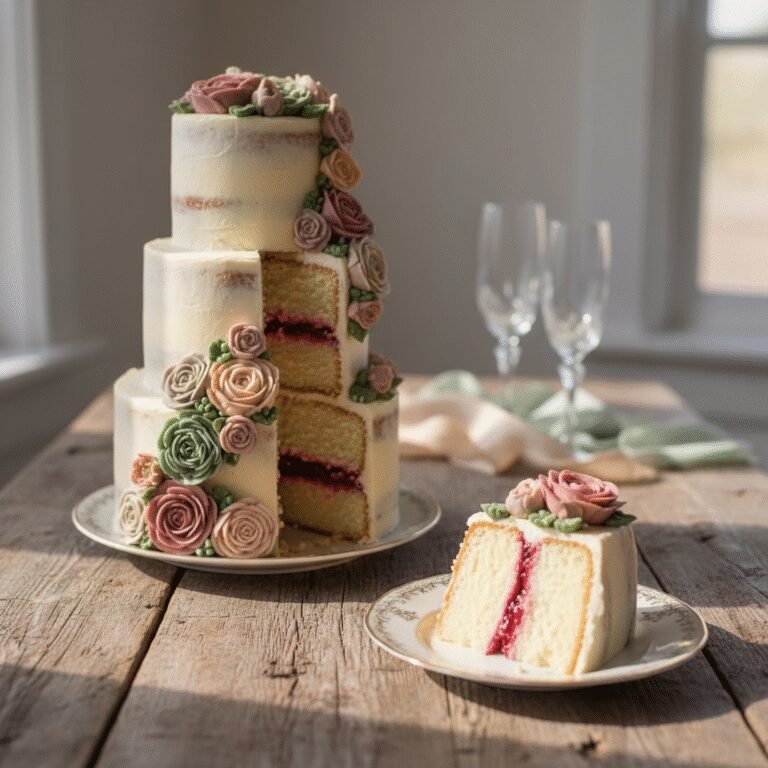
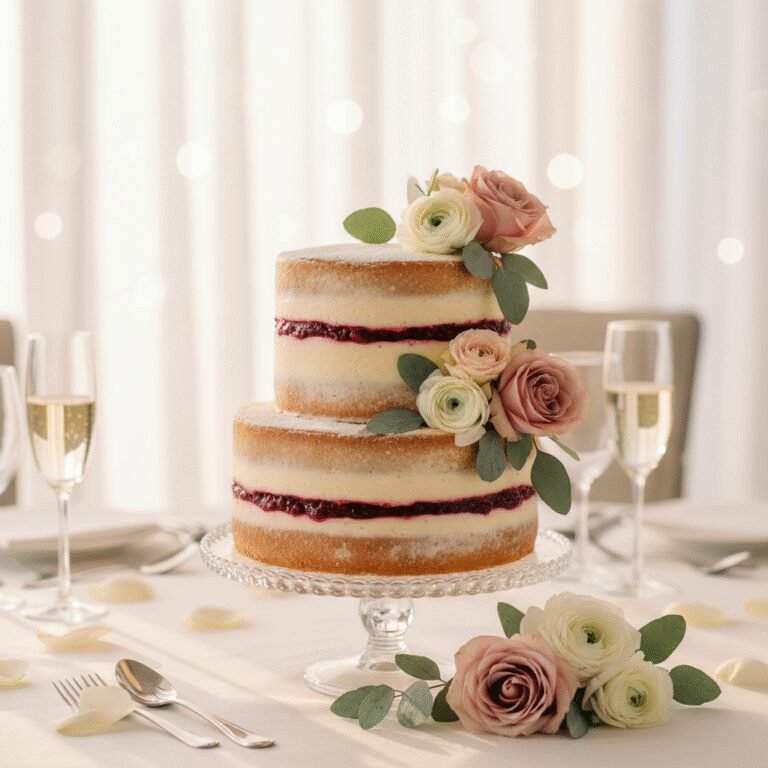
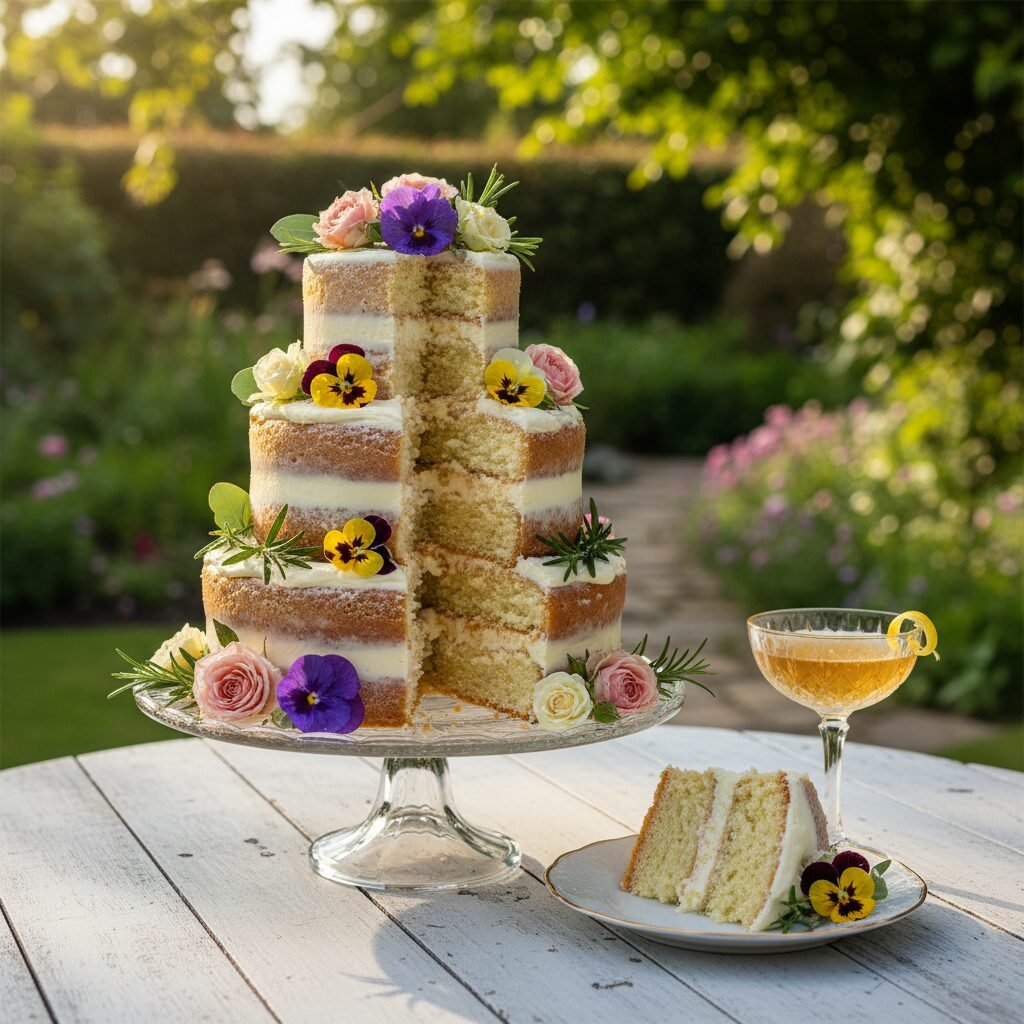
- 15. DECORATE: Apply a final layer of frosting, scraping the sides for a semi-naked look if desired. Arrange fresh edible flowers and lemon slices artistically on the top and sides.
Expert Cooking Tips
- ✓Ensure all ingredients, especially butter and eggs, are at true room temperature to prevent the batter from curdling.
- ✓When making Swiss Meringue Buttercream, if the mixture looks soupy after adding butter, keep whipping; it will come together. If it looks curdled, it’s too cold—warm the bowl slightly with a hair dryer or warm towel.
- ✓Use high-quality elderflower cordial (like Belvoir Fruit Farms) for the best flavor payoff.
- ✓Wrap the flowers’ stems in floral tape or dip them in chocolate before inserting them into the cake to keep the cake food-safe.
- ✓Bake the cake layers a day in advance; wrapped tightly in plastic wrap, they are easier to handle and frost after resting.
Substitutions and Variations
If you cannot find cake flour, you can make a substitute by removing 2 tablespoons of all-purpose flour from every cup and replacing it with 2 tablespoons of cornstarch; sift well to combine. For the elderflower component, St. Germain liqueur offers a boozy, floral kick to the frosting, but non-alcoholic elderflower cordial or syrup works perfectly fine for a family-friendly version. If you prefer a different citrus, lime or orange zest can replace the lemon, though lemon provides the most classic pairing. For the frosting, if you find Swiss Meringue too technical, an American Buttercream or a Cream Cheese frosting (stabilized with extra butter) can be used, though they will be sweeter. Gluten-free baking flour blends (1:1 measure) usually work well with this reverse-creaming method, but the texture may be slightly denser.
Common Mistakes to Avoid
The most common mistake with this cake is rushing the cooling process. If you try to frost the cake while it is even slightly warm, the butter-based frosting will slide right off the layers. Another pitfall is overmixing the batter after adding the flour; this develops too much gluten and results in a tough, bread-like texture rather than a tender crumb. Be careful with the flowers—never use flowers from a florist or a roadside, as they are likely treated with pesticides. Only use flowers specifically grown for consumption or from your own organic garden. Lastly, don’t skip the syrup soak; sponge cakes can dry out quickly, and the syrup provides essential moisture and flavor intensity.
Serving Suggestions
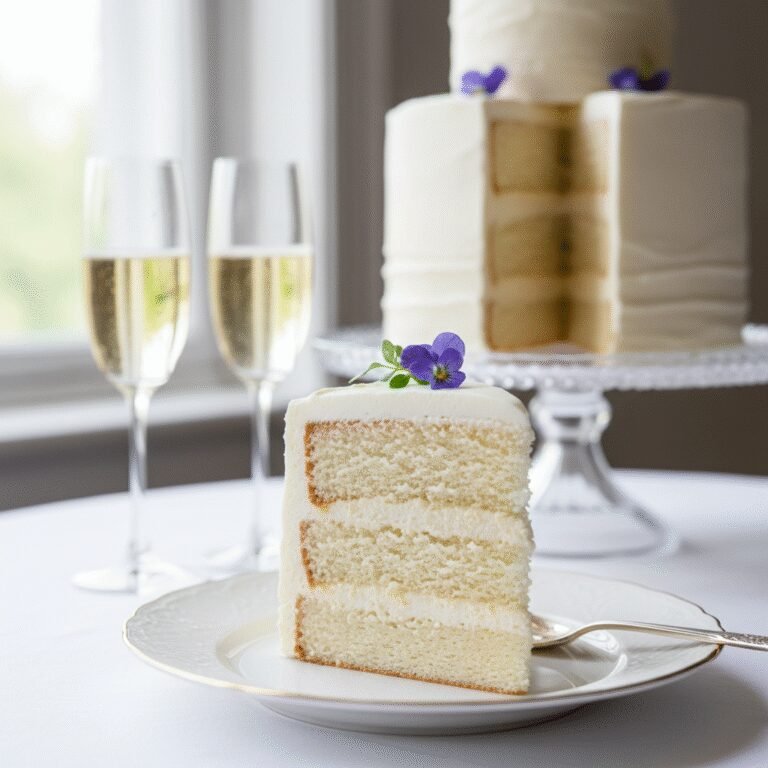
This cake is a centerpiece that deserves a moment of admiration before slicing. Serve it on a high pedestal cake stand to elevate its presence. For slicing, use a long, sharp knife dipped in hot water and wiped dry between cuts to ensure clean, professional-looking layers. Flavor-wise, this cake pairs beautifully with a glass of chilled champagne or a sparkling elderflower pressé. A side of fresh raspberries or strawberries macerated in a little sugar and lemon juice also complements the floral notes beautifully. Serve at room temperature; if the cake has been refrigerated, let it sit out for at least 2 hours so the buttercream softens.
Storage and Reheating Tips
Because of the butter and egg whites in the frosting, this cake is best stored in the refrigerator, especially in warm weather. However, it should always be eaten at room temperature. You can store the frosted cake in the fridge for up to 3 days, preferably in a cake box to prevent it from absorbing fridge odors. If you have leftover slices, press a piece of parchment paper against the cut sides to keep the sponge from drying out. For long-term storage, the baked, unfrosted cake layers can be wrapped tightly in plastic wrap and foil and frozen for up to 3 months. Thaw them in the fridge overnight before assembling.
Nutrition Facts (Estimated)
| Serving Size | 1 slice |
| Calories | 580 |
| Fat | 32g |
| Saturated Fat | 19g |
| Unsaturated Fat | 11g |
| Trans Fat | 1g |
| Cholesterol | 115mg |
| Sodium | 210mg |
| Carbohydrates | 68g |
| Fiber | 1g |
| Sugar | 42g |
| Protein | 6g |
Frequently Asked Questions
Can I make this cake ahead of time?
Yes, absolutely. The cake layers are actually easier to handle if baked a day ahead, wrapped in plastic, and stored at room temperature or in the fridge. You can also make the buttercream a week in advance and refrigerate it; just let it come to room temperature and re-whip it before using.
What kind of flowers are safe to use?
Safe edible flowers include pansies, violas, roses, marigolds, nasturtiums, lavender, and chamomile. Avoid toxic flowers like hydrangeas, lilies, or daffodils. Always ensure they are organically grown and free from pesticides.
Why did my buttercream curdle?
Temperature is usually the culprit. If the butter was too cold, the mixture might look chunky. If the meringue was too warm, it might look soupy. Keep whipping! If it’s cold, warm the bowl slightly; if it’s warm, pop the bowl in the fridge for 10 minutes then whip again.
Can I use store-bought lemon juice?
Fresh lemon juice is highly recommended for the bright, zesty flavor that cuts through the sugar. Bottled lemon juice often has preservatives that can alter the taste, making it flatter and more acidic.
Do I have to use the reverse creaming method?
You don’t strictly ‘have’ to, but it is highly recommended for this specific recipe to achieve a flat, velvety top and a tender crumb. Traditional creaming works but may result in a more domed cake with a slightly more open crumb.
Can I bake this in different sized pans?
Yes. This recipe makes three 6-inch layers. You can adapt it for two 8-inch pans (bake time may increase slightly) or about 18-20 cupcakes (bake for 18-22 minutes).
Is elderflower liqueur necessary?
No, it is optional. It adds a nice depth and boozy kick, but you can substitute it with an equal amount of elderflower cordial for a non-alcoholic version without losing the flavor profile.
How do I get the ‘naked cake’ look?
Apply a generous layer of frosting to the sides, then use a bench scraper or offset spatula to scrape most of it off while smoothing. You want to leave just a sheer veil of frosting so the cake layers peek through.
Conclusion
Creating this Lemon Elderflower Wedding Cake is a labor of love that rewards you with a dessert as memorable as the occasion it celebrates. The process of infusing the sugar with zest, whipping the meringue to glossy peaks, and arranging the delicate blooms is almost as enjoyable as eating the final product. Whether you are celebrating a marriage, an anniversary, or just the arrival of spring, this cake brings a touch of royal elegance to your table. We hope this recipe inspires you to embrace the beauty of botanical baking. Happy baking!