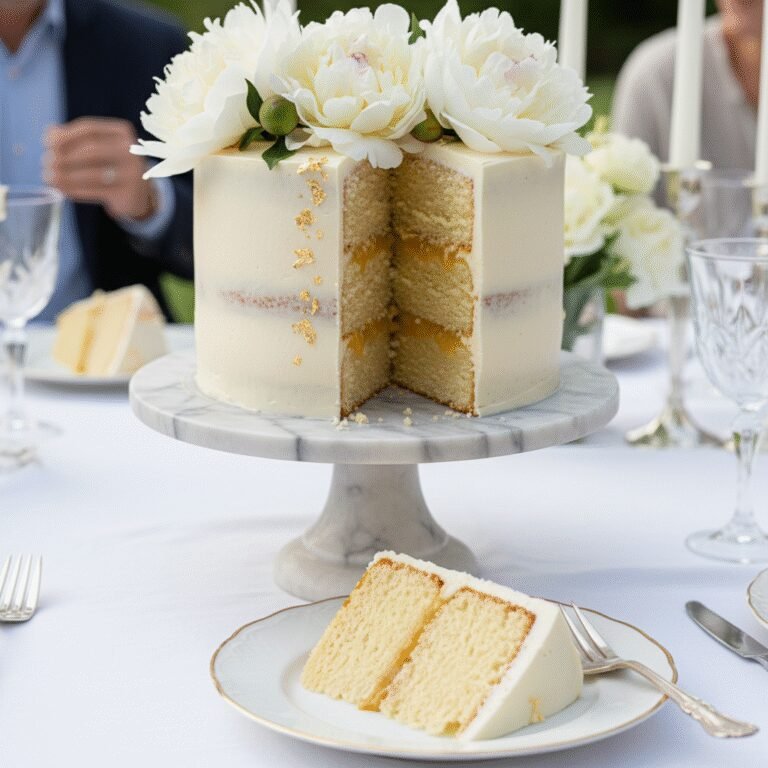
Royal Lemon Elderflower Wedding Cake with Swiss Meringue Buttercream
Elegant Lemon Elderflower Wedding Cake With Buttercream Flowers Recipe
Capture the magic of a royal wedding with this exquisite Lemon Elderflower Cake. Featuring airy lemon sponges soaked in elderflower syrup, filled with zesty lemon curd, and enveloped in silky Swiss Meringue Buttercream, this recipe is the epitome of spring elegance.
2 hours
45 minutes
4 hours
1 three-layer 8-inch cake (12-16 servings)
Dessert
Baking
British / American
Vegetarian
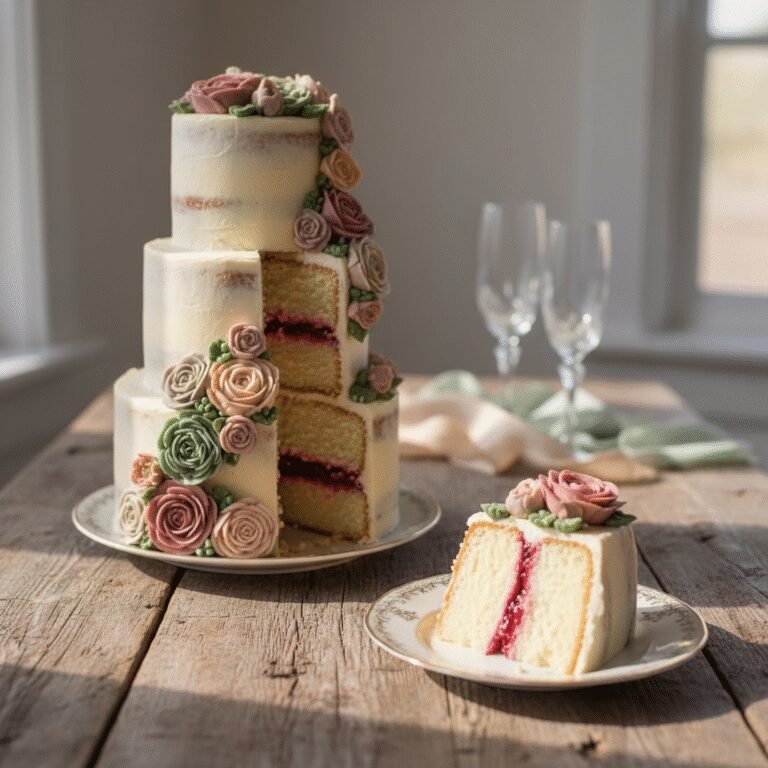
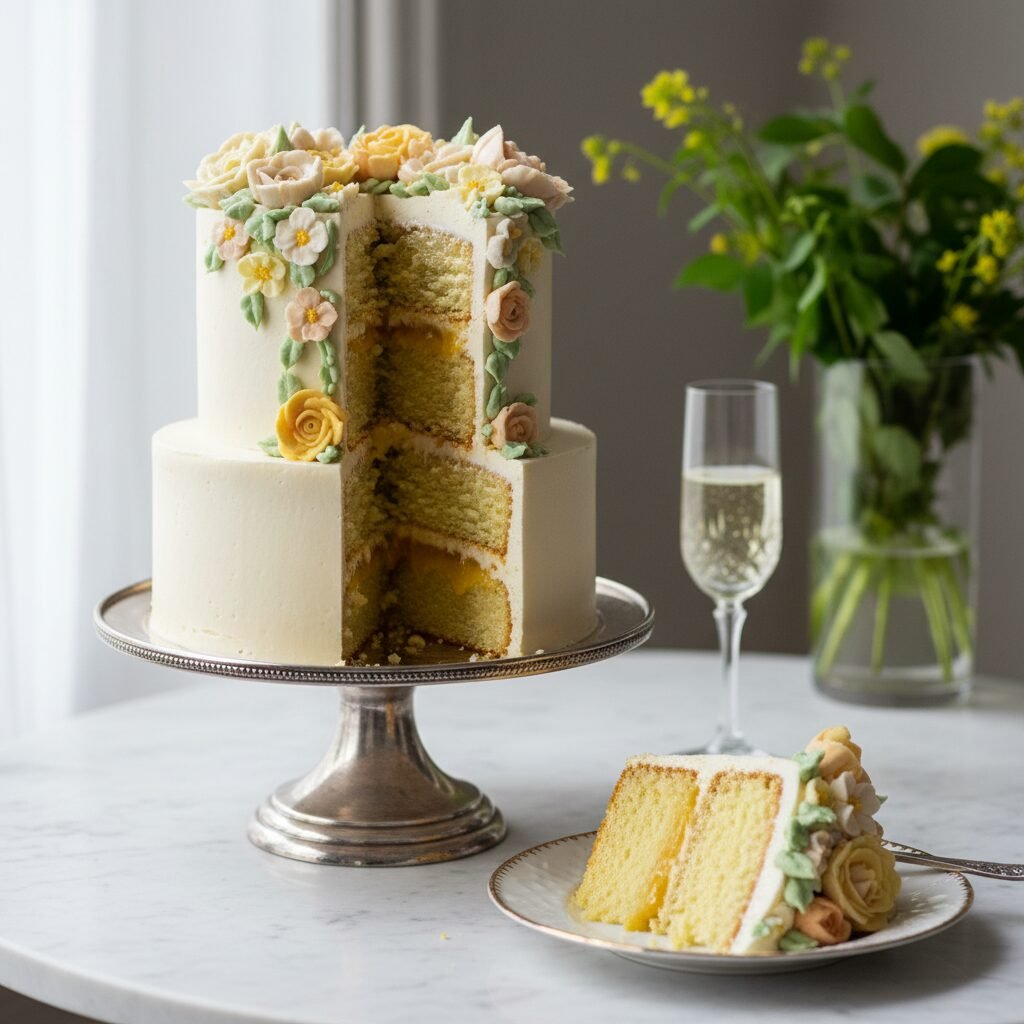
There is something undeniably magical about the combination of bright, zesty lemon and the delicate, floral sweetness of elderflower. It is a pairing that evokes images of English country gardens, blooming meadows, and, of course, high-profile royal celebrations. This Lemon Elderflower Wedding Cake is not just a dessert; it is a centerpiece designed to celebrate love and new beginnings. The recipe begins with a sponge that is incredibly tender, owing to the use of cake flour and the reverse creaming method, which guarantees a velvety crumb. But the real secret lies in the soak. As soon as the cakes leave the oven, they are brushed liberally with a homemade elderflower syrup that infuses every pore with floral notes, ensuring the cake remains moist for days. Inside, layers of sharp, homemade lemon curd cut through the sweetness, providing a burst of sunshine in every bite. The exterior is coated in a cloud-like Swiss Meringue Buttercream, a frosting that is far superior to its American counterpart for wedding cakes due to its stability and silky texture that isn’t cloyingly sweet. To finish, we adorn the cake with hand-piped buttercream flowers, turning a delicious bake into a work of art. Whether you are baking for an actual wedding, a bridal shower, or simply want to challenge your baking skills with a project that yields spectacular results, this cake promises to deliver. It strikes the perfect balance between sophisticated flavors and comforting textures, making it a recipe that guests will talk about long after the last crumb has been devoured.
History & Origins
The history of the wedding cake is as rich and layered as the cakes themselves, dating back to ancient Rome where bread was broken over the bride’s head to ensure fertility and good fortune. By medieval times in England, this tradition evolved into a custom where guests would stack small spiced buns as high as possible; if the bride and groom could kiss over the tower without knocking it down, a lifetime of prosperity was guaranteed. This eventually morphed into the tiered cakes we recognize today. However, for centuries, the ‘traditional’ wedding cake was a heavy, alcohol-soaked fruitcake, encased in hard marzipan and royal icing. This was practical in an era before refrigeration, as the alcohol and sugar preserved the cake for months, or even years (often saved for the christening of the first child). The shift toward lighter sponges and fresh flavors is a relatively modern luxury. The specific popularity of the Lemon and Elderflower combination skyrocketed in May 2018, when Prince Harry and Meghan Markle broke with centuries of British royal tradition. Instead of the obligatory fruitcake, they commissioned Claire Ptak of Violet Cakes to create a Lemon Elderflower cake covered in buttercream for their Windsor Castle reception. This single culinary decision sent ripples through the baking world, instantly modernizing the concept of the wedding cake. It signaled a move away from stiff formality toward seasonality, fresh ingredients, and organic decoration. Since then, this flavor profile has become a staple for spring and summer nuptials, representing a blend of classic British botanical flavors with a lighter, more contemporary palate.
Why This Recipe Works
This recipe succeeds where many others fail because it meticulously balances moisture, structure, and flavor intensity. First, the structure of the cake is paramount for a tiered presentation. We use a modified reverse-creaming method (mixing fat into dry ingredients before adding liquids) which coats the flour proteins in fat, inhibiting gluten formation. This results in a plush, tender crumb that is sturdy enough to stack but soft enough to melt in your mouth. Second, the flavor profile is built in layers. Many lemon cakes rely solely on extracts, which can taste artificial. Here, we use fresh lemon zest rubbed into the sugar to release essential oils, fresh lemon juice in the batter, and a concentrated tart lemon curd filling. This acidity is crucial to cut through the richness of the butter and sugar. Third, the moisture issue is solved via the elderflower syrup soak. Sponge cakes can dry out, especially when prepared a day in advance for a wedding. The syrup permeates the cake, locking in moisture and distributing the elderflower flavor evenly, rather than just having it in the frosting. Finally, the Swiss Meringue Buttercream is the ideal medium for this cake. Unlike American buttercream, which is gritty and crusts over, Swiss Meringue is an emulsion of egg whites and butter. It is smooth, stable at room temperature (vital for display), and takes color beautifully for the buttercream flowers.
Why You’ll Love This Recipe
- ✓Perfect balance of tart lemon and floral elderflower notes
- ✓Sturdy yet tender crumb suitable for stacking tiers
- ✓Stays moist for days thanks to the elderflower syrup soak
- ✓Swiss Meringue Buttercream offers a silky, professional finish
- ✓Elegant presentation with handcrafted buttercream flowers
- ✓Ideal for spring and summer celebrations
Equipment You’ll Need
- ✓Stand mixer with paddle and whisk attachments
- ✓Three 8-inch round cake pans
- ✓Digital kitchen scale
- ✓Candy thermometer
- ✓Offset spatula
- ✓Piping bags and floral piping tips (e.g., Wilton 104, 127)
- ✓Cake turntable
- ✓Bench scraper
- ✓Flower nail (for piping flowers)
- ✓Parchment paper
Ingredients
- ✓3 cups (340g) Cake flour, sifted
- ✓2 1/2 teaspoons Baking powder
- ✓1/2 teaspoon Salt
- ✓1 cup (226g) Unsalted butter, room temperature
- ✓1 3/4 cups (350g) Granulated sugar
- ✓1 tablespoon Lemon zest (approx. 2 lemons)
- ✓4 large Eggs, room temperature
- ✓1 teaspoon Vanilla extract
- ✓1 cup (240ml) Whole milk, room temperature
- ✓1/4 cup (60ml) Fresh lemon juice
- ✓FOR THE SYRUP: 1/2 cup Elderflower cordial or St-Germain liqueur
- ✓FOR THE SYRUP: 2 tablespoons Granulated sugar
- ✓FOR THE FILLING: 1 cup Lemon curd (homemade or high-quality store-bought)
- ✓FOR THE BUTTERCREAM: 8 large Egg whites (approx. 240g)
- ✓FOR THE BUTTERCREAM: 2 1/2 cups (500g) Granulated sugar
- ✓FOR THE BUTTERCREAM: 3 cups (680g) Unsalted butter, cubed and cool room temperature
- ✓FOR THE BUTTERCREAM: 2 tablespoons Elderflower cordial
- ✓FOR THE BUTTERCREAM: Gel food coloring (optional for flowers)
Instructions
- 1. PREPARE THE PANS: Preheat your oven to 350°F (175°C). Grease three 8-inch cake pans with butter, line the bottoms with parchment paper, and dust the sides with flour, tapping out any excess.
- 2. INFUSE SUGAR: In the bowl of a stand mixer, combine the granulated sugar and lemon zest. Rub the zest into the sugar with your fingertips until the sugar is moist and fragrant. This releases the essential oils.
- 3. MIX BATTER: Add the room temperature butter to the sugar and beat on medium-high speed using the paddle attachment until pale and fluffy (about 3-5 minutes). Add eggs one at a time, beating well after each addition. Scrape down the bowl. Mix in the vanilla.
- 4. DRY & WET INGREDIENTS: In a separate bowl, whisk together the cake flour, baking powder, and salt. In a measuring cup, mix the milk and lemon juice (it will look curdled; this is normal). Reduce mixer speed to low. Add the flour mixture in three parts, alternating with the milk mixture in two parts, starting and ending with flour. Mix only until combined to avoid overworking the gluten.
- 5. BAKE: Divide the batter evenly among the three prepared pans. Bake for 25-30 minutes, or until a toothpick inserted into the center comes out clean or with just a few moist crumbs. Do not overbake.
- 6. MAKE THE SYRUP: While cakes bake, whisk together the elderflower cordial and 2 tablespoons of sugar in a small saucepan. Heat gently just until the sugar dissolves. Do not boil off the alcohol if using liqueur.
- 7. SOAK: Remove cakes from the oven. Let them cool in pans for 10 minutes. Poke holes over the tops with a skewer and brush the warm syrup generously over the warm cakes. Let them cool completely in the pans before removing.
- 8. MAKE BUTTERCREAM: Whisk egg whites and sugar in a heatproof bowl set over a pot of simmering water (double boiler). Whisk constantly until the sugar is completely dissolved and the mixture reaches 160°F (71°C). Transfer to the stand mixer with the whisk attachment. Whip on high speed until stiff, glossy peaks form and the bowl feels cool to the touch (about 10-15 minutes).
- 9. EMULSIFY: Switch to the paddle attachment. With the mixer on low, add the cubed butter one piece at a time. Once all butter is added, increase speed to medium-high and beat until silky and smooth. Add the elderflower cordial and beat until combined.
- 10. ASSEMBLE: Place one cake layer on a board. Pipe a dam of buttercream around the edge. Fill the center with lemon curd. Top with the next cake layer and repeat. Place the final layer upside down for a flat top.
- 11. CRUMB COAT: Apply a thin layer of buttercream over the entire cake to lock in crumbs. Refrigerate for 30 minutes.
- 12. DECORATE: Apply a final smooth coat of buttercream. Divide remaining buttercream, tint with gel colors, and pipe flowers onto a flower nail before transferring them to the cake (chilling piped flowers briefly helps them handle better).
Expert Cooking Tips
- ✓Room temperature ingredients are non-negotiable; cold eggs or milk will curdle the batter.
- ✓Weigh your flour in grams for the most accurate results; too much flour leads to dry cake.
- ✓If your buttercream looks curdled (soupy or chunky) after adding butter, keep beating! It will come together.
- ✓Use a metal bench scraper heated under hot water (and dried) to get perfectly smooth sides on your cake.
- ✓Chill the cake layers before assembly; cold cake is sturdier and easier to stack.
- ✓When making the syrup, taste it; if you prefer a stronger floral punch, add more cordial.
- ✓Use gel food coloring rather than liquid drops to avoid altering the consistency of the buttercream.
Substitutions and Variations
For a gluten-free version, substitute the cake flour with a high-quality 1:1 gluten-free baking flour blend that includes xanthan gum. If you cannot find elderflower cordial or liqueur (like St-Germain), you can make a simple syrup infused with edible dried elderflowers, or substitute with a floral honey syrup. If you prefer to avoid alcohol completely, use a high-quality elderflower pressé or syrup found in the mixer section of grocery stores. For the buttercream, if you are intimidated by Swiss Meringue, you can use an American Buttercream, but reduce the sugar slightly and add a pinch of salt to balance the sweetness. Lemon curd can be swapped for raspberry jam or a white chocolate ganache if you want to reduce the tartness.
Common Mistakes to Avoid
The most common mistake is overmixing the batter after adding the flour, which results in a dense, rubbery texture instead of a light crumb. Another frequent issue is rushing the buttercream process; if you add the butter while the meringue is still warm, it will melt into a soup. If this happens, put the bowl in the fridge for 20 minutes and whip again. Do not skip the crumb coat; applying the final layer of frosting directly to the cake will pull up crumbs and ruin the clean finish. Finally, ensure your lemon curd is thick enough before filling; if it’s too runny, it will seep out between the layers and cause the cake to bulge or slide.
Serving Suggestions
Serve this cake at room temperature. Buttercream hardens in the fridge, so if the cake has been chilled, allow it to sit out for at least 2-3 hours before serving to ensure the frosting is silky and the sponge is soft. Slice the cake using a long, sharp knife dipped in hot water and wiped dry between cuts for clean, professional-looking slices. This cake pairs beautifully with a glass of chilled champagne, a dry Prosecco, or a floral Earl Grey tea, which complements the bergamot and elderflower notes perfectly.
Storage and Reheating Tips
The assembled cake can be stored at room temperature in a cool, dry place for up to 2 days (provided the filling is stable and the room isn’t hot). For longer storage, keep it in the refrigerator for up to 5 days, preferably in a cake box to prevent it from absorbing fridge odors. Cut slices should have plastic wrap pressed directly against the cut surface to prevent drying. You can also freeze individual cake layers (wrapped tightly in plastic wrap) for up to 3 months before assembly. Leftover slices can be frozen in airtight containers for up to a month.
Nutrition Facts (Estimated)
| Serving Size | 1 slice |
| Calories | 650 |
| Fat | 38g |
| Saturated Fat | 22g |
| Unsaturated Fat | 14g |
| Trans Fat | 0.5g |
| Cholesterol | 140mg |
| Sodium | 320mg |
| Carbohydrates | 72g |
| Fiber | 1g |
| Sugar | 45g |
| Protein | 6g |
Frequently Asked Questions
Can I make the cake layers ahead of time?
Yes, you can bake the layers up to 3 days in advance. Wrap them tightly in plastic wrap once completely cool and store them in the refrigerator. You can also freeze them for up to a month.
What is the difference between elderflower cordial and liqueur?
Elderflower cordial is a non-alcoholic concentrated syrup made from sugar, water, and elderflowers. Liqueur (like St-Germain) contains alcohol. Both work well, but cordial is sweeter.
Why did my Swiss Meringue Buttercream curdle?
This usually happens due to temperature differences. If the butter was too cold or the meringue too warm, it breaks the emulsion. Keep whipping! It almost always comes back together. If it stays soupy, chill the bowl for 15 minutes and whip again.
Do I have to use cake flour?
Cake flour has a lower protein content than all-purpose flour, resulting in a finer, softer crumb. If you don’t have it, you can make a substitute by removing 2 tablespoons of all-purpose flour from every cup and replacing it with cornstarch, though true cake flour is better.
Can I use fresh flowers instead of buttercream flowers?
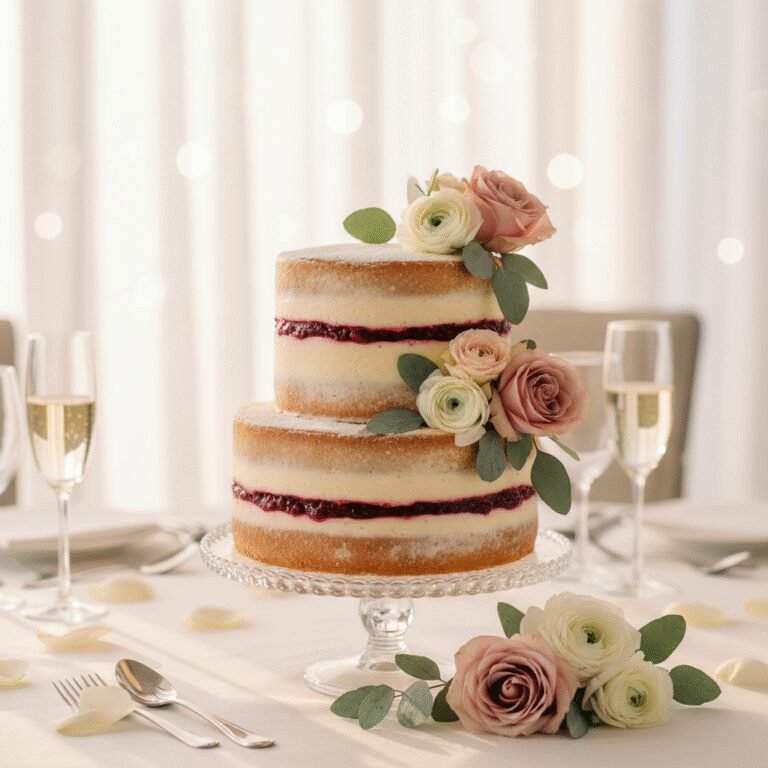
Absolutely. Ensure the flowers are non-toxic and organic (pesticide-free). Wrap the stems in floral tape or insert them into a straw before placing them into the cake to prevent sap from leaching into the food.
Is this cake stable enough for an outdoor wedding?
Swiss Meringue Buttercream is more stable than whipped cream but less heat-resistant than fondant or ganache. It will hold up in mild weather, but in direct hot sun or temperatures over 80°F (27°C), it may start to soften or melt.
How do I get the buttercream so white?
Butter is naturally yellow. To get white buttercream, beat the butter for a long time until pale before adding it to the meringue. You can also add a tiny, tiny dot of purple gel food coloring to neutralize the yellow tones.
Can I use store-bought lemon curd?
Yes, high-quality store-bought curd works well. Look for one that lists butter and eggs as primary ingredients rather than thickeners and water for the best flavor.
What size eggs should I use?
This recipe assumes standard US ‘Large’ eggs, which weigh approximately 50g each (without shell). Using extra-large or medium eggs will alter the liquid balance of the recipe.
How do I transport this cake?
Transport the cake well-chilled. The cold buttercream acts like a protective shell. Place the cake box on a flat surface in the car (like the floor of the passenger seat), not on a slanted seat, and keep the AC running.
Conclusion
Baking this Elegant Lemon Elderflower Wedding Cake is a labor of love that rewards you with a show-stopping centerpiece worthy of royalty. The journey from infusing the sugar with zest to piping the final petal on a buttercream peony is one of creativity and culinary joy. By following these steps, you aren’t just making a cake; you are crafting a memory. Whether it’s for a grand wedding reception or an intimate garden party, the bright flavors and sophisticated look of this cake will leave a lasting impression on everyone who tastes it. So, gather your ingredients, trust the process, and prepare to slice into a taste of spring.