The Ultimate Royal Lemon Elderflower Wedding Cake Recipe
Elegant Lemon Elderflower Wedding Cake Recipe
Bring a touch of regal elegance to your special day with this exquisite Lemon Elderflower Wedding Cake. Inspired by the 2018 Royal Wedding, this recipe features light, airy lemon sponges soaked in a fragrant elderflower syrup and enveloped in a silky Swiss meringue buttercream.
1 hour 30 minutes
35 minutes
4 hours (includes cooling)
1 three-layer 8-inch cake (approx. 16-20 servings)
Dessert
Baking
British / American
Vegetarian
When Prince Harry and Meghan Markle chose a Lemon Elderflower cake for their wedding in 2018, they didn’t just pick a dessert; they sparked a global baking revolution that shifted wedding traditions away from heavy fruitcakes toward bright, seasonal flavors. This Elegant Lemon Elderflower Wedding Cake recipe is my homage to that iconic moment, designed for the home baker who wants to create a show-stopping centerpiece. Imagine the scent of fresh citrus zest mingling with the delicate, floral aroma of elderflower blossoms filling your kitchen. This cake is the epitome of spring and summer elegance.
Unlike traditional wedding cakes that can be dense or dry, this recipe focuses on a sponge that is incredibly tender and moist. The secret lies in the balance of fresh lemon zest and juice within the batter, paired with a generous soaking of homemade elderflower syrup immediately after baking. The syrup permeates the crumb, locking in moisture and infusing every bite with floral notes that are sophisticated rather than overpowering. We finish it with a Swiss Meringue Buttercream, which is far superior to standard American buttercream for weddings. It offers a silky, smooth texture that pipes beautifully and holds up well, providing a creamy counterpoint to the zesty cake without being tooth-achingly sweet. Whether you are baking for a wedding, a bridal shower, or simply want to feel like royalty for a day, this cake promises a flavor profile that is fresh, botanical, and utterly romantic.
History & Origins
The tradition of the wedding cake dates back centuries, evolving from simple wheat cakes broken over the bride’s head in Roman times to the elaborate, tiered confections we know today. For generations, particularly in British culture, the standard was a dense, alcohol-soaked fruitcake. This was practical, as the alcohol preserved the cake for long periods, allowing tiers to be saved for christenings. However, tastes have evolved. The 20th and 21st centuries saw a shift toward lighter sponges—vanilla, chocolate, and eventually, fruit-forward flavors.
The specific combination of lemon and elderflower is deeply rooted in British seasonality. Elderflowers bloom for a short window in late spring and early summer in the English countryside, and making elderflower cordial is a beloved rural tradition. Pairing this fleeting, aromatic floral flavor with the sharp brightness of lemon is a classic culinary move to balance sweetness with acidity. When the Duke and Duchess of Sussex selected this flavor profile for their nuptials, it marked a significant departure from the rigid royal tradition of fruitcake. It signaled a modern, fresh approach to monarchy and celebration. Since then, this flavor pairing has cemented itself as a modern classic in the wedding industry, symbolizing freshness, new beginnings, and a connection to nature.
Why This Recipe Works
This recipe succeeds where others fail because it meticulously addresses the two biggest complaints about wedding cakes: dryness and lack of flavor dimension. First, we use the ‘reverse creaming’ method (mixing fat into dry ingredients before adding liquids) for the sponge. This coats the flour proteins in fat, inhibiting gluten formation and resulting in a velvety, ultra-tender crumb that stays flat on top—perfect for stacking.
Secondly, the ‘soak’ technique is non-negotiable. By brushing the warm cakes with a concentrated elderflower and lemon syrup, we introduce moisture that stays trapped inside the cake as it cools. This also intensifies the flavor, ensuring the elderflower isn’t lost against the butter and sugar. Finally, the choice of Swiss Meringue Buttercream is crucial. Unlike American buttercream, which is gritty and crusts over, Swiss Meringue is an emulsion of egg whites, sugar, and butter. It is stable enough to support tiers but light enough to melt on the tongue. The addition of St-Germain (elderflower liqueur) or a high-quality cordial into the buttercream bridges the flavor gap between the frosting and the sponge, creating a cohesive bite.
Why You’ll Love This Recipe
- ✓inspired by the 2018 Royal Wedding flavor profile
- ✓Ultra-moist crumb due to the elderflower syrup soak
- ✓Silky, stable Swiss Meringue Buttercream perfect for piping
- ✓Balanced floral and citrus notes—not too sweet
- ✓Sturdy enough for tiering but light enough for dessert
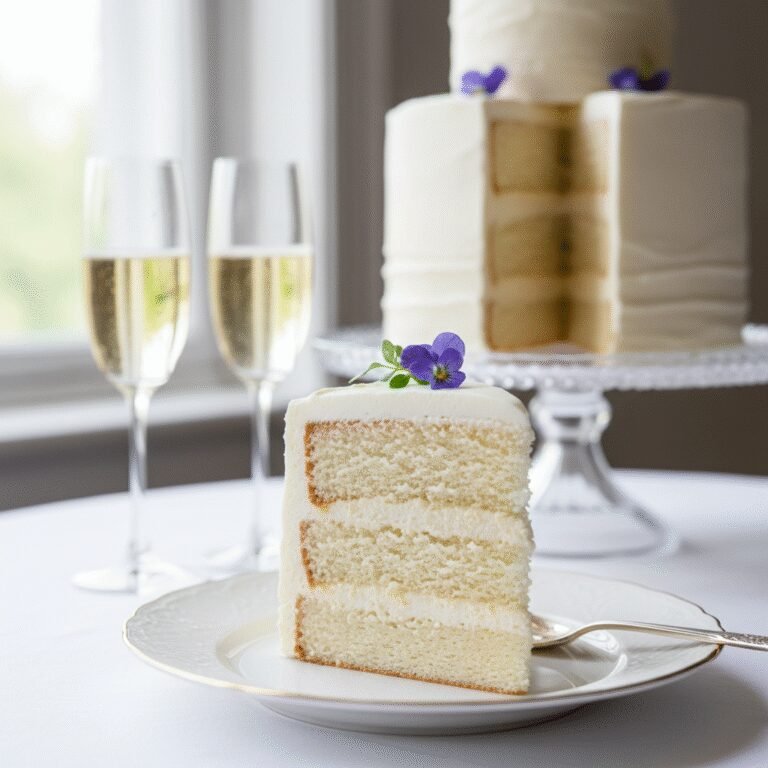
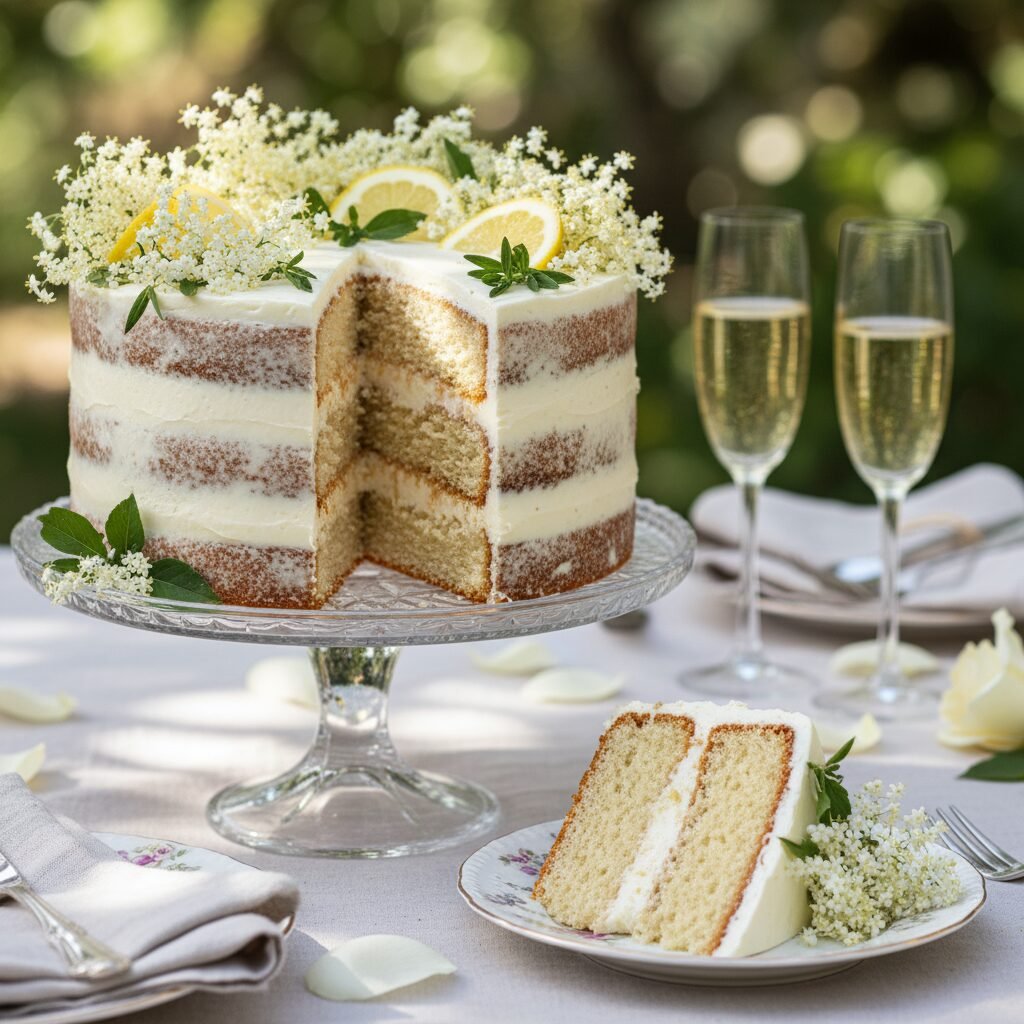
- ✓Elegant, rustic semi-naked finish showcases the layers
Equipment You’ll Need
- ✓Three 8-inch round cake pans
- ✓Stand mixer with paddle and whisk attachments
- ✓Kitchen scale
- ✓Pastry brush
- ✓Offset spatula
- ✓Cake turntable
- ✓Candy thermometer (for buttercream)
- ✓Parchment paper
- ✓Wire cooling rack
Ingredients
- ✓3 cups (340g) Cake flour, sifted
- ✓2 1/2 cups (500g) Granulated sugar, divided
- ✓1 tbsp Baking powder
- ✓1/2 tsp Salt
- ✓1 cup (226g) Unsalted butter, room temperature, cubed
- ✓1 cup (240ml) Whole milk, room temperature
- ✓1/2 cup (120ml) Sour cream, room temperature
- ✓6 Large egg whites, room temperature
- ✓2 tbsp Lemon zest (approx. 2 lemons)
- ✓1/4 cup (60ml) Fresh lemon juice
- ✓1/2 cup (120ml) Elderflower cordial (for syrup)
- ✓5 Large egg whites (for buttercream)
- ✓1 1/2 cups (300g) Granulated sugar (for buttercream)
- ✓2 cups (452g) Unsalted butter, slightly cool (for buttercream)
- ✓3 tbsp St-Germain liqueur or Elderflower cordial (for buttercream)
- ✓Fresh organic edible flowers (for garnish)
- ✓Fresh lemon slices (for garnish)
Instructions
- 1. Preheat your oven to 340°F (170°C). Grease three 8-inch cake pans with butter, line the bottoms with parchment paper, and dust with flour.
- 2. In the bowl of a stand mixer fitted with the paddle attachment, combine the sifted cake flour, 2 cups of sugar, baking powder, salt, and lemon zest. Mix on low speed for 30 seconds to combine.
- 3. Add the cubed, room-temperature butter to the dry ingredients. Mix on low speed until the mixture resembles coarse sand and no large chunks of butter remain (this is the reverse creaming method).
- 4. In a separate jug, whisk together the milk, sour cream, 6 egg whites, and lemon juice.
- 5. With the mixer on low, slowly pour in half of the wet ingredients. Increase speed to medium and beat for 2 minutes to build structure.
- 6. Scrape down the sides of the bowl. Add the remaining wet ingredients in two batches, mixing on low just until combined after each addition. Do not overmix.
- 7. Divide the batter evenly among the three prepared pans (use a scale for accuracy). Smooth the tops with an offset spatula.
- 8. Bake for 30-35 minutes, or until a toothpick inserted into the center comes out clean or with a few moist crumbs. The cakes should spring back when lightly touched.
- 9. While the cakes bake, make the syrup. Combine 1/2 cup elderflower cordial and 1/2 cup sugar in a small saucepan. Heat gently until the sugar dissolves. Set aside.
- 10. Remove cakes from the oven and let them cool in the pans for 10 minutes. Then, poke holes over the tops using a skewer and brush generously with the elderflower syrup.
- 11. Turn cakes out onto a wire rack to cool completely before frosting.
- 12. For the buttercream: Combine 5 egg whites and 1 1/2 cups sugar in a heatproof bowl over a pot of simmering water (double boiler). Whisk constantly until the mixture reaches 160°F (71°C) and sugar is dissolved.
- 13. Transfer the mixture to the stand mixer with the whisk attachment. Whip on high speed until stiff peaks form and the bowl feels cool to the touch (about 10-15 minutes).
- 14. Switch to the paddle attachment. With the mixer on low, add the slightly cool butter one cube at a time. Once all butter is added, increase speed and whip until smooth and creamy. Add the St-Germain or cordial and mix until incorporated.
- 15. To assemble: Place one cake layer on a board. Spread a layer of buttercream on top. Repeat with the second and third layers.
- 16. Apply a thin layer of buttercream all over the outside (crumb coat) and chill for 20 minutes. Apply the final coat of frosting, smoothing with a bench scraper.
- 17. Garnish with fresh edible flowers and lemon slices just before serving.
Expert Cooking Tips
- ✓Ensure all ingredients, especially butter, eggs, and dairy, are at room temperature to prevent the batter from curdling.
- ✓Rub the lemon zest into the sugar with your fingertips before mixing; this releases the essential oils for a more potent lemon flavor.
- ✓Do not rush the cooling process for the Swiss Meringue Buttercream base. If you add butter to hot meringue, it will melt into soup.
- ✓If your buttercream looks curdled after adding the butter, keep whipping! It will come back together.
- ✓Weigh your batter into the pans to ensure even layers that bake at the same rate.
- ✓Use high-quality elderflower cordial (like Belvoir or homemade) for the best flavor profile.
Substitutions and Variations
If you cannot find cake flour, you can make a substitute by removing 2 tablespoons of all-purpose flour from every cup and replacing it with cornstarch, sifting well. For a non-alcoholic version, simply omit the St-Germain liqueur in the buttercream and use extra elderflower cordial instead. If you prefer a lighter frosting, a stabilized whipped cream with mascarpone can work, though it won’t hold up as well in heat as the Swiss Meringue. For the sour cream, full-fat Greek yogurt is an excellent 1:1 substitute that maintains the moisture content.
Common Mistakes to Avoid
The most common mistake is overmixing the batter after adding the liquids, which leads to a dense, rubbery cake rather than a fluffy one. Another pitfall is not letting the cakes cool completely before frosting; even a slightly warm cake will melt the butter in the frosting, causing the layers to slide. Finally, be careful with the elderflower cordial—it is sweet. Taste your syrup and buttercream as you go to ensure the lemon acidity balances the sugar properly.
Serving Suggestions
Serve this cake on a rustic wooden stand or a white porcelain pedestal to let the yellow lemon garnish and flowers pop. It pairs beautifully with a glass of chilled champagne or an elderflower spritz. For a dessert table, serve alongside fresh berries or a tart lemon curd sauce to cut through the richness of the buttercream.
Storage and Reheating Tips
The assembled cake can be stored at room temperature in a cool, dry place for up to 2 days (Swiss Meringue buttercream is stable due to the sugar and cooking process). For longer storage, refrigerate for up to 4 days, but always allow the cake to come to room temperature for 2-3 hours before serving to soften the butter. The unfrosted cake layers can be wrapped tightly in plastic wrap and frozen for up to 3 months.
Nutrition Facts (Estimated)
| Serving Size | 1 slice (1/16 of cake) |
| Calories | 580 |
| Fat | 32g |
| Saturated Fat | 19g |
| Unsaturated Fat | 11g |
| Trans Fat | 0.5g |
| Cholesterol | 110mg |
| Sodium | 210mg |
| Carbohydrates | 68g |
| Fiber | 1g |
| Sugar | 45g |
| Protein | 6g |
Frequently Asked Questions
Can I make the cake layers ahead of time?
Yes! In fact, freezing the layers makes them easier to handle. Bake, cool, wrap tightly in double-layers of plastic wrap, and freeze for up to a month. Thaw slightly before stacking.
Where can I find elderflower cordial?
Elderflower cordial is available in the mixer section of most liquor stores, high-end grocery stores (like Whole Foods), or online. IKEA also often carries an elderflower syrup.
Why did my buttercream separate?
This usually happens if the butter was too cold or the meringue was too warm. If it looks like cottage cheese, keep whipping—it almost always comes back together. If it’s soupy, chill the bowl for 10 minutes and whip again.
Can I use fresh elderflowers?
If you have access to fresh elderflowers (usually in late spring), you can steep them in sugar syrup to make your own cordial. Do not put raw flowers directly into the batter as the flavor won’t distribute well.
Is this cake suitable for fondant?
Yes, this cake is sturdy enough to support the weight of fondant, and Swiss Meringue Buttercream acts as a perfect adhesive base.
How do I get the ‘semi-naked’ look?
Apply a generous layer of frosting, then use a bench scraper to scrape off the excess while rotating the turntable, leaving just a thin veil of frosting that allows the cake layers to peek through.
Can I make this gluten-free?
Yes, use a high-quality 1:1 gluten-free baking flour blend (like King Arthur or Bob’s Red Mill) that contains xanthan gum. The texture will be slightly different but still delicious.
What flowers are safe to put on a cake?
Always use organic, pesticide-free flowers sold specifically for culinary use. Safe options include roses, pansies, violets, and lavender. Avoid toxic flowers like hydrangeas or lilies.
Conclusion
This Lemon Elderflower Wedding Cake is more than just a dessert; it is a celebration of refined flavors and the joy of baking. While it requires a bit of time and patience, specifically with the Swiss Meringue Buttercream, the result is a bakery-quality masterpiece that will impress any guest. The interplay of zesty lemon and floral elderflower creates a memory on the palate that lasts long after the last crumb is gone. Whether for a wedding, an anniversary, or a lavish garden party, I hope this recipe brings a touch of royal magic to your table.