Elegant Champagne Cake With Gold Leaf Decoration: The Ultimate Celebration Dessert
Elegant Champagne Cake With Gold Leaf Decoration Recipe
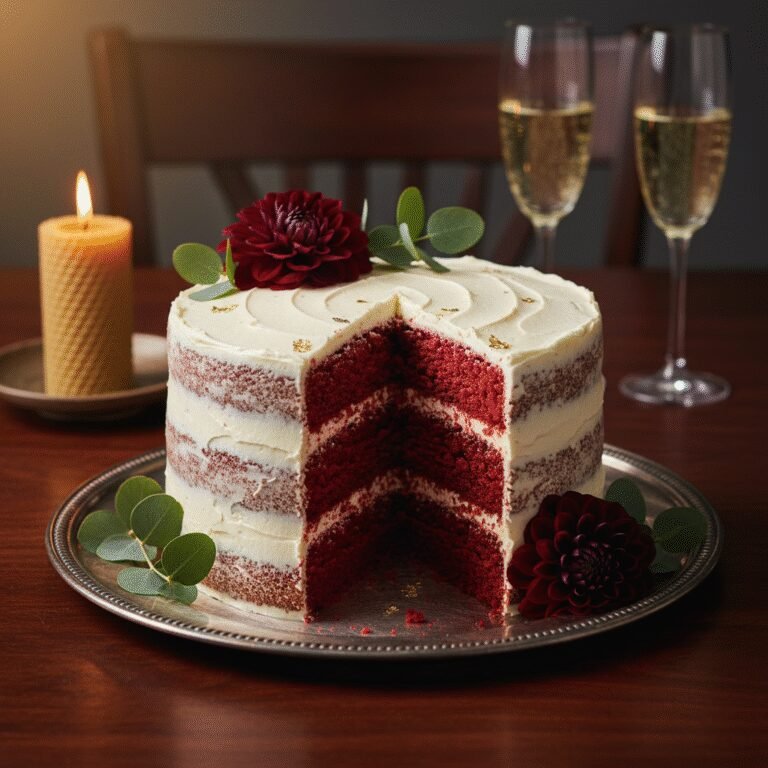
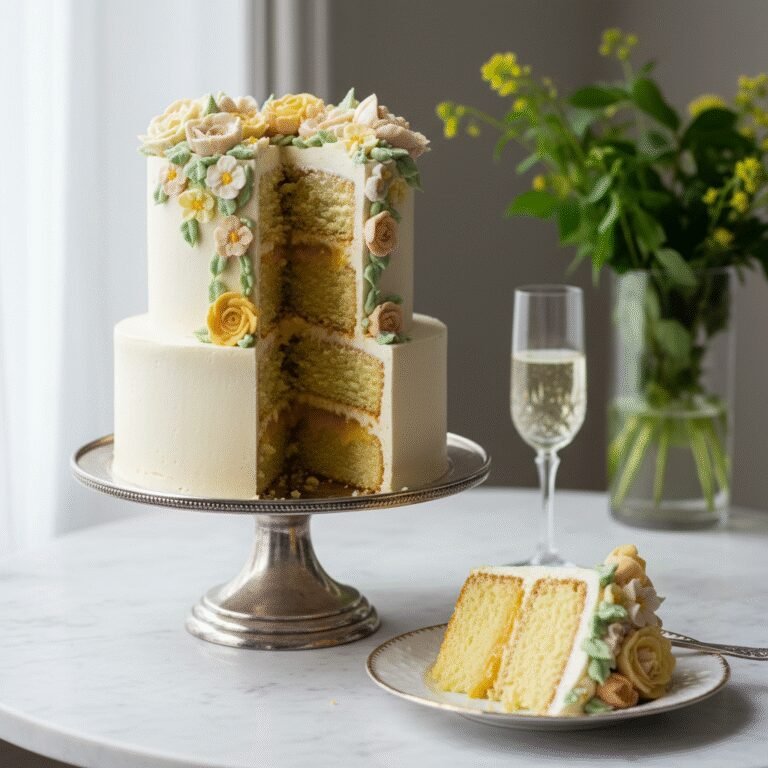
Raise a toast with this stunning Champagne Cake, featuring tender layers infused with a sparkling wine reduction and frosted with a silky Swiss Meringue Buttercream. Adorned with edible gold leaf, this dessert is the epitome of luxury, perfect for New Year’s Eve, weddings, or any milestone celebration that calls for a touch of glamour.
1 hour
35 minutes
3 hours 30 minutes
12-16 Servings
Dessert
Baking
American / French Fusion
Vegetarian
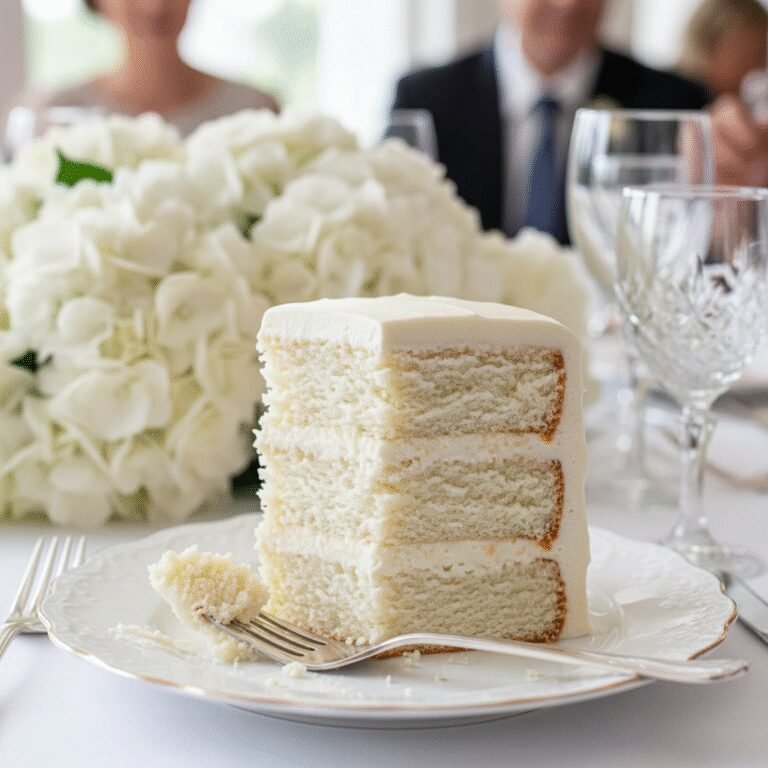
There are desserts that simply satisfy a sweet tooth, and then there are desserts that command the room. This Elegant Champagne Cake with Gold Leaf Decoration falls squarely into the latter category. It is a showstopper, a centerpiece, and a conversation starter all rolled into one. Designed for the most festive occasions—from black-tie weddings to intimate New Year’s Eve soirées—this cake captures the effervescence and joy of a popped cork in every bite. While many champagne cakes simply use the beverage as a liquid replacement for milk, this recipe takes it a step further by utilizing a champagne reduction. By simmering the sparkling wine down, we concentrate its unique flavor profile—notes of toasted brioche, almond, and citrus—ensuring that the taste doesn’t bake away in the oven. The result is a crumb that is incredibly tender, moist, and distinctly aromatic without being overpowering. To match the sophistication of the sponge, we pair it with a velvety Champagne Swiss Meringue Buttercream. Unlike American buttercream, which can be gritty and overly sweet, the Swiss method yields a frosting that is smooth as silk and light as a cloud, providing the perfect canvas for the champagne flavor to shine. The final touch, sheets of delicate edible gold leaf, elevates the aesthetic from homemade to high-end patisserie. This isn’t just a recipe; it is a project in edible architecture that rewards you with a slice of pure luxury.
History & Origins
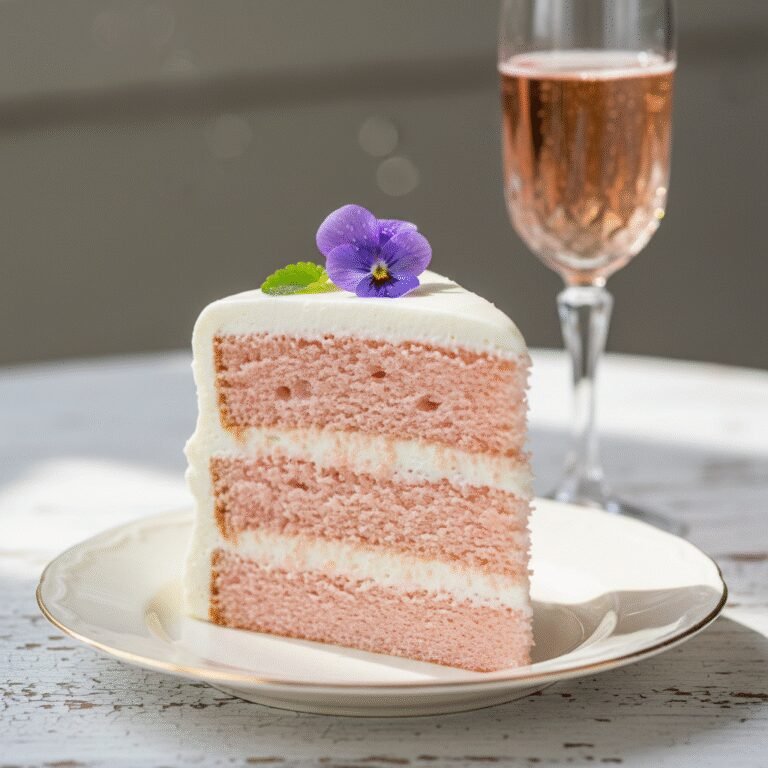
The concept of the ‘Champagne Cake’ has a surprisingly retro and glamorous history, deeply rooted in the mid-century American culinary scene. While using wine in baking dates back centuries in European traditions, the specific iteration of the ‘Pink Champagne Cake’ became a massive trend in the United States during the 1950s and 1960s. It is often attributed to the legendary bakeries of Los Angeles, serving the Hollywood elite who wanted desserts that matched the opulence of the Silver Screen. During this era, the cake was almost exclusively dyed a bright, festive pink and often contained coconut, becoming a staple at bridal showers and society weddings. However, the history of the ingredients goes back much further. Champagne itself, the sparkling wine from the Champagne region of France, has been associated with royalty and coronation since the 17th century. The addition of edible gold leaf also has ancient origins; civilizations from the Egyptians to the nobility of Medieval Europe used precious metals to garnish food, signifying immense wealth and divine favor. In this modern interpretation, we strip away the artificial pink dyes of the 1950s version to focus on the natural, elegant hues of the pastry, while retaining the celebratory spirit. We are marrying the mid-century American obsession with novelty cakes with the timeless European tradition of refined, alcohol-infused patisserie, creating a dessert that honors history while feeling thoroughly contemporary.
Why This Recipe Works
This recipe succeeds where many other champagne cakes fail due to one critical technique: the champagne reduction. Alcohol is volatile, and the delicate flavor compounds in sparkling wine often evaporate completely when exposed to the high heat of an oven, leaving behind a cake that tastes merely of vanilla and sugar. By taking two cups of champagne and slowly simmering them down to a half-cup of potent syrup before mixing it into the batter, we intensify the flavor profile significantly. This reduction retains the tart, fruity, and yeasty notes of the wine, which cuts through the richness of the butter and sugar. Furthermore, the use of cake flour instead of all-purpose flour is essential here. The lower protein content in cake flour ensures a fine, tight crumb that is velvety soft, mimicking the delicate nature of the bubbles in the drink. For the frosting, we opt for Swiss Meringue Buttercream because of its stability and texture. It holds up beautifully to piping and smoothing, creating the flawless, porcelain-like finish required for applying gold leaf. The slight saltiness of the butter and the protein from the egg whites balance the sweetness of the champagne syrup, creating a flavor profile that is sophisticated and complex rather than cloyingly sweet. Every element, from the reverse creaming method to the final garnish, is engineered to produce a professional-quality result.
Why You’ll Love This Recipe
- ✓Uses a champagne reduction for intense, authentic flavor.
- ✓Swiss Meringue Buttercream offers a silky, non-gritty texture.
- ✓Edible gold leaf creates a stunning, professional visual impact.
- ✓Perfect balance of sweetness and acidity.
- ✓Sturdy crumb structure that is easy to stack and frost.
- ✓Ideal for high-stakes celebrations like weddings and NYE.
Equipment You’ll Need
- ✓Three 8-inch round cake pans
- ✓Stand mixer with paddle and whisk attachments
- ✓Small saucepan (for reduction)
- ✓Kitchen scale
- ✓Offset spatula
- ✓Bench scraper
- ✓Tweezers (for gold leaf application)
- ✓Wire cooling racks
- ✓Parchment paper
- ✓Candy thermometer
Ingredients
- ✓2 cups Champagne or dry sparkling wine (for reduction)
- ✓3 cups cake flour, sifted
- ✓1 tbsp baking powder
- ✓1/2 tsp salt
- ✓1 cup unsalted butter, room temperature
- ✓2 cups granulated sugar
- ✓6 large egg whites, room temperature
- ✓1 tsp vanilla bean paste
- ✓1/2 cup whole milk, room temperature
- ✓फ्यू drops of pink gel food coloring (optional)
- ✓For the Buttercream: 6 large egg whites
- ✓2 cups granulated sugar
- ✓2 cups unsalted butter, cubed and cool room temperature
- ✓1/4 cup Champagne reduction (reserved from above)
- ✓1 tsp vanilla extract
- ✓Pinch of fine sea salt
- ✓5 sheets edible gold leaf (24 karat)
Instructions
- 1. Prepare the Champagne Reduction: Pour 2 cups of champagne into a small saucepan over medium heat. Simmer until the liquid has reduced to roughly 3/4 cup. This takes about 15-20 minutes. Set aside to cool completely. You will use 1/2 cup for the cake and 1/4 cup for the frosting.
- 2. Prep the Oven and Pans: Preheat your oven to 350°F (175°C). Grease three 8-inch round cake pans with butter, line the bottoms with parchment paper, and dust with flour, tapping out the excess.
- 3. Mix Dry Ingredients: In a medium bowl, whisk together the sifted cake flour, baking powder, and salt. Set aside.
- 4. Cream Butter and Sugar: In the bowl of a stand mixer fitted with the paddle attachment, beat the room temperature butter and granulated sugar on medium-high speed for about 5 minutes, until the mixture is very pale and fluffy.
- 5. Add Egg Whites: Reduce speed to medium. Add the egg whites one at a time, scraping down the bowl after each addition. Mix in the vanilla bean paste.
- 6. Combine Wet and Dry: In a measuring cup, combine the 1/2 cup of cooled champagne reduction, the milk, and food coloring (if using). With the mixer on low, add the flour mixture in three batches, alternating with the milk/champagne mixture, starting and ending with the flour. Mix only until just combined to avoid a tough cake.
- 7. Bake: Divide the batter evenly among the three prepared pans. Bake for 30-35 minutes, or until a toothpick inserted into the center comes out clean or with just a few moist crumbs. Do not overbake.
- 8. Cool: Let the cakes cool in the pans for 10 minutes, then turn them out onto a wire rack to cool completely before frosting.
- 9. Make the Swiss Meringue Buttercream: Whisk egg whites and sugar in a heatproof bowl over a pot of simmering water (double boiler). Whisk constantly until the sugar is dissolved and the mixture reaches 160°F (71°C).
- 10. Whip the Meringue: Transfer the hot mixture to the stand mixer fitted with the whisk attachment. Whip on high speed until stiff peaks form and the bowl feels cool to the touch (about 10-15 minutes).
- 11. Add Butter and Flavor: Switch to the paddle attachment. Add the cubed butter one piece at a time, mixing on medium speed. Once all butter is incorporated and the frosting is silky, add the reserved 1/4 cup champagne reduction, vanilla, and salt. Mix until creamy.
- 12. Assembly: Place one cake layer on a serving board. Spread a layer of buttercream on top. Repeat with the second and third layers. Apply a thin crumb coat over the entire cake and chill for 20 minutes.
- 13. Final Coat: Apply a thick, smooth layer of buttercream over the chilled cake. Use a bench scraper to get perfectly smooth sides.
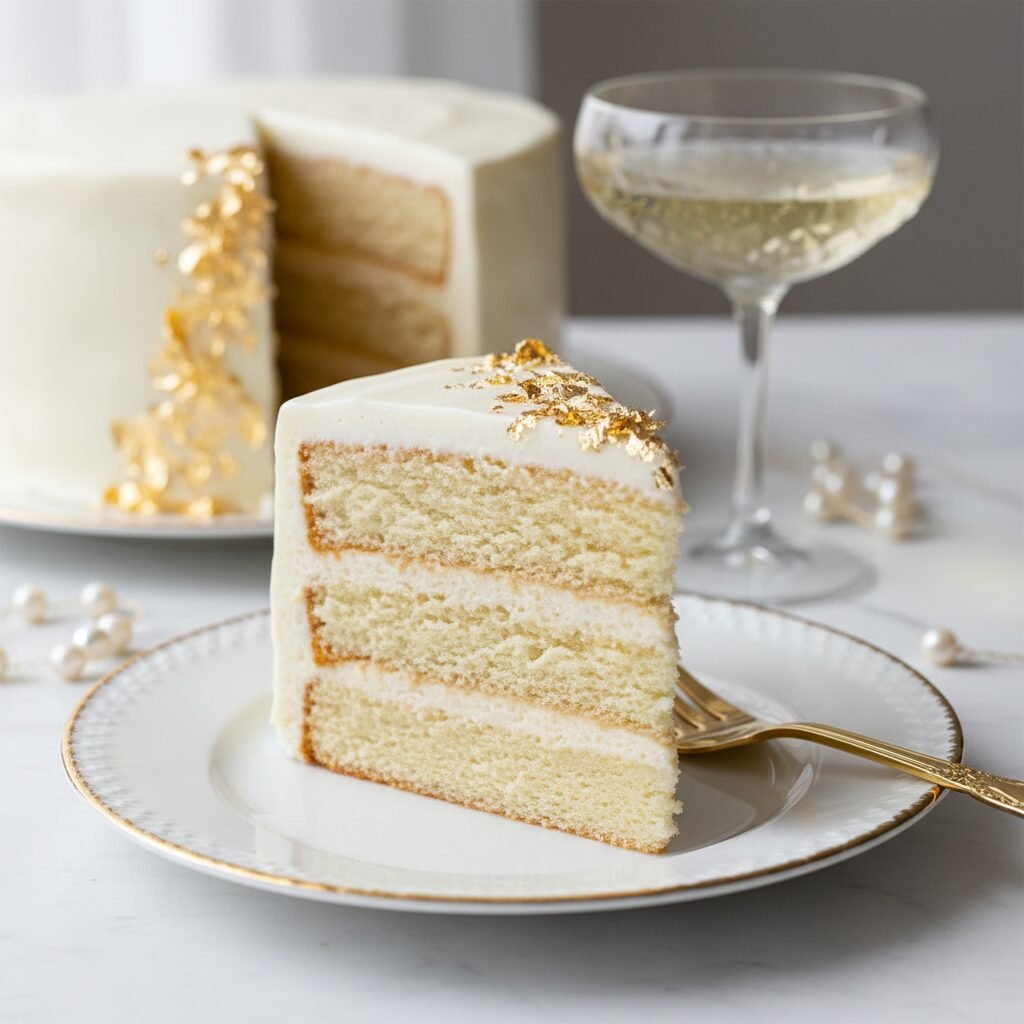
- 14. Decorate: Carefully open the edible gold leaf booklet. Using tweezers or a dry paintbrush, gently lift pieces of gold leaf and press them onto the side or top of the cake in a cascading pattern. Serve immediately or chill.
Expert Cooking Tips
- ✓Do not rush the reduction; if you don’t reduce the champagne enough, adding too much liquid will break your buttercream.
- ✓Ensure your butter is at the correct consistency for the buttercream. If it’s too warm, the frosting will be soupy; too cold, and it will be lumpy.
- ✓Wipe down your mixing bowl with vinegar before whipping egg whites to ensure they whip to maximum volume.
- ✓If your buttercream looks curdled after adding the champagne reduction, keep whipping! It will come back together.
- ✓Use a kitchen scale to divide the batter between pans for perfectly even layers.
- ✓Chill the cake before applying gold leaf; condensation can sometimes make the leaf tricky to handle, but a firm surface helps.
- ✓Handle gold leaf in a draft-free room; even a heavy breath can blow the expensive sheets away.
Substitutions and Variations
If you cannot find cake flour, you can make a substitute by measuring 1 cup of all-purpose flour, removing 2 tablespoons, and replacing them with 2 tablespoons of cornstarch. Sift this mixture twice before using. For the alcohol, any dry sparkling wine works well—Prosecco, Cava, or a Brut Champagne are best. Avoid sweet varieties like Moscato, as the cake is already sweet enough. If you need an alcohol-free version, you can use a high-quality sparkling white grape juice or sparkling apple cider, reduced in the same manner to concentrate the flavor, though the taste profile will be fruitier and sweeter. For the gold leaf, if it is outside your budget or unavailable, you can use gold luster dust mixed with a drop of vodka to paint gold accents, or simply use gold sprinkles for a festive look.
Common Mistakes to Avoid
The most common mistake is using the champagne straight from the bottle without reducing it. This adds too much liquid to the batter and frosting without imparting enough flavor. Another error is overmixing the batter after adding the flour; this develops the gluten and results in a dense, bread-like texture rather than a fluffy cake. regarding the buttercream, adding the butter before the meringue has completely cooled will melt the butter and ruin the structure. Finally, attempting to apply gold leaf with your fingers is a mistake; it will stick to your skin instantly. Always use tools.
Serving Suggestions
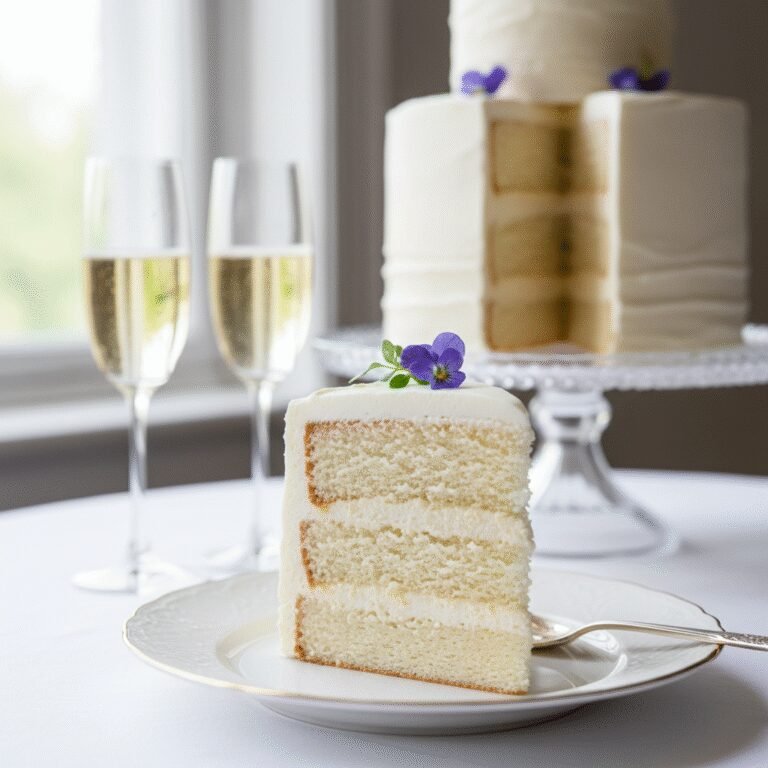
Serve this cake at room temperature, not cold from the fridge, to ensure the buttercream is soft and the cake is moist. It pairs beautifully, of course, with a glass of the same Champagne used in the recipe. To balance the sweetness, serve with a side of tart fresh berries like raspberries or blackberries. For an extra touch of elegance, garnish the serving plates with a smear of raspberry coulis or a few edible flowers that complement the gold leaf.
Storage and Reheating Tips
The frosted cake can be left at cool room temperature for up to 2 days (as long as the kitchen isn’t hot). For longer storage, keep it in the refrigerator for up to 5 days, but ensure it is covered with a cake dome or plastic wrap to prevent the fridge smells from seeping into the fat of the frosting. Bring it back to room temperature for at least 2-3 hours before serving. The baked, unfrosted cake layers can be wrapped tightly in plastic wrap and frozen for up to 3 months. Thaw in the fridge overnight before assembling.
Nutrition Facts (Estimated)
| Serving Size | 1 slice |
| Calories | 580 |
| Fat | 32g |
| Saturated Fat | 19g |
| Unsaturated Fat | 11g |
| Trans Fat | 0.5g |
| Cholesterol | 110mg |
| Sodium | 210mg |
| Carbohydrates | 68g |
| Fiber | 0.5g |
| Sugar | 42g |
| Protein | 6g |
Frequently Asked Questions
Does the alcohol bake out of the cake?
A significant amount of the alcohol evaporates during the reduction process and the baking process, but not 100%. The cake will retain a very small amount of alcohol content. However, the buttercream contains the reduction which is not cooked again, so it will have a slightly higher alcohol presence, though still minimal per slice.
Can I make this cake ahead of time?
Yes, the cake layers are actually easier to handle if baked a day in advance and chilled. The Swiss Meringue Buttercream can also be made ahead and refrigerated; just let it come to room temperature and re-whip it before using.
Why is my Swiss Meringue Buttercream soupy?
This usually happens if the meringue was too warm when you added the butter. Put the bowl in the fridge for 15-20 minutes, then whip it again. It should come together.
What does Champagne cake taste like?
It tastes like a delicate, high-end vanilla cake with subtle notes of almond, caramel, and a slight tang from the wine’s acidity. It is not overwhelmingly ‘boozy.’
Can I use rose gold leaf instead?
Absolutely! Edible silver, rose gold, or standard gold leaf all work perfectly and are applied in the exact same way.
Do I have to use a stand mixer?
For Swiss Meringue Buttercream, a stand mixer is highly recommended because it requires a lot of whipping (10+ minutes). A hand mixer can work, but your arm will get very tired.
Can I make this as cupcakes?
Yes, this recipe will yield approximately 24-30 cupcakes. Bake them for 18-22 minutes at the same temperature.
Is edible gold leaf safe to eat?
Yes, as long as it is labeled ‘edible’ and is 23 or 24 karat. Pure gold is biologically inert and passes through the body without being absorbed.
Conclusion
Creating this Elegant Champagne Cake with Gold Leaf is more than just following a recipe; it is an act of artistic expression. While the steps may seem involved, the components—the reduction, the sponge, and the meringue—come together to form a dessert that is greater than the sum of its parts. The visual impact of the shimmering gold against the creamy white frosting creates a moment of awe before the first slice is even served. Whether you are ringing in the New Year, celebrating a marriage, or simply treating yourself to the finer things in life, this cake promises to deliver a memorable experience. So pop the cork, save a splash for the chef, and enjoy the process of baking something truly magnificent.