Elegant Almond Wedding Cake With Naked Frosting Style
Elegant Almond Wedding Cake With Naked Frosting Style Recipe
This stunning almond wedding cake features moist, tender layers infused with pure almond extract and a semi-naked vanilla buttercream finish. Perfect for DIY brides or special anniversaries, it offers bakery-quality elegance with a rustic, accessible charm that anyone can master at home.
1 hour
35 minutes
4 hours (includes cooling)
One 3-layer 8-inch cake (approx. 12-15 servings)
Dessert
Baking
American
Vegetarian
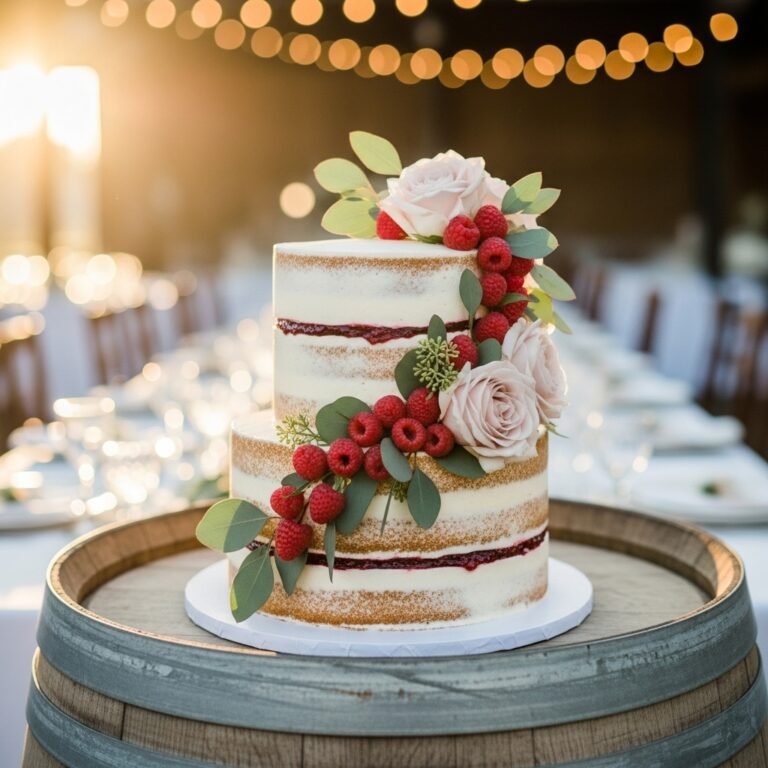
There is something profoundly special about baking a wedding cake. Whether you are a brave bride taking the DIY route, a devoted family member baking for a loved one, or simply a home baker looking to create a showstopping centerpiece for an anniversary or shower, this Elegant Almond Wedding Cake with Naked Frosting is the ultimate recipe. The ‘naked’ or semi-naked cake trend has taken the bridal world by storm, and for good reason. It strips away the intimidation of perfectly smoothed fondant, replacing it with a rustic, ethereal aesthetic that allows the beauty of the cake layers to peek through.
But this cake isn’t just about looks. The flavor profile is the quintessential ‘wedding cake’ taste that evokes nostalgia and celebration. We use a blend of high-quality almond flour and cake flour to create a crumb that is incredibly tender yet sturdy enough to stack. The inclusion of both butter and oil ensures the cake remains moist for days—a crucial factor for weddings where cakes are often baked in advance. The flavor is delicate, aromatic, and sophisticated, featuring the sweet, nutty warmth of almond extract paired with vanilla bean paste. When enrobed in a thin, ‘naked’ layer of silky Swiss Meringue Buttercream (or a crusting American buttercream, if you prefer), the result is a dessert that feels organic, romantic, and utterly delicious. This guide will walk you through every step, from achieving the perfect batter emulsion to the architectural secrets of stacking, ensuring your creation is as structurally sound as it is beautiful.
History & Origins
The concept of the wedding cake dates back to Roman times, where a cake of wheat or barley was broken over the bride’s head to bring good fortune. However, the specific evolution of the ‘white wedding cake’ is a more recent phenomenon, largely popularized by Queen Victoria’s wedding in 1840. Her cake featured a pure white icing, which was a status symbol indicating the family could afford refined white sugar. For over a century, the standard remained heavy fruit cakes covered in marzipan and royal icing.
In the United States, the shift toward lighter, fluffier cakes—like the white almond cake—began in the mid-20th century, coinciding with improvements in baking powder and the availability of fine cake flours. The almond flavor specifically became associated with weddings due to the symbolism of the almond itself. In many cultures, fresh almonds signify the ‘bitter and sweet’ nature of marriage, and giving five sugared almonds to guests represents health, wealth, happiness, fertility, and long life.
The ‘Naked Cake’ style, however, is a distinctly modern disruption. Popularized in the early 2010s, largely credited to pastry chef Christina Tosi of Momofuku Milk Bar in New York, the naked cake rejected the overly manicured, fondant-heavy designs of the previous decades. It aligned perfectly with the rise of the rustic-chic, barn wedding aesthetic. By exposing the layers, the cake felt more honest, homemade, and accessible. It moved the focus from sugar-sculpture back to the actual cake and filling, creating a visual that suggests ‘farm-to-table’ freshness and effortless elegance.
Why This Recipe Works
This recipe is engineered to solve the two biggest problems with homemade wedding cakes: dryness and structural instability. Many white cakes are dry because they rely solely on egg whites and butter. While butter provides flavor, it is 80% fat and 20% water; when the water evaporates, the cake can feel dry. Oil, however, is 100% fat and remains liquid at room temperature. By using a specific ratio of unsalted butter (for that classic rich taste) and neutral oil (for lasting moisture), we get the best of both worlds.
Furthermore, the addition of almond flour doesn’t just add flavor; the natural oils in the nuts contribute to a plush, velvety crumb that stays soft. Structurally, we use the ‘reverse creaming’ method (mixing fat into dry ingredients before adding liquids) or a very thorough traditional creaming method with cake flour. This minimizes gluten development, resulting in a flat, even top that requires less leveling—essential for a straight, professional-looking stack. Finally, the ‘naked’ frosting technique is actually the most forgiving decoration style for home bakers. It requires less buttercream than a fully frosted cake and eliminates the stress of trying to get perfectly smooth, sharp edges. The visible layers create a built-in design element that looks intentionally rustic rather than accidentally messy.
Why You’ll Love This Recipe
- ✓Moist, tender crumb that stays fresh for 3-4 days.
- ✓Classic wedding cake flavor with pure almond and vanilla.
- ✓Sturdy structure suitable for stacking tiers.
- ✓Forgiving ‘naked’ frosting style perfect for beginners.
- ✓Elegant, rustic presentation ideal for floral garnishes.
- ✓Freeze-friendly layers for stress-free advance prep.
Equipment You’ll Need
- ✓Three 8-inch round cake pans
- ✓Stand mixer with paddle attachment
- ✓Kitchen scale (highly recommended)
- ✓Parchment paper
- ✓Cake turntable
- ✓Offset spatula
- ✓Bench scraper (for smoothing frosting)
- ✓Cake board
- ✓Serrated knife (for leveling)
Ingredients
- ✓2 1/2 cups (300g) cake flour, sifted
- ✓1/2 cup (50g) super-fine almond flour
- ✓2 1/2 tsp baking powder
- ✓1/2 tsp salt
- ✓3/4 cup (170g) unsalted butter, room temperature
- ✓1/4 cup (60ml) neutral vegetable oil (canola or grapeseed)
- ✓1 3/4 cups (350g) granulated sugar
- ✓5 large egg whites, room temperature
- ✓1 tbsp pure vanilla extract
- ✓1 1/2 tsp pure almond extract
- ✓1 cup (240ml) full-fat sour cream, room temperature
- ✓1/4 cup (60ml) whole milk, room temperature
- ✓FOR THE FROSTING: 2 cups (450g) unsalted butter, slightly softened
- ✓5-6 cups (600-720g) powdered sugar, sifted
- ✓2 tsp vanilla bean paste
- ✓1/4 tsp almond extract
- ✓3-4 tbsp heavy cream
- ✓Pinch of salt
Instructions
- 1. Prep the Oven and Pans: Preheat your oven to 350°F (175°C). Grease three 8-inch cake pans generously. Line the bottoms with parchment paper rounds, then grease the parchment and dust with flour, tapping out the excess.
- 2. Mix Dry Ingredients: In a medium bowl, whisk together the sifted cake flour, almond flour, baking powder, and salt until evenly combined. Set aside.
- 3. Cream Butter and Sugar: In the bowl of a stand mixer fitted with the paddle attachment, beat the softened butter, oil, and granulated sugar on medium-high speed for about 5-7 minutes. The mixture should look very pale, fluffy, and aerated.
- 4. Add Egg Whites: Reduce speed to medium. Add the egg whites one at a time, mixing well after each addition. Scrape down the sides of the bowl to ensure everything is incorporated. Stir in the vanilla and almond extracts.
- 5. Combine Wet and Dry: In a small jug, whisk together the sour cream and milk. Turn the mixer to low speed. Add the flour mixture in three parts, alternating with the sour cream mixture in two parts, beginning and ending with the flour (Flour, Wet, Flour, Wet, Flour). Mix only until the flour streaks disappear. Do not overmix.
- 6. Bake: Divide the batter evenly among the three prepared pans (use a kitchen scale for precision). Bake for 30-35 minutes, or until a toothpick inserted into the center comes out clean or with just a few moist crumbs. The tops should be pale golden.
- 7. Cool: Allow cakes to cool in the pans for 10 minutes, then run a knife around the edges and invert them onto a wire rack to cool completely. *Pro Tip: Wrap warm layers in plastic wrap and freeze for 30 minutes before frosting for easier handling.*
- 8. Make the Frosting: Clean the mixer bowl. Beat the butter on medium-high speed for 5-7 minutes until it is almost white in color. Add the powdered sugar one cup at a time on low speed. Once incorporated, increase speed to high and whip for 3 minutes. Add vanilla bean paste, almond extract, salt, and heavy cream. Whip for another 2-3 minutes until light and creamy.
- 9. Assembly: Place a dab of frosting on a cake board. Place the first cake layer down. If the cake has a dome, level it with a serrated knife first. Spread a generous layer of buttercream on top. Repeat with the second and third layers. Place the final layer bottom-side up for a flat top.
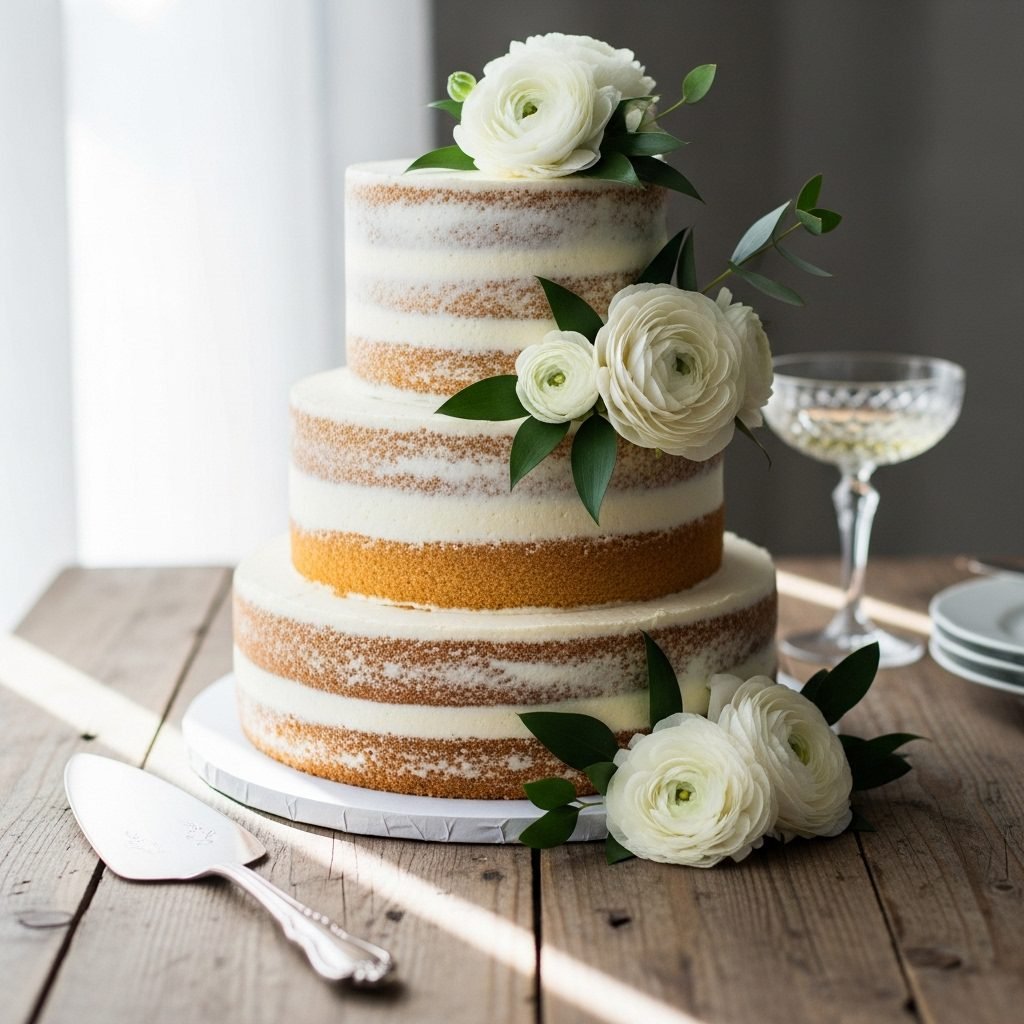
- 10. Naked Finish: Apply a thin layer of buttercream all over the top and sides of the cake (this is essentially a crumb coat). Use a bench scraper to scrape away the excess frosting from the sides, pressing firmly enough to reveal the cake layers beneath while leaving a thin veil of frosting in the crevices. Smooth the top.
- 11. Decorate: Garnish with fresh, pesticide-free flowers, greenery, or fresh berries just before serving.
Expert Cooking Tips
- ✓Room Temperature is Key: Ensure your butter, eggs, sour cream, and milk are all at room temperature. This creates a proper emulsion which traps air, leading to a fluffy cake.
- ✓Don’t Overmix: Once the flour hits the liquid, gluten begins to form. Mix on low speed and stop as soon as the streaks of flour are gone to keep the cake tender.
- ✓Weigh Your Ingredients: For baking, volume measurements (cups) can be inaccurate. Using a digital scale ensures your ratios are perfect.
- ✓Chill Before Stacking: Cold cake layers are much sturdier and easier to stack and frost than room-temperature ones. I recommend freezing the layers for at least an hour before assembly.
- ✓Almond Flour Type: Use ‘super-fine’ blanched almond flour. Almond meal (which has skins) will make the cake gritty and dark.
- ✓The Scraper Angle: When creating the naked look, hold your bench scraper at a 45-degree angle against the cake and keep your hand steady while rotating the turntable.
Substitutions and Variations
For those with dietary restrictions or pantry limitations, here are some substitutions. **Flour:** You can use all-purpose flour instead of cake flour, but the crumb will be slightly denser; remove 2 tablespoons of AP flour per cup and replace with cornstarch to mimic cake flour. **Almond Flour:** If you have a nut allergy, replace the almond flour with an equal weight of additional cake flour and omit the almond extract, doubling the vanilla. **Sour Cream:** Full-fat Greek yogurt is an excellent 1:1 substitute for sour cream. **Dairy-Free:** Use high-quality plant-based butter sticks (not tub margarine) and a dairy-free milk (oat or soy works best) mixed with a teaspoon of vinegar to mimic buttermilk/sour cream acidity. **Egg Whites:** You can use whole eggs (3 whole eggs for 5 whites), but the cake will be yellow rather than white and will have a richer, less delicate flavor.
Common Mistakes to Avoid
The most common mistake is **overbaking**, which dries out the almond flour and makes the cake crumbly. Check the cake 5 minutes before the recipe states. Another issue is **improper creaming**; if you don’t beat the butter and sugar long enough (at least 5 minutes), the cake will be dense and heavy. **Using cold ingredients** will cause the batter to curdle (look separated); if this happens, the cake won’t rise evenly. Regarding the decoration, **applying frosting to a warm cake** is a disaster; the butter in the frosting will melt, causing the layers to slide. Finally, **skipping the dowels** on a tiered cake (if you are making more than 3 layers) can lead to collapse. Even a small 2-tier cake needs support dowels in the bottom tier.
Serving Suggestions
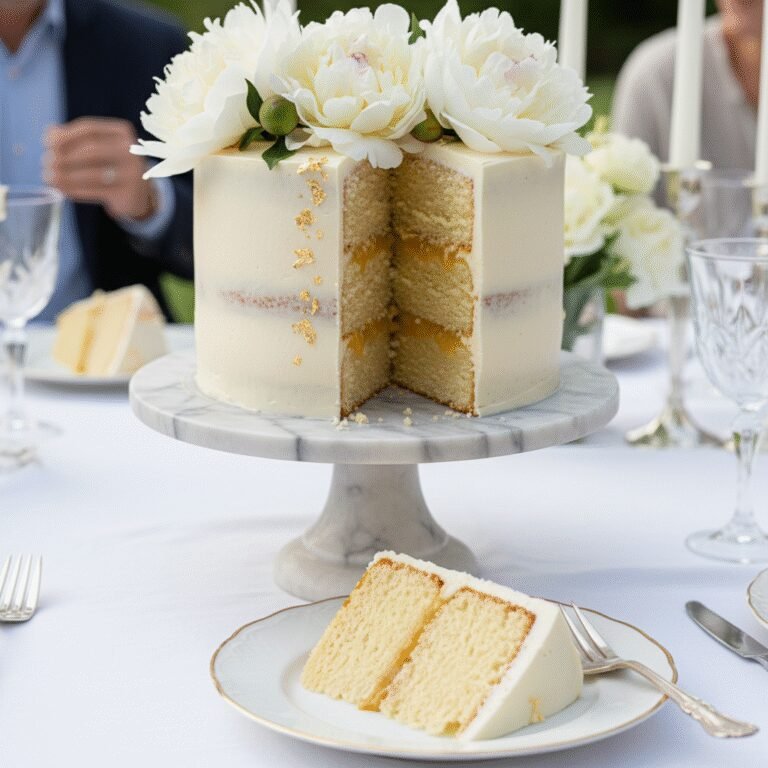
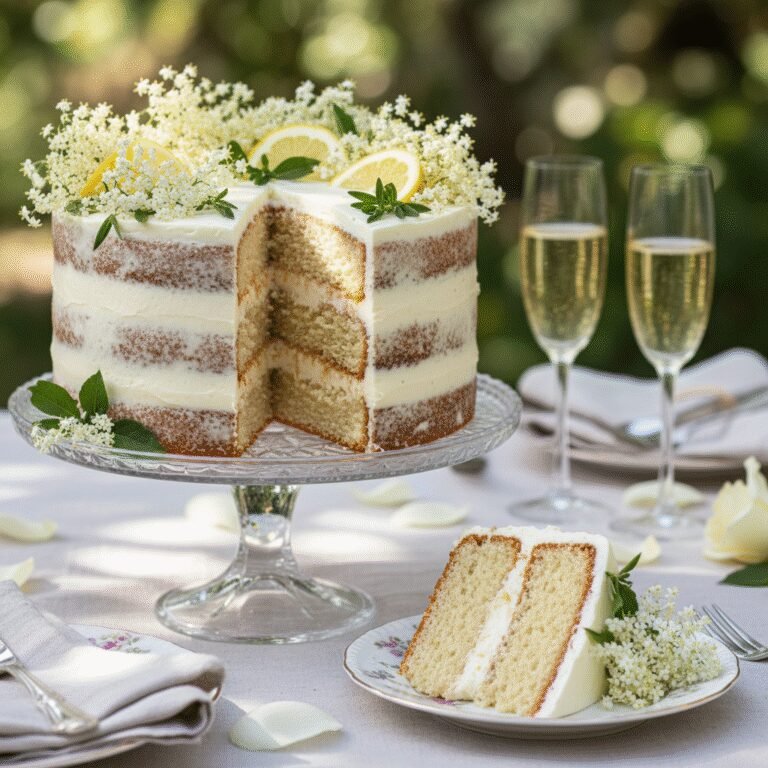
This cake is stunning when served on a rustic wooden pedestal or a vintage glass cake stand. Because the frosting is minimal, garnish is key. Fresh flowers (roses, eucalyptus, peonies) are classic—just be sure to wrap the stems in floral tape or insert them into straws before putting them in the cake to ensure food safety. For a flavor contrast, serve slices with a tart raspberry coulis or fresh berries to cut through the sweetness of the buttercream. A glass of champagne or a dark roast coffee pairs beautifully with the almond notes.
Storage and Reheating Tips
Because of the ‘naked’ style, the exposed cake layers can dry out faster than a fully frosted cake. **Room Temperature:** The cake can stay at cool room temperature for up to 24 hours if covered with a cake dome. **Refrigerator:** If making ahead, store the frosted cake in the fridge for up to 3 days. The exposed sides should be gently covered with plastic wrap once the frosting is hard. **Freezer:** You can freeze the assembled cake (without flowers). Chill until hard, then wrap tightly in two layers of plastic wrap and one layer of foil. Thaw in the fridge overnight before serving. **Leftovers:** Press a piece of parchment or plastic wrap directly against the cut side of the cake to keep the interior moist.
Nutrition Facts (Estimated)
| Serving Size | 1 slice (1/12 of cake) |
| Calories | 580 |
| Fat | 32g |
| Saturated Fat | 18g |
| Unsaturated Fat | 12g |
| Trans Fat | 0g |
| Cholesterol | 85mg |
| Sodium | 310mg |
| Carbohydrates | 68g |
| Fiber | 2g |
| Sugar | 42g |
| Protein | 6g |
Frequently Asked Questions
Can I make this cake in advance?
Yes! Cake layers can be baked, cooled, wrapped, and frozen for up to a month. Assemble the cake the day before the event and keep it chilled. Bring to room temperature 2-3 hours before serving.
How do I prevent the cake from drying out since it’s ‘naked’?
The oil and almond flour in the batter help retain moisture. However, brushing the layers with a simple syrup (equal parts sugar and water boiled) before frosting adds an extra insurance policy against dryness.
Can I use this recipe for cupcakes?
Absolutely. This batter makes approximately 24-30 standard cupcakes. Bake at 350°F for 18-22 minutes.
Why did my cake sink in the middle?
This usually happens if the oven door was opened too early (releasing heat) or if the cake was underbaked. It can also happen if there was too much leavening (baking powder).
Can I tier this cake for a wedding?
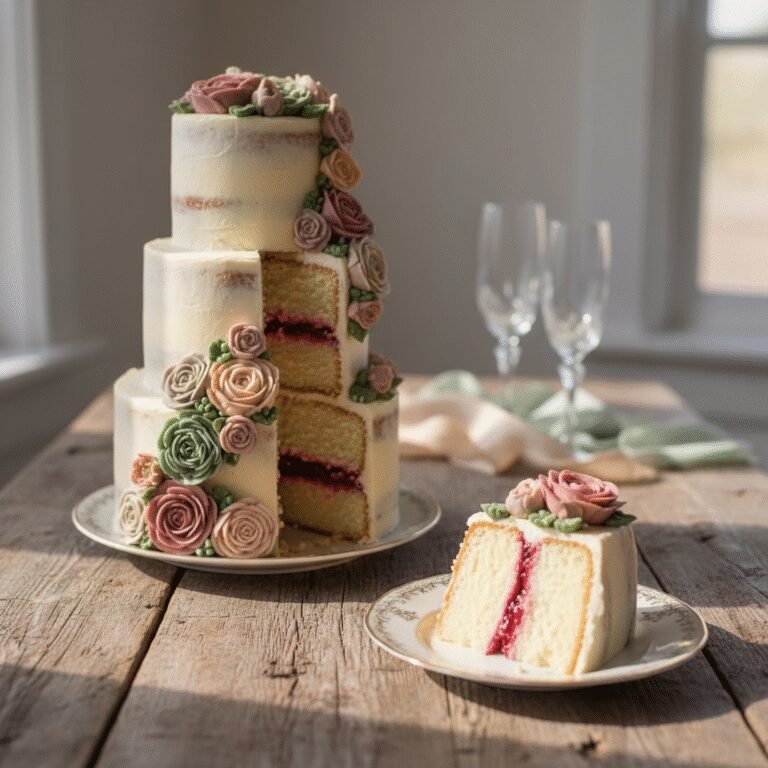
Yes, this is a sturdy cake suitable for tiering. You will need to use bubble tea straws or wooden dowels in the lower tiers to support the weight of the cakes above.
Do I have to use almond extract?
No, if you prefer a classic vanilla cake, you can omit the almond extract. However, the almond flour will still give a very subtle nutty background note.
What if I don’t have a turntable?
A turntable makes the naked finish much easier, but you can use a Lazy Susan or simply walk around the table while smoothing the sides.
How do I get the frosting white?
Buttercream is naturally yellow because of the butter. To get it white, beat the butter for a long time (5+ minutes) before adding sugar, and add a tiny drop of violet food coloring to counteract the yellow tones.
Conclusion
Creating an Elegant Almond Wedding Cake with a naked frosting finish is a labor of love that yields spectacular results. It bridges the gap between professional pastry artistry and the warmth of a home-baked treat. The aroma of toasted almonds and vanilla filling your kitchen is just the beginning; the real reward is the silence that falls over the room when guests take their first bite of the moist, flavorful crumb. Whether for a wedding, an anniversary, or ‘just because,’ this cake proves that sometimes, less really is more. Don’t be intimidated by the steps—take your time, trust the process, and enjoy the magic of baking something truly beautiful.