Sky-High Indulgence: The Ultimate Tall Tres Leches Four-Layer Cake
Tall Tres Leches Cake Four Layer Cake Recipe
Elevate the classic Latin American dessert to new heights—literally! This showstopping four-layer Tall Tres Leches Cake features airy sponge layers soaked in a sweet three-milk syrup, stacked high with stabilized whipped cream and fresh berries for a gravity-defying treat.
45 minutes
35 minutes
4 hours (includes cooling and soaking time)
12-16 servings
Dessert
Baking
Latin American Fusion
Vegetarian
If you have ever experienced the melt-in-your-mouth magic of a traditional Tres Leches cake, you know it is typically served as a humble sheet cake, soaked directly in the pan to contain its glorious, milky goodness. But what if we took those flavors and built them upward? This Tall Tres Leches Four-Layer Cake is a feat of baking engineering and a celebration of texture. By reimagining the classic sponge to be slightly more structural while remaining absorbent, we can stack four beautiful layers of milk-soaked cake, separated by clouds of stabilized mascarpone whipped cream.
The result is a stunning centerpiece that defies the soggy expectations of a standard milk cake. It offers the perfect balance of moisture and fluffiness, ensuring that the bottom layer doesn’t collapse under the weight of the top. The flavor profile is sweet, creamy, and slightly floral from a hint of vanilla and perhaps a dash of rum in the soak. As you slice into this tower, the milk syrup glistens, promising a bite that is both rich and refreshing. This recipe is designed for the ambitious home baker who wants to bring a bakery-style aesthetic to their kitchen table. It is perfect for birthdays, weddings, or any celebration where you want to impress guests not just with flavor, but with architectural beauty.
History & Origins
The origins of Tres Leches (Three Milks) cake are a topic of delicious debate, often claimed by Nicaragua and Mexico, though its popularity spans all of Latin America. The concept of soaking cake in liquid has deep roots in European culinary traditions, such as the British trifle or the Italian tiramisu, and likely traveled to the Americas during the colonial era. However, the specific iteration of Tres Leches we know and love today—a sponge cake soaked in evaporated milk, condensed milk, and heavy cream—gained massive popularity in the mid-20th century.
A significant catalyst for its widespread fame was the condensed milk recipes printed on the labels of Nestlé cans distributed across Latin America in the 1940s. This marketing strategy helped standardize the recipe across borders. Traditionally, the cake is baked in a rectangular pan and poked with a fork to allow the milk mixture to saturate every crumb. Transforming this dish into a tall, freestanding layer cake is a modern innovation, driven by the visual demands of social media and contemporary pastry trends. It represents a fusion of the traditional, comforting flavor profile with the elegant presentation of American-style layer cakes, requiring new techniques to manage moisture distribution without compromising stability.
Why This Recipe Works
Making a Tres Leches cake stand tall as a four-layer construction requires balancing absorption with structural integrity. A standard sponge would turn into mush and collapse if stacked this high with the traditional amount of liquid. This recipe works because we utilize a ‘biscuit à la cuillère’ or a sturdier genoise-style sponge that incorporates separated eggs. The whipped egg whites provide the necessary aeration to absorb the milk, while the yolks and flour structure ensure the cake holds its shape even when wet.
Furthermore, the ‘soak’ is applied carefully using a pastry brush or a squeeze bottle rather than pouring it all over at once. This allows for precise control, ensuring the edges remain firm enough to support the frosting while the center remains luscious and moist. Finally, the frosting is not just plain whipped cream, which would weep and slide; we stabilize it with mascarpone cheese and a touch of powdered sugar. This creates a firm, delicious mortar that bonds the layers together, preventing the dreaded ‘cake slide’ and allowing for clean, beautiful slices that showcase the distinct layers.
Why You’ll Love This Recipe
- ✓Four impressive layers of airy, milk-soaked sponge cake.
- ✓Stabilized mascarpone whipped cream holds the structure perfectly.
- ✓Customizable sweetness level in the three-milk soak.
- ✓A showstopping presentation perfect for special occasions.
- ✓Stays moist for days, actually tasting better over time.
Equipment You’ll Need
- ✓Four 8-inch round cake pans
- ✓Stand mixer with whisk attachment
- ✓Large mixing bowls
- ✓Rubber spatula
- ✓Squeeze bottle or pastry brush
- ✓Offset spatula
- ✓Turntable (optional but recommended)
- ✓Parchment paper
Ingredients
- ✓2 cups all-purpose flour
- ✓2 tsp baking powder
- ✓1/2 tsp salt
- ✓8 large eggs, separated, room temperature
- ✓1 1/2 cups granulated sugar, divided
- ✓1/3 cup whole milk
- ✓2 tsp vanilla extract
- ✓1 can (14 oz) sweetened condensed milk
- ✓1 can (12 oz) evaporated milk
- ✓1 cup heavy whipping cream (for the soak)
- ✓3 cups heavy whipping cream (for the frosting)
- ✓8 oz mascarpone cheese, cold
- ✓1 cup powdered sugar
- ✓1 tsp vanilla bean paste
- ✓Fresh berries (strawberries, raspberries) for garnish
Instructions
- Preheat your oven to 350°F (175°C). Grease four 8-inch round cake pans and line the bottoms with parchment paper. Do not grease the sides, as this helps the sponge climb.
- In a medium bowl, sift together the flour, baking powder, and salt. Set aside.
- In the bowl of a stand mixer, beat the egg yolks with 1 cup of granulated sugar on high speed until pale yellow and thick (ribbon stage), about 4-5 minutes. Mix in the whole milk and vanilla extract.
- Gently fold the flour mixture into the yolk mixture using a rubber spatula just until combined. Do not overmix.
- In a separate clean, grease-free bowl, whip the egg whites on medium speed until frothy. Gradually add the remaining 1/2 cup sugar and increase speed to high, whipping until stiff, glossy peaks form.
- Gently fold one-third of the egg whites into the batter to lighten it. Then, carefully fold in the remaining whites until no streaks remain, being careful not to deflate the batter.
- Divide the batter evenly among the four prepared pans. Smooth the tops lightly.
- Bake for 18-22 minutes, or until the cakes spring back when touched and a toothpick comes out clean.
- Invert the pans onto a wire rack immediately to cool upside down (this prevents sinking). Let them cool completely before removing from pans.
- While cakes cool, whisk together the condensed milk, evaporated milk, and 1 cup of heavy cream in a pitcher or bowl.
- Once cool, run a knife around the edges and remove cakes from pans. Place the first layer on a cake board. Poke holes all over the surface with a fork.
- Using a squeeze bottle, slowly drizzle about 1/2 to 3/4 cup of the milk mixture over the layer, focusing on the center and leaving a small rim at the edge less soaked to maintain structure.
- To make the frosting, whip the mascarpone cheese and powdered sugar until smooth. Slowly stream in the 3 cups of cold heavy cream and vanilla bean paste, whipping until stiff peaks form.
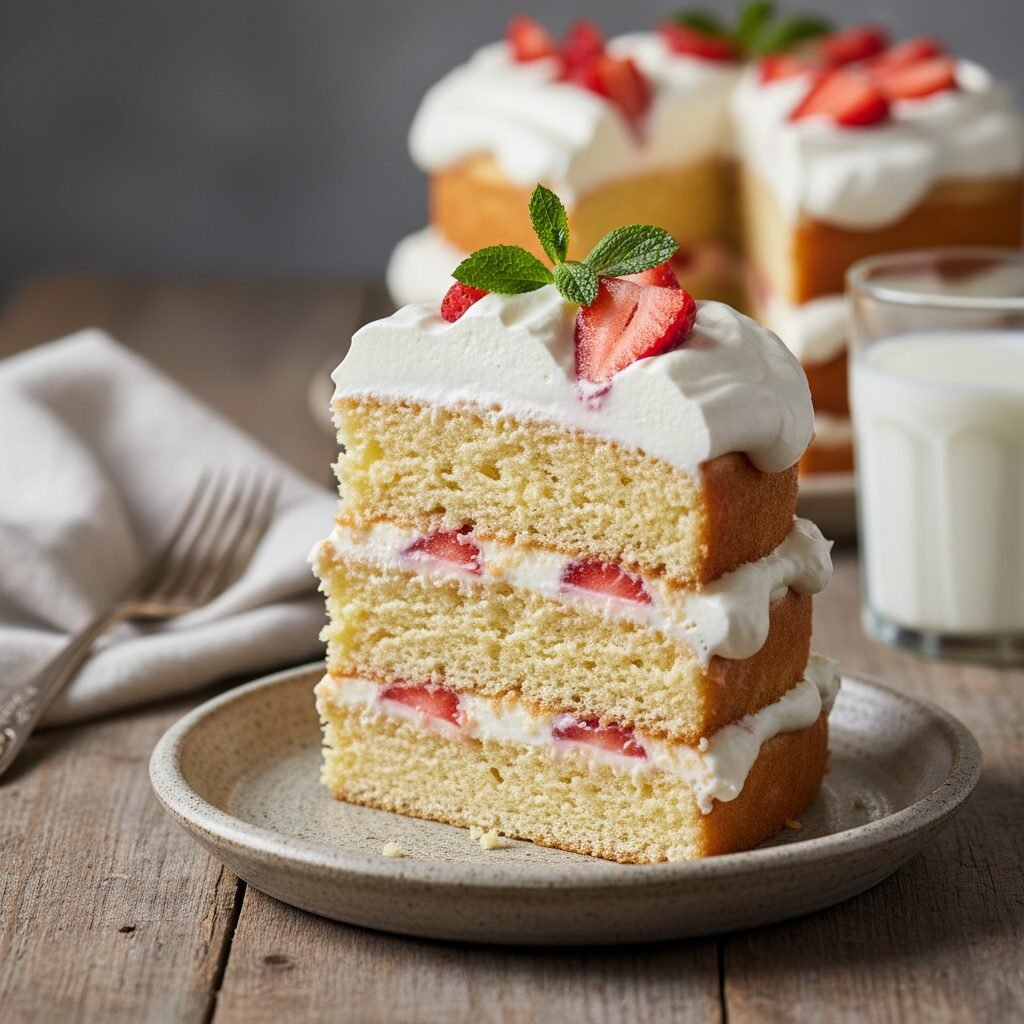
- Spread a layer of frosting over the soaked cake layer. Top with the next cake layer, poke holes, soak, and frost. Repeat until all four layers are stacked.
- Cover the entire cake with the remaining whipped cream frosting. Garnish with fresh berries.
- Refrigerate the cake for at least 2-3 hours (preferably overnight) before slicing to allow the structure to set and flavors to meld.
Expert Cooking Tips
- ✓Ensure your mixing bowl for the egg whites is completely free of grease or yolk, or they won’t whip properly.
- ✓Don’t over-soak the bottom layer; gravity will pull liquid down from the top layers over time.
- ✓Use cold heavy cream and cold mascarpone for the frosting to ensure it whips up stiff and holds the weight of the cake.
- ✓If the cake layers have domed tops, trim them flat before stacking to prevent the tower from leaning.
- ✓Let the cake rest in the fridge before serving; it is essential for the stability of a tall Tres Leches.
- ✓Using a squeeze bottle for the soak gives you much more control than pouring from a pitcher.
Substitutions and Variations
For the flour, cake flour can be used for a finer crumb, though all-purpose provides better structure for a tall cake. If you need a gluten-free version, a high-quality 1:1 gluten-free baking flour blend usually works well with this sponge method. For the dairy, this is a ‘Three Milks’ cake, so dairy-free substitutions change the nature of the dish significantly. However, you can use full-fat canned coconut milk, sweetened condensed coconut milk, and oat milk for the soak, and a coconut cream-based whip for the frosting. The mascarpone in the frosting can be swapped for cream cheese for a tangier flavor, or omitted if you use a gelatin stabilizer for the whipped cream. If you don’t have vanilla bean paste, standard vanilla extract is perfectly fine.
Common Mistakes to Avoid
The most common mistake is over-soaking the cake layers, causing them to disintegrate or leak excessively, which can make the layers slide off one another. Another error is greasing the sides of the cake pans; sponge cakes need to cling to the sides to rise high and stay fluffy. Failing to whip the egg whites to stiff peaks will result in a dense, rubbery cake that won’t absorb the milk properly. Finally, rushing the chilling process is a mistake—this cake needs cold temperature to firm up the frosting and the soaked sponge so it can be sliced cleanly.
Serving Suggestions
Serve this cake chilled, straight from the refrigerator. A tall slice looks magnificent on a wide plate, perhaps dusted with a little cinnamon or cocoa powder. It pairs beautifully with a cup of strong, dark roast coffee or an espresso to balance the sweetness of the condensed milk. For an extra touch of elegance, serve with a side of tart fruit compote, such as mango or passion fruit, to cut through the richness of the cream.
Storage and Reheating Tips
Because of the fresh dairy and eggs, this cake must be kept refrigerated. Store it in a cake carrier or cover the cut sections with plastic wrap to prevent them from drying out or absorbing fridge odors. It will last for up to 3-4 days in the refrigerator. Freezing is not recommended for the fully assembled cake as the texture of the soaked sponge and whipped cream can suffer upon thawing. However, you can freeze the unsoaked cake layers wrapped tightly in plastic for up to a month.
Nutrition Facts (Estimated)
| Serving Size | 1 slice |
| Calories | 580 |
| Fat | 32g |
| Saturated Fat | 19g |
| Unsaturated Fat | 11g |
| Trans Fat | 0g |
| Cholesterol | 145mg |
| Sodium | 180mg |
| Carbohydrates | 64g |
| Fiber | 1g |
| Sugar | 42g |
| Protein | 9g |
Frequently Asked Questions
Can I make this cake ahead of time?
Yes, in fact, it is better if made ahead! Assembling it the day before serving allows the milk soak to distribute evenly and the frosting to set, making it easier to slice.
Why is milk leaking out of the bottom of my cake?
This usually means the layers were over-soaked or the soak was applied too quickly. Gravity pulls the liquid down. Next time, use slightly less liquid on the bottom layers.
How do I prevent the whipped cream from melting?
Stabilizing the cream is key. This recipe uses mascarpone cheese, which adds fat and structure. Keep the cake refrigerated at all times until serving.
Can I use a boxed cake mix?
Boxed mixes are often too soft and airy for a tall, soaked layer cake; they tend to turn to mush. The homemade sponge in this recipe is designed to hold up to the liquid.
What if I don’t have four cake pans?
You can bake the batter in batches. Just be sure to keep the remaining batter gently covered, though the egg whites may deflate slightly if they sit too long. Ideally, borrow pans or bake in two batches.
Can I add flavor to the soak?
Absolutely. A splash of dark rum, brandy, coffee liqueur, or even coconut rum adds a delicious depth of flavor to the milk mixture.
Is it necessary to separate the eggs?
Yes, for this sponge method. Separating eggs allows you to incorporate maximum air into the whites, creating the ‘sponge’ structure needed to absorb the liquid.
How do I transport this cake?
Transport it in a sturdy cake box with a non-slip mat underneath. Keep the vehicle cool and drive carefully. It is a heavy, moist cake that can shift if the car is too warm.
Conclusion
This Tall Tres Leches Four-Layer Cake is more than just a dessert; it is a culinary project that rewards you with one of the most moist, flavorful, and visually stunning cakes you will ever create. While it requires a bit more finesse than the traditional sheet pan version, the result is a bakery-quality centerpiece that will have your guests asking for the recipe. The combination of the sturdy yet absorbent sponge, the rich three-milk soak, and the stable, creamy frosting creates a harmony of textures that is truly unforgettable. So, gather your ingredients, clear some space in the fridge, and get ready to bake a masterpiece.