The Ultimate Fluffy Japanese Matcha Sponge Cake Recipe
Classic Japanese Matcha Sponge Cake Recipe
Discover the secret to baking the airiest, most delicate Japanese Matcha Sponge Cake right in your home kitchen. This recipe balances the earthy, sophisticated notes of premium green tea with a cloud-like texture that melts in your mouth, making it the perfect centerpiece for tea time or a light dessert.
30 minutes
40 minutes
1 hour 10 minutes
One 8-inch round cake (8 servings)
Dessert
Baking
Japanese
Vegetarian
If you have ever walked past a bakery window in Tokyo or Kyoto, you have likely been mesmerized by the pristine, tall, and impossibly fluffy cakes on display. Japanese baking is renowned worldwide for its dedication to texture, often described as ‘fuwa-fuwa’ (fluffy) or ‘mochi-mochi’ (chewy). This Classic Japanese Matcha Sponge Cake is the epitome of that culinary philosophy. Unlike dense Western butter cakes, this sponge relies heavily on the aeration of eggs to create a structure that is as light as a feather yet resilient enough to hold its shape.
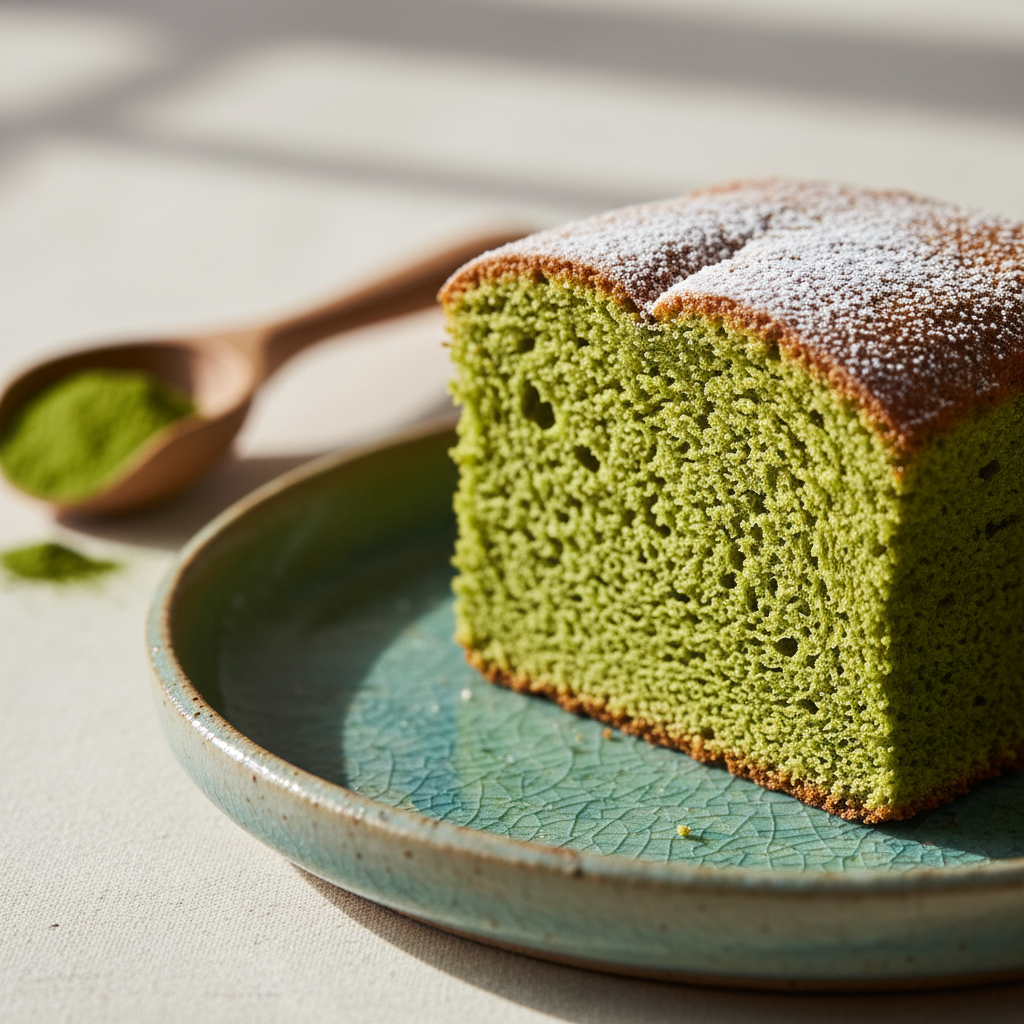
The flavor profile is a sophisticated dance between the slight bitterness of high-quality Matcha green tea powder and the gentle sweetness of fine sugar. It is not an overly sugary dessert; instead, it offers a refined palate cleanser that pairs exceptionally well with a dollop of lightly sweetened whipped cream or fresh berries. The vibrant emerald green color is entirely natural, a testament to the quality of the tea used, and it makes for a visually stunning presentation that is sure to impress guests at any gathering.
For many home bakers, the idea of making a sponge cake can be intimidating due to fears of deflation or a dry crumb. However, this recipe has been meticulously tested to ensure stability and moisture. We utilize a specific method of separating eggs and incorporating a meringue, similar to a chiffon technique, which guarantees that sky-high rise and velvet crumb. Whether you are a seasoned pro looking to refine your technique or a beginner eager to try your hand at Asian-style baking, this recipe is your gateway to mastering the art of the Japanese sponge.
History & Origins
The story of sponge cake in Japan is a fascinating journey of cultural exchange and adaptation that dates back to the 16th century. It began when Portuguese merchants arrived in Nagasaki, bringing with them a confection known as ‘Pão de Castela’ (bread of Castile). This early version was a simple mixture of flour, sugar, and eggs, baked without butter or oil. The Japanese adopted this recipe, calling it ‘Castella’ or ‘Kasutera,’ and over centuries, refined it to suit local tastes. The original Castella is somewhat denser and sweeter than the modern sponge cake, often featuring a dark brown top and bottom crust.
As Japan modernized during the Meiji era (1868–1912) and Western ingredients like milk and butter became more accessible, Japanese bakers began experimenting with French genoise and chiffon techniques. They sought to create cakes that were lighter, moister, and softer, aligning with the Japanese preference for delicate textures. This evolution led to the creation of the modern Japanese sponge cake, which serves as the base for the iconic Japanese Strawberry Shortcake.
The incorporation of Matcha into Western-style pastries is a relatively modern innovation, likely gaining significant popularity in the late 20th century as Kyoto’s Uji region—famous for its superior green tea—began marketing matcha not just for tea ceremonies, but as a versatile culinary ingredient. Today, the fusion of the Portuguese-derived sponge cake technique with the ancient Japanese tradition of Matcha represents a perfect harmony of East and West, creating a dessert that honors history while embracing modern pastry science.
Why This Recipe Works
This recipe succeeds where many others fail because it addresses the three main challenges of sponge cake: volume, stability, and moisture. First, we use the separated egg method (similar to a chiffon cake) rather than a whole-egg genoise method. By whipping the egg whites separately into a meringue with sugar, we create a robust structure of air bubbles. The protein network in the whites is stronger when whipped alone, providing the lift needed without relying heavily on baking powder.
Secondly, the order of operations is crucial. We mix the egg yolks with oil and milk before folding in the flour. The oil coats the flour proteins, inhibiting the formation of tough gluten strands. This ensures the cake remains tender and ‘melt-in-your-mouth’ soft rather than chewy or bread-like. We also use cake flour specifically, which has a lower protein content than all-purpose flour, further guaranteeing a delicate crumb.
Finally, the baking temperature is kept moderate to ensure even rising without burning the delicate matcha, which is sensitive to heat and can turn brown if the oven is too hot. We also insist on using high-quality culinary or ceremonial grade matcha. Cheaper powders can be dull in color and overly bitter, ruining the delicate balance of the cake. The combination of these technical details results in a sponge that is tall, vibrant, and perfectly moist every single time.
Why You’ll Love This Recipe
- ✓Achieves a towering, professional bakery-style height.
- ✓Uses authentic Matcha for a vibrant natural green color.
- ✓Texture is incredibly light, airy, and ‘fuwa-fuwa’.
- ✓Balanced sweetness that isn’t cloying.
- ✓Versatile base for layer cakes or roll cakes.
- ✓Includes tips for preventing deflation after baking.
Equipment You’ll Need
- ✓8-inch round cake pan (aluminum preferred)
- ✓Parchment paper
- ✓Electric hand mixer or stand mixer
- ✓Large mixing bowls (glass or metal)
- ✓Rubber spatula
- ✓Fine mesh sieve or sifter
- ✓Wire cooling rack
- ✓Kitchen scale (highly recommended)
Ingredients
- ✓4 large eggs, separated (cold)
- ✓120g (approx. 1 cup) Cake flour
- ✓15g (2 tbsp) Premium Matcha powder
- ✓120g (approx. 1/2 cup + 1 tbsp) Granulated white sugar
- ✓40ml (2 tbsp + 2 tsp) Whole milk, room temperature
- ✓40ml (2 tbsp + 2 tsp) Vegetable oil or neutral oil
- ✓1/2 tsp Vanilla extract
- ✓1/4 tsp Cream of tartar (or 1 tsp lemon juice)
- ✓Pinch of salt
Instructions
- Preheat your oven to 340°F (170°C). Line the bottom of an 8-inch round cake pan with parchment paper. Do not grease the sides of the pan; the batter needs to cling to the sides to rise properly.
- Sift the cake flour and matcha powder together into a bowl twice. This ensures there are no lumps and aerates the flour for a lighter cake.
- Separate the eggs carefully. Place the egg whites in a large, clean, grease-free bowl and the yolks in a separate medium bowl. Ensure no yolk gets into the whites.
- Add half of the sugar (60g) to the egg yolks. Beat with an electric mixer on high speed until the mixture becomes pale yellow and creamy, and falls in a ribbon when the beaters are lifted.
- Add the milk, vegetable oil, and vanilla extract to the yolk mixture. Whisk gently until combined.
- Gradually add the sifted flour and matcha mixture to the yolks. Mix gently with a whisk or spatula just until the flour disappears. Do not overmix.
- In the bowl with the egg whites, add the cream of tartar (or lemon juice). Beat on low speed until foamy.
- Increase speed to medium-high and gradually add the remaining sugar (60g) in three batches. Beat until stiff peaks form. The meringue should be glossy and the peak should stand straight up when the beater is lifted.
- Add one-third of the meringue to the green yolk batter. Fold it in gently using a rubber spatula to lighten the batter. Use a ‘J’ motion: cut down the middle, scoop the bottom, and fold over.
- Add the remaining meringue in two batches, folding gently after each addition. Be very careful not to deflate the air bubbles. Stop mixing as soon as no white streaks remain.
- Pour the batter into the prepared cake pan from a height of about 6 inches to pop large air bubbles. Tap the pan on the counter 2-3 times to release any trapped air.
- Bake for 35-40 minutes. Test for doneness by inserting a skewer into the center; it should come out clean.
- Immediately upon removing from the oven, drop the pan from a height of 6 inches onto the counter once. This ‘shock’ prevents the cake from shrinking as it cools.
- Invert the cake onto a wire rack to cool upside down. This helps maintain its height. Once completely cool, run a knife around the edge to release it from the pan.
Expert Cooking Tips
- ✓Ensure your bowl and beaters for the egg whites are completely free of grease or water, or the meringue won’t whip.
- ✓Use room temperature milk to help the ingredients emulsify better, but keep eggs cold for easier separation.
- ✓Do not over-fold the batter. Under-mixing is better than over-mixing, which causes a dense, rubbery cake.
- ✓Invest in an oven thermometer. Japanese sponges are sensitive to temperature fluctuations.
- ✓Sifting the flour and matcha twice is non-negotiable for that fine, bakery-style texture.
- ✓The ‘drop’ technique after baking is crucial for structural integrity; don’t skip it!
Substitutions and Variations
If you cannot find cake flour, you can make a substitute by measuring 1 cup of all-purpose flour, removing 2 tablespoons, and replacing them with 2 tablespoons of cornstarch. Sift this mixture 3-4 times to aerate it. For the oil, any neutral-flavored oil works, such as canola, grapeseed, or vegetable oil; avoid olive oil as the flavor is too strong. If you don’t have cream of tartar, fresh lemon juice or white vinegar works as a stabilizer for the egg whites in a 1:1 ratio. For the milk, you can substitute soy milk or almond milk for a dairy-free version, though the fat content in whole milk adds a slight richness. Regarding the Matcha, while ‘Culinary Grade’ is acceptable for baking, ‘Premium Culinary’ or ‘Ceremonial Grade’ will provide a much more vibrant green color and a smoother, less bitter flavor profile.
Common Mistakes to Avoid
The most common mistake is deflating the batter during the folding process. This happens when the meringue is folded too aggressively or for too long. Remember to be gentle and stop as soon as the mixture is uniform. Another frequent issue is under-whipping or over-whipping the egg whites. Under-whipped whites won’t provide enough lift, resulting in a dense cake, while over-whipped (dry/clumpy) whites are hard to incorporate and can cause the cake to crack. Greasing the sides of the pan is another mistake; this type of sponge needs to grip the ungreased sides of the pan to climb up as it bakes. Finally, opening the oven door too early can cause the sudden drop in temperature to make the cake collapse. Wait until at least 30 minutes have passed before checking.
Serving Suggestions
This sponge cake is incredibly versatile. It is delicious served simply with a dusting of powdered sugar and a side of hot green tea. For a classic presentation, slice the cake horizontally into two or three layers and fill with lightly sweetened whipped cream and fresh strawberries or azuki (red bean) paste. It also pairs beautifully with white chocolate ganache, which complements the bitterness of the matcha. For a summer treat, serve a slice with a scoop of vanilla or black sesame ice cream. If you are feeling adventurous, a drizzle of kuromitsu (black sugar syrup) adds a deep, molasses-like sweetness that is very traditional in Japanese desserts.
Storage and Reheating Tips
Japanese sponge cakes are best eaten fresh, but they can be stored successfully. Wrap the completely cooled cake tightly in plastic wrap to prevent it from drying out. It can be kept at room temperature for up to 2 days in a cool, dark place. For longer storage, keep it in the refrigerator for up to 4 days, but be aware that the refrigerator can dry out the sponge, so ensure it is very well wrapped or placed in an airtight container. Allow the cake to come to room temperature before serving for the best texture. You can also freeze the cake (whole or sliced) wrapped in plastic wrap and then aluminum foil for up to 1 month. Thaw in the refrigerator overnight before serving.
Nutrition Facts (Estimated)
| Serving Size | 1 slice |
| Calories | 210 |
| Fat | 10g |
| Saturated Fat | 2g |
| Unsaturated Fat | 7g |
| Trans Fat | 0g |
| Cholesterol | 85mg |
| Sodium | 60mg |
| Carbohydrates | 26g |
| Fiber | 1g |
| Sugar | 18g |
| Protein | 5g |
Frequently Asked Questions
Why did my sponge cake collapse after taking it out of the oven?
Collapse is usually caused by under-baking (the structure wasn’t set) or failing to ‘shock’ the cake by dropping the pan immediately after removal. It can also happen if the meringue was not whipped to stiff peaks.
Can I use all-purpose flour instead of cake flour?
Technically yes, but the texture will be heavier and more bread-like. Cake flour has less protein (gluten), which is essential for the tender, airy texture characteristic of Japanese sponge cakes.
What grade of Matcha should I use?
We recommend a high-quality ‘Premium Culinary’ or ‘Ceremonial’ grade. Lower grades tend to be brownish-green and very bitter, which can overpower the delicate sweetness of the sponge.
Why do I need to cool the cake upside down?
Cooling upside down uses gravity to stretch the cake structure while it sets, preventing it from sinking back into itself as the hot air inside cools and contracts.
Can I bake this in a different size pan?
Yes, but you will need to adjust the baking time. A 6-inch pan will yield a taller cake and may need slightly longer, while a 9-inch pan will be flatter and bake faster. Adjust ingredients proportionally for best results.
My cake has large holes in it. What happened?
Large tunnels or holes are usually caused by not tapping the pan on the counter before baking to release trapped air bubbles, or by folding the batter too roughly.
Is this cake gluten-free?
No, this recipe uses wheat flour. You can try substituting with a high-quality 1:1 gluten-free baking flour blend, but the texture may be slightly denser.
How do I know when the meringue is ready?
When you lift the beater, the egg whites should stand straight up without the tip curling over (stiff peaks). If the tip curls (soft peaks), keep whipping. If it looks chunky or dry, you’ve gone too far.
Conclusion
Mastering the Classic Japanese Matcha Sponge Cake is a rewarding experience that brings a taste of Japanese elegance into your kitchen. The combination of the fluffy, cloud-like texture and the deep, earthy aroma of matcha creates a dessert that is both comforting and sophisticated. While the technique requires a bit of patience and attention to detail, the result is absolutely worth it. Whether you serve it plain with tea or dressed up with cream and fruit for a celebration, this cake is sure to become a favorite in your baking repertoire. Happy baking!