The Best Authentic Mexican Tres Leches Cake Recipe
Classic Mexican Tres Leches Cake Recipe
Experience the ultimate indulgence with this authentic Mexican Tres Leches Cake. An airy sponge cake soaked in a sweet trio of milks and topped with fluffy whipped cream, it is the perfect make-ahead dessert for any celebration.
30 minutes
30 minutes
5 hours (includes chilling)
12-15 servings
Dessert
Baking
Mexican
Vegetarian
If there is one dessert that defines the sweet, creamy soul of Latin American cuisine, it is undoubtedly the Tres Leches Cake. Imagine a light, airy sponge cake—specifically baked to be porous and absorbent—soaked in a decadent bath of three different types of milk: sweetened condensed milk, evaporated milk, and heavy cream. The result is not a soggy mess, but a miraculous transformation where the cake acts like a sweet sponge, holding the liquid in a suspension that bursts with milky sweetness in every bite.
This recipe is a staple in Mexican households and a favorite across the United States for good reason. It balances the rich, caramel-like depth of condensed milk with the lightness of a fresh whipped cream topping. Unlike heavy butter cakes, the base here is a fat-less sponge (or a chiffon-style cake) which relies on whipped eggs for volume. This structure is crucial because it allows the cake to drink up the ‘tres leches’ mixture without disintegrating. Whether you are celebrating a birthday, Cinco de Mayo, or simply craving a comforting slice of heaven, this cake delivers a nostalgic, creamy texture that is impossible to resist. It requires a bit of patience to let the soak do its magic, but the wait is rewarded with one of the most luscious cakes you will ever taste.
History & Origins
The origins of Tres Leches Cake (Pastel de Tres Leches) are often debated, with various Latin American countries claiming it as their own, including Mexico, Nicaragua, and Cuba. However, the concept of soaking cakes in liquid dates back much further to Medieval Europe. Recipes like the English trifle, Italian tiramisu, and rum cakes all share the technique of using alcohol, custard, or syrup to moisten stale cake.
In the Americas, the history is tied closely to the rise of canned goods. In the 19th and early 20th centuries, fresh milk was difficult to store in warmer climates without refrigeration. The invention of evaporation and canning processes made evaporated and condensed milk pantry staples. The definitive popularity of Tres Leches exploded in the 1940s when Nestlé began printing the recipe on the labels of their sweetened condensed milk and evaporated milk cans sold across Latin America. This marketing strategy solidified the cake’s place in culinary history. While the exact inventor remains anonymous, the cake has become an iconic symbol of Mexican festivities, evolving from a promotional recipe to a beloved cultural heritage dish served at weddings, quinceañeras, and family gatherings.
Why This Recipe Works
This recipe works because it respects the science of the sponge. Many Tres Leches recipes fail because they use a standard butter cake base. Butter cakes are too dense and oily to absorb the milk mixture properly, leading to a pool of liquid at the bottom of the pan and a dry center.
Our recipe utilizes a classic sponge method where egg whites are whipped to stiff peaks and folded into the batter. This incorporates air bubbles that act as tiny pockets. When the cake is baked and cools, these pockets remain open. When you pour the three-milk syrup over the cake, the liquid fills these air pockets rather than dissolving the crumb. Furthermore, the ratio of the soaking liquid is perfectly balanced. We use equal parts evaporated milk and condensed milk for sweetness and density, cut with heavy cream to add richness without making it cloyingly sweet. The addition of a pinch of cinnamon to the soak adds a subtle warmth that cuts through the sugar, providing a depth of flavor that distinguishes a professional-quality cake from a generic one.
Why You’ll Love This Recipe
- ✓Authentic sponge texture that absorbs liquid perfectly without becoming mushy.
- ✓Perfectly balanced sweetness using a specific ratio of three milks.
- ✓Ideal make-ahead dessert; flavor improves after soaking overnight.
- ✓Topped with stabilized whipped cream that holds its shape.
- ✓Crowd-pleasing texture that melts in your mouth.
Equipment You’ll Need
- ✓9×13 inch baking pan
- ✓Stand mixer or electric hand mixer
- ✓Large mixing bowls
- ✓Rubber spatula
- ✓Whisk
- ✓Fork or skewer (for poking holes)
- ✓Measuring cups and spoons
Ingredients
- ✓1 cup all-purpose flour
- ✓1 1/2 tsp baking powder
- ✓1/4 tsp salt
- ✓5 large eggs (separated, room temperature)
- ✓1 cup granulated sugar (divided into 3/4 cup and 1/4 cup)
- ✓1/3 cup whole milk
- ✓1 tsp vanilla extract
- ✓1 can (14 oz) sweetened condensed milk
- ✓1 can (12 oz) evaporated milk
- ✓1/2 cup heavy whipping cream (for the soak)
- ✓2 cups heavy whipping cream (for the topping)
- ✓3 tbsp powdered sugar (for the topping)
- ✓Ground cinnamon (for dusting)
- ✓Fresh strawberries or cherries (optional garnish)
Instructions
- Preheat your oven to 350°F (175°C). Grease a 9×13 inch baking pan with butter or cooking spray. Flour it lightly or line with parchment paper.
- In a medium bowl, sift together the all-purpose flour, baking powder, and salt. Set aside.
- Separate the eggs carefully. Place the egg yolks in a large bowl and the egg whites in the bowl of a stand mixer.
- Add 3/4 cup of granulated sugar to the egg yolks. Beat on high speed until the yolks are pale yellow and creamy.
- Stir in the 1/3 cup whole milk and 1 teaspoon vanilla extract into the yolk mixture.
- Gently pour the egg yolk mixture over the flour mixture and stir gently with a spatula just until combined. Do not overmix.
- Beat the egg whites on high speed until soft peaks form. Gradually pour in the remaining 1/4 cup of sugar while continuing to beat until stiff, glossy peaks form.
- Gently fold the egg whites into the batter in three batches. Use a spatula to cut through the center and fold over, preserving the air bubbles.
- Pour the batter into the prepared pan and smooth the top. Bake for 25-30 minutes, or until a toothpick inserted into the center comes out clean.
- Allow the cake to cool completely in the pan on a wire rack (approx 1 hour).
- While the cake cools, whisk together the condensed milk, evaporated milk, and 1/2 cup heavy cream in a pitcher.
- Once cool, use a fork or skewer to poke holes all over the surface of the cake.
- Slowly pour the milk mixture over the cake, focusing on the edges and dry spots. It will look like too much liquid, but it will absorb.
- Cover and refrigerate for at least 4 hours, preferably overnight, to allow full absorption.
- Before serving, whip the 2 cups of heavy cream with powdered sugar until stiff peaks form. Spread over the soaked cake.
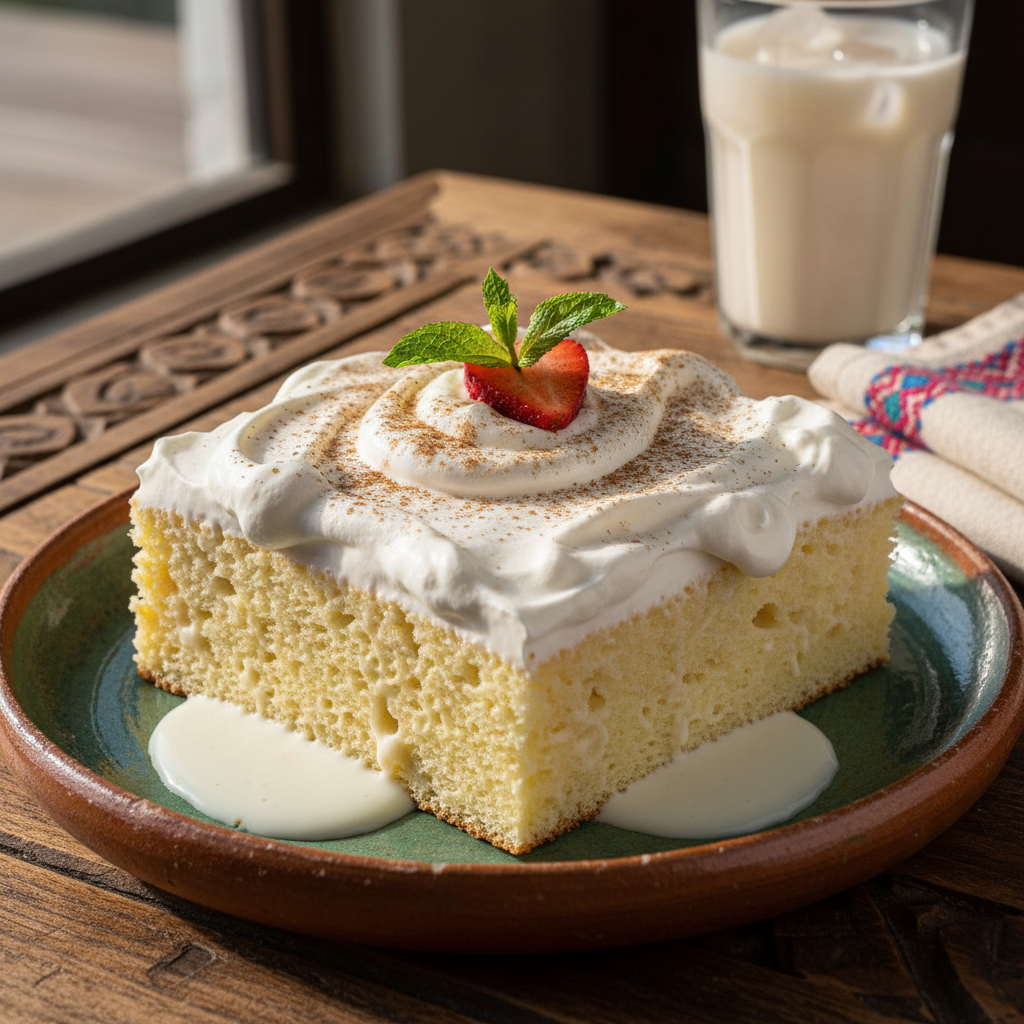
- Dust with cinnamon and top with fresh berries if desired. Serve chilled.
Expert Cooking Tips
- ✓Ensure your eggs are at room temperature; this helps them whip up to a greater volume.
- ✓Do not rush the folding process. If you deflate the egg whites, the cake will be dense and rubbery.
- ✓Let the cake cool completely before adding the milk soak, otherwise, the cake may turn mushy.
- ✓Pour the milk mixture slowly. Give the cake time to drink up the liquid before adding more.
- ✓Use a glass baking dish if possible; it makes it easier to see if the milk has reached the bottom.
- ✓If you want a boozy kick, add a splash of dark rum or brandy to the milk mixture.
Substitutions and Variations
For the flour, cake flour can be used for an even tenderer crumb, though all-purpose is standard. If you need a gluten-free version, a high-quality 1:1 gluten-free baking flour blend works surprisingly well due to the moisture content. For the milks, you can substitute the heavy cream in the soak with whole milk for a lighter version, though it will be less rich. Coconut milk can replace the heavy cream or evaporated milk for a tropical twist. While granulated sugar is best for the sponge, you can use honey or maple syrup to sweeten the whipped cream topping, though it will alter the flavor profile slightly.
Common Mistakes to Avoid
The most common mistake is under-whipping the egg whites. They provide the structure; if they aren’t stiff, the cake will collapse. Another error is pouring the milk over a hot cake, which can cause the structure to disintegrate into mush. Conversely, waiting too long to serve can be an issue—while it needs to soak, leaving it for more than 3 days can result in a texture that is too wet. Finally, failing to poke enough holes or poking them too shallowly will result in a dry center and soggy edges.
Serving Suggestions
Tres Leches is best served chilled, straight from the refrigerator. A square slice looks beautiful on a simple white plate to contrast the creamy colors. While delicious on its own, it pairs wonderfully with acidic fruits like sliced strawberries, kiwi, or mango to cut through the dairy richness. A dusting of cinnamon is traditional, but shaved dark chocolate or toasted coconut flakes are excellent modern twists. Serve with a hot cup of black coffee or espresso to balance the sweetness.
Storage and Reheating Tips
This cake must be kept refrigerated due to the dairy content. Cover the pan tightly with plastic wrap or aluminum foil. It will stay fresh for up to 3-4 days. The texture actually improves on the second day. Freezing is not recommended for a fully soaked and frosted Tres Leches cake, as the texture of the dairy and the sponge changes unpleasantly upon thawing. If you must freeze it, bake the sponge and freeze it dry, then thaw and soak it a day before serving.
Nutrition Facts (Estimated)
| Serving Size | 1 slice |
| Calories | 450 |
| Fat | 18g |
| Saturated Fat | 11g |
| Unsaturated Fat | 6g |
| Trans Fat | 0g |
| Cholesterol | 125mg |
| Sodium | 180mg |
| Carbohydrates | 58g |
| Fiber | 1g |
| Sugar | 38g |
| Protein | 9g |
Frequently Asked Questions
Can I make this cake ahead of time?
Yes, this is actually one of the best cakes to make ahead. It tastes significantly better the next day after the flavors have melded and the milk has fully permeated the sponge.
Why is my cake soggy?
If the cake is mushy rather than moist, you likely didn’t whip enough air into the eggs (making the sponge too dense) or you poured the milk while the cake was still hot.
Can I use boxed cake mix?
You can, but the texture won’t be authentic. Boxed mixes often contain oil and butter which repel the milk. If you must, look for a ‘sponge’ or ‘angel food’ style mix, but homemade is far superior.
Is Tres Leches cake extremely sweet?
Yes, it is a sweet dessert due to the condensed milk. However, the unsweetened whipped cream topping and the use of fresh fruit help balance the sugar intensity.
Can I make this dairy-free?
It is difficult to replicate the exact flavor, but you can use full-fat canned coconut milk, sweetened condensed coconut milk, and oat milk or almond cream. The flavor will be distinctly coconut-forward.
How do I know when the sponge is done baking?
The top should be golden brown and spring back when lightly touched. A toothpick inserted into the center should come out clean or with just a few dry crumbs.
Can I use 2% or skim milk?
It is not recommended for the soak. The fat content in evaporated milk and cream is essential for the velvety mouthfeel. Lower fat milks will make the cake feel watery.
Why do I need to separate the eggs?
Separating eggs allows you to whip the whites into a foam. This foam provides the leavening and the airy structure necessary to hold the liquid without collapsing.
Conclusion
Creating a Classic Mexican Tres Leches Cake is a labor of love that yields one of the most rewarding desserts imaginable. From the careful folding of the batter to the anticipation while it soaks in the refrigerator, every step builds toward that first incredible bite. It’s a dessert that speaks of celebration, family, and the joy of sharing food. Whether you are an experienced baker or trying this for the first time, this recipe promises a result that is authentic, delicious, and unforgettable. So grab your mixer, separate those eggs, and get ready to impress your friends and family with the best cake they’ve ever had.