The Ultimate Fresh Peach Upside Down Cake With Fresh Berries
Fresh Peach Upside Down Cake With Fresh Berries Recipe
Capture the vibrant essence of summer with this stunning Fresh Peach Upside Down Cake. Featuring a caramelized layer of juicy peaches and tart berries atop a tender, buttermilk-infused crumb, this dessert is as beautiful as it is delicious.
20 minutes
45 minutes
1 hour 5 minutes
8-10 servings
Dessert
Baking
American
Vegetarian
There is something undeniably magical about the height of stone fruit season. When peaches are at their peak—heavy with juice, fragrant, and yielding to the touch—they demand a recipe that highlights their natural splendor without masking it. This Fresh Peach Upside Down Cake with Fresh Berries is my absolute favorite way to celebrate that abundance. Unlike a standard fruit cake where the produce is hidden inside the batter, an upside-down cake puts the fruit front and center, quite literally.
The process begins by creating a sticky, rich caramel glaze right in the bottom of your pan, which then cradles the sliced peaches and a scattering of vibrant blueberries or raspberries. As the cake bakes, the heat transforms the butter and brown sugar into a decadent sauce that seeps into the fruit and the top layer of the cake. The batter itself is robust enough to hold the weight of the fruit but remains incredibly moist and tender, thanks to the addition of sour cream and high-quality vanilla.
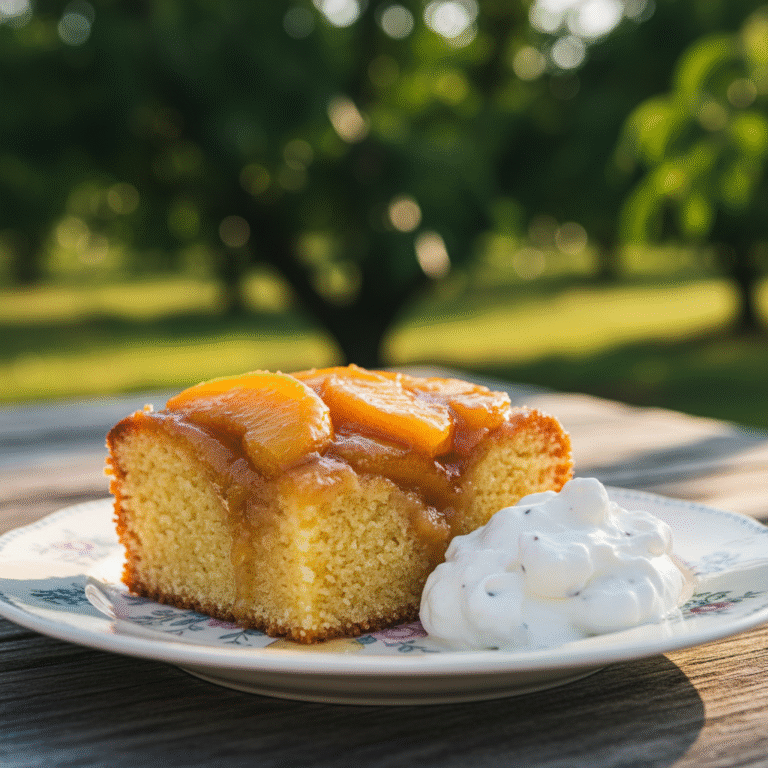
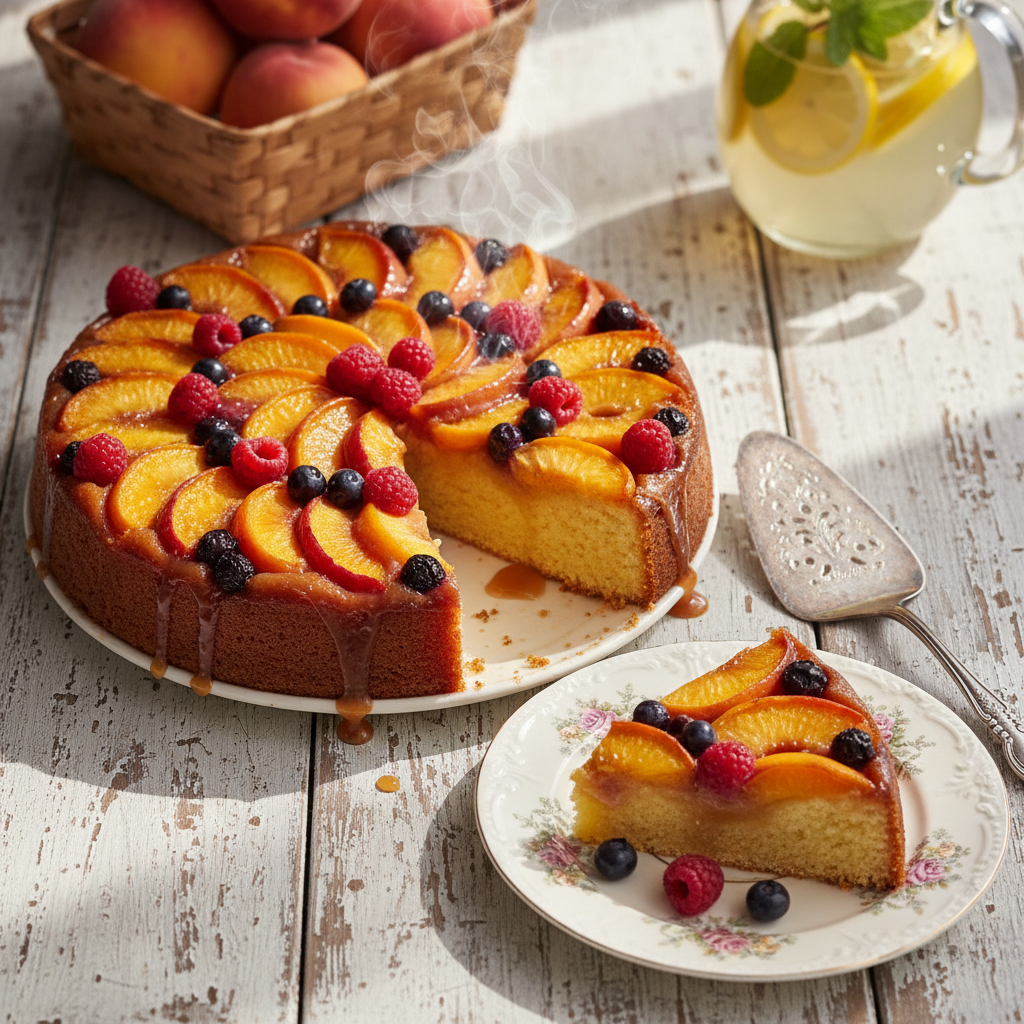
When you flip this cake onto a platter, the reveal is always a show-stopping moment. The peaches glisten like stained glass, the berries burst into pockets of jammy goodness, and the aroma of caramelized sugar and baked fruit fills the kitchen. It is a rustic yet elegant dessert that feels right at home on a picnic table or at a dinner party. Whether served warm with a melting scoop of vanilla bean ice cream or enjoyed at room temperature with a cup of coffee the next morning, this cake encapsulates the sweet, sunny nostalgia of summer baking.
History & Origins
The concept of the upside-down cake is deeply rooted in American culinary history, though its origins can be traced back even further to the skillet cakes of the Middle Ages. Before the advent of modern ovens, cakes were often cooked in cast-iron skillets over open fires. Cooks would line the bottom of the skillet with fruit and sugar, pour batter over the top, and flip it out once cooked to reveal the caramelized topping. This practical method allowed for a beautiful presentation without the need for frosting, which was often difficult to store or prepare.
The upside-down cake as we know it today saw a massive surge in popularity in the United States during the 1920s. This boom is largely attributed to the Dole Pineapple Company, which sponsored a recipe contest in 1925. They received thousands of submissions for pineapple upside-down cake, cementing the tropical version as an American classic. However, long before canned pineapple became a pantry staple, bakers were utilizing seasonal, local fruits for these cakes.
In the American South and Midwest, where stone fruits like peaches, cherries, and plums were abundant in the summer months, fresh fruit upside-down cakes were a common way to use up a harvest. This specific recipe, featuring fresh peaches and berries, pays homage to those early, pre-industrial farmhouse kitchens. It moves away from the mid-century reliance on canned goods and returns to the tradition of celebrating fresh, seasonal produce. It combines the old-world technique of skillet baking with a modern appreciation for the complex flavor pairing of sweet peaches and tart berries.
Why This Recipe Works
This recipe succeeds where many other fruit cakes fail because of the careful balance between the moisture of the fruit and the structure of the cake. Fresh peaches release a significant amount of water as they bake. If the batter is too light or airy, the cake will become soggy and collapse under the weight of the fruit. Conversely, if the batter is too dense, it won’t absorb the delicious caramel sauce created at the bottom of the pan.
To solve this, we use a ‘creaming method’ batter enriched with sour cream. The sour cream adds acidity, which tenderizes the gluten strands, resulting in a soft crumb, while its thickness ensures the batter is sturdy enough to support the topping. Furthermore, the brown sugar and butter layer at the bottom doesn’t just sweeten the fruit; it actually confits the peaches as they bake. The direct contact with the heat caramelizes the sugars in the fruit, intensifying their peach flavor and creating a glossy, gorgeous finish that looks professionally made.
Adding berries isn’t just for aesthetics; they provide a crucial flavor counterpoint. Peaches are intensely sweet and mellow. The burst of acidity from raspberries or blueberries cuts through that sweetness and the richness of the buttery caramel, providing a more complex and balanced bite. Finally, flipping the cake while it is still warm ensures that the fruit releases cleanly from the pan, keeping your beautiful design intact.
Why You’ll Love This Recipe
- ✓Show-stopping presentation with glistening caramelized fruit.
- ✓Uses fresh, seasonal ingredients for maximum flavor.
- ✓The sponge is incredibly moist due to sour cream and butter.
- ✓Versatile: works with blueberries, raspberries, or blackberries.
- ✓No fancy decorating skills required; the pan does the work.
- ✓Perfect balance of sweet caramel and tart fruit.
Equipment You’ll Need
- ✓9-inch round cake pan or 10-inch cast iron skillet
- ✓Electric hand mixer or stand mixer
- ✓Large mixing bowl
- ✓Medium mixing bowl
- ✓Whisk
- ✓Rubber spatula
- ✓Measuring cups and spoons
- ✓Wire cooling rack
- ✓Serving platter
Ingredients
- ✓1/4 cup unsalted butter, melted (for topping)
- ✓1/2 cup light brown sugar, packed (for topping)
- ✓2-3 large ripe peaches, pitted and sliced into 1/2 inch wedges
- ✓3/4 cup fresh blueberries or raspberries
- ✓1 1/2 cups all-purpose flour
- ✓1 1/2 teaspoons baking powder
- ✓1/4 teaspoon salt
- ✓1/2 cup unsalted butter, softened to room temperature (for cake)
- ✓3/4 cup granulated white sugar
- ✓2 large eggs, room temperature
- ✓1 teaspoon pure vanilla extract
- ✓1/2 cup sour cream or full-fat Greek yogurt
- ✓1/4 cup whole milk
Instructions
- Preheat your oven to 350°F (175°C). Grease the sides of a 9-inch round cake pan generously with butter or non-stick spray.
- Prepare the topping: Pour the 1/4 cup of melted butter into the bottom of the cake pan. Sprinkle the brown sugar evenly over the melted butter.
- Arrange the fruit: Place the peach slices in a concentric circle or decorative pattern on top of the brown sugar mixture. Fill the gaps between the peaches with the fresh berries. Set the pan aside.
- Whisk dry ingredients: In a medium bowl, whisk together the all-purpose flour, baking powder, and salt until well combined.
- Cream butter and sugar: In a large bowl using a hand mixer or stand mixer, beat the softened butter and granulated sugar together on medium-high speed until pale and fluffy (about 3-4 minutes).
- Add wet ingredients: Beat in the eggs one at a time, mixing well after each addition. Scrape down the sides of the bowl. Add the vanilla extract and mix to combine.
- Combine batter: Reduce the mixer speed to low. Add half of the flour mixture to the butter mixture, followed by the sour cream and milk. Mix just until incorporated. Add the remaining flour mixture and mix until just combined. Do not overmix.
- Assemble: Spoon the thick batter gently over the arranged fruit in the pan. Use an offset spatula to carefully spread the batter to the edges, being careful not to displace the fruit design underneath.
- Bake: Bake in the preheated oven for 40-50 minutes, or until the top is golden brown and a toothpick inserted into the center of the cake comes out clean.
- Cool and Flip: Remove from the oven and let the cake cool in the pan on a wire rack for exactly 10-15 minutes. Run a knife around the edge of the pan to loosen the cake. Place a serving platter upside down over the pan, then quickly and carefully flip the pan and platter over together. Lift the pan off to reveal the fruit topping.
- Serve: Allow the cake to cool slightly before slicing. Serve warm or at room temperature.
Expert Cooking Tips
- ✓Choose peaches that are ripe but firm. Overly ripe peaches may turn to mush, while hard peaches won’t caramelize properly.
- ✓Do not skip the cooling time, but don’t wait too long. If you flip immediately, the cake is too fragile; if you wait until it’s cold, the caramel will harden and stick to the pan.
- ✓Room temperature ingredients (butter, eggs, sour cream) are crucial for a smooth, emulsified batter that rises evenly.
- ✓If using a darker metal pan or a cast iron skillet, check the cake at 35 minutes, as these conduct heat faster than glass or light metal.
- ✓Place a baking sheet on the rack below the cake in the oven to catch any potential caramel drips.
- ✓If a piece of fruit sticks to the pan after flipping, simply lift it out with a fork and patch it back onto the cake while the caramel is still warm.
Substitutions and Variations
This recipe is quite adaptable to dietary needs and pantry staples. If you don’t have sour cream, you can substitute an equal amount of full-fat plain Greek yogurt or buttermilk (though buttermilk will make the batter slightly thinner). For the fruit, nectarines are a perfect 1:1 swap for peaches and don’t require peeling (though peeling peaches is optional anyway). You can also use frozen peaches and berries; just be sure to thaw them and pat them very dry with paper towels to avoid adding excess water to the caramel. If you need to make this gluten-free, use a high-quality 1:1 gluten-free baking flour blend that contains xanthan gum; almond flour alone will not provide enough structure. For a dairy-free version, use vegan butter sticks and a dairy-free yogurt alternative, though the caramelization may look slightly different.
Common Mistakes to Avoid
The most common mistake with upside-down cakes is flipping the cake at the wrong time. If you flip it the second it comes out of the oven, the cake structure is too delicate and may break apart. If you let it cool completely, the brown sugar and butter solidify, gluing the fruit to the pan. Stick to the 10-15 minute window. Another mistake is slicing the peaches too thinly; they will dissolve into the caramel. Aim for 1/2 inch wedges for the best texture. Lastly, avoid overmixing the batter once the flour is added. Overmixing develops gluten, which leads to a tough, rubbery cake rather than a tender crumb.
Serving Suggestions
This cake is best served slightly warm, where the caramel is still gooey and the fruit is tender. A scoop of high-quality vanilla bean ice cream is the classic accompaniment, as the cold cream melts into the warm cake. For a lighter option, a dollop of barely sweetened whipped cream or a spoonful of crème fraîche works beautifully to cut the sweetness. If serving for brunch, it pairs exceptionally well with dark roast coffee or an Earl Grey tea. You can also garnish with a sprig of fresh mint or a dusting of cinnamon before serving for an extra pop of color and aroma.
Storage and Reheating Tips
Because this cake contains fresh fruit, it is best stored in the refrigerator if it won’t be eaten within 24 hours. Cover the cake loosely with plastic wrap or store it in an airtight cake carrier. It will keep in the fridge for up to 3-4 days. To serve leftovers, it is highly recommended to reheat individual slices in the microwave for 15-20 seconds to soften the butter in the crumb and revive the caramel texture. Freezing is possible but not ideal, as the texture of the fruit can become watery upon thawing; if you must freeze, wrap tightly in plastic wrap and foil, and consume within 1 month.
Nutrition Facts (Estimated)
| Serving Size | 1 slice |
| Calories | 340 |
| Fat | 16g |
| Saturated Fat | 10g |
| Unsaturated Fat | 5g |
| Trans Fat | 0g |
| Cholesterol | 65mg |
| Sodium | 180mg |
| Carbohydrates | 48g |
| Fiber | 2g |
| Sugar | 28g |
| Protein | 5g |
Frequently Asked Questions
Do I need to peel the peaches?
No, peeling is not strictly necessary. The skin of the peach softens significantly during baking and adds a nice color. However, if you dislike the texture of peach skin, you can blanch the peaches in boiling water for 30 seconds to easily peel them before slicing.
Can I use canned peaches?
Yes, but fresh is preferred for texture. If using canned peaches, ensure they are drained thoroughly and patted dry with paper towels to prevent the cake from becoming soggy. Reduce the brown sugar in the topping by 1-2 tablespoons since canned fruit is already sweet.
Why did my cake sink in the middle?
Sinking usually happens if the oven door was opened too early, causing a drop in temperature, or if the cake was underbaked. It can also result from over-creaming the butter and sugar, incorporating too much air that collapses later. Ensure your baking powder is fresh.
Can I bake this in a cast iron skillet?
Absolutely! A 10-inch cast iron skillet is traditional and works wonderfully. You can even melt the butter and sugar directly on the stovetop in the skillet before arranging the fruit and adding the batter.
My caramel is runny, what happened?
Runny caramel usually means the fruit released too much liquid that didn’t cook off, or the cake was cut while piping hot. Letting the cake rest for the recommended time helps the juices thicken.
Can I use strawberries instead of blueberries?
Strawberries have a higher water content and can sometimes turn mushy or gray when baked for this long. Blackberries or raspberries are better alternatives, but if you use strawberries, use firm ones and cut them in half.
How do I know when the cake is done?
Insert a toothpick or skewer into the center of the cake. It should come out clean or with just a few moist crumbs attached. The top (which will be the bottom) should be golden brown and spring back when lightly pressed.
Can I make the batter ahead of time?
It is not recommended to make the batter ahead of time because the baking powder begins to react as soon as it touches the wet ingredients. For the best rise, bake immediately after mixing.
Conclusion
This Fresh Peach Upside Down Cake with Fresh Berries is more than just a dessert; it is a celebration of the season on a plate. The combination of the buttery, caramel-soaked fruit and the tender, tangy cake creates a flavor profile that is comforting yet sophisticated. Whether you are an experienced baker or trying an upside-down cake for the first time, this recipe is designed to guide you to a perfect result. So, head to your local farmers market, grab the ripest peaches you can find, and preheat your oven. Your kitchen is about to smell like heaven, and your family and friends are in for a treat they won’t soon forget.