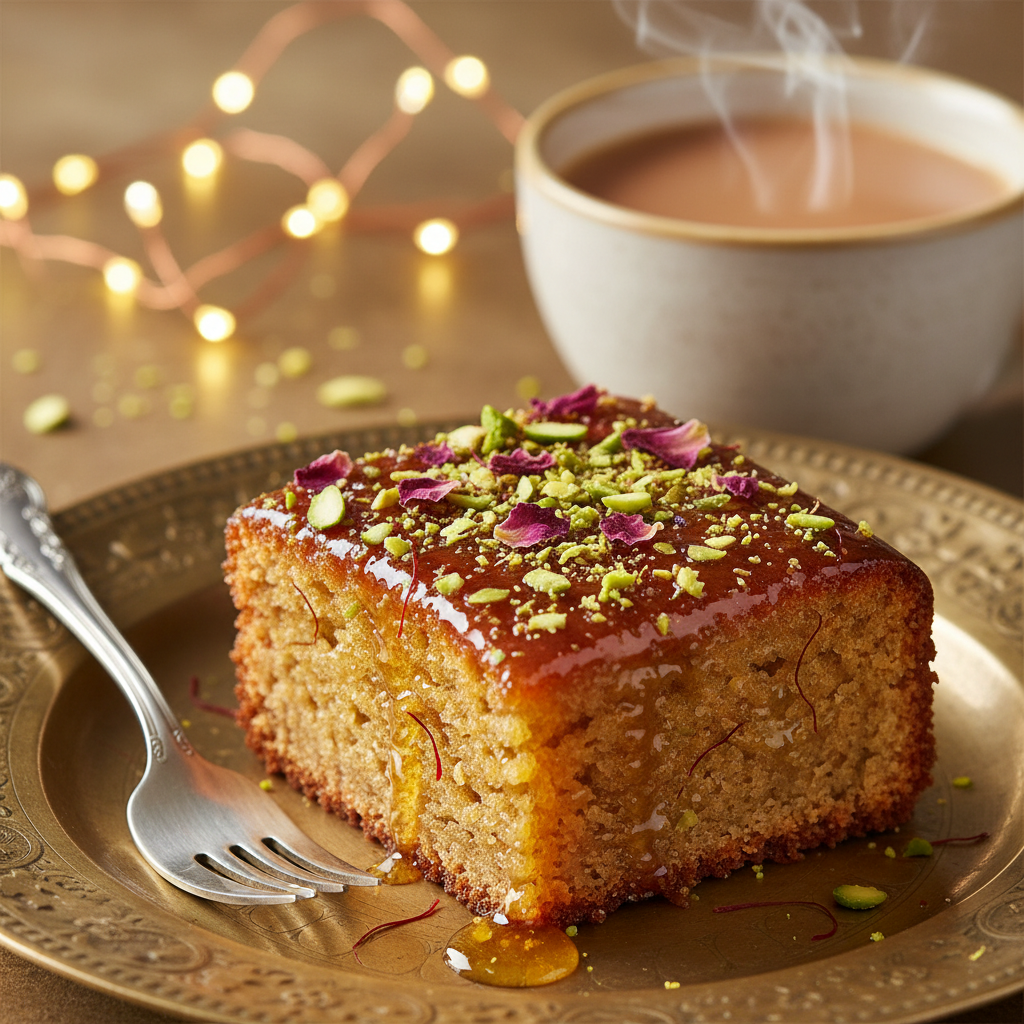
The Ultimate Gulab Jamun Cake: A Fusion of Tradition and Indulgence
Traditional Indian Gulab Jamun Cake Recipe
Experience the magic of Diwali all year round with this exquisite Gulab Jamun Cake. It perfectly captures the nostalgic flavors of the classic Indian sweet—milk solids, saffron, rose, and cardamom—transformed into a moist, decadent sponge that is easier to make than the traditional fried dumplings.
20 minutes
35 minutes
55 minutes
12 servings
Dessert
Baking
Indian Fusion
Vegetarian
If you have ever bitten into a warm, syrup-soaked Gulab Jamun, you know it is an experience that transcends mere dessert. It is a celebration of texture and aroma, where the milky richness of khoya meets the floral elegance of rose water and the warmth of cardamom. This Gulab Jamun Cake recipe takes that beloved, centuries-old experience and reimagines it for the modern kitchen. Instead of the labor-intensive process of rolling and deep-frying individual dough balls, we channel those exact flavor profiles into a stunning, golden sponge cake.
The result is nothing short of spectacular. The crumb is tender and dense, mimicking the mouthfeel of the traditional sweet, thanks to a generous addition of milk powder. As it comes out of the oven, the cake is poked and drenched in a sticky, saffron-infused simple syrup that permeates every pore, ensuring that every bite is as juicy and fragrant as the original mithai. This fusion dessert appeals to both purists who crave the authentic taste of ‘mawa’ and adventurous bakers looking for a show-stopping centerpiece. Whether you are hosting a Diwali party, a Holi celebration, or simply craving a slice of Indian heritage with your afternoon tea, this cake bridges the gap between the East and the West with effortless grace.
History & Origins
To understand the significance of this cake, one must first look at the history of Gulab Jamun itself. The origins of the traditional sweet can be traced back to medieval India, with strong influences from Persian cuisine. It is often linked to a dish called ‘Luqmat al-Qadi’ (Judge’s Morsel), which consisted of deep-fried dough balls soaked in honey or syrup. When these culinary traditions traveled to the Indian subcontinent with the Mughal emperors, they evolved. The local adaptation began using ‘khoya’ or ‘mawa’ (milk solids reduced over hours) instead of just flour, creating the rich, milky dumpling we know today. The name itself is a compound of ‘gulab’ (rose water, from the Persian words ‘gol’ for flower and ‘ab’ for water) and ‘jamun’ (a South Asian fruit with a similar size and shape).
The Gulab Jamun Cake is a much more recent phenomenon, born out of the global Indian diaspora’s desire to celebrate traditional flavors within the context of Western baking techniques. As Indian home bakers in the US and UK began experimenting with fusion desserts—combining the nostalgia of their childhood sweets with the convenience of oven baking—this cake emerged as a favorite. It represents a culinary evolution, preserving the ancient flavor triad of cardamom, rose, and saffron, while adapting the form to suit modern lifestyles where standing over a hot kadhai (wok) for frying isn’t always feasible. It is a tribute to cultural adaptability, proving that tradition can take new shapes without losing its soul.
Why This Recipe Works
This recipe succeeds where many fusion attempts fail because it prioritizes texture as much as flavor. The biggest challenge in converting a fried milk-solid dumpling into a baked cake is replicating that unique, dense, yet melt-in-the-mouth consistency. Standard vanilla cake recipes simply won’t cut it; they are too airy and lack the milky depth.
This recipe solves that by incorporating a high ratio of full-fat milk powder directly into the dry ingredients. The milk powder caramelizes slightly during baking, providing that signature ‘mawa’ flavor profile that distinguishes Indian sweets. Furthermore, the structural integrity of the cake is designed to withstand the syrup soak. A standard sponge would turn into mush if drenched in sugar syrup, but this batter produces a crumb structure that is sturdy enough to hold the liquid, becoming moist and pudding-like rather than soggy. The syrup itself is boiled to a ‘sticky’ consistency (just before a one-string consistency), ensuring it glazes the cake and sinks in slowly, rather than washing away the texture. Finally, the use of yogurt in the batter adds a slight tang that cuts through the intense sweetness, balancing the dish perfectly.
Why You’ll Love This Recipe
- ✓Authentic Mawa Flavor: Uses milk powder to replicate the traditional taste.
- ✓No Frying Required: A healthier, less messy alternative to the deep-fried classic.
- ✓Moist & Syrupy: Soaked in a saffron-rose syrup for ultimate decadence.
- ✓Perfect for Crowds: Much easier to serve at parties than rolling 50 individual balls.
- ✓Make-Ahead Friendly: Tastes even better the next day as the syrup absorbs.
Equipment You’ll Need
- ✓9-inch round cake pan or Bundt pan
- ✓Electric hand mixer or stand mixer
- ✓Large mixing bowls
- ✓Small saucepan (for syrup)
- ✓Sieve for sifting
- ✓Skewer or toothpick (for poking holes)
- ✓Pastry brush
Ingredients
- ✓1 cup All-Purpose Flour
- ✓1 cup Full-Fat Milk Powder (Nido or similar)
- ✓1/2 tsp Baking Soda
- ✓1 tsp Baking Powder
- ✓1/2 tsp Cardamom Powder (freshly ground)
- ✓1/2 cup Unsalted Butter, softened
- ✓1/2 cup Granulated Sugar (for cake)
- ✓1/2 cup Plain Yogurt (Curd/Dahi), room temperature
- ✓1/2 cup Whole Milk, room temperature
- ✓FOR THE SYRUP: 1 cup Water
- ✓FOR THE SYRUP: 1 cup Granulated Sugar
- ✓FOR THE SYRUP: 1 tsp Rose Water
- ✓FOR THE SYRUP: 1 pinch Saffron Strands
- ✓FOR THE SYRUP: 2-3 Green Cardamom pods, crushed
- ✓GARNISH: Chopped Pistachios, Dried Rose Petals, Silver Leaf (Warq)
Instructions
- Preheat your oven to 350°F (175°C). Grease a 9-inch round cake pan or bundt pan generously with butter and dust with flour, tapping out the excess.
- In a medium bowl, sift together the all-purpose flour, milk powder, baking soda, baking powder, and ground cardamom. Whisk well to ensure the milk powder is evenly distributed. Set aside.
- In a large mixing bowl, cream the softened butter and 1/2 cup sugar together using an electric mixer until pale and fluffy (about 3-4 minutes).
- Add the yogurt to the butter-sugar mixture and beat for another minute. If it looks slightly curdled, don’t worry; it will come together with the dry ingredients.
- Gradually add the dry ingredient mixture to the wet ingredients in three parts, alternating with the milk. Start and end with the dry ingredients. Mix on low speed just until combined. Do not overmix, or the cake will be tough.
- Pour the batter into the prepared pan and smooth the top with a spatula. Bake in the center of the oven for 30-35 minutes, or until a skewer inserted into the center comes out clean and the top is golden brown.
- While the cake bakes, prepare the syrup. In a saucepan, combine water, 1 cup sugar, saffron strands, and crushed cardamom pods. Bring to a boil over medium heat.
- Let the syrup simmer for 5-7 minutes until it feels slightly sticky between your fingers. Remove from heat and stir in the rose water. Set aside to cool slightly (it should be warm, not hot).
- Once the cake is baked, remove it from the oven and let it cool in the pan for 10 minutes. Then, invert it onto a wire rack placed over a baking sheet.
- While the cake is still warm, use a skewer or toothpick to poke holes all over the top surface. Slowly pour or brush the warm syrup over the cake, allowing it to seep into the holes. Reserve a little syrup for serving.
- Garnish immediately with chopped pistachios and dried rose petals so they stick to the syrup. If using edible silver leaf, apply it gently.
- Allow the cake to rest for at least an hour before slicing to let the flavors meld and the syrup fully absorb.
Expert Cooking Tips
- ✓Room Temperature Ingredients: Ensure butter, milk, and yogurt are at room temperature to create a smooth emulsion.
- ✓Don’t Skimp on Milk Powder: This is the key ingredient for the authentic Gulab Jamun taste. Use full-fat for the best results.
- ✓Syrup Temperature: The best absorption happens when the cake is warm and the syrup is warm. If both are cold, the syrup won’t soak in.
- ✓Cardamom Freshness: Grind your own cardamom seeds using a mortar and pestle rather than using pre-ground store-bought powder for a potent aroma.
- ✓Watch the Oven: Milk powder browns faster than flour. If the top is browning too quickly before the center is cooked, tent loosely with aluminum foil.
- ✓Resting Time: Like the traditional sweet, this cake tastes significantly better after resting for a few hours or overnight.
Substitutions and Variations
If you need to make this eggless, the current recipe already uses yogurt as a binder, making it naturally egg-free. For a vegan version, substitute the dairy butter with vegan butter blocks, the yogurt with a thick coconut or almond yogurt, the milk with oat milk, and the milk powder with a soy or coconut milk powder (though this will slightly alter the flavor profile away from traditional mawa). If you don’t have rose water, you can use a drop of rose essence (be careful, it’s potent) or simply omit it and rely on saffron and cardamom. You can swap all-purpose flour for a gluten-free 1:1 baking blend, but ensure it contains xanthan gum for structure.
Common Mistakes to Avoid
The most common mistake is overmixing the batter. Because of the high protein content in the milk powder and flour, overmixing develops too much gluten, resulting in a rubbery, dense cake rather than a soft sponge. Another error is boiling the syrup to a ‘thread’ consistency. If the syrup is too thick, it will sit on top of the cake like a glaze rather than soaking in. Conversely, if the syrup is too watery, it will make the cake mushy. Aim for a texture similar to warm honey or maple syrup. Finally, do not unmold the cake immediately after taking it out of the oven; it is very fragile when hot and needs 10 minutes to set.
Serving Suggestions
This cake is stunning on its own, but for a truly decadent experience, serve warm slices with a dollop of vanilla bean ice cream or a side of ‘Rabri’ (thickened sweetened milk). The cold creaminess contrasts beautifully with the warm, spicy syrup of the cake. It pairs exceptionally well with Masala Chai or a strong cup of coffee to balance the sweetness. For a festive look, arrange the slices on a platter dusted with powdered sugar and scattered with fresh rose petals.
Storage and Reheating Tips
Due to the milk content and moisture, this cake is best stored in an airtight container in the refrigerator if keeping for more than 24 hours. It will stay fresh in the fridge for up to 5 days. Before serving, microwave a slice for 15-20 seconds to soften the butter and revive the moist texture. You can also freeze individual slices wrapped tightly in plastic wrap and foil for up to a month. Thaw in the fridge overnight and warm before eating.
Nutrition Facts (Estimated)
| Serving Size | 1 slice |
| Calories | 320 |
| Fat | 12g |
| Saturated Fat | 7g |
| Unsaturated Fat | 4g |
| Trans Fat | 0g |
| Cholesterol | 45mg |
| Sodium | 180mg |
| Carbohydrates | 48g |
| Fiber | 1g |
| Sugar | 28g |
| Protein | 6g |
Frequently Asked Questions
Can I use store-bought Gulab Jamun mix instead of flour and milk powder?
Yes, you can! Replace the flour, milk powder, and baking soda in this recipe with an equal weight of store-bought Gulab Jamun instant mix. However, you may need to adjust the liquid slightly as mixes vary.
Why did my cake sink in the middle?
This usually happens if the oven door was opened too early during baking, causing a temperature drop, or if there was too much leavening (baking powder/soda). Ensure your oven is fully preheated and resist checking until the 30-minute mark.
Can I make this cake in advance?
Absolutely. In fact, it is recommended. Making it 12 to 24 hours before serving allows the syrup to distribute evenly, enhancing the flavor and texture.
Is saffron necessary?
While saffron adds a distinct luxurious aroma and a beautiful golden hue to the syrup, the cake will still be delicious without it. You can increase the cardamom slightly if omitting saffron.
Can I use reduced-fat milk powder?
It is not recommended. The fat in the milk powder contributes significantly to the richness and ‘mawa’ mouthfeel. Non-fat powder may result in a drier, less flavorful cake.
How do I know when the syrup is ready?
Rub a drop of syrup between your thumb and forefinger. It should feel sticky and slightly oily, like honey, but should not form a thread when you pull your fingers apart.
Can I bake this as cupcakes?
Yes, this batter works great for cupcakes. Reduce the baking time to 18-22 minutes. Poke holes and spoon a teaspoon of syrup over each cupcake while warm.
My cake feels too dry, what can I do?
If you’ve already baked it, make a little extra syrup and let it soak longer. For next time, ensure you measure flour correctly (spoon and level method) and do not overbake.
Conclusion
The Traditional Indian Gulab Jamun Cake is more than just a dessert; it is a conversation starter and a bridge between cultures. It captures the heart of Indian festivity—the warmth, the sweetness, and the aromatic spices—and delivers it in a package that is accessible to bakers of all skill levels. Whether you are looking to recreate a childhood memory or introduce your friends to the wonders of Indian flavors, this cake promises to deliver joy in every saffron-scented bite. Happy baking!