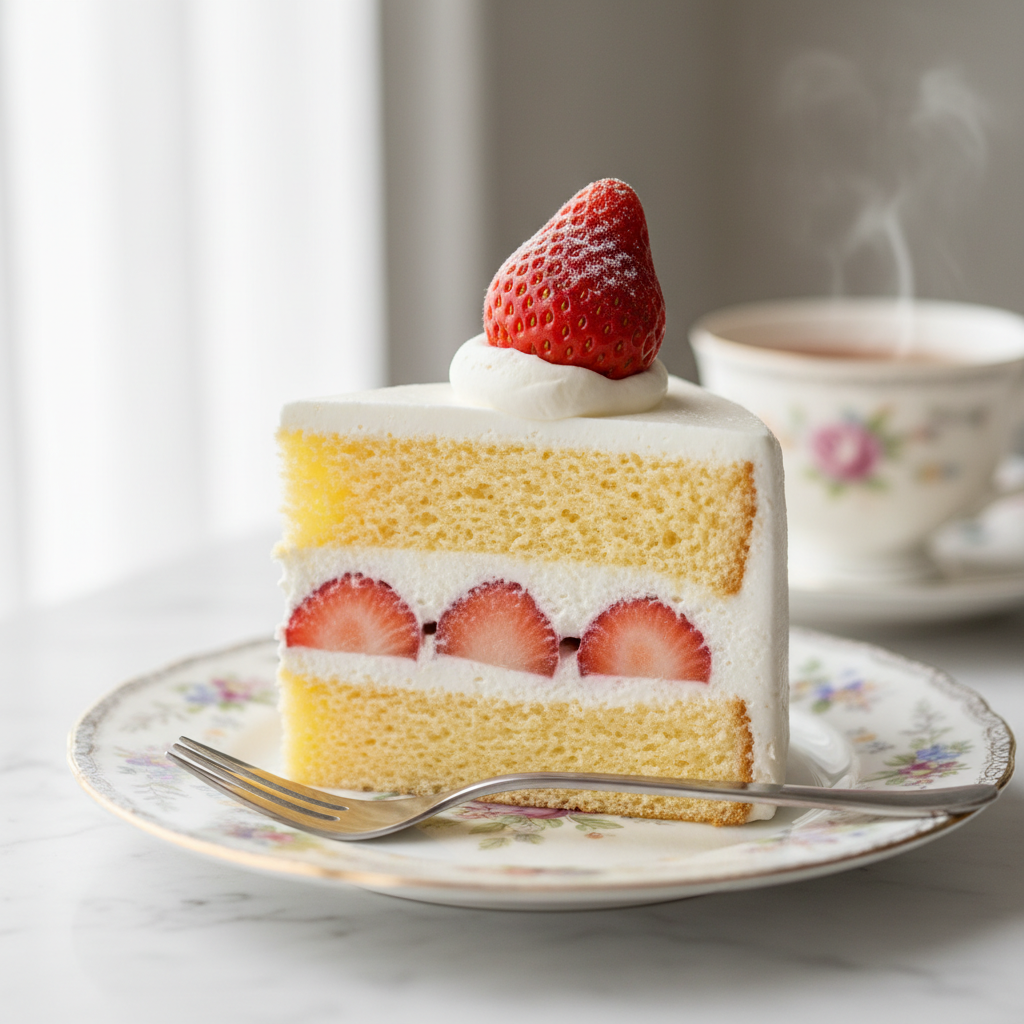
Traditional Japanese Strawberry Shortcake: The Ultimate Fluffy Christmas Cake
Traditional Japanese Strawberry Shortcake Recipe
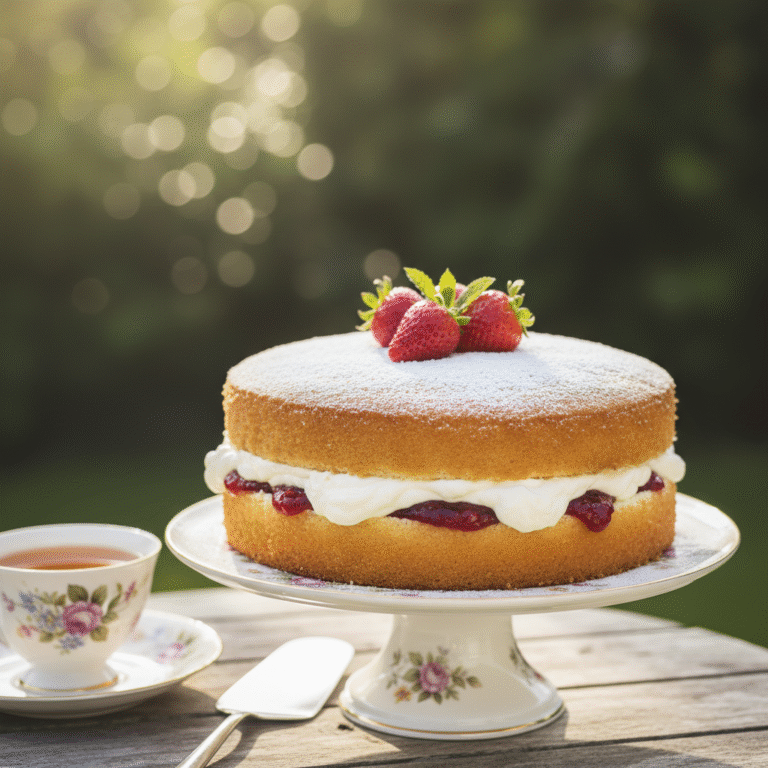
Experience the cloud-like texture of authentic Japanese Strawberry Shortcake. This stunning dessert features airy genoise sponge layers, lightly sweetened whipped cream, and fresh, juicy strawberries, making it the perfect centerpiece for holidays and celebrations.
45 minutes
25 minutes
1 hour 10 minutes (plus cooling time)
8 servings (one 8-inch round cake)
Dessert
Baking
Japanese
Vegetarian
If you have ever walked past a bakery window in Tokyo, you have likely been mesmerized by the pristine elegance of the Japanese Strawberry Shortcake. Unlike its American counterpart, which typically utilizes a dense, biscuit-like base, the Japanese version is a triumph of lightness and air. It is essentially a layer cake, but one so delicate that it feels as though you are eating a cloud. The foundation is a classic genoise sponge—a cake leavened primarily by the air beaten into eggs rather than chemical leavening agents. This results in a texture that is springy yet melt-in-your-mouth soft.
The sponge is brushed with a simple syrup to retain moisture and add a subtle sweetness, then layered with billows of Chantilly cream and premium strawberries. The balance here is key; the cake is not overly sweet, allowing the tartness of the berries and the richness of the cream to shine through. In Japan, this cake is not just a dessert; it is an institution, particularly synonymous with Christmas celebrations. However, its light profile makes it an excellent choice for summer birthdays or afternoon tea. Mastering the genoise sponge can be intimidating for home bakers, but this detailed guide breaks down the science of egg aeration and temperature control to ensure your cake rises beautifully every time. Prepare to transport your kitchen to a high-end Ginza patisserie with this exquisite recipe.
History & Origins
The history of Japanese Strawberry Shortcake is a fascinating blend of Western influence and Japanese adaptation. While ‘shortcake’ in the UK or US refers to a crumbly biscuit or scone dough, the Japanese interpretation evolved differently during the Meiji era when Western confectionery, or ‘yōgashi’, began entering the country. The specific iteration we know and love today is widely attributed to Fujii Rin’emon, the founder of the famous confectionery chain Fujiya. After visiting the United States in the early 20th century and observing the popularity of shortcakes, he sought to adapt the concept to suit Japanese palates, which generally prefer softer, moister textures over dry or crumbly ones.
By 1922, Fujiya began selling this sponge-based cake featuring whipped cream and strawberries. The choice of ingredients was no accident; the red strawberries and white whipped cream mirrored the colors of the Japanese flag, evoking a sense of national pride and celebration. Following World War II, as the economy recovered and refrigerators became household staples, the popularity of fresh cream cakes exploded. It eventually solidified its status as the quintessential Japanese Christmas cake (‘Kurisumasu Keki’). In Japan, Christmas is largely a secular, romantic holiday rather than a religious one, and sharing a round strawberry shortcake has become the standard way to celebrate. Today, it remains the most popular cake in Japan, representing a perfect harmony of Western technique and Japanese aesthetic sensibility.
Why This Recipe Works
This recipe succeeds because it meticulously addresses the most common failure point in sponge cakes: the deflation of the egg foam. A traditional genoise relies entirely on the volume of whipped eggs for its rise. By warming the eggs and sugar over a bain-marie (water bath) before whipping, we allow the sugar to dissolve completely and the protein structure of the eggs to relax. This enables the mixture to whip up to a greater volume and stability compared to cold eggs.
Furthermore, this recipe incorporates milk and butter that are kept warm until the very last moment. Adding cold fat to an aerated batter can shock the foam and cause it to collapse. By tempering a small amount of batter into the warm butter mixture first, we create an emulsion that folds seamlessly into the main batter without destroying those precious air bubbles. We also use cake flour with a lower protein content, which minimizes gluten formation, ensuring the crumb remains tender rather than chewy. Finally, the ratio of sugar in the whipped cream is kept lower than Western standards, roughly 8-10%, which prevents the dessert from becoming cloying and maintains the structural integrity of the cream for frosting.
Why You’ll Love This Recipe
- ✓Achieves a bakery-style, feather-light genoise sponge texture.
- ✓Uses a stabilized whipped cream that holds its shape for days.
- ✓Perfect balance of sweetness and fresh fruit acidity.
- ✓Includes professional tips for smooth icing and decoration.
- ✓The ultimate celebratory dessert for Christmas or birthdays.
Equipment You’ll Need
- ✓8-inch round cake pan (aluminum preferred)
- ✓Electric hand mixer or stand mixer
- ✓Large mixing bowls
- ✓Rubber spatula
- ✓Wire cooling rack
- ✓Parchment paper
- ✓Saucepan (for water bath)
- ✓Cake turntable (optional but recommended)
- ✓Offset spatula
- ✓Pastry brush
- ✓Serrated bread knife
Ingredients
- ✓3 large Eggs (room temperature)
- ✓90g (3.2 oz) Granulated sugar
- ✓90g (3.2 oz) Cake flour (sifted twice)
- ✓30g (1 oz) Unsalted butter
- ✓1 tbsp Whole milk
- ✓1/2 tsp Vanilla extract
- ✓400ml Heavy whipping cream (cold, min 36% fat)
- ✓30g (2 tbsp) Granulated sugar (for cream)
- ✓1 lb Fresh strawberries (uniform size)
- ✓50ml Water (for syrup)
- ✓25g Sugar (for syrup)
- ✓1 tsp Kirsch or Grand Marnier (optional)
Instructions
- Preheat your oven to 350°F (175°C). Line the bottom and sides of an 8-inch round cake pan with parchment paper. Do not grease the sides if you want the cake to climb higher, but parchment is safer for beginners.
- Prepare the syrup: In a small bowl, mix 50ml hot water with 25g sugar until dissolved. Add liqueur if using. Set aside to cool.
- Melt butter and milk: Combine butter and milk in a small heatproof bowl. Place this bowl in a larger bowl of hot water to keep it warm (approx 120°F/50°C) while you work.
- Make the egg foam: In a large heatproof bowl, combine eggs and 90g sugar. Place the bowl over a pot of simmering water (bain-marie). Whisk constantly until the sugar dissolves and the mixture is warm to the touch (approx 104°F/40°C).
- Remove from heat and beat with an electric mixer on high speed. Beat until the mixture is pale, fluffy, and triples in volume. This takes about 5-8 minutes. The batter should reach the ‘ribbon stage’ where it falls slowly and holds a trail for a few seconds.
- Add vanilla extract and mix briefly on low speed to stabilize the bubbles.
- Sift the cake flour over the egg mixture in two or three batches. After each addition, fold gently but thoroughly using a rubber spatula. Use a ‘J’ motion: cut down the center, scoop along the bottom, and fold over. Rotate the bowl as you go. Do not overmix.
- Temper the fat: Take a scoop of the batter and add it to the warm butter/milk mixture. Mix well until combined. Pour this back into the main batter.
- Fold gently until the batter is shiny and smooth. Pour into the prepared cake pan. Tap the pan on the counter once to release large air bubbles.
- Bake for 23-25 minutes, or until a toothpick comes out clean and the top springs back when touched.
- Remove from oven and immediately drop the pan from a height of 6 inches onto the counter (this prevents shrinking). Remove cake from pan and cool upside down on a wire rack.
- While the cake cools, wash and hull strawberries. Slice about 6-8 berries for the filling and keep the prettiest ones whole for the topping.
- Whip the cream: In a cold bowl over an ice bath, whip the heavy cream and sugar until stiff peaks form. Be careful not to over-whip into butter.
- Assembly: Slice the cooled sponge cake horizontally into two even layers. Brush the cut side of the bottom layer generously with syrup.
- Spread a layer of whipped cream on the bottom sponge. Arrange sliced strawberries evenly. Cover with more cream to fill gaps.
- Brush the cut side of the top sponge layer with syrup and place it cut-side down onto the filling. Press gently.
- Frost the top and sides of the cake with the remaining whipped cream. Use an offset spatula to smooth the surface.
- Decorate with the reserved whole strawberries. Chill for at least 2 hours before slicing to allow the cream to set and flavors to meld.
Expert Cooking Tips
- ✓Ensure your eggs are warm before whipping; cold eggs won’t reach maximum volume.
- ✓Sift the flour at least twice to ensure it is aerated and free of lumps.
- ✓Do not over-fold the flour. Stop as soon as you no longer see streaks of flour to avoid deflating the batter.
- ✓Keep the heavy cream very cold before whipping; place the bowl in an ice bath for best results.
- ✓Use strawberries that are uniform in size for a professional look and even layering.
- ✓When frosting, clean your spatula frequently to keep the cream smooth.
- ✓Let the cake rest in the fridge before cutting; this makes slicing significantly easier.
Substitutions and Variations
If you cannot find cake flour, you can make a substitute by removing 2 tablespoons of all-purpose flour from one cup and replacing it with 2 tablespoons of cornstarch. Sift this mixture 4-5 times to ensure even distribution. For the sweetener, superfine sugar dissolves faster in the eggs, but regular granulated sugar works if warmed properly. If you prefer a non-alcoholic version, simply omit the Kirsch or Grand Marnier from the syrup; the syrup will still keep the cake moist. For the fruit, while strawberry is traditional, you can substitute with kiwi, peaches, or mangoes for a different seasonal twist, though the moisture content of these fruits may vary. If you need a dairy-free version, you can substitute the butter with oil and use a stabilized coconut whipped cream, although the flavor profile will shift significantly from the traditional dairy-rich taste.
Common Mistakes to Avoid
The most common mistake with Japanese Strawberry Shortcake is deflating the egg foam during the folding process. If you mix too vigorously or use a whisk instead of a spatula for folding, the air bubbles will pop, resulting in a dense, rubbery pancake rather than a fluffy sponge. Another frequent error is over-baking the sponge, which dries it out. Watch the oven carefully and pull it as soon as it springs back. Additionally, failing to brush the cake with syrup is a missed opportunity; the sponge is naturally drier than oil-based cakes and relies on the syrup for that melt-in-the-mouth quality. Finally, avoid over-whipping the cream. If the cream turns grainy (begins to turn to butter), it will ruin the texture of the final cake. Stop when you reach stiff peaks.
Serving Suggestions
This cake is best served slightly chilled. Use a sharp knife dipped in hot water and wiped dry between each cut to get those perfect, clean bakery-style slices. Serve it alongside a pot of hot Earl Grey tea or a light Japanese green tea, which complements the creaminess without overpowering the delicate strawberry flavor. For a festive touch, dust the top with a little powdered sugar just before serving.
Storage and Reheating Tips
Japanese Strawberry Shortcake is best eaten on the day it is assembled, as fresh whipped cream can lose volume over time. However, it can be stored in the refrigerator for up to 2 days. Place the cake in a cake carrier or cover the cut sections with plastic wrap to prevent the sponge from drying out and the cream from absorbing fridge odors. Freezing is not recommended for the fully assembled cake, as fresh strawberries will release water and become mushy upon thawing, ruining the cream and sponge texture.
Nutrition Facts (Estimated)
| Serving Size | 1 slice |
| Calories | 380 |
| Fat | 22g |
| Saturated Fat | 13g |
| Unsaturated Fat | 8g |
| Trans Fat | 0.5g |
| Cholesterol | 140mg |
| Sodium | 65mg |
| Carbohydrates | 38g |
| Fiber | 1g |
| Sugar | 24g |
| Protein | 5g |
Frequently Asked Questions
Why did my sponge cake collapse after baking?
Collapse is usually caused by under-baking (the structure wasn’t set) or not dropping the pan immediately after removing it from the oven. Dropping it shocks the steam out and prevents the structure from shrinking inward.
Can I use frozen strawberries?
No, frozen strawberries release too much water when thawed, which will make the whipped cream runny and the sponge soggy. Always use fresh fruit for this recipe.
What is the difference between heavy cream and whipping cream?
Heavy cream typically has a fat content of 36% or higher, which holds its shape better for piping and frosting. Regular whipping cream (30-35%) is lighter and may not hold up as well for a layer cake.
Can I make the sponge cake in advance?
Yes, you can bake the sponge cake a day ahead. Once cooled, wrap it tightly in plastic wrap to keep it moist and store it at room temperature. This often makes it easier to slice.
Why is my whipped cream grainy?
Grainy cream is a sign of over-whipping. The fat globules have started to clump together to form butter. If it’s only slightly grainy, you can try folding in a tablespoon of unwhipped liquid cream to smooth it out.
Do I really need a thermometer for the eggs?
While experienced bakers can judge by touch, using a thermometer ensures the eggs reach the optimal temperature (104°F/40°C) to dissolve the sugar and relax proteins without cooking the eggs.
Can I use a different size pan?
Yes, but you will need to adjust baking times. A 6-inch pan will create a taller cake and may need slightly longer, while a 9-inch pan will be flatter and bake faster.
How do I get flat cake layers?
Genoise sponge usually bakes relatively flat, but if you have a dome, simply trim it off with a serrated knife. You can snack on the trimmings or use them for a trifle!
Conclusion
Mastering the Traditional Japanese Strawberry Shortcake is a rewarding journey that elevates your baking skills to new heights. While it requires attention to detail—specifically in temperature and folding techniques—the result is a dessert that is unparalleled in elegance and texture. The harmony of the airy sponge, the rich yet light cream, and the burst of fresh strawberries creates a flavor profile that is timeless. Whether you are making this for a Christmas celebration or simply to treat your loved ones, this cake is sure to impress. So, gather your ingredients, take a deep breath, and prepare to bake the fluffiest cake of your life. Happy baking!