
The Ultimate Fluffy Microwave Vanilla Mug Cake For Two
Quick Microwave Vanilla Mug Cake For Two People Recipe
Craving a homemade dessert but short on time? This fluffy, moist vanilla mug cake recipe is designed perfectly for two people, coming together in under 5 minutes. It is the ultimate quick fix for late-night sweet tooth emergencies without the hassle of baking a whole cake.
5 minutes
2 minutes
7 minutes
2 Servings
Dessert
Microwave
American
Vegetarian
We have all been there: it is 9:00 PM on a Tuesday, you are curled up on the couch watching your favorite show, and suddenly, a craving hits. You want cake. Not a pre-packaged snack bar, but a warm, tender, homemade slice of vanilla cake. However, the thought of preheating the oven, dragging out the stand mixer, grease, flouring pans, and waiting an hour for baking and cooling is enough to make you settle for a piece of stale chocolate from the back of the pantry. Enter the hero of modern convenience cooking: the Microwave Vanilla Mug Cake for Two. This isn’t just any mug cake; it is a carefully tested recipe designed to banish the rubbery, egg-heavy textures that often plague microwave desserts. Instead, we are talking about a light, airy crumb that rivals a standard oven-baked cupcake, steaming hot and ready to eat in mere minutes.
What makes this recipe particularly special is the ‘for two’ aspect. Most mug cake recipes are solitary affairs, often resulting in awkward measuring of partial eggs or leftover batter. This recipe is perfectly scaled to produce two generous servings, making it the ideal romantic dessert for date night in, a fun activity for a sleepover, or simply a way to enjoy a treat with a friend (or save one for tomorrow!). The flavor profile is a nostalgic classic: pure, sweet vanilla bean notes carrying a buttery richness, serving as the perfect canvas for sprinkles, chocolate chips, or a dollop of whipped cream. It captures the essence of a birthday cake without the commitment. Whether you are a college student in a dorm, a busy parent needing a quick win, or just someone who loves cake, this recipe is about to become your new best friend.
History & Origins
The concept of the ‘mug cake’ might feel like a specifically internet-age phenomenon, born from the viral culture of Pinterest and TikTok, but its roots go back much further, tied intrinsically to the invention of the microwave oven itself. The microwave was invented accidentally in 1945 by Percy Spencer, a self-taught engineer at Raytheon. By the late 1970s and early 1980s, microwaves had become a staple in American households, and with them came a wave of ‘microwave cookbooks’ promising to revolutionize dinner. While many of those savory experiments (like microwaved roast chicken) fell out of favor due to texture issues, the realm of baking saw some interesting developments. Early microwave cakes were often termed ‘cup cakes’—not in the sense of the frosted treat we know, but literally cakes baked in cups or small bowls.
However, the true explosion of the mug cake as we know it today occurred around the late 2000s and early 2010s. As food blogging gained traction, content creators sought recipes that were photogenic, quick, and accessible. The mug cake was the perfect answer: it required no special equipment, minimal ingredients, and offered instant gratification. It democratized baking, removing the fear of failure that accompanies a 12-layer torte. Culturally, it represents a shift towards ‘single-serving’ culture and the demand for speed in the kitchen. It also aligns with the comfort food movement, offering a warm, hug-in-a-mug experience. Over the last decade, the mug cake has evolved from a rubbery, desperate fix into a refined culinary niche, with chefs and food scientists optimizing ratios to replicate the texture of oven-baked goods using microwave radiation.
Why This Recipe Works
Microwave baking is fundamentally different from oven baking, and understanding this science is why this specific recipe succeeds where others fail. In a conventional oven, heat is applied from the outside in, allowing leavening agents to react slowly and the gluten structure to set gradually. A microwave, however, excites water molecules throughout the batter simultaneously, causing rapid heating and expansion. This is why many mug cakes turn out rubbery or tough—they are essentially steamed and toughened by the intense, rapid energy. To combat this, this recipe eliminates the egg. Eggs are primarily protein, and in a microwave, egg proteins coagulate very tightly and quickly, turning a small cake into a sponge-like omelet. By removing the egg, we keep the crumb tender and soft.
Furthermore, we utilize a specific ratio of fat (melted butter) to liquid (milk) and flour. The fat coats the flour proteins, inhibiting gluten formation, which is crucial since we are mixing this by hand and don’t want a chewy texture. We also use baking powder as the sole leavening agent. It reacts twice—once when wet, and once with heat—providing that necessary lift in the short 90-second cook time. The addition of a pinch of salt is scientifically necessary to balance the sweetness and enhance the vanilla flavor, preventing the cake from tasting flat. Finally, splitting the batter into two mugs ensures even cooking; a larger mass of batter in a single bowl might cook unevenly in a microwave, with the center remaining raw while the edges dry out.
Why You’ll Love This Recipe
- ✓Ready in under 5 minutes from start to finish.
- ✓Egg-free batter ensures a moist, fluffy texture, not rubbery.
- ✓Perfectly portioned for two people to avoid food waste.
- ✓Uses standard pantry staples you likely already have.
- ✓Highly customizable with add-ins like chocolate chips or fruit.
- ✓Minimal cleanup required compared to traditional baking.
Equipment You’ll Need
- ✓Two microwave-safe mugs (10-12 oz capacity)
- ✓Small mixing bowl
- ✓Whisk or fork
- ✓Measuring spoons
- ✓Measuring cups
Ingredients
- ✓1/2 cup All-Purpose Flour
- ✓1/4 cup Granulated White Sugar
- ✓1 teaspoon Baking Powder
- ✓1/8 teaspoon Salt
- ✓1/2 cup Whole Milk (room temperature is best)
- ✓3 tablespoons Unsalted Butter, melted
- ✓1 teaspoon Pure Vanilla Extract
- ✓1 tablespoon Rainbow Sprinkles (optional, plus more for topping)
Instructions
- Start by selecting two microwave-safe mugs. They should hold at least 10-12 ounces of liquid to prevent the cake from overflowing as it rises.
- In a small mixing bowl, whisk together the dry ingredients: 1/2 cup flour, 1/4 cup sugar, 1 teaspoon baking powder, and 1/8 teaspoon salt. Ensure there are no large lumps of flour.
- Pour in the wet ingredients: 1/2 cup milk, 3 tablespoons melted butter, and 1 teaspoon vanilla extract.
- Whisk the batter gently until just combined. It is okay if there are tiny lumps; do not overmix or the cake will be tough. If using sprinkles, fold them in gently now.
- Divide the batter evenly between the two mugs. Each mug should be filled no more than halfway.
- Place both mugs in the microwave on opposite sides of the turntable (not touching in the center).
- Microwave on high power for 90 seconds to 2 minutes. The timing depends heavily on your microwave’s wattage (based on an 1100W microwave). Watch carefully; the cake is done when it has risen, the top looks set and dry, and it springs back when lightly touched.
- Carefully remove the mugs from the microwave (handles may be hot). Let them cool for 1-2 minutes before eating, as the steam inside is very hot.
- Top with whipped cream, fresh berries, or extra sprinkles if desired, and serve warm.
Expert Cooking Tips
- ✓Do not overfill your mugs; the batter rises significantly and can spill over if the mug is too small.
- ✓If you have a lower wattage microwave (700W-900W), you may need to add 30-45 seconds to the cook time.
- ✓For the best texture, consume these warm. Mug cakes tend to dry out as they cool down completely.
- ✓Use room temperature milk if possible; cold milk can solidify the melted butter and make mixing difficult.
- ✓Place a paper towel under the mugs in the microwave just in case of any accidental spills for easy cleanup.
- ✓If cooking only one mug at a time, reduce the cooking time to roughly 45-60 seconds per mug.
Substitutions and Variations
This recipe is quite flexible if you need to swap ingredients based on dietary needs or pantry availability. For the flour, you can use a gluten-free 1:1 baking flour blend; however, avoid almond flour or coconut flour as they absorb liquid differently and will result in a crumbly mess without egg. If you are vegan or dairy-free, the cow’s milk can be replaced with soy milk, oat milk, or almond milk. Soy milk works best as its protein content mimics dairy well. The butter can be swapped for melted coconut oil, vegetable oil, or even a vegan butter substitute. If you use coconut oil, be aware it might impart a slight coconut flavor unless you use refined oil. For the sweetener, standard granulated sugar is best for texture, but you can use brown sugar for a moister, butterscotch-like flavor. Liquid sweeteners like maple syrup or honey can be used, but you should reduce the milk by about a tablespoon to account for the extra liquid. Lastly, the vanilla extract can be swapped for almond extract or lemon extract for a different flavor profile.
Common Mistakes to Avoid
The most common mistake people make with mug cakes is overcooking them. Because microwaves vary so wildly in power, 2 minutes in one machine might be perfect, while in another, it creates a dry, hard puck. Always start with the lower end of the time range and check. Another frequent error is overmixing the batter. When you add the wet ingredients to the dry, you want to mix only until the flour streaks disappear. Vigorously beating the batter develops gluten, which is great for bread but terrible for cake, resulting in a rubbery, chewy texture. Using the wrong size mug is also a classic pitfall; if the mug is too narrow, the cake won’t cook evenly, and if it’s too shallow, it will overflow. Finally, don’t skip the cooling time. It might be tempting to dig in immediately, but the cake continues to cook slightly and set as it sits for that first minute out of the microwave.
Serving Suggestions
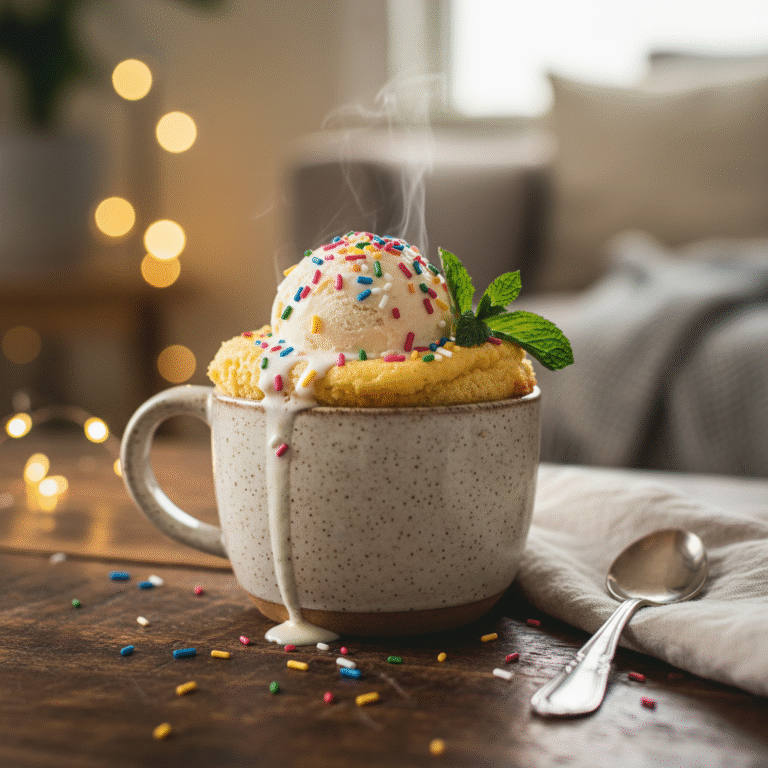
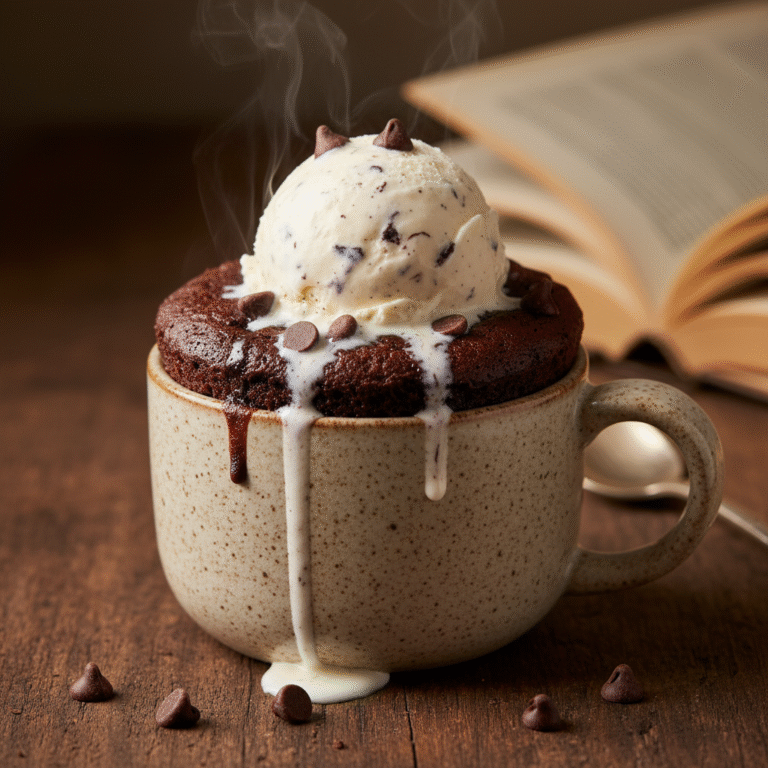
While these mug cakes are delicious on their own, the right toppings can elevate them from a quick snack to a decadent dessert. A classic dollop of freshly whipped cream or a scoop of vanilla bean ice cream is unbeatable, as the melting cream seeps into the warm sponge. For a fruity twist, top with fresh sliced strawberries, raspberries, or a simple berry compote. If you are a chocolate lover, a drizzle of hot fudge sauce or chocolate ganache works wonders. For a bit of crunch, add chopped toasted nuts like pecans or walnuts, or crushed cookie crumbs. You can also dust the tops with powdered sugar or cocoa powder for a simple, elegant finish. Serve with a hot cup of coffee or a cold glass of milk to balance the sweetness.
Storage and Reheating Tips
Mug cakes are best enjoyed immediately after cooking. Unlike traditional oven-baked cakes, they do not store well because the microwave cooking process leaves them prone to drying out rapidly once cool. If you absolutely must save one, cover the top of the mug tightly with plastic wrap to trap moisture and store it at room temperature for up to 24 hours. Do not refrigerate, as this will accelerate the staling process. To reheat, remove the plastic wrap and microwave on high for 10-15 seconds. We highly recommend preparing the dry mix in advance if you want to save time later, rather than baking the cake and trying to store the finished product. You can keep the pre-mixed dry ingredients in a jar and just add the wet ingredients when you are ready to eat.
Nutrition Facts (Estimated)
| Serving Size | 1 Mug Cake |
| Calories | 320 |
| Fat | 14g |
| Saturated Fat | 9g |
| Unsaturated Fat | 4g |
| Trans Fat | 0g |
| Cholesterol | 35mg |
| Sodium | 210mg |
| Carbohydrates | 44g |
| Fiber | 1g |
| Sugar | 22g |
| Protein | 4g |
Frequently Asked Questions
Can I make this recipe in one giant mug?
Technically yes, if you have a soup mug or a very large bowl (approx 20oz capacity). However, cooking time will increase, and the center might struggle to cook before the edges dry out. We recommend splitting it for the best texture.
Why is my mug cake rubbery?
Rubbery texture usually comes from two things: overmixing the batter (developing too much gluten) or overcooking it. Try mixing less vigorously and reducing the microwave time by 15-20 seconds.
Can I use self-rising flour?
Yes! If you use self-rising flour, simply omit the baking powder and the salt from the recipe, as self-rising flour already contains these leavening agents.
Can I bake this in the oven instead?
You can, but it defeats the purpose of a quick mug cake! If you must, bake in oven-safe ramekins at 350°F (175°C) for about 15-20 minutes.
Can I add cocoa powder to make this chocolate?
To make this chocolate, replace 2 tablespoons of the flour with 2 tablespoons of unsweetened cocoa powder and add an extra teaspoon of sugar.
Is it safe to eat without eggs?
Absolutely. Since this recipe is egg-free, you don’t have to worry about undercooked eggs. In fact, the batter is safe to taste before cooking (as long as your flour is not raw-flour risk, though microwaving kills bacteria).
My cake overflowed! What happened?
This usually happens if the mug was too small or filled too high. The batter should only fill the mug halfway to allow room for the rapid rise that happens in the microwave.
Can I double this recipe?
Yes, you can double the ingredients to make 4 mugs. However, do not microwave all 4 at once unless you have a very large microwave, as it will affect cooking evenness. Cook them in batches of two.
Conclusion
There is something undeniably magical about being able to create a warm, fluffy cake in less time than it takes to brew a pot of coffee. This Quick Microwave Vanilla Mug Cake for Two is more than just a recipe; it is a solution for late-night cravings, a surprise treat for a loved one, and a testament to the fact that good food doesn’t always require hours of labor. With its tender crumb, sweet vanilla aroma, and endless possibilities for customization, it is sure to become a staple in your recipe repertoire. So next time the sweet tooth strikes, skip the store-bought cookies, grab your favorite mugs, and enjoy the instant gratification of homemade cake.