The Ultimate Traditional British Sticky Toffee Pudding Cake Recipe
Traditional British Sticky Toffee Pudding Cake Recipe
Experience the ultimate comfort dessert with this traditional British Sticky Toffee Pudding. A moist, date-studded sponge cake drenched in a rich, buttery toffee sauce, this classic recipe is the perfect indulgence for cozy nights in or festive holiday gatherings.
20 minutes
35 minutes
55 minutes
9 servings
Dessert
Baking
British
Vegetarian
If there is one dessert that defines British comfort food, it is undoubtedly Sticky Toffee Pudding. Despite the name ‘pudding,’ which can be confusing for Americans who equate the term with creamy custards, this dish is actually a incredibly moist, dense sponge cake. The magic lies in the ingredients: chopped dates are softened in boiling water and baking soda, breaking them down into a sweet, sticky puree that gets folded into the batter. This process not only naturally sweetens the cake but also guarantees a texture that is impossibly soft and tender, never dry.
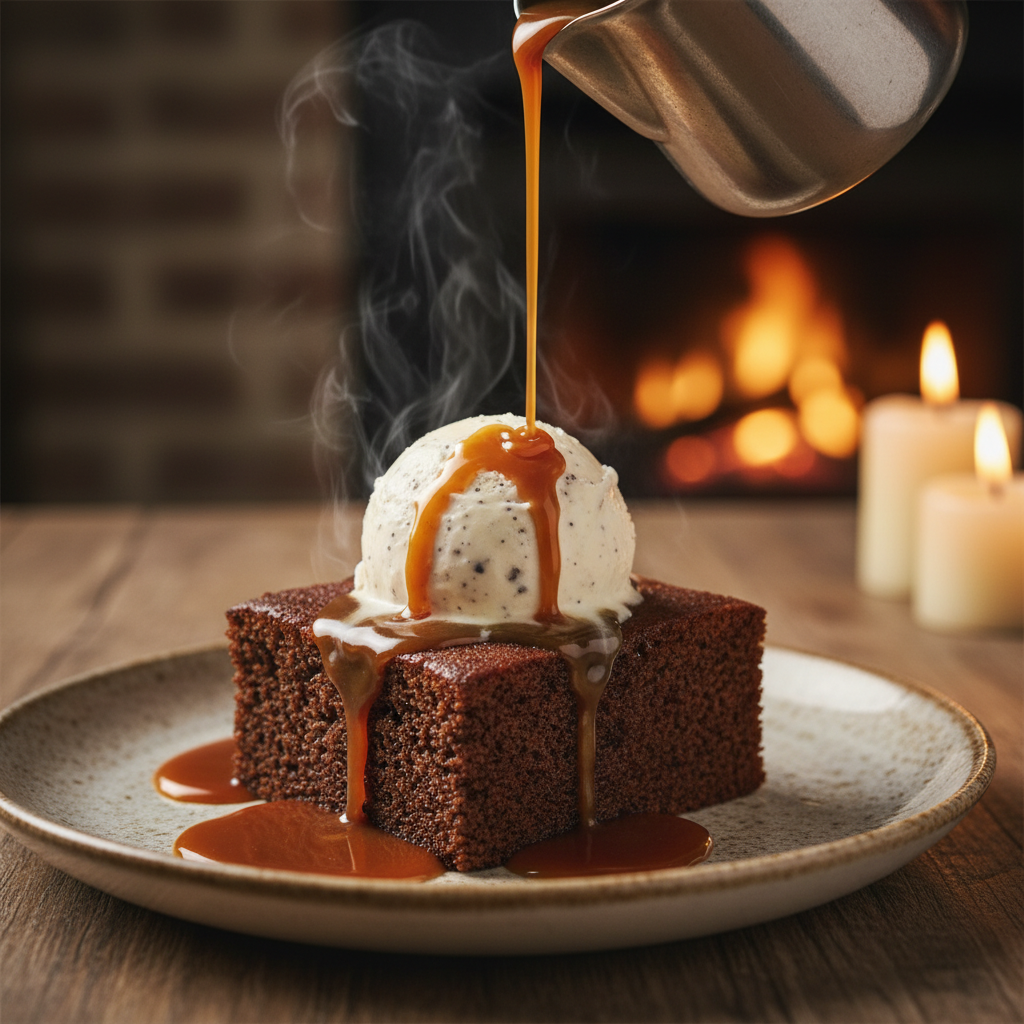
But the sponge is only half the story. The crowning glory is the luxurious toffee sauce—a simple yet decadent emulsion of heavy cream, dark brown sugar, and butter—that is poured over the warm cake, soaking into every crumb. When served fresh from the oven, perhaps with a scoop of vanilla bean ice cream or a dollop of custard (crème anglaise), the contrast between the hot, sticky sponge and the cold, melting cream is nothing short of heavenly.
This recipe has been refined to ensure the perfect balance of sweetness and depth. We use dark brown sugar for its high molasses content, giving the toffee sauce a complex, caramel-like bitterness that cuts through the sugar. Whether you are hosting a dinner party and need a show-stopping finale or simply craving something warm and sweet on a rainy afternoon, this Traditional British Sticky Toffee Pudding is guaranteed to become a family favorite. It captures the essence of a rustic English pub right in your own kitchen, offering a hug in a bowl that transcends borders and culinary traditions.
History & Origins
The exact origins of Sticky Toffee Pudding are somewhat shrouded in culinary mystery and friendly rivalry, adding to its charm. While it feels like a dessert that has been around for centuries, it is actually a relatively modern classic in the pantheon of British cuisine. The most widely accepted origin story traces it back to the 1970s in the Lake District of England. Francis Coulson of the Sharrow Bay Country House Hotel is often credited with developing the definitive version of the dish. He reportedly received the recipe from a Mrs. Martin of Lancashire, who in turn may have received it from Canadian air force officers lodging at her hotel during the Second World War. This Canadian connection is interesting because the batter is quite similar to an American or Canadian muffin texture, distinct from traditional English steamed suet puddings.
However, another claim comes from the Udny Arms Hotel in Aberdeenshire, Scotland, which also purports to have served the pudding around the same time. Regardless of who poured the first ladle of sauce, the dish exploded in popularity during the late 20th century. It transitioned rapidly from a regional hotel specialty to a staple on pub menus across the United Kingdom. Today, it is considered a national treasure, beloved for its ability to warm the soul during Britain’s famously damp winters. It has also crossed the Atlantic, finding a devoted following in the United States and beyond, where it is often served at high-end steakhouses and bistros as a premium comfort dessert.
Why This Recipe Works
This specific recipe works because it meticulously addresses the science behind the moisture and flavor profile of the cake. Many sticky toffee pudding recipes can turn out either too dry or cloyingly sweet. Here, we utilize the chemical reaction between bicarbonate of soda (baking soda) and boiling water to soften the skins of the dried dates effectively. This step is non-negotiable; it breaks down the cellular structure of the fruit, allowing it to dissolve into the batter, creating a natural binding agent that retains moisture far better than butter or oil alone.
Furthermore, the choice of Muscovado or dark brown sugar is critical. Unlike white sugar, dark brown sugar contains molasses, which adds moisture, acidity, and a deep, toffee-like flavor profile that mirrors the sauce. We also balance the ratio of sauce to sponge carefully. Some recipes skimp on the sauce, leaving you with dry patches of cake. This recipe yields a generous amount of toffee sauce, ensuring that once you poke holes in the warm cake and pour it over, the liquid permeates deep into the center. The result is a pudding that is sticky and gooey throughout, not just on top. Finally, the addition of a pinch of sea salt to the sauce cuts the sweetness, providing a sophisticated salted caramel edge that keeps the palate interested.
Why You’ll Love This Recipe
- ✓Uses Medjool dates for superior natural sweetness and moisture
- ✓Generous amount of homemade toffee sauce for soaking
- ✓Can be made ahead and reheated effortlessly
- ✓Perfect balance of rich molasses flavor without being overly sweet
- ✓Freezer-friendly sponge for quick desserts later
Equipment You’ll Need
- ✓8×8 inch square baking pan
- ✓Food processor or blender
- ✓Medium saucepan
- ✓Electric hand mixer or stand mixer
- ✓Heatproof bowl
- ✓Rubber spatula
- ✓Whisk
- ✓Skewer or toothpick
Ingredients
- ✓6 oz (170g) Medjool dates, pitted and roughly chopped
- ✓1 cup (240ml) boiling water
- ✓1 tsp baking soda
- ✓1/4 cup (57g) unsalted butter, softened
- ✓3/4 cup (150g) granulated sugar
- ✓2 large eggs, room temperature
- ✓1 tsp vanilla extract
- ✓1 1/3 cups (170g) all-purpose flour
- ✓1 tsp baking powder
- ✓1/2 tsp salt
- ✓For the Sauce: 1/2 cup (113g) unsalted butter
- ✓For the Sauce: 1 cup (200g) dark brown sugar, packed
- ✓For the Sauce: 1 cup (240ml) heavy whipping cream
- ✓For the Sauce: 1/2 tsp vanilla extract
- ✓For the Sauce: 1/4 tsp flaky sea salt (optional)
Instructions
- Preheat your oven to 350°F (175°C). Grease an 8×8 inch square baking pan generously with butter or non-stick spray.
- Place the chopped dates in a heatproof bowl. Sprinkle the baking soda over them and pour the boiling water on top. Ensure all dates are submerged. Let this sit for 15 minutes to soften. Once soft, you can mash them with a fork for a chunky texture or pulse in a food processor for a smooth puree (recommended).
- While the dates soak, cream the softened butter and granulated sugar in a large bowl using an electric mixer until pale and fluffy, about 3 minutes.
- Add the eggs one at a time, beating well after each addition. Scrape down the sides of the bowl. Mix in the vanilla extract.
- In a separate bowl, whisk together the flour, baking powder, and salt.
- Gently fold half of the flour mixture into the butter mixture. Then, fold in the date mixture (including the liquid). Finally, fold in the remaining flour mixture. Do not overmix; stir just until combined.
- Pour the batter into the prepared baking pan and smooth the top with a spatula.
- Bake for 30-35 minutes, or until the cake springs back when touched and a toothpick inserted into the center comes out clean.
- While the cake bakes, make the toffee sauce. In a medium saucepan over medium heat, combine the butter, dark brown sugar, and heavy cream. Bring to a gentle boil, whisking constantly.
- Reduce the heat to low and let it simmer for about 3-5 minutes until the sauce thickens slightly and becomes a deep amber color. Stir in the vanilla and sea salt. Remove from heat.
- When the cake comes out of the oven, use a skewer or fork to poke holes all over the surface. Pour about half of the warm toffee sauce over the cake, allowing it to soak in.
- Serve the cake warm, cut into squares, with the remaining toffee sauce poured over individual servings. Top with whipped cream or vanilla ice cream.
Expert Cooking Tips
- ✓Do not skip the soaking step for the dates; the baking soda is crucial for breaking down the fibers.
- ✓Use room temperature eggs to ensure the batter emulsifies properly without curdling.
- ✓If you prefer a smoother texture, puree the dates and water in a blender before adding to the batter.
- ✓Watch the sauce carefully while simmering; sugar burns quickly, so keep stirring.
- ✓For an extra indulgent touch, toast the butter for the sauce slightly before adding the cream (brown butter toffee).
- ✓Let the cake rest for 10 minutes after pouring the initial sauce layer to allow full absorption.
Substitutions and Variations
If you cannot find Medjool dates, regular dried pitted dates work fine, though they may need a few extra minutes of soaking time as they are drier. For a gluten-free version, substitute the all-purpose flour with a high-quality 1:1 gluten-free baking flour blend that includes xanthan gum; the texture remains surprisingly similar due to the moisture from the dates. If you are out of dark brown sugar for the sauce, light brown sugar creates a lighter, sweeter caramel, though it lacks the depth of molasses. You can also use molasses or treacle (1 tablespoon) added to white sugar to mimic brown sugar. For a dairy-free adaptation, use plant-based butter blocks and full-fat coconut cream or a dairy-free heavy cream alternative for the sauce, though the flavor profile will shift slightly towards coconut.
Common Mistakes to Avoid
The most common mistake is overbaking the sponge. Because the cake is dark due to the dates and sugar, visual cues can be tricky. Rely on the touch test (springs back) and a toothpick test. Overbaking results in a dry, crumbly texture that even the sauce cannot fully rescue. Another error is not chopping the dates finely enough. Large chunks of date can sink to the bottom and create an uneven texture; pureeing them ensures every bite is moist. Regarding the sauce, be careful not to boil it too vigorously or for too long, as this can cause the butter to separate from the sugar, resulting in a greasy layer on top. Simmer gently just until combined and slightly thickened. Finally, do not try to substitute the baking soda with baking powder in the soaking step; baking powder does not have the alkalinity needed to soften the date skins.
Serving Suggestions
Sticky Toffee Pudding is best served warm. If you have made the cake ahead of time, reheat individual squares in the microwave for 20-30 seconds before serving. The classic accompaniment is a scoop of high-quality vanilla bean ice cream, which provides a temperature and texture contrast. Alternatively, heavy pouring cream (unwhipped) is very traditional in the UK. For a more elevated presentation, serve with a warm crème anglaise or a dollop of slightly unsweetened whipped cream to balance the sugar. A garnish of chopped pecans or walnuts can add a nice crunch, and a sprinkle of flaky sea salt on top of the sauce highlights the caramel notes perfectly.
Storage and Reheating Tips
This cake stores exceptionally well, often tasting better the next day as the flavors meld. Store the cake covered in the refrigerator for up to 5 days. Keep the extra sauce in a separate airtight container in the fridge. To freeze, wrap individual squares of the cooled cake (without the sauce topping) tightly in plastic wrap and then foil; they can be frozen for up to 3 months. The sauce can also be frozen in a sealed container. Thaw the cake and sauce in the refrigerator overnight. Reheat the cake in the microwave or oven, and gently warm the sauce on the stovetop or microwave before assembling.
Nutrition Facts (Estimated)
| Serving Size | 1 square with sauce |
| Calories | 480 |
| Fat | 22g |
| Saturated Fat | 14g |
| Unsaturated Fat | 7g |
| Trans Fat | 0.5g |
| Cholesterol | 85mg |
| Sodium | 210mg |
| Carbohydrates | 68g |
| Fiber | 3g |
| Sugar | 45g |
| Protein | 4g |
Frequently Asked Questions
Can I use fresh dates instead of dried?
It is not recommended. Dried dates have a concentrated sugar content and chewy texture that is essential for the structure and flavor of this pudding. Fresh dates contain too much water and lack the depth of flavor required.
Why do I need baking soda for the dates?
Baking soda (bicarbonate of soda) is alkaline. When added to boiling water and dates, it helps break down the tough skin and fibers of the dried fruit, turning them into a soft pulp that integrates seamlessly into the batter.
Is this the same as Christmas Pudding?
No. Christmas Pudding is a boiled or steamed fruitcake heavily spiced and packed with various dried fruits, suet, and alcohol. Sticky Toffee Pudding is a lighter baked sponge cake flavored primarily with dates and toffee.
Can I bake this in a muffin tin?
Yes! This recipe works great as individual puddings. Grease a standard muffin tin and bake for approximately 18-22 minutes. This creates great individual portions for parties.
My sauce separated, how do I fix it?
If your toffee sauce separates (looks oily), remove it from the heat and whisk in a teaspoon of hot water vigorously. Alternatively, use an immersion blender to re-emulsify the mixture.
Can I make this recipe without a food processor?
Absolutely. After soaking the dates, simply mash them thoroughly with a fork or a potato masher. The cake will have small chunks of date in it, which adds a lovely rustic texture.
What helps the cake rise?
The recipe uses baking powder in the flour mix, but the baking soda used to soak the dates also contributes to the leavening when it reacts with the acidity in the brown sugar and dates.
Is this dessert very sweet?
Yes, it is a rich and sweet dessert. The sweetness comes from the dates and the sugar. To balance it, serve with unsweetened cream or crème fraîche, and don’t skip the salt in the sauce.
Conclusion
There are few desserts that offer the same level of satisfaction as a homemade Sticky Toffee Pudding. It is the culinary equivalent of a warm blanket on a cold day. By following this guide, you will master the art of the perfect sponge and the glossiest, richest toffee sauce. Whether you are an Anglophile looking to recreate a British classic or simply a lover of sweet, caramel flavors, this recipe is sure to earn a permanent spot in your baking repertoire. Don’t forget to save that extra sauce—it’s liquid gold! Happy baking!