
Traditional French Fraisier Cake: The Ultimate Strawberry Masterpiece
Traditional French Fraisier Strawberry Cake Recipe
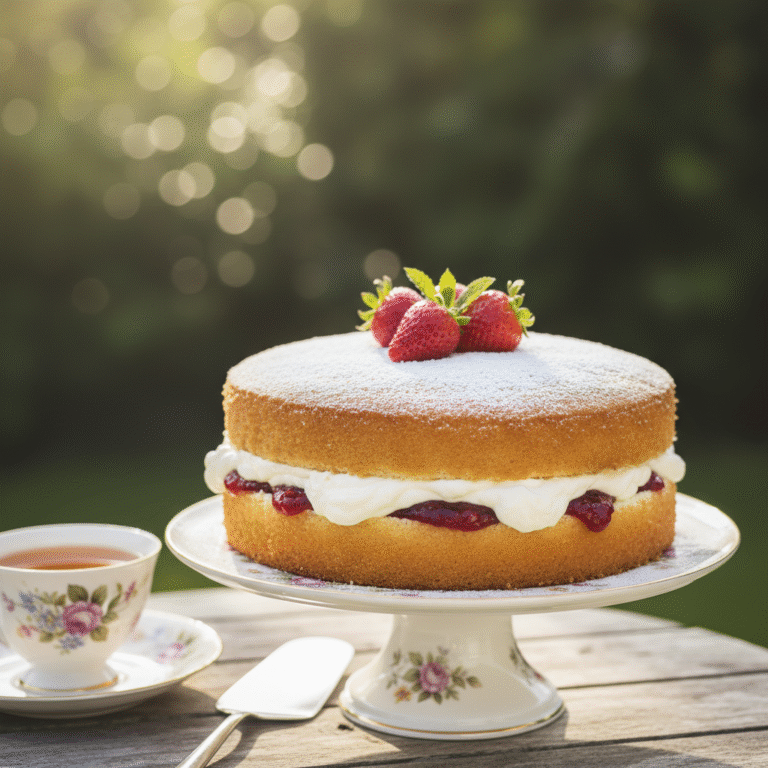
This show-stopping Traditional French Fraisier Cake features two layers of light genoise sponge, a silky crème mousseline, and a stunning ring of fresh strawberries. It is the perfect elegant dessert for spring celebrations, offering a balance of rich cream and bright fruit.
1 hour 30 minutes
30 minutes
6 hours (includes chilling)
One 8-inch cake (8-10 servings)
Dessert
Baking & Chilling
French
Vegetarian
There is perhaps no cake more visually arresting in the French pastry repertoire than the Fraisier. Unlike a standard strawberry shortcake which relies on whipped cream and biscuits, the Fraisier is an architectural marvel that demands attention. At its heart, this cake is a celebration of the strawberry—’fraise’ in French—elevated by the richness of a crème mousseline and the tenderness of a genoise sponge. The magic lies in the assembly: halved strawberries are pressed against the sides of a ring mold, creating a stained-glass effect that promises freshness before you even take a bite. Inside, whole strawberries are nestled into a velvety, butter-enriched pastry cream that sets firm enough to slice beautifully yet melts instantly on the tongue.
For many home bakers, the Fraisier represents a graduation to intermediate patisserie. It looks intimidatingly professional, the kind of dessert you’d gaze at longingly in a Parisian bakery window. However, once broken down into its components, it is surprisingly achievable. The flavor profile is sophisticated; the mousseline is often spiked with a hint of Kirsch (cherry brandy) to cut through the butter fat, while the sponge is soaked in a simple syrup to ensure it remains moist for days. This isn’t just a cake; it’s a textural journey from the soft sponge to the firm fruit and the luscious cream. Whether you are making this for a Mother’s Day brunch, a birthday, or simply to celebrate the arrival of strawberry season, this recipe will guide you through creating a masterpiece that tastes even better than it looks.
History & Origins
The history of the Fraisier is a fascinating journey through French culinary evolution, distinct from its fruit-and-cream cousins. While strawberries have been enjoyed in France for centuries—famously cultivated in the gardens of Versailles for Louis XIV—the modern incarnation of the Fraisier is a relatively contemporary invention in the timeline of French pastry. The name itself is derived simply from ‘fraise,’ the French word for strawberry. While cakes combining strawberries and cream have existed in various forms, the specific architecture of the Fraisier as we know it today gained prominence in the 1960s.
Many culinary historians credit the famous pastry chef Gaston Lenôtre with popularizing the modern Fraisier. He refined the dessert by using crème mousseline (pastry cream whipped with butter) instead of a simple crème pâtissière or Chantilly cream. This innovation was crucial; the butter provided the structural integrity needed to hold the weight of the cake and the fruit without collapsing, allowing for that signature clean slice and the vertical display of strawberries around the edge. Before this, strawberry cakes were often messier affairs. The traditional finish often involves a thin layer of almond paste (marzipan) on top, tinted a pale green or pink, though modern interpretations often use a red fruit coulis or a simple dusting of powdered sugar. Today, the Fraisier stands alongside the Opéra and the Saint-Honoré as a pillar of classic French pastry, symbolizing the arrival of spring and the bounty of the garden.
Why This Recipe Works
This recipe succeeds where others fail because it meticulously balances structural integrity with mouthfeel. The biggest challenge with a Fraisier is the cream: if it’s too soft, the cake collapses when the ring is removed; if it’s too hard, it tastes like a block of butter. Our ratio for the crème mousseline ensures a filling that sets firmly due to the butter content but remains aerated and light thanks to the proper whipping technique. We also utilize a classic Genoise sponge rather than a butter cake. A Genoise is aerated solely by eggs and sugar whipped over heat, resulting in a dry, absorbent crumb. This is intentional; the sponge is designed to drink up the Kirsch-infused syrup, transforming into a moist, flavorful layer that doesn’t turn to mush.
Furthermore, the assembly technique detailed here emphasizes the ‘tight pack.’ By piping the cream specifically between the strawberries and pressing the sponge down firmly, we eliminate air pockets that ruin the visual cross-section. We also recommend using a simple syrup soak that is applied generously. Many home bakers under-soak their sponge, leading to a dry cake. This recipe ensures every bite is cohesive, with the syrup bridging the gap between the airy sponge and the rich cream.
Why You’ll Love This Recipe
- ✓Features a silky, authentic Crème Mousseline that holds its shape perfectly.
- ✓Uses a classic Genoise sponge that absorbs syrup without becoming soggy.
- ✓Creates a stunning visual presentation with exposed strawberry cross-sections.
- ✓Can be made ahead of time, as the flavors meld and improve after chilling.
- ✓Includes detailed instructions for the signature marzipan or glaze topping.
Equipment You’ll Need
- ✓8-inch Springform pan or Cake Ring
- ✓Acetate cake collar (essential for clean removal)
- ✓Stand mixer with whisk and paddle attachments
- ✓Saucepan
- ✓Instant-read thermometer
- ✓Piping bag with a round tip
- ✓Pastry brush
- ✓Rolling pin (if using marzipan)
Ingredients
- ✓4 large eggs (room temperature)
- ✓120g granulated sugar (for sponge)
- ✓120g all-purpose flour, sifted
- ✓30g unsalted butter, melted (for sponge)
- ✓500ml whole milk
- ✓1 vanilla bean, split and scraped
- ✓200g granulated sugar (for cream)
- ✓60g cornstarch
- ✓250g unsalted butter, softened (for cream)
- ✓100ml water
- ✓100g sugar (for syrup)
- ✓2 tbsp Kirsch or strawberry liqueur (optional)
- ✓750g fresh strawberries, hulled and uniform in size
- ✓200g marzipan or red berry jelly for topping
Instructions
- Preheat oven to 350°F (175°C). Grease and line an 8-inch round cake pan with parchment paper.
- Prepare the Genoise: In a heatproof bowl over simmering water, whisk eggs and 120g sugar until warm to the touch and sugar is dissolved. Remove from heat and whip on high speed until tripled in volume and pale (ribbon stage).
- Gently fold in the sifted flour in three batches. Fold in the melted butter carefully to avoid deflating the batter. Pour into the pan and bake for 20-25 minutes. Let cool completely.
- Make the Pastry Cream base: Heat milk and vanilla bean in a saucepan. In a bowl, whisk egg yolks, 200g sugar, and cornstarch. Temper the yolks with hot milk, return to the pan, and cook until thickened. Remove from heat and stir in half of the softened butter (125g). Cover with plastic wrap touching the surface and cool to room temperature.
- Make the Syrup: Boil water and 100g sugar until dissolved. Remove from heat, let cool, and stir in the Kirsch.
- Finish the Mousseline: When the pastry cream is at room temperature, whip it in a stand mixer while gradually adding the remaining softened butter (125g). Whip until fluffy, pale, and stable.
- Assembly: Slice the cooled sponge horizontally into two thin layers. Trim the edges so they are slightly smaller than your 8-inch ring.
- Place your cake ring on a serving board and line the inside with the acetate strip. Place the first layer of sponge at the bottom. Brush generously with syrup.
- Select strawberries of the same height. Cut them in half vertically. Arrange them cut-side out against the acetate strip, creating a ring around the sponge.
- Pipe a ring of mousseline cream between the strawberries to fill the gaps. Pipe a layer of cream over the bottom sponge and smooth it out. Add whole or chopped strawberries in the center, then cover with more cream.
- Place the second sponge layer on top, press down gently, and brush with syrup. Spread a final thin layer of cream on top to create a flat surface.
- Chill the cake for at least 4 hours, preferably overnight, to set the mousseline.
- Decoration: Roll out marzipan and cut an 8-inch circle, placing it on top. Alternatively, use a fruit glaze. Remove the ring and peel off the acetate before serving.
Expert Cooking Tips
- ✓Ensure your eggs are at room temperature for the Genoise to achieve maximum volume.
- ✓The butter for the mousseline must be soft but not melted; if it’s too cold, the cream will be lumpy.
- ✓Do not skip the acetate collar; it is crucial for revealing the clean layers of the cake.
- ✓Choose strawberries that are uniform in height so the top sponge sits level.
- ✓If the mousseline separates (curdles) while whipping, warm the bowl slightly with a hair dryer or warm towel and whip again.
- ✓Brush the syrup generously; a dry sponge ruins the texture of a Fraisier.
Substitutions and Variations
If you cannot find Kirsch, you can substitute it with a simple vanilla extract or a strawberry liqueur for a fruitier punch. For a non-alcoholic version, simply omit the alcohol and increase the vanilla in the syrup. If you prefer not to use marzipan for the topping, a red berry coulis thickened with gelatin (miroir glaze) is a stunning and traditional alternative. You can also simply dust the top heavily with powdered sugar right before serving. Regarding the flour, cake flour can be used instead of all-purpose for an even more tender crumb, though all-purpose works fine for a sturdy Genoise. If you are allergic to almonds, avoid the marzipan and opt for a whipped ganache or fruit glaze topping. For the cream, there is no true substitute for the butter in the mousseline if you want the structural stability, but aDiplomat cream (pastry cream + whipped cream) can be used for a lighter, less stable version that must be served in a bowl or glass.
Common Mistakes to Avoid
The most common mistake is rushing the temperature equalization for the mousseline cream. If the pastry cream base is cold and you add soft butter, the butter will seize and create lumps. Conversely, if the pastry cream is too hot, the butter will melt and the mixture will be soupy. Both components must be at the same room temperature (around 68°F/20°C). Another error is not whipping the eggs enough for the Genoise; the volume comes entirely from the air beaten into the eggs, so take your time. Finally, failing to press the cream firmly into the gaps between the strawberries results in air pockets that mar the beautiful exterior view. Use a piping bag to force the cream into every crevice.
Serving Suggestions
The Fraisier is a rich cake, so thin slices are often sufficient. It is best served chilled but allowed to sit at room temperature for about 15-20 minutes before eating, which softens the butter in the cream slightly for a better mouthfeel. Serve with a glass of chilled Champagne or a dessert wine like Sauternes, which complements the strawberries and vanilla. A fresh mint leaf garnish or a few edible flowers on top adds a lovely color contrast to the pink or green marzipan topping.
Storage and Reheating Tips
This cake must be stored in the refrigerator due to the dairy content in the mousseline cream. It will keep well for up to 3 days. Cover the cut edges with plastic wrap to prevent the sponge from drying out and the strawberries from oxidizing. Freezing is not recommended for a Fraisier, as the fresh strawberries will release water upon thawing, making the cake soggy and ruining the texture of the cream. If you must transport it, keep it in the ring mold until you arrive at your destination to ensure stability.
Nutrition Facts (Estimated)
| Serving Size | 1 slice |
| Calories | 450 |
| Fat | 28g |
| Saturated Fat | 16g |
| Unsaturated Fat | 10g |
| Trans Fat | 0.5g |
| Cholesterol | 145mg |
| Sodium | 120mg |
| Carbohydrates | 48g |
| Fiber | 2g |
| Sugar | 35g |
| Protein | 6g |
Frequently Asked Questions
Can I make the Fraisier cake in advance?
Yes, in fact, it is better if made a day ahead. The overnight chilling allows the mousseline to set perfectly and the sponge to absorb the syrup flavors. Just leave the final decoration (fresh fruit on top) for the day of serving.
My mousseline cream looks curdled. Can I fix it?
Yes! This usually happens if the butter and pastry cream were at different temperatures. To fix it, gently heat the side of the mixing bowl with a hair dryer while whipping on high speed. The mixture should come back together into a smooth emulsion.
Do I really need an acetate collar?
For the professional look, yes. The acetate allows you to pull the mold off without dragging the cream or fruit with it. If you don’t have one, you can use parchment paper, but the finish won’t be as glossy or smooth.
Can I use frozen strawberries?
No. Frozen strawberries will release too much liquid when they thaw, which will cause the cream to separate and the cake to collapse. Fresh, firm strawberries are essential for the structure.
What is the difference between Mousseline and Diplomat cream?
Mousseline is pastry cream whipped with butter, making it rich and stable. Diplomat cream is pastry cream whipped with heavy cream (and often gelatin), making it lighter and airier but less structural. Fraisier typically uses Mousseline to support the weight of the cake.
Why is my sponge cake tough?
A tough sponge usually comes from over-mixing when folding in the flour. You want to fold gently just until the flour disappears to keep the air bubbles intact and avoid developing gluten.
Can I use a different fruit?
While a traditional Fraisier uses strawberries, you can adapt this technique for raspberries (framboisier) or even mangoes. Just ensure the fruit is not too watery.
How do I get the smooth top layer?
The traditional smooth top is often a disc of rolled marzipan. If using cream, use an offset spatula dipped in hot water to smooth the final layer before chilling.
Conclusion
Mastering the Traditional French Fraisier is a feather in the cap of any home baker. It is a dessert that commands respect and delivers joy in equal measure. The combination of the light, syrup-soaked sponge, the decadent mousseline, and the burst of fresh acidity from the strawberries is truly timeless. While the steps may seem numerous, the result is a professional-quality cake that will dazzle your friends and family. So, wait for the peak of strawberry season, gather your ingredients, and treat yourself to the process of creating this edible work of art. Bon appétit!