The Ultimate 5-Minute Chocolate Mug Cake: Fudgy, Moist, and Eggless
Quick Microwave Chocolate Mug Cake Recipe
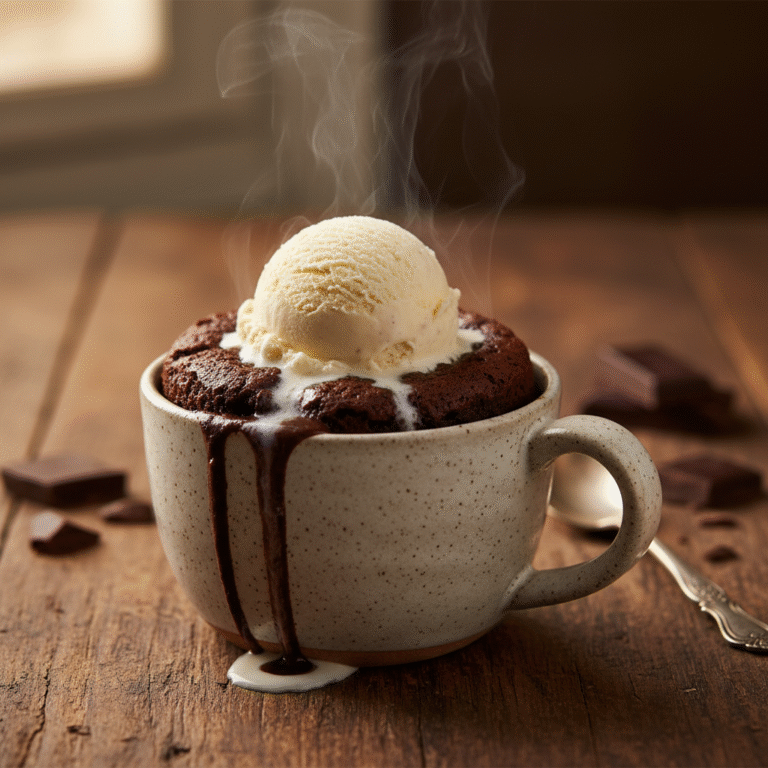
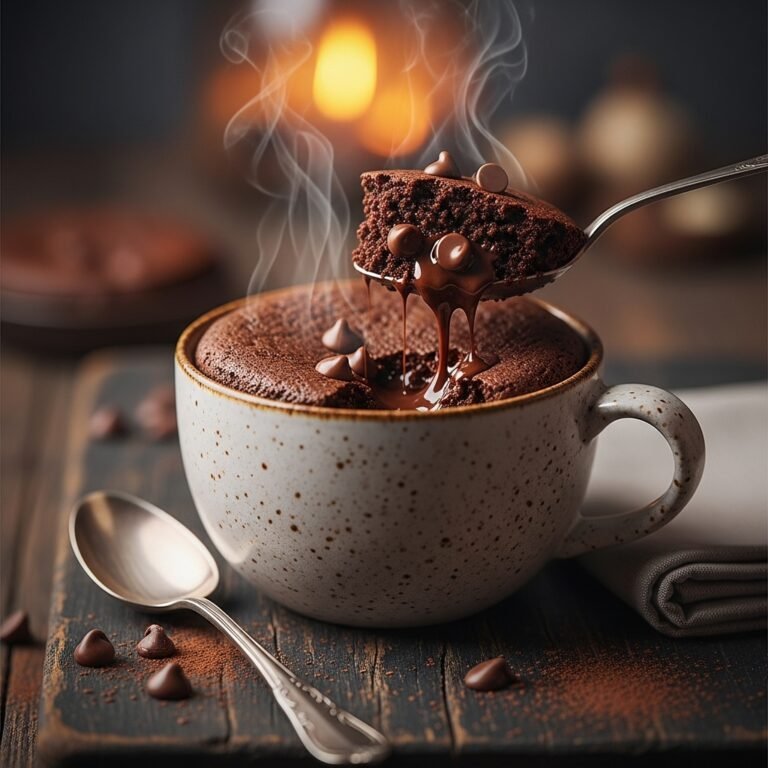
Satisfy your deepest chocolate cravings in less than five minutes with this ultra-fudgy, eggless chocolate mug cake. It is the perfect single-serving dessert that delivers a moist, brownie-like texture without the hassle of traditional baking.
3 minutes
2 minutes
5 minutes
1 serving
Dessert
Microwave
American
Vegetarian
We have all been there: it is 9:00 PM on a Tuesday, the day has been long, and the only thing that can possibly salvage the evening is a decadent, warm chocolate dessert. But the thought of preheating the oven, dragging out the stand mixer, and waiting an hour for a cake to bake is simply out of the question. Enter the chocolate mug cake—a culinary miracle that bridges the gap between instant gratification and gourmet indulgence. This isn’t just any mug cake; this is the result of years of testing to banish the rubbery, dry, and sponge-like texture that often plagues microwave desserts. Instead, we are talking about a rich, velvety crumb that hovers deliciously between a molten lava cake and a dense fudge brownie.
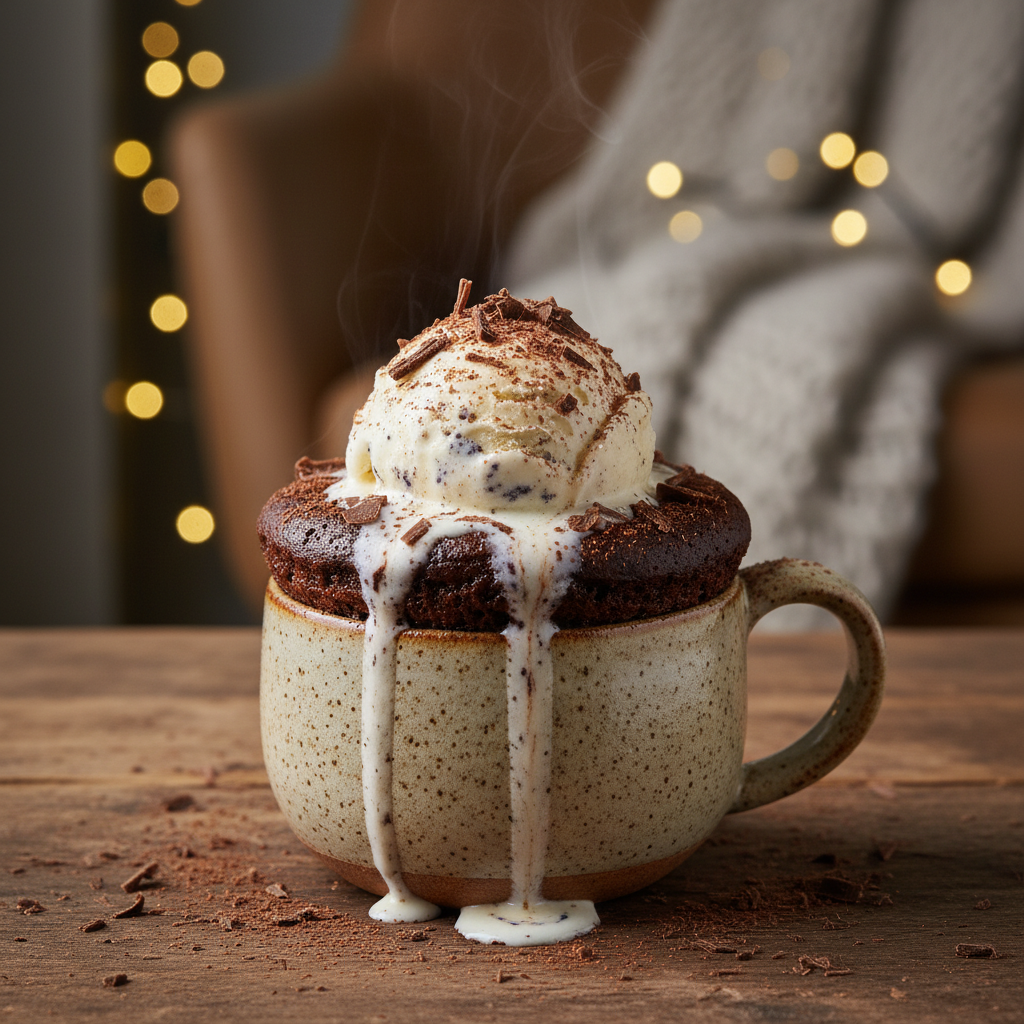
The beauty of this recipe lies in its simplicity and its pantry-staple ingredient list. You do not need artisan chocolate bars or fancy equipment. With just a mug, a spoon, and a few basics like flour, sugar, cocoa powder, and oil, you can create a dessert that rivals your favorite bakery’s chocolate slice. It is designed for the solo snacker, the busy parent, or the college student with limited kitchen access. The flavor profile is deeply chocolatey, enhanced by a pinch of salt and a splash of vanilla to round out the sweetness. Whether you top it with a scoop of vanilla bean ice cream, a dollop of whipped cream, or just eat it straight from the microwave while it is still steaming, this mug cake is pure, unadulterated comfort in a cup.
History & Origins
The concept of the mug cake is a relatively modern phenomenon, inextricably linked to the popularization of the microwave oven. While the microwave was invented in the 1940s by Percy Spencer and became a household staple by the 1970s and 80s, it was largely relegated to reheating leftovers or popping popcorn for decades. The idea of ‘baking’ in a microwave was often viewed with skepticism, producing textures that were notoriously chewy or uneven. However, as internet food culture exploded in the late 2000s and early 2010s, the demand for ‘life hacks’ and quick recipes birthed the mug cake trend.
Early iterations were often simplified versions of standard cake batters, simply reduced in volume. Unfortunately, these recipes often included whole eggs, which, when microwaved, tend to scramble and create a rubbery, omelet-like texture. Over time, food bloggers and recipe developers began to refine the science. They realized that microwave baking requires a different chemical approach than oven baking. The removal of eggs and the adjustment of fat ratios were pivotal moments in mug cake history, transforming them from a novelty internet trend into a legitimate dessert category. Today, the mug cake represents the ultimate democratization of baking—accessible, fast, and requiring minimal skill, yet capable of delivering profound satisfaction.
Why This Recipe Works
This recipe succeeds where many others fail because it specifically addresses the physics of microwave cooking. Microwaves cook food by agitating water molecules, which generates heat rapidly and internally. In a standard oven, heat is applied externally and penetrates slowly, allowing gluten structures to form gradually. Because microwaves cook so fast, traditional cake batters with eggs tend to toughen up instantly, resulting in that dreaded rubbery texture. By eliminating the egg entirely, we remove the proteins that coagulate too hard, too fast.
Furthermore, this recipe utilizes oil instead of butter. While butter provides flavor, it contains water and milk solids. Oil is 100% fat, which ensures the cake remains incredibly moist and tender even after the rapid moisture loss that occurs in the microwave. We also use a specific ratio of liquid (milk) to dry ingredients that might seem too runny at first. This extra hydration is crucial because the microwave steams the cake as much as it bakes it. The addition of a pinch of salt and vanilla extract is not just for flavor; they are essential for masking the sometimes ‘flat’ taste of flour that hasn’t had time to brown via the Maillard reaction, ensuring the cocoa notes pop aggressively.
Why You’ll Love This Recipe
- ✓Ready in under 5 minutes from start to finish.
- ✓Eggless recipe ensures a moist, fudgy texture, not rubbery.
- ✓Uses standard pantry staples you likely already have.
- ✓Minimal cleanup—mix and bake in the same mug.
- ✓Highly customizable with mix-ins like chocolate chips or nuts.
- ✓Perfect portion control for a single serving.
Equipment You’ll Need
- ✓Microwave-safe mug (12-14 oz capacity)
- ✓Tablespoon
- ✓Microwave
- ✓Measuring spoons
Ingredients
- ✓4 tablespoons all-purpose flour
- ✓3 tablespoons granulated sugar
- ✓2 tablespoons unsweetened cocoa powder
- ✓1/2 teaspoon baking powder
- ✓Pinch of salt
- ✓3 tablespoons milk (dairy or plant-based)
- ✓1 tablespoon vegetable oil or melted coconut oil
- ✓1/4 teaspoon vanilla extract
- ✓1 tablespoon chocolate chips (optional, for the center)
Instructions
- Grab a microwave-safe mug that holds at least 12 ounces to prevent overflowing.
- Add the dry ingredients: flour, sugar, cocoa powder, baking powder, and salt directly into the mug.
- Use a spoon to mix the dry ingredients thoroughly, breaking up any large clumps of cocoa powder.
- Add the wet ingredients: milk, vegetable oil, and vanilla extract.
- Stir efficiently until the batter is smooth and no pockets of dry flour remain at the bottom of the mug.
- If using chocolate chips, drop them into the center of the batter now. Do not stir them in; let them sink slightly.
- Place the mug in the microwave.
- Cook on high power for 60 to 90 seconds. Start with 60 seconds. The cake is done when it has risen and the top looks set but slightly shiny.
- Remove carefully (the mug will be hot!) and let it sit for 1-2 minutes to cool and set further.
- Serve warm, ideally topped with whipped cream or ice cream.
Expert Cooking Tips
- ✓Do not overcook: This is the golden rule. Even 10 seconds too long can dry it out. It is better to slightly undercook it for a molten texture.
- ✓Use a wide mug: A wider mug allows for more even cooking compared to a tall, narrow one.
- ✓Mix the bottom: Make sure you scrape the bottom edges of the mug with your spoon so you don’t end up with a mouthful of dry flour later.
- ✓Fresh baking powder: Ensure your leavening agent isn’t expired, or the cake won’t rise.
- ✓Cocoa quality: Since chocolate is the main flavor, use a high-quality cocoa powder like Dutch-processed for a smoother taste.
- ✓Milk temperature: Room temperature milk mixes slightly better, but cold milk works fine too.
Substitutions and Variations
This recipe is incredibly forgiving and adaptable to various dietary needs. For a vegan version, simply use a plant-based milk like almond, soy, or oat milk, and ensure your chocolate chips are dairy-free. If you need to go gluten-free, a 1:1 gluten-free all-purpose flour blend works remarkably well, though the texture may be slightly denser. You can substitute the granulated sugar with brown sugar for a deeper, caramel-like flavor, or use coconut sugar for a lower glycemic index option. Regarding the fat, while vegetable oil is neutral, melted coconut oil adds a lovely subtle flavor, or you can use melted butter if you prefer that classic bakery taste, though the texture will be slightly firmer once cooled.
Common Mistakes to Avoid
The most frequent mistake is overcooking the cake. Microwaves vary wildly in wattage (usually between 700W and 1200W). If you have a high-wattage microwave, 60 seconds might be plenty. If you cook it until it looks completely dry on top like an oven cake, it is likely already overdone inside. Another common error is using a mug that is too small. The batter rises rapidly during cooking; if the mug is small, it will spill over and create a mess. Finally, forgetting to mix the dry ingredients first often leads to clumps of bitter cocoa powder or baking powder in the final bite.
Serving Suggestions
While delicious on its own, this mug cake shines with toppings. A scoop of vanilla bean ice cream is classic, as the cold cream melts into the hot cake creating a sauce. Fresh berries, particularly raspberries or strawberries, cut through the richness of the chocolate. A dusting of powdered sugar or a drizzle of salted caramel sauce can elevate the presentation. For a cozy winter vibe, try adding a pinch of cinnamon to the batter and topping with whipped cream.
Storage and Reheating Tips
Mug cakes are best enjoyed immediately while they are warm. However, if you cannot finish it, you can cover the mug with plastic wrap and store it in the refrigerator for up to 1 day. To reheat, simply microwave it for 10-15 seconds. Note that the texture will not be as soft as when it was fresh. We do not recommend freezing this cake, as the texture tends to become spongy upon thawing.
Nutrition Facts (Estimated)
| Serving Size | 1 mug cake |
| Calories | 380 |
| Fat | 18g |
| Saturated Fat | 3g |
| Unsaturated Fat | 14g |
| Trans Fat | 0g |
| Cholesterol | 2mg |
| Sodium | 210mg |
| Carbohydrates | 52g |
| Fiber | 3g |
| Sugar | 28g |
| Protein | 5g |
Frequently Asked Questions
Why is my mug cake rubbery?
Rubberiness usually comes from two things: overcooking or over-mixing. Since this recipe is eggless, the risk is lower, but if you cook it too long, the gluten structure tightens up. Also, mix just until combined; do not beat the batter.
Can I make this without a microwave?
Yes, you can bake this in an oven-safe ramekin at 350°F (175°C) for about 12-15 minutes, but that defeats the ‘quick’ purpose of the recipe!
Can I double the recipe?
You can, but do not cook it in the same mug unless it is a giant soup mug. It is better to make two separate mugs and cook them one at a time for consistent results.
What if I don’t have baking powder?
You can omit it, but the cake will be dense and fudge-like, more similar to a brownie than a cake. It will not rise much.
Is it safe to eat the batter?
Since there are no raw eggs, the main risk is raw flour, which can contain bacteria. It is generally recommended to cook the flour, but many people do taste the batter.
Can I use water instead of milk?
Technically yes, but the cake will be less rich and flavorful. Milk adds fat and sugar that improve the texture.
Why did my cake explode over the mug?
The mug was likely too small or filled too high. The batter should only fill the mug about halfway to leave room for the rise.
Can I add protein powder?
Yes, you can replace 1 tablespoon of flour with protein powder, but you may need to add an extra teaspoon of milk as protein powder absorbs liquid.
Conclusion
The Quick Microwave Chocolate Mug Cake is more than just a recipe; it is a survival tool for chocolate lovers everywhere. It proves that you do not need hours of time or a kitchen full of equipment to create something truly delicious and satisfying. Whether you are treating yourself after a long work week or making a quick dessert for a sudden guest, this recipe delivers consistent, fudgy perfection every time. Keep these pantry staples on hand, and you will never be more than five minutes away from chocolate heaven.