
Authentic Traditional Italian Panettone Recipe: A Step-by-Step Guide
Traditional Italian Panettone Cake Recipe
Experience the magic of an authentic Italian Christmas with this traditional Panettone recipe. Light, airy, and studded with candied fruits and raisins, this sweet bread requires patience but rewards you with a festive masterpiece far superior to any store-bought version.
4 hours (active)
55 minutes
36 hours (includes rising)
1 large Panettone (1kg / 2.2 lbs)
Dessert
Baking
Italian
Vegetarian
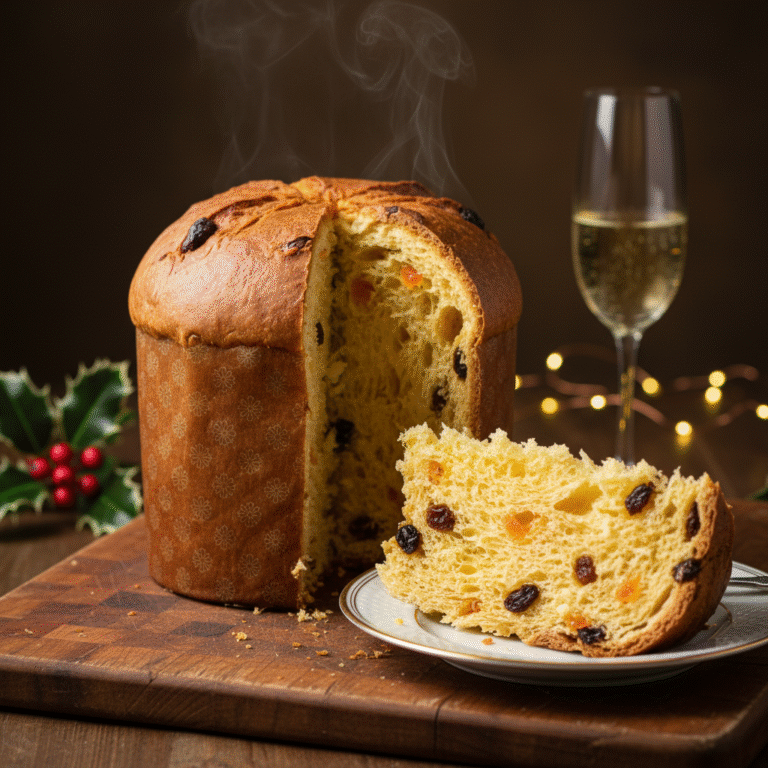
There is perhaps no baking project more revered—and initially intimidating—than the traditional Italian Panettone. This tall, domed sweet bread, hailing from Milan, is the undisputed king of Italian holiday tables. Unlike the dry, industrial versions often found stacked in supermarket aisles, a homemade Panettone is a revelation of texture and flavor. It is incredibly light, shredding into cotton-candy-like strands, yet rich with butter, egg yolks, and the aromatic perfume of vanilla, honey, and citrus zest.
Making Panettone is not just a recipe; it is a ritual. It is a slow-food experience that demands time, temperature control, and respect for the process. The magic happens over the course of two to three days, allowing the dough to develop a complex flavor profile and that signature open crumb structure. While many shy away from this challenge, believing it requires a professional bakery setup, it is entirely achievable in a home kitchen with a sturdy stand mixer and a bit of patience.
In this comprehensive guide, we strip away the mystery of the ‘lievito madre’ (mother yeast) by using a manageable pre-ferment method that mimics the traditional results without requiring you to maintain a starter for months. We will walk through the crucial double-dough stages, the intense kneading required to build gluten, and the iconic upside-down cooling method that defies gravity. Prepare your kitchen for the scents of candied orange and sweet dough, and get ready to bake the most impressive loaf of your life.
History & Origins
The history of Panettone is as rich and layered as the bread itself, deeply rooted in the culinary traditions of Milan, Italy. While its exact origins are blurred by centuries of folklore, the most enduring legend dates back to the 15th century at the court of Ludovico il Moro, the Duke of Milan. The story goes that the court chef burned the dessert intended for a lavish Christmas banquet. A young scullery boy named Toni offered his own rustic yeast cake, made from leftover dough, flour, eggs, sugar, raisins, and candied fruit. The Duke and his guests were captivated by the unique shape and taste, dubbing it ‘Pan de Toni’ (Toni’s Bread), which eventually evolved into ‘Panettone’.
Historically, wheat bread was a luxury only the wealthy could afford, but a decree allowed bakers to make wheat bread available to everyone at Christmas, often enriched with fats and sugars. By the 19th century, Panettone began to resemble the version we know today, thanks to bakers like Paolo Biffi, who created a giant cake for Pope Pius IX. However, the iconic tall, domed shape is a relatively modern innovation from the early 20th century, attributed to Angelo Motta. He revolutionized the traditional recipe by letting the dough rise three times (almost 20 hours) and using a paper cuff (pirottino) to force the dough vertically, giving the cake its signature lightness. Today, Panettone is a global symbol of Italian festivity, enjoyed from South America to Japan, yet the artisanal methods of Milan remain the gold standard.
Why This Recipe Works
This recipe is meticulously designed to bridge the gap between professional Italian bakery standards and the home kitchen. The primary reason this specific method works is the use of a ‘Biga’ or stiff pre-ferment. Traditional artisanal Panettone relies on a ‘Lievito Madre’ (stiff sourdough starter) which requires daily maintenance and complex pH balancing that is often unrealistic for the casual home baker. By using a long-fermented yeasted Biga, we replicate the acidity and enzymatic activity necessary to strengthen the gluten network and extend shelf life, without the steep learning curve of natural sourdough management.
Secondly, this recipe emphasizes the ‘double dough’ method (impasto). We do not mix everything at once. The first dough is allowed to triple in volume, building a robust gluten structure that can support the heavy load of butter, yolks, and fruit added in the second stage. This separation ensures the yeast isn’t overwhelmed by osmotic pressure from the sugar too early.
Finally, the ingredient ratios are calculated to maximize the ‘shreddability’ of the crumb. We use Manitoba flour (very high protein) to create an elastic web that traps carbon dioxide, while the high percentage of butter and yolks ensures the crumb remains moist and tender for weeks. The instruction to hang the cake upside down is not a gimmick; it is structurally necessary to prevent the heavy, souffle-like structure from collapsing under its own weight before the butter solidifies.
Why You’ll Love This Recipe
- ✓Achieves the signature ‘shreddable’ and airy crumb texture.
- ✓Uses a simplified pre-ferment method accessible to home bakers.
- ✓Features authentic flavors of candied orange, citron, and vanilla bean.
- ✓Stays fresh for weeks without artificial preservatives.
- ✓Detailed instructions on the crucial hanging and cooling process.
- ✓Produces a stunning, professional-looking holiday centerpiece.
Equipment You’ll Need
- ✓Heavy-duty stand mixer with dough hook
- ✓Digital kitchen scale (essential)
- ✓1kg (2.2lb) Panettone paper mold (approx 6-7 inches wide)
- ✓Long metal skewers or knitting needles (for hanging)
- ✓Instant-read thermometer
- ✓Large bowls for proofing
- ✓Plastic wrap or shower caps
- ✓Razor blade or lame for scoring
Ingredients
- ✓For the Biga (Pre-ferment): 80g Strong Bread Flour (Manitoba if possible), 40g Water (room temp), 1g Active Dry Yeast
- ✓First Dough: 90g Biga (all of it), 260g Strong Bread Flour, 130g Water, 70g Granulated Sugar, 60g Unsalted Butter (softened), 55g Egg Yolks (approx 3 large yolks)
- ✓Second Dough: All of the First Dough, 60g Strong Bread Flour, 60g Granulated Sugar, 3g Salt, 10g Honey, 80g Unsalted Butter (very soft), 55g Egg Yolks, 1 Vanilla Bean (scraped), Zest of 1 Orange, Zest of 1 Lemon
- ✓Inclusions: 120g Sultanas or Raisins (soaked and drained), 80g Candied Orange Peel (diced), 40g Candied Citron Peel (diced)
Instructions
- 1. Prepare the Biga (Day 1, Evening): Dissolve the tiny amount of yeast in the water. Mix with the flour in a small bowl until a rough, stiff dough forms. Cover tightly and let ferment at room temperature (approx 68°F/20°C) for 12-16 hours. It should look puffy and smell slightly acidic the next day.
- 2. Soak Raisins: Before starting the first dough, soak raisins in hot water (or rum) for 30 minutes. Drain thoroughly and pat dry with paper towels. They must be hydrated but not wet.
- 3. First Dough (Day 2, Morning): In the bowl of a stand mixer, combine the fermented Biga, flour, and water. Knead with the hook on low speed until the dough comes together. Add the sugar in two batches, mixing until absorbed.
- 4. Add Fats to First Dough: Add the egg yolks one at a time, mixing until incorporated. Finally, add the softened butter in chunks. Knead on medium speed until the dough is smooth and elastic (windowpane test). This can take 15-20 minutes. Place in a greased bowl, cover, and let rise in a warm place (80°F/27°C) until it creates a ‘triple volume’ (3x original size). This usually takes 10-12 hours. Do not rush this.
- 5. Second Dough (Day 2, Evening): Once the first dough has tripled, deflate it gently and chill it in the fridge for 30 minutes (this prevents overheating during the next mix). Return it to the mixer. Add the second portion of flour, honey, and scents (vanilla, zests). Knead until smooth.
- 6. Sugar and Yolks: Add the sugar, followed by the salt. Once absorbed, begin adding the yolks one by one. Develop the gluten structure again.
- 7. Butter Emulsion: Add the soft butter gradually. Knead extensively until the dough is very shiny, elastic, and pulls away from the sides completely. It should pass a very thin windowpane test.
- 8. Inclusions: Turn the mixer to the lowest speed and gently fold in the raisins and candied peels. Do not overmix or you will tear the gluten.
- 9. Bench Rest: Turn the dough onto a buttered surface. Round it into a ball. Let it rest (bench proof) for 45-60 minutes in the open air to form a ‘skin’.
- 10. Shaping (Pirlatura): Tighten the dough ball by dragging it against the counter to create surface tension. Place the dough gently into the paper mold.
- 11. Final Rise: Cover the mold loosely with plastic wrap (create a dome so it doesn’t touch the dough). Place in a warm spot (80°F/27°C). Let rise until the dome of the dough reaches the very edge of the mold. This can take 4-6 hours.
- 12. Baking: Preheat oven to 350°F (175°C). Remove plastic. Let the dough sit uncovered for 10 minutes to form a dry skin. Using a razor, score a cross on top. Place a small pat of butter in the center of the cross.
- 13. Oven: Bake on the lower rack for 50-60 minutes. If the top browns too fast, tent with foil after 30 minutes. The internal temperature must reach 200°F (93°C) exactly.
- 14. Hanging (Crucial): Remove from oven. Immediately pierce the bottom of the mold with two long skewers. Flip the panettone upside down and suspend it between two chairs or boxes. Let it cool upside down for at least 4-6 hours (preferably overnight).
- 15. Serving: Once cool, flip right side up. Store in a sealed bag for at least 24 hours before cutting to allow flavors to mature.
Expert Cooking Tips
- ✓Temperature Control: If the dough gets too hot during kneading (over 78°F/26°C), the gluten will degrade. If it feels warm, put the bowl in the fridge for 10 minutes.
- ✓The Windowpane: Never proceed to add butter or fruit until the dough passes a strong windowpane test. The gluten mesh must be fully developed first.
- ✓Soak the Fruit: Dry raisins will suck moisture out of your dough, making the cake dry. Ensure they are hydrated and patted dry.
- ✓Don’t Rush the Rise: The first rise MUST triple. If you cut it short, the second rise will be sluggish and the final texture dense.
- ✓Use a Thermometer: Baking by time is risky. Use an instant-read thermometer to pull the cake at exactly 200°F (93°C).
- ✓Manitoba Flour: Standard All-Purpose flour will not work. You need flour with 13-14% protein content (often labeled as Manitoba or High Gluten Flour).
Substitutions and Variations
The most critical ingredient here is the flour. If you cannot find Italian ‘Manitoba’ flour, look for ‘High Gluten Flour’ or very strong Bread Flour with at least 13% protein. Do not use All-Purpose or Cake flour; the structure will collapse.
For the inclusions, tradition dictates raisins and candied orange/citron peel. However, you can customize this. Chocolate chips (dark or milk) are a popular modern variation—freeze them before adding so they don’t melt into the dough during mixing. Dried cranberries, apricots, or cherries can replace raisins. You can also infuse the raisins in Amaretto, Rum, or Marsala wine for an adult kick. If you dislike candied peel, you can increase the amount of raisins or chocolate, but ensure the total weight of inclusions remains roughly the same to maintain the dough’s structural integrity.
Common Mistakes to Avoid
The most common mistake is **under-kneading**. Panettone dough is rich in fat and sugar, which inhibit gluten formation. You must knead until the dough is incredibly elastic before adding the butter. Conversely, **overheating the dough** in the mixer is fatal; friction generates heat, and if the butter melts effectively before baking, the structure becomes greasy and heavy. Another major error is **skipping the hanging process**. Panettone is essentially a souffle rich in butter; if cooled upright, it will collapse under its own weight, becoming dense and gummy at the bottom. Finally, **cutting it too soon** is a tragedy. The fats need time to stabilize, and the moisture needs to redistribute. Wait at least 24 hours after baking.
Serving Suggestions
Panettone is traditionally served in vertical wedges. While delicious on its own, it pairs exceptionally well with a dollop of Mascarpone cream (mascarpone whipped with sugar and a touch of vanilla or liqueur). It is the perfect companion to a hot espresso for breakfast or a glass of sweet dessert wine, like Moscato d’Asti or Vin Santo, after dinner. Leftover Panettone (if there is any) makes arguably the world’s best French Toast or bread pudding.
Storage and Reheating Tips
Unlike standard breads, Panettone improves with age. Because of the high fat content and acidity from the fermentation, it stays fresh for a long time. Keep it stored in a tightly sealed plastic bag at room temperature. It will remain soft for up to 2 weeks. Do not refrigerate it, as this will stale the bread faster. For long-term storage, you can freeze the whole cake or slices wrapped tightly in plastic wrap and foil for up to 2 months. Thaw at room temperature before serving.
Nutrition Facts (Estimated)
| Serving Size | 1 slice (approx 80g) |
| Calories | 360 |
| Fat | 16g |
| Saturated Fat | 9g |
| Unsaturated Fat | 6g |
| Trans Fat | 0.5g |
| Cholesterol | 110mg |
| Sodium | 140mg |
| Carbohydrates | 48g |
| Fiber | 2g |
| Sugar | 22g |
| Protein | 7g |
Frequently Asked Questions
Why do I have to hang the Panettone upside down?
Panettone has an extremely delicate, airy structure loaded with butter and eggs. When it comes out of the oven, the structure is not yet set enough to support its own weight. Hanging it allows the gluten structure to stretch and set as it cools, preventing the cake from collapsing into a dense puck.
Can I use regular All-Purpose flour?
No. All-Purpose flour lacks the protein content necessary to build the strong gluten network required to hold the heavy butter, eggs, and fruit while rising so high. You must use Strong Bread Flour or High Gluten Flour (13%+ protein).
What if I don’t have a paper mold?
The paper mold is crucial for the vertical rise and even heat distribution. However, in a pinch, you can use a tall cake tin (like a cheesecake pan) lined with parchment paper extending several inches above the rim to support the rising dough. The result may vary slightly in texture.
Why is my dough taking so long to rise?
Panettone dough is ‘heavy’ due to the sugar and fat, which slows down yeast activity. If your room is cool, the rise can take significantly longer than stated. Try to find a warmer spot (around 80°F/27°C), perhaps inside an oven with just the light turned on.
Can I use instant yeast instead of active dry?
Yes, you can use instant yeast. Use the same weight, but you don’t need to dissolve it in water first; you can mix it directly into the flour for the Biga.
My dough is tearing when I add the fruit. What happened?
You likely added the fruit at too high a speed or mixed for too long. The gluten network is tight; the fruit acts like rocks in the web. Add fruit on the lowest speed and mix only until just distributed.
Can I make this without a stand mixer?
Theoretically, yes, but it is physically exhausting and very difficult. The dough requires intense development to reach the windowpane stage, which can take 30+ minutes of hand kneading with a very sticky dough. A stand mixer is highly recommended.
Why does the recipe require two dough stages?
The first stage allows the yeast to multiply and the gluten to build strength without the interference of all the sugar and fat. If you added everything at once, the osmotic pressure from the sugar would kill the yeast or slow it down so much the dough would never rise.
Conclusion
Mastering the art of the Traditional Italian Panettone is a badge of honor for any home baker. It is a journey that teaches patience, precision, and an appreciation for the alchemy of baking. While the process is long, the moment you slice into that golden, aromatic dome and see the light, shreddable crumb, you will understand why this cake has captivated the world for centuries. Share it with loved ones, gift it to friends, or savor it slowly with a morning coffee. You have created not just a cake, but a memory.