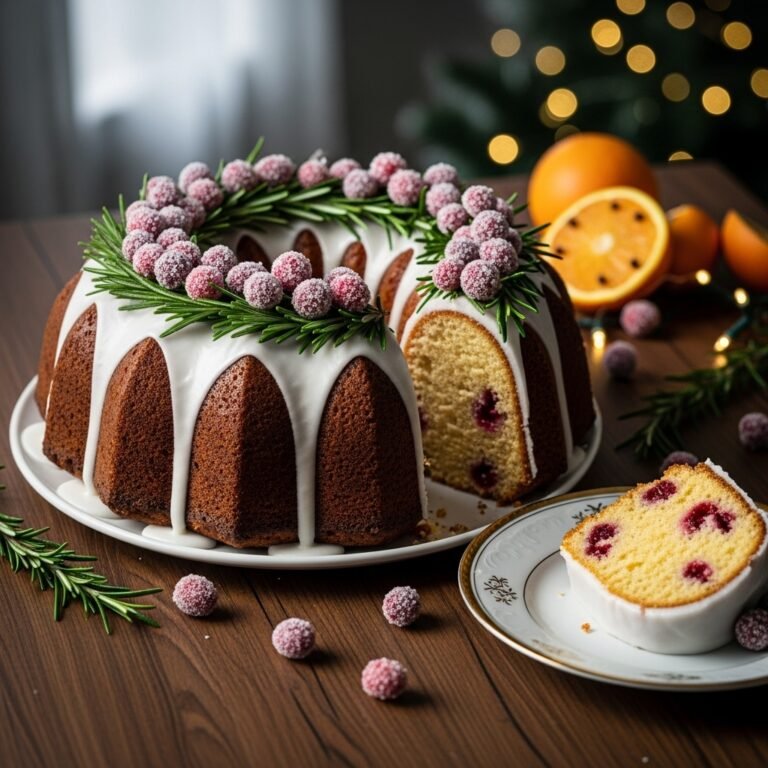

Ultimate Festive Gingerbread Layer Cake with Sparkling Sugared Cranberries
Festive Gingerbread Layer Cake With Sugared Cranberries Recipe
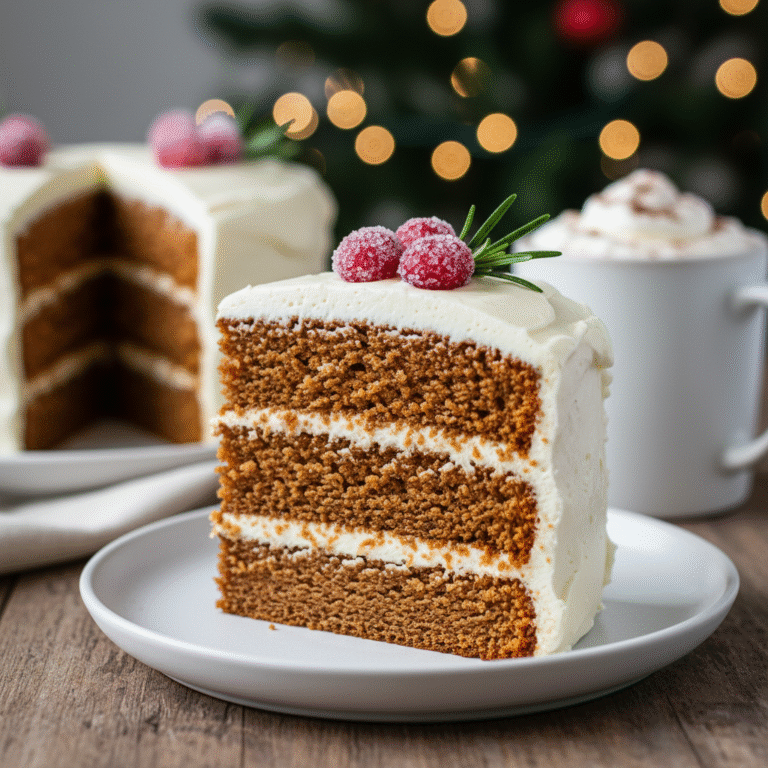
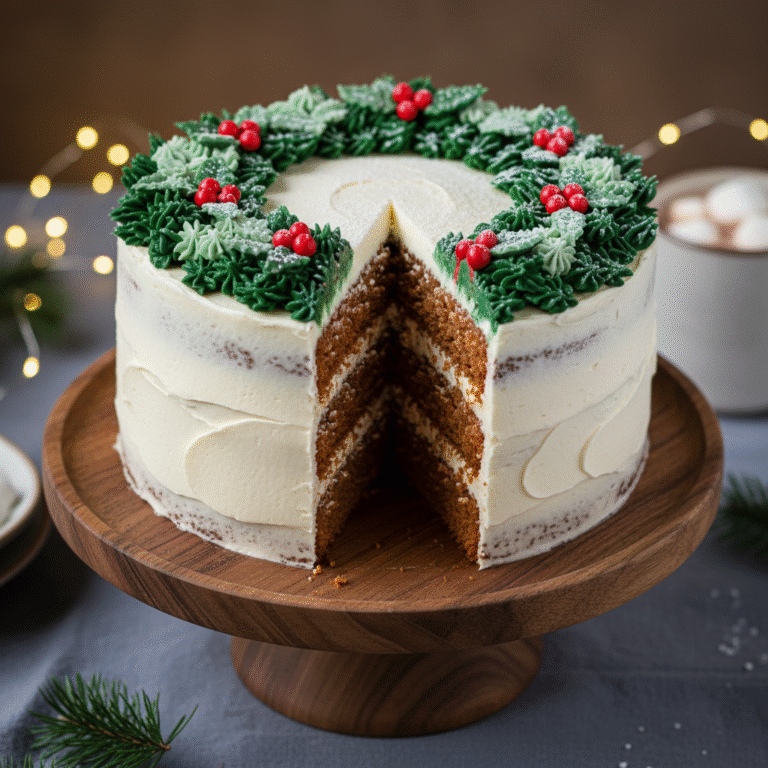
This show-stopping Festive Gingerbread Layer Cake features moist, spiced molasses cake layers smothered in tangy cream cheese frosting. Topped with sparkling sugared cranberries and fresh rosemary, it is the quintessential holiday centerpiece that tastes just as magical as it looks.
45 minutes
35 minutes
1 hour 20 minutes
12-14 servings
Dessert
Baking
American
Vegetarian
There is something undeniably magical about the aroma of warm spices filling a kitchen during the holiday season. It is a scent that instantly transports us back to childhood memories of rolling dough, frosting cookies, and the anticipation of festive gatherings. This Festive Gingerbread Layer Cake is the embodiment of that nostalgia, elevated into a sophisticated and stunning dessert that demands center stage at your holiday table. Unlike the crisp snap of a gingerbread man, this cake focuses on the deep, sultry flavors of molasses and dark brown sugar, creating a crumb that is incredibly moist, tender, and rich.
The beauty of this recipe lies in its balance. Gingerbread can often lean too heavy or dense, but here, we have lightened the texture without sacrificing that signature robust flavor. The three layers are infused with a heavy hand of ground ginger, cinnamon, cloves, and nutmeg, creating a spicy warmth that lingers on the palate. This intensity is perfectly offset by the luscious, tangy cream cheese frosting that fills the layers and coats the exterior. It is a marriage of flavors—spicy and sweet, earthy and creamy—that defines the perfect winter dessert.
But what truly sets this cake apart is the garnish. The sugared cranberries are not just a decoration; they are distinct little jewels of tartness that pop in your mouth, cutting through the richness of the frosting and cake. They look like frosted berries plucked from a winter wonderland, adding a texture and visual sparkle that makes this cake a true masterpiece. Whether you are hosting a grand Christmas dinner or looking for a special baking project to celebrate the season, this gingerbread layer cake is designed to impress both the eyes and the taste buds, proving that traditional flavors can be transformed into modern luxury.
History & Origins
The history of gingerbread is as rich and complex as its flavor profile, spanning centuries and continents to become the holiday staple we cherish today. The roots of ginger itself can be traced back to ancient China, where it was cultivated for medical and culinary uses before making its way to Europe via the Silk Road. In medieval Europe, ‘gingerbread’ referred to preserved ginger, not the cake or cookie we know. It wasn’t until the 11th century, when Crusaders brought ginger back from the Middle East, that it began to appear in European baking. By the late Middle Ages, gingerbread guilds were established in Germany, where the craft of baking Lebkuchen became an art form. These early versions were often honey-sweetened and heavily spiced, used for religious ceremonies and festivals.
The transition from hard cookies to the soft, cake-like gingerbread we use in this layer cake is largely an American evolution. When European settlers arrived in the New World, they brought their recipes but adapted them to local ingredients. Molasses, a byproduct of sugar refining in the Caribbean, became a cheaper and more accessible sweetener than refined sugar in the American colonies. This substitution gave American gingerbread its distinctive dark color, moist texture, and deep, slightly bitter sweetness. In fact, soft gingerbread was so popular that recipes for ‘Gingerbread Cake’ appear in the earliest American cookbooks, including ‘American Cookery’ by Amelia Simmons in 1796. George Washington’s mother, Mary Ball Washington, was famously known for her soft gingerbread recipe, which she served to the Marquis de Lafayette. Over time, as baking powder and baking soda became standard leavening agents in the 19th century, gingerbread evolved into the lighter, fluffier cakes we enjoy today. This Festive Gingerbread Layer Cake pays homage to that long lineage, combining the ancient warmth of spices with the American tradition of molasses-rich cakes.
Why This Recipe Works
This recipe succeeds where many other gingerbread cakes fail because it meticulously addresses the common pitfalls of baking with molasses and heavy spices: density and dryness. Molasses is acidic and heavy; while it provides flavor and moisture, it can easily weigh down a batter, resulting in a gummy texture. To counteract this, this recipe utilizes a combination of baking soda and boiling water. The boiling water does two critical things: first, it ‘blooms’ the spices (ginger, cinnamon, cloves), releasing their essential oils for a more potent flavor profile. Second, when added to the batter, the heat helps to dissolve the sugars and relax the gluten, while the reaction with baking soda creates immediate aeration, ensuring the cake rises tall and light rather than sinking into a dense brick.
Furthermore, the fat content is carefully balanced. We use a mix of oil and butter. Butter provides that unmistakable rich dairy flavor that is essential for a holiday cake, while vegetable oil ensures the cake stays soft and moist for days, even after refrigeration. Butter alone can cause a cake to feel dry once chilled, but the oil keeps the crumb tender. Finally, the cream cheese frosting is the scientifically perfect pairing for gingerbread. The slight tang and acidity of the cream cheese cut through the deep, dark sweetness of the molasses and brown sugar, preventing the dessert from becoming cloying. This interplay of textures—the soft, open crumb of the cake against the smooth, dense frosting and the crunch of the sugared cranberries—creates a sensory experience that is perfectly balanced.
Why You’ll Love This Recipe
- ✓Incredibly moist crumb thanks to a blend of molasses and dark brown sugar.
- ✓Perfectly balanced spice blend that warms the palate without being overpowering.
- ✓Tangy cream cheese frosting that cuts through the sweetness.
- ✓Stunning presentation with sparkling sugared cranberries.
- ✓Can be made ahead of time, as the flavors deepen overnight.
- ✓A show-stopping centerpiece for Christmas or holiday gatherings.
Equipment You’ll Need
- ✓Three 8-inch round cake pans
- ✓Stand mixer or electric hand mixer
- ✓Large mixing bowls
- ✓Whisk
- ✓Sifter
- ✓Parchment paper
- ✓Wire cooling rack
- ✓Offset spatula
- ✓Cake turntable (optional)
- ✓Saucepan (for cranberries)
Ingredients
- ✓3 cups all-purpose flour
- ✓1 tbsp ground ginger
- ✓2 tsp ground cinnamon
- ✓1 tsp ground cloves
- ✓1 tsp ground nutmeg
- ✓1 tsp baking powder
- ✓1 tsp baking soda
- ✓1/2 tsp salt
- ✓1 cup unsalted butter, softened
- ✓1/2 cup vegetable oil
- ✓1 cup dark brown sugar, packed
- ✓1 cup granulated sugar (for cake)
- ✓4 large eggs, room temperature
- ✓1 cup unsulfured molasses
- ✓1 cup boiling water
- ✓16 oz cream cheese, softened (for frosting)
- ✓1 cup unsalted butter, softened (for frosting)
- ✓5 cups powdered sugar
- ✓1 tsp vanilla extract
- ✓2 cups fresh cranberries
- ✓2 cups granulated sugar (for cranberries)
- ✓1/2 cup water (for cranberries)
Instructions
- Preheat your oven to 350°F (175°C). Grease three 8-inch round cake pans with butter and dust with flour, or line the bottoms with parchment paper for easy release.
- In a medium bowl, sift together the flour, ground ginger, cinnamon, cloves, nutmeg, baking powder, baking soda, and salt. Set aside.
- In the bowl of a stand mixer fitted with the paddle attachment, beat the softened butter, vegetable oil, brown sugar, and 1 cup granulated sugar on medium-high speed until light and fluffy (about 3-4 minutes).
- Add the eggs one at a time, beating well after each addition and scraping down the sides of the bowl as needed. Pour in the molasses and mix until fully combined.
- Reduce the mixer speed to low. Gradually add the dry ingredients to the wet mixture, mixing only until just combined. Do not overmix.
- With the mixer on the lowest setting, carefully pour in the boiling water. The batter will be thin, which is normal. Stir gently by hand to ensure no flour pockets remain at the bottom.
- Divide the batter evenly among the three prepared cake pans. Bake for 30-35 minutes, or until a toothpick inserted into the center comes out clean.
- Remove cakes from the oven and let them cool in the pans for 10 minutes, then invert them onto a wire rack to cool completely before frosting.
- While cakes cool, prepare the Sugared Cranberries. Combine 1/2 cup water and 1/2 cup granulated sugar in a saucepan over medium heat until sugar dissolves. Stir in cranberries to coat, then remove with a slotted spoon and place on a wire rack to dry for 45 minutes until tacky.
- Roll the tacky cranberries in the remaining 1 1/2 cups of granulated sugar until fully coated. Let them dry for another hour.
- To make the frosting: Beat the cream cheese and butter together on high speed until smooth and creamy. Gradually add powdered sugar, one cup at a time, beating on low. Add vanilla and a pinch of salt, then whip on high for 2 minutes until fluffy.
- Assemble the cake: Place one layer on a cake stand. Spread a generous layer of frosting on top. Repeat with the second and third layers. Frost the outside of the cake with a rustic or smooth finish.
- Top the cake with a mound of sugared cranberries and optional sprigs of fresh rosemary for a festive look. Slice and serve.
Expert Cooking Tips
- ✓Ensure all cold ingredients (eggs, butter, cream cheese) are at room temperature to prevent a curdled batter and lumpy frosting.
- ✓Do not skip the boiling water; it is essential for activating the baking soda and blooming the spices.
- ✓Weigh your flour using a kitchen scale for the most accurate results, or use the spoon-and-level method.
- ✓If the frosting is too soft to pipe or spread, refrigerate it for 15-20 minutes to firm up.
- ✓Make the sugared cranberries a few hours in advance so they have plenty of time to dry and set.
- ✓Use unsulfured molasses (like Grandma’s brand) rather than blackstrap molasses, which can be too bitter.
- ✓To get flat cake layers, use cake strips around the pans or trim the domes with a serrated knife after cooling.
Substitutions and Variations
This recipe is quite robust, but there are several substitutions you can make depending on dietary needs or pantry availability. For the flour, a high-quality 1:1 gluten-free all-purpose baking flour works wonderfully; look for a blend that includes xanthan gum to ensure the structure holds up. If you don’t have dark brown sugar, light brown sugar is an acceptable substitute, though the flavor will be slightly milder. You can also make your own brown sugar by mixing 1 cup of granulated sugar with 1 tablespoon of molasses. Regarding the fat, you can use all butter if you prefer, but the cake may be slightly drier once refrigerated; conversely, using all oil will make it very moist but less rich in flavor. For the molasses, do not substitute with honey or maple syrup as the acidity of molasses is required to react with the baking soda. However, treacle is a viable alternative if you are in the UK. For the frosting, mascarpone cheese can be used in place of cream cheese for a less tangy, creamier finish. If you dislike cranberries, candied ginger pieces or pomegranate arils make beautiful and delicious alternatives for the garnish.
Common Mistakes to Avoid
The most common mistake with gingerbread cake is over-baking. Because the batter is dark, it is hard to judge doneness by color alone. Rely on the toothpick test and check it at the 30-minute mark; if it comes out with a few moist crumbs, it is done. Baking it until the toothpick is bone-dry often results in a dry cake. Another frequent error is adding the boiling water too quickly or while the mixer is on high speed, which can splash hot water and scramble the eggs. Always add it slowly on the lowest speed. In terms of the frosting, using cold cream cheese is a recipe for disaster; it will result in tiny lumps that are impossible to whip out. Ensure the cream cheese is completely soft. Lastly, do not try to frost the cake while it is even slightly warm. The butter-based frosting will melt and slide right off the layers. Patience is key—let the layers cool completely, or even chill them in the fridge for 30 minutes before assembly.
Serving Suggestions
This Festive Gingerbread Layer Cake is a showstopper that needs little accompaniment, but the right pairing can elevate the experience. Serve slices on white ceramic plates to let the dark cake and red berries pop visually. A dollop of lightly sweetened whipped cream or a scoop of vanilla bean ice cream pairs beautifully with the spices, adding a cool contrast to the warm flavors. For beverages, a hot cup of coffee or a dark roast espresso balances the sweetness of the cake perfectly. If serving at an evening holiday party, a glass of tawny port, a spiced rum cocktail, or a warm mulled wine complements the ginger and molasses notes exquisitely. For a non-alcoholic option, hot apple cider or a chai tea latte echoes the spice profile of the cake.
Storage and Reheating Tips
To store this cake, place it in an airtight cake carrier or cover it gently with plastic wrap. Because of the cream cheese frosting, it must be stored in the refrigerator, where it will keep fresh for up to 5 days. However, gingerbread cake often tastes best when served at room temperature, so remove the cake (or slices) from the fridge about 30 to 60 minutes before serving to allow the frosting to soften and the cake crumb to relax. If you wish to freeze the cake, you can freeze the unfrosted layers individually wrapped in plastic wrap and foil for up to 3 months. Thaw them in the fridge overnight before frosting. You can also freeze individual slices of the fully frosted cake; place them on a baking sheet to freeze the frosting solid, then wrap them tightly in plastic wrap and foil. Thaw in the refrigerator before eating.
Nutrition Facts (Estimated)
| Serving Size | 1 slice |
| Calories | 680 |
| Fat | 34g |
| Saturated Fat | 18g |
| Unsaturated Fat | 14g |
| Trans Fat | 0g |
| Cholesterol | 95mg |
| Sodium | 340mg |
| Carbohydrates | 88g |
| Fiber | 1g |
| Sugar | 52g |
| Protein | 6g |
Frequently Asked Questions
Can I make this cake ahead of time?
Yes, absolutely! In fact, gingerbread flavors often improve and deepen after sitting for a day. You can bake the layers a day in advance, wrap them tightly, and store them at room temperature or in the fridge. Assemble and frost the cake on the day of serving for the best presentation.
Why did my cake sink in the middle?
Sinking usually happens if the oven door was opened too early during baking, causing a sudden temperature drop, or if the cake was under-baked. It can also result from over-mixing the batter or using expired baking powder/soda.
Can I use fresh ginger instead of ground ginger?
Ground ginger is recommended for baking because it provides a more concentrated, warm spice flavor that distributes evenly. Fresh ginger has a sharper bite and adds moisture that might alter the batter consistency. If you really want to use fresh, grate it very finely and use about 2 tablespoons, but expect a different texture.
What type of molasses should I use?
Use unsulfured molasses, often labeled as ‘original’ or ‘mild’. Avoid blackstrap molasses, which is much more concentrated, bitter, and less sweet, as it can overpower the cake and make it taste medicinal.
Can I bake this as a sheet cake instead of layers?
Yes, you can bake this in a 9×13 inch pan. You will likely need to increase the baking time to 40-50 minutes. Keep an eye on it and use the toothpick test. You can halve the frosting recipe for a sheet cake.
How do I get the cranberries to look ‘frosted’?
The trick is the two-step process. First, the cranberries must be coated in simple syrup and allowed to dry until tacky. This tackiness acts as glue. Then, rolling them in granulated sugar creates that snowy, frosted look. If they are too wet, the sugar will dissolve; if too dry, the sugar won’t stick.
Can I use cupcakes instead?
Yes, this batter makes excellent cupcakes. It will yield approximately 24-30 cupcakes. Bake them at 350°F for 18-22 minutes.
Is the coffee or hot water necessary?
You can use hot coffee instead of boiling water to deepen the flavor further, but the liquid must be hot. It activates the cocoa (if used) and spices and helps the baking soda react. Do not substitute with cold liquid.
Conclusion
This Festive Gingerbread Layer Cake with Sugared Cranberries is more than just a dessert; it is a celebration of the holiday season in every bite. From the deep, comforting spices to the bright, sparkling tartness of the cranberries, it encapsulates the joy and warmth of winter gatherings. While it looks like a bakery-quality masterpiece, the straightforward mixing method makes it accessible for home bakers of all levels. Whether you are starting a new family tradition or looking to impress guests at a holiday party, this cake promises to deliver flavor, beauty, and a touch of magic. So, preheat your oven, gather your spices, and get ready to bake a cake that will be talked about long after the last crumb is gone.