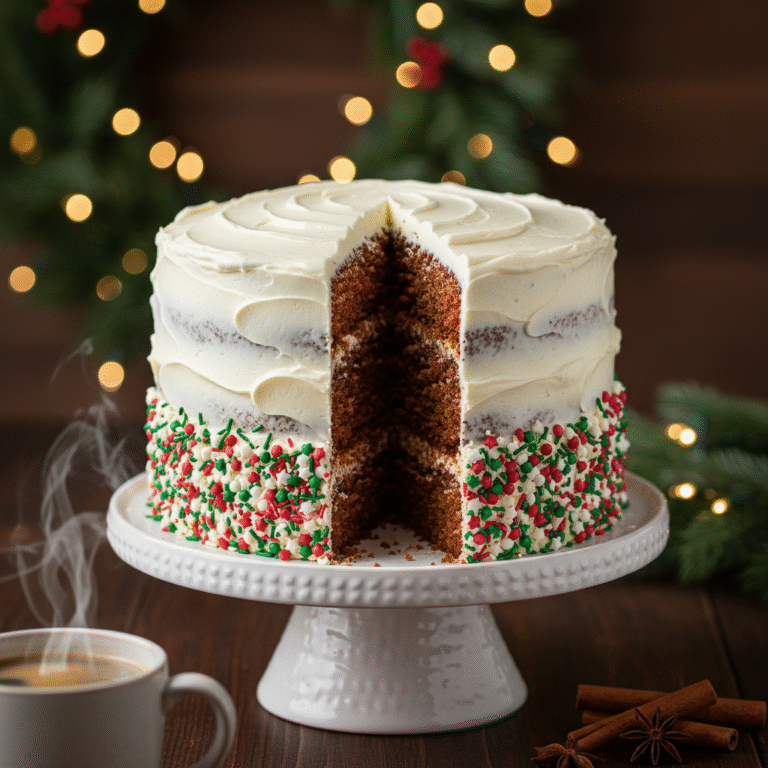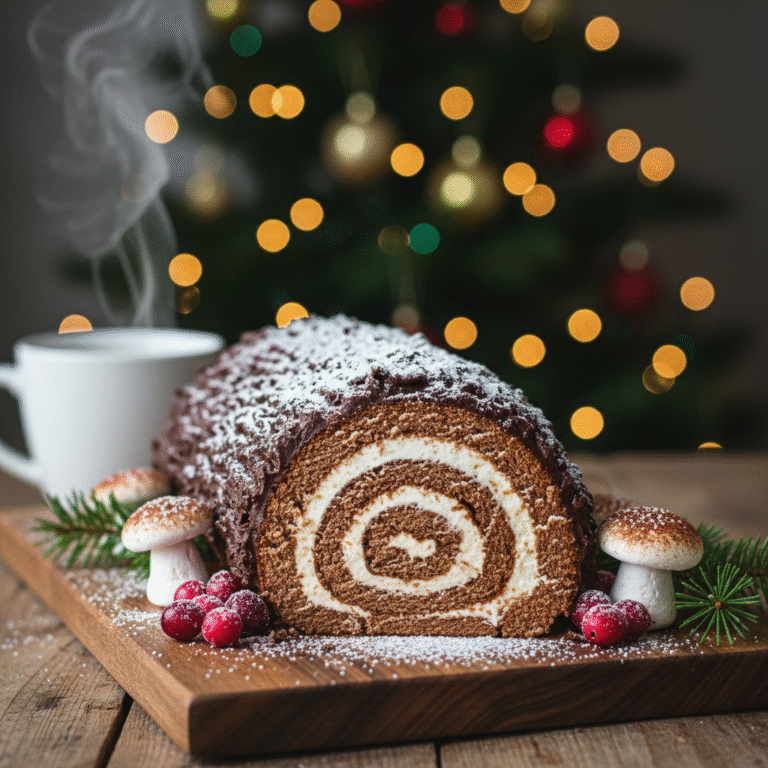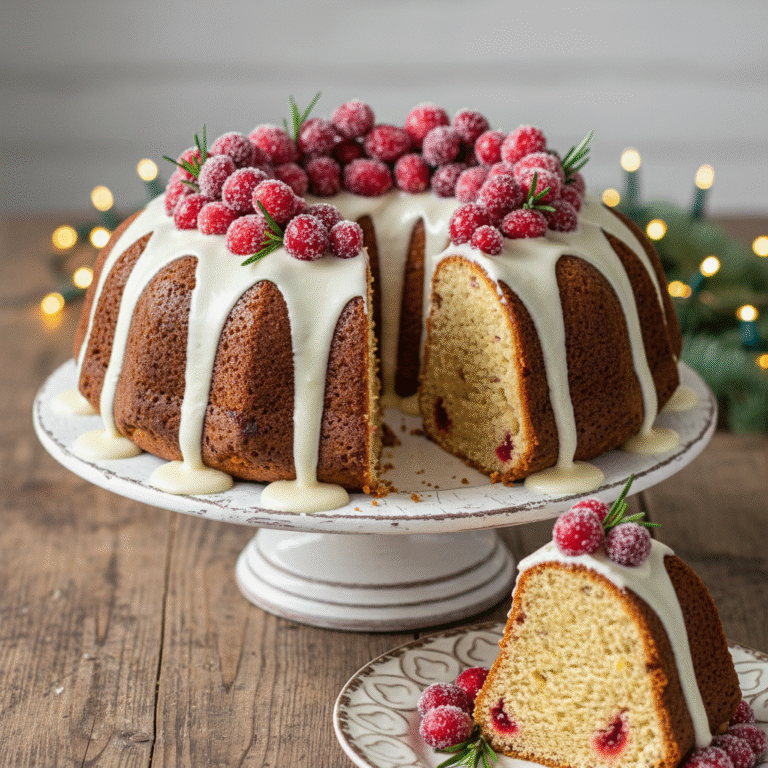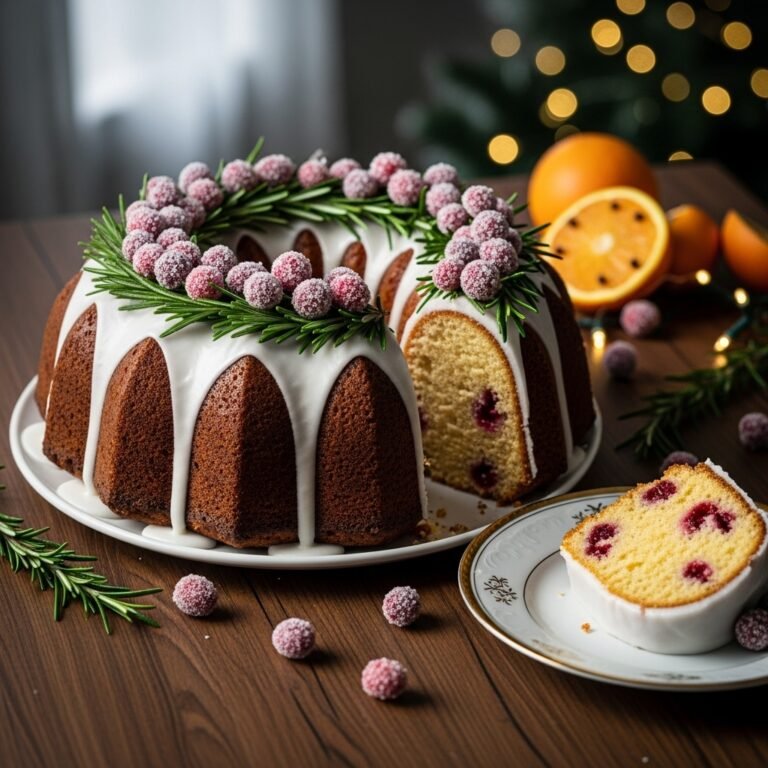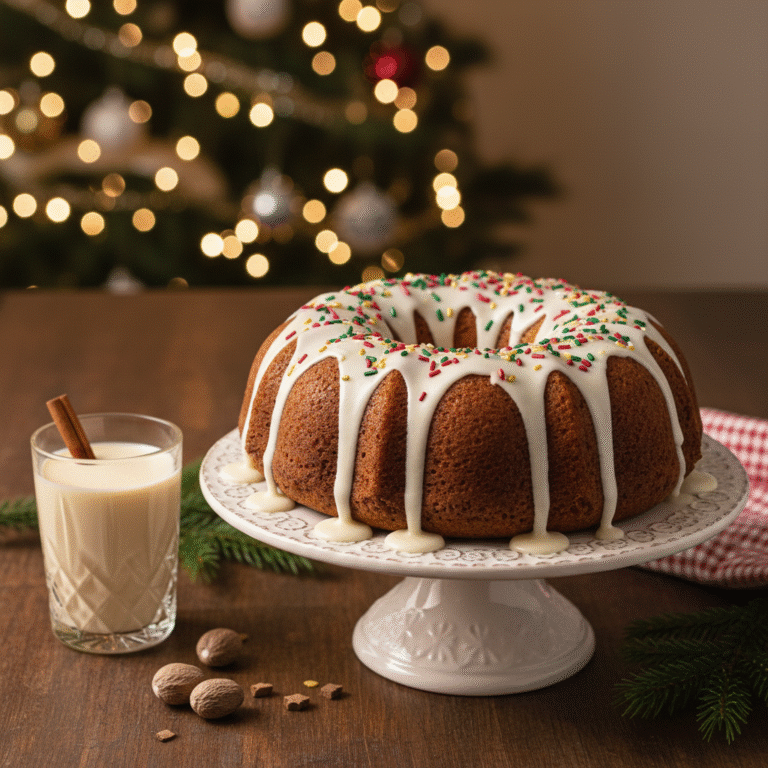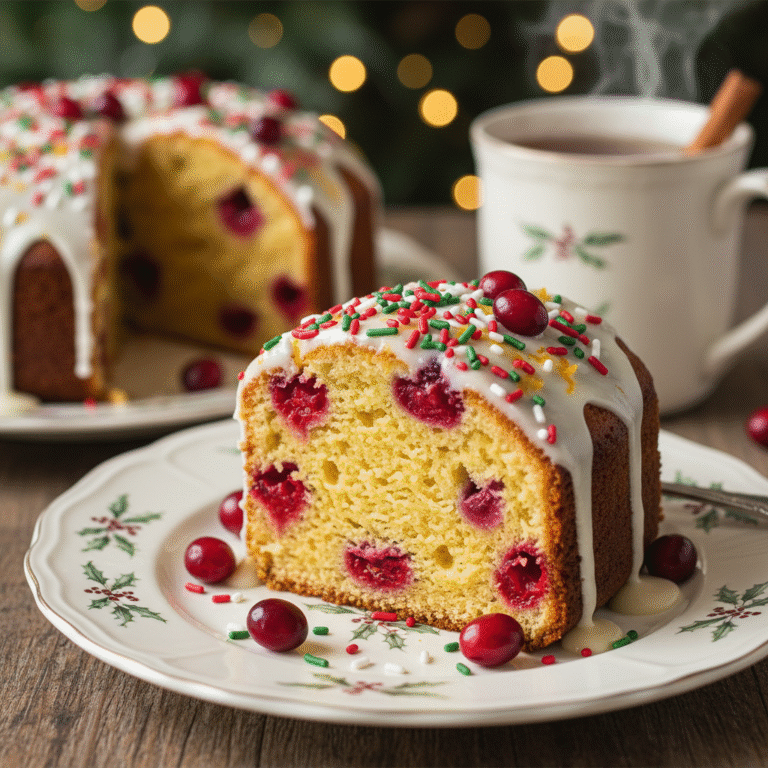

The Ultimate Festive Gingerbread Layer Cake With Silky Chocolate Ganache
Festive Gingerbread Layer Cake With Chocolate Ganache Recipe
This showstopping Festive Gingerbread Layer Cake pairs the deep, warming spices of molasses and ginger with a decadent, glossy chocolate ganache. It is the perfect centerpiece for your holiday table, offering a sophisticated twist on classic Christmas flavors that is incredibly moist and surprisingly easy to assemble.
45 minutes
35 minutes
1 hour 45 minutes (plus cooling)
12-14 servings
Dessert
Baking
American / European Fusion
Vegetarian
When the calendar flips to December, the kitchen inevitably becomes the heart of the home, and no aroma captures the spirit of the season quite like the spicy, heady scent of gingerbread. While gingerbread cookies and houses are staples of holiday tradition, this Festive Gingerbread Layer Cake elevates those nostalgic flavors into a sophisticated dessert worthy of your most elegant Christmas dinner or New Year’s Eve party. Imagine a crumb that is incredibly dark, damp, and tender—thanks to a generous amount of molasses and brown sugar—infused with a bold quartet of ginger, cinnamon, cloves, and nutmeg. But we don’t stop there.
To balance the intense spice profile, we envelop the layers in a luxurious, bittersweet chocolate ganache. The combination of ginger and chocolate is a match made in culinary heaven; the sharpness of the root cuts through the richness of the cocoa, while the chocolate adds a creamy, velvety texture that traditional cream cheese frosting simply cannot provide. This cake is designed to be a feast for the senses, visually stunning with its dark contrast against festive garnishes like sugared cranberries or sprigs of rosemary. It is a dessert that demands to be sliced slowly and savored with a cup of strong coffee or a glass of port. Whether you are a seasoned baker or a novice looking to impress, this recipe guides you through creating a professional-quality layer cake that tastes even better than it looks. It represents the very essence of ‘hygge’—cozy, comforting, and undeniably indulgent.
History & Origins
The history of gingerbread is as rich and complex as its flavor profile, dating back thousands of years. The root ginger was first cultivated in ancient China for medical treatments and was later brought to Europe via the Silk Road. By the Middle Ages, preserved ginger found its way into the hands of European monks, who created the earliest forms of gingerbread—often a dense, honey-sweetened cake known as ‘pain d’épices’ in France or ‘Lebkuchen’ in Germany. It was considered a delicacy, reserved for wealthy aristocrats and royalty due to the high cost of spices.
Queen Elizabeth I is famously credited with the invention of the gingerbread man, having cookies baked in the likeness of visiting dignitaries. However, the transition from hard cookies to the soft, moist cake we know today (often called gingerbread cake or ‘grammercy’) occurred later, heavily influenced by American colonial baking. In early America, molasses was a more affordable sweetener than refined sugar, leading to the development of the dark, sticky gingerbread cakes that became a staple in New England.
The pairing of chocolate with gingerbread is a much more modern evolution. While chocolate was consumed as a drink in the 17th and 18th centuries, its use in baking alongside heavy spices didn’t gain traction until the 20th century when culinary boundaries expanded. Today, combining the ancient warmth of ginger with the New World richness of chocolate represents a global fusion of culinary history, bringing together traditions from the East, Europe, and the Americas into one festive slice.
Why This Recipe Works
This recipe succeeds where many spice cakes fail because it specifically addresses the issue of dryness. Gingerbread relies heavily on spices which can be drying, but here, we utilize a ‘hot liquid’ method. By adding boiling water (or hot coffee) at the very end of the mixing process, we bloom the cocoa powder and spices, intensifying their flavor instantly. More importantly, the hot liquid relaxes the gluten strands in the flour and melts the butter and sugar completely, resulting in a batter that is thin but bakes up into a cake with an incredibly soft, velvety crumb that stays moist for days.
Furthermore, the chemistry between the molasses and the baking soda is crucial. Molasses is acidic, and when it reacts with the alkaline baking soda, it creates carbon dioxide bubbles. This reaction provides the necessary lift to a heavy batter, ensuring the cake is fluffy rather than dense or gummy. We also use a combination of oil and butter; butter provides the classic flavor, while oil ensures the cake remains soft even when refrigerated, which is essential since the ganache frosting requires a cool environment to set. The ganache itself is made with a specific ratio of heavy cream to chocolate to ensure it is spreadable enough to frost with, yet firm enough to hold the layers together without sliding, providing a textural contrast to the soft sponge.
Why You’ll Love This Recipe
- ✓Incredibly moist texture due to the hot water method.
- ✓Perfect balance of spicy ginger and rich semi-sweet chocolate.
- ✓Sturdy structure that makes layering easy for beginners.
- ✓Can be made ahead of time—flavors improve after 24 hours.
- ✓Glossy ganache finish looks professionally made.
- ✓Fills your home with the ultimate Christmas aroma.
Equipment You’ll Need
- ✓Three 8-inch round cake pans
- ✓Stand mixer or electric hand mixer
- ✓Large mixing bowls
- ✓Whisk
- ✓Rubber spatula
- ✓Saucepan (for ganache)
- ✓Offset spatula
- ✓Wire cooling rack
- ✓Parchment paper
- ✓Cake turntable (optional)
Ingredients
- ✓3 cups All-purpose flour
- ✓1 tbsp Ground ginger
- ✓2 tsp Ground cinnamon
- ✓1 tsp Ground cloves
- ✓1/2 tsp Ground nutmeg
- ✓1/2 tsp Allspice
- ✓2 tsp Baking soda
- ✓1/2 tsp Salt
- ✓3/4 cup Unsalted butter, softened
- ✓1/2 cup Vegetable oil
- ✓1 cup Dark brown sugar, packed
- ✓1 cup Unsulphured molasses (not blackstrap)
- ✓3 Large eggs, room temperature
- ✓1 tsp Vanilla extract
- ✓1 cup Hot water or hot brewed coffee
- ✓16 oz Semi-sweet chocolate (high quality), chopped
- ✓1 1/2 cups Heavy whipping cream
- ✓2 tbsp Unsalted butter (for ganache)
- ✓Sugared cranberries and rosemary sprigs for garnish
Instructions
- Preheat your oven to 350°F (175°C). Grease three 8-inch round cake pans generously with butter or baking spray, and line the bottoms with parchment paper rounds to ensure easy release.
- In a medium bowl, whisk together the flour, ground ginger, cinnamon, cloves, nutmeg, allspice, baking soda, and salt. Ensure the spices are evenly distributed throughout the flour mixture. Set aside.
- In the bowl of a stand mixer fitted with the paddle attachment (or a large bowl with a hand mixer), beat the softened butter, vegetable oil, and brown sugar on medium-high speed until light and fluffy, about 3-4 minutes.
- Lower the mixer speed and add the molasses, beating until fully combined. Scrape down the sides of the bowl.
- Add the eggs one at a time, beating well after each addition. Stir in the vanilla extract.
- With the mixer on low speed, gradually add the dry ingredients to the wet ingredients. Mix only until just combined and no streaks of flour remain. Do not overmix.
- Carefully pour the hot water (or hot coffee) into the batter. Whisk gently by hand or mix on the lowest speed until combined. The batter will be very thin and liquidy; this is normal.
- Divide the batter evenly among the three prepared cake pans. Tap the pans gently on the counter to release any large air bubbles.
- Bake for 30-35 minutes, or until a toothpick inserted into the center comes out clean or with just a few moist crumbs. Avoid opening the oven door before the 25-minute mark to prevent sinking.
- Remove cakes from the oven and let them cool in the pans for 10 minutes. Then, run a knife around the edges and invert them onto a wire rack to cool completely before frosting.
- While the cakes cool, prepare the ganache. Place the chopped chocolate and 2 tablespoons of butter in a heatproof bowl.
- In a small saucepan, heat the heavy cream over medium heat until it begins to simmer gently (do not let it come to a rolling boil).
- Pour the hot cream over the chocolate and butter. Let it sit undisturbed for 5 minutes to melt the chocolate.
- Gently whisk the mixture starting from the center and working outward until it transforms into a smooth, glossy ganache. Let the ganache sit at room temperature, stirring occasionally, until it thickens to a spreadable consistency (about 1-2 hours). You can refrigerate it for 10-minute intervals to speed this up, stirring in between.
- To assemble, level the tops of the cake layers with a serrated knife if they are domed. Place the first layer on a cake stand or serving plate.
- Spread a generous layer of thickened ganache over the top. Repeat with the second and third layers.
- Use the remaining ganache to frost the outside of the cake. You can create a rustic swirl pattern or smooth it out with an offset spatula.
- Garnish with sugared cranberries and fresh rosemary sprigs for a festive look. Allow the cake to set for at least 30 minutes before slicing.
Expert Cooking Tips
- ✓Use fresh spices: Spices lose potency over time. For the signature gingerbread kick, ensure your ground ginger and cloves are fresh.
- ✓Do not use Blackstrap molasses: It is too bitter and savory for this cake. Look for ‘Grandma’s’ or ‘unsulphured’ molasses.
- ✓Room temperature ingredients: Ensure eggs and butter are at room temperature to create a smooth emulsion in the batter.
- ✓The toothpick test: Because this cake is dark, it’s hard to see if it’s done visually. Rely on the toothpick test, but aim for moist crumbs rather than bone dry.
- ✓Ganache consistency: If the ganache becomes too hard to spread, microwave it for 5-10 seconds. If it’s too runny, let it sit longer or chill briefly.
- ✓Hot Coffee Substitution: Using hot coffee instead of water intensifies the chocolate notes without making the cake taste like coffee.
Substitutions and Variations
This recipe is quite versatile if you need to make adjustments. For a **Gluten-Free** version, substitute the all-purpose flour with a high-quality 1:1 gluten-free baking flour blend that includes xanthan gum; the moisture in this cake makes it very forgiving for GF baking. If you need to go **Dairy-Free**, swap the butter in the cake for vegan butter or additional oil, and use full-fat canned coconut milk (the thick cream part) instead of heavy cream for the ganache, paired with dairy-free chocolate chips.
Regarding the sweetener, **molasses** is essential for the flavor and chemistry, but in a pinch, you can use dark treacle or sorghum syrup, though the flavor profile will shift. If you don’t have **brown sugar**, you can make your own by mixing 1 cup of white sugar with 1 tablespoon of molasses. For the **spices**, if you don’t have all the individual spices, you can use an equal amount of pumpkin pie spice, adding an extra teaspoon of ground ginger to maintain the gingerbread identity.
Common Mistakes to Avoid
The most common mistake with gingerbread cake is **over-baking**. The dark color of the batter makes it difficult to judge doneness by eye, leading many to leave it in the oven too long, resulting in a dry cake. Trust your timer and the toothpick test. Another pitfall is **using cold ingredients**. If your eggs or liquid are cold, they will seize the melted butter/oil mixture, causing the batter to break and the cake to bake unevenly.
Regarding the ganache, **overheating the cream** is a frequent error. If the cream boils too vigorously, it can scorch the chocolate or cause the emulsion to separate (break), leaving you with an oily mess. Pour the cream just as it simmers. Finally, **rushing the assembly** is a recipe for disaster. If the cakes are even slightly warm, the ganache will melt and the layers will slide off. Ensure the cakes are completely cool to the touch.
Serving Suggestions
This cake is rich and flavorful, so thin slices go a long way. It pairs beautifully with a dollop of unsweetened or lightly sweetened **whipped cream** (chantilly) to cut through the density of the molasses and chocolate. For a warm contrast, serve with a scoop of **vanilla bean ice cream**.
Beverage-wise, this cake is the perfect companion for a dark roast **coffee** or an espresso, as the bitterness balances the sweet ganache. For an evening serving, a glass of **tawny port**, **Madeira wine**, or a **spiced rum cocktail** complements the warm spices in the sponge. To make the presentation extra festive, dust the top with powdered sugar just before serving to resemble snow.
Storage and Reheating Tips
Because of the ganache and the high moisture content, this cake stores very well. **Room Temperature:** The cake can be kept at cool room temperature in an airtight container for up to 2 days. The ganache acts as a seal, keeping the sponge moist. **Refrigerator:** For longer storage, keep the cake in the fridge for up to 5-7 days. Ensure it is covered with a cake dome or plastic wrap to prevent it from absorbing fridge odors. Let the slices come to room temperature for 20-30 minutes before eating for the best texture and flavor release. **Freezing:** You can freeze the unfrosted cake layers for up to 3 months. Wrap each layer tightly in plastic wrap and then foil. Thaw in the fridge overnight before frosting. You can also freeze individual slices of the finished cake; just wrap them well.
Nutrition Facts (Estimated)
| Serving Size | 1 slice |
| Calories | 680 |
| Fat | 38g |
| Saturated Fat | 21g |
| Unsaturated Fat | 15g |
| Trans Fat | 0.5g |
| Cholesterol | 95mg |
| Sodium | 340mg |
| Carbohydrates | 82g |
| Fiber | 3g |
| Sugar | 52g |
| Protein | 7g |
Frequently Asked Questions
Can I bake this in a 9×13 pan instead of layers?
Yes, absolutely. Bake in a greased 9×13 inch pan for approximately 35-45 minutes. You may need to slightly increase the baking time. Check with a toothpick starting at 35 minutes.
Why did my cake sink in the middle?
Sinking usually happens if the oven door was opened too early, causing a temperature drop that collapsed the rising structure. It can also happen if there was too much leavening (baking soda) or if the batter sat out too long before baking.
Can I use fresh ginger instead of ground?
You can use fresh grated ginger for a sharper kick, but use it in addition to, not entirely replacing, the ground ginger. Ground ginger offers a concentrated warmth that is classic to gingerbread. Try adding 1 tablespoon of fresh grated ginger to the wet ingredients.
My ganache is too runny to spread. What do I do?
Ganache requires time to set. If it’s too runny, place the bowl in the refrigerator for 10-minute intervals, stirring in between, until it reaches a peanut-butter-like consistency.
Can I make this cake ahead of time?
Yes, gingerbread actually tastes better the next day as the spices have time to meld. You can bake the layers one day, wrap them, and frost the next day, or make the whole cake a day in advance.
What kind of molasses should I use?
Use unsulphured molasses, often labeled as ‘original’ or ‘mild’. Do not use Blackstrap molasses, which is very bitter, less sweet, and has a different sodium content that can alter the texture.
Can I make this into cupcakes?
Yes! This batter makes wonderful cupcakes. Fill liners 2/3 full and bake at 350°F for 18-22 minutes. It should yield about 24-30 cupcakes.
Is the coffee flavor strong in the cake?
No. If you use hot coffee instead of water, it simply enhances the depth of the molasses and spices and pairs with the chocolate. It does not make the cake taste like a mocha cake.
Conclusion
This Festive Gingerbread Layer Cake with Chocolate Ganache is more than just a dessert; it is a celebration of holiday warmth and comfort on a plate. The deep, complex flavors of molasses and spices combined with the luxurious richness of chocolate create a dessert that is both nostalgic and excitingly new. Whether you are capping off a grand Christmas feast or simply treating your family to a weekend baking project, this cake promises to deliver joy in every bite. Don’t forget to pin this recipe to your holiday boards so you can revisit this classic-in-the-making year after year. Happy baking!