Festive Gingerbread Layer Cake With Holiday Sprinkles Recipe
Festive Gingerbread Layer Cake With Holiday Sprinkles Recipe
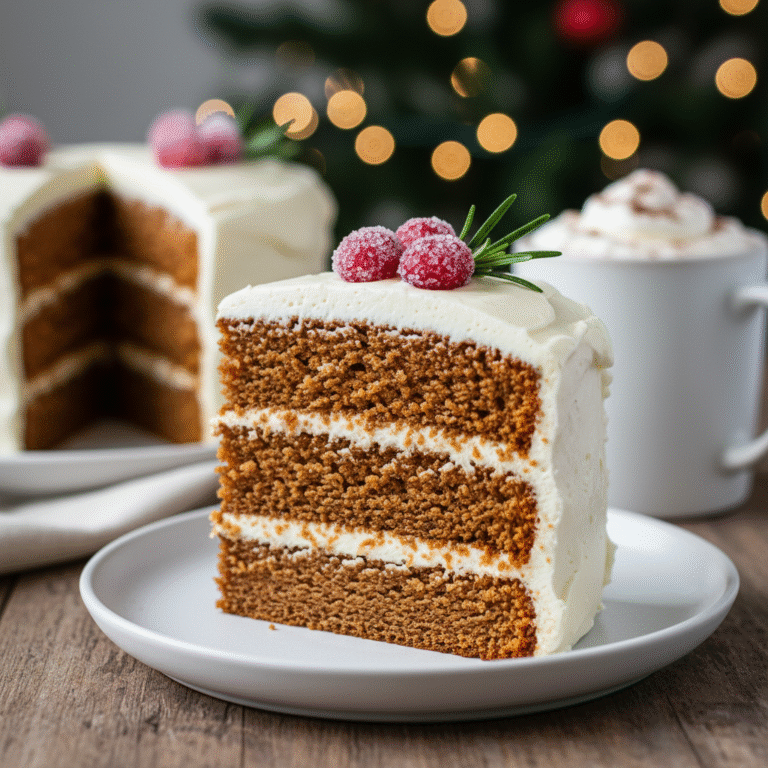
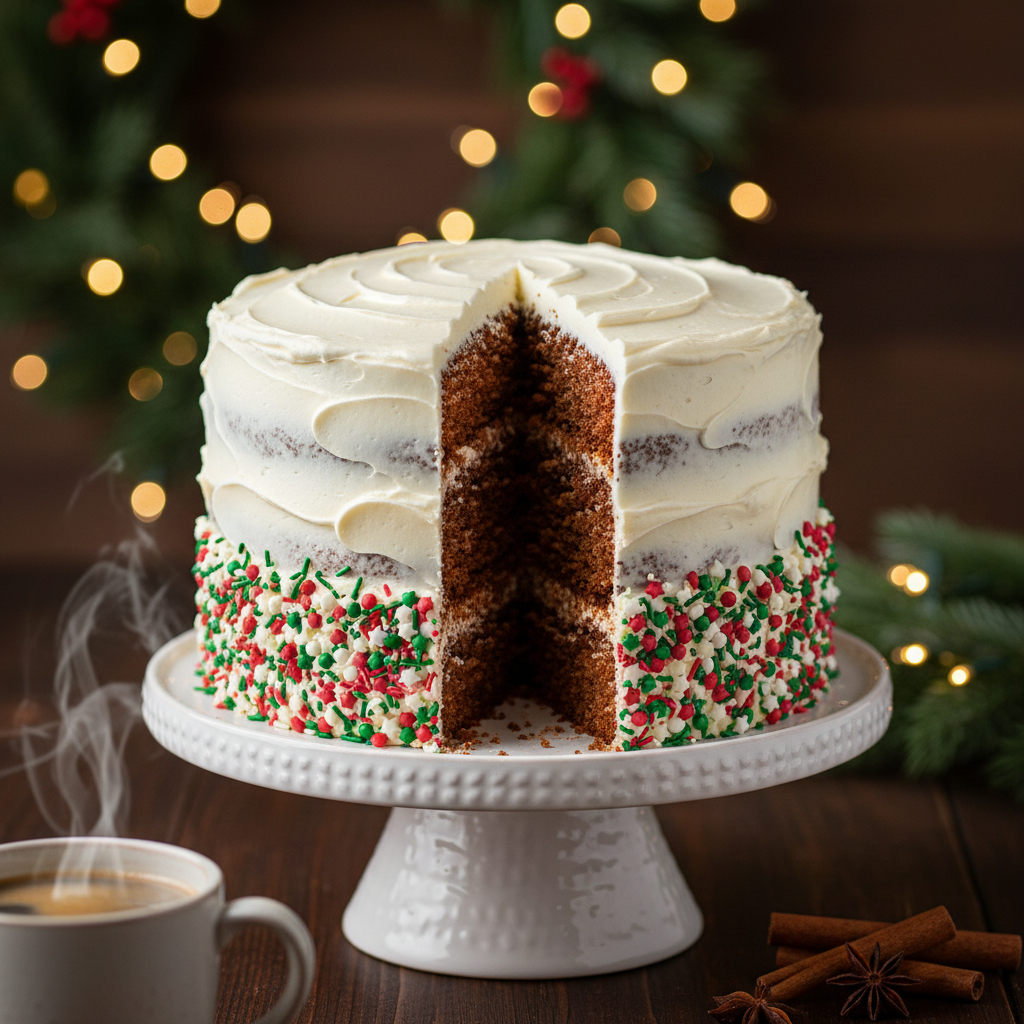
This showstopping Festive Gingerbread Layer Cake features three moist, spiced molasses sponges stacked with tangy cream cheese frosting and adorned with vibrant holiday sprinkles. It’s the ultimate Christmas centerpiece that tastes just as cozy and nostalgic as it looks.
45 minutes
35 minutes
1 hour 20 minutes
12-16 servings
Dessert
Baking
American / European
Vegetarian
There is something undeniably magical about the aroma of warm spices wafting through the kitchen during the holiday season. While gingerbread cookies often steal the spotlight, this Festive Gingerbread Layer Cake is here to claim the throne as the ultimate Christmas dessert. Imagine the deep, rich flavors of molasses, ginger, cinnamon, and cloves transformed into a tender, moist crumb that practically melts in your mouth. This isn’t just a cake; it’s a celebration of winter flavors, wrapped in a velvety coat of cream cheese frosting that provides the perfect tangy counterpoint to the dark, spicy sponge.
Every slice of this cake tells a story of holiday traditions and cozy nights by the fire. The inclusion of holiday sprinkles adds a playful, festive crunch that delights both children and adults alike, turning a sophisticated flavor profile into a whimsical masterpiece. Whether you are hosting a grand holiday dinner or looking for a special treat to leave out for Santa (he might prefer this over cookies!), this cake delivers on all fronts. It boasts a robust structure that makes it easy to stack and frost, yet it remains incredibly soft thanks to the careful balance of liquid and fat. We’re skipping the dry, dense fruitcakes of the past and embracing a modern classic that is vibrant, flavorful, and undeniably photogenic. Get ready to impress your guests with a dessert that looks professional but is surprisingly achievable in your home kitchen.
History & Origins
The history of gingerbread is as rich and layered as the cake itself. The root of the ginger plant was first cultivated in ancient China for medical treatments and eventually traveled to Europe via the Silk Road. By the Middle Ages, ginger was a highly prized spice, often used to preserve meats and mask the taste of preserved foods. However, the concept of ‘gingerbread’ as we know it began to take shape in medieval Europe. It was originally a dense, honey-sweetened cake known as ‘pain d’épices’ in France and ‘Lebkuchen’ in Germany. These early versions were often shaped into intricate molds and were a staple at medieval fairs.
Queen Elizabeth I is famously credited with the invention of the gingerbread man, serving them to visiting dignitaries. But as baking powder and baking soda became available in the 19th century, the texture of gingerbread evolved from a hard biscuit or dense slab into the fluffy, cake-like dessert we adore today. In America, the recipe adapted to include molasses, a byproduct of sugar refining that was cheaper than sugar and gave the cake its signature dark color and moisture. This Festive Gingerbread Layer Cake is a modern descendant of those ancient traditions. It combines the old-world spice blends of European guilds with the American innovation of moist, molasses-rich batters, resulting in a dessert that bridges centuries of culinary history.
Why This Recipe Works
This recipe succeeds where many spice cakes fail because of its meticulous attention to moisture retention and spice activation. Gingerbread can often run the risk of being dry or overly dense due to the heavy molasses. To combat this, we utilize a combination of oil and butter. Butter provides that classic dairy richness and flavor, while oil ensures the cake stays soft and moist for days, even after refrigeration. Additionally, the use of buttermilk introduces acidity, which not only tenderizes the gluten strands in the flour but also reacts vigorously with the baking soda to create a significant lift, resulting in a lighter crumb.
Furthermore, we employ a technique often used in chocolate cakes: blooming the spices. By mixing the ginger, cinnamon, cloves, and nutmeg with the wet ingredients—specifically the warm water or coffee—we intensify their flavor profiles before they are locked into the batter. The warmth helps release the essential oils in the spices, ensuring that every bite is evenly seasoned and aromatic. Finally, the cream cheese frosting is the scientifically perfect pairing; its slight acidity and tang cut through the sweetness of the molasses and the warmth of the spices, creating a balanced palate that prevents the dessert from becoming cloying.
Why You’ll Love This Recipe
- ✓Incredibly moist crumb that stays fresh for days.
- ✓Perfect balance of warming spices: ginger, cinnamon, and cloves.
- ✓Tangy cream cheese frosting cuts through the rich molasses sweetness.
- ✓Festive presentation with holiday sprinkles makes it a centerpiece.
- ✓Sturdy structure makes it easy to layer and decorate for beginners.
Equipment You’ll Need
- ✓Three 8-inch round cake pans
- ✓Stand mixer or handheld electric mixer
- ✓Large mixing bowls
- ✓Whisk
- ✓Rubber spatula
- ✓Wire cooling rack
- ✓Offset spatula
- ✓Cake turntable (optional)
- ✓Parchment paper
Ingredients
- ✓3 cups all-purpose flour
- ✓1 tablespoon ground ginger
- ✓2 teaspoons ground cinnamon
- ✓1 teaspoon ground cloves
- ✓1/2 teaspoon ground nutmeg
- ✓1 teaspoon baking soda
- ✓1/2 teaspoon salt
- ✓3/4 cup unsalted butter, softened
- ✓1/2 cup vegetable oil
- ✓1 cup granulated sugar
- ✓1/2 cup packed dark brown sugar
- ✓1 cup unsulphured molasses
- ✓3 large eggs, room temperature
- ✓1 cup buttermilk, room temperature
- ✓1/2 cup hot water (or hot coffee for depth)
- ✓16 oz cream cheese, softened (for frosting)
- ✓1 cup unsalted butter, softened (for frosting)
- ✓5 cups powdered sugar, sifted
- ✓2 teaspoons vanilla extract
- ✓1/2 cup holiday sprinkles (red, green, white mix)
Instructions
- Preheat your oven to 350°F (175°C). Grease three 8-inch round cake pans with butter or cooking spray and line the bottoms with parchment paper.
- In a medium bowl, whisk together the flour, ginger, cinnamon, cloves, nutmeg, baking soda, and salt until well combined. Set aside.
- In the bowl of a stand mixer fitted with the paddle attachment, beat the 3/4 cup softened butter, vegetable oil, granulated sugar, and brown sugar on medium-high speed until light and fluffy (about 3-4 minutes).
- Reduce the mixer speed to medium and add the molasses and eggs, one at a time, beating well after each addition. Scrape down the sides of the bowl as needed.
- Reduce speed to low. Add the flour mixture in three parts, alternating with the buttermilk, beginning and ending with the flour. Mix just until combined—do not overmix.
- With the mixer on the lowest setting, carefully pour in the hot water (or coffee). Mix gently until the batter is smooth. The batter will be thin; this is normal.
- Divide the batter evenly among the three prepared pans. Tap the pans gently on the counter to release any large air bubbles.
- Bake for 30-35 minutes, or until a toothpick inserted into the center comes out clean or with just a few moist crumbs.
- Remove cakes from the oven and let them cool in the pans for 10 minutes. Then, turn them out onto a wire rack to cool completely before frosting.
- To make the frosting: In a clean mixing bowl, beat the cream cheese and 1 cup butter together on medium-high speed until smooth and creamy.
- Gradually add the powdered sugar, one cup at a time, mixing on low speed until incorporated. Add the vanilla extract and whip on high speed for 2-3 minutes until fluffy.
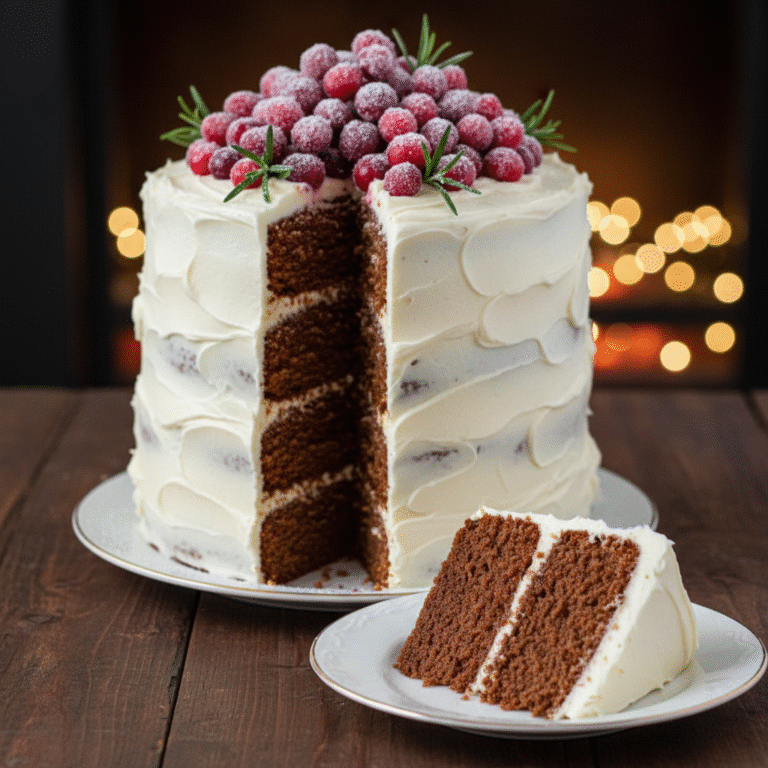
- To assemble: Place one cake layer on a serving plate or cake stand. Spread a thick layer of frosting over the top. Repeat with the second and third layers.
- Apply a thin crumb coat of frosting over the entire cake and refrigerate for 20 minutes. Then, apply the remaining frosting generously over the top and sides.
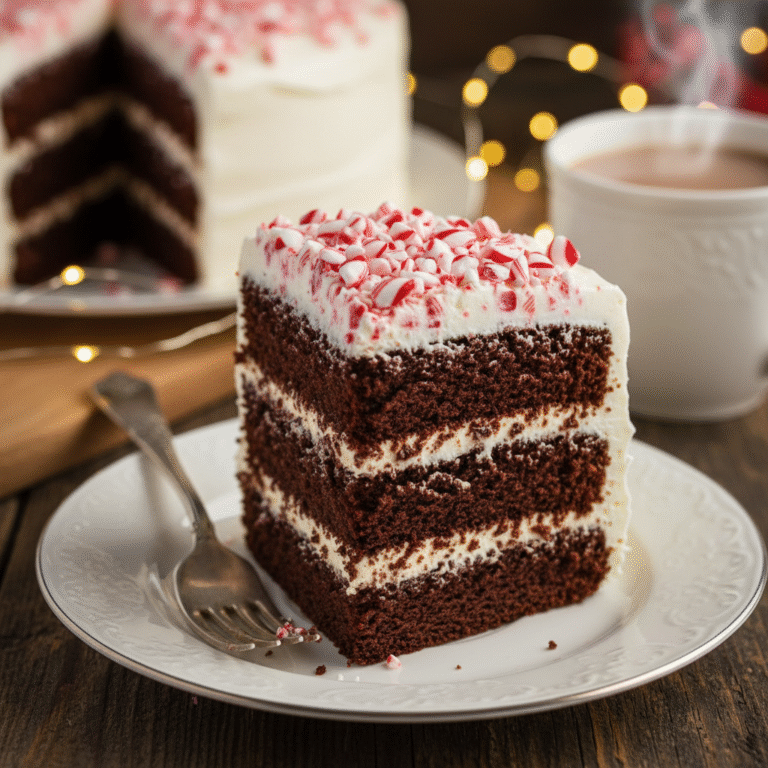
- Gently press holiday sprinkles onto the bottom third of the cake sides and sprinkle generously over the top rim.
- Slice and serve immediately, or refrigerate until ready to serve.
Expert Cooking Tips
- ✓Ensure all refrigerated ingredients (eggs, buttermilk, butter, cream cheese) are at room temperature before starting. This ensures a smooth emulsion and better rise.
- ✓Do not skip the parchment paper. Molasses cakes can be sticky, and parchment guarantees a clean release from the pan.
- ✓If you don’t have buttermilk, you can make a substitute by adding 1 tablespoon of lemon juice or white vinegar to a cup of milk and letting it sit for 5 minutes.
- ✓Weigh your flour using a kitchen scale for the most accurate results. Too much flour will make the cake dry.
- ✓Use ‘unsulphured’ molasses (like Grandma’s brand) rather than ‘blackstrap’ molasses, which can be too bitter for a cake.
- ✓Cool the cakes completely before frosting. Even a slightly warm cake will melt the butter in the cream cheese frosting, causing the layers to slide.
- ✓For cleaner slices, dip your knife in hot water and wipe it dry before cutting each slice.
Substitutions and Variations
This recipe is versatile enough to accommodate several dietary needs or pantry limitations. If you need to make this gluten-free, a high-quality 1:1 gluten-free baking flour blend (containing xanthan gum) works remarkably well; just be sure to let the batter rest for 15 minutes before baking to hydrate the rice flours. For a dairy-free version, substitute the butter with a plant-based butter stick and the buttermilk with almond milk mixed with a teaspoon of apple cider vinegar. The cream cheese frosting can be swapped for a vegan buttercream or a coconut cream frosting. If you are out of dark brown sugar, light brown sugar works fine, though the flavor will be slightly milder. You can also swap the vegetable oil for melted coconut oil or canola oil without impacting the texture significantly. Finally, if you dislike the strong bite of cloves, you can increase the cinnamon and reduce the cloves to a pinch, or use pumpkin pie spice as a convenient alternative.
Common Mistakes to Avoid
The most common mistake with gingerbread cake is over-baking. Because the batter is dark from the molasses, it is hard to judge doneness by color alone. Rely on the toothpick test and start checking 5 minutes before the timer goes off. Another pitfall is using blackstrap molasses; this variety is extremely concentrated and bitter, intended more for savory dishes or health supplements, and will ruin the sweet balance of the cake. Ensure you buy standard unsulphured molasses. Additionally, rushing the cooling process is a recipe for disaster. Gingerbread is structurally delicate when warm. If you try to turn it out of the pan too soon, it may crack. If you frost it while warm, you will end up with a puddle of icing. Lastly, over-mixing the batter after adding the flour can lead to tunneling (large holes) and a tough, rubbery texture. Mix only until the flour streaks disappear.
Serving Suggestions
This Festive Gingerbread Layer Cake is a stunner on its own, but you can elevate the experience with a few thoughtful additions. Serve each slice with a dollop of lightly sweetened whipped cream or a scoop of vanilla bean ice cream to contrast the spices. A drizzle of salted caramel sauce over the slice adds a luxurious finish that pairs beautifully with the ginger. Beverage-wise, this cake pairs exceptionally well with hot coffee, an espresso martini, or a warm mug of chai tea. For a kids’ party, serve it alongside hot cocoa topped with marshmallows. If you want to enhance the presentation, garnish the plate with sugared cranberries or a sprig of fresh rosemary for a pop of color and a hint of pine aroma that complements the holiday theme.
Storage and Reheating Tips
Because of the cream cheese frosting, this cake should be stored in the refrigerator. It can be kept in an airtight cake carrier or wrapped gently in plastic wrap for up to 5 days. However, cold cake can taste dry and the butter hardens, so it is crucial to let the slices sit at room temperature for about 20-30 minutes before eating to restore the soft texture and maximize flavor. If you want to freeze the cake, you can freeze the unfrosted layers individually wrapped in plastic wrap and foil for up to 3 months. Thaw them in the fridge overnight before assembling. You can also freeze individual slices of the finished cake; place them on a baking sheet to freeze the frosting solid, then wrap tightly in plastic wrap and foil. Thaw in the fridge before serving.
Nutrition Facts (Estimated)
| Serving Size | 1 slice |
| Calories | 580 |
| Fat | 28g |
| Saturated Fat | 14g |
| Unsaturated Fat | 12g |
| Trans Fat | 0g |
| Cholesterol | 85mg |
| Sodium | 320mg |
| Carbohydrates | 76g |
| Fiber | 2g |
| Sugar | 45g |
| Protein | 6g |
Frequently Asked Questions
Can I make this cake ahead of time?
Yes, absolutely. The flavors of gingerbread actually improve and deepen after sitting for 24 hours. You can bake the layers a day in advance, wrap them tightly, and store them at room temperature or in the fridge before frosting.
Why do I need to use hot water?
Hot water (or hot coffee) helps to ‘bloom’ the cocoa (if used) and spices, releasing their full flavor profile. It also helps to melt the butter and sugars slightly, ensuring a smoother, more uniform batter.
Can I make this as cupcakes instead?
Yes! This recipe will yield approximately 24-30 cupcakes. Bake them at 350°F for about 18-22 minutes. Check for doneness with a toothpick.
What if I don’t like molasses?
Molasses is essential for the authentic gingerbread flavor and texture. If you strongly dislike it, you might prefer a ‘Spice Cake’ recipe which relies on brown sugar and spices without the heavy molasses content, but substituting it here will drastically change the cake.
My cake sank in the middle. What happened?
This usually happens if the oven door was opened too early, causing a temperature drop, or if the cake was under-baked. It can also result from too much leavening (baking soda) or over-beating the eggs.
Can I use fresh ginger instead of ground?
Fresh ginger adds a lovely kick but has a different moisture content. If you use it, use about 2 tablespoons of freshly grated ginger, but keep at least half the amount of ground ginger for that deep, baked-in warmth.
Is the coffee flavor strong if I use it?
No. The coffee enhances the spices and the richness of the molasses but does not make the cake taste like a latte. It simply adds depth.
How do I get the sprinkles to stick to the sides?
Apply the sprinkles immediately after frosting the cake, while the cream cheese icing is still soft and tacky. Cup your hand with sprinkles and gently press them into the side of the cake.
Conclusion
This Festive Gingerbread Layer Cake With Holiday Sprinkles is more than just a dessert; it is a centerpiece that embodies the spirit of the holidays. From the therapeutic process of mixing the spiced batter to the joy of decorating with colorful sprinkles, every step is a celebration. The combination of the deep, dark, spicy sponge with the light, tangy frosting is a timeless pairing that never fails to delight. Whether you are an experienced baker or trying your hand at a layer cake for the first time, this recipe is designed to guide you to success. So, put on your favorite holiday playlist, preheat the oven, and get ready to create a delicious memory that your family and friends will talk about until next Christmas. Happy baking!