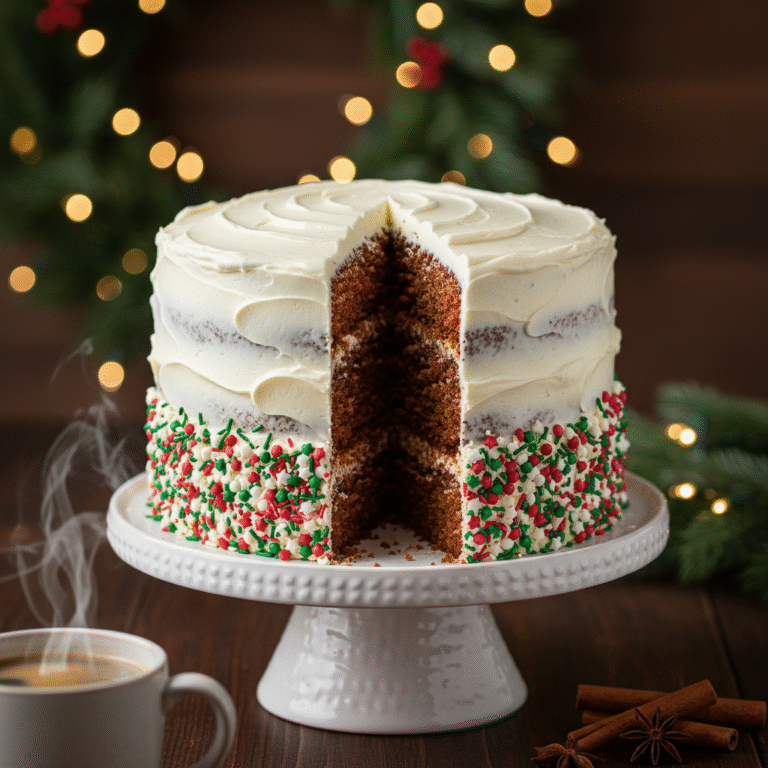
Festive Gingerbread Layer Cake with Tangy Cream Cheese Frosting
Festive Gingerbread Layer Cake Recipe
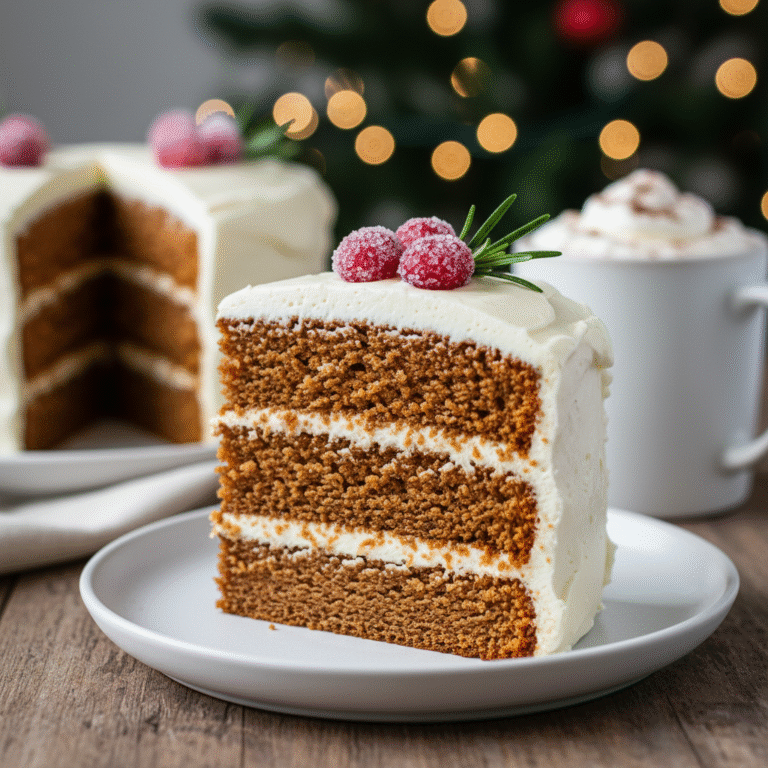
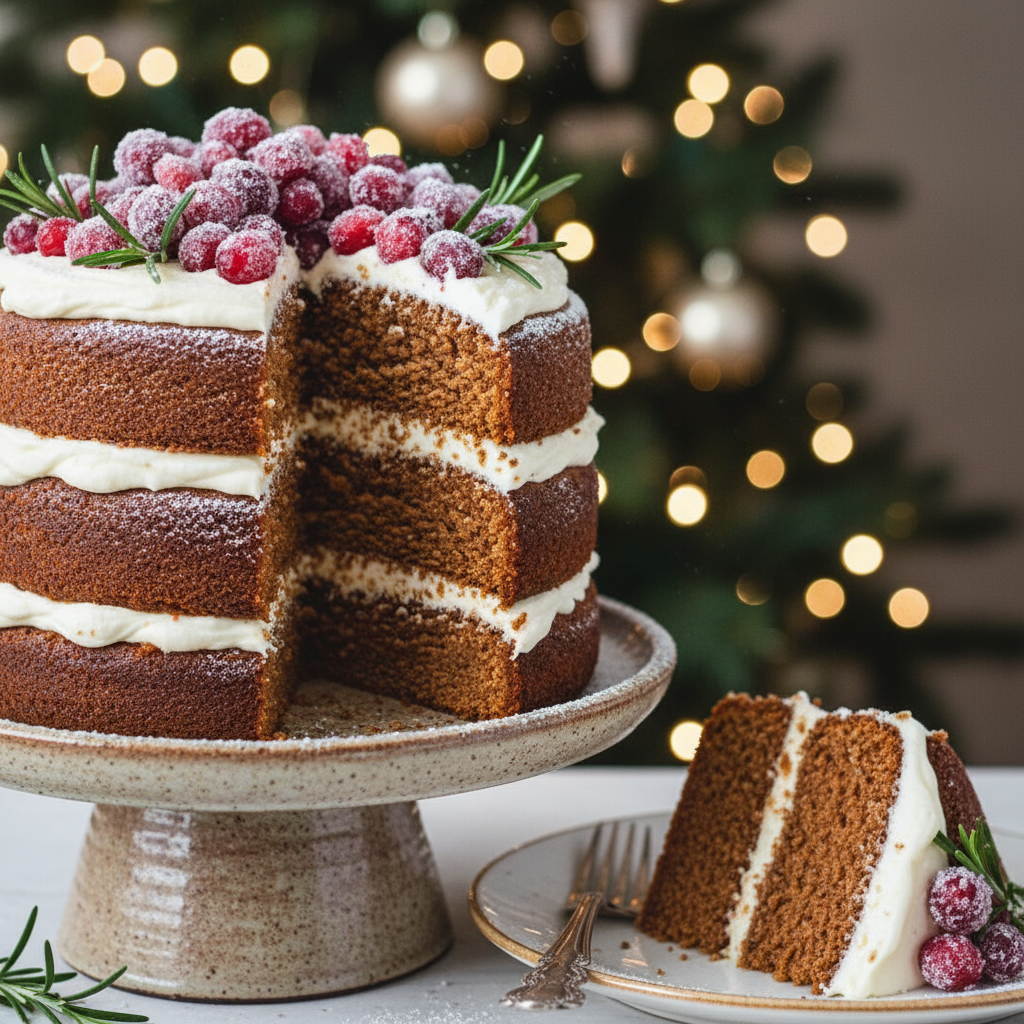
This show-stopping Festive Gingerbread Layer Cake features three incredibly moist, spice-infused layers smothered in a velvety cream cheese frosting. It is the ultimate holiday centerpiece that perfectly balances deep molasses richness with bright, tangy sweetness.
45 minutes
35 minutes
1 hour 20 minutes
12-16 servings
Dessert
Baking
American
Vegetarian
There is something undeniably magical about the aroma of gingerbread baking in the oven—it is the scent of the holidays, of warmth, and of gathering together. This Festive Gingerbread Layer Cake is my love letter to the season, designed to be the crown jewel of your Christmas dessert table. Unlike dry or overly dense spice cakes you might have tried in the past, this recipe produces a crumb that is remarkably tender and moist, thanks to a generous amount of dark molasses and a secret splash of hot coffee that blooms the spices. The flavor profile is complex and deep, featuring a warming trio of ground ginger, cinnamon, and cloves, with just a hint of nutmeg to round it out. But a great cake is nothing without its counterpart, and here we pair the spicy richness of the gingerbread with a cloud-like, tangy cream cheese frosting. The contrast is simply divine. Whether you are hosting a large family dinner or looking for a baking project to get you into the festive spirit, this cake promises to deliver not just a delicious dessert, but a slice of holiday nostalgia. It is rustic yet elegant, comforting yet sophisticated, and guaranteed to have your guests asking for seconds before they have even finished their first slice.
History & Origins
The history of gingerbread is as rich and layered as the cake itself. Its origins can be traced back to ancient Greece and Egypt, where ginger was used for ceremonial purposes, but it was in medieval Europe that gingerbread began to take on the forms we recognize today. Brought to Europe by Crusaders returning from the Middle East in the 11th century, ginger was initially a preservation agent and a luxury spice. By the 15th century, gingerbread making had become a recognized guild profession in Germany, with specialized bakers creating intricate designs. However, the soft, cake-like gingerbread we enjoy in this recipe has closer ties to early American culinary traditions. In the 18th century, heavily spiced cakes sweetened with molasses became popular in the United States, largely because molasses was a more affordable sweetener than refined sugar at the time. One of the most famous early recipes is associated with Mary Ball Washington, the mother of George Washington, who served a soft gingerbread to the Marquis de Lafayette. Over centuries, the recipe evolved from dense, bread-like loaves to the lighter, fluffier layer cakes we crave today. This modern iteration honors that long lineage, keeping the traditional flavor profile intact while utilizing modern baking science to achieve a superior texture.
Why This Recipe Works
This recipe succeeds where many other spice cakes fail because it meticulously balances moisture, acidity, and structure. The key player here is molasses. While it provides that signature dark, caramelized flavor, it is also acidic. This acidity reacts vigorously with the baking soda in the batter, creating carbon dioxide bubbles that lift the heavy batter, resulting in a cake that is surprisingly light and fluffy rather than dense and gummy. Furthermore, we use a combination of oil and butter. Butter provides the essential creamy flavor that we associate with holiday baking, while the oil ensures the cake remains moist for days, even when refrigerated. Another critical technique employed here is ‘blooming’ the spices in hot liquid. By mixing the ginger, cinnamon, and cloves with hot coffee (or boiling water) before adding them to the batter, we release their essential oils, intensifying their flavor and ensuring they are evenly distributed throughout the cake. Finally, the cream cheese frosting is whipped with a high ratio of heavy cream to butter, creating a lighter, more stable frosting that doesn’t weigh down the tender cake layers.
Why You’ll Love This Recipe
- ✓Incredibly moist texture that stays fresh for days
- ✓Deep, authentic gingerbread flavor using dark molasses
- ✓Perfect balance of spicy cake and tangy cream cheese frosting
- ✓Stunning holiday presentation with sugared cranberries
- ✓Can be made ahead of time for stress-free hosting
Equipment You’ll Need
- ✓Three 8-inch round cake pans
- ✓Stand mixer or electric hand mixer
- ✓Large mixing bowls
- ✓Whisk
- ✓Rubber spatula
- ✓Wire cooling rack
- ✓Offset spatula for frosting
- ✓Parchment paper
Ingredients
- ✓3 cups all-purpose flour
- ✓1 tablespoon ground ginger
- ✓2 teaspoons ground cinnamon
- ✓1 teaspoon ground cloves
- ✓1/2 teaspoon ground nutmeg
- ✓1 teaspoon baking soda
- ✓1/2 teaspoon baking powder
- ✓1/2 teaspoon salt
- ✓3/4 cup unsalted butter, softened
- ✓1/2 cup vegetable oil
- ✓1 cup granulated sugar
- ✓1/2 cup packed dark brown sugar
- ✓3 large eggs, room temperature
- ✓1 cup unsulfured molasses
- ✓1 cup hot coffee (or boiling water)
- ✓16 oz full-fat cream cheese, softened (for frosting)
- ✓1 cup unsalted butter, softened (for frosting)
- ✓5 cups powdered sugar (for frosting)
- ✓1 teaspoon vanilla extract (for frosting)
- ✓Pinch of salt (for frosting)
- ✓Sugared cranberries and rosemary sprigs (for garnish)
Instructions
- Preheat your oven to 350°F (175°C). Grease three 8-inch round cake pans with butter, line the bottoms with parchment paper, and dust the sides with flour, tapping out any excess.
- In a medium bowl, whisk together the flour, ground ginger, cinnamon, cloves, nutmeg, baking soda, baking powder, and salt until well combined. Set aside.
- In the bowl of a stand mixer fitted with the paddle attachment, beat the softened butter, vegetable oil, granulated sugar, and brown sugar on medium-high speed for about 3-4 minutes until the mixture is light and fluffy.
- Add the eggs one at a time, beating well after each addition and scraping down the sides of the bowl as needed to ensure even mixing.
- Pour in the molasses and mix on low speed until fully incorporated. The mixture may look slightly curdled at this point; this is normal.
- With the mixer on low speed, add the dry ingredients in three parts, alternating with the hot coffee (or boiling water), beginning and ending with the dry ingredients. Mix only until just combined to avoid overworking the gluten.
- Divide the batter evenly among the three prepared cake pans. Tap the pans gently on the counter to release any large air bubbles.
- Bake for 30-35 minutes, or until a toothpick inserted into the center of the cakes comes out clean or with just a few moist crumbs.
- Remove the cakes from the oven and let them cool in the pans for 10 minutes. Then, carefully turn them out onto a wire rack to cool completely before frosting.
- To make the frosting: In a clean mixing bowl, beat the cream cheese and butter together on medium-high speed until smooth and creamy, about 3 minutes.
- Gradually add the powdered sugar, one cup at a time, mixing on low speed until incorporated. Add the vanilla extract and a pinch of salt.
- Increase the speed to medium-high and whip the frosting for another 2-3 minutes until it is fluffy and white.
- Assemble the cake by placing one layer on a serving plate or cake stand. Spread a generous layer of frosting over the top. Repeat with the second and third layers.
- Apply a thin crumb coat of frosting over the entire cake and refrigerate for 20 minutes to set. Then, apply the remaining frosting in a thick, swooping layer.
- Garnish with sugared cranberries and fresh rosemary sprigs for a festive look just before serving.
Expert Cooking Tips
- ✓Ensure all your refrigerated ingredients (eggs, butter, cream cheese) are at room temperature before starting to ensure a smooth emulsion.
- ✓Do not skip the parchment paper lining; gingerbread is sticky and can cling to pans even when greased.
- ✓Use ‘unsulfured’ molasses (like Grandma’s brand) rather than blackstrap molasses, which is too bitter for this delicate cake.
- ✓Be careful not to overmix the batter once the flour is added, as this will result in a tough, rubbery texture.
- ✓If your frosting feels too soft to pipe or spread, chill it in the refrigerator for 15-20 minutes to firm up.
- ✓Weigh your flour using a kitchen scale for the most accurate results; too much flour is the number one cause of dry cake.
- ✓The hot coffee enhances the chocolatey and spicy notes of the molasses without making the cake taste like coffee.
Substitutions and Variations
This recipe is versatile enough to handle several dietary adjustments without sacrificing quality. If you are gluten-free, you can substitute the all-purpose flour with a high-quality 1:1 gluten-free baking flour blend that contains xanthan gum. For a dairy-free version, use plant-based butter blocks and a dairy-free cream cheese alternative; note that you may need to add a little more powdered sugar to stabilize the frosting as dairy-free cream cheese tends to be softer. If you prefer not to use coffee, boiling water works perfectly fine, or you could use a hot chai tea concentrate for an extra spice kick. While vegetable oil is recommended for moisture, melted coconut oil or light olive oil can be used as alternatives. For the sugar, you can use all brown sugar for a deeper caramel flavor, though the texture might be slightly denser.
Common Mistakes to Avoid
The most common mistake when making gingerbread cake is using the wrong type of molasses. Blackstrap molasses is extremely concentrated, bitter, and less sweet than regular unsulfured molasses; using it will drastically alter the taste and may make the cake unpalatable. Another frequent error is opening the oven door too early. Because this batter relies on the chemical reaction between baking soda and acidic molasses for lift, opening the door prematurely can cause the center to collapse. Additionally, ensure your spices are fresh. Ground spices lose their potency over time, so if your ginger and cloves have been sitting in the pantry for years, your cake will lack that signature punch. Finally, rushing the cooling process is a recipe for disaster; frosting a warm cake will cause the butter and cream cheese to melt, resulting in a sliding, messy cake.
Serving Suggestions
This Festive Gingerbread Layer Cake is a statement piece that deserves to be showcased. Serve it on a white ceramic cake stand to let the dark cake and white frosting pop. It pairs beautifully with a hot cup of coffee, an espresso martini, or a warm mug of mulled cider. For an extra touch of elegance, serve each slice with a dollop of lightly sweetened whipped cream and a dusting of cinnamon. If you are serving this after a heavy holiday meal, cut the slices thin, as the cake is rich and satisfying. The sugared cranberries and rosemary are not just for looks; the tartness of the cranberries cuts through the sweetness of the frosting beautifully, so encourage guests to eat them!
Storage and Reheating Tips
Because of the cream cheese frosting, this cake should be stored in the refrigerator. It can be kept in an airtight cake container or loosely covered with plastic wrap for up to 5 days. In fact, the flavors often improve on the second day as the spices have more time to meld. If you want to make the cake ahead of time, you can bake the layers, wrap them tightly in plastic wrap, and freeze them for up to 3 months. Thaw the layers in the refrigerator overnight before frosting. Once frosted, individual slices can also be frozen; place them on a baking sheet to freeze the frosting solid, then wrap tightly in plastic wrap and foil. To serve from the fridge, let the cake sit at room temperature for 30-60 minutes to allow the frosting and cake to soften.
Nutrition Facts (Estimated)
| Serving Size | 1 slice |
| Calories | 580 |
| Fat | 28g |
| Saturated Fat | 14g |
| Unsaturated Fat | 12g |
| Trans Fat | 0g |
| Cholesterol | 85mg |
| Sodium | 310mg |
| Carbohydrates | 76g |
| Fiber | 1g |
| Sugar | 42g |
| Protein | 5g |
Frequently Asked Questions
Can I make this cake as a sheet cake instead of layers?
Yes, absolutely! You can bake this recipe in a 9×13 inch baking pan. You will likely need to increase the baking time to 40-50 minutes. Keep an eye on it and test with a toothpick.
Why does the recipe call for hot coffee?
Hot liquid helps to ‘bloom’ the cocoa and spices, releasing their full flavor potential. Coffee specifically enhances the depth of the molasses without imparting a strong coffee taste.
Can I reduce the amount of sugar in the recipe?
You can reduce the sugar in the cake batter by about 1/4 cup without major structural issues, but reducing it further may affect the moisture and texture. The frosting sweetness is necessary for structure.
What can I use instead of molasses?
Molasses is essential for the specific gingerbread flavor and texture. Substitutes like honey or maple syrup will result in a completely different spice cake, not a traditional gingerbread.
My cake sank in the middle. What happened?
This usually happens if the oven door was opened too early, the oven wasn’t hot enough, or the leavening agents (baking soda/powder) were expired. Make sure to check your oven temperature with a thermometer.
How do I make sugared cranberries for garnish?
Simmer equal parts sugar and water to make a syrup. Let it cool slightly, toss fresh cranberries in the syrup, let them dry on a rack for an hour until sticky, then roll them in granulated sugar.
Can I use fresh ginger instead of ground?
Ground ginger is more concentrated and better for baking structure. However, you can add 1 tablespoon of freshly grated ginger in addition to the ground ginger for an extra spicy kick.
Is the batter supposed to be very thin?
Yes, this is a liquid-heavy batter. Do not be alarmed; the thin consistency is what ensures the cake bakes up incredibly moist and tender.
Conclusion
This Festive Gingerbread Layer Cake is more than just a dessert; it is a celebration of holiday flavors and traditions. From the first waft of cinnamon and cloves filling your kitchen to the final forkful of moist cake and creamy frosting, the experience is pure joy. It is the kind of recipe that gets requested year after year, becoming a staple in your family’s holiday repertoire. Whether you are an experienced baker or trying your hand at a layer cake for the first time, this recipe is robust and forgiving enough to ensure success. So, put on your favorite holiday playlist, grab your apron, and get ready to bake something truly spectacular. Happy holidays and happy baking!