Festive Egg Nog Bundt Cake With Silky Chocolate Ganache
Festive Egg Nog Bundt Cake With Chocolate Ganache Recipe
Celebrate the season with this ultra-moist Festive Egg Nog Bundt Cake, infused with fresh nutmeg and rich eggnog. Topped with a decadent, glossy chocolate ganache, it is the ultimate holiday centerpiece that tastes just like Christmas on a plate.
20 minutes
55 minutes
1 hour 30 minutes
12-16 servings
Dessert
Baking
American
Vegetarian
There is something undeniably magical about the holiday season, a time when our kitchens transform into warm sanctuaries filled with the scents of cinnamon, vanilla, and freshly grated nutmeg. Among the myriad of cookies and pies that grace our tables, the Bundt cake stands tall as a symbol of effortless elegance and communal sharing. This Festive Egg Nog Bundt Cake with Chocolate Ganache is not just a dessert; it is a celebration of winter’s most polarizing yet beloved beverage. Whether you are a die-hard eggnog enthusiast or someone who usually passes on the drink, this cake bridges the gap perfectly. The batter uses the rich, custard-like consistency of premium eggnog to create a crumb that is dense, velvety, and incredibly moist, avoiding the dryness that often plagues lesser sponge cakes.
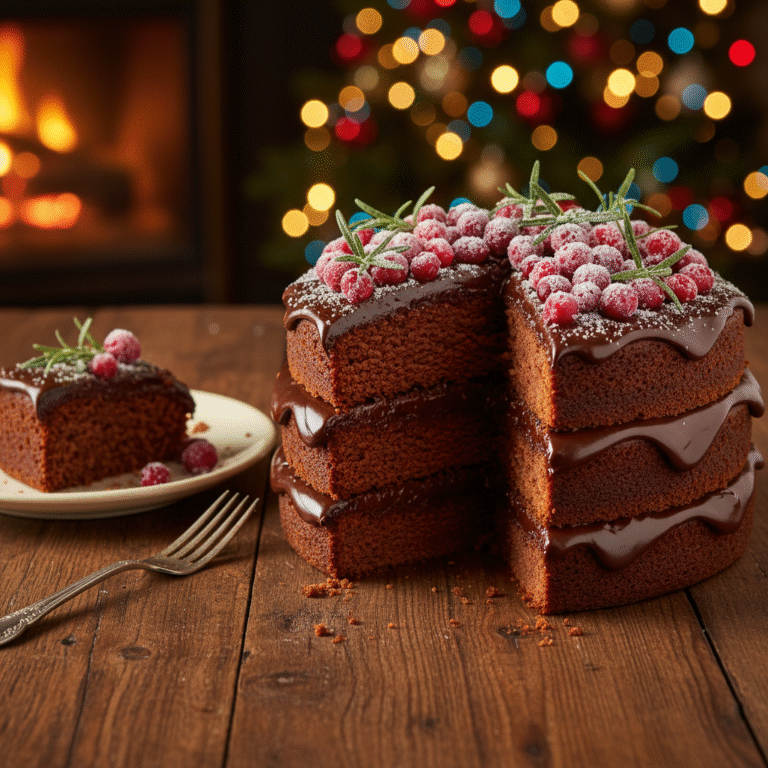
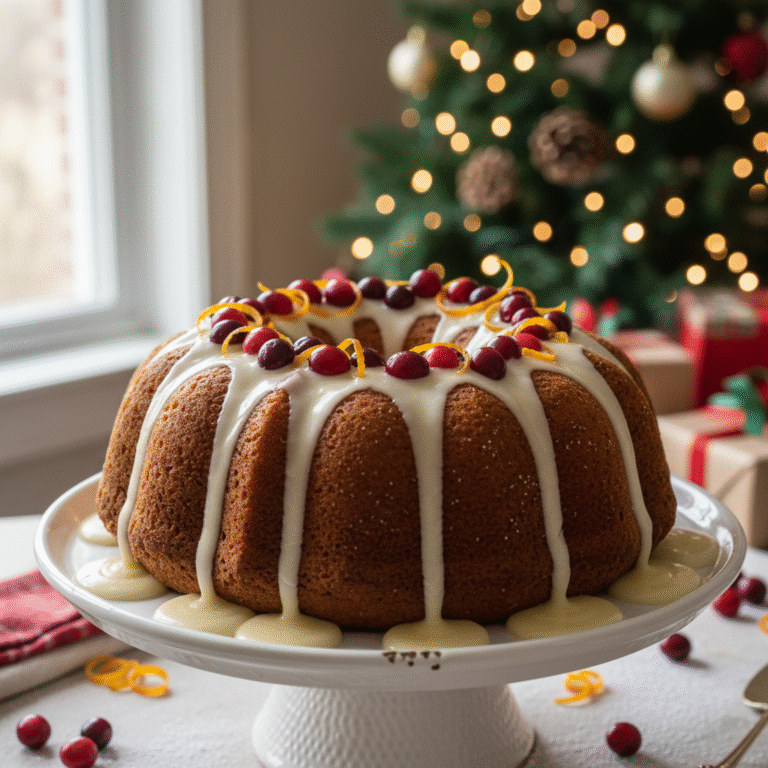
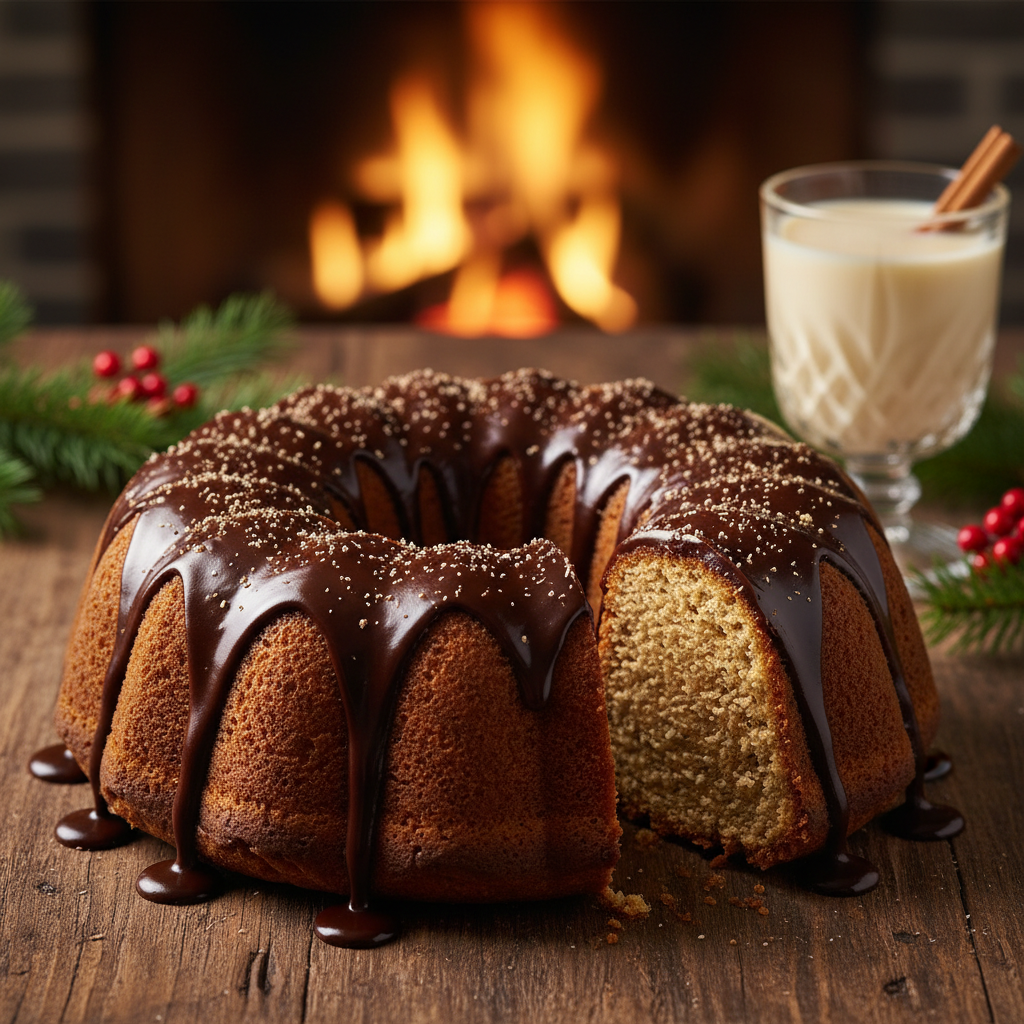
The flavor profile is a sophisticated dance of spices and sweetness. We amplify the natural notes of the eggnog with a splash of dark rum and a generous amount of freshly grated nutmeg, which provides that signature aromatic warmth. But the true showstopper is the contrast. While the cake itself is sweet and creamy, the dark chocolate ganache poured over the top introduces a luxurious bitterness that balances the palate. It drips down the intricate ridges of the Bundt pan, creating a visual masterpiece that looks like it came straight from a professional bakery window. This recipe is designed for the busy holiday host—it yields a stunning result with relatively minimal active effort, freeing you up to enjoy the festivities while the oven does the work.
History & Origins
To understand the heritage of this dessert, we must look at two distinct histories: the vessel and the flavor. The Bundt pan itself is a relatively modern American icon with European roots. In the 1950s, H. David Dalquist, the founder of Nordic Ware, created the pan at the request of a group of Jewish women in Minneapolis who wanted a lighter version of the traditional German ‘Gugelhupf’ cake mold. Initially a slow seller, the Bundt pan exploded in popularity after the 1966 Pillsbury Bake-Off, where the ‘Tunnel of Fudge’ cake took second place. Since then, the fluted ring shape has become a staple of American baking, beloved for its ability to bake heavy, dense batters evenly due to the central heat chimney.
The flavor profile, however, goes back much further. Eggnog traces its lineage to medieval Britain and a drink called ‘posset,’ a hot, milky, ale-like drink. By the 13th century, monks were known to drink a posset with eggs and figs. As the recipe crossed the Atlantic to the American colonies, it evolved. Dairy and eggs were abundant in the New World, and rum—coming from the Caribbean—became the spirit of choice. By the 18th century, eggnog was a festive standard, particularly during the Christmas season. Combining these two histories, this cake takes the colonial tradition of spiced, spiked custard and marries it with the mid-century modern innovation of the Bundt, creating a dessert that feels timeless yet distinctly American.
Why This Recipe Works
This recipe succeeds where many holiday cakes fail because it leverages the unique chemical properties of eggnog. Commercial or homemade eggnog is essentially a fluid custard; it is an emulsion of fat (from cream and yolks), sugar, and proteins. When used as the primary liquid in a cake batter, it provides a structure that milk or water simply cannot match. The high fat content ensures a tender crumb by inhibiting gluten formation, while the sugar in the nog contributes to a golden, caramelized crust that releases easily from the intricate Bundt pan designs.
Furthermore, the ‘Reverse Creaming’ or modified mixing method we often see in high-ratio cakes is mimicked here by the density of the ingredients. The weight of the batter supports the suspension of spices, ensuring the nutmeg doesn’t sink to the bottom. We also use a combination of butter and a small amount of oil; butter provides the mouthwatering flavor, while the oil ensures the cake stays moist for days, which is crucial for holiday baking done in advance. Finally, the ganache is not just a frosting; it acts as a seal. By coating the cake in a layer of chocolate and cream, we lock in the moisture, preventing the cut sides from drying out too quickly. The bitterness of semi-sweet or dark chocolate cuts through the richness of the eggnog, preventing the dessert from becoming cloyingly sweet.
Why You’ll Love This Recipe
- ✓Incredibly moist crumb thanks to full-fat eggnog
- ✓Warm, aromatic spices featuring fresh nutmeg and cinnamon
- ✓Rich, glossy chocolate ganache that sets perfectly
- ✓Beautiful presentation with minimal decorating skills required
- ✓Can be made a day in advance for better flavor development
- ✓Perfect way to use up leftover holiday eggnog
Equipment You’ll Need
- ✓10-12 cup Bundt pan
- ✓Stand mixer or electric hand mixer
- ✓Large mixing bowl
- ✓Medium mixing bowl
- ✓Whisk
- ✓Wire cooling rack
- ✓Small saucepan (for ganache)
- ✓Rubber spatula
Ingredients
- ✓3 cups All-purpose flour
- ✓2 tsp Baking powder
- ✓1/2 tsp Baking soda
- ✓1 tsp Salt
- ✓1 tsp Freshly grated nutmeg
- ✓1/2 tsp Cinnamon
- ✓1 cup Unsalted butter, softened
- ✓2 cups Granulated sugar
- ✓4 large Eggs, room temperature
- ✓1 tsp Vanilla extract
- ✓1 tbsp Dark rum or brandy (optional)
- ✓1 1/4 cups Full-fat eggnog
- ✓6 oz Semi-sweet chocolate, chopped
- ✓1/2 cup Heavy cream
Instructions
- Preheat your oven to 350°F (175°C). Thoroughly grease your Bundt pan with butter or non-stick baking spray, ensuring every crevice is coated. Dust with flour and tap out the excess.
- In a medium bowl, whisk together the flour, baking powder, baking soda, salt, nutmeg, and cinnamon. Set this dry mixture aside.
- In the bowl of a stand mixer fitted with the paddle attachment, cream the softened butter and granulated sugar together on medium-high speed for about 5 minutes, until the mixture is pale, fluffy, and aerated.
- Reduce the mixer speed to medium. Add the eggs one at a time, beating well after each addition and scraping down the sides of the bowl to ensure even incorporation. Mix in the vanilla extract and rum (if using).
- Reduce the mixer speed to low. Add one-third of the flour mixture, followed by half of the eggnog. Repeat with another third of the flour, the remaining eggnog, and finish with the final third of the flour. Mix just until the streaks of flour disappear. Do not overmix.
- Pour the thick batter into the prepared Bundt pan. Smooth the top with a rubber spatula and gently tap the pan on the counter a few times to release any large air bubbles.
- Bake for 50-60 minutes, or until a skewer inserted into the thickest part of the cake comes out clean or with just a few moist crumbs attached.
- Remove the cake from the oven and let it cool in the pan for exactly 10 minutes. Then, invert the pan onto a wire rack to release the cake. Let it cool completely to room temperature before glazing.
- To make the ganache: Place the chopped chocolate in a heatproof bowl. Heat the heavy cream in a small saucepan until it just begins to simmer (do not boil). Pour the hot cream over the chocolate and let it sit for 5 minutes.
- Gently whisk the chocolate and cream together starting from the center until a glossy, smooth ganache forms. Let it cool slightly to thicken.
- Pour the ganache over the cooled cake, allowing it to drip naturally down the sides. Garnish with extra grated nutmeg if desired.
Expert Cooking Tips
- ✓Room Temperature Ingredients: Ensure your butter, eggs, and eggnog are at room temperature. This creates a smoother emulsion and a fluffier cake.
- ✓Proper Greasing: Bundt pans are notorious for sticking. Use a baking spray that contains flour, or be very diligent with the butter-and-flour method.
- ✓Fresh Nutmeg: Do not use pre-ground nutmeg if you can avoid it. Freshly grated nutmeg offers a punchier, more floral aroma that defines this cake.
- ✓Don’t Overmix: Once the flour hits the liquid, gluten begins to form. Mix only until combined to keep the cake tender.
- ✓Cooling Time: Timing the unmolding is critical. If the cake is too hot, it will break; if too cold, the sugars will solidify and stick to the pan. 10 minutes is the sweet spot.
Substitutions and Variations
This recipe is quite robust, but there are several ways to adapt it to your pantry or dietary needs. If you do not have store-bought eggnog, you can make a quick substitute by mixing 1 cup of heavy cream with 1/4 cup of sugar, a pinch of nutmeg, and 2 egg yolks (tempered). For an alcohol-free version, simply omit the rum; the flavor will still be fantastic, perhaps just slightly less complex. You can substitute rum extract (1 tsp) if you want the flavor without the booze. regarding the flour, cake flour can be used for an even lighter crumb, but increase the volume by 2 tablespoons per cup. If you need to make this gluten-free, use a high-quality 1:1 gluten-free baking flour blend that includes xanthan gum; the dense nature of the cake adapts well to gluten-free blends. For the ganache, you can swap semi-sweet chocolate for white chocolate for a ‘snowy’ look, though this will make the overall dessert much sweeter.
Common Mistakes to Avoid
The most frequent error with Bundt cakes is the ‘sticking tragedy.’ This usually happens because the pan wasn’t greased thoroughly enough, or the non-stick coating on an old pan has worn off. Always grease right before filling the pan so the oil doesn’t slide down the sides. Another common mistake is overbaking. Because the pan is dark and heavy, it retains heat. Start checking the cake at the 50-minute mark. If the top is browning too fast but the center is raw, tent it loosely with aluminum foil. Lastly, adding the ganache while the cake is still warm is a mistake; the glaze will simply melt, soak into the crumb, and disappear rather than sitting beautifully on top.
Serving Suggestions
This cake is a showstopper on its own, but you can elevate the plating for a holiday party. Serve each slice with a dollop of unsweetened whipped cream to cut the richness. A handful of tart red berries, like sugared cranberries or raspberries, adds a festive pop of color and a necessary acidic contrast. For beverages, this pairs beautifully with a dark roast coffee, an espresso, or—if you’re feeling particularly festive—a glass of aged port or sherry. If serving for a brunch, a side of fresh fruit salad helps balance the heaviness of the cake.
Storage and Reheating Tips
This cake has excellent keeping qualities thanks to the fat content in the eggnog. It can be stored at room temperature in an airtight container or cake dome for up to 3 days. If your kitchen is particularly warm, or if you prefer a firmer ganache, you can refrigerate it for up to 5 days; just be sure to let it come to room temperature before serving to soften the butter in the crumb. For long-term storage, the unglazed cake freezes beautifully. Wrap it tightly in plastic wrap, then foil, and freeze for up to 2 months. Thaw overnight on the counter and glaze fresh before serving. Individual slices can also be frozen, separated by parchment paper.
Nutrition Facts (Estimated)
| Serving Size | 1 slice |
| Calories | 480 |
| Fat | 24g |
| Saturated Fat | 14g |
| Unsaturated Fat | 8g |
| Trans Fat | 0g |
| Cholesterol | 95mg |
| Sodium | 210mg |
| Carbohydrates | 60g |
| Fiber | 1g |
| Sugar | 38g |
| Protein | 6g |
Frequently Asked Questions
Can I use low-fat eggnog for this recipe?
It is not recommended. The fat in full-fat eggnog contributes to the tenderness and moisture of the cake. Low-fat versions may result in a drier, rubbery texture.
Why did my Bundt cake sink in the middle?
Sinking usually happens if the cake was underbaked or if the oven door was opened too early, causing a sudden temperature drop. It can also be caused by over-leavening (too much baking powder).
Can I add nuts or dried fruit to the batter?
Absolutely! 1/2 cup of chopped pecans or dried cranberries works well. Toss them in a teaspoon of flour before adding to the batter to prevent them from sinking to the bottom.
How do I know exactly when the ganache is ready to pour?
The ganache should be the consistency of thick honey or corn syrup. If it’s too thin, it will run off; if too thick, it won’t drip. Test a spoonful on the side of a bowl to check the flow.
I don’t have a Bundt pan. Can I make this in a standard cake pan?
Yes, you can divide the batter between two 9-inch round cake pans. The baking time will be significantly shorter, likely around 30-35 minutes.
Is the raw egg in the eggnog safe?
Commercial eggnog is pasteurized, so it is safe. If using homemade eggnog, the cake is baked at 350°F, which kills any bacteria present in the eggs.
My ganache broke and looks oily. Can I fix it?
Yes! Whisk in a teaspoon of boiling water at a time vigorously. This helps re-emulsify the fat and solids, bringing the glossy texture back.
Can I make the cake batter the night before?
It is best to bake immediately after mixing because the baking powder begins reacting as soon as it gets wet. If you wait too long, the cake won’t rise properly.
Conclusion
The Festive Egg Nog Bundt Cake with Chocolate Ganache is more than just a sweet treat; it is a comforting slice of holiday tradition reimagined for the modern table. The warmth of the spices, the richness of the custard-infused crumb, and the luxurious finish of the chocolate glaze create a harmony of flavors that is sure to impress your guests. Whether you are baking for a crowded Christmas party or a quiet winter evening by the fire, this recipe delivers joy in every bite. We hope it becomes a cherished part of your holiday repertoire for years to come. Happy baking!